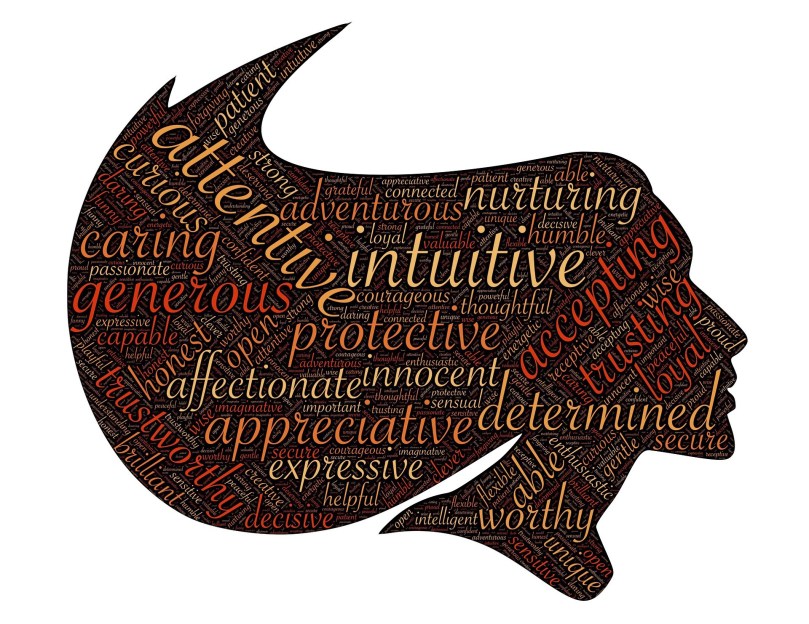
Life and death are in the power of the tongue, speak life, every cell in your body

Life and death are in the power of the tongue

I’ve been somewhat unsettled in recent weeks hearing masses around the world chanting “I can’t breathe”. I believe in the power of the tongue in creating wellness and illness in our bodies.

I pin my hopes on George receiving justice: what was done to him was an abomination. I firmly believe that the systems that stand in place to perpetuate injustice and prejudice should be exposed and torn away—all the wrongs of those who are silenced and told that their opinions don’t matter.

I wasn’t going to write this post. This has been sitting in my drafts for two weeks. Not my place to comment. I didn’t want to be one to criticise.

But does holding back my voice not make me part of the problem, rather than contributing to a solution? So, let me say this clearly:

I am horrified by the continued use of the slogan”I can’t breathe“.

On the one hand, it’s great for the media. On the other hand, do those chanting it consider the double-edged sword it can be for their health?

Words spoken by masses with strong emotions: powerful stuff.

Calling into existence that which is spoken.

The question is: what does it create?

What spells are we casting?

We laugh at “abracadabra” – but many believe that the word actually has meaning and power.

Scholars who support the Hebrew etymology say that abracadabra is a corruption of the Hebrew, ebrah k’dabri, meaning “I will create as I speak,” ie that the act of speech will magically create new realities. … the words and letters of the Hebrew alphabet have the power to create.

Abracadabra, https://www.thejc.com/judaism/jewish-words/abracadabra-1.466709

life and death, Every cell in your body is eavesdropping on your thoughts & words, i can't breathe, #icantbreathe, united we stand, we can do it

Similarly, you may scoff at those that use affirmations and recite promises to themselves or God, claiming a blessing or healing.

But what if words and thoughts and emotions do have power?

This is particularly true of words spoken full of emotion.

What if I can’t breathe has power?

The first reference I can find to this slogan arises in late 2014, shortly after the asphyxiation of Eric Gardner by a police officer. His last words “I can’t breathe”, were raised like a mantra in the protests that followed in New York City.

“There was this quote staring me in the face, and that’s something that should be the quote of the year,” Shapiro recalled.
So the Yale Law Library’s associate director and lecturer revised his 2014 list, placing “I can’t breathe” in the top slot. His widely cited annual list, which is intended to capture the political and cultural mood of the country each year, serves as a supplement to “The Yale Book of Quotations,” originally published in 2006.

‘I can’t breathe.’ Eric Garner’s last words are 2014’s most notable quote, according to a Yale librarian

Unfortunately, when I took a quick look at the 2014-15 flu deaths for that same period, there was a small spike – from the usual 36,000 a year up to 51,000. Mere coincidence? Quite likely. There are probably a million factors that played a part in the increase. Again in 2017, when the book “I can’t breathe” by Matt Kaibbi comes out, and Queen Ifrica publishes her song “I can’t breathe”: we get another spike up to 61,000 flu deaths. Probably irrelevant.

However, at this moment in history, following on the heels of mass sickness caused by a little-studied virus, we have angry crowds chanting “I can’t breathe”. We have media pushing fear and uncertainty. We have politicians using fear for personal safety and security for their platforms and personal gain.

So, if our words do have power and every cell of our body is eavesdropping on our thoughts, emotions and words – recreating what we declare into existence – how important then are the words that we choose to chant in protest?

Justice for George becomes much more powerful than I can’t breathe if we believe that we have a hand in creating an outcome!
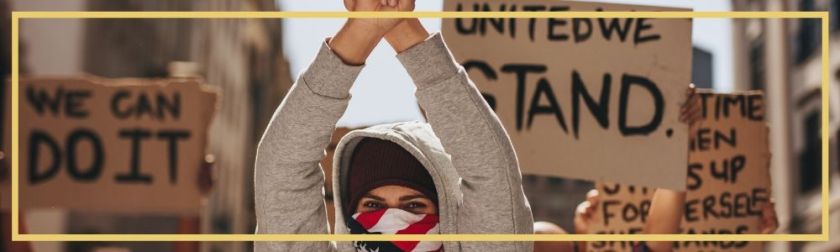
every cell in your body is eavesdropping on what you think, say, do and feel

Every cell in your body is eavesdropping.

In the same way that our mind is aware of everything that goes on in our body, our body and cells are listening and experiencing our thoughts, emotions and words. Unfortunately, our body takes those thoughts, emotions and words literally.

Our cells don’t differentiate when we are protesting from when we are having a phone call or merely meditating alone. Your body experiences your thoughts, emotions and words as they are. You can’t tell your body “I was just joking”.

Like a child that doesn’t understand sarcasm, our body responds to what was said and doesn’t take a joke. It takes everything we feel, say and think quite seriously.

In many different teachings, we find the effects of emotions on our organs:

  • anger: affects the liver
  • fear: affects the kidneys
  • grief: weakens the lungs
  • worry: affects the stomach
  • stress: wreaks havoc on your heart and mind

Examine, for a moment, how your words spoken with emotion are affecting different parts of your body.

Consider your inner child and the children around you:

We all have the voice of an inner critic stuck in our heads – and quite often it’s the voice of a parent, teacher or someone we respected or feared as a child. The voice that our child hears now is the voice that will become their inner critic in the future.

Do we want our children to have an inner voice that says “I can’t breathe”?

consider the impact of words on children

What are our children hearing and experiencing in the chants and protests? How are we explaining the situation to them? What conversations do we have that allow understanding, compassion and wisdom to guide the experience?

Consider a child: how do you build them up after you’ve stripped them down with words said in anger? Think for a moment about any relationship where words have been spoken in anger: if you don’t move past the hatred into love, understanding and acceptance, what footing is your relationship on?

The protests in Panama are not about Black Lives Matter: they are about the lock-down and people going hungry. I have it so much easier in what I have to explain! But I still have to explain to my daughter the images, emotions and even violence that she is witnessing if she catches the news.

At the same time, I explain how incredible our bodies and immune systems are! I talk about how we eat, and even how our emotions and thoughts can help us stay healthy and strong. I check myself any time I notice that I am feeling fearful or anxious: careful not to stuff it down but to release it. I don’t need my daughter to latch onto my fear or anxiety!

In the same way, I have to relate and quieten that inner child of my own: that part of me that feels insecure in any way.
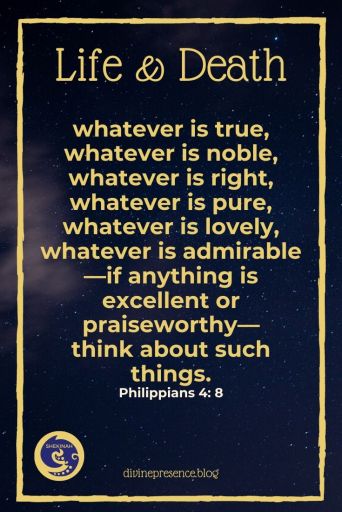
Philippians 4:8, whatever is true, whatever is noble, whatever is right, whatever is pure, whatever is lovely, whatever is admirable—if anything is excellent or praiseworthy— think about such things.
Whatever is true, whatever is noble, whatever is right, whatever is pure, whatever is lovely, whatever is admirable—if anything is excellent or praiseworthy— think about such things.

The power of your thoughts

Your thoughts influence your words and your actions. Long before you choose to do something, you have probably considered it multiple times.

Think, for a moment, about words that you spoke to someone in anger. How many times had you thought that before you actually said it? Then, in a moment of rage and slightly out of control (or perhaps in control but no caring about the consequences) you actually said what you’ve been thinking for a while. You voiced how you truly felt. Maybe it wasn’t the whole picture. But it started with thoughts that you have mulled over.

Consider the effect of thinking “I can’t breathe”, with all the nuances that it carries. Perhaps one of those nuances is that the system is unjust and doesn’t allow you to speak your mind.

If you regularly think “the system is unjust”, are you motivated to change it? Or do you get caught in a feeling of hopelessness? Notice the difference between thinking “I can participate in changing this unjust system” versus thinking “the system is unjust”.

Have you noticed how all your thoughts influence your emotions and your words? If your thoughts control your actions, then they have a role to play in creating your future! The action you take has a direct impact on your results.

The power of our emotions when mixed with words.

Our words are so much more powerful when they are spoken with emotion. It doesn’t matter if you are creating and destroying.

Anger at injustice can provide us with the strength and courage to embark on a journey that we might otherwise never take. Unfortunately, anger can also eat us up on the inside if we bottle it up, rather than channelling and releasing it.

Before becoming a bitter person: this was probably an angry person. Over time, the fire of the anger dies down, but the embers continue to burn within. The dissatisfaction and discontent are still there, unresolved. After the explosion of rage burnt out, bitter ashes and disillusion are left.

When we start a journey to transform our community, we may embark on it out of anger and frustration at the current situation. It is terrific to shout out to the world:

This is wrong! Wrongs must be righted!

"Your anger is the part of you that knows your mistreatment and abuse are unacceptable. Your anger knows you deserve to be treated well, and with kindness. Your anger is a part of you that LOVES you."
“Your anger is the part of you that knows your mistreatment and abuse are unacceptable. Your anger knows you deserve to be treated well, and with kindness. Your anger is a part of you that LOVES you.” https://twitter.com/apocalynds/status/1269711325749563399

But at some moment, love and compassion for our community need to replace that anger against the aggressors as the driving force of change. When we fail to recognise that our passion is driven by love and stay only in the rage, we miss an opportunity to grown in greater love and compassion.

Revolutions begin in angry protest and perhaps even rioting but have to end in love and compassion to build!

Man must evolve for all human conflict a method which rejects revenge, aggression and retaliation. The foundation of such a method is love.

Martin Luther King, Jr.

Make sure your thoughts, emotions & words serve your goals.

I love that injustice has awoken people to stand up and make a difference in their worlds. But if I could ask just one thing, it would be this:

Choose your words carefully, especially those spoken with emotion.

I want to hear the masses chanting:

Justice for George!
We can do it!
United we stand.
Black lives matter!

Fighting for justice!
We stand for justice.
We demand justice!

Respect me.
My voice matters!

I’m sure you could make a better list of powerful statements that could create change, without cursing your body or those supporting you.

And when we are done tearing down what no longer serves us, let’s build communities of compassion, love and kindness. Communities that are safe for our children, and that allow us to learn what it means to love our neighbour as ourselves.

Your words can either speak life, or your words can speak death. Our tongues can build others up, or they can tear them down

Life & death are in the power of the tongue.

Prov. 18: 21
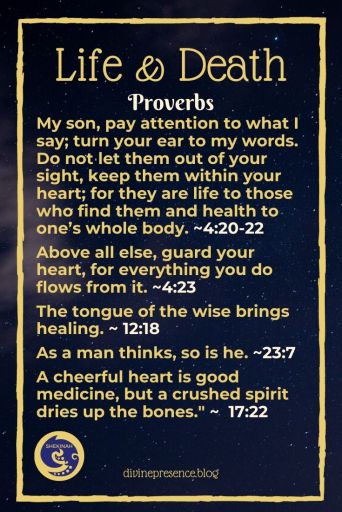
pay attention, words, sight, heart, health, guard your heart, bring healing, tongue of the wise, as a man thinks, so is he, a cheerful heart, good medicine,

If I look to Proverbs for Wisdom, these are but a few of the reminders about the power of our thoughts, emotions and words:

Proverbs 12:18
The tongue of the wise brings healing.

Proverbs 23:7
As a man thinks, so is he.

Proverbs 4:23
Above all else, guard your heart, for everything you do flows from it.

Proverbs 4:20-22
My son, pay attention to what I say; turn your ear to my words. Do not let them out of your sight, keep them within your heart; for they are life to those who find them and health to one’s whole body.

Proverbs 17:22
A cheerful heart is good medicine, but a crushed spirit dries up the bones.
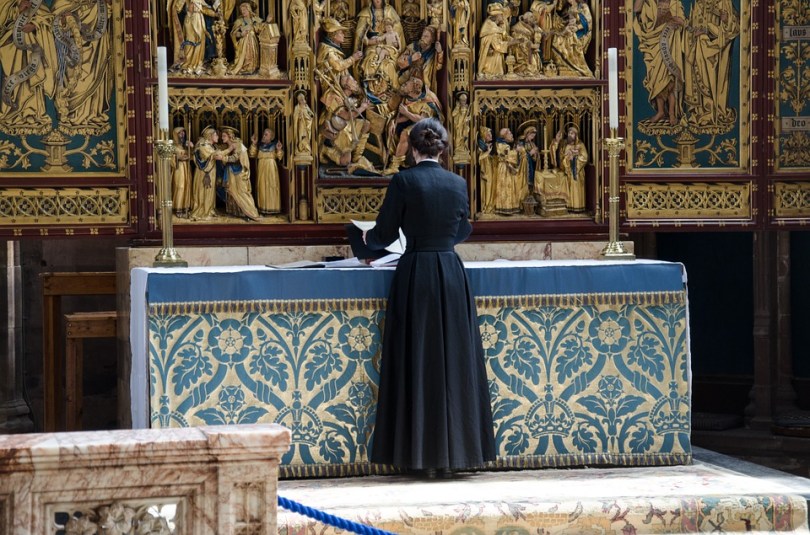
Sermon: International Women’s Day

Today, March 8th, is International Women’s Day, and I would like to take this time to celebrate women in the Church!

I realise that throughout Church history, we have had leaders who have said:

“What is the difference whether it is in a wife or a mother, it is still Eve the temptress that we must beware of in any woman… ”

– Saint Augustine of Hippo, Church Father, Bishop of Hippo Regius, 354 – 430

Or even Luther who stated:

“No gown worse becomes a woman than the desire to be wise.”

Throughout the history of the Church, we have found philosophers, scholars and debates about the role of women in society & the Church.  The very idea that women might participate actively in the Church received support in the early years of the Church, but over time, this fell out of favor.  We find the following decision issued by the Synod of Carthage (398 AD).

“A woman, however learned and holy, may not take upon herself to teach in an assembly of men.”

These types of attitudes lead Elizabeth Cady Stanton to comment:

“The Bible and the Church have been the greatest stumbling blocks in the way of women’s emancipation.”

Shirley Williams said:

shirleywilliams

But then there are also celebrations of women in the Church also.

“These people do not know that while Barak trembled, Deborah saved Israel, that Esther delivered from supreme peril the children of God … Is it not to women that our Lord appeared after His Resurrection? Yes, and the men could then blush for not having sought what the women had found.”

–Saint Jerome, (the 2nd most prolific writer after Augustine in ancient Latin Cristianity) after criticism for dedicating his books to women

Most recently, Pope Francis said

“We have to work harder to develop a profound theology of women within the church. The feminine genius is needed wherever we make important decisions.”

We know that some of Jesus’ earliest followers were women – Mary Magdalene, Joanna, & Susanna.  We find women at the foot of Jesus’ cross, and women were the first to see Jesus after his resurrection.

“When [the women] came back from the tomb, they told all these things to the Eleven… But they did not believe the women, because their words seemed to them like nonsense.”

–Luke 24:9-11

We find the importance of women in Paul’s ministry: women were important members of the early christian church movement.  Homes of believers were where groups of Christians met and held meetings.  Those who could offer their homes for meetings were obviously considered to be important in this setting, and often went hand in hand with leadership roles.  We find Lydia of Philippi (a wealthy dealer in purpose cloth).  Acts mentions that “she and her household” were baptised.  (Acts 16: 11-15).

Although we may consider that the 1st century woman’s role was in the home, turning her home into a public religious setting opened up for these women opportunities for religious leadership.  These women were given leadership roles, dignity and status in return for their patronage, receiving a renewed dignity within Paul’s movement.

Even in Titus 2 we find:

Similarly, teach the older women to live in a way that honors God. They must not be malicious gossips… spending their time tearing others apart…  Instead, they should teach others what is good.

The role of women was that of active teachers… But striving for unity, not division.  There was no room in the early church for women who caused division.

Given that Paul is supposed to have said in 1st Corinthians things like:

  • Every woman who prays or prophesies with her head uncovered dishonors her head–it is the same as having her head shaved
  • Is it proper for a woman to pray to God with her head uncovered?
  • Women should be silent during the church meetings. It is not proper for them to speak. They should be submissive, just as the law says. Women should be silent during the church meetings. It is not proper for them to speak. They should be submissive, just as the law says.

But, funnily enough, he then finishes this paragraph with

  • So, my dear brothers and sisters, be eager to prophesy, and don’t forbid speaking in tongues.

So… women were to be eager to prophesy, but were not supposed to speak?

Of course, the most quoted scripture regarding the role of women in the Church is probably 2 Timothy 2: 12:

“I do not permit a woman to teach or to have authority over a man.”

woman-1197111_1920And yet this appears to conflict directly with so many of Paul’s letters and greetings, and the women that he mentions in his Epistles.  I’m just going to list for you the women that Paul sends his special greetings to, and some of the circumstances in which he greets them:

  • Prisca (or Priscilla) and her husband Aquila, mentioned six times in the Bible, as missionary partners with the Apostle Paul (and in the craft of tent-making). The author of Acts states that they were refugees who came first to Corinth when the Emperor Claudius expelled all Jews from Rome. I’ve always noticed that when Paul referred to this couple, he always mentioned her first – so that some scholars suggest that she was the head of the family unit.
  • Mary and “the beloved Persis” are commended for their hard work.
  • There is then the greeting for Julia, who worked and travelled as a missionary with her husband.  He also sends greetings to Tryphena, Tryphosa and to Rufs’ mother, who “labour for the Lord’s work”.
  • Phoebe, a leader from the church at Cenchreae, a port city near Corinth is commended for her hospitality. Paul attaches to her three titles: diakonos meaning a deacon (lit. “servant”), sister, and prostatis meaning “a woman in a supportive role, patron, benefactor”.There is no difference when the title of deacon is used for Phoebe and Timothy. Diakonos (Gk.) is grammatically a masculine word, the same word that Paul uses in regards to his own ministry. Phoebe is the only woman to be named “deacon”. In Romans Phoebe is seen as acting as Paul’s envoy. Phoebe is named as a Patron of Paul, meaning that she would have been financially contributing to Paul’s mission. Phoebe was especially influential in the early Church seen in Jerusalem from the 4th century inscription: “Here lies the slave and bride of Christ, Sophia, deacon, the second Phoebe, who fell asleep in Christ.”

Paul in his letter to Timothy discusses the criteria for Deacons in the early Church which is explicitly directed to both male and females. Women flourished in the deaconate between the 2nd and 6th centuries. The position required pastoral care to women, instructing female candidates and anoint them at Baptism. They were also required to be present whenever a female would address a bishop.

  • And in Romans 16: 7 we find “Greet Andronicus and Junia, my fellow Jews, who were in prison with me. They are highly respected among the apostles and became followers of Christ before I did.”  Junia was in prison with Paul – and possibly the only female apostle we will find mentioned in the New Testament.  Junia may have been an evangelist and church-planter, just like Paul.  Some translations made her name into “Junias” – i.e. a man.  But it appears that this has since been corrected into the feminine version.  I can only ask, How inspiring and wise must this woman have been to have been deemed by Paul worthy of the title “apostle”?

We also find

  • Chloe, a prominent woman of Corinth.
  • Euodia & Syntyche, Paul’s fellow workers in the gospel (mentioned in Philippians).

I find it difficult to relate these instances of respect and high esteem to the concept of a Paul that hated women and put them down.  These messages of thanks were to women (and men) who had played a vital role in Paul’s ministry.

But what do we do if two thoughts or passages seem to conflict? This is where the heart of the gender debate begins…  On one hand, we have those who say, “well if the Bible says to do it, then we ought to do it.”

Well, Leviticus 19 says that “You shall not put on a garment made of two kinds of materials.” If you’re wearing a cotton polyester blend or any other blend for that matter, you’re disobeying Biblical command this morning.  Well, you may be saying that’s an obscure Old Testament command. And you’d be right.

But five times, Paul and Peter tell Christians to “Greet one another with holy kisses.” Done any kissing in church lately?

Oh! That verse is historical & cultural…

So what if in Timothy Paul wasn’t talking about women generally, but some particular & specific women that Timothy was having problems with?  We may never fully know or understand the circumstances of this particular verse in Timothy.

I think it’s a fair conclusion that the testimony found in the bulk of Scripture, including the Pauline texts, speak plainly for women to be able to fulfill any ministry or position that the Spirit of God places upon them, whether it be teacher, prophet, pastor, evangelists or apostle.

When we look at the church, more times than not, there will be more women than men in church. Often times this is seen as a failure on the part of the church. In reality it may be the success of women being in MORE tuned with the Spirit of God. If there is to be a great awakening in the church, it will take place because we, the women in the church will see begin to see ourselves as God sees us. Women may hold the key to unleashing the power available in the church.

As we read in this morning’s Epistle, God is wiser than the wisest of human plans, and God’s weakness is stronger than the greatest of human strength. We may not fully understand the power of Jesus’ sacrifice, but we should whole-heartedly believe and cling to it.

Let us pray:

Creator God,

We give you thanks for the ministries that you have given to each one of us. We give you thanks not only for those women who have served you over the centuries, but also for those who serve you in whatever capacity today.

Today we specifically ask for your protection and peace in the Democratic Republic of Congo, where over six million people have died in the conflict so far.  We pray for the 40,000 women & children each day that are raped and tortured… asking for your healing hand over their lives.  We pray for justice for them – that even thought their country may not have anything of economic interest to the West, that you enlighten our leaders to see the needs of these people and intervene.

Today we ask that the lines of gender, race, wealth, and status completely disappear as we are transformed by your Spirit to be the “new creatures” in Christ we are called to be. May your church truly become the place where there is “neither Jew nor Greek, slave nor free, male nor female” for we are indeed all one in the grace and mercy of Christ Jesus our Lord.

Amen.