
I recently read and posted this comment, reflecting on how 2019 has been the best worst year of my life… or possibly the worst best year of my life. I haven’t quite made up my mind which it is!
Some of you are breaking generational curses and you don’t even know it. That’s why your attack has been so hard.
Unknown
And how it has felt like a struggle this year, but in a great way. I know I have done some deep healing work and growth, but it has also felt dark and dirty. Like weeding the garden – you get sweaty, dirty and now there’s gunk under my nails that doesn’t want to simply wash off!
Part of me, the part that grew up as a missionary kid, automatically hears in my head those verses from Exodus, Numbers & Deuteronomy:
Thou shalt not bow down thyself unto them, nor serve them: for I the Lord thy God am a jealous God, visiting the iniquity of the fathers upon the children unto the third and fourth generation of them that hate me
Deuteronomy 5:9
Of course, with modern psychology and even neuroscience, we begin to understand a new application of what happens. There is nature and there is nurture – what we inherit through our genes and biologically, as well as what we learn from our parents, grandparents and community as we grow up.
Earlier this year, I was working with a few girlfriends, addressing some of those generational issues that were coming up and keeping us stuck – visiting the experiences of our parents and grandparents and forgiving them or those that had harmed them. It felt dark and intense. But very liberating as well.
Consider these 2 examples:
Case 1: 1874
In 1874, the New York State Prison Board discovered that they have 6 members of the same family locked up at the same time. Mere coincidence? Looking back, all the way to 1720, they found a town trouble-maker and his less-than-lovely wife, who had 6 daughters and two sons. From those, by 1874, they had 1200 descendants.
- 310 were homeless
- 180 had drug or alcohol abuse problems
- 160 were involved in prostitution
- 150 had spent time in prison, 7 for murder
Case #2: 1874
Nonetheless, another couple, going back to 1703 had 11 children. His name was Jonathan Edwards, and as a family man and caring for his education, he went on to be the President of Princeton University. By 1874, they had 1400 descendants.
- 13 college presidents
- 65 university professors
- 100 lawyers and 32 state judges
- 85 authors
- 80 politicians, including 3 state governors, 3 senators, and 1 President
- 66 doctors
Is this nature?
Is it nurture?
Or perhaps a mix of both?

Generational trauma & the study of epigenetics
Some of the most interesting work that is being done at the moment is in epigenetics, cellular biology, and neurobiology. In mice, the effects of trauma on the DNA and gene sequencing can be seen for up to 14 generations. But, on a more tangible level, we have scientists like Dr. Rachel Yehuda, from Mt. Sinai Medical in New York, studying the effects of trauma and PTSD on the children and grandchildren of those who suffered in the holocaust. The effects of the stress and trauma can be transmitted biologically up to three generations.
Similarly, we see the effects on the human body of those who have suffered through famine or war and political unrest. Have you dug deeper into your family tree and had a good look at the biological and environmental factors that affected your childhood, your parents and your grandparents? What stories did you hear? Or perhaps, more importantly, what stories would they refuse to speak of?
We read in the Bible that we reap what we sow… but sometimes we reap what others have sowed… and worse yet, sometimes we reap what others have been the victim of! Sometimes the changes in genetic traits works in our favours, and sometimes it might be considered a flaw. We might inherit genes for strength or we might be prone to certain syndromes or diseases.
Just remember this: when your grandmother was pregnant with your mum, you were there as an embryo experiencing the world. Of course, biology allows us to know that at the moment of inception, a “cleaning” takes place, which for the most part should take care of most of those “anomalies”. But that’s not always the case.
The vestiges of the US Civil War
Furthermore, as studies of the sons of men from the Civil War exhibited, there are also experiences that were specifically transferred down through the Y chromosome (only to the sons and not to the daughters). Whether it was the stress or the malnutrition that the father’s suffered is not yet known, but without a doubt, the sons of those who had been in prison camps died younger than those who were not prisoners.
Without a doubt, trauma in previous generations can alter genes and their expression in future generations. The reason (the story) for the trauma gets lots, but the behaviours and the symptoms are passed down. Our bodies, in order to manage stress, make a physiological change. Unfortunately, when the conditions for the next generation are not the same, these changes may not be for their benefit. But the evolution has occurred.
Nurture – the cycles of behaviour we learn
The same way that part of the trauma is stored and handled genetically, there are also many coping mechanisms that are behaviour and habits. Dysfunctional families breed dysfunctional adults. We are the product of our childhood upbringing and our socialisation.
So, even when there were experiences we had as a child – behaviour and responses that we swore we would never repeat when we had children of our own – unless we have done the healing work, we will run down the easiest neural pathway to the very same response. Whether we like it or not, how we were raised shapes our reactions, responses and attitudes.
- Children raised in abusive homes learn that violence is an effective way to resolve conflict.
- Boys who witness domestic violence are three times more likely to become batterers.
- Children of alcoholics have a fourfold risk of becoming an alcoholic than someone who comes from a family of non-alcoholics.
You learned so much by simply watching others – even unconsciously:
- how to eat
- how to cope with stress
- how to do marriage or relationships
- what to do with your anger.
Have you taken the time to give serious thought to your life generationally?
The trauma embedded in your family line
Take a moment to look at yourself, your parents and your grandparents. Look wider at your cousins, aunties and uncles. What do you see of:
- mental illness
- drug addiction or substance abuse
- codependency or enabling
- depression
- anxiety
- stress
- anger
When you see it all – as a single, big picture – can you get an idea of the importance of breaking the cycle?
If you were to shake the family tree – what skeletons fall out? What is hiding in the closets?
If you don’t deal with
- the weight and obesity issue;
- the debt and overspending;
- anxiety and stress;
- anger;
- depression;
- insecurity; or
- drug addiction and substance abuse,
Those very same issues will be for your children to handle. They will face the same patterns and choices.
The traumas that are not healed in your generation will be for the next generation to heal and work through.
The path of healing
So, how do we get there? If you want for the buck to stop here – how do you make sure that you are the generation that changes the situation for the future?
Acknowledgement and awareness
It all starts with awareness. You cannot teach what you don’t know – so first, you have to become aware. This comes from evaluating your thoughts and feelings. It also comes from educating yourself – through personal development and self-improvement.
Through looking at what you want to be and then measuring yourself up to that model. For me, I would like to be able to say I am compassionate, creative and courageous. How do I measure up to this standard? I recently wrote about being an angry woman, and the healing that has to happen as I work my way through that!

Acceptance & ownership
Unfortunately, what you resist, persists. When you fail to acknowledge those thoughts and feelings – “I shouldn’t feel this way” and “I shouldn’t be thinking that”, you cannot change the pattern.
After the awareness, you have to own it – as yours. “This is what I feel”. You don’t have to agree with it or like it. Once you’ve swallowed it down and allowed yourself to digest it, then you can do something with it.
Just take ownership – “These are my thoughts, feelings and actions – and because they are mine, they are mine to change!”
Be the one in your family that was brave enough to do the dirty work of cleansing and healing!
Using forgiveness and release
When we go back to the root of the issue, we go back to that event in the past, and have a new experience of it with forgiveness and releasing the past. You will need a powerful experience to release the trauma, to override the trauma response in you.
When I was doing some of this work earlier this year, I came face-to-face with one of my survival mechanisms. When I feel attacked, I want to shoot someone. Now, to my rational mind, that makes absolutely no sense. I obviously don’t want to shoot someone. How could I possibly want to do that?
But my first thoughts always turn to “just shoot them down”. Sometimes I would literally do it verbally – destroy them with my tongue. But in my mind, the image I had included guns.
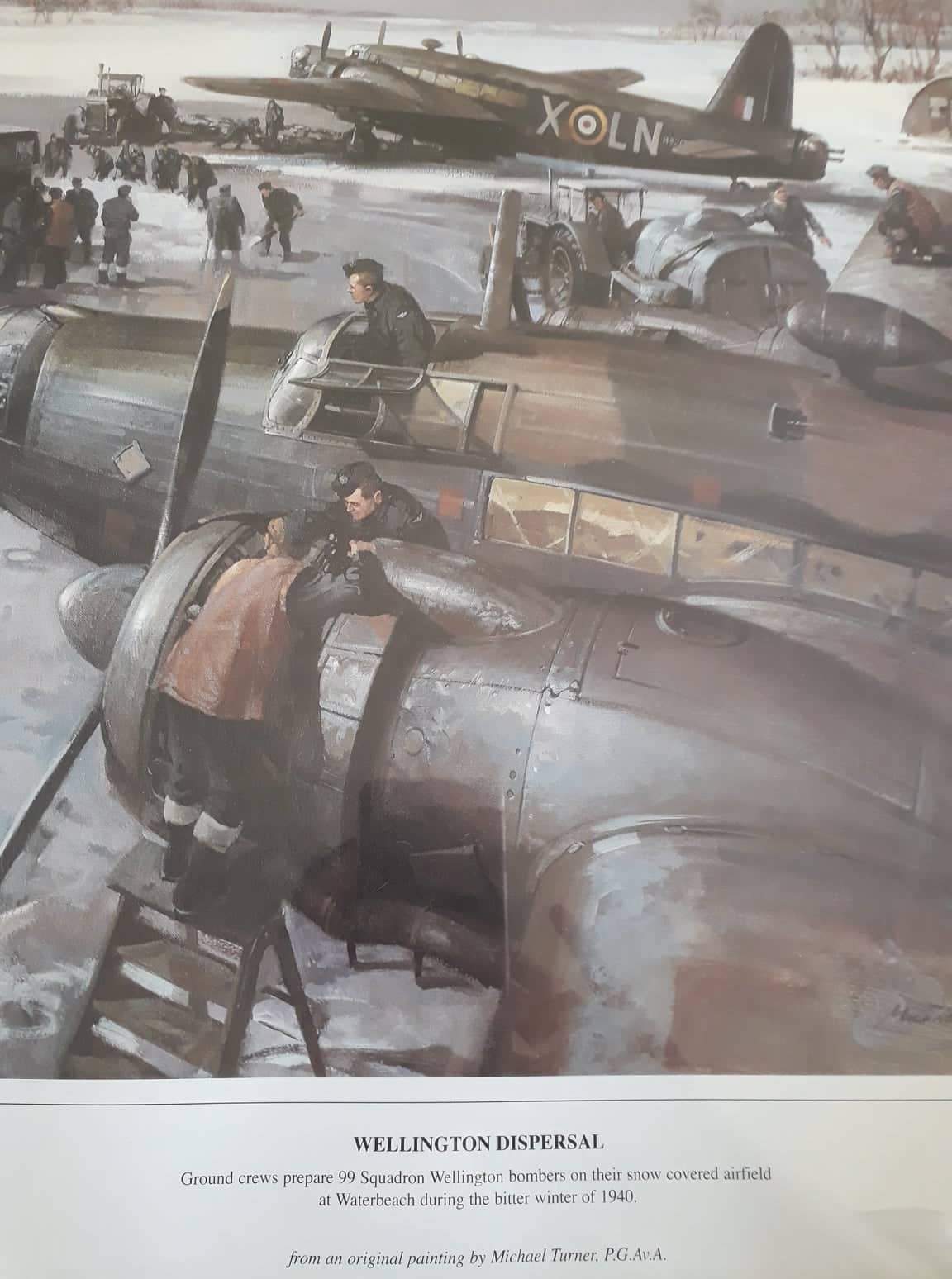
When I went into the forgiveness work with Sarah and Sharon, I realised my granddad was a rear gunner (or tail gunner) in WWII. If you know anything about that, it was the least likely position to survive.
This is what the tail of a Lancaster bomber could look like upon arriving home:

But my granddad did survive and came home. He never – that I ever remember – spoke about his days in the war. He would remember his pilot and members of his crew fondly, but never told a single war story that I will ever recall. And as I did the work with Sharon & Sarah, I realised how good he must have been as a gunner to have survived so many battles. How many planes did he shoot down, so that he and his crew could make it back alive? He must have been a really good shot to have made it out alive.
I sat with that deep sadness and guilt. And I realised why my survival instinct was “let’s just shoot them down”, but I’m not in that position.
I don’t actually need to shoot anyone down in order to survive:
Not with my mouth.
Not in my thoughts.
In my world, I can choose to be kind and compassionate.
So, I worked through forgiving the powers that were that started the war and put my granddad in a position where he had to shoot others down in order to survive. I forgave my granddad for all those people whose lives he’d taken in order to get home to my grandmother and mum alive. And I forgave myself for those crazy, irrational thoughts that I had carried around in my head for as long as I could remember, recognising them for what they were.
I then finally able to forgive myself for all the times I had shot others down with my tongue, tearing them apart with my words.
Yesterday, I discovered that a guy called Mark Wolynn has written a book called “It didn’t start with you: how inherited family trauma shapes who we are and how to end the cycle“. I’m definitely adding that to my reading list for January! Maybe I’m already doing the work – but perhaps there’s so much more that I could be doing.
Learning a new way
Breaking the cycle of generational trauma starts with acknowledging that you have a choice. That in that space that exists between stimulus and response, you can breathe. That space is yours.
It takes practice. You will need patience and understanding. Show yourself some compassion and mercy, because there will be mistakes along the way.
But you can – single-handedly – break this cycle, one decision at a time. You can choose what tools and support you need. Perhaps you need faith and a spiritual understanding, to reach out to a friend, a coach or a mentor, and in some cases, you might even need therapy.
But each day is a choice that allows the generational curses to be broken.
Because the buck stops here – in the worst best year of my life!



 Divine Presence: Letting the Infinite flow in my life