trust without certainty, journey to faith, Thomas, spiritual rhythms, inner transformation, reflection, spiritual practices, renewal, abiding, faithful presence, self-awareness, radical honesty, trust, spiritual growth, resilient faith

Trust without certainty: Thomas’ journey to Faith

The Gap Between Theory and Reality

Most of us have experienced the gap between theory and reality.

Think back to a time when you took on a major new responsibility. Perhaps it was becoming a parent, starting a new career, caring for an aging loved one, or stepping into a leadership role. Before the moment arrived, you probably did your research. You read the books, listened to the experts, and gathered advice from people who had gone before you. You felt prepared.

Then reality arrived.

In our journey, we often find ourselves learning to trust without certainty.

The books suddenly seemed less helpful at two o’clock in the morning when the baby would not stop crying. The carefully constructed plans gave way to exhaustion, uncertainty, and the uncomfortable realization that life rarely unfolds according to theory. In that moment, something important happens. The idea of being a parent dies, and the reality of loving a child is born.

The difference is not knowledge. It is relationship. It is the difference between knowing the manual and knowing the person.

Faith often unfolds in much the same way. Much of our spiritual growth begins with ideas, beliefs, and expectations. Yet sooner or later, life confronts us with situations where certainty disappears. We find ourselves learning to cultivate trust without certainty, discovering that faith is not simply about having the right answers but about remaining in relationship with God when the answers are incomplete.

Thomas, one of Jesus’ disciples, found himself standing in precisely that gap.

Thomas and the Courage of Radical Honesty

After the resurrection, the other disciples had seen the risen Christ. Thomas had not.

His struggle is often reduced to a problem of doubt, but the story reveals something deeper. Thomas is wrestling with an experience he missed. The others possess a certainty that he lacks. They have seen what he has not seen, and they are asking him to trust their testimony.

What makes Thomas remarkable is not his doubt but his self-awareness. Rather than pretending to believe what he does not yet understand, he practices radical honesty. He openly acknowledges his struggle and names what he thinks he needs.

โ€œUnless I see the mark of the nails in his hands, and put my finger in the mark of the nails and my hand in his side, I will not believe.โ€

Many of us know that feeling. Sometimes our questions about faith are not intellectual objections. They arise because we have not experienced what others seem to experience so easily. We hear stories of answered prayers, profound encounters with God, or moments of spiritual clarity, and we wonder why our own journey feels less certain.

What happens next reveals something remarkable about Christ. Jesus does not shame Thomas. He does not reject him. Instead, Jesus meets him exactly where he is. The place of doubt becomes the place of encounter.

In one of the most compassionate moments in the Gospel of John, Jesus invites Thomas to come closer. He offers the very evidence Thomas requested. Yet Jesus also points beyond Thomas when he says, โ€œBlessed are those who have not seen and yet have come to believe.โ€

With those words, Jesus creates a bridge from certainty to trust.

Trust Without Certainty

Thomas receives the gift of seeing. Future generations of believers, however, will be invited into something different.

Most of us will never touch the wounds of Christ. We will never stand in that upper room and receive the kind of certainty Thomas desired. Instead, we are invited into a different kind of faithโ€”one that learns to trust without certainty.

This is where the story begins to speak directly into our lives.

Many of us spend years searching for certainty. We want guarantees that God is present. We want proof that our prayers are being heard. We want reassurance that we are on the right path.

Yet mature faith often develops in another direction. Rather than receiving more certainty, we find ourselves learning to trust without certainty. We discover that faith is not the absence of questions. Faith is the willingness to continue walking with God in the midst of unanswered questions.

This movement from certainty to trust is one of the deepest forms of inner transformation. It changes not only what we believe but how we live.

Spiritual Rhythms and the Maturing of Faith

The psalmist describes this mature faith when he writes,

โ€œI keep the Lord always before me; because he is at my right hand, I shall not be moved.โ€

This is not the language of a dramatic spiritual breakthrough. It is the language of spiritual rhythms.

The psalmist is describing a practiced awareness of God’s presence. Faith has become more than an occasional experience. It has become a way of life shaped by reflection, prayer, worship, and other spiritual practices that keep the heart oriented toward God.

This may be one of the greatest misconceptions about faith. We often imagine that trust is built through dramatic moments of certaintyโ€”an answered prayer, a powerful worship experience, or a profound spiritual insight. While such moments can be important, they are rarely sufficient to sustain us over a lifetime.

Trust is usually formed much more quietly.

It is formed through the spiritual rhythms we return to day after day. Prayer teaches us to bring our questions honestly before God rather than hiding them. Reflection helps us recognize patterns of grace that are easy to miss in the rush of daily life. Scripture reminds us of God’s faithfulness when our own perspective becomes clouded by fear or uncertainty. Worship lifts our attention beyond our immediate circumstances and reorients us toward a larger story.

spiritual rhythms, inner transformation, reflection, spiritual practices, renewal, abiding, faithful presence, self-awareness, radical honesty, trust, spiritual growth, resilient faith

These spiritual practices do not remove uncertainty. Instead, they teach us how to remain present within it. They cultivate the capacity to abide in God’s presence even when answers are incomplete. Over time, what begins as a discipline becomes a disposition. We find ourselves developing a deeper trustโ€”not because life has become more predictable, but because we have repeatedly encountered God’s faithful presence in the midst of unpredictability.

This is why trust without certainty is not a single act of faith. It is a way of life. It is the fruit of spiritual rhythms that gradually transform the heart and nurture a resilient faith capable of enduring both clarity and mystery.

The author of 1 Peter writes to believers who had never seen the risen Christ:

โ€œAlthough you have not seen him, you love him; and even though you do not see him now, you believe in him.โ€

These believers had learned something profound. They had learned to trust without certainty.

Peter describes their faith as gold refined by fire. It is a resilient faith, strengthened through testing, uncertainty, and perseverance. Rather than destroying faith, difficulty becomes the means through which faith is purified and strengthened.

Again and again, God brings renewal in places where fear, doubt, and uncertainty once dominated. Over time, believers discover that trust grows not through the elimination of hardship but through God’s faithful presence within it.

Faith Carried by Community

One of the most overlooked details in Thomas’s story is that he remained with the community even while he struggled.

He doubted, but he did not leave.

Before Thomas ever encountered the risen Christ for himself, he was sustained by the testimony of others. The community continued telling the story. They continued gathering. They continued holding faith on his behalf until he was ready to encounter Christ for himself.

The same remains true today.

There are seasons when our faith feels strong and confident. There are other seasons when uncertainty weighs heavily upon us. During those times, the community becomes one of God’s greatest gifts. Others hold hope when ours is fading. Others remind us of truths we can no longer clearly see.

Peter’s declaration in Acts captures this beautifully:

โ€œThis Jesus God raised up, and of that all of us are witnesses.โ€

Faith is never merely a private experience. It is a shared story. Sometimes we continue learning to trust without certainty because someone beside us is still carrying the story when we no longer have the strength to carry it ourselves.

A Final Invitation

Thomas touched the wounds of Christ and believed.

Most of us will not receive that kind of certainty.

Instead, we are invited into the ongoing journey of learning to trust without certainty. We are invited to recognize Christ through a lifetime of faithful encountersโ€”in community, in Scripture, in prayer, and in the quiet persistence of grace.

Faith matures through spiritual rhythms. It grows through self-awareness, radical honesty, trust, and reflection. It is strengthened by spiritual practices and sustained by community. Over time, these rhythms shape a resilient faith capable of enduring uncertainty without surrendering hope.

Faith ultimately takes root not because everything has been proven but because we have come to trust the One who remains faithful.

Where might Christ be inviting you today?

Perhaps the invitation is not to find more certainty.

Perhaps the invitation is simply to take the next step in learning to trust without certainty.

You might also find this blog post interesting for building faith and trust:

blind trust, communication, Compassion, competency, consistency, consistent, dependability, distrust, emotional and spiritual healing, Faith, family, Forgiveness, God, hope, learning and personal development, life, living in the Spirit, love, reliability, self-awareness for personal growth, spiritual abuse, Spiritual Growth, spiritual healing, spiritually mature, trust, truth

Trust, distrust and blind trust: rebuilding faith and hope

Over recent weeks, in my healing journey, I have been examining my relationship with trust. It first came to my attention when I looked at my business decisions, especially mistakes that I have made over the past 20 years. But, in recent days, I noticed a pattern emerge.

The beauty of recognising patterns of behaviour is that it opens the door for change and transformation. What I’ve noticed is a swinging pendulum in my life between distrust and blind trust. This pattern has cost me thousands of dollars, as well as relationships and creating heartbreak.

It is in seeing my actions and omissions accurately that the doors open.

The truth sets us free.

You will know the truth, and the truth will set you free, John 8:32

Let me provide you with some concrete examples: 

  1. In my early business days, I hired a friend to run one of my companies. Because I was overwhelmed and swamped with the growth in business and hiring new staff, I failed to supervise her properly. She was struggling in getting everything done, and I wasn’t available to support her. I didn’t ask how things were going, instead choosing to focus exclusively on my own overwhelm. Unfortunately, while she was getting the client work done, she wasn’t invoicing the client for it! By the time I realised the mess in accounts receivable and payable, the client had accrued some $40,000.00 in services they hadn’t paid for. Thankfully, the client eventually paid all outstanding invoices. But it took years to get fully up to date, and I bore the financial brunt of being caught between suppliers and financing a client. When I’m overwhelmed, I shut down, dissociate from the present, and turn to blind trust. 
  2. In March 2009, I left on holiday for three weeks to New Zealand. I chose the dates based on the weather (end of summer) and flight costs (cheaper because summer holidays were over and it wasn’t yet Easter). I was overwhelmed and exhausted after restructuring staff following the 2008 markets crash. Unfortunately, March 31st is the end of tax season – which meant that my company tax returns were prepared and presented in my absence. The company accountant and external accountants included a refundable expense in “income”, an extra $54,000 in ghost income! As a result, my income tax bill that year was $27,000.00 when it should have been less than $9,000.00. But, you prepay taxes for the next year, based on the estimates of what you paid the previous year! So, not only was I hit with the current tax bill, but my estimated taxes for the next year were identical, giving me a tax credit for years to come. My blind trust created a substantial financial pinch. 

I could provide you with many more examples in my professional life where I have distrusted, micro-managed and controlled every aspect of an employee’s performance, to those moments where I am overwhelmed and shut down, leading to no involvement or supervision at all.

Definitions

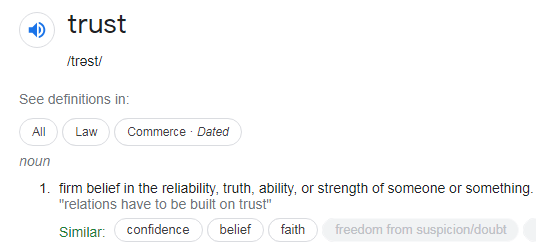
definition of trust, Oxford Languages, firm belief in the reliability, truth, ability, or strength of someone or something
definition of Trust

Trust = firm belief in the reliability, truth, ability, or strength of someone or something

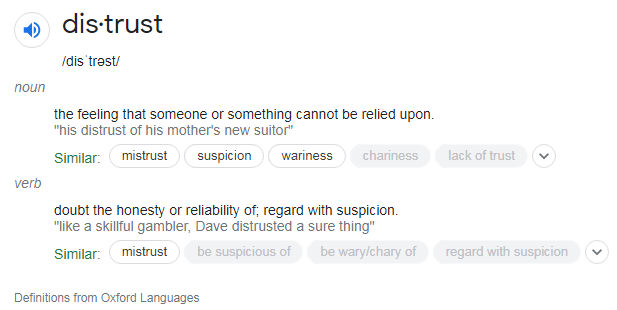
distrust, feeling that someone or something cannot be relied upon, doubt the honest or reliability of, regard with suspicion, definitions from Oxford Languages
definition of Distrust

Distrust = the feeling that someone or something cannot be relied upon.

Blind faith or blind trust: “unquestioning belief in something, even when it’s unreasonable or wrong”. I take it to mean “trust in spite of evidence to the contrary” or blindly ignoring evidence that perhaps they are undeserving of your complete trust.

trauma, state of mind, overwhelmed, shut down, freeze, dissociation, present moment, avoidance, blind faith, trust, firm belief, distrust

How trauma informs our state of mind

Unfortunately, this pattern is not something I learned as an adult, and I’ve been using this pattern since early childhood. When I get overwhelmed, the easiest solution is to shut down and freeze, and this takes me into dissociation from the present moment and avoidance. In these cases, blind faith and trust in others become the only option, and I can’t trust myself. 

Hypervigilance at the other end of the pendulum presents itself as distrust, micro-managing every situation as I attempt to control the outcome. Of course, this is exhausting, making me angry (an emotion that I was taught not to acknowledge as a child) and frustrated. To avoid anger, I would rebound into dissociation and shut down.  

I never learned how to stay in the middle: in balance, calm and being alert. I struggle on so many levels with trust, and this shows up in my life on every level: 

  • personal 
  • interpersonal 
  • professional 
  • spiritual 

I could choose to sit in victimhood: “this is how I am, because of my childhood“. But I choose not to. I started to look at my patterns as generative learning – an opportunity to grow and change. And I share these learnings with you, because I want you to recognise that you have options and choices available to you.

As I have begun to experience inner peace, the wisdom of trust has become available.  

The human experiences that break trust, building distrust

Years ago, I denied being traumatised at boarding school because I wasn’t regularly beaten and abused. Anger and speaking up would earn you a beating, being labelled a Jezebel, or having a rebellious spirit.

I avoided beatings by being “a good girl”, knowing when to shut my mouth and swallowing any anger I felt. The survival skills I learned were to shut down, dissociate, and walk away. Unfortunately, those skills are not very resourceful and helpful in my life anymore.

There are many moments that I wish I were rebellious, angry & unruly. How I wish I had been the wild child that baulked the system and stood up against injustices, daring to question unfair authority. Instead, I chose the safety and security of apathy, withdrawal and indifference.
Unfortunately, as an adult, I still struggle with dealing with my anger, boundaries and injustice. As a lawyer, it’s easy to stand up for others. But I shrink instead of standing up for myself. I avoid confrontations of a personal nature, even when they would clear the air.

Through it all, I am entrenched in my independence. Of course, as I know now – hyper-independence is merely a symptom of trauma: unable to ask for help because I can’t trust others. Can I even trust myself?

Taught to obey Church leaders without question:

We had verses drummed into us, which in themselves were not wrong. But was the interpretation of these verses rightly applied?

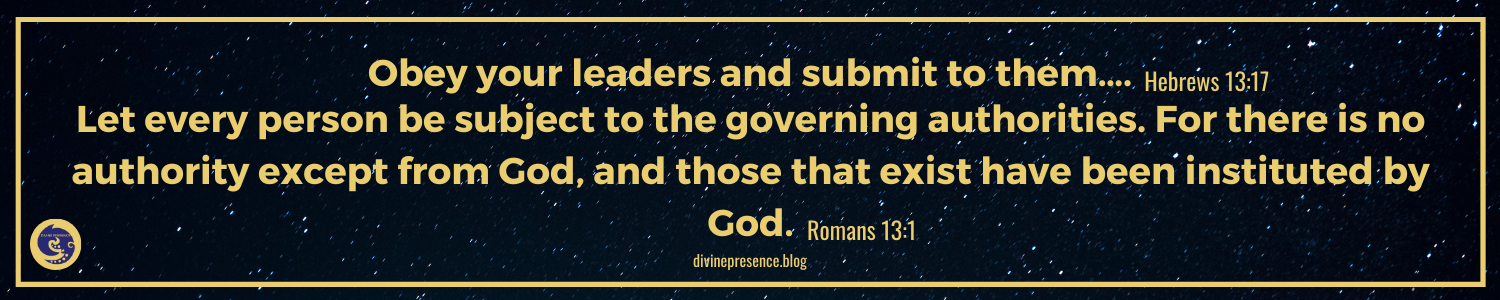
Obey your leaders and submit to them, Hebrews, Romans, Let every person be subject to the governing authorities. For there is no authority except from God, and those that exist have been instituted by God

Under no circumstances were we, children, to question those in authority because they were “appointed by God”. And if God wanted to remove them for wrongdoing, then it was merely our duty to “pray about it” rather than to do anything.

Remind them to be subject to rulers, to authorities, to be obedient, to be ready for every good deed, Therefore whoever resists the authorities resists what God has appointed, and those who resist will incur judgment, Romans, Titus,

Even the hymns we sang reminded us that we were to “Trust and Obey” rather than stand up for ourselves or others. Helplessness was ingrained, and anything that was not as it “should be” was “God’s will”, and we were to endure it.

Biblical teachings: the human heart

But that wasn’t the only weapon in the arsenal of submission. In reading the below verses, repeatedly we heard: “The heart is deceitful above all things”. Divine Justice prevailing, to each according to their ways, patterns and actions received little mention. Instead, beatings were justified because our hearts were deceitful.

Those in power were above all of that.

The heart is deceitful above all things, devious & incurably sick.  But I - the Eternal One - probe the innermost heart & the innermost thoughts. I compensate & repay justly - how they really are, not how they pretend to be - to each according to their ways, patterns & actions, Jeremiah 17: 9-10

How can I trust myself if I believe that my heart is deceitful? What relationship or trust can I build with others if they are devious and incurably sick in their hearts?

If you question what I am telling you, you lack faith. Instead, you should “pray about it” and “trust God” to solve this for you.

If the prevalent attitude about human nature is one of sin and depravity, then there is no trust.

Maureen Murdock, “The Heroine’s Journey”

Divide and conquer has worked for centuries, both within the church and politics, and it’s as quickly at work today as it always has been. Even today, we hear who to distrust and then expected to place blind trust in authority.

But blind faith means that you have no ownership of your spiritual path or will. It relieves you of responsibility, creating victimhood. And victims are powerless, easy to manipulate.

I am so grateful for learning a new way: what it means to have a healthy trust.

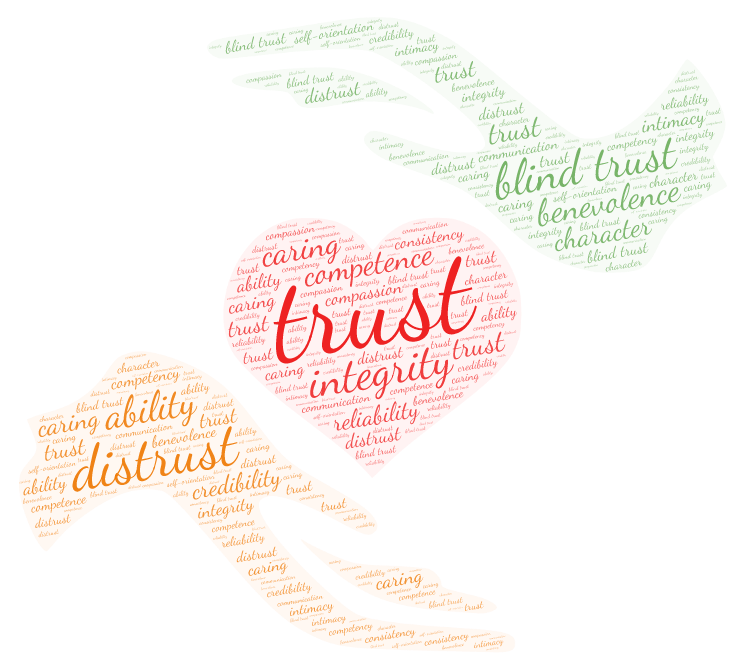
trust, blind trust, distrust, integrity, benevolence, ability, competence, character, caring, credibility, reliability, intimacy, self-orientation, communication, compassion, caring, consistency, competency,
Trust

Trusting Divine Presence, trusting myself & trusting others

As much as I would like to say that my journey back to trust began with trusting Divine Presence in my life, that’s not the truth of my journey. My transformation started with an exploration of self-awareness for personal growth, and spiritual healing occurred after learning and personal development.

The first step back to trust was:

Know thyself.

In noticing my patterns of distrust and blind trust, I could explore what healthy trust means. Emotional and spiritual healing have come together as I worked with forgiveness of myself and others.

My trust in the Divine grows as I let go of my need to micro-manage and control every tiny detail. And in living in the Spirit, I trust my insight and intuition to build relationships with others.

What does it mean to trust me, others and Divine Presence?

Divine Presence, the elements of trust, apathy, withdrawal, dissociation, distrust, blind faith, blind trust, healthy trust

The elements of trust

Trust is not something we do from a place of apathy, withdrawal or dissociation. It is active and engaged: trust requires relaxed courage, curiosity, and calm presence. 

According to Grant Soosalu & Marvin Oka, in their book mBraining, they identify the four elements of trust (learning to trust yourself):  

  • Communication
  • Compassion
  • Consistency
  • Competency

Other authors and writers similarly identify the basic requirements of trust as: 

  • Competence
  • Character
  • Caring
  • Credibility
  • Reliability
  • Intimacy
  • Self-Orientation
  • Integrity
  • Benevolence
  • Ability

These authors point towards the same essential characteristics and requirements of trust. As difficult as it is, I have tried to group these together in a simple explanation:

Communication:

  • Is all about listening as well as sharing
  • As Covey says: “Seek first to understand, and then to be understood”
  • To build trust, it’s necessary to voice your wants, needs, desires and motives. It’s okay to have self-interest, but be open about what those interests are

“intimacy refers to your willingness to share appropriate information about the things that truly matter.”

Diana Gabriel, The 4 Components of Trust

Heart – Intimacy, Benevolence, Compassion & Caring:

  • Trust begins when we are open & transparent – even with ourselves
  • It is recognising my value and the value of others, leading to genuine empathy & understanding
  • Clear & heartfelt commitment to my personal wellbeing and the wellbeing of others
  • Only then can we build trusted relationships

Actions – Consistency & Character:

  • In order to build trust, there has to be congruence and alignment between what I say and do! This applies as much to promises I make to myself as what I promise others.
  • Predictable, reliable, & full of integrity
  • Loyalty, honour & duty
  • Respect and selfless service
  • Oriented to values and the vision – not just selfish interest
  • Clear set of principles, so you can be on the same wavelength
  • Can be counted upon

Ability – Competency & Credibility:

  • Mastery – skilled & knowledgeable
  • Has a domain of expertise and performs their functions well
  • Will speak up and give their point of view on the matter at hand from a point of knowledge
  • Stays current & up to date
  • Self-assured in their competence
  • Demonstrating progress towards goals


Emotional and spiritual healing: rebuilding trust 

When I look back at boarding school and these four qualities of trust, I find those in authority sorely lacking. If they had known better, they would have done better. But they lacked communication skills; they were authoritarian rather than compassionate. When I look at their actions, looking for consistency and character, I find them predictable, but I couldn’t count on them. They were not always congruent in what they said and did, as the rules did not apply equally to all. Perhaps worst of all, they were not skilled and knowledgeable, although they believed themselves to be.

We were left with an expectation of blind faith and trust in authority because the essential elements of a healthy trust were missing.

self-awareness, self awareness, building relationships, trust, authority, blind faith, qualities of trust, communication skills, compassion, consistency, character

Self-awareness

I now recognise that I have a proactive role in building relationships: I listen to the desires of my heart and trust my gut. I stay engaged and curious, rather than withdrawing. Instead of seeing myself as helpless and needing to be rescued, I recognise that I must play a part in building my future.

True faith is an inner alignment with yourself and with God. It’s a balance of trusting the universe to provide and doing your part to co-create with the Creator.

Jim Tolles “The problems with blind faith”

Letting the Infinite flow in my life: rebuilding trust

The road back to faith, trust and hope is uneven and rocky. Sometimes, it’s the procession of three steps forward and two steps back as I fall into habitual patterns of blind trust or distrust.

I am learning to communicate and listen. As I consistently practise the presence of the Divine in my life, I hear the small, still voice of Spirit. It requires that I quiet my mind – that I sit in Silence and allow my heart to be still. It’s a daily practice in which my mastery builds up each day.

I have to choose to be open and transparent; it doesn’t happen naturally. There are times I want to shut down, and I have to make a conscious choice to be vulnerable and compassionate. When I commit to building relationships with myself, others, and the Divine, trusting relationships open up for me.

I sit in the Silence each morning to reconnect and refill my heart with the faithful love of Divine Presence, for I trust in Divine Love.
Each morning I listen to how I should walk and allow my Spirit to submit fully to Spirit

Ps. 143: 8

My understanding of what it means to rely on the Divine entirely has changed: it is no longer helplessness. I am not frozen in fear, unable to think logically or approach life with curiosity. I’m not keeping myself safe by being emotionally disengaged or apathetic. Instead, I am choosing to be fully present and connected.

From this place, I still choose trust, faith and hope.

Place your trust in the Eternal; rely on the Divine completely;
never depend upon your own ideas and inventions.
Give the Great Creator the credit for everything you accomplish,
trusting that Divine Love will smooth out and straighten the road that lies ahead.

Prov. 3: 5-6

Other posts your might find interesting on Blind Faith:

Divine Presence, trust, distrust, blind faith, blind trust, rebuilding faith, hope