Faith,Love Thy Neighbour,Social justice,growth,living with purpose,living in truth,Integrity,spiritual transformation,Love Your Neighbor,fruit of the Spirit,power of prayer,spiritual worship,practicing presence,kindness,time management,self-control,spiritual discipline,emotional intelligence,

Teaching to Fish: Faith, Justice, and Growth today

A few weeks ago, in a message titled “Living with Truth,” we looked at Amos 8 and Psalm 15, seeing how God despises exploitation and steadies those who live with integrity. We saw that an upright heart is not just a moral ideal, but a firm foundation in a shifting world. Today, as we turn our gaze once more to the prophetic words of Amos, and the poetic truths of Psalm 113 and 1 Timothy 2, we are invited to go even deeper. We are called to see God’s heart for justice not merely as a set of ethical rules or a social program to be enacted, but as a profound act of spiritual worship—a natural, unavoidable overflow of a life lived in His divine presence.

From Presence to Practice: Living a Life of Justice

Consider a scene right here in Panama City: A maid earns about $450–$650 a month. Her days are defined by a quiet, relentless rhythm—hands calloused from brooms, mops and detergents, a body weary from endless tasks. Her labor is a testament to her strength, but her circumstances hold her captive.  If she spoke English, her reality could be transformed by a new opportunity: a job with foreigners, offering higher wages and new possibilities. In some cases, the opportunity to work in a business, not just a home.

On the surface, this is a beautiful story of economic mobility. But what if it’s also a story of a deeper, spiritual transformation—a journey from being overlooked to being fully seen, from feeling defeated to embodying the dignity with which God created her? This new role could be the stepping stone she needs, a way to move into an office position and grow professionally.

We are called, above all, to love our neighbor as ourselves. But sometimes, in our well-intentioned outreach, we stop at handing out fish—a meal, a bag of clothes, temporary aid. We address the immediate symptoms of poverty without looking to the root cause. What if God is calling us to a deeper form of love—not just to teach our neighbors to fish with practical skills, but to teach them to live by the Spirit? To live with the Fruit of the Spirit—love, joy, peace, patience, kindness, goodness, faithfulness, gentleness, and self-control? Practicing God’s presence in our work, in our relationships, and in our communities is how we truly empower others, for it is in our spiritual overflow that we find the capacity to reflect His heart and lift the lowly from the dust to dignity.

Let’s explore how the virtues of justice, the power of prayer, and the grace of reconciliation are not just things we do, but things that grow from a place of deep spiritual worship, transforming minimum-wage struggles into futures of hope.

Faith and Finance: Practicing Presence in the Economy

Amos 8 delivers a searing, prophetic warning to those who “trample the needy” with dishonest scales, exploiting the poor for something as trivial as a pair of sandals ($2.50 in those days, according to some commentators).

Faith,Love Thy Neighbour,Social justice,growth,living with purpose,living in truth,Integrity,spiritual transformation,Love Your Neighbor,fruit of the Spirit,power of prayer,spiritual worship,practicing presence,kindness,time management,self-control,spiritual discipline,emotional intelligence,

This wasn’t just a business crime; it was a profound spiritual betrayal. It was a failure to see God’s image in the very people they were exploiting. In their relentless pursuit of profit, they created a moral and spiritual gap—a chasm between themselves and those they were created to love. They lost the ability to practice God’s presence in their transactions, turning human beings into commodities.

Contrast this with the story of Dan Price, the CEO of Gravity Payments, who in 2015 made a startling decision. He slashed his own $1 million salary to ensure every employee, from the lowest-paid clerk to the most experienced developer, earned at least $70,000. This man is not perfect, but his business model has shown us it’s possible to build a business to foster employee well-being.

We see this emphasis not as a clever business strategy; But an act of profound spiritual integrity. It becomes an outward expression of a heart that was practicing generosity and kindness, where a side-effect is a flourishing company which far outweighs the financial cost. We can model our business on what it means to truly love your neighbor as yourself in a corporate setting. This decision isn’t just about money; it’s about dignity and mutual respect.

In a similar fashion, Fundación Microfinanzas BBVA provides training and micro-loans to women who would never be able to access traditional bank loans. Their stories of success are not just about a loan, but about a woman who used that small loan to start a sustainable business—a local market stall, a small bakery, a sewing business—and became a pillar in her community.

These stories show us that when we act with integrity and love, we create opportunities for dignity and self-sufficiency, turning a simple loan into an instrument of God’s grace. It is a powerful example of how a practical business model can be an expression of spiritual conviction.

From Dust to Dignity: Living the Fruit of the Spirit

Psalm 113 paints a glorious, almost unbelievable, picture of God. He is “enthroned on high,” yet He “stoops down to look” at the heavens and the earth (Psalm 113:4-6). This is the great paradox of God: He is infinitely high, yet He condescends to be intimately involved in our lives. The Psalm continues this breathtaking thought: God raises the poor from the dust and seats them “with princes” (Psalm 113:7-8). This isn’t just a metaphor for a better life; it is a spiritual truth. Justice is a form of worship, an act of love that mirrors God’s own heart, transforming our neighbors from being forgotten to being honored.

Faith,Love Thy Neighbour,Social justice,growth,living with purpose,living in truth,Integrity,spiritual transformation,Love Your Neighbor,fruit of the Spirit,power of prayer,spiritual worship,practicing presence,kindness,time management,self-control,spiritual discipline,emotional intelligence,

In Panama City, CAPTA, a program by Fundación Calicanto, empowers marginalized women. Their training focuses on vocational skills, but the true transformation happens on a deeper level. It is a work of building self-esteem and confidence—a rebuilding of the inner person. This is where the spiritual and the practical beautifully intersect.

From a spiritual perspective, we can see that the professional skills they teach are not merely a checklist for a job; they are an invitation to live with the Fruit of the Spirit. They are a spiritual path in themselves.

Think about it:

  • Professional communication becomes an act of kindness and gentleness, a way of building up instead of tearing down. It’s an expression of inner peace that makes our words steady and our intentions clear.
  • Time management becomes a practice of peace and self-control. It is a spiritual discipline that brings order to chaos and frees us to be present in our work.
  • Emotional intelligence becomes a manifestation of love and patience. It is an acknowledgment that our neighbor’s struggles are real and that we can meet them with empathy.
  • Dress code becomes a reflection of self-worth and inner dignity. It is a way of honoring God by honoring the temple of the Holy Spirit.

By teaching these, we are not just preparing someone for a job; we are teaching them to practice God’s presence in every part of their lives, transforming the exploited poor into Psalm 113’s princes.

Prayer in Action: Aligning Our Hearts with God’s

1 Timothy 2 urges us to pray for all people, especially those in authority, so that we may live “peaceful and quiet lives in all godliness” (1 Timothy 2:1-2). This is not a call to be passive; it is a call to be grounded. Prayer is not a passive wish; it is an active alignment of our hearts with God’s will. It is the fuel for our action.

Daniel’s life is a perfect example. He prayed faithfully three times a day in exile, facing the threat of the lion’s den, yet his prayer life was the spiritual foundation that allowed him to maintain his integrity and influence kings. His prayers weren’t just an escape from his circumstances; they were a way of maintaining his relationship with God, allowing him to be a transformative presence in a pagan nation.

In Haiti, SALT Microfinance is a powerful, modern example of prayer leading to action. They blend savings groups, vocational training, and Bible teaching in a holistic approach to empowerment. A testimonial from a woman named Elashe shows how a small loan helped her start a small store, a business that grew so much that she was eventually able to help her children move to the United States to pursue their dreams. This is what happens when prayer shapes our vision, leading to tangible, life-changing results.

Here in Panama, INADEH trains thousands in vocational skills, a tool for breaking the cycle of poverty. Let’s join our Wednesday night online prayer group to lift up the leaders of these organizations and our neighbors in Santa Ana and El Chorrillo.

For our church: Prayer is where empowerment begins, but it should never end there. It should lead us to ask the question: what is God calling us to do? Could we offer a health workshop, teaching nutrition as an act of loving our neighbor with our knowledge? Even if you are unable to teach, you can pray every Wednesday, asking God to guide our leaders and neighbors. This is how we blend faith and action, shaping peace and justice through empowered lives.

Bridging the Divide: The Journey of Reconciliation

1 Timothy 2:5 proclaims Christ as the “one mediator” between God and man. This is the heart of the Christian faith. Justice, then, is His gospel in action, the visible fruit of a reconciled life, bridging the divides of our broken world. The parable of the Good Samaritan is not just a lesson in kindness; it is a story of radical reconciliation. A Samaritan, despised by the Jewish people, crossed ethnic and class barriers to show mercy (Luke 10:25-37), binding the wounds and restoring dignity to a man who had been cast aside. His compassion was an act of grace that mirrored the mediation of Christ.

Faith,Love Thy Neighbour,Social justice,growth,living with purpose,living in truth,Integrity,spiritual transformation,Love Your Neighbor,fruit of the Spirit,power of prayer,spiritual worship,practicing presence,kindness,time management,self-control,spiritual discipline,emotional intelligence,

In Panama, the AES Panamá Foundation trains youth with technical and English language skills. Similarly, WeGrow Panama mentors young women in STEAM fields. These programs are not just about job training; they are about bridging divides and restoring relationships. They create a space where people can see beyond class and background to find a shared sense of dignity and purpose. They are a powerful image of Christ’s work of reconciliation in our city.

No matter how big or small our involvement, this is how our church can build bridges, not walls, across economic and cultural divides. These acts of reconciliation are a physical embodiment of Christ’s mediation, transforming our community with opportunity and hope.

Conclusion: From Being to Doing

Acts 4:32-35 shows the early church sharing so that “no one was in need.” Their community was a testament to justice and accountability. Like SALT’s savings groups or AES’s training, we can empower, not enable.

The true work of justice begins not with a strategy, but with a spiritual posture. It begins by practicing God’s presence in every area of our lives, allowing His love, His kindness, and His peace to flow through us and into the world around us. When we seek Him first, the actions of justice become a natural, beautiful overflow of our hearts.

This is the very essence of what the scriptures we explored today call us to: to be a people who, like the “upright” in Psalm 113, are lifted from the dust of our own spiritual poverty to reflect God’s justice. It is to live with integrity, rejecting the dishonest scales of Amos, and to be grounded in prayer, as 1 Timothy teaches, so that our lives become a visible testimony to God’s love and reconciliation.

My question for you today is not what you will do, but what you will become. How is God inviting you to practice His presence and cultivate His fruit in your life today? How will that inner transformation spill over into an act of love for your neighbor, an act of justice that reflects the very heart of God?
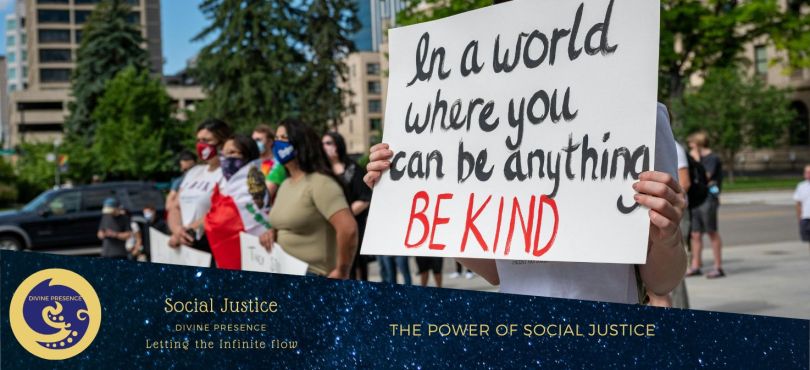
Experience the Power of Social Justice: Living with Truth

Today’s lectionary reading comes from Amos 8: 1-12. It focuses on the karma of those who oppress the poor and the failure to uphold social justice. In a similar fashion, Psalm 15 focuses on the power of social justice and the need for living in truth. 

I’m often uncomfortable with many books of the prophets. Especially those like Amos 8 that start with  words like we find in Amos 8:2.

“The end has come upon my people Israel; I will spare them no longer

It sounds so harsh.

Until you read further and understand the context.

In fact, in many places within the Bible, context is everything. There are actions and there are consequences.

Actions and consequences

Like Newton’s Third Law in physics: for every action, there is an equal and opposite reaction.

So, what caused this outrage and response?

8:4  Hear this, you who trample on the needy, and bring to ruin the poor of the land,

8:5  saying, “When will the new moon be over so that we may sell grain, and the Sabbath, so that we may offer wheat for sale? We will make the ephah smaller and the shekel heavier and practice deceit with false balances,

8:6  buying the poor for silver and the needy for a pair of sandals and selling the sweepings of the wheat.”

So, how did the people of Israel bring about their own destruction?

  1. trampling the needy and bringing the poor to ruin
  2. practicing deceit with false balances
  3. human trafficking and exploiting the poor
  4. selling the sweepings of the wheat (selling substandard or defective goods).

This wasn’t a reflection of how the people of Israel treated other nations, but rather how rotten they were within themselves. It was a reflection of how far their society had fallen, oppressing their neighbours and taking advantage of each other. 

We also find in Psalm 15 another list of practices which lead to social injustice:

  • slandering
  • doing evil to their friends
  • heaping shame upon your neighbours
  • loan sharks
  • taking bribes against the innocent (false imprisonment, bribery and corruption)

So, while in the New Testament there is a lot about personal righteousness, in the Old Testament we find a lot more about the power of social justice and the importance of ensuring a nation of righteousness.

It’s particularly interesting when we see the foundations that were laid down for the nation of Israel.

“However, there should be no poor among you, for in the land the Lord your God is giving you to possess as your inheritance, he will richly bless you.”

Deuteronomy 15:4

Nonetheless, since the people failed to live in the power of social justice that were laid down, the divide grew between the ‘have’s and the ‘have not’s. 

Modern examples of these injustices

It’s not always easy to relate to these verses from the Old Testament, since often what they speak of are practices that we are not familiar with.

So, let me try to provide some modern examples of these injustices:

Trampling the needy and bringing the poor to ruin

Perhaps in our modern age, this is as simple as being dismissed, ignored and dehumanised. Becoming a statistic, rather than being seen as a person.

How often do we deny someone opportunities to grow, simply because their resume or clothes don’t look attractive enough. They are already struggling, but we don’t even provide them with opportunities to grow and change their circumstances, preferring instead to choose someone that already has advantages.

We all know that it takes money to make money. If you have enough money, you can invest in stocks, real estate and other assets that simply provide an income without you working.

The poor, on the other hand, are limited to using their time, skills and labour to make money.

Because of this, the rich get richer and have more opportunities to pursue education, rather than needing to work to take care of their needs.

Even if we consider the impact of something like the 2008 crash, we can see how the banks were bailed out, while the middle and lower class lost their jobs and then their homes when they were unable to keep up the payments for the mortgages. Because of this, many private institutions were able to sweep through and buy up those homes at low cost, which were then rented back to the very classes that had previously owned them.

But who was responsible for the loan crisis and crash? The very banks and investment advisers that later profited from the bailouts and being able to buy up cheap.

This is only one example of how you bring the poor to ruin.

It’s buying up the farmland of farmers, after you’ve squeezed them into not being able to sell their produce at the market.

All of these commonly accepted business practices that we overlook are not overlooked by the heavens. We are asked to love our neighbour as ourselves, and this is reflected even in the way we create laws and manage our economy. 

Practicing deceit with false balances

With electronic scales and everything modernised, it’s hard to imagine the experiences of the past. But as it says in Amos, there were many waiting for the days of the full moon or the Sabbath, so that they could prey on the poor.

They would “make the ephah smaller and the shekel heavier“.

  • The wheat and grain was sold by the ephah (about a bushel or 60 pounds). By making the ephah smaller, the buyer would receive less wheat.
  • The shekel, on the other hand, was the weight used to measure silver and gold. So, by making it heavier, you had to use more gold or silver to pay for your purchases. 

In other words, they were shortchanging the buyer and charging an inflated price.

Even in the online world, where prices are shown to us, there are many ways to charge inflated prices. For example, the price might say “does not include delivery and handling”, and they add an extra $5.00 charge for delivery. It’s even more likely that prices are adjusted on real-time factors such as demand, the time of day, or even location of the buyer. 

Did you press “accept cookies”? Those very cookies might track what you buy, how much you spend and even the frequency of what you look at.

These modern conveniences can influence the prices of what the algorithm believes you can afford and adjust it accordinly. You might never know that the price you are quoted is different from the price others are paying. 

Human trafficking and exploiting in the poor

It was common in the times of the Old Testament to own slaves. It was even common to sell yourself as a slave, to ensure that your family’s debts were paid and that you would have a roof over your head and food to eat.

Nonetheless, in Exodus through Numbers, we see many rules established about these practices, aimed to ensure social justice. One of the principal ones being the “Year of Jubilee“. Every seven years, the slaves that had been purchased had to be released and returned to freedom.

Obviously, the price you would pay for someone in the first year would be much higher than you might be wiling to pay in the last year or the month before the Year of Jubilee.

However, none of this exempted them from paying a fair price. They were not supposed to buy someone just for the cost of a pair of sandals. Even today there are examples of debt bondage in countries like India, Pakistan and Nepal, where people are forced to work just to continue paying off the interest on loans, and don’t even dare to take sick days as the loan amount will increase.

Around the world, there are at least 40 million people in slavery, in spite of slavery having been abolished.

Nonetheless, the exploiting of the poor to keep them working for low wages, whether it be illegal immigrants that are mistreated or other forms of social injustice in wages is rampant all around the world. 

Selling the sweepings of wheat

This is an interesting one that probably needs a little more explanation.  Basically, what would happen as that sellers would mix the chaff of the wheat with the actual wheat being sold, and so they would sell less actual wheat to the consumer.

It’s simply a form of defective goods, as the buyer would not get what they were paying for. 

So, what are some modern examples we might consider?

  • Refurbished or poorly manufactured electronics. often sold with misleading claims about their performance or lifespan.
  • Counterfeit or fake goods
  • Deceptive advertising, packaging or labelling
  • Overcharging our hours or time when selling professional services

We are called to be honest and trustworthy even when we are not being watched and supervised. It’s all about personal integrity in business and dealing with others. 

The outcome of a nation with social injustice

Amos provides a bleak picture of what will befall a nation that has corroded from within.

I will turn your feasts into mourning and all your songs into lamentation; I will bring sackcloth on all loins and baldness on every head; I will make it like the mourning for an only son and the end of it like a bitter day.

Amos 8:10

Worse yet, the country is promised that they will no longer hear the Word of the Lord. Because they have abandoned God, they will no longer be able to hear that still, small voice.

The blessings of social justice

Psalms 15 reminds us that a person, community and nation that focuses on social justice will be blessed.

Those who do these things shall never be moved.

Psalm 15:5

What are “these things”? There are both do’s and don’ts in this list.

What to do?

  • Walk blamelessly and do what is right
  • Speak the truth from their hearts
  • In whose eyes the wicked are despised
  • Honour those who fear the Lord
  • Stand by their oath even to their hurt

What not to do?

  • Do not slander with their tongue
  • Do no evil to their friends
  • Do not heap shame upon their neighbours
  • Do not lend money at interest
  • Do not take a bribe against the innocent

A person that cannot be moved is one that stands strong, no matter what they are facing or how strong the winds and storm. They might be battered, but they will not be knocked over. 

The blessing that awaits is unwavering stability, steadfastness, and an unyielding position in the face of adversity or challenges.

The person and nation that stands strong for social justice refuses to be swayed, shaken, or forced. Instead they have determination, resilience, and a deep-rooted sense of security in their faith. 

This is the promise of the power of social justice and living in truth.

Active forgiveness: how to intentionally practice love

Today, as I look with great sadness at the anger erupting in communities in the United States, I realise that Christian leaders need to stand up and overturn a few more tables within the temple! Obviously, we haven’t overturned the tables of oppression!

Oppression can take so many forms: whether it’s the orphans (or children who are being trafficked), the widows (or human trafficking), the poor, the sojourners/immigrants/foreigners, or someone who you haven’t even recognised as your equal (race, education or any other standard).

The first table that needs to be overturned is the alter on which our individual egos sit.

Ego – that part of us that fails to understand that illness would become wellness if we would replace “I” with “WE”.

The illness of division could be the wellness of unity and cooperation, if we are willing to start within: with an awareness of our own feelings, anger, hatred and division. It is my ego that tells me that I am separate from those in pain.

When I saw the first posts about the events, questions came to mind – even along the lines of “is this another false flag operation” to get people to focus their attention onto something divisive, rather than awakening to creating the world and society in which we wish to live.

But the reality is that these events show the brokenness of the “normal” to which we wish to return.

How is it possibly okay for a white man (just because he has a uniform) to kneel on the neck of another man, already cuffed and in custody, until he stops breathing? Even if this was “created” to divert attention from something else: this requires our collective attention and healing! It is no less oppression, irrespective of the purpose which it serves.

My arrogance: daring to think that I am somehow above these events, says “not my problem”. But that’s not true.

It is exactly my privilege that is the problem!

It’s the fact that this would NOT happen to me that makes me the ideal person to say “something needs to change”. Deep within, I know that it’s time to heal within me the coldness and apathy that say “not my injustice”!

The collective pain

What springs to view with these events is the pain that many are suffering, sight unseen.

Today I read about the father that goes for a walk with his young daughter and the dog because he’s fearful of walking around his neighbourhood alone. I read about the young man being the only person of colour in his school, and constantly being pulled over by the cops, while his friends never received the same treatment.

And I realise that we are called to overturn the tables that allow some to be down-trodden, while others continue to live with privilege.

I’m not saying that I should “lose” my privileges, but rather that they should be the same privileges afforded to every person, regardless of race, creed, or economic strata.

Perhaps we need to learn a little more about restorative justice: the process where entire communities taking responsibility for restoring balance, harmony and the practice of forgiveness.

I’m talking about Ho’oponopono.

“Restorative justice is a philosophy that embraces a wide range of human emotions including healing, mediation, compassion, forgiveness, mercy, reconciliation as well as sanction when appropriate. It also recognizes a world view that says we are all interconnected and that what we do be it for good or evil has an impact on others.”

— “Restorative Justice – The Pacific Way” Paper presented at the 7th International Conference on Prison Abolition; Barcelona, Spain, 17 – 19 May 1995;  by Jim Consedine (see link at the end of this post)

I first learnt about restorative justice in law school in Waikato University, Hamilton, New Zealand.  Thankfully, I was at a very culturally connected law school, where we openly spoke about community justice systems and how the Pākehā system failed to take into account restoration of balance within the community.  It simply punished the offender (like a criminal justice system). 

But the community continued to suffer and hurt: with the criminal justice system, nothing is actually done to restore balance within the community.

Most people only know Ho’oponopono as 4 lines:

  • I love you
  • I’m sorry
  • Please forgive me
  • Thank you

But it’s more than just repeating the mantras… It’s opening up our awareness and emotions.

Ho’oponopono Practice: The Practice of Forgiveness

The origins of the Huna practice known as Ho’oponopono are a community reconciliation process. It is very similar to other Pacific Island restorative processes – which involved entire communities taking responsibility for restoring balance, harmony and the practice of forgiveness when harmony in the community has been broken.

Coming to Ho’oponopono from a lawyers perspective of community justice, I knew that it was so much more than simply 4 lines:

  • I love you
  • I’m sorry
  • Please forgive me
  • Thank you 

Not because I knew anything about the Hawaiian Huna practice itself, but simply because I recognized that there was so much more to restoration than simply saying “sorry”!  It’s much more than sending the “offender” to jail.

Restorative justice means righting the wrong that allows the crime to be committed in the first place. It addresses the question: “Why would four white men consider that it was okay, under any circumstances, to pin a man down under their knee until he stops breathing?”

True healing happens when we allow ourselves to experience what is happening in the community from every angle and clear the pain from every perspective:

  1. the perpetrator (Can I forgive him and his companions? Do I need to forgive myself for any hatred, anger or other feelings against them?);
  2. the victim (Can I forgive what others did to him? Do I need to forgive myself for any prejudice or feelings against him?)
  3. the bystanders (Is there any judgment in my heart against them? Do I feel that they failed in any way?)
  4. the family members (What forgiveness do I need to practice for the family of the victim or the perpetrators?)
  5. others in the community, including the protestors, police, first responders, or leaders (How do I consider that they have failed?)

It’s literally saying… I understand ALL of the pain and frustration – of every person involved and forgiving for each and every one of them for whatever I hold them at fault for. It is a process and quite possibly not something you can do in a single moment.

It begs the question: why were onlookers too afraid to intervene? It asks: “How did we create officers of the law that were so lacking in empathy and awareness, that they failed to hear this man begging and be moved by any compassion?”

be kind, love, forgiveness, ho'oponopono, practicing forgiveness, learning to forgive, I'm sorry, please forgive me, gratitude

Where do we start?

Forgiveness always starts within.

If you’re a Christian and you are moved to pray, then I invite you to start asking to be shown within yourself everything that needs to come to the surface and be dealt with! Before you go praying for peace in Minnesota or Minneapolis, ask to be shown the plank in your own eye that should be removed!

What are the little ways that you are failing to stand up for justice in your community? Where are you unconsciously supporting “the status quo”, rather than overturning the tables of inequality?

It’s so much easier to think that there’s a problem in Minnesota than to acknowledge that there is a problem in my own heart!

Don’t righteously pray to forgive those who are rioting and angrily violent: pray to understand the underlying emotions of that anger and violence, so that it touches your heart. Pray for empathy and understanding.

Yourself.

Hooponopono practice is the practice of forgiveness based on the knowledge that anything that happens to you or that you perceive — the entire world where you live — is your creation.  Whatever you have become aware of that exists in the world, has become your responsibility to set to right.

Everything in your life is entirely your responsibility: 100%. No exceptions.

Please don’t misunderstand what I mean.  I did not say it was your fault.  I said it’s your responsibility

You are 100% responsible for:

  • healing yourself and breaking down the barriers within your beliefs, emotions and fears;
  • changing the relationship you have with any other person of another race, religion or background that you have not been able to fully understand and relate to; and
  • changing your perception of the world, making it possible for you to overturn the tables of injustice.

Before you try to put in order what is wrong “out there in the world”, have a deep look within and see what needs to be put right within your heart.

homesless, beggar, guilt, forgiveness, prejudice, overturning tables of injustice, racism, discrimination
Who needs to feel your love and acceptance?

Ho’oponopono practise is a journey to restore inner peace and balance.  It begins by changing my inner world in order to effect change in the exterior world.

Three steps PLUS gratitude

How can we heal this pain with Ho’oponopono?

I love you

Start simply reminding yourself, regularly and consistently of Divine Love – “I love you”.  “I love you” just as you are today, with mistaken views and perceptions of the world, with perceptions that have not allowed you to grow and change your community, and with all the baggage that you have chosen to carry around.  I love you in spite of your fears and weakness. And because I love you, “I recognise that whatever comes to me in this life is my creation.”

Can you expand the circle of “I love you” to your neighbours?

What about to your whole suburb? Or the suburb next to yours? Can you extend that “I love you” to your town or city? How comfortable are you putting a face on “I love you”? What resistance are you feeling when you say “I love you”? Acknowledge it, so that you can forgive yourself fully.

I’m sorry

Once you recognise love and even those areas of lack of love, you can tell yourself “Sorry”.  Sorry for the errors of thought, words and actions that created those memories and held onto that energy. Sorry for failing to love fully and completely. I’m sorry for not practising unconditional love.

  • What do you need to forgive yourself for?
  • What do you need to ask your neighbour forgiveness for? What are you sorry for?

Don’t just say it: allow yourself to connect with the emotions. Perhaps you feel shame as you say “I’m sorry that I looked the other way” or “I’m sorry when I laughed nervously when someone said something rude to you, because I was too weak to stand up to them for you.”

Allow yourself simply to feel what needs to be felt. What you resist, persists in your life. If you fail to acknowledge what you are feeling, you cannot forgive yourself for it.

Please forgive me

It’s not just about asking for forgiveness: the miracle happens when you give yourself permission to release the burden you’ve been carrying. Forgiveness is about letting it go.

It’s impossible to turn over a new leaf unless we are willing to allow the old leaf to fall off the tree, decompose and become dust.

Take a moment to imagine a new relationship with yourself and with your neighbour. How will your view of the world change? How will you change your interaction with them?

Thank you

And then, of course, the practice of gratitude – gratitude for the freedom that this brings!  Gratitude for the change in my way of thinking, speaking and acting.  Thank you for the new opportunities this creates.  Thank you for the changes that will start happening in my relationships and how I relate to others.

coming together, building bridges, understanding, compassion, building communities, trust, love

Coming together as a community

Once we have taken care of the sty in our own eyes, maybe we can come together in small community groups and begin to work on this collectively: slowly building the size of the groups that do this together, until we have rebuilt love and trust.

But if we aren’t willing to overturn the tables of the status quo – nothing will change.

I invite you to join me on this journey of discovery – where we can learn together what it means to heal the world and restore balance to hurting communities, by starting within.