

justice, Shekinah, practicing presence, glory of the Lord, glory of God, light, shining

A river of justice

Readings:

  • Joshua 24: 1-3; 14-25
  • Amos 5: 18-24

5:24 But let justice roll down like waters, and righteousness like an everflowing stream.

As you walk out of Church today, what will have changed? What difference will it have made to come to church this morning and worshiped God?  What does choosing God, rather other gods, mean today? How does worshiping God change our lives?

Noris read for us this morning Amos, chapter 5, verses 18 to 24. I want to re-read those to you now, from the version “The Message”:

18-20 Woe to all of you who want God’s Judgment Day!
    Why would you want to see God, want him to come?
When God comes, it will be bad news before it’s good news,
    the worst of times, not the best of times.
Here’s what it’s like: A man runs from a lion
    right into the jaws of a bear. …
At God’s coming we face hard reality, not fantasy—
    a black cloud with no silver lining.

21-24 “I can’t stand your religious meetings.
    I’m fed up with your conferences and conventions.
I want nothing to do with your religion projects,
    your pretentious slogans and goals.
I’m sick of your fund-raising schemes,
    your public relations and image making.
I’ve had all I can take of your noisy ego-music.
    When was the last time you sang to me?
Do you know what I want?
    I want justice—oceans of it.
I want fairness—rivers of it.
    That’s what I want.
That’s. All. I. Want.

God’s anger in Amos was because the religious festivals were not followed up by just actions. God gave the means to reverse the people’s systems of injustice, to end inequity and oppression. But the river of people who were supposed to flow out of the temple (like when we all leave this Church this morning) to fulfill God’s promises walked out of the temple and did nothing.

You were given arms that can reach out to those who suffer: who are those arms wrapped around? Yourself? You were given feet to take the first steps towards those who feel alone, afraid, oppressed: where are your feet planted? In your comfortable life? You were given ears to hear the stories of justice denied: are you listening? You were given a mouth to speak Truth: but words are used to harm and tear down, rather than to build, and certainly not to speak Truth!**

Thursday, November 9th many Panamanians waited expectantly for a reveal of names and details regarding the Obredecht corruption cases. A nation waiting and hoping for justice to prevail and corruption to set a food on the proverbial banana skin and the other foot in the grave. It wasn’t enough.

This brings to mind, for me, Proverbs 24: 24

Whoever says to the guilty “You are innocent” will be cursed by peoples and denounced by nations.

All I read on Twitter & Facebook is frustrations and cursing of the lack of action and lack of justice. What more can and should be done? Panama needs to restart and rethink fighting corruption from a grassroots level. It needs to start in the home. Social justice and righteousness are needed from each person and member of society. And for us, it starts as we walk out of Church today. Worshiping God is not just about what we do for one hour on Sunday morning. Worshiping God is in each thought, each word & each deed.

1 John 4: 20 through 5:3  remind us:

20 Whoever claims to love God yet hates a brother or sister is a liar. For whoever does not love their brother and sister, whom they have seen, cannot love God, whom they have not seen. 21 And he has given us this command: Anyone who loves God must also love their brother and sister.

5:1 Everyone who believes that Jesus is the Christ is born of God, and everyone who loves the father loves his child as well. This is how we know that we love the children of God: by loving God and carrying out his commands. In fact, this is love for God: to keep his commands. …

How do we love our brother and sister? Well, let me warn you, it’s not sentimental. It’s not that “feeling” of love. It’s about your actions -and they speak much louder than any words. John warns us about this: “we know that we love the children of God: by loving God and carrying out his commands. In fat, this is love for God: to keep his commands.”

Let’s take a quick walk through the Bible and discover the ways we show love to our neighbours – children of God – all created, like you and me, in the image and likeness of God:

Leviticus 19: 9-18 

When you reap the harvest of your land, you shall not reap your field right up to its edge, neither shall you gather the gleanings after your harvest. And you shall not strip your vineyard bare, neither shall you gather the fallen grapes of your vineyard. You shall leave them for the poor and for the sojourner: I am the LORD your God.
You shall not steal; you shall not deal falsely; you shall not lie to one another. …
… The wages of a hired worker shall not remain with you all night until the morning. …
… You shall not go around as a slanderer among your people. …
You shall not hate your brother in your heart, but you shall reason frankly with your neighbor… ou shall not take vengeance or bear a grudge against the sons of your own people, but you shall love your neighbor as yourself: I am the LORD”

Proverbs 29: 7 

The righteous care about justice for the poor…

Isaiah 1: 17 

Learn to do right; seek justice.
    Defend the oppressed.
Take up the cause of the fatherless;
    plead the case of the widow.

Isaiah 58: 6-7 

… this is the kind of fasting I want: Free those who are wrongly imprisoned; lighten the burden of those who work for you. Let the oppressed go free, and remove the chains that bind people.  Share your food with the hungry, and give shelter to the homeless. Give clothes to those who need them, and do not hide from relatives who need your help.

Jeremiah 22: 3 

… Do justice and righteousness, and deliver from the hand of the oppressor him who has been robbed. And do no wrong or violence to the resident alien, the fatherless, and the widow, nor shed innocent blood in this place.

Matthew 6: 14-15 

For if you forgive others when they sin against you, your heavenly Father will also forgive you. But if you do not forgive others their sins, your Father will not forgive your sins.

Matthew 25: 35-36

For I was hungry and you gave me something to eat, I was thirsty and you gave me something to drink, I was a stranger and you invited me in, I needed clothes and you clothed me, I was sick and you looked after me, I was in prison and you came to visit me.’

Romans 14: 13

Therefore let us stop passing judgment on one another. Instead, make up your mind not to put any stumbling block or obstacle in the way of a brother or sister.

Galatians 6:2 

Carry each other’s burdens…

1 Thessalonians 5: 11

… encourage one another and build each other up…

1 Peter 3: 8

be like-minded, be sympathetic, love one another, be compassionate and humble.

I want us to imagine, just for a moment, a world in which all Christians lived according to all these rules and fulfilled these commands. In Joshua 24 we read how the people of Israel chose to follow God and follow his commandments. What would this look like for Christians? Let’s take a moment, just to imagine this:

  • no sexual harassment
  • no hunger
  • everyone paid a fair wage
  • no slander
  • no hate, no vengeance, no grudges
  • justice for the poor
  • oppressed people who are defended vigorously, fatherless children who are protected, widows who have someone standing up for them
  • no one wrongly imprisoned
  • no human trafficking or slavery
  • the homeless living in proper shelters, the hungry given food
  • relatives receiving hep from their families
  • no wrong or violence against the immigrant
  • no innocent blood shed
  • forgiving others graciously when they make mistakes, even if they intentionally act wrongly
  • strangers invited in
  • sick cared for
  • those in prison visited and encouraged
  • no one passing judgement on you

This is justice rolling down like waters. This is an ever-flowing stream of righteousness! This is loving your neighbor and loving God.

As we go out today, let us remember this promise from Psalm 106: 3

Blessed are those who act justly, who always do what is right.

Always. It’s such a big word.

So, as we leave this Church this morning, may we be a small stream of water, a trickle in the giant ocean of injustice… going against the tide and shining our light in this world of darkness.


**https://www.reformedworship.org/article/june-2014/just-amos
 

Sermon: Abundance of Grace

How many of you are awake this morning?  I’m looking for a show of hands here…

How many of you were awake while Betsy read the 7 verses from Romans 5: 12-17?  English Standard Version.  It seems amazing that the entire message of the Bible, from Genesis to the end,  is found here, all summed up neatly in seven verses.

If you all understood it, I don’t need to give you this sermon, and we can go straight to the offertory (we’ll skip the prayers) and then head downstairs to the coffee break.  How does that sound?

How many of you think you don’t need to hear this sermon?

How many of you think you can stay awake until I finish the sermon?

We’ll see how you all go with that, shall we?  …

This morning I’m going to take you on an intellectual (read: scientific journal mumbo jumbo), winding maze through one of the toughest texts that I’ve ever had to prepare for.

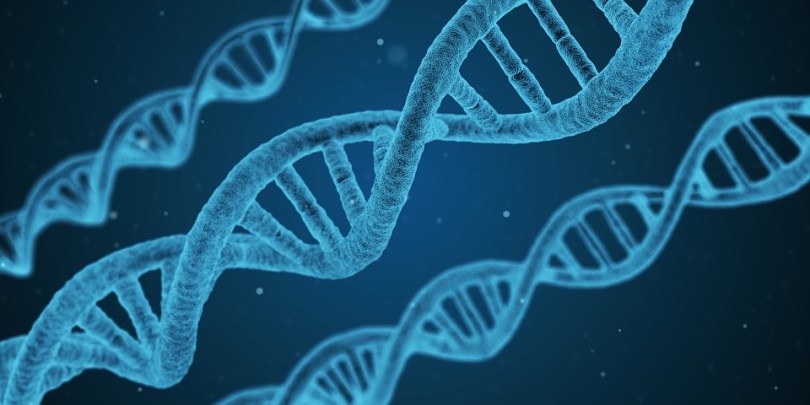
I am going to try to give you an explanation that you can hopefully understand…  although I am going to rely a bit on my high-school science as it relates to DNA sequencing in the human body and a very basic knowledge of NLP (NeuroLinguistic Programming).

I want to start with the idea of the “Original Sin” and the effect of that “Original Sin” on mankind and how that is passed down from generation to generation.  Verse 12 of Romans 5 starts with

“just as sin came into the world through one man, and death through sin, and so death spread to all men”

We’ve all been taught that Adam had everything he needed to live eternally, but that because of his sin in the garden of Eden, life becomes finite instead of infinite – death enters the world.

And I want to add to that mix the verse from Exodus 34:7 (ESV) that says:

Keeping steadfast love for thousands, forgiving iniquity and transgression and sin, but who will by no means clear the guilty, visiting the iniquity of the fathers on the children and the children’s children, to the third and the fourth generation.”

And I’ve wondered to myself how that might be possible on a molecular and physical level – can science explain what the Bible says happened to Adam because of sin and to all mankind, through the passing of the sin from generation to generation?  How does Adam’s bad nature get down to me all these millennia later? Well, some say, it’s like pollution or poison poured into a river. If a company dumps hundreds of liters of mercury into a river, then no matter how far downstream you go, you still get mercury poisoning.

Now – today I’m not going to give you a definition of sin – or even discuss what Adam’s sin was – trying to become like God, transgressing the Commandment God gave him, or whether sin is simply missing the mark of the most perfect version of yourself that God created you to be (like the archer that fails to hit the target).

What I want to look at is the effect that sin has upon us, as a human race, and then briefly touch about the gift of Abundance of Grace that we are promised in Romans 5: 17.

Our bodies have 3 billion genetic building blocks, or base pairs, that make us who we are. And we are somewhere between 99.5 to 99.9% similar to the person next to us.  A printed version of your entire genetic code would occupy some 262,000 pages! Of those pages, only some 500 would be unique to you. So how much of that do you think you inherited from 20 generations back?  How similar does that make you to the person sitting behind you?

And it seems that in 2017, scientists are getting closer to having the answers as they study the effects of stress and life-styles on our DNA codes and sequencing.  And now it seems that there is a reason for this, on 2 levels: epigenetics and the shortening of our telomeres (the protective casing at the end of a strand of DNA).   The field of epigenetics refers to the science that studies how the development, functioning and evolution of biological systems are influenced by forces operating outside the DNA sequence, including intracellular, environmental and energetic influences (and by energetic, I also mean the emotional forces that affect our bodies organs, such as when we get angry, are upset, or stressed and tired, especially for long periods of time).

Since the 1970s, researchers had known that the tightly wound spools of DNA inside each cell’s nucleus require something extra to tell them exactly which genes to transcribe, whether for a heart cell, a liver cell or a brain cell.

One such extra element is the methyl group, a common structural component of organic molecules. The methyl group works like a placeholder in a cookbook, attaching to the DNA within each cell to select only those recipes —  genes — necessary for that particular cell’s proteins. Because methyl groups are attached to the genes, residing beside but separate from the double-helix DNA code.  Originally these changes were believed to occur only during fetal development. But it has already been shown that DNA can be added to in adulthood, setting off a cascade of cellular changes resulting in cancer, diabetes or other illnesses.  Not only that, but epigenetic change could be passed down from parent to child, one generation after the next (hence you find the reference in the Bible that the sins of the fathers are passed down to the son to the third and fourth generations). A study from Randy Jirtle of Duke University showed that when female mice are fed a diet rich in methyl groups, the fur pigment of subsequent offspring is permanently altered. Just by playing with the diet, they could alter the colour of the fur of the mice.  Now, what if emotions, such as guilt, could play a similar role?

The medical field has already shown that stress has this particular effect.  Telomeres are a protective casing at the end of a strand of DNA. Each time a cell divides, it loses a bit of its telomeres. An enzyme called telomerase can replenish it, but chronic stress and cortisol exposure decrease your supply. When the telomere is too diminished, the cell often dies or becomes pro-inflammatory. This sets the aging process in motion, along with associated health risks.

Now we all know that old wives tale that tells a young pregnant woman not to cry during the pregnancy because her child will bear the effects of it through their entire life – but now science is beginning to understand that the negative effects of stress begin before conception.  A baby’s intrauterine environment is shaped by a mom’s pre-existing physical health. There have also been several studies looking at maternal health and telomeres in offspring: the higher a mom’s prenatal anxiety, the shorter the baby’s telomere length (i.e. the shorter the life span).

According to the new insights of behavioral epigenetics, traumatic experiences in our past, or in our recent ancestors’ past, leave molecular scars adhering to our DNA. Jews whose great-grandparents were chased from their Russian shtetls; a child whose grandparents lived through the ravages of a Revolution; young immigrants whose parents survived massacres; anyone who grew up with alcoholic or abusive parents — all carry with them more than just memories.

So what on earth does any of all this scientific mumbo jumbo have to do with the “Original Sin”, and Paul’s discussion of the original Adam and the posterior Adam (Jesus)?

Well, for starters – it explains how our genetic make up is affected by our habits, our environment, our diet, our stress, and even the stress and anxiety of being ashamed, berating ourselves, or failing to accept God’s forgiveness of our sins.  It explains how any resentment, bitterness or anger that we carry towards another person, when we fail to forgive, affects us to the most innermost of our being as David describes in the Psalms.

1. Your beliefs influence your behavior.  

One of the most basic ways that beliefs can shape reality is through their influence on behavior—no quantum physics or molecular genetics knowledge required.  Beliefs about your basic character—who you are as a person on a fundamental level—can be especially powerful. Research suggests that while guilt (feeling that you did a bad thing) can motivate self-improvement, shame (such as that felt by Adam & Eve in the garden), tends to create a self-fulfilling prophecy, reducing hope and undermining efforts to change, leaving you stuck in the rut of the very behavior you are ashamed of.

And your behavior will directly impact you with respect to your habits, whether they are good habits, or bad habits.

2. Your feelings directly affect your DNA:   

“When we have negative emotions such as anger, anxiety and dislike or hate, or think negative thoughts such as ‘I hate my job,’ ‘I don’t like so and so’ or ‘Who does he think he is?’, we experience stress and our energy reserves are redirected,” and I’m not talking about a positive redirecting. Part of our energy reserves, which otherwise would be put to work maintaining, repairing and regenerating our complex biological systems, which you probably know as your “body”, are used to confront the stresses these negative thoughts and feelings create, leaving your body unattended.

On another level, science is now beginning to understand that humans have multiple brains: the one you know in your head, your heart brain (which generates much of your energy field), and your gut brain.  So, when you are feeling heavy-hearted, what effect is this physically having on your DNA and body – how is it affecting the helix structure of your DNA strands?  When you are in a gut-wrenching panic or suffering constant anxiety, what effect is this having on the nutrients that are getting to your cells and DNA on a molecular level?

3. You may choose, or not, to accept the abundance of God’s grace:   

The entire Bible is about the transformation of man… having been made perfect, having become imperfect, and having reached perfection once more in the person of Jesus Christ.  Having loved perfectly: God and others – fulfilling the 2 greatest laws of the Bible:  To Love the Lord your God with all your heart, soul, mind & strength, and to love your neighbour as yourself.  And how Jesus came to make the way for us to become perfect also in Him, breaking the curses so that they are no longer passed down to future generations, allowing us to re-write the code and become truly transformed, by the renewing of our mind (which will, of course, affect our bodies and even down to our DNA).

There is only one question:  are you willing to allow God’s grace to truly sweep through your life and transform you: To practice abiding in His presence on a daily basis until you reach a level of peace that transcends all human understanding, guarding your heart and mind in His love? 

Let’s pray.


Sources and further reading: