5 Ways to Reflect the Spirit of Jesus’ Birth in your Life

When we look at the life and death of Jesus there are many lessons that stand out. But today, I invite you to reflect on these 5 ways that you can practice the presence of Spirit in your life, based on Jesus’ birth.
Revised common lectonary, luke, hebrews, jesus' birth, Christmas, spirit, divine presence, presence of spirit

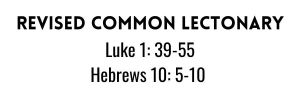
Today’s reading from Luke demonstrates to us the joy and rejoicing of Mary and Elizabeth, as well as John the Baptist’s reaction to first meeting Jesus while in the womb.

We’re told that Elizabeth was filled with the Holy Spirit immediately.

These are the first two ways that we reflect the spirit of Christmas and Jesus’ birth in our lives:

  • Rejoicing
  • Filled with the Spirit

Rejoicing in the Christmas Spirit

If only it were as easy as I make it sound. Rejoice!

Many try to imitate this Christmas spirit with dopamine and serotonin substitutes:

  • Shopping sprees
  • Parties
  • Giving gifts
  • Novelty: Loads of new toys and things to do

All of these mimic that feeling of rejoicing, but once Christmas is over and we enter the New Year, we slump. They were just substitutes for true joy.

True joy, on the other hand, is from the inside out. Mary responds to Elizabeth’s greeting with these words: (1:47)

my spirit rejoices in God my Savior

This is a spiritual joy, not a dopamine rush. It’s not dependent on circumstances or the latest buzz.

Before this, however, we read that Mary proclaims:

My soul magnifies the Lord.

In order to reach this level of spiritual joy, Mary focused on praise and worship. What is your focus and praise?

Where attention goes, energy flows.

Where is your focus? Does this create spiritual joy for you? 

Filled with the Spirit

Secondly, as I mentioned, Elizabeth was filled with the Spirit. She had a moment of enlightenment as she spoke to Mary and blessed her. 

But the fruit of the Spirit is love, joy, peace, patience, kindness, goodness, faithfulness, gentleness, self-control… (Galatians 5: 22-23)

Is your spiritual focus on being filled with the Spirit and growing these fruit as a natural outcome of your spiritual practice?

When you squeeze a lemon, you get lemon juice. If you are squeezed and pressured in life, what naturally flows out of you?  Is it love, joy, peace and patience?

It’s when you are under pressure that you naturally see what fruit you have.

And the spirit of Christmas calls us to be filled with the Spirit.

The purpose of Christ’s coming

The final three ways that we can reflect the spirit of Jesus’ birth in our lives are all related to the purpose of Christ’s coming to this world. 

Hebrews 10 mentions that sacrifices and burnt offerings are not what the Creator desires to see from us. Jesus also said that he had not come to  do away with the law or change it, but to fulfill it.

And yet, our sacrifices and burnt offerings are not what is desired. So, what does the Creator desire from us?

Love the Lord thy God…

Love the Lord your God with all your heart, with all your soul, and with all your mind, and with all your strength.

Mark 12: 30

So, what is your heart set on? What rules your emotions and feelings? Neuroscience tells us that our heart governs our desires. It’s not a rational thought governed from the mind – but rather something that is felt and hoped for. 

But our mind and thoughts are also covered by this rule to Love God. It’s not just with your heart, but also with your mind. Are your thoughts governed by your love for God? What do you spend all your time thinking and worrying about?

As I said above, where attention goes, energy flows. Is your attention placed on your love of God?

Once again, we are called to love God with all our soul – it’s a spiritual love of God, not just thoughts and feelings.

Finally, there’s a physical love of God: what we actually do. Do your actions reflect your love of God?

This takes us naturally into the second part of Jesus’ teaching:

Love your neighbour…

The second is this: ‘You shall love your neighbor as yourself.’ There is no other commandment greater than these.

Mark 12: 31

The first commandment is to love God, and the second ones tells us to love others as much as we love ourselves.

The spirit of Christmas often shows up in churches and communities as giving to those less fortunate than us. Especially in colder climates, where the homeless battle extreme cold, Christmas is a time for sharing basic necessities and life-saving goods. 

But as you reflect on this season, how will you express your love for others and those around you?

As Jesus taught us, your neighbour can be anyone, including marginalised social groups or immigrants.

Thy will be done…

Perhaps the biggest challenge of the season is to accept that the real message in Christ coming to earth is these four words:

Thy will be done…

We read this in the text from Hebrews, where the author tells us

I have come to do your will…

It’s not about offerings and sacrifices, but understanding the Creator’s will in your life. Not looking at how this is expressed for the person sitting beside you, but rather accepting that your life has a plan and a purpose.

Exclusively yours.

How will you fulfill this purpose?

Are you willing to look at what this purpose for your life is and then put all of your heart and soul into living with purpose?

Is your daily prayer: “Thy will be done”?

It’s easy to get caught up in plans and executing good ideas. But are those good idea a reflection of the Creator’s will for your life? Are you in alignment with your purpose?

When you tune into your heart’s desire, what do you heart? Is your heart’s desire to live your best life for yourself? Or are you willing to focus your energy on letting your heart’s desire be what God has for you?

When you take action, who guides and leads those actions?  What is the driving motivation behind you?

Reflecting the purpose of Christmas in your life

So, in these coming days, I invite each and every one of us to delve into:

Rejoicing in a life filled with the Spirit, where your heart, mind, soul and strength are focused on loving God and your neighbour as yourself. In this way, saying “Thy will be done” starts to come naturally for each of us. 

Divine wisdom shepherds me, peace, abundance, love, a time of turmoil, the valley of the shadow of death, comfort, psalm 23, psalms 23, the Lord is my shepherd, I shall not want, green pastures, still waters,

Peace, abundance and love in a time of turmoil

I took a moment today to reread one of my posts from ten years ago: The Lord is my shepherd. It was a collection of thoughts about Psalm 23 and what it means to feel safe in the presence of God.

For these last ten years, I’ve come to understand that our English Bible translation uses “the Lord” as the standard translation wherever the original used YHWH. I’ve distanced myself from the idea of God being a man sitting Santa-like on his sky-throne.

Somehow distant and looking down on us all – rather than Spirit and in each and every one of us. Over these past 22 months, I realise that what has kept me going strong is the Divine presence of inner peace, abundance, and compassion, despite living in a time of turmoil.

So, today I want to share my thoughts on what it means to allow the Infinite to flow through us as Divine Wisdom, peace and love, taking thoughts and ideas from Psalm 23.

Divine Wisdom shepherds me

One of the things about sheep and shepherds is that the sheep get used to the shepherd because the shepherd lives with them twenty-four hours a day. They recognise the shepherd by the sound of their voice and the scent.

And so, as I learn to live in the presence of the Divine, I learn to listen to that still, small voice of Divine Wisdom. It’s often hushed, although occasionally, I get a brutal shake or prod!

Shepherding is about being led, surrendering to the path of Divine Will, rather than what my ego would have me do. And when I listen and surrender, I recognise that I have everything I need.

Divine Wisdom shepherds me, I have everything I need, abundance, peace, love, compassion, Psalm 23, The Lord is my Shepherd, I shall not want

Everything I need: all the time I could possibly need to get things done, all the love and affection that my heart desires, and all the resources that I need at this moment.

In fact, when I sit with my God Box, which I made at the beginning of this year, I am in awe! All the worries and concerns that I put in my God Box were taken care of. All of them. Not a single one of those worries came to pass this year! I took all those things that were beyond my control and simply said, “you handle this for now, and when I’m ready, gently place it on my plate to take care of”.

Resting in the presence of the Divine

Most of us remember that the shepherd makes us lie down in green pastures; there’s a lushness to this imagery. In addition to having our fill – an all you can eat banquet – do you experience the softness and gentleness of lying down and resting?

How have you rested in 2021?

Are you resting gently and deeply, or do you stay up at night with worries?

To quote my previous post on Psalm 23:

“We have found both  provender and peace, rest and refreshment, serenity and satisfaction.”

In addition to surrendering to rest and relaxation, we are offered our fill of living water – to be cleansed, refreshed and revitalised.

Can you allow the Infinite to flow through you?

I rest gently and deeply, drinking my fill of living water in safety, relaxation and rest, security, feeling safe, a safe place to be, He makes me lie down in green pastures, He leads me beside still waters

My soul is restored and renewed

I wear myself out trying to do it all from my own strength and under my own steam. I forget – regularly – to allow Divine Presence to flow through me and empower me. But, as I let it, my soul and spirit are restored and renewed.

All I have to do is step away from staying business – holding and grasping desperately to doing it all myself.

When I’m doing it all alone, it’s empty and incomplete. My ego’s happy – for a while until it falls and fails. Then it throws a tantrum when I realise that I am not perfect and complete unless I am open to the presence of the Divine.

I am complete when I am One with Spirit. But when I allow myself to be guided by Divine Wisdom, I find myself facing anything and everything. The path takes me back to wholeness.

But it is a soft allowing and opening up. It is surrender and trusting, which I still find challenging.

How are you allowing the Divine Creator to complete you?

My soul is restored, as I am guided by Divine Wisdom along paths of wholeness, I am made complete., He restoreth my soul, He renews my soul, He guides me along paths of righteousness, for His name's sake, I am whole and complete, nothing is lacking in me, Psalm 23

A time of turmoil in the world

Walking through the valley of the shadow of death

These two years have felt like a walk through the valley of the shadow of death. The foreboding of “it’s out there” could be terrifying, and yet I have discovered this fantastic, deep well within me of inner peace. One that genuinely has surpassed all my understanding.

I know, without a doubt, that we are walking through this valley. That means that there is a light at the end: there will be a moment when we are no longer under the shadow of death.

But I feel an intense peace and calm within me. I haven’t feared for myself or those I love in these two years of uncertainty. I have felt deeply protected and shielded despite all the turmoil.

Some of the changes have been harrowing – as an introvert with a slightly extroverted child, I cannot begin to explain the challenges of two years of home-schooling while working from home. And yet, this too shall pass.

And every time she says that these have been the best two years of her life, I am blown away. In my mind, I have focused on my shortcomings rather than how resilient we have both been!

Even when the path I am on is hard, and it seems that there is a shadow of death hanging over me, I walk calmly, with courage, fearing no harm, I live in the presence of the Divine even here, I feel protected and shielded, I am pulled to safety, though I walk through the valley of the shadow of death, I fear no ill, I fear no evil, for Thou art with me, thy rod and thy staff they comfort me, Psalm 23

We have been abundantly protected and shielded. We’ve grown and changed with the changing times.

And in so many ways, I have been miraculously comforted and found safety.

Making time for self-care

Despite the challenges of these times – the enemies that surround us – Divine Wisdom reminds me to take time out. To sit quietly and eat calmly. To enjoy the food before me.

These past two years have been about re-encountering a relationship with gratitude and pausing, especially around food. I’ve made more time cooking and sitting down to eat, with grace before meals, rather than eating on the run.

And what I’ve realised is that this has a very practical application in our digestive system: as we switch over from “fight & flight mode” to “rest and digest”. It’s a crucial physiological distinction. Divine Wisdom reminds me regularly: stop what you’re doing and just eat. It’s okay to take time for nourishing your body without multi-tasking.

I am also reminded that I have a purpose and calling – and that does not require multi-tasking either! It’s becoming more single-minded about “the one thing” and focusing my energy and attention on what I am called to be and do.

The more I follow this, I count my many blessings! My cup indeed does run over!

Divine Wisdom reminds me to make time for self-care, even in the face of life's challenges, I am blessed, protected & empowered, I have a special calling and purpose, I count my blessings and am content, Psalm 23, Thou preparest a table before me in the presence of my enemies, Thou anointest my head with oil, My cup runneth over

Guided by Divine Wisdom, with goodness & mercy watching my back

Who has your back?

We’re promised that both goodness and mercy will follow us wherever we go. Mercy sweeps along behind me, forgiving my mistakes and weaknesses, allowing me to forgive myself.

Can I let go of the guilt and shame that I’ve carried and allow it to be swept away by goodness and mercy?

The final part of Psalm 23 reminds us that we dwell forever with Divine Presence, finally reaching that place of complete Oneness with Spirit.

Goodness and mercy follow me wherever I go, my faithful companions on this journey of life, I will allow the Infinite to flow through me until I am one with Spirit, Psalm 23, Surely goodness and mercy shall follow me all the days of my life, And I will dwell in the house of the Lord for ever,

I belong. I am loved and cherished, with an everlasting love.

This is what it means for Divine Wisdom to be omnipotent, omniscient and omnipresent.

Will you allow the Infinite to flow through you until you are One with Spirit?

God is enriching every aspect of your lives, grace of God, will of God, called to be saints, thanksgiving, enriched in speech, knowing what to say, knowledge, lacking, having all the gifts, waiting, revealed, sustain you till the end, God is faithful, set apart for service, called into community, grace and peace, the right words to say, everything you need to know, necessary gifts, faithfulness

God is enriching every aspect of your lives

Lectionary reading: 1 Corinthians 1: 1-9

In this first letter from Paul to the Corinthians, he reminds them that not only is he designated by the will of God, but rather that all of them are also called.

Leaving aside my personal bones to pick with Paul, I cannot ignore the deep learnings that are available to us from reading this passage. Each of us, even today, has a calling. These verses remind us that we are up to this task – the task of fulfilling our purpose – because the Divine enriches every aspect of our lives.

I want to explore:

  • What we are invited into?
  • Consider the tools and gifts we are each given to fulfil our life mission.

Your Divine purpose

Every tree, every blade of grass, each bird fulfils a purpose on this planet. When we take the time to simply sit and notice, we see how each living being on earth, whether plant, animal or human, fits into the bigger scheme of life.

Nonetheless, we also see a lot of confusion – internally and in society – about our purpose and callings. Many of us are merely “staying alive” and struggling to survive.

Growing up in a very evangelical church, I was brought up to believe that my purpose would be “a cross to carry”. I was terrified of discovering my purpose, hoping it would not be a calling to go to Africa as a missionary. In churches, we talk about “knowing the will of God in your life”, but most of the time it’s put on us as “you’re called into missions” or “you’re called to preach the word of God”.

But if we take a look at most of the “heroes” of the Bible, we find that they were ordinary people with ordinary jobs. They simply happened to be in the right place at the right time. And when they were asked to step into doing something “big”, their lives had already prepared them for this.

Consider Deborah, for example. While she was considered a prophet, she was busy doing her day-to-day responsibilities of being the local “judge”. I’m pretty sure that she didn’t see her job, most days, as anything out of the ordinary. Especially if you watch any episodes of traffic courts or have ever spent a couple of hours in your local magistrate’s court, you will see the everyday complaints that people bring. There was nothing remarkable about her calling — until there was.

Knowing your Divine purpose starts with recognising that we were already given the necessary gifts to fulfil our mission. Paul reminds the Corinthians of this:

“you are not ill-equipped or slighted on any necessary gifts”.

If you are unsure what your purpose and mission are, a great place to start is looking at your talents and natural gifts and abilities. You have everything you need to fulfil your purpose in life. Because a bird has wings, it flies (or if it’s a chicken, it tries to).

I doubt cherry trees complain to each other that they wish they were able to produce oranges, and yet we waste so much of our time lamenting the gifts and talents that we don’t have.

cherry trees, enriched, loved, divine love, loved by the divine, purpose in life

Today I want to invite you to do an inventory of your natural gifts and talents, and consider your calling and purpose in this light.

Set apart for service

Think for a moment of when you are arranging a table for dinner: you go to the cupboard, and you pick up the plates. If there are four of you for dinner, you don’t choose six plates, but only four. You set them aside for service: the ones that you need when you need them.  The rest of the dishes sit in the cupboard, waiting to be shown when they will be required.

Know this: you have been set aside for service. Perhaps you feel like you are sitting in the cupboard – always on the shelf rather than in the game. I wonder if Deborah thought that she was on the shelf as she worked through listening to all the petty complaints that were brought before her.

But Paul reminds us that our purpose will be revealed.

General callings

There are two other callings, apart from our life purpose. We are called to be saints, and we are called into community.

Called to be saints

While Deborah might have been “a saint”, the first description of Deborah was that she was the wife of Lapidoth. I wonder if Lapidoth considered her to be “a saint”; probably not in the way that you and I imagine the word to mean.

So, today I invite you to rewrite your definition of what it means to be a saint!

The calling to be saints is about how we live our day-to-day lives. If I had to sum it up in one word, I would say it’s compassion: 

  • Love for the Divine, with a constant connection that we are overflowing with love and compassion
  • Love for our neighbour as ourself

Compassion allows us to be kind and patient. It will enable us to live with love in our lives, as mentioned in 1 Corinthians 13:

  • not envious, proud or boastful
  • not self-seeking or dishonouring others
  • it keeps no record of wrongs and is not easily angered
  • protects
  • trusts
  • hopes
  • perseveres

We are all called to live in this place of being fulling aligned with Divine Love. What is your personal definition of what it means to live as a saint? Make it realistic for you, rather than something so out of reach that you could not aspire to live each day in sainthood!

Called into community

You are also called into community: that we cannot live in isolation. Take a moment and consider what your community looks like:

  • family
  • friends
  • work colleagues
  • hobbies and activities that you participate in
  • volunteering & community activities
  • your neighbourhood where you live
  • your spiritual community

What does your community look like?

spiritual community, volunteering, charity, neighbourhood, family relationships, social life, professional relationships

God is enriching every aspect of your life

You are promised that nothing is lacking because you have all the gifts that you need. Paul describes this as

God is enriching every aspect of your lives.

He then goes on to explain what he means by this.

You are enriched in speech

This means, when you are in touch with the Divine and that deep inner knowing, you will have the right words to say. Enriched in speech is knowing what to say and when to say nothing.

Most of us want to think about what to say. We make up scenarios and speeches in our head, failing to listen to the still small voice of Spirit.

Consider silence and just going within to listen, confident that you are enriched in speech.

You are enriched in knowledge

Everything you need to know, you will know. Can you trust this?

My first “real job” at sixteen was working as a cashier at McDonald’s: “Would you like fries with that?”. Later in life, I have come to cherish what I learned from “would you like fries with that?” – because it is a lesson in upselling. McDonald’s sells millions of fries every year because of this simple phrase. The client is already there, and they have their wallet in their hand, ready to buy something. The cashier doesn’t know what the client wants, and often the result of the question is “no, but I will have…”. While they didn’t sell the fries, they got an additional sale from the client.

This mundane, everyday job taught me a skill that has served me well over the past thirty years. Am I always open to adding more value to someone else’s life?

You, too, are enriched with knowledge. You have life experiences, abilities and life lessons that you possibly haven’t tapped into. You might not be aware of everything you know.

But trust that you know everything that you need to know when you need it.  You are enriched with knowledge.

Enriched with God’s grace, peace & faithfulness

Today I want to remind you that you are enriched with grace, peace and faithfulness. I don’t mean that you show others mercy, but instead that you accept grace, be open to a peace that transcends your understanding, and that you experience Divine faithfulness towards you.

“Grace is love that cares and stoops and rescues.”(John Stott)

It is said that the grace of God is the opposite of karma – it’s receiving the good that you do not deserve because you are a child of God. You are loved and cherished. In my life, I can see where I have blocked grace, continuing to believe that I deserve punishment and the consequences of my decisions and actions. Nonetheless, we are enriched with grace. Are you willing to accept more grace?

enriched with grace, peace that passes understanding, peace that transforms, faithfulness

We are also enriched with peace: that peace that while we are waiting, we will be sustained emotionally, mentally, physically and spiritually. It’s the peace that we hold within us, even in the middle of the storm. This inner peace does not depend on what is happening in our environment. While we are aware of the situation and in touch with it – we are present – but we also connect with the Divine. It is that Divine that allows us to say

I am not overcome by the storm, because I am one with the storm.

Sometimes storms clear our path. Can you recognise this inner peace which sustains you while you wait?

Finally, the Divine is faithful, constant and true. When I say we are enriched with faithfulness, I am not referring to your faith in God, but rather how the Divine relates to you! It doesn’t matter how small your faith is, but rather that we know that Divine Love is faithful. We can trust that all things are working for our good and that we are enriched with all good things.

Thanksgiving

Our response to this is one of gratitude and thanksgiving.

If you are struggling to discover your purpose, consider a daily practice of gratitude, where you each day you focus your attention and thanksgiving on your talents, gifts, strengths and abilities. Start to notice the patterns and what you genuinely enjoy. Be grateful for the desires of your heart and the wisdom and insight that you gain from being present.

Take note of the times when you receive grace: when in spite of the natural consequences of your choices and decisions, you get a second chance! Practice thanksgiving for all those opportunities.

Start to notice when you are filled with peace, in spite of the situations and challenges you are facing. Be grateful for those moments.

Notice the presence of the Divine in your life in each moment of the day. Sit in silence and be thankful.

sign up, weekly newsletter, Divine Presence
Sign up to receive Beth’s weekly newsletter with the latest blog posts, journal prompts and affirmations.

living authentically, authentic Christians, fruit of the Spirit, speaking the truth in love, let love be genuine, true to self, true to God, authenticity, faith, works, show me your faith apart from your works, love, joy, peace, patience, kindness, goodness, faithfulness, self-control, humility, the truth will set you free

Living authentically – the authentic Christian

One of the reasons that I think Christians get such a bad rap, is that we only ever talk about our struggles behind closed doors – if we admit them at all! Perhaps if we admitted our struggles to those outside of Churches – especially the struggles with ego and learning to truly love, we would find that others were more accepting when we tried to share our journey with them!

But, if your upbringing in the church was anything like mine – God forbid that we admit to others that we have doubts about faith, God and “salvation”. You parrot off that you are sharing God’s love with the world, as you Bible-bash them into salvation.

Read More »
field of mustard, mustard seed, humble, humility, noble cedar, cedar trees, evergreen, faith, growth, branch, uprooted, chopped down, defeated

“A noble cedar or a humble mustard seed?”

A few months ago I threw some avocado seeds into my compost bin, and now I’ve discovered I have a beautiful avocado seedling growing in my compost.  I’ve very happy about that – but all I did was throw it away! I was expecting to make compost, but now I am very pleased that I need to ask Alexis to locate a great place to plant an avocado tree.  And we all know how big an avocado tree can get.  So, I’m not sure where that avocado tree will get planted, but I am pretty sure that it will produce some great avocados!Read More »

Rising up on wings like eagles

Readings: 

  • Isaiah 40: 21- 31
  • Mark 1: 29-39

Isaiah 40:21-31 (NRSV)

21 Have you not known? Have you not heard?
    Has it not been told you from the beginning?
    Have you not understood from the foundations of the earth?
22 It is he who sits above the circle of the earth,
    and its inhabitants are like grasshoppers;
who stretches out the heavens like a curtain,
    and spreads them like a tent to live in;
23 who brings princes to naught,
    and makes the rulers of the earth as nothing.

24 Scarcely are they planted, scarcely sown,
    scarcely has their stem taken root in the earth,
when he blows upon them, and they wither,
    and the tempest carries them off like stubble.

25 To whom then will you compare me,
    or who is my equal? says the Holy One.
26 Lift up your eyes on high and see:
    Who created these?
He who brings out their host and numbers them,
    calling them all by name;
because he is great in strength,
    mighty in power,
    not one is missing.

27 Why do you say, O Jacob,
    and speak, O Israel,
“My way is hidden from the Lord,
    and my right is disregarded by my God”?
28 Have you not known? Have you not heard?
The Lord is the everlasting God,
    the Creator of the ends of the earth.
He does not faint or grow weary;
    his understanding is unsearchable.
29 He gives power to the faint,
    and strengthens the powerless.
30 Even youths will faint and be weary,
    and the young will fall exhausted;
31 but those who wait for the Lord shall renew their strength,
    they shall mount up with wings like eagles,
they shall run and not be weary,
    they shall walk and not faint.

If you’ve experienced a storm in your life, you know being patient and waiting for a resolution can be so hard. If right now you are passing through a hard time, “waiting on the Lord” can seem like a tall order. Like the Israelites, you may be feeling and saying:

“My way is hidden from the Lord,
And my just claim is passed over by my God”?

The Jewish people that had been taken into exile in Babylon were in a precarious position. Nebuchadnezzar had long since passed, and he had been replaced by Nabonidus. Now Nabonidus had left the city of Babylon to live in the Arabian desert and worship the moon god, leaving his young son Belshazzar (Belsharusur) as regent king in his place. And this young regent was all about partying and having fun with his friends. You may remember in Daniel 5, with the hand writing on the wall, when the young king is partying with all his friends, drinking wine from the sacred temple goblets.  Belshazzar was far from a good king.

Those who were taken into captivity were the old Judean aristrocracy. In Jerusalem, they had held positions of power, status and wealth. This was not the case in Babylon.  They were forced to live in ethnic enclaves, something like our 20th-Century concentration or force-labor camps.  Such a change would have created doubts in their mind as to whether they were truly the elected people of God on earth.

While the aristocracy was held in Babylon, society in Judah had disintegrated after the fall of Jerusalem in 586 BC. The population was reduced by 90%, meaning only 10% of the population was left: death, exile and destruction of the temple gutted all the institutions that held the society together.  There was no hope in the past, there seemed to be no future and way forward.

And so, in 550 B.C., Cyrus the Persian captured Ecbatana, the capital of the Median Empire. After this victory, he began to look south toward Babylon. Because of the way that Nabonidus and his son Belshazzar had been ruling, Cyrus  was very welcome in Babylon. When Cyrus finally arrived, in 539 BC, he was greeted with shouts of joy from the conquered.

Isaiah chapter 40 starts with “Comfort my people”, and it is the beginning of the second Isaiah (as it is believed that chapters 1 to 39 were written by Isaiah, and the second half were written by a disciple of Isaiah). Regardless of who wrote chapters 40 to 55, there is a distinct change of tone: chapters 1 to 39 speak of judgement and disaster. Chapters 40 to 55 speak to salvation, hope and restoration.  For 50 years, they have been “hidden from the Lord”, and so in chapter 40 we read “Comfort my people… Speak comfort to Jerusalem… her warfare is ended… her iniquity is pardoned”.

We find words of hope, “wait on the Lord”.

21 Have you not known? Have you not heard?
    Has it not been told you from the beginning?
22 It is he who sits above the circle of the earth,
    23 who brings princes to naught,
    and makes the rulers of the earth as nothing.

25 To whom then will you compare me,
or who is my equal? says the Holy One.

What’s bigger? Your problem? or God? How often do we become so embroiled and caught up with our problems, that we make them into mountains? And even so, what is bigger: your mountain of problems, or God?  When you go through something awful or unexpected, you get the chance to see whether or not your faith in God is real. Do you really wait upon the Lord when you are faced with challenges?

Some key questions we might ask are:

  • What does it mean to wait? What’s involved?
  • How are we to wait?
  • Who and what are we waiting for?
  • Why should we wait?
  • How long do we wait?

Habakkuk 2:1 says,

I will stand at my watchpost,
    and station myself on the rampart;
I will keep watch to see what he will say to me,
    and what he will answer concerning my complaint.

Are you keeping watch, at your watchpost? Are you continuing at your station or on the rampart, to see what God has to say about your complaints?  I read somewhere:

“Hurry is the death of prayer. The reason why you don’t hear God is because you’re in too much of a hurry. ‘God, I want to hear from you. But hurry up! I’ve got to make it to my next appointment.’”

“Psalm 130:5-6: “I wait for the LORD, my soul does wait, And in His word do I hope. My soul waits for the Lord More than the watchmen for the morning; Indeed, more than the watchmen for the morning,” he was comparing waiting expectantly on the Lord to the night guards of the city who watched the passage of time in anticipation of the coming dawn when they would be released from duty. The coming of the dawn was certain, but not without the passage of time.”

Psalm 46:10 reminds us:

Be still and know that I am God.

There is a moment to simply wait on the Lord, in order to renew your strength.  Be still.

Psalm 62:5  (NRSV)

For God alone my soul waits in silence,
    for my hope is from him.

Are you waiting in silence?

Psalm 27:14 (NRSV)

14 Wait for the Lord;
    be strong, and let your heart take courage;
    wait for the Lord!

There are at least 29 verses in the Bible that speak of “wait on the Lord”. Psalm 23 speaks of waiting in rest: lie down in green pastures, restoring our souls.  Ours is a society that has grown accustomed to immediate gratification. Due to modern technology and all our conveniences—telephones, refrigerators, freezers, microwaves, fast foods, airplanes, etc.—we have many things immediately at our fingertips. But yet we find a growing group of people that are learning mindfulness, breathing (“Just breathe”) and sitting quietly in silence. And we, as Christians, need to learn to wait upon the Lord.

But like the Jewish exiles, we are impatient for salvation. How long? How much longer? Are we nearly there yet?

In Mark 1, we read:

35 Early in the morning, well before sunrise, Jesus rose and went to a deserted place where he could be alone in prayer.

We also read in Matthew 14: 23:

After He had sent the crowds away, He went up on the mountain by Himself to pray; and when it was evening, He was there alone.

Mark 6:46

After bidding them farewell, He left for the mountain to pray.

Luke 5: 16 

But Jesus Himself would often slip away to the wilderness and pray.

Luke 6: 12 

It was at this time that He went off to the mountain to pray, and He spent the whole night in prayer to God.

Luke 9: 18 

And it happened that while He was praying alone, the disciples were with Him,

Matthew 26 & Mark 14, in Gethsemane:  “Sit here while I go over there and pray. “And he went a little beyond them and fell on his face and prayed.” “He went away a second time and prayed.” “and he left them again, and went away and prayed a third time”

We are reminded in the Bible repeatedly to “wait on the Lord”, and we see the best example in the life of Jesus. Pulling away from the crowds, pulling away from the hustle and bustle of life, pulling away into the wilderness, or onto a hill, or up a mountain, to pray.  Before and after teaching and preaching, before and after healing the sick and throwing out demons – Jesus went aside to pray.  He knew where his strength and stamina truly came from.

28 Have you not known? Have you not heard?
The Lord is the everlasting God,
    the Creator of the ends of the earth.
He does not faint or grow weary;
    his understanding is unsearchable.
29 He gives power to the faint,
    and strengthens the powerless.
30 Even youths will faint and be weary,
    and the young will fall exhausted;
31 but those who wait for the Lord shall renew their strength,
    they shall mount up with wings like eagles,
they shall run and not be weary,
    they shall walk and not faint.


Sermon: Abundance of Grace

How many of you are awake this morning?  I’m looking for a show of hands here…

How many of you were awake while Betsy read the 7 verses from Romans 5: 12-17?  English Standard Version.  It seems amazing that the entire message of the Bible, from Genesis to the end,  is found here, all summed up neatly in seven verses.

If you all understood it, I don’t need to give you this sermon, and we can go straight to the offertory (we’ll skip the prayers) and then head downstairs to the coffee break.  How does that sound?

How many of you think you don’t need to hear this sermon?

How many of you think you can stay awake until I finish the sermon?

We’ll see how you all go with that, shall we?  …

This morning I’m going to take you on an intellectual (read: scientific journal mumbo jumbo), winding maze through one of the toughest texts that I’ve ever had to prepare for.

I am going to try to give you an explanation that you can hopefully understand…  although I am going to rely a bit on my high-school science as it relates to DNA sequencing in the human body and a very basic knowledge of NLP (NeuroLinguistic Programming).

I want to start with the idea of the “Original Sin” and the effect of that “Original Sin” on mankind and how that is passed down from generation to generation.  Verse 12 of Romans 5 starts with

“just as sin came into the world through one man, and death through sin, and so death spread to all men”

We’ve all been taught that Adam had everything he needed to live eternally, but that because of his sin in the garden of Eden, life becomes finite instead of infinite – death enters the world.

And I want to add to that mix the verse from Exodus 34:7 (ESV) that says:

Keeping steadfast love for thousands, forgiving iniquity and transgression and sin, but who will by no means clear the guilty, visiting the iniquity of the fathers on the children and the children’s children, to the third and the fourth generation.”

And I’ve wondered to myself how that might be possible on a molecular and physical level – can science explain what the Bible says happened to Adam because of sin and to all mankind, through the passing of the sin from generation to generation?  How does Adam’s bad nature get down to me all these millennia later? Well, some say, it’s like pollution or poison poured into a river. If a company dumps hundreds of liters of mercury into a river, then no matter how far downstream you go, you still get mercury poisoning.

Now – today I’m not going to give you a definition of sin – or even discuss what Adam’s sin was – trying to become like God, transgressing the Commandment God gave him, or whether sin is simply missing the mark of the most perfect version of yourself that God created you to be (like the archer that fails to hit the target).

What I want to look at is the effect that sin has upon us, as a human race, and then briefly touch about the gift of Abundance of Grace that we are promised in Romans 5: 17.

Our bodies have 3 billion genetic building blocks, or base pairs, that make us who we are. And we are somewhere between 99.5 to 99.9% similar to the person next to us.  A printed version of your entire genetic code would occupy some 262,000 pages! Of those pages, only some 500 would be unique to you. So how much of that do you think you inherited from 20 generations back?  How similar does that make you to the person sitting behind you?

And it seems that in 2017, scientists are getting closer to having the answers as they study the effects of stress and life-styles on our DNA codes and sequencing.  And now it seems that there is a reason for this, on 2 levels: epigenetics and the shortening of our telomeres (the protective casing at the end of a strand of DNA).   The field of epigenetics refers to the science that studies how the development, functioning and evolution of biological systems are influenced by forces operating outside the DNA sequence, including intracellular, environmental and energetic influences (and by energetic, I also mean the emotional forces that affect our bodies organs, such as when we get angry, are upset, or stressed and tired, especially for long periods of time).

Since the 1970s, researchers had known that the tightly wound spools of DNA inside each cell’s nucleus require something extra to tell them exactly which genes to transcribe, whether for a heart cell, a liver cell or a brain cell.

One such extra element is the methyl group, a common structural component of organic molecules. The methyl group works like a placeholder in a cookbook, attaching to the DNA within each cell to select only those recipes —  genes — necessary for that particular cell’s proteins. Because methyl groups are attached to the genes, residing beside but separate from the double-helix DNA code.  Originally these changes were believed to occur only during fetal development. But it has already been shown that DNA can be added to in adulthood, setting off a cascade of cellular changes resulting in cancer, diabetes or other illnesses.  Not only that, but epigenetic change could be passed down from parent to child, one generation after the next (hence you find the reference in the Bible that the sins of the fathers are passed down to the son to the third and fourth generations). A study from Randy Jirtle of Duke University showed that when female mice are fed a diet rich in methyl groups, the fur pigment of subsequent offspring is permanently altered. Just by playing with the diet, they could alter the colour of the fur of the mice.  Now, what if emotions, such as guilt, could play a similar role?

The medical field has already shown that stress has this particular effect.  Telomeres are a protective casing at the end of a strand of DNA. Each time a cell divides, it loses a bit of its telomeres. An enzyme called telomerase can replenish it, but chronic stress and cortisol exposure decrease your supply. When the telomere is too diminished, the cell often dies or becomes pro-inflammatory. This sets the aging process in motion, along with associated health risks.

Now we all know that old wives tale that tells a young pregnant woman not to cry during the pregnancy because her child will bear the effects of it through their entire life – but now science is beginning to understand that the negative effects of stress begin before conception.  A baby’s intrauterine environment is shaped by a mom’s pre-existing physical health. There have also been several studies looking at maternal health and telomeres in offspring: the higher a mom’s prenatal anxiety, the shorter the baby’s telomere length (i.e. the shorter the life span).

According to the new insights of behavioral epigenetics, traumatic experiences in our past, or in our recent ancestors’ past, leave molecular scars adhering to our DNA. Jews whose great-grandparents were chased from their Russian shtetls; a child whose grandparents lived through the ravages of a Revolution; young immigrants whose parents survived massacres; anyone who grew up with alcoholic or abusive parents — all carry with them more than just memories.

So what on earth does any of all this scientific mumbo jumbo have to do with the “Original Sin”, and Paul’s discussion of the original Adam and the posterior Adam (Jesus)?

Well, for starters – it explains how our genetic make up is affected by our habits, our environment, our diet, our stress, and even the stress and anxiety of being ashamed, berating ourselves, or failing to accept God’s forgiveness of our sins.  It explains how any resentment, bitterness or anger that we carry towards another person, when we fail to forgive, affects us to the most innermost of our being as David describes in the Psalms.

1. Your beliefs influence your behavior.  

One of the most basic ways that beliefs can shape reality is through their influence on behavior—no quantum physics or molecular genetics knowledge required.  Beliefs about your basic character—who you are as a person on a fundamental level—can be especially powerful. Research suggests that while guilt (feeling that you did a bad thing) can motivate self-improvement, shame (such as that felt by Adam & Eve in the garden), tends to create a self-fulfilling prophecy, reducing hope and undermining efforts to change, leaving you stuck in the rut of the very behavior you are ashamed of.

And your behavior will directly impact you with respect to your habits, whether they are good habits, or bad habits.

2. Your feelings directly affect your DNA:   

“When we have negative emotions such as anger, anxiety and dislike or hate, or think negative thoughts such as ‘I hate my job,’ ‘I don’t like so and so’ or ‘Who does he think he is?’, we experience stress and our energy reserves are redirected,” and I’m not talking about a positive redirecting. Part of our energy reserves, which otherwise would be put to work maintaining, repairing and regenerating our complex biological systems, which you probably know as your “body”, are used to confront the stresses these negative thoughts and feelings create, leaving your body unattended.

On another level, science is now beginning to understand that humans have multiple brains: the one you know in your head, your heart brain (which generates much of your energy field), and your gut brain.  So, when you are feeling heavy-hearted, what effect is this physically having on your DNA and body – how is it affecting the helix structure of your DNA strands?  When you are in a gut-wrenching panic or suffering constant anxiety, what effect is this having on the nutrients that are getting to your cells and DNA on a molecular level?

3. You may choose, or not, to accept the abundance of God’s grace:   

The entire Bible is about the transformation of man… having been made perfect, having become imperfect, and having reached perfection once more in the person of Jesus Christ.  Having loved perfectly: God and others – fulfilling the 2 greatest laws of the Bible:  To Love the Lord your God with all your heart, soul, mind & strength, and to love your neighbour as yourself.  And how Jesus came to make the way for us to become perfect also in Him, breaking the curses so that they are no longer passed down to future generations, allowing us to re-write the code and become truly transformed, by the renewing of our mind (which will, of course, affect our bodies and even down to our DNA).

There is only one question:  are you willing to allow God’s grace to truly sweep through your life and transform you: To practice abiding in His presence on a daily basis until you reach a level of peace that transcends all human understanding, guarding your heart and mind in His love? 

Let’s pray.


Sources and further reading:

Sermon: Boasting in my Weakness

“Boasting in my Weakness” – Really?

LECTIONARY:

  • 2 Corinthians 12: 2-10

A teacher said to her students in class one day,

“Boys and girls, there is a wonderful example in the life of the ant. Every day the ant goes to work and works all day, a busy life. And in the end, what happens?

Little Johnny replies, “SOMEONE STEPS ON HIM.”

We live in an era in which life is a constant struggle. Everyone  wants to be healthy and strong; nobody likes to be sick, weak, depressed or worried. And yet, we face problems and tragedies; we struggle to live up to expectations – whether our own or those imposed by others.  We’re not quite who we think we should be. Just like Paul in his letter to the Corinthians.

Take a moment and put this in context: this letter to Corinthians was not written in a vacuum. When Paul wrote this letter (which by the way is his 4th letter, not the second), he didn’t pen in the chapter and verse designations. Those were added much later in history. So chapter 11 and chapter 12 are one continuous thought.  In chapter 11, Paul writes about the suffering he has endured because of the name of Jesus. He tells the Corinthians that he has been imprisoned for preaching the gospel; he has been whipped on several occasions; he had been beaten with rods. He tells them that on one occasion the Jews stoned him; and left him for dead. But he survived (probably with deep lacerations and broken bones.) Paul was shipwrecked three times, spending one night in the open seas. He experienced intense times of suffering and yet found strength.

It is apparent as you read this part of 2nd Corinthians, that some in the church in Corinth were questioning Paul’s authority as an apostle. “Not good enough.”  So in Chapter 11, Paul tells about all the things he could boast about, both good and bad, that make him an apostle. But in Chapter 12 the tone changes, because he is not living in the past.  Our past history and our past glories are all fine and well, but the real question is “who are you today?”.  Paul is writing this letter to the Corinthians when he is no longer in sparkling health and strength.  Who keeps singing “Glory Days” by Bruce Springsteen?

The church in Corinth has these “super apostles” or “big shots” that were criticising Paul. Paul responds, admitting that he was not a trained speaker, (2 Cor. 10:10), implying that the so-called super-apostles were trained speakers. One of their favorite criticisms of Paul seems to have been that he was not very impressive in presence or speech.  Paul warned the Corinthians against the pretense that knowledge can create. Toe to toe with these orators, Paul would fail. In many respects, his writing also lacked sophistication and talent.

And yet Paul says, he will boast about his weaknesses.  We feel unhappy and worried about our weaknesses, but somehow he has accepted his weakness in a positive way and so he is able to boast about it.  And he even accepts that he needs it long-term. In order to remain focused on God, rather than himself and his exploits, Paul has this “thorn in his side”. He prayed repeatedly and yet the thorn remained in his life. I don’t think that ‘three times’ means Paul said three prayers but that he spend three seasons in prayer pleading with God to remove this from his life.  And yet he has an unanswered prayer.

  • How many times could we cite that we are thankful for our unanswered prayers?
  • How often do our prayers tend to focus on making life easier and softer and rarely are for the kind of difficulties that would challenge us and make us grow spiritually.

None of us wants to really be moved outside of our comfort zone, and so we react to life’s situation by rejecting the difficulty.  Paul, for all his abilities and mighty use by God, could not escape the fact that he was human, and thus inevitably susceptible to weakness.

Paul doesn’t like it.
He can’t change it.
And God won’t remove it.

Had Paul focused on the injustice of this torment in his life, he could have become a very bitter man, consumed by how unfair this harsh and excessive situation had become for him.  But Paul not only accepted his negative circumstances but he also expresses his joy and happiness over them.

  • What is your hurt story?
  • What behavior keeps you from where you need to be?

I hate looking weak or insufficient. I particularly loathe being wrong, especially when the mistake I’ve made has public ramifications. What will people think?  God forbid that someone realise how far behind I am at work, or that I get upset and short-tempered with my daughter when I’m tired, or that I can’t seem to get things right in my marriage, or that I don’t think quickly on my feet and always come up with the perfect rebuttal three days later!  I get frustrated by these deficiencies and perceived weaknesses – I’m inadequate and useless.  And so, since I don’t like to feel this way, I adopt a fake persona that I hope others will see (or that they will at least pretend to see, because I pretend to see the fake persona they put forward).

We live in a world where all the photos of models in magazines are Photo-shopped to perfection, where there’s a special model for hands, and another for backs and another for legs.  Where there are body doubles for actresses in Hollywood for those close-up shots or for the action or dance scenes – each one showing a perfection that perhaps the actress doesn’t actually have.

Boasting in weakness goes so against the way the world operates today. We don’t boast to our peers about our weaknesses or in a job interview. Typically, when we’re asked to focus on our weaknesses in an interview, we are trained to say – “Well, I would say that I’m stubborn, and I just don’t give up until I’ve finished the project that I’m working on to successful completion.”  or “I care too much about my work, and don’t have a good work-life balance.” – or whatever we think the perfect answer to the question is.

In our conversations with our friends, we don’t say, “Hey! Turns out I’m really bad at empathy and I’m totally self-centered. Isn’t that great?”

So, let’s each take a moment to reflect – what is your greatest weakness? What are you truly ashamed of?

  • I’m self-centered, frigid, insensitive and withdrawn;
  • I speak too loudly and sometimes have inappropriate social awareness;
  • I hate confrontation and so don’t deal with issues in a timely manner;
  • I don’t take criticism well;
  • I shut down and reject others;
  • I ride rough-shod over other people’s feelings in order to get what I want;
  • I can’t handle change and am stuck in a rut;
  • I take things personally;
  • I can’t say no and am always overloaded;
  • I’m condescending and treat others badly;
  • I have poor leadership skills;
  • I manipulate others;
  • I hold on to hurt feelings and dwell on them;
  • I overreact  …

Each one of us has something that we try to hide and pretend isn’t there. And if it’s a habit that we’re trying to break or a type of reaction that we know is wrong, whatever you do, don’t label it as “SIN”, so passé!  No one “sins” anymore… No one is a “sinner”.

Let me put it this way – the Bible says if you know what is right and you don’t do it, it’s sin – so, when you’re on that diet for your diabetes and you know you shouldn’t eat that chocolate bar and ice cream, that’s sin – not necessarily for someone else, but for you.  Because you know that it’s bad for you!  And yet you insist…

For how many of you, has ignoring and trying to hide this weakness, bad habit or character flaw actually worked?  As much as we may hate it, ignoring our weakness doesn’t make them go away. How many of you notice a character flaw in another person and say nothing, because you’re polite?  You see someone faking it and you go along with the charade, because you want them to go along with your charade?  They say there’s “nothing wrong” and you say “okay”, because it’s the easy way out.

If I took the time to actually ask, and they answered me honestly, I might have to do something about it!  I might then have to care for this person later, and ask how they are doing again… and then hear the truthful answer!  And it’s so much easier to just accept the “nothing wrong” and “okay” and carry on as if nothing had happened.

But that’s not who we are supposed to be!  We’re not supposed to be shallow and callous people, living on a surface, pretending that the weaknesses don’t exist.

When I don’t have enough love in my life, God reminds me that God is LOVE – it’s unlimited! I may be frigid and uncaring, but when I’m filled with God’s love there’s more than enough to go around!  I can be filled to overflowing – because God created me to be His vessel.  It doesn’t matter how much love I have, the question is “how much love does God have?”And so, it is when I can truly say “this is my weakness” that I allow God to shine through!  When I finally accept – “this is how I am”, I’m wonderfully and perfectly made, and God just wants to shine through all the cracks in my character, then I can truly boast in my weakness.

When I don’t have enough patience, God reminds me that He is PATIENCE – unlimited…

When I am filled with anger, God reminds me that He is goodness and kindness… unlimited…

I would invite all of you, during our coffee time after the service, to take a moment and share with someone your weakness, (yes, that one that you are SO ashamed of) and how God can shine through you, in spite of yourself!

Sermon: Naked & Vulnerable

Genesis 3: 8-15

1 Samuel 8: 4-11, 16-20

I can’t tell you how excited I am to stand up here today and let you know that today we’re going to talk about getting naked, and not going with the crowd!

I’m going to give you a moment to let that sink in…

We just read in Genesis about Adam’s reaction when his eyes are opened, and he realises he and Eve are naken – they sow together fig leaves and make themselves clothes, and in verse 10, Adam responds to God:

“I heard the sound of you in the garden, and I was afraid, because I was naked; and I hid myself.”

Yesterday, I was giving Isabella a bath, and I can tell you, two-year olds are not ashamed of their bodies, and have nothing to hide.  If I would let her, I’m pretty sure Isabella would’t put on clothes at any time – she doesn’t understand what she needs them for. She struggles against you when it’s time to get dressed and routinely says “NO” when you say she needs to put clothes on.

More importantly, Isabella has no need to put up defenses and barriers between her and other people – she wears her heart on her sleeve. She laughs without reserve, she cries without reserve, and she simply shows every emotion that she is feeling.  She even manipulates without reserve and then laughs when you call her out on it, totally living in the present moment and without shame. When she’s uncertain, she lets you know, reaching out for support.  And if she gets scared, she seeks immediate shelter!

Take a moment – when was the last time you were truly authentic?  How long has it been since you allowed yourself to take off your armour and defenses, take down all those barriers you’ve built to protect yourself, and actually allowed yourself to live and feel?  We talk about “putting on our face”, rather than putting on make-up, or “keeping a poker face” instead of showing emotions.

How long has it been since you were naked and vulnerable before the people that matter the most in your live?  Most of us have lived for far too long in a society where naked has a sexual connotation, and we’ve forgotten that it also means to be open and discovered; it means to be honest, sincere and real.  Like Adam, we hide.  And then, when those who know us best get through that defense and find us, we give excuses like Adam did – it was HER fault, not mine.  That woman that YOU gave me, God, SHE made me do it!  It couldn’t possibly have been my fault!

In coaching we talk about secondary and primary emotions – and most of us are only in touch with the secondary ones, and fail to accept to even admit that below that emotion there’s another one that we’re too afraid to even acknowledge.  Many times our anger is simply a mask for impotence or pain and hurt; or our coldness and indifference is a mask for pain and vulnerability.  We put on a brave front, when we are really scared and insecure.  And we get so busy trying to convince the world that this is who we are, that we lose touch with ourselves and our true emotions.

All of this seeps over and into our Christian life and our relationship with God.  How many times do we try to keep on the mask, saying hollow prayers and just going through the motions?  When was the last time you were completely unarmed and defenseless before God?

Ephesians 6: 10-18 tells us to put on the full armour of God.  I have a really simple question – have any of you ever tried to put on a suit of armour ON TOP of another suit of armour?  If you are already wearing your own suit of armour, how could you possibly put on the suit of armour that God has to offer?  I’d like to look at this quickly:

  1. You have a belt of TRUTH – when was the last time you had truth in your life? Blatant, honest truth?  Where you didn’t have to mince words and keep up appearances? When you were who you really are?  What if, instead of being protected by all these lies, you could be protected by truth? What difference would that make in your life today?
  2. There’s a breastplate of righteousness.  I don’t what your definition of righteousness is, but when I think of righteousness, I don’t only think of holiness or blamelessness – it’s all tied in there together with fairness, goodness, justice, honor, and virtue.  And once again I’m going to ask – how can you wear a breastplate of righteousness when you already are living a lie?  If there is no authenticity and you are not being true to yourself, what kind of goodness and fairness can you offer to others?
  3. Next we have your feet fitted with the gospel of peace.  Oh! That’s deep.  How many of you can say your feet are shod with peace and tranquility?  Or are you so busy, keeping moving and always in a hurry that you fail to truly have a moment for peace?  Why the busyness? What’s the hurry? Does it make you feel more important? Does it give you self worth? Are you hiding from other feelings and simply filling up the void and emptiness in your life with “I’m too busy”.  Is there room on your body to put on the gospel of peace on your feet? Or do you need to get naked in order to have this possibility?
  4. Then, you are to take up the shield of faith – faith in humanity, faith in yourself, faith in God’s goodness and greatness, living a life of conviction and constancy, with the certainty that “it is well with my soul”.  Did your faith get broken, like a child’s toy, when life’s struggles trampled on it?  When did your heart get broken, such that you could no longer believe?
  5. We’re called to put on the helmet of salvation – does it fit on your head? Or are there too many ideas and issues rolling around in there?  When was the last time you took time to accept that perhaps salvation doesn’t depend on you, but only on God’s grace!  Can you accept God’s grace and undying love for you?  Or are you once again, too busy, trying to earn it and deserve it with everything you are doing? Be still… and know that I am God! The helmet of salvation is simply knowing that it’s not all on you.  You aren’t in this alone.  And keeps your mind clear and free.
  6. We are each given the gift of the Sword of the Spirit, the Word of God.  Yes, there’s the Word of God in the Bible, but there’s also the word of God in our hearts.  Have you taken a moment to listen to what God would say to you today?  Are you busy fighting your battles alone, rather than with God’s help?  When you ask God for guidance in your daily battles, do you actually sit quietly and listen to God’s answer?  Or do you just plow ahead into “this is what I need to do” without listening?  Who else are you not listening to?  The words of wisdom and advice we can find in the Bible are only available if we are willing to listen.
  7. And finally, we have praying in the Spirit – when was the last time you let you spirit pray directly in tune with God’s spirit? Have you taken the time lately to quieten all the senses and stop the rush, to be able to allow your spirit to pray, rather than your mouth, your emotions, your thoughts, your brain?

When we stand before God, we are supposed to be naked! Not naked, afraid and ashamed – naked, unashamed and vulnerable, open, holding nothing back, masking nothing.

Are you so busy trying to show everyone that you have it all together, that you’ve started telling this to God as well? Living your life as if you don’t need God’s help, assurance and salvation?  God wants us to get real! To get real with him. Get real with each other.  Talk from the heart!

To quote Kevin Smith:

  • Stop fakin’ the funk!
  • Stop fuontin’ and Stuntin’!
  • Stop trying to be something that you’re not before God!
  • Stop coming before God with “Oh holy, most reverent, wise & eternal God”!

GOD DOESN’T BELIEVE YOU!  As terrifying as it may be, he sees through the whole facade – you can’t keep pretending.

God wants us to be free! And freedom starts with being who you really are, and then building from there!

Speaking for myself –

I am terrified of being vulnerable and opening up – my facade is cold and unfeeling – and God says – “be vulnerable, risk being hurt, and open up” – then, and only there, will you be able to truly show God’s love to others.

My facade is being “too busy”, and always having excuses – and God’s response is “take time to simply be still and know that I am God”, there’s peace there.

My facade is that I am self-centered and ego-centric – and God’s response is that God is love, and there’s more than enough to go around!  I don’t need to live looking out for myself and my own interests, because the lie that I have been told that “there’s not enough” to go around is simply that, a lie.  There is abundance! I can always afford to give, because God promises to each of us:

Give, and it will be given to you. A good measure, pressed down, shaken together and running over, will be poured into your lap. For with the measure you use, it will be measured to you.

God’s gift for us is that we are a special people – we don’t need to live like everyone else does.  We can be different and live in abundance.  But most of the time, we want to have a king to rule over us, like the people of Israel in Samuel – without realising the blessings that we will lose as a result.  Everyone else lives with barriers and facades, and so we should to?  I don’t think so – we are intended to live naked and exposed before God and men – covered in the armour that God has given to us, rather than the armour of our own making.

Leaving the walls in ruins

Lectionary Readings:

  1. 2 Samuel 7:1–14a
  2. Psalm 89:20–37
  3. Ephesians 2:11–22
  4. Mark 6:30–34, 53–56

What was the very first thing you did this morning when you woke up?
Think… for a moment:  How did you set the tone for your day?
Did you smile?
Did you groan?
Did you pull the covers over your head and think, just a couple more minutes, pleeeease God?
Did you say a small prayer: “Thank you God: This is the day that the Lord has made, I WILL rejoice and be glad in it!”?

How were those waking seconds?
Now… delve a little further: What is your morning routine?

  • Do you stretch and get all those toxins out of your muscles and moving through the lymphatic system?
  • Breathe deeply and get the toxins out of your lungs and fresh air to feed the cells of your body for this day?
  • Do you break your fast with water to cleanse your digestive system? Add a slice to lemon to it to improve the taste and the cleansing effect?
  • Do you go for a walk, get on the treadmill, use a rebounder, elliptic machine, body shaker – anything to wake all the cells and muscles of your body and make sure the blood and lymphatic system are truly flowing and cleansing the body?
  • How about your mind? What do you do first thing in the morning to rid your mind of the toxic thoughts and attitudes you may have suffered yesterday and ensure that today is filled with love?  Before you went to bed last night – did you let go of the toxins of the day? Or did you take them to bed with you?

As usually happens to me on the internet, I was searching for more information about the God gene and I went off on this tangent of how to renew your mind, find peace, and connect with God.  And that lead me to this webinar[1] about “how to start your day right”.

I’d never bothered to think about the first action I did when I woke up, until now that is!

Let me make a vivid comparison for you:
I’m pretty sure my first actions are groan and think: “OKAY, gotta get out of the bed and take the dogs for a walk”; stumble to the closet and get exercise gear and get dressed, make my way to the kitchen to fix a cup of tea, search the house for my keys, grab the leashes, find my mobile and earphones, and get out the door.

All the while, Susy and Mercedes are, on the other hand, bounding round the house! She woke up!  GREAT! Ah, fresh air! Scenery! Companionship!  I’m so excited. I can’t wait to go!  Yes, we’re going for a walk.  The day has begun!
They exude happiness and joy at the start of a new day.  They live in the moment.

The webinar about how to start your day right got me thinking:
What is it about the day that I groan about? Why do I “complain”?
Do I feel “obligated” to take the dogs for a walk and resent it?
No.
In fact, I actually enjoy it.
For an hour and 10 minutes I can shut myself off from the entire world, live in the present moment and only think about walking, the scenery, the dogs, the street, the trees, and morning…
To me, it doesn’t matter what the weather is doing. I’ve gone out in the pouring rain to walk the dogs.

I have other options – I could train the dogs to get up at 6.45 instead of 5.45… I could get up and put the dogs out of the bedroom and go back to bed, and Yari would take the dogs for a walk.  I don’t actually have to take the dogs for a walk every morning.
But that hour and 10 minutes of being out, breathing deeply, listening to my affirmations and meditations, is an essential part of my morning ritual.

The affirmations go something like this:
I joyously release the past, I am at peace. I forgive others and I set myself free from them. I forgive, and I let go of the past. I am forgiven, I forgive, I forgive others. I forgive myself and I set myself free from the past. I accept others for how they are, and how they are not. I forgive myself completely, let go of the past, and choose to live in the present moment. … I love and accept myself, exactly as I am now. I love everything about myself: I am perfect, whole & complete. [2]
I am in harmony with God, … I am always connected to my source, to Spirit, to God. I am one with all that is, and with the Power that created me, with Source, with Spirit, with God. The love, power, and presence of God protects & surrounds me, wherever I am, God is. I am the manifestation and infinite possibility of God. I live life in the present moment, in the now, in Spirit. My power is in the present moment, in my Source, in Spirit, from God. Who I am is Spirit, Source, God. … God is always present in my life. [3]

So… I have made a conscious decision, from now on, when I wake up, the first thing I am going to do is SMILE, and say “This is the day that the Lord has made, I will rejoice and be glad in it”. I will stretch those muscles and let my body release the toxins; I will breathe deeply, while I’m waiting for the water to boil to make my tea, and drink that glass of water with lemon juice.  And THEN I’m going to put on my sneakers and go and enjoy that hour and ten minutes that I am so blessed to have that I can spend bonding with my two dogs, meditating and spending time with God; choosing to forgive and getting into the right frame of mind for the rest of the day.

I choose to leave the walls which God has broken down, as rubble; and more importantly, to clear away the rubble, rather than using it to build new walls.

Jesus, in Matthew 5:43-48 teaches us:

43-47“You’re familiar with the old written law, ‘Love your friend,’ and its unwritten companion, ‘Hate your enemy.’ I’m challenging that. I’m telling you to love your enemies. … When someone gives you a hard time, respond with the energies of prayer, for then you are working out of your true selves, your God-created selves. This is what God does. He gives his best—the sun to warm and the rain to nourish—to everyone, regardless: the good and bad, the nice and nasty. If all you do is love the lovable, do you expect a bonus? Anybody can do that. If you simply say hello to those who greet you, do you expect a medal? Any run-of-the-mill sinner does that.

48“In a word, what I’m saying is, Grow up. You’re kingdom subjects. Now live like it. Live out your God-created identity. Live generously and graciously toward others, the way God lives toward you.”

And so, in Ephesians 2:11-22 we read:

14-15The Messiah … tore down the wall we used to keep each other at a distance. He repealed the law code that had become so clogged with fine print and footnotes that it hindered more than it helped. Then he started over. Instead of continuing with two groups of people separated by centuries of animosity and suspicion, he created a new kind of human being, a fresh start for everybody.

16-18Christ brought us together through his death on the cross. The Cross got us to embrace, and that was the end of the hostility. … He treated us as equals, and so made us equals. Through him we both share the same Spirit and have equal access to the Father.

19-22That’s plain enough, isn’t it? You’re no longer wandering exiles. … You’re no longer strangers or outsiders. You belong here, … God is building a home. He’s using us all—irrespective of how we got here—in what he is building. He used the apostles and prophets for the foundation. Now he’s using you, fitting you in brick by brick, stone by stone, with Christ Jesus as the cornerstone that holds all the parts together. We see it taking shape day after day—a holy temple built by God, all of us built into it, a temple in which God is quite at home.

Think of these walls that existed at the moment that Christ died:

  1. There’s the wall that kept the Gentiles from approaching the temple – marked by signs in both Greek & Latin – warning foreigners that they would be killed if they tried to enter further…
  2. Then there’s the wall that separated the males from the females – a gender wall, INSIDE the temple… right in the middle of God’s house!
  3. And inside that wall, there’s another wall, beyond which no lay person could pass.  Priests only from hereon in!
  4. And then there’s another wall – a curtain – that separated the holy things from the unholy.  Setting apart the Holy of Holies.

And yet, here we read in Ephesians that Christ knocked ALL of these walls down.  Jesus told us, and Ephesian repeats to us – there is NO ROOM for “us and them” in this new kingdom.  Everyone is welcome to come to God, to become spiritual beings, to have that personal relationship.

It’s interesting to notice that in the original Greek text, it doesn’t actually say the “circumcised” and the “uncircumcised”.  That’s a very politically correct translation. What it actually says in Ephesians is the “circumcised” and the “foreskins” – you know, that little piece of useless flesh that you cut off and throw away!  That’s what they were calling the gentiles.  Foreskins.[4]  It wasn’t merely a description.  It was a hateful slur against the new Christians.  Used by Christians to refer to other Christians.

One of the things we can learn from this passage of Ephesians is how our view of God and our relationship with God needs to be perfected.  Ephesians is about my identity in what God has done for me.  Paul calls me to be changed by Christ – but God Himself – to allow God’s spirit to work in me every day.  The debate about circumcision was about people changing themselves (physically) so that they could make themselves acceptable.  It contrasts our view: how God loves me just the way I am and God’s Spirit works to transform me; on the other hand: I must earn God’s love by changing myself to conform to man’s standard of what God wants of me.

Do I use hateful words, just as they were hateful in former centuries? Do I build walls?

Hostility, almost inevitably, goes both ways.  When a person is cruel and unjust, there is anger.  Cruel words lead to more cruel words, forgiveness is difficult.

We all know about walls.

  • The Great Wall of China – built to protect and to keep out the invaders.
  • The wall built in November 1940, by the Nazis, in Warsaw, Poland – to create a ghetto for hundreds of thousands of Jews to segregate them from the rest of the population of the city.
  • The wall built in August 1961, separating “East” and “West”, right down the middle of Berlin.  Separating families and friends.
  • A wall built in Belfast, Northern Ireland, to separate Protestants from Catholics

Yet, somehow, all of these walls are built on the foundations of fear, misunderstanding and hatred. We build these walls to protect us from being hurt, or being changed, or being vulnerable.  My wall feeds off your wall. When I come into contact with your wall, I build mine a little higher and little thicker.  Others learn not to be trusting or vulnerable when they run into my walls.[5]

So, Christ came into this world for the purpose of tearing down walls. It’s our job, however, to let go of the rubble.

Unfortunately, many of us see the pile of rubble that used to be the wall – we see that rock or stone that reminds us of the hurtful words spoken by another, and we use it as the cornerstone to rebuild a new wall. For cement, we’ve used the mortar of name-calling, labelling and prejudice.  Rather than understanding that we need to throw away all the rubble that is left from the wall, we hold onto it.  “I might need it later”.

This is not what we are called to do.  We all live in the same house – God’s house.

Ephesians 4: 31-32 call us to:

Let all bitterness and wrath and anger and clamour and slander be put away from you, along with all malice. Be kind to one another, tender-hearted, forgiving one another, as God in Christ forgave you.

1 Peter 3: 8-18 reminds us:

Finally, all of you, have unity of mind, sympathy, brotherly love, a tender heart, and a humble mind. Do not repay evil for evil or reviling for reviling, but on the contrary, bless, for to this you were called, that you may obtain a blessing. For “Whoever desires to love life and
see good days, let him keep his tongue from evil and his lips from speaking deceit; let him turn away from evil and do good; let him seek peace and pursue it. For the eyes of the Lord are on the righteous, and his ears are open to their prayer.

We have been given the gift of peace from God – but it’s hard to receive a gift if you aren’t holding out open hands to receive it.  It’s especially hard when your hands are busy clutching the bricks for building personal walls, especially those bricks labelled prejudice, bias and judgement.

We are God’s masterpieces, created by God to do the good works for which we were predestined.  God Himself is our peace – peace in the full sense of “Shalom”.  Not just the absence of animosity and outright fighting, but “shalom” in the sense of true oneness, wholeness and healthiness.  All roads to peace begin with God.

And to be one with God, to commune with Him, there is no room for personal or group grudges.  There’s no room for self-righteousness or holding on to hate or malice.  To be in harmony with God, we cannot break fellowship with our fellow man over differences in doctrine, liturgy, politics or controversial moral issues.  This is a denial of our oneness with God, which we have from Christ.

Christ tears down the walls – who are we to rebuild them?  Jesus abolished bitterness, unforgiveness, and unresolved anger. It chokes our fruitfulness, keeps up from growing and hinders our ability to truly pray and be in communion with God.

I started this morning, asking “how do you start each day?” Each day we have to make sure that we clean away any rubble left from the ruins of the walls that God has torn down.

The same way that we take the time to cleanse our body of toxins, we need to clean our heart and mind of the toxic materials that we used to build those walls.  The same way that we hop in the shower and let the water wash away anything that stains us, we have to let God’s love wash away all the stains in our heart.

Because we have this promise from God:

I will give you a new heart and put a new spirit in you; I will remove from you your heart of stone and give you a heart of flesh.[6]

And so we cry out each morning to God for cleansing:

Create in me a clean heart, O God, and renew a right spirit within me.[7]


[1] http://www.youtube.com/watch?v=PliFBr__T7Y&feature=related
[2] Dr. Harry Henshaw – Affirmations for Forgiveness
[3] Dr. Harry Henshaw – Affirmations for Spirituality
[4] http://michaeldavidjay.wordpress.com/2010/02/01/sermon-on-ephesians2_11-22/
[5] Beth Richardson.  From http://www.pflame.org/html/worship/sermons/PFUMC_Sermon_20090621.pdf
[6] Ezekiel 36:26
[7] Psalms 51:10