When we look at the life and death of Jesus there are many lessons that stand out. But today, I invite you to reflect on these 5 ways that you can practice the presence of Spirit in your life, based on Jesus’ birth.
Today’s reading from Luke demonstrates to us the joy and rejoicing of Mary and Elizabeth, as well as John the Baptist’s reaction to first meeting Jesus while in the womb.
We’re told that Elizabeth was filled with the Holy Spirit immediately.
These are the first two ways that we reflect the spirit of Christmas and Jesus’ birth in our lives:
Rejoicing
Filled with the Spirit
Rejoicing in the Christmas Spirit
If only it were as easy as I make it sound. Rejoice!
Many try to imitate this Christmas spirit with dopamine and serotonin substitutes:
Shopping sprees
Parties
Giving gifts
Novelty: Loads of new toys and things to do
All of these mimic that feeling of rejoicing, but once Christmas is over and we enter the New Year, we slump. They were just substitutes for true joy.
True joy, on the other hand, is from the inside out. Mary responds to Elizabeth’s greeting with these words: (1:47)
my spirit rejoices in God my Savior
This is a spiritual joy, not a dopamine rush. It’s not dependent on circumstances or the latest buzz.
Before this, however, we read that Mary proclaims:
My soul magnifies the Lord.
In order to reach this level of spiritual joy, Mary focused on praise and worship. What is your focus and praise?
Where attention goes, energy flows.
Where is your focus? Does this create spiritual joy for you?
Filled with the Spirit
Secondly, as I mentioned, Elizabeth was filled with the Spirit. She had a moment of enlightenment as she spoke to Mary and blessed her.
But the fruit of the Spirit is love, joy, peace, patience, kindness, goodness, faithfulness, gentleness, self-control… (Galatians 5: 22-23)
Is your spiritual focus on being filled with the Spirit and growing these fruit as a natural outcome of your spiritual practice?
When you squeeze a lemon, you get lemon juice. If you are squeezed and pressured in life, what naturally flows out of you? Is it love, joy, peace and patience?
It’s when you are under pressure that you naturally see what fruit you have.
And the spirit of Christmas calls us to be filled with the Spirit.
The purpose of Christ’s coming
The final three ways that we can reflect the spirit of Jesus’ birth in our lives are all related to the purpose of Christ’s coming to this world.
Hebrews 10 mentions that sacrifices and burnt offerings are not what the Creator desires to see from us. Jesus also said that he had not come to do away with the law or change it, but to fulfill it.
And yet, our sacrifices and burnt offerings are not what is desired. So, what does the Creator desire from us?
Love the Lord thy God…
Love the Lord your God with all your heart, with all your soul, and with all your mind, and with all your strength.
Mark 12: 30
So, what is your heart set on? What rules your emotions and feelings? Neuroscience tells us that our heart governs our desires. It’s not a rational thought governed from the mind – but rather something that is felt and hoped for.
But our mind and thoughts are also covered by this rule to Love God. It’s not just with your heart, but also with your mind. Are your thoughts governed by your love for God? What do you spend all your time thinking and worrying about?
As I said above, where attention goes, energy flows. Is your attention placed on your love of God?
Once again, we are called to love God with all our soul – it’s a spiritual love of God, not just thoughts and feelings.
Finally, there’s a physical love of God: what we actually do. Do your actions reflect your love of God?
This takes us naturally into the second part of Jesus’ teaching:
Love your neighbour…
The second is this: ‘You shall love your neighbor as yourself.’ There is no other commandment greater than these.
Mark 12: 31
The first commandment is to love God, and the second ones tells us to love others as much as we love ourselves.
The spirit of Christmas often shows up in churches and communities as giving to those less fortunate than us. Especially in colder climates, where the homeless battle extreme cold, Christmas is a time for sharing basic necessities and life-saving goods.
But as you reflect on this season, how will you express your love for others and those around you?
As Jesus taught us, your neighbour can be anyone, including marginalised social groups or immigrants.
Thy will be done…
Perhaps the biggest challenge of the season is to accept that the real message in Christ coming to earth is these four words:
Thy will be done…
We read this in the text from Hebrews, where the author tells us
I have come to do your will…
It’s not about offerings and sacrifices, but understanding the Creator’s will in your life. Not looking at how this is expressed for the person sitting beside you, but rather accepting that your life has a plan and a purpose.
Exclusively yours.
How will you fulfill this purpose?
Are you willing to look at what this purpose for your life is and then put all of your heart and soul into living with purpose?
Is your daily prayer: “Thy will be done”?
It’s easy to get caught up in plans and executing good ideas. But are those good idea a reflection of the Creator’s will for your life? Are you in alignment with your purpose?
When you tune into your heart’s desire, what do you heart? Is your heart’s desire to live your best life for yourself? Or are you willing to focus your energy on letting your heart’s desire be what God has for you?
When you take action, who guides and leads those actions? What is the driving motivation behind you?
Reflecting the purpose of Christmas in your life
So, in these coming days, I invite each and every one of us to delve into:
Rejoicing in a life filled with the Spirit, where your heart, mind, soul and strength are focused on loving God and your neighbour as yourself. In this way, saying “Thy will be done” starts to come naturally for each of us.
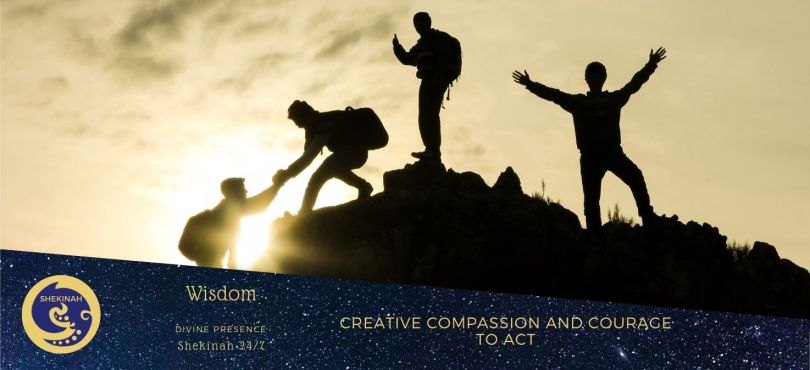
Wisdom comes when we apply creative compassion to creative action. In fact:
Generative wisdom is far more than just having wise insights from your life experiences.
Soosalu & Oka, “mBraining”
It is not an end state of being wise, but rather an ongoing process, one that continually transforms who you are.
I cannot stress this enough: wisdom must be embodied in pragmatic action. The same way that we show our faith by our works and deeds, we embody our wisdom in action and the decisions that we make each and every day.
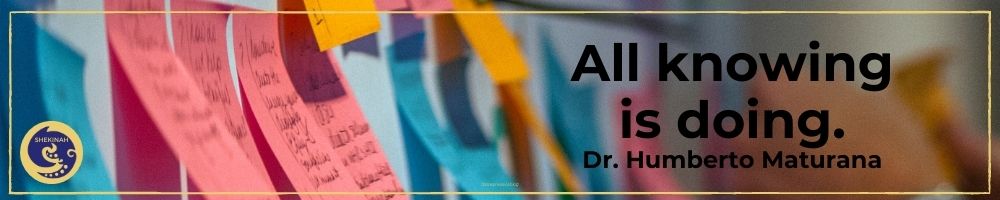
All knowing is doing.
Dr. Humberto Maturana
Most of us that were brought up in churches can easily recite that to love God is to love our neighbour and to love our brother, no matter who they might be. We are likewise challenged to bless those who curse us.
It is not enough to be able to recite the Bible verse that says this, but rather to actually do it – in the midst of the emotional chaos and turmoil of conflict and upheaval.
It’s easy to be at peace and in harmony with God and others when you are sitting quietly, meditating and in prayer. But true wisdom is being able to hold that same inner peace in the midst of the unrest of every day triggers and people who would typically anger us or make us feel fearful.
I’ll show you my faith by my works is not simply about doing good deeds: but rather it is living that life of faith and Divine Wisdom in all moments of challenge.
The process of acquiring true wisdom is not one of studying and memorisation (although that is no doubt where it begins): it is in changing our responses and choosing a new way of acting and reacting in the world.
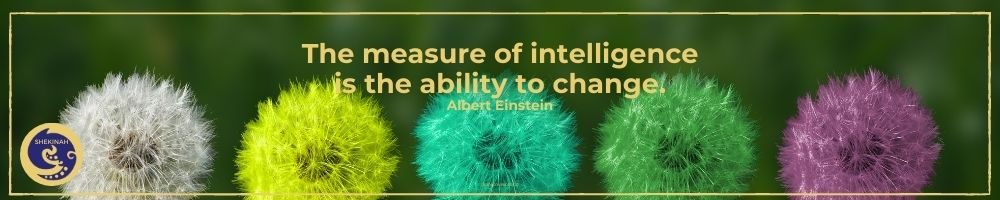
The measure of intelligence is the ability to change.
Albert Einstein
The beginning of wisdom
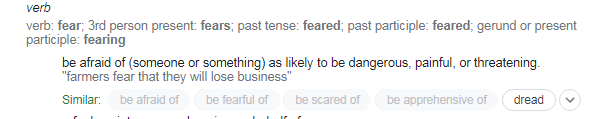
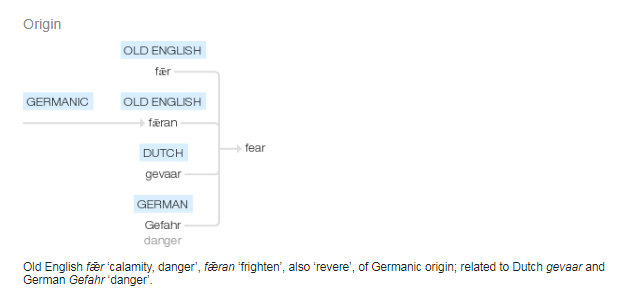
This journey for me, into transformation and change, began with the search to understand “the fear of the Lord”. As a child, I had it hammered into me that the fear of the Lord is the beginning of wisdom.
Unfortunately, my understanding of “fear of the Lord” was heavily tainted by my understanding of the word “fear”. And my understanding of “the Lord” was much influenced by the descriptions of a terrible God sitting on a throne “in heaven” surrounded by “a host of angels” that were ready to send anyone and everyone to hell.
It was much more of a Machiavellian description of “tis better to be feared than loved”, than an understanding of awe, presence and communion. I certainly viewed God as being dangerous and painful. While I was perfectly capable of saying “God loves you”, it had quite the “domestic violence kind of love” written all over it. Unfortunately, I experienced a traumatic view of authority, which clouded and overwrote my views on God.
It has been hard for me to change and learn a new definition of Divine Love. One of the many reasons that you will find me referring more to “Divine” and “Source” rather than “God” and “the Lord” in this blog is that I am aware that I am not the only one that still has wounds to heal. I am perfectly clear in my mind that these are man-made wounds, by men (and women) who purported to be godly and “loving”. And horridly, wretchedly human.
I came close to throwing out the baby with the bathwater.
It is so much easier to say “God did this” than to take the time to separate the humanity of (mostly) well-intentioned, badly misguided men and women, and simply turn your back on the Divine.
Finding my way back to accepting Divine Love and living in that Presence has been a challenge: one in which I have had to be open and vulnerable to healing and change over these past ten years.
Forgiveness and learning to love and accept myself have been difficult lessons to live by.
A peace that passes understanding
And yet, in 2020, I had a year in which to come to grips with “how far I’ve come”. You might notice that there has been a hiatus in posting (for months on end).
Part of this was overwhelm with all that was happening in the world. Another part was being drawn into the shadows of “This is where you need to shine more light in your life and allow healing to take place. This is what you are holding onto and it’s time to let go of.”
The beauty of 2020, for me, was that I discovered that somehow, over the last decade, I had discovered “a peace that passes all understanding”. Accidentally tripped over it during the chaos.
While I contemplated questions like:
What is truly important?
How does the way I am living my life reflect my values?
What do I trust in and where is my faith place?
I discovered that I had come to a deeper understanding of the simplicity of Source versus channel.
The Source of abundance, health and well-being is the Divine. The channels through which I may receive abundance can be a job, independent contracting or even gifts.
When I found my channels placed in jeopardy by the chaos of 2020, I suddenly discovered that my faith and trust had moved. I was no longer trusting in myself and my ability to create income: I had an inner peace I had never experienced before of “my Source” would provide a new channel.
Likewise, I’ve had to face thoughts and challenges regarding my attitudes towards health and wellness. I live from a place of responsibility: I am 100% responsible for my health and wellness and taking care of myself.
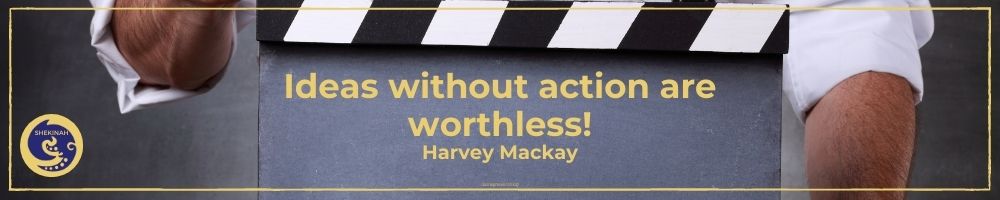
Ideas without action are worthless!
Harvey Mackay
Nonetheless, the question arose: but where am I putting my faith?
Is my faith limited to what I can control and what I can do for myself? Or is it in something bigger than me? Can I trust in my Creator that I am wonderfully made and that all my cells and organs respond and vibrate to a Divine vibration of health and wellness?
Letting go: moving with inspiration
For most of us, 2020 gave us the challenge and opportunity to let go of life as we knew it (and planned it), and to turn our trust into a Divine purpose and process.
Most of us can quote many a verse that reminds us that everything that is happening is for us. But what does wisdom really look and feel like in the face of uncertainty?
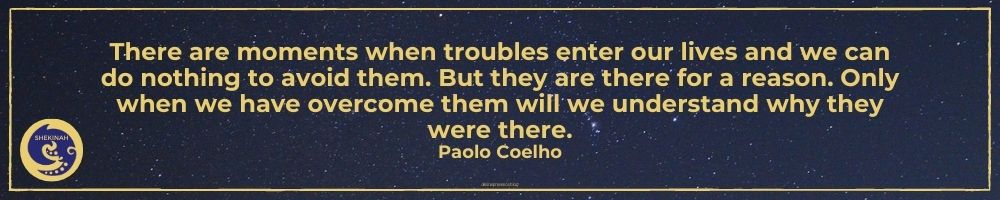
There are moments when troubles enter our lives and we can do nothing to avoid them. But they are there for a reason. Only when we have overcome them will we understand why they were there.
Paolo Coelho
In part, we have to be willing to let go of what was to step into what could be. This requires changes at so many levels:
from the heart: starting with love and compassion for ourselves and for others around us;
in our heads: minding our thoughts, especially the doubts, awfulisations and catastrofising that we do;
and in our guts: being willing to gently release the tight grip we have on our identity “this is who I am” and grow into a new creation.
On a spiritual level, it requires that we be reminded that we are souls having a human experience. Our spirits are searching for Oneness with the Divine – living constantly in that Divine Presence, rather than separated from. And yet the human experience teaches us that we are individual and separate from each other and from God. We are constantly trying to get back to God.
Creative compassion
Divine Love, especially in moments like these, invites us to get in touch with God’s plan and purpose in our lives. Each one of us has been given unique talents and gifts that are not shared by others.
Likewise, most of us have passed through levels of preparation. What life lessons have you learned that have moulded you into the person you are today?
Creative compassion invites us to have a look at everything we have to offer, as well as our heart’s desires, and ask:
What is truly on my heart?
This might include questions or thoughts of the following nature:
What might it be like to live in alignment with Divine Will?
How can I use all the gifts, talents and experiences I have been given to serve others?
Who am I drawn to serving?
Many of us, don’t have immediate clarity. Some, of course, get called similar to what we’ve read in the Bible:
Jonah – told exactly who to go to and what to say to them;
Jeremiah – given visions and messages
Peter – called by Jesus to leave his nets
Some of us might end up with an experience like Esther, put in a position where we only discover it’s purpose when there is a crisis “I was put here for such a time as this”. Others might experience hardship like Joseph, only to be called “when it’s time”.
Most of us, on the other hand, have nothing quite so concise. Life is much more mundane and subtle.
Are we listening for those callings?
Perhaps, like the Good Samaritan, we are simply called to go about our business and just help others anonymously when they are put in our path.
The only questions we have to ask ourselves is: am I living this life from a place of compassion for myself & others? Do I allow Divine Love to flow through me as a conduit and channel for others?
Sometimes the calling is simply to follow a new line of study or preparation, without knowing the end purpose. Can you trust the Divine to take that step without being able to see the full path ahead?
A man is the sum of his actions, of what he has done, of what he can do. Nothing else.
Gandhi
It takes courage to act when called:
Without action there is no true wisdom.
As James said, it is not simply about hearing “the Word” or memorising it. It’s no good to spout it out to others or recite it.
The true change happens when we allow it to change our heart: to give up our heart of stone and allow it to be replace with a heart of flesh. A hear that is vulnerable, open, soft and gentle.
When this happens, we learn to think in new ways. And as we begin to think in new ways, we learn to talk differently. We see through new eyes, with compassion and empathy.
It takes courage to allow Divine Love to change and transform our lives. In many cases, this means letting go of any hatred or fear that we have been harbouring. To start to let go of fear, we have to acknowledge and accept that we are afraid.
When I’m honest with myself: fear is usually about situations beyond my control. Like most of the things that happened in 2020. Letting go of that fear requires that I learn “fear of the Lord” in a new way: trust in the invisible.
And only now am I discovering that level of courage to have faith. I haven’t figured out my “calling”, but for now, I’m willing just to take the one next step that is clear on the path ahead and trust that the rest will be revealed when I’m ready.
Inspirations:
The fear of I AM THAT I AM is the beginning of wisdom and knowledge of the Divine One is understanding. For through wisdom your days will be many, and years will be added to your life.
Proverbs 9:10-11
The fear of I AM THAT I AM is the beginning of wisdom and knowledge of the Divine One is understanding. For through wisdom your days will be many and years will be added to your life.
Proverbs 9:10-11
Desire without knowledge is not good, and whoever makes haste with his feet misses his way.
Proverbs 19:2
Desire without knowledge is not good, and whoever makes haste with his feet misses his way.
Proverbs 19:2
5 Trust in I AM THAT I AM with all your heart; do not depend on your own understanding. 6 Seek his will in all you do, and he will show you which path to take.
Proverbs 3: 5-6
Trust in I AM THAT I AM with all your heart; do not depend on your own understanding. Seek Divine will in all you do, and the Divine will show you which path to take.
Proverbs 3:5-6
And I will give you a new heart, and a new spirit I will put within you. And I will remove the heart of stone from your flesh and give you a heart of flesh.
Ezekiel 36:26
And I will give you a new heart, and a new spirit I will put within you. And I will remove the heart of stone from your flesh and give you a heart of flesh.
Ezekiel 36:26
So get rid of your feelings of hatred. Don’t just pretend to be good! Be done with dishonesty and jealousy and talking about others behind their backs.
1 Peter 2:1
So get rid of your feelings of hatred. Don’t just pretend to be good! Be done with dishonesty and jealousy and talking about others behind their backs.
1 Peter 2:1
All knowing is doing.
Dr. Humberto Maturana
The measure of intelligence is the ability to change. Albert Einstein
Ideas without action are worthless!
Harvey Mackay
There are moments when troubles enter our lives and we can do nothing to avoid them. But they are there for a reason. Only when we have overcome them will we understand why they were there.
Paolo Coelho
A man is the sum of his actions, of what he has done, of what he can do. Nothing else. Gandhi
We must be willing to let go of the life we planned, so as to have the life that is waiting for us. Joseph Campbell
We keep brainstorming options and plans, but Divine Purpose prevails.
Proverbs 19:21




 Divine Presence: Letting the Infinite flow in my life