Radiance of faith: how to let your love shine bright

Today we remember and celebrate the birth of Jesus, and how his lessons of love shine bright through the ages. All over the world, different peoples and cultures join together to remember the birth of this bright light in the midst of darkness. 
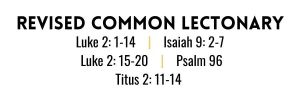
revised common lectionary, luke, isaiah, psalm, titus, bright light, radiance of faith, love, christmas message, birth of jesus

Our story starts out with homeless travellers, forced by colonisers and imperialists to return to a town that was no longer home. For them, this meant a winter’s nights spent in a stable.

No central heating (possibly no heating at all). No electricity or running water. Instead, they put up with straw beds, the smell of dung and moisture, and possibly leaks in the roof and a cold wind chill.

It was only slightly better than staying outdoors. 

We’re told that Mary gave birth in these conditions. Forget

  • the midwife, doctor or antibiotics
  • warm water and clean towels
  • another pair of hands to help Joseph clean up the baby after it was born
  • close family and friends to help out and bring a caserole. 

Instead, it is a very humble birth, as you might find in an indigenous village of the third world, yet devoid the community support. 

This is the birth that we celebrate at Christmas. 

A birth of humility, yet full of a mother’s love and the faith of strangers. 

A birth that changed the world, how we see God, and even how we interact with God. 

From these humble beginnings, we find ourselves two thousand years later here in this Church remembering the meaning of Christmas.

The Radiance of Faith

In Luke we read that following the birth of Jesus, an angel appeared to shepherds, watching their sheep in the fields around Bethlehem.

Perhaps you would be more acquainted with cowboys than shepherds, unless you live in the outback of Australia, the highlands of Scotland or various parts of the Middle East.

But most of us know that these shepherds were likely in worse conditions than Mary and Joseph who were in the stable. They were likely under the stars, without a roof or tent over their heads. Exposed to the elements in the middle of winter.

And it’s to these people that the angel appears with the good news of the birth of the Messiah.

The angel didn’t appear to the priests and pharisees.  He didn’t go to the palace and announce the birth to the king or to Pontius Pilate as the representative of Rome in Judea.

Instead, the good news was shared with lowly shepherds.

In what was undoubtedly a terrifying way. Great light and fanfare on a quiet night in the mountains.

Scared much? 

And yet, what was the response of the shepherds after overcoming their fear?

Rejoicing!

More importantly: they responded with action.

They left their flocks and went straight to visit Mary, Joseph and Jesus. Without waiting. 

This is their example to us of the radiance of faith.

Hearing. Believing. Taking action based on that faith and belief.

So, for each of us today, let’s take a moment to reflect on our faith in action.

How do we live a life of faith?

Titus tells us

For the grace of God has appeared, bringing salvation to all, training us to renounce impiety and worldly passions and in the present age to live lives that are self-controlled, upright, and godly,

Titus 2: 11-12

The grace of God appears

It all starts with Divine grace. Not because we deserve it or have worked for it. Simple a Divine gift from above.

We are merely asked to accept it.

Because we have accepted this Divine Love, we can begin to change our habits and way of being.

Training us

Titus then goes on to say that this grace of God, this salvation, trains us. The grace is instantaneous.

But our transformation is something that we work on.

We are trained in this, day by day.

What we renounce or quit

We start by choosing to renounce those habits and ways of living that leave us in the darkness. Titus calls these worldly passions. 

Walking in the light of love is a choice. A choice we make daily.

And the principal part of that choice is to quit those practices, attitudes and ways of living that keep us chained.

This is different for each person. Perhaps it’s gluttony or being lazy. For others, it is a shopping addiction or smoking. And yet, for another, it might be bitterness and hate.

We start by choosing to let go, renounce and quit.

The new habits we adopt

Then, we open our time, energy and focus up to the opportunity to adopt new habits and ways of being.

Titus says that in the present age – at this moment – we choose to live lives of self-control. Creating a new habit requires discipline, attention and focus.

It’s more than just making a New Year’s resolution to do things differently. For many of us, it’s noticing our hidden triggers and what stimulates the old habits.

For example: gluttony is often about avoidance of emotions. But we get stuck on thinking that gluttony is about the food. There is nothing wrong with the food. What we need to look at is our relationship with food. When we use food to cover up and avoid, we end up eating more than we need because we don’t want to feel emotionally uncomfortable. It’s easier to feel physically uncomfortable.

So, when we start to notice our triggers and what stimulates the old, then we can adopt the new.

Coming back to our example of gluttony: if I am avoiding my emotions, when I accept God’s love and grace in my life, then I can start to love myself. At this moment, I interrupt the old habit of over-eating and instead sit with the emotions and feelings that had me uncomfortable.

With this love and grace that shone down from me from above, I practice loving and accepting myself, rather than avoiding my feelings by eating them. 

Let your love shine bright

Once I have mastered this, even in one area of my life, it’s possible to let that love shine bright in many other areas of my life.

Other habits are easier to break and new habits become easier to make.

As I change – emotionally, mentally, physically and spiritually – others can see the change in me.

But it all starts because of a message I received of Divine Love – acceptance of Divine Grace – that allows me to then go out, like the shepherds at Christmas, and share with others about this miracle of transformation.

How will you choose, this Christmas, to let your love shine bright in your neighbourhood and community? 
God is enriching every aspect of your lives, grace of God, will of God, called to be saints, thanksgiving, enriched in speech, knowing what to say, knowledge, lacking, having all the gifts, waiting, revealed, sustain you till the end, God is faithful, set apart for service, called into community, grace and peace, the right words to say, everything you need to know, necessary gifts, faithfulness

God is enriching every aspect of your lives

Lectionary reading: 1 Corinthians 1: 1-9

In this first letter from Paul to the Corinthians, he reminds them that not only is he designated by the will of God, but rather that all of them are also called.

Leaving aside my personal bones to pick with Paul, I cannot ignore the deep learnings that are available to us from reading this passage. Each of us, even today, has a calling. These verses remind us that we are up to this task – the task of fulfilling our purpose – because the Divine enriches every aspect of our lives.

I want to explore:

  • What we are invited into?
  • Consider the tools and gifts we are each given to fulfil our life mission.

Your Divine purpose

Every tree, every blade of grass, each bird fulfils a purpose on this planet. When we take the time to simply sit and notice, we see how each living being on earth, whether plant, animal or human, fits into the bigger scheme of life.

Nonetheless, we also see a lot of confusion – internally and in society – about our purpose and callings. Many of us are merely “staying alive” and struggling to survive.

Growing up in a very evangelical church, I was brought up to believe that my purpose would be “a cross to carry”. I was terrified of discovering my purpose, hoping it would not be a calling to go to Africa as a missionary. In churches, we talk about “knowing the will of God in your life”, but most of the time it’s put on us as “you’re called into missions” or “you’re called to preach the word of God”.

But if we take a look at most of the “heroes” of the Bible, we find that they were ordinary people with ordinary jobs. They simply happened to be in the right place at the right time. And when they were asked to step into doing something “big”, their lives had already prepared them for this.

Consider Deborah, for example. While she was considered a prophet, she was busy doing her day-to-day responsibilities of being the local “judge”. I’m pretty sure that she didn’t see her job, most days, as anything out of the ordinary. Especially if you watch any episodes of traffic courts or have ever spent a couple of hours in your local magistrate’s court, you will see the everyday complaints that people bring. There was nothing remarkable about her calling — until there was.

Knowing your Divine purpose starts with recognising that we were already given the necessary gifts to fulfil our mission. Paul reminds the Corinthians of this:

“you are not ill-equipped or slighted on any necessary gifts”.

If you are unsure what your purpose and mission are, a great place to start is looking at your talents and natural gifts and abilities. You have everything you need to fulfil your purpose in life. Because a bird has wings, it flies (or if it’s a chicken, it tries to).

I doubt cherry trees complain to each other that they wish they were able to produce oranges, and yet we waste so much of our time lamenting the gifts and talents that we don’t have.

cherry trees, enriched, loved, divine love, loved by the divine, purpose in life

Today I want to invite you to do an inventory of your natural gifts and talents, and consider your calling and purpose in this light.

Set apart for service

Think for a moment of when you are arranging a table for dinner: you go to the cupboard, and you pick up the plates. If there are four of you for dinner, you don’t choose six plates, but only four. You set them aside for service: the ones that you need when you need them.  The rest of the dishes sit in the cupboard, waiting to be shown when they will be required.

Know this: you have been set aside for service. Perhaps you feel like you are sitting in the cupboard – always on the shelf rather than in the game. I wonder if Deborah thought that she was on the shelf as she worked through listening to all the petty complaints that were brought before her.

But Paul reminds us that our purpose will be revealed.

General callings

There are two other callings, apart from our life purpose. We are called to be saints, and we are called into community.

Called to be saints

While Deborah might have been “a saint”, the first description of Deborah was that she was the wife of Lapidoth. I wonder if Lapidoth considered her to be “a saint”; probably not in the way that you and I imagine the word to mean.

So, today I invite you to rewrite your definition of what it means to be a saint!

The calling to be saints is about how we live our day-to-day lives. If I had to sum it up in one word, I would say it’s compassion: 

  • Love for the Divine, with a constant connection that we are overflowing with love and compassion
  • Love for our neighbour as ourself

Compassion allows us to be kind and patient. It will enable us to live with love in our lives, as mentioned in 1 Corinthians 13:

  • not envious, proud or boastful
  • not self-seeking or dishonouring others
  • it keeps no record of wrongs and is not easily angered
  • protects
  • trusts
  • hopes
  • perseveres

We are all called to live in this place of being fulling aligned with Divine Love. What is your personal definition of what it means to live as a saint? Make it realistic for you, rather than something so out of reach that you could not aspire to live each day in sainthood!

Called into community

You are also called into community: that we cannot live in isolation. Take a moment and consider what your community looks like:

  • family
  • friends
  • work colleagues
  • hobbies and activities that you participate in
  • volunteering & community activities
  • your neighbourhood where you live
  • your spiritual community

What does your community look like?

spiritual community, volunteering, charity, neighbourhood, family relationships, social life, professional relationships

God is enriching every aspect of your life

You are promised that nothing is lacking because you have all the gifts that you need. Paul describes this as

God is enriching every aspect of your lives.

He then goes on to explain what he means by this.

You are enriched in speech

This means, when you are in touch with the Divine and that deep inner knowing, you will have the right words to say. Enriched in speech is knowing what to say and when to say nothing.

Most of us want to think about what to say. We make up scenarios and speeches in our head, failing to listen to the still small voice of Spirit.

Consider silence and just going within to listen, confident that you are enriched in speech.

You are enriched in knowledge

Everything you need to know, you will know. Can you trust this?

My first “real job” at sixteen was working as a cashier at McDonald’s: “Would you like fries with that?”. Later in life, I have come to cherish what I learned from “would you like fries with that?” – because it is a lesson in upselling. McDonald’s sells millions of fries every year because of this simple phrase. The client is already there, and they have their wallet in their hand, ready to buy something. The cashier doesn’t know what the client wants, and often the result of the question is “no, but I will have…”. While they didn’t sell the fries, they got an additional sale from the client.

This mundane, everyday job taught me a skill that has served me well over the past thirty years. Am I always open to adding more value to someone else’s life?

You, too, are enriched with knowledge. You have life experiences, abilities and life lessons that you possibly haven’t tapped into. You might not be aware of everything you know.

But trust that you know everything that you need to know when you need it.  You are enriched with knowledge.

Enriched with God’s grace, peace & faithfulness

Today I want to remind you that you are enriched with grace, peace and faithfulness. I don’t mean that you show others mercy, but instead that you accept grace, be open to a peace that transcends your understanding, and that you experience Divine faithfulness towards you.

“Grace is love that cares and stoops and rescues.”(John Stott)

It is said that the grace of God is the opposite of karma – it’s receiving the good that you do not deserve because you are a child of God. You are loved and cherished. In my life, I can see where I have blocked grace, continuing to believe that I deserve punishment and the consequences of my decisions and actions. Nonetheless, we are enriched with grace. Are you willing to accept more grace?

enriched with grace, peace that passes understanding, peace that transforms, faithfulness

We are also enriched with peace: that peace that while we are waiting, we will be sustained emotionally, mentally, physically and spiritually. It’s the peace that we hold within us, even in the middle of the storm. This inner peace does not depend on what is happening in our environment. While we are aware of the situation and in touch with it – we are present – but we also connect with the Divine. It is that Divine that allows us to say

I am not overcome by the storm, because I am one with the storm.

Sometimes storms clear our path. Can you recognise this inner peace which sustains you while you wait?

Finally, the Divine is faithful, constant and true. When I say we are enriched with faithfulness, I am not referring to your faith in God, but rather how the Divine relates to you! It doesn’t matter how small your faith is, but rather that we know that Divine Love is faithful. We can trust that all things are working for our good and that we are enriched with all good things.

Thanksgiving

Our response to this is one of gratitude and thanksgiving.

If you are struggling to discover your purpose, consider a daily practice of gratitude, where you each day you focus your attention and thanksgiving on your talents, gifts, strengths and abilities. Start to notice the patterns and what you genuinely enjoy. Be grateful for the desires of your heart and the wisdom and insight that you gain from being present.

Take note of the times when you receive grace: when in spite of the natural consequences of your choices and decisions, you get a second chance! Practice thanksgiving for all those opportunities.

Start to notice when you are filled with peace, in spite of the situations and challenges you are facing. Be grateful for those moments.

Notice the presence of the Divine in your life in each moment of the day. Sit in silence and be thankful.

sign up, weekly newsletter, Divine Presence
Sign up to receive Beth’s weekly newsletter with the latest blog posts, journal prompts and affirmations.

Light, darkness & faith

We all know what it’s like when the lights go off inside our home, and we are left in the pitch black. Can we imagine what it was like before electricity, when a home was lit solely with candles? There was no staying up watching TV. There was no working late on the computer. Imagine, you were handwriting a manuscript, and you make a mistake – rewrite the entire page, there is no delete button on the computer to go back 3 spaces.Read More »

Meditation: Romans 6: 6-7, 14

We need to remember that each day we are “born anew”, we die to sin and rise to Christ in us, the hope of glory.

Because we are shown grace and mercy, we have the possibility of dying to whatever holds us back, and rising again renewed and full of life and light.

Matthew 5: 13-15

13 You are the salt of the earth. But if the salt loses its savor, how can it be made salty again? It is no longer good for anything, except to be thrown out and trampled by men. 14 You are the light of theworld. A city on a hill cannot be hidden. 15  Neither do people light a lamp and put it under a basket. Instead, they set it on a lampstand, and it gives light to everyone in the house

But until we actually recognize that living in the Presence of our Creator actually means shining forth every day as light in this world, we are only surviving, instead of thriving.

practicing presence, light, God, Presence, present, light house, beacon, Spirit, baptism, baptized, baptizer, Holy Spirit

Let there be Light!

Readings:

  • Genesis 1: 2-3

…And the Spirit of God was hovering over the face of the waters. And God said, “Let there be light,” and there was light.

  • Mark 1:4-11

4 John the baptizer appeared in the wilderness, proclaiming a baptism of repentance for the forgiveness of sins.  … 8 I have baptized you with water; but he will baptize you with the Holy Spirit.”
9  In those days Jesus came from Nazareth of Galilee and was baptized by John in the Jordan. 10 And when he came up out of the water, immediately he saw the heavens being torn open and the Spirit descending on him like a dove.

Another version that I read of Mark 1, verse 4 says:

“So, John the Baptizer appeared in the wilderness, calling for baptism and a change of heart that lead to forgiveness of sins.”

  • Acts 19:1-7

And when Paul had laid his hands on them, the Holy Spirit came on them

Without the power of the Spirit, there is no light! And without repentance – in other words, “a change of heart”, there is no filling by the Spirit!

I want us to consider two definitions for repentance: first the definition provided by Marcus Borg:  repentance is not how we understand the word now (repentance from sins), but rather a “return from exile”.  To repent is to enter the kingdom of God: we die to the old way of being and we are “born again” into a new way of being.  Matthew uses this same opening: “Repent, for the kingdom of heaven is at hand.” So once again, we have this message that our relationship with God is changing: God is near to us (not far away) and that we simply have to turn around and return from exile (separation). But this goes hand in hand with the idea of repentance from sins, if we look at it in the following sense.

Repentance is more than simply asking for forgiveness or confessing that we have done something wrong and saying sorry. I read this morning

Saying “I’m sorry” is something anyone can do. Sorry doesn’t require change, only an acknowledgement that you messed up. Sorry is a way out of a problem, not the beginning of a new path.  …Simply saying “I’m sorry” allows that a problem exists, but does nothing to bring about a genuine change of heart.

The idea of metanoia, which has been translated as repentance, is one of admission to God of our deep sorrow for the pain and hurt caused by our actions and sins, and a resolve to change our way of being and life to act correctly in the future.  It is adopting a new way of life, a new way of being.

A little bit like trying to lose weight and get fit, as many of us do at the beginning of every year: but the reality is that it isn’t enough to go on a diet. We need to change our lifestyle and adopt a new lifestyle that allows us to be healthy and fit. It is a complete changing of our ways: adopting new eating habits, adopting a new morning routine, perhaps starting each morning with warm lemon water.  And the first weeks and months of this new way of life are a struggle: you feel like you are on a diet, rather than adopting a new lifestyle.  But you also are aware that if you go back to your “normal habits” you will go back to that weight and that body that you were trying to improve.

David admits: He  struggles with addiction. He is determined to beat his habit but gives in, feels bad, intends to make a change, but ends up slipping time and again. When he does, it deeply hurts his wife and children. He sees the pain in their faces and feels bad that he has hurt them. David is remorseful but not repentant.

Regret and remorse have consequences, but do not necessarily address the wrong-doing of those consequences. People get caught and can feel remorse because there are consequences to their actions. For example, you can speed down the highway, get caught and feel remorse. But you may not feel repentant over the speeding. You have remorse because you received a ticket. The ticket temporarily slows you down, but eventually you creep back up to that speeding level.

Repentance would be sticking to the speed limit, rather than speeding. Repentance for alcoholism is getting into rehab, and then once out changing the lifestyle he has so that he has more human connection and less need to give into the addiction. Repentance would be living a new way of life, in spite of his weakness and addiction.

The same is true spiritually for us. It is not enough for us to be sorry or feel guilty for our sins. This feeling of guilt or remorse achieves nothing for us! Being sorry or feeling remorse is not enough either. To repent is not simply an emotional act, but rather requires a change of moral purpose, and requires regret of the past and pursuit of a new direction.

2 Corinthians 7:10 explains this as follows:

For godly sorrow produces a repentance that leads to salvation without regret, whereas worldly sorrow produces death.

The Message explains this a little better:

Distress that drives us to God does that. It turns us around. It gets us back in the way of salvation. We never regret that kind of pain. But those who let distress drive them away from God are full of regrets, end up on a deathbed of regrets.

It’s not enough to regret what you did. Repentance is about turning things around and living life a completely new way! Repentance is adopting a new way of thinking, it is a change of mind, transformation of your mind and thoughts, deciding to live your life with a new purpose.  It is interesting that baptism is an immersion to complete saturation: it can just as well be immersion in a transformed mind and way of thinking, and not simply immersion in water.  Water is simply symbolic of this immersion to change.  The purpose of baptism by John was repentance: to bring about a change of mind, a change of way of being.  The water baptism symbolizes a cleansing process, the letting go of the old way of being.

The fundamental idea with this repentance is not sorrow or remorse: it is change. But profound and deep change: not just a change superficially of our actions to follow the rules, but rather as Jesus taught us, a profound change of being.  There’s a reason that Jesus spoke of forgiveness being not 7 times, but rather 7 times 70 (7X70) times (490) – because you need to be sorry and forgive yourself this many times in order to truly change your way of thinking and being regarding a certain situation or action.  This repentance is the first step in the realization of Truth and knowing God. The Word (Jesus) dissolves, breaks up and washes away all thoughts of the material world.  And it leaves us as spiritual beings that need and hunger to be connected with Spirit.

We all want light in our lives, we all know that Christ is the Way, the Truth and the Light. We all know that after the baptism of repentance, we make room for the baptism of Spirit. But are you willing to pay the cost for this power and light – filling of the Spirit?

What am I talking about? Why am I talking about paying the cost? Isn’t this a free gift? Yes, the indwelling Spirit of God is a gift: but throughout the Gospels, Jesus would say to the sick or the blind or the lepers that he healed: “Go and sin no more.” The healing that took place was a physical and spiritual healing: and this required a new way of life and being! And you: have you had this transformation? Are you working out your salvation with fear and trembling?

… for it is God who works in you, both to will and to work for his good pleasure. (Philippians 2:13)

And so, we are told as children of God to do everything without grumbling, murmuring, complaining, arguing, hesitation or disputing. (Philippians 2:14) Everything. What does this “everything” refer to? God’s will and God’s work for God’s good pleasure: because it is God who works in you to will and to work.  THEN you will shine like stars, a bright light in this world, full of Spirit, and showing to all the fruits of the Spirit: love, joy, peace, patience, kindness, goodness, faithfulness, humility and self-control.

Every Christian is indwelt by the Spirit, but every Christian does not heed the direction and instruction of the Spirit in their lives. Some Christians are still caught up listening to their material needs, their fears, their ego, their selfish ways. But those guided by the Spirit can rest in the assurance that God’s good will be done. Those who are spiritual “live by the Spirit” (Gal. 5:16), that is, they walk, or live their life, in the power of the Holy Spirit.

God says in Genesis 1 –  “Let there be light” – and Jesus says to us in Matthew 5: 14

You are the light of the world.

Not Jesus – YOU! A city on a hill cannot be hidden. And if the Spirit fills you, that light cannot be hidden!  So – let your light, of a changed way of being, of thinking, of speaking, of acting be the beacon of light that draws others to God.

God, maturity, grow, Spirit, true, best version of you, body, emotions, spirit, John, baptizer, light, testimony, Messiah, prophet, voice, practicing presence, Shekinah

Who are you?

Readings:

  • John 1: 6-8; 19-28

God sent a man, John the Baptist, to tell about the light so that everyone might believe because of his testimony. John himself was not the light; he was simply a witness to tell about the light.

19 This was John’s testimony when the Jewish leaders sent priests and Temple assistants from Jerusalem to ask John, “Who are you?” 20 He came right out and said, “I am not the Messiah.”
21 “Well then, who are you?” they asked. “Are you Elijah?”
“No,” he replied.
“Are you the Prophet we are expecting?”
“No.”
22 “Then who are you? We need an answer for those who sent us. What do you have to say about yourself?”
23 John replied in the words of the prophet Isaiah:
     “I am a voice shouting in the wilderness,
    ‘Clear the way for the Lord’s coming!’”
24 Then the Pharisees who had been sent 25 asked him, “If you aren’t the Messiah or Elijah or the Prophet, what right do you have to baptize?”
26 John told them, “I baptize with water, but right here in the crowd is someone you do not recognize. 27 Though his ministry follows mine, I’m not even worthy to be his slave and untie the straps of his sandal.”
28 This encounter took place in Bethany, an area east of the Jordan River, where John was baptizing.

So, I would ask each one of you this morning: who are you?

John the Baptist, knew clearly, who he was. Do you know who you are?  Are you living the life that God intended for you to live, being who God made you to be? Have you reached a place of maturity where you know and accept what God says about you, agree with Spirit that this is true of you, and become the best version of you that exists?

Let’s do a small exercise, and review different areas of our lives: starting with our bodies.  I want you to close your eyes for a moment, and just be present in your body. Be aware of your head, of your neck, your shoulders, your left arm, your hand, your right arm, your right hand… and now let’s move down to your legs. And now let’s move back to your head. And now, I want to ask you: are you your body? Or is your body simply the vessel that carries you?

If you are not your body, then who are you?

What about your possessions? Do those define who you are? Your home, your car, your bank account? Is that who you are?

How about your job, profession and career? Does that define who you are? How many people do you know that have changed careers? How many times in your life has your career and profession changed? How many people do you know that have been laid off or fired, that have quit, that have moved to another country and had to start over in another field? Is a person truly defined by their career or profession? Who are you?

What about your family? Are you mum, dad, the black sheep, the only single one left, the life of the party, the grandmother? Is that who you are? How many people do you know who have lost members of their family? And yet they still continue to live and find new identities and purposes.  Who are you?

How about your emotions? Are you happy, sad, angry, fearful, ashamed, tired? But is that who you are? Or is that simply a state of feeling and emotion that comes and passes?

John responds rather cryptically to the Pharisees and scribes: “I am a voice…” The first verses of John tell us a little more about John the Baptist’s identity:

“God sent a man, John the Baptist, to tell about the light so that everyone might believe because of his testimony. John himself was not the light; he was simply a witness to tell about the light.”

And you, who are you? What were you sent for? God sent you… Have you discovered yet what for? Are you living out that purpose? Are you being everything that you could possibly be?

Your identity doesn’t depend on something you do or have done. Most of us confuse doing, having and feeling with being.  Instead of saying I feel sad, we identify with the sadness and say “I am sad”. Instead of saying that I work as a lawyer, we say “I am a lawyer”. Instead of saying I have a family, we lose our identity within that family.  But is that truly who you are?

John knew who he was. And Jesus certainly knew who he was.  Jesus said:

  • I am the bread of life.
  • I am the light of the world.
  • I am the door.
  • I am the good shepherd.
  • I am the resurrection and the life.
  • I am the way, the truth and the life.
  • I am the vine.
  • “I tell you the truth, before Abraham was even born, I Am!

And who are you?

Now, I don’t care much for Joel Osteen, but I quite like part of his start to Sunday services and his declaration about the Bible:

This is my Bible.
I am what it says I am.
I can do what it says I can do.

Who are you?

Who does God, through the Bible, say that you are? Let me give you some ideas:

  • You ARE a child of God, complete in Christ – John 1: 12; Colossians 2:10
  • You ARE loved, accepted, redeemed, holy, forgiven, free from condemnation, chosen, established, anointed and sealed by God. 1 John 3: 3; Ephesians 1:6; Colossians 1:14; Romans 8:1; 2 Corinthians 1:21; Colossians 3:12
  • You ARE a joint heir with Jesus, united with God and one spirit with God Spirit. Romans 8: 17; 1 Corinthians 6:17
  • You ARE a temple of God: his Spirit and life lives in you. 1 Corinthians 6:19
  • You are God’s co-worker; a living stone on which the spiritual house is being built. 2 Corinthians 6:1; 1 Peter 2:5

So, if that’s who you are: what are you doing that lives up to this description of you? Does your life reflect who you are?

If you embodied this description of you: what would be different to how you are living your life at the moment? What needs to change in your life, for this to really be you? What would new things would appear in your life if this was you?

What scares you the most about this description of you?

  • Being a child of God? a joint heir with Jesus?
  • Being united with God – complete Oneness?
  • being complete?
  • being loved, accepted, redeemed, holy, forgiven, free from condemnation, chosen, established, anointed and sealed by God?
  • being God’s temple?
  • being God’s co-worker and co-creator?

What obstacles or idols in your life keep you from living this out? What habits or practices do you need to incorporate into your life to live this more fully?

What’s keeping you from living this life today? From walking out of the Church today and being You, the best You that there is, the You that God created you to be in all your fullness and glory, so that others might see Christ in you?

Because today, YOU are the hope of the world. You are the voice in the wilderness. You are the light in the darkness. God sent you!

So, who are you?

Sermon: Rejoicing in Sufferings

READINGS:

  • Romans 5: 1-8
  • Matthew 9:35 – 10:8
  • Psalm 100

REJOICING IN SUFFERINGS

I invite you to think for a moment about that Olympian champion, the one that sat on the sofa every day watching TV, checking their internet, and reading books.  The one that slept in every morning, had a full cooked breakfast, eating anything they wanted, when they wanted, partying with their friends any time they liked, and taking it easy. On the day of the meet, the simply went out and effortlessly won gold because they were just the best.

What do you mean you never heard of that guy?  Apparently it’s not that easy to be an Olympian Gold Medalist! There may be suffering involved on the road to glory: it takes work, effort, consistency, perseverance, and faith to become perfect and complete, lacking nothing! Rapid success stories happen, true. But the reality is that most “overnight successes” come at the end of years of hard work and those witnessing the “success” part too readily assume the “overnight part.”

Joy comes in spite of our pain! To have joy in spite of difficulties and struggles  is not to deny pain; it is to recognize that they can co-exist. The same way a pregnant mother can go through the agony of childbirth and still have joy in thinking about what is to come. She knows that there is a beautiful light and life at the end of these painful hours.

This morning, Paul says that we are to “Rejoice” in Suffering!  And the reason that Paul gives for this is that suffering produces “endurance”: in other words

  • intestinal fortitude
  • grit
  • perseverance
  • stamina
  • tenacity
  • gutsiness
  • resilience

Paul  goes on to say that this endurance will produce character, and character produces hope, and out of hope comes an outpouring of love into our hearts.

James 1, verses 2 to 4 say something similar:

My brethren, count it all joy when you fall into various trials, knowing that the testing of your faith produces patience. But let patience have its perfect work, that you may be perfect and complete, lacking nothing.

I want to talk  this morning about cultivating resilience, which enables us to remain positive and focused. Resilience is a quality that allows some people to be knocked down by life and come back stronger than ever – they rise from the ashes, rather than letting failure overcome them and drain their resolve: a basic ingredient for happiness. So, Paul tells us to “rejoice in our sufferings” – note: he doesn’t say you will only suffer once.  There will be sufferings – did you hear the S? And yet, we are to rejoice, because this is how we learn and grow!

Paul says suffering will lead to endurance, and this will, in turn, lead to having character (that is, who you really are, when all the layers are peeled away – when no one else is looking!).  Said another way:  suffering produces steadiness, steadiness produces reliability, and reliability produces hope.  If we prove ourselves to be reliable, even in the face of hardship – there is hope!

How many of you here today have survived every day of your life so far in spite of the ups and downs?

Amazing! You have survived everything that life has thrown at you so far!  Every one here today is a survivor.  But here’s the challenge: it is not enough just to be here – you should be better for it!  Better equipped, greater patience, more understanding, a higher level of emotional intelligence, empathy for your fellow man or woman.  How do you make this happen, faster and easier on yourself and those around you?

For starters, I would say that the first step is acknowledgement: recognizing that you are in a situation that is outside of your comfort zone and that makes you feel that you are under threat.  The reason I say this is that when you are in denial, “this isn’t happening to me”, it’s impossible to actually act!  You can’t make any decisions about something that isn’t happening to you!   So, step one is admitting that you have a situation.

But I invite you to be careful in your choice of words: transform “hardship” into “challenge”, giving yourself the possibility of seeing opportunity and to make this a productive situation. What do you want life to look like on the other side of this adversity? Remember: your success rate so far is 100%: how will you come out of this one?

Step two, is getting a handle on your emotions.  The signs of a resilient person is that when they are in a difficult situation, they keep calm, evaluate things rationally, and come up with a plan, and so they can act.  The biggest emotion we have to face is fear – fight or flight or lizard brain (paralyzed by fear, shutting down).  Imagine how many times the word “fear” is dealt with in the Bible!  John 14: 27 says

Peace I leave with you; my peace I give you.  … Do not let your hearts be troubled and do not be afraid.

Or Joshua 1:9

Have I not commanded you? Be strong and courageous.  Do not be afraid; do not be discouraged…

Or even Psalm 23: 4

Yea, though I walk through the valley of the shadow of death, I will fear no evil

Our human response is we try to hide our fear – we mask it:

  • with anger (anger feels much more powerful than fear!);
  • with frustration (“I don’t know what to do” sounds better than “I know what to do, but I’m too scared to do it”);
  • with stoicism (I’m bearing this – rather than getting off my butt and doing something about it, because I would hate to make a decision and be wrong).

When you identify your fear or fears, you can then identify the possibilities that lie on the other side: opportunities. Managing  emotions requires that we grow deeply in emotional intelligence – so much to learn from difficult circumstances!

The third step in resilience is a little crazy: you need to be delusional! And by that I mean: you need to set the bar to recovery WAY HIGH! Crazy successful people and people who survive tough situations are all overconfident. And by overconfident I mean… a delusional sense of self-worth.  But wait!! – wasn’t step one and step two about acknowledging where you are and what you are feeling?  Yes. But now I am asking you to go all out in believing:

I can do all things through Christ who strengthens me…

Yes, you need to clearly understand and acknowledge the situation, but be overconfident about YOUR ability to get yourself through and out of the situation successfully.  Remind yourself of your strengths and accomplishments. Remember: so far your success rate at making it through difficult days and situations is 100%.What does successful look like this time?

Step 4 in the process is something continual: Preparation.  Whether you are in a difficult situation or not, you should always be in preparation.  Luke 12:35 reminds us:

Be dressed in readiness, and keep your lamps lit.

And likewise, 2 Timothy 4:2

… be prepared, in season and out of season…

It’s impossible to prepare for the unknown, but we can constantly improve ourselves, practicing good habits and overcoming our bad habits.  Habits are what will come through in times of difficulty.  Think of common habits you have: breathing, walking, putting on your seat belt…

When I was 22, I spent 7 hours preparing and training for the most important 10 seconds of that day.  I arrived at 8 a.m., with a group of about 20 other people, and we trained, over and over and over again, lying on the floor, standing up, hanging from harnesses in the air… and when they felt that we were actually ready, they put us all in an airplane, with parachutes on our backs.  And when we reached an altitude of over 3,000 feet, one by one, we jumped out of the plane.

I have complete amnesia about those first five seconds of the jump – no sense of falling, no sense of the wind rushing past my face, nothing!  All I remember is my security check: arms in position, knees bent, one thousand, two thousand, three thousand, four thousand, five thousand, Check (over my right shoulder), check (over my left shoulder).  Parachute properly deployed!  We were static line jumping, in our first solo jumps from the plane.  I do remember the last 5 vital seconds of the experience – the landing.  There are really only 10 seconds in a jump that are the most important:  the first 5 and the last 5:  making sure your chute is open (otherwise releasing that chute and deploying the reserve – if that happens, go back to step one!), and landing on the ground.  You don’t want to collapse your chute 3 stories up in the air, otherwise you could break both femur’s as you plummet down straight onto your legs! But we spent 7 hours preparing for those 10 seconds – and hardly any time at all on how to actually control your parachute, turns and having fun.  Just pay attention to your headset and what the instructor is saying and you’ll be fine.

What does your preparation for the hard times in life look like? Does it bring you hope?  I had hope as I jumped out of the plane – not one, but two parachutes on my back, and knowing that I knew exactly what to do if there was a problem with the first one.  I was as ready as I could be.  There is an amazing adrenaline rush on the other side of fear!

Step five, is kind of obvious: hard work! Whatever the situation is that is bringing you suffering, there are things you will need to do! Whether it is the loss of a loved one, loss of a job, a drop in income, or the ending of a relationship, there is work to be done. After acknowledging the situation, and facing your fear or pain or loss, and getting delusional about your ability to survive this, relying on all the preparation that you have brought to this moment in your life: you have to actually stand up and do what needs to be done!

Proverbs 14:23 reminds us:

All hard work brings profit, but mere talk leads only to poverty.

It’s not enough to talk about what needs to be done and what you are going to do. You actually have to do it! I understand the desire just to stay in bed and pull the covers up over your head and give in to mind-numbing sleep!  I am sure that we have all been there – plagued by the depression.  Step one:  get up!   Take the first step!

Survivors take great joy from even their smallest successes. That is an important step in creating an ongoing feeling of motivation and preventing the descent into hopelessness.”

It is those small victories that carry you forward – one more step, one more challenge, one more day.

And finallyhelp: there’s a time to receive help and there’s a time to help others. Having caring, supportive people around you acts as a protective factor during times of crisis. It is important to have people you can confide in. And sometimes, in our most challenging moments, what our souls and spirits need is to reach out and help others. It is when we find a sense of purpose in our lives that we transform the most. For example:

After her 13-year-old daughter was killed by a drunk driver, Candace Lightner founded Mother’s Against Drunk Driving (MADD). Upset by the driver’s light sentence, Lightner decided to focus her energy into creating awareness of the dangers of drunk driving.

I’m thankful for her impact – she reached me, as a teenager, teaching me two important lessons: never drive drunk and never, ever get in the car with a drunk driver.  So, I was usually the designated driver.  Candace Lightner will never know me, or the thousands of teenagers whose lives she saved: but she made a difference! Are you making a difference?

This is where we find hope and an outpouring of love in our hearts!

acupuncture, allowing the infinite to flow, the flow of energy, the flow of power, God is light, the power of light

Acupuncture – and understanding God…

Let’s start with the basic tenet from the Bible: “God is light and in him is no darkness at all.” (1 Jn 1:5), and let’s take it literally:  God is LIGHT.

So, what is light? Light, scientifically speaking is particles and waves, which is a range of electromagnetic radiation that can be detected by the human eye, or photons.  Photons, which are massless particles and bursts of energy “quanta” which move at the speed of light. Electromagnetic waves start when an electric charge jiggles back and forth. In fact, you can actually think of an electromagnetic wave as being two waves in one – it has both an electric field and a magnetic field that move together. Being more simplistic, light is energy.   The Bible also says that God is an all-consuming fire.  Once again, we’re talking about energy.

Question by a 14-year-old: “doesn’t everything have atoms or at least mass and weight? if it doesn’t, then is it really there?”

Scientific answer:  “Lots of things aren’t made of atoms. Light and other electromagnetic waves are an obvious example. Individual protons, neutrons, and electrons don’t constitute atoms until they’re combined.”

So, while God doesn’t have atoms and mass and weight, if God is light, then as electromagnetic waves, God can exist even though we can’t see God.

So… then let’s look at what Chinese medicine tells us about the human body:  As the basis of Acupuncture, Shen Nung (oldest known acupuncturist) theorised that the body has an energy force running throughout it.  This energy force is known as Qi (pronounced Chee).  The Qi consists of all essential life activities, which include the spiritual, emotional, mental and the physical aspects of life.  A person’s health is influenced by the flow of Qi in the body. If the flow of Qi is insufficient, unbalanced or interrupted, Yin and Yang become unbalanced, and illness may occur. Qi travels throughout the body along “Meridians” or special pathways.  Acupuncture is the insertion of very fine needles, (sometimes in conjunction with electrical stimulus), on the body’s surface, in order to influence physiological functioning of the body. The acupuncture points are specific locations where the Meridians come to the surface of the skin, and are easily accessible by “needling” and Acupressure. The connections between them ensure that there is an even circulation of Qi or energy.

How does Acupuncture work? Scientists have no real answer to this; as you know many of the workings of the body are still a mystery!  By some unknown process, Acupuncture raises levels of triglycerides, specific hormones, prostaglandins, white blood counts, gamma globulins, opsonins and overall anti-body levels.   The “neurotransmitter” theory states that certain neurotransmitter levels (serotonin & nor-adrenaline) are affected by Acupuncture.  One of the most popular theories is the “Gate Control” theory.  According to this theory, the perception of pain is controlled by a part of the nervous system which regulates the impulse, which will later be interpreted as pain.  This part of the nervous system is called the “gate”.  If the gate is hit with too many impulses, it becomes overwhelmed, and it closes.

If the body has this energy flow, and there are pathways that the energy is supposed to flow through, and the pathway gets closed because of the person’s emotions or stress, then this will lead to imbalance in the energy throughout the body, and leads to illness.   We have all read, at some point in life, that emotions are the root cause of almost every injury and illness. Anger, fear, unworthiness and other emotions get ‘stuffed’ into the body, over time these limiting emotions weaken the physical body creating stiffness, aches, pain and general discomfort, which eventually can cause more serious conditions like tumours and cancer.  And so acupuncture is used to open the pathways that were closed, restoring the energy and balance to ALL organs and areas of the body, and reestablishing good health.

So… what does ANY of this have to do with God?

Let’s say that we accept that God is (at least, one facet and part of God is) ENERGY.  Pure and simple energy.  And energy flows and moves.  We can also, scientifically, prove that WE (human beings) are ENERGY and this flows through us.

As we’ve already seen, negative emotions (what the Bible refers to as SIN) block the energy flow through our body and may lead to illness.  If we believe that we are vessels put here on earth to do God’s purpose, and that as God is light and we are to be filled with His light, we need to have open pathways for the energy to flow, any sin in our lives will block the flow!  God, being the gentleman that he is, is limited to those areas of our life where we allow Him to flow freely.

That anger that I am holding onto, that resentment or bitterness, it not only affects my relationship with other people, but it directly inhibits me from having an openly flowing relationship with God!  The pathway is somewhat (or in some cases) totally blocked.  I can’t be used as a vessel for God to my full potential, because I have a blockage.

Consider one more thing:  1 Peter 1:16 “Be holy, as I am holy”.  If God is “holy” and God is light, and there is NO darkness in Him, then we are called to have NO blackout areas.  There is no room for short-circuits in our lives and the energy flow in our body.  We are to be totally free of any blockages which may lead to darkness having a place in our bodies.  We are to be holy (totally, not partially).

Holiness and sanctification go hand in hand.  We are told in 1 Corinthians 6:11 that we are washed, sanctified and justified.  “Sanctification occurs as a result of salvation. At the moment of conversion, the Holy Spirit enters our life. We are no longer held hostage by death, but are free to live the life God desires for us. We are thus sanctified simply because of our standing as lost souls saved by grace.”  So, once we are saved by the blood of Christ, (let’s think of that like getting a blood transfusion, replacing all of our old & decrepit blood with fresh, oxygen full blood!), we are to live a process of sanctification.

Why a process?  Unlike the things and places that are sanctified by God in the Bible, people have the capacity to sin. Even though we have been “set apart” as God’s children, we have free will and may continue to behave in ways that are contrary. As Christians, we realise shortly after we have been saved that there is a new inner battle being waged within us – a battle between our old sin-lead nature and new Spirit-lead nature.

So, while we got the blood-transfusion, there are still parts of the energy pathways in our lives that are blocked.  That have to be unblocked (and not re-blocked), so that the Spirit can flow through us.   And this is a constant process – we must continually clean out any blockages (confess sins), so that the energy of the Holy Spirit flows through us.

If I am angry with my neighbour, I have a blockage in my relationship with my neighbour.  Unfortunately, this same blockage that doesn’t allow me to speak openly with my neighbour exists in my body also – and so affects my relationship with God.  The blockage is in ME.  It’s not just in my relationship with my neighbour.  In some cases it goes as far as physically affecting my body.

I read about the following exercise: close your fist tight, and hold it tight until your knuckles go white (lack of blood & oxygen).  If you kept the flow of oxygen from your knuckles for long enough, they fingers would eventually die.  It’s medically been shown that something similar happens with anger and resentment… and how this affects some of our digestive organs.  When we are angry, one of the muscles that cramps up is in the abdomen (yeah… that “knot in your stomach”).  This muscle, if it cramps up too much and too often, forgets to relax… and then may cut off the proper blood supply to our stomach (resulting in ulcers), our lungs (means the muscles won’t inhale and exhale as they should, reducing the oxygen in all our body), or our heart (which may lead to heart attack).  And this is the just physical aspect!

And look what stress does to us:  When you perceive a threat, your nervous system responds by releasing a flood of stress hormones, including adrenaline and cortisol. These hormones rouse the body for emergency action.  We all know that your heart pounds faster, muscles tighten, blood pressure rises, breath quickens, and your senses become sharper. These physical changes increase your strength and stamina, speed your reaction time, and enhance your focus – preparing you to either fight or flee from the danger at hand.  The stress response is the body’s way of protecting you. When working properly, it helps you stay focused, energetic, and alert. In emergency situations, stress can save your life – giving you extra strength to defend yourself, for example, or spurring you to slam on the brakes to avoid an accident.  Unfortunately, the body can’t distinguish between physical and psychological threats. When you’re stressed over a busy schedule, an argument with a friend, a traffic jam, or a mountain of bills, your body reacts just as strongly as if you were facing a life-or-death situation.

Long-term exposure to stress can lead to serious health problems. Chronic stress disrupts nearly every system in your body. It can raise blood pressure, suppress the immune system, increase the risk of heart attack and stroke, contribute to infertility, and speed up the aging process. Long-term stress can even rewire the brain, leaving you more vulnerable to anxiety and depression.

How, then, am I sanctified? How do I become holy, because God is holy?

Well, if my body is a vessel through which energy flows, both my energy (Qi) and God’s energy, and I have blockages, then I cannot reach the level of holiness that my body (heart, soul & spirit) allows God’s energy to TOTALLY flow through me.  Sanctification is the process through which I let go of each blockage and remove it (confessing my sin, accepting God’s forgiveness, and then repenting – never repeating it, so as to never re-block that pathway), until such a point that the light of God completely flows through all of my being. Through the filling of the Holy Spirit, my energy and His energy combine, and I can do greater things.  I become a totally useful vessel, when I allow Him to flow through me, rather than wanting to do my own thing!  (No more singing, “I did it my way”).

One of Jesus’ parables teaches us that a farmer summarises whether or not a tree is good by its yield.  This isn’t the yield in one season or over 1 or 2 years.  This is the yield during the tree’s lifetime.  My works (actions) declare and manifest outwardly the reality of my faith which is not visible to man.  If I am bearing fruit, this shows that I am alive, healthy and productive.  My fruit is NOT what makes me alive.  It’s just the evidence that I am alive and well.  What makes me alive and well is the life ENERGY that flows through me!  And as I allow myself to be filled with God’s energy, and not just limited to my own, the results can be overwhelming!

If a man is to shed the light of the sun upon other men, he must first of all have it within himself.