
ways to love your enemies, a month to be compassionate, love your friend, hate your enemy, let them bring out the best in you, bring out the worst in you, responding to triggers, feeling triggered, nice, nasty, good and bad, love the lovable, kingdom, live generously, benefits of loving your enemy, feed the hungry, forgive the guilty, welcome the unwanted, do unto others

Love your enemies: a month to be compassionate

“It is easy enough to be friendly to one’s friends. But to befriend the one who regards himself as your enemy is the quintessence of true religion. The other is mere business.”
― Mahatma Gandhi

Valentine’s day is almost here, and I want to challenge you to love the people that trigger you and rub you the wrong way. The people that don’t fit your ideal image of what humanity looks like at its best. This might be:

  • troubled youth
  • the homeless vagabond
  • drug addicts
  • militant feminists / gays / Muslims / Christians
  • your parents, siblings or a co-worker

Who are you struggling to love and accept? For this Valentine’s Day – I challenge you to find space in your heart to love this person or group of people.

Just for one day.

compassion for a day

How is your religion serving you?

A 2012 study from the University of Berkeley found that typically atheists, agnostics and the non-religious were more motivated by compassion than those that considered themselves to be religious. In some ways, this infers that “love thy neighbour” has become more of a rule of external action, rather than kindness inspired from a loving heart.

Does your religion lead you to a place of moral obligation, while allowing you to avoid feelings of connection?

Unfortunately, it seems that the non-religious are more likely to give up their seat on a bus or train to a stranger. There is a surprising lack of empathy when we focus on following rules, rather than allowing ourselves to be lead from a heart of compassion.

While practising compassion results in subduing the ego and the self-centred mind, complying with the rules allows the ego to become self-righteous. We become the very Pharisees that Jesus decried. “Look how well I follow the rules .” Unfortunately, then our ego begins to hide behind self-righteousness, with a false sense of wellbeing and goodness.

Being religious may very well diminish our capacity for empathy and compassion.

What does the Bible say about this?

The very essence of Jesus’ teachings is love and compassion. For example:

43-47 “You’re familiar with the old written law, ‘Love your friend,’ and its unwritten companion, ‘Hate your enemy.’
I’m challenging that. I’m telling you to love your enemies. Let them bring out the best in you, not the worst.
When someone gives you a hard time, respond with the energies of prayer, for then you are working out of your true selves, your God-created selves. This is what God does.
He gives his best—the sun to warm and the rain to nourish—to everyone, regardless: the good and bad, the nice and nasty.
If all you do is love the lovable, do you expect a bonus? Anybody can do that. If you simply say hello to those who greet you, do you expect a medal? Any run-of-the-mill sinner does that. 48 “In a word, what I’m saying is, Grow up. You’re kingdom subjects. Now live like it. Live out your God-created identity. Live generously and graciously toward others, the way God lives toward you.”
Matthew 5:43-48 (MSG)

We also read in other places “if your enemy is hungry, feed him”. Then, in 1 John we find

If anyone boasts, “I love God,” and goes right on hating his brother or sister, thinking nothing of it, he is a liar. If he won’t love the person he can see, how can he love the God he can’t see? The command we have from Christ is blunt: Loving God includes loving people. You’ve got to love both. (1 John 4:20 – MSG)

How well are you doing with loving your brother, your neighbour, your co-worker that irritates you or that person that strikes fear in your heart?

what does the Bible say about this

Where neuroscience meets ancient wisdom

I’m lucky to get to study and practice mBraining (Soosalu & Oka) and mBIT (multiple brain integration techniques). Because of this, I’ve learned to make a clear distinction between what I use my head for – thinking, logic, analysis & creativity – versus how I use my heart. I use my heart for feeling & connecting (with myself and with others). While I might analyse and make meaning of my emotions in my head, I recognise that the feeling happens within me, not in my mind.

Over time, I’ve recognised that I when I get deep into learning (books & knowledge), I end up in my head, rather than in my heart. It takes a different kind of learning for me to have a change of heart. The risk of being “in my head” is that ego comes into play – I start imagining and visualising stories of who I am or who others are. Instead of connecting with the person, heart-to-heart, I allow myself to catastrophise or awfulise any past experiences I have had.

Who are you?

I’ve also learned with mBraining that our identity – who we deeply are – lies down in our gut, not in our heads. If you think of a fetus or embryo, the gut forms before the heart and the head – and our very primal system of self-preservation (including the immune system) lies with our belly.

So, when we want to make a profound, long-lasting change in our lives, head knowledge is only the very tip of the iceberg. It is only the first step. We have to “take it to heart” and “digest it” before we can look for actual change and transformation.

Unfortunately, we can also get caught up in having an identity forged on being part of a group or a religious organisation. This forces us to follow the rules and kowtow to behavioural expectations. Another way to hold your identity, however, is to see yourself as Jesus invites us to as a “child of God”. As such, your identity changes from having your security in obeying the rules to having security based on identifying with the Divine.

The presence of the Divine in everyone I see

“To love another person is to see the face of God.”
― Victor Hugo, Les Miserables
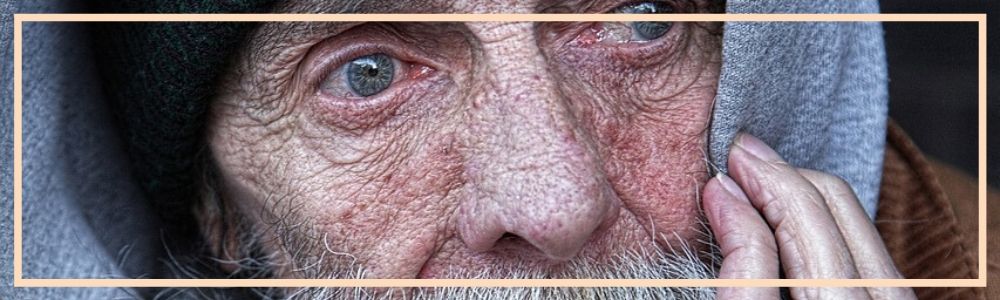
seeing God in the face of another, practising kindness, compassion, love your enemies, practising loving kindness

Every person you meet is a reflection of the Creator, loved and set upon this earth with a purpose & passion. They may have chosen not to follow their purpose or calling, but they are no less God’s children than the prodigal son.

They breathe in the same breath of life that you or I breathe.

The same way that you expect others to show you empathy & compassion for your mistakes and shortcomings give them that same latitude. You had a moment of “come to Jesus” on your spiritual path, whether you choose to believe and follow the Christian path or another.

But at some point, you had an awakening – a moment of accepting your gifts and callings. Of realising that everything before then was simply preparation for the spiritual path, you would choose.

Can you look at the homeless person or the drug addict before you and see their calling to be all they were created to be? Can you be patient and kind while they find the courage to accept it?

They are not the enemy, only friends that you haven’t yet had the pleasure of getting to know.

“Do I not destroy my enemies when I make them my friends?”
― Abraham Lincoln

Practical ways you can love your enemies

Start with humility

All love begins within, being willing to look at yourself with love and compassion. This humility allows you to forgive yourself, truly seeing your shadows, weaknesses & darkness. Acknowledging your mistakes and feelings that we try so hard to hide – shame, guilt and fear.

When we are humble, we can genuinely say “There, but for the grace of God, go I.

Focus on Divine Love

Loving God with all your heart, mind & soul allows you to love your neighbour as yourself. But it’s not just loving the Divine. It’s accepting reciprocation. Can you accept that you are loved? Can you allow Divine Love to fill your lungs with every breath you take, to fill your bloodstream and reach every cell of your body?

If you aim each day to be Divine Love in the world around you, you will come to realise that love is patient and kind, without envy, boasting, and self-seeking. This same Divine Love is not quick to anger, forgives easily and keeps no record of wrongs.

Could you live each day from a place of this kind of love?

Practice empathy & patience

Putting it into practice requires that we put ourselves in the shoes of others. Until we get to know another person, we are oblivious to their experiences, their family background, education, and even opportunities. What are the challenges and obstacles that they are currently faced with?

It’s easy to judge another when we make up stories in our head. It’s a lot more complicated when we take the time to truly listen and get to know what is going on in their lives. What mistakes have they made that they are struggling to overcome?

Could you allow yourself to see their pain and feel for them?

Practise forgiveness

Most of us know the line “and forgive us our trespasses as we forgive those who trespass against us” or some version of it. My experience has been that the hardest part of forgiving another person is admitting what I forgive them for!

I cannot forgive and release what I am not willing to admit exists. If I believe “I should not feel ashamed”, and so ignore my feelings of shame, I cannot forgive what I feel ashamed for. Until I am willing to admit to the existence of what I feel, I cannot experience it and allow it to flow. Likewise, if I am feeling hate towards someone and limit myself to “I am not supposed to hate anyone”, I make it impossible to work my way through it.

How often are we offended by what someone said because we judged them by the lens of what happened five or ten years ago (perhaps even with another person)? Who needs the forgiveness: the person that just offended you, the person that hurt you all those years ago, or you for carrying this all these years without facing it?

Practising forgiveness requires that you dig deep into your personal darkness and baggage. It’s one of the most uncomfortable tasks of my spiritual practice, even now.

Be willing to take a step back

Often, our perspective is tarnished by the lens and angle we are looking through. Are you ready to take a step back or to the side, to look from another angle?

For example, what if instead of seeing it just from your point of view, or the point of view of the other person, you pulled up a third chair and looked at the two of you from the perspective of an onlooker. What would you see? How does this inform your compassion?

And if you were to raise up, higher, from a bird’s eye view of all the moving pieces of the past hour, day, weeks or years that lead up to this moment and this encounter – what would you notice differently? About yourself? About them?

Dare to be love & compassion

“Want to keep Christ in Christmas? Feed the hungry, clothe the naked, forgive the guilty, welcome the unwanted, care for the ill, love your enemies, and do unto others as you would have done unto you.”
― Steve Maraboli

It takes a brave person to see another as a beautiful human being and human becoming. When we look through Divine Love, we see infinite potential in each person we meet. But first, you have to be open and vulnerable: willing to see yourself as infinite potential.

Perhaps the answer to your prayers is you, and you are meant to be the change in the world that you desire to see.

sign up, weekly newsletter, Divine Presence
Sign up to receive Beth’s weekly newsletter with the latest blog posts, journal prompts and affirmations.

End-of-Times – the Prophecies

Lectionary Readings: Nov 17, 2013

  • Luke 21: 5-19
  • Malachi 4: 1-2
  • Isaiah 12
  • Isaiah 65: 17-25

Dr. Ian Paisley, the fiery Irish cleric and politician was reputed to have been preaching one Sunday on the End Times – and in particular on the Day of Judgement.
As he reached the climax of his address he said that on the Day of Judgement “there would be wailing and gnashing of teeth”.
At which point an old woman put up her hand and said “Dr. Paisley, I have no teeth”
Paisley replied “Madam, teeth will be provided”

The French news agency, Reuters, dubbed the decade 1994-2003, “the Decade of Disasters”.  From 1994 to 2003, disasters killed 673,070 people and affected 2.58 billion people, causing $691 billion in estimated damage. In 2003 alone, 76,806 were reported killed.

Of course, all of that was before the December 26, 2004 earthquake and the resulting Tsunami, where killer waves slammed into the coastline of 11 Indian Ocean countries, resulting in at least 155,000 fatalities and 500,000 injuries. Some 5 million people lost their homes or access to food and water.

In the decade that followed we have the Haiti earthquake in 2010, with possibly as many as 159 thousand deaths. At least 3 million people were affected by this earthquake.

In March 2011, we watched in horror the breaking news and videos from the earthquake and resulting Tsunami in Japan and the Fukushima disaster. “Only” 20,000 people were killed in this disaster, with losses and rebuilding costing an estimated US$235 billion, making it the costliest natural disaster in world history.

In 2012, we have Hurricane Sandy, which once again “only” killed 199 people.  Of course, when compared to Hurricane Katrina in 2005, Sandy only caused economic damage, not the devastation.

Now we’re faced with the Philippine’s typhoon, with some 2,500 people confirmed dead and some 673 thousand people displaced.  I can only imagine that these families have no food, water, money, or clothing. Most no longer have homes or jobs to go back to. Therefore, they have no pay-checks coming in to provide for basic necessities. Relief efforts, unfortunately, are blocked by the debris left by the typhoon, making it difficult for emergency crews and food and supplies to get to where they are most needed.

In ongoing conflicts, we have the civil war in Syria, where according to the United Nations, the death toll reached 120,000 by September 2013.  More than 4 million Syrians have been displaced; more than 2 million Syrians fled the country.

Or what about climate change: Planet Earth stands on the cusp of disaster. This is not doom-laden talk but rather the considered opinion of 1,300 leading scientists from 95 countries who published a detailed assessment of the state of the world.  Two-thirds of the delicately-balanced ecosystems studied have suffered badly at the hands of man over the past 50 years…

Does it sound like end times to you?

In Luke 21, verse 11, we read:

“There will be great earthquakes, and there will be famines and plagues in many lands, and there will be terrifying things and great miraculous signs from heaven.”

Unfortunately, these verses from Luke 21 get worse before they get better:

9 And when you hear of wars and insurrections, don’t panic. Yes, these things must take place first, but the end won’t follow immediately.” 10 … “Nation will go to war against nation, and kingdom against kingdom. … 12 “But before all this occurs, there will be a time of great persecution. You will be dragged into synagogues and prisons, and you will stand trial before kings and governors because you are my followers.  … 16 Even those closest to you—your parents, brothers, relatives, and friends—will betray you. They will even kill some of you. 17 And everyone will hate you because you are my followers.[c]

Looking forward to this with great expectation, are we? Do you cringe when you read these verses from Luke? Do you try to find another meaning in the words? Do you think – that’s not relevant to today’s Christian?

Part of the prophecy from Luke already came to pass:  In AD 70 Titus, a Roman general, with 80,000 men, began a siege of Jerusalem. It was a difficult city to take, set on a hill, and defended to the death. The result was famine and terror, and there were even reports of cannibalism. At the end the Holy Place was burnt down; and Titus ordered the whole city and the Temple to be razed to the ground.

How many times will we look at the signs of the times and wonder?

All the disasters Jesus talks of in this discourse in Luke’s gospel could come together at this moment, or this afternoon. Or in a million years’ time. The fact is all that these things have happened at one time or another, sometimes two or three of them simultaneously.

The Bible commentator, Fitzmeyer writes, “There are almost as many interpretations of this passage as there are heads that think about it”.

Let me put it all in perspective for you:  THE BLACK DEATH from 1338 to 1350 killed some 75 million people in 12 years!  In some countries 90% of the population was wiped out.

WARS AND RUMOURS OF WARS: our world has lived through World War I, World War II, the Cold War, Nuclear arms race, Cuban Crisis, Berlin Wall, Korea, Vietnam, Iraq, Africa, Iraq again, Syria, the threat of Iran…  – the list goes on and on.

There is nothing new in predictions of great catastrophe. From way before the time of Jesus right up to the present day predictions of the end of the world have come and gone and have often left people with egg on their faces.

These kinds of predictions don’t get me excited at all – I will admit, I cringed when I read the Lectionary readings for this morning.

¿This is what I have to speak about?

We should all note, Jesus refused to be drawn into speculation about the end times;  “it is not for you to know the times or the dates that the Father has set by his own authority”….

But then again… why meditate and pray when you can worry…

How are we, as Christians, meant to react to all this turmoil in our world?
Jesus instructed us to get out there, outside of our comfort zones, and preach the Kingdom of Heaven.  We are called to be “witnesses”.

13 But this will be your opportunity to tell them about me.[b] 14 So don’t worry in advance about how to answer the charges against you, 15 for I will give you the right words and such wisdom that none of your opponents will be able to reply or refute you!   18 …  not a hair of your head will perish! 19 By standing firm, you will win your souls.

See… another passage that makes me uncomfortable!  Another cringing on the inside!

But that’s what it says, “tell them about me”.
So, today I want to discuss what it means to be a Christian in times of unrest.  What does it mean to be a witness of Christ?

Let you give you this from a legal perspective:
In a Court of Law, the witness is not the defence lawyer. He or she doesn’t have to explain why something happened.  We are not here to protect or justify God or Christ.  We don’t have to “fight” for God and explain why God is right and “you are wrong”.   We are not put here on earth to “defend the Bible”.
The witness is not the prosecution lawyer either. We don’t have to try and convince people to make a decision. That’s not our job either. We don’t have to point the finger and call people sinners.  We are neither the prosecutor, nor judge, nor jury, nor executioner.  It’s not our job to judge others!
A witness is a person who can testify to what he or she has experienced or knows of first hand.  All we are called to do is to say why it has made a difference in MY LIFE.

Christians are sometimes confused into thinking that everything should go perfectly, that there should be no more difficulties.
That hasn’t been your experience?

I’m a Christian, and things are going tough – so maybe I need a little more prayer…   Or you get the guilt trip – ¿am I at fault? That’s it, if only I had more faith, the hard times would go away.

That’s not what the Bible has taught us:
It doesn’t say “take up your sack of gold and follow me”, but rather “take up your cross”.

When you put your faith in Christ you will STILL experience pressures and persecution.

Let’s consider for a moment, our perspective of inner peace: If I asked you to choose, which one of the following images conveys to you a message of inner peace, which would you choose:  a Buddhist monk meditating or a Christian on his knees praying)?

How many would say the Buddhist Monk?

How many would say the Christian?

What’s wrong with this picture????

Let me remind you of one simple fact of life:

Life is 10% what happens to me and 90% how I react.

THAT’s what being a Christian is all about.  It’s not about “what happens to me”, but rather “how do I handle and react to these events”.

Have I found inner peace?  Can I share that peace with others?

Am I willing to persevere, knowing that the Holy Spirit has given me strength to face this? Can I encourage others to keep on “keeping on”?

It’s irrelevant whether the prophecies of the end of times are coming true right now – the ONLY question we have to answer is: Am I taking each opportunity I am given to show God’s love to my neighbour?

Charles Swindoll reminds us:

… we have a choice every day regarding the attitude we will embrace for that day. …The only thing we can do is play on the one string we have, and that is our attitude…

We can choose to worry.
We can choose to find inner peace.
Whatever we choose to do, we are called to bring God’s love and grace to people who may not have had the opportunity to experience it.

As we reach the Thanksgiving and Christmas season – I challenge each of you to take stock of your blessings, to take stock of your faith and your inner peace, and wherever you are at, that’s the place to start sharing from: whether you decide you have a lot to learn still or whether you feel that you have found peace, start sharing from there.

Creator God, we thank you for this day and for the transforming presence of the Holy Spirit in our lives. Lord, we pray not for tranquillity, nor that our tribulations cease; we pray for Your Spirit and Your love, and that You grant us strength and grace to overcome adversity; through Jesus Christ. Amen.

Leaving the walls in ruins

Lectionary Readings:

  1. 2 Samuel 7:1–14a
  2. Psalm 89:20–37
  3. Ephesians 2:11–22
  4. Mark 6:30–34, 53–56

What was the very first thing you did this morning when you woke up?
Think… for a moment:  How did you set the tone for your day?
Did you smile?
Did you groan?
Did you pull the covers over your head and think, just a couple more minutes, pleeeease God?
Did you say a small prayer: “Thank you God: This is the day that the Lord has made, I WILL rejoice and be glad in it!”?

How were those waking seconds?
Now… delve a little further: What is your morning routine?

  • Do you stretch and get all those toxins out of your muscles and moving through the lymphatic system?
  • Breathe deeply and get the toxins out of your lungs and fresh air to feed the cells of your body for this day?
  • Do you break your fast with water to cleanse your digestive system? Add a slice to lemon to it to improve the taste and the cleansing effect?
  • Do you go for a walk, get on the treadmill, use a rebounder, elliptic machine, body shaker – anything to wake all the cells and muscles of your body and make sure the blood and lymphatic system are truly flowing and cleansing the body?
  • How about your mind? What do you do first thing in the morning to rid your mind of the toxic thoughts and attitudes you may have suffered yesterday and ensure that today is filled with love?  Before you went to bed last night – did you let go of the toxins of the day? Or did you take them to bed with you?

As usually happens to me on the internet, I was searching for more information about the God gene and I went off on this tangent of how to renew your mind, find peace, and connect with God.  And that lead me to this webinar[1] about “how to start your day right”.

I’d never bothered to think about the first action I did when I woke up, until now that is!

Let me make a vivid comparison for you:
I’m pretty sure my first actions are groan and think: “OKAY, gotta get out of the bed and take the dogs for a walk”; stumble to the closet and get exercise gear and get dressed, make my way to the kitchen to fix a cup of tea, search the house for my keys, grab the leashes, find my mobile and earphones, and get out the door.

All the while, Susy and Mercedes are, on the other hand, bounding round the house! She woke up!  GREAT! Ah, fresh air! Scenery! Companionship!  I’m so excited. I can’t wait to go!  Yes, we’re going for a walk.  The day has begun!
They exude happiness and joy at the start of a new day.  They live in the moment.

The webinar about how to start your day right got me thinking:
What is it about the day that I groan about? Why do I “complain”?
Do I feel “obligated” to take the dogs for a walk and resent it?
No.
In fact, I actually enjoy it.
For an hour and 10 minutes I can shut myself off from the entire world, live in the present moment and only think about walking, the scenery, the dogs, the street, the trees, and morning…
To me, it doesn’t matter what the weather is doing. I’ve gone out in the pouring rain to walk the dogs.

I have other options – I could train the dogs to get up at 6.45 instead of 5.45… I could get up and put the dogs out of the bedroom and go back to bed, and Yari would take the dogs for a walk.  I don’t actually have to take the dogs for a walk every morning.
But that hour and 10 minutes of being out, breathing deeply, listening to my affirmations and meditations, is an essential part of my morning ritual.

The affirmations go something like this:
I joyously release the past, I am at peace. I forgive others and I set myself free from them. I forgive, and I let go of the past. I am forgiven, I forgive, I forgive others. I forgive myself and I set myself free from the past. I accept others for how they are, and how they are not. I forgive myself completely, let go of the past, and choose to live in the present moment. … I love and accept myself, exactly as I am now. I love everything about myself: I am perfect, whole & complete. [2]
I am in harmony with God, … I am always connected to my source, to Spirit, to God. I am one with all that is, and with the Power that created me, with Source, with Spirit, with God. The love, power, and presence of God protects & surrounds me, wherever I am, God is. I am the manifestation and infinite possibility of God. I live life in the present moment, in the now, in Spirit. My power is in the present moment, in my Source, in Spirit, from God. Who I am is Spirit, Source, God. … God is always present in my life. [3]

So… I have made a conscious decision, from now on, when I wake up, the first thing I am going to do is SMILE, and say “This is the day that the Lord has made, I will rejoice and be glad in it”. I will stretch those muscles and let my body release the toxins; I will breathe deeply, while I’m waiting for the water to boil to make my tea, and drink that glass of water with lemon juice.  And THEN I’m going to put on my sneakers and go and enjoy that hour and ten minutes that I am so blessed to have that I can spend bonding with my two dogs, meditating and spending time with God; choosing to forgive and getting into the right frame of mind for the rest of the day.

I choose to leave the walls which God has broken down, as rubble; and more importantly, to clear away the rubble, rather than using it to build new walls.

Jesus, in Matthew 5:43-48 teaches us:

43-47“You’re familiar with the old written law, ‘Love your friend,’ and its unwritten companion, ‘Hate your enemy.’ I’m challenging that. I’m telling you to love your enemies. … When someone gives you a hard time, respond with the energies of prayer, for then you are working out of your true selves, your God-created selves. This is what God does. He gives his best—the sun to warm and the rain to nourish—to everyone, regardless: the good and bad, the nice and nasty. If all you do is love the lovable, do you expect a bonus? Anybody can do that. If you simply say hello to those who greet you, do you expect a medal? Any run-of-the-mill sinner does that.

48“In a word, what I’m saying is, Grow up. You’re kingdom subjects. Now live like it. Live out your God-created identity. Live generously and graciously toward others, the way God lives toward you.”

And so, in Ephesians 2:11-22 we read:

14-15The Messiah … tore down the wall we used to keep each other at a distance. He repealed the law code that had become so clogged with fine print and footnotes that it hindered more than it helped. Then he started over. Instead of continuing with two groups of people separated by centuries of animosity and suspicion, he created a new kind of human being, a fresh start for everybody.

16-18Christ brought us together through his death on the cross. The Cross got us to embrace, and that was the end of the hostility. … He treated us as equals, and so made us equals. Through him we both share the same Spirit and have equal access to the Father.

19-22That’s plain enough, isn’t it? You’re no longer wandering exiles. … You’re no longer strangers or outsiders. You belong here, … God is building a home. He’s using us all—irrespective of how we got here—in what he is building. He used the apostles and prophets for the foundation. Now he’s using you, fitting you in brick by brick, stone by stone, with Christ Jesus as the cornerstone that holds all the parts together. We see it taking shape day after day—a holy temple built by God, all of us built into it, a temple in which God is quite at home.

Think of these walls that existed at the moment that Christ died:

  1. There’s the wall that kept the Gentiles from approaching the temple – marked by signs in both Greek & Latin – warning foreigners that they would be killed if they tried to enter further…
  2. Then there’s the wall that separated the males from the females – a gender wall, INSIDE the temple… right in the middle of God’s house!
  3. And inside that wall, there’s another wall, beyond which no lay person could pass.  Priests only from hereon in!
  4. And then there’s another wall – a curtain – that separated the holy things from the unholy.  Setting apart the Holy of Holies.

And yet, here we read in Ephesians that Christ knocked ALL of these walls down.  Jesus told us, and Ephesian repeats to us – there is NO ROOM for “us and them” in this new kingdom.  Everyone is welcome to come to God, to become spiritual beings, to have that personal relationship.

It’s interesting to notice that in the original Greek text, it doesn’t actually say the “circumcised” and the “uncircumcised”.  That’s a very politically correct translation. What it actually says in Ephesians is the “circumcised” and the “foreskins” – you know, that little piece of useless flesh that you cut off and throw away!  That’s what they were calling the gentiles.  Foreskins.[4]  It wasn’t merely a description.  It was a hateful slur against the new Christians.  Used by Christians to refer to other Christians.

One of the things we can learn from this passage of Ephesians is how our view of God and our relationship with God needs to be perfected.  Ephesians is about my identity in what God has done for me.  Paul calls me to be changed by Christ – but God Himself – to allow God’s spirit to work in me every day.  The debate about circumcision was about people changing themselves (physically) so that they could make themselves acceptable.  It contrasts our view: how God loves me just the way I am and God’s Spirit works to transform me; on the other hand: I must earn God’s love by changing myself to conform to man’s standard of what God wants of me.

Do I use hateful words, just as they were hateful in former centuries? Do I build walls?

Hostility, almost inevitably, goes both ways.  When a person is cruel and unjust, there is anger.  Cruel words lead to more cruel words, forgiveness is difficult.

We all know about walls.

  • The Great Wall of China – built to protect and to keep out the invaders.
  • The wall built in November 1940, by the Nazis, in Warsaw, Poland – to create a ghetto for hundreds of thousands of Jews to segregate them from the rest of the population of the city.
  • The wall built in August 1961, separating “East” and “West”, right down the middle of Berlin.  Separating families and friends.
  • A wall built in Belfast, Northern Ireland, to separate Protestants from Catholics

Yet, somehow, all of these walls are built on the foundations of fear, misunderstanding and hatred. We build these walls to protect us from being hurt, or being changed, or being vulnerable.  My wall feeds off your wall. When I come into contact with your wall, I build mine a little higher and little thicker.  Others learn not to be trusting or vulnerable when they run into my walls.[5]

So, Christ came into this world for the purpose of tearing down walls. It’s our job, however, to let go of the rubble.

Unfortunately, many of us see the pile of rubble that used to be the wall – we see that rock or stone that reminds us of the hurtful words spoken by another, and we use it as the cornerstone to rebuild a new wall. For cement, we’ve used the mortar of name-calling, labelling and prejudice.  Rather than understanding that we need to throw away all the rubble that is left from the wall, we hold onto it.  “I might need it later”.

This is not what we are called to do.  We all live in the same house – God’s house.

Ephesians 4: 31-32 call us to:

Let all bitterness and wrath and anger and clamour and slander be put away from you, along with all malice. Be kind to one another, tender-hearted, forgiving one another, as God in Christ forgave you.

1 Peter 3: 8-18 reminds us:

Finally, all of you, have unity of mind, sympathy, brotherly love, a tender heart, and a humble mind. Do not repay evil for evil or reviling for reviling, but on the contrary, bless, for to this you were called, that you may obtain a blessing. For “Whoever desires to love life and
see good days, let him keep his tongue from evil and his lips from speaking deceit; let him turn away from evil and do good; let him seek peace and pursue it. For the eyes of the Lord are on the righteous, and his ears are open to their prayer.

We have been given the gift of peace from God – but it’s hard to receive a gift if you aren’t holding out open hands to receive it.  It’s especially hard when your hands are busy clutching the bricks for building personal walls, especially those bricks labelled prejudice, bias and judgement.

We are God’s masterpieces, created by God to do the good works for which we were predestined.  God Himself is our peace – peace in the full sense of “Shalom”.  Not just the absence of animosity and outright fighting, but “shalom” in the sense of true oneness, wholeness and healthiness.  All roads to peace begin with God.

And to be one with God, to commune with Him, there is no room for personal or group grudges.  There’s no room for self-righteousness or holding on to hate or malice.  To be in harmony with God, we cannot break fellowship with our fellow man over differences in doctrine, liturgy, politics or controversial moral issues.  This is a denial of our oneness with God, which we have from Christ.

Christ tears down the walls – who are we to rebuild them?  Jesus abolished bitterness, unforgiveness, and unresolved anger. It chokes our fruitfulness, keeps up from growing and hinders our ability to truly pray and be in communion with God.

I started this morning, asking “how do you start each day?” Each day we have to make sure that we clean away any rubble left from the ruins of the walls that God has torn down.

The same way that we take the time to cleanse our body of toxins, we need to clean our heart and mind of the toxic materials that we used to build those walls.  The same way that we hop in the shower and let the water wash away anything that stains us, we have to let God’s love wash away all the stains in our heart.

Because we have this promise from God:

I will give you a new heart and put a new spirit in you; I will remove from you your heart of stone and give you a heart of flesh.[6]

And so we cry out each morning to God for cleansing:

Create in me a clean heart, O God, and renew a right spirit within me.[7]


[1] http://www.youtube.com/watch?v=PliFBr__T7Y&feature=related
[2] Dr. Harry Henshaw – Affirmations for Forgiveness
[3] Dr. Harry Henshaw – Affirmations for Spirituality
[4] http://michaeldavidjay.wordpress.com/2010/02/01/sermon-on-ephesians2_11-22/
[5] Beth Richardson.  From http://www.pflame.org/html/worship/sermons/PFUMC_Sermon_20090621.pdf
[6] Ezekiel 36:26
[7] Psalms 51:10