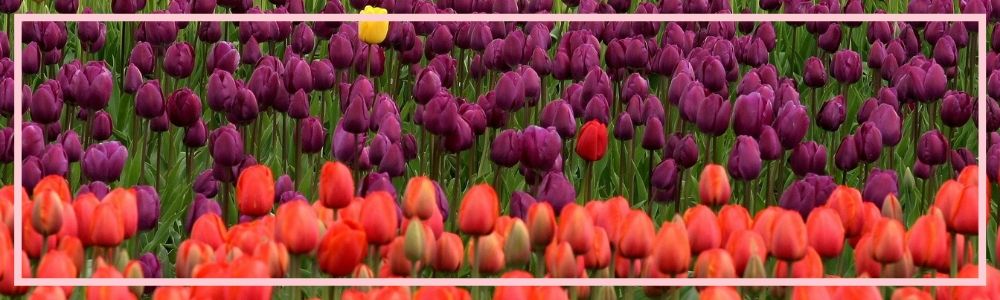
Radiance of faith: how to let your love shine bright

Today we remember and celebrate the birth of Jesus, and how his lessons of love shine bright through the ages. All over the world, different peoples and cultures join together to remember the birth of this bright light in the midst of darkness. 
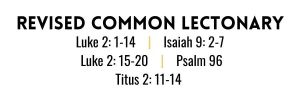
revised common lectionary, luke, isaiah, psalm, titus, bright light, radiance of faith, love, christmas message, birth of jesus

Our story starts out with homeless travellers, forced by colonisers and imperialists to return to a town that was no longer home. For them, this meant a winter’s nights spent in a stable.

No central heating (possibly no heating at all). No electricity or running water. Instead, they put up with straw beds, the smell of dung and moisture, and possibly leaks in the roof and a cold wind chill.

It was only slightly better than staying outdoors. 

We’re told that Mary gave birth in these conditions. Forget

  • the midwife, doctor or antibiotics
  • warm water and clean towels
  • another pair of hands to help Joseph clean up the baby after it was born
  • close family and friends to help out and bring a caserole. 

Instead, it is a very humble birth, as you might find in an indigenous village of the third world, yet devoid the community support. 

This is the birth that we celebrate at Christmas. 

A birth of humility, yet full of a mother’s love and the faith of strangers. 

A birth that changed the world, how we see God, and even how we interact with God. 

From these humble beginnings, we find ourselves two thousand years later here in this Church remembering the meaning of Christmas.

The Radiance of Faith

In Luke we read that following the birth of Jesus, an angel appeared to shepherds, watching their sheep in the fields around Bethlehem.

Perhaps you would be more acquainted with cowboys than shepherds, unless you live in the outback of Australia, the highlands of Scotland or various parts of the Middle East.

But most of us know that these shepherds were likely in worse conditions than Mary and Joseph who were in the stable. They were likely under the stars, without a roof or tent over their heads. Exposed to the elements in the middle of winter.

And it’s to these people that the angel appears with the good news of the birth of the Messiah.

The angel didn’t appear to the priests and pharisees.  He didn’t go to the palace and announce the birth to the king or to Pontius Pilate as the representative of Rome in Judea.

Instead, the good news was shared with lowly shepherds.

In what was undoubtedly a terrifying way. Great light and fanfare on a quiet night in the mountains.

Scared much? 

And yet, what was the response of the shepherds after overcoming their fear?

Rejoicing!

More importantly: they responded with action.

They left their flocks and went straight to visit Mary, Joseph and Jesus. Without waiting. 

This is their example to us of the radiance of faith.

Hearing. Believing. Taking action based on that faith and belief.

So, for each of us today, let’s take a moment to reflect on our faith in action.

How do we live a life of faith?

Titus tells us

For the grace of God has appeared, bringing salvation to all, training us to renounce impiety and worldly passions and in the present age to live lives that are self-controlled, upright, and godly,

Titus 2: 11-12

The grace of God appears

It all starts with Divine grace. Not because we deserve it or have worked for it. Simple a Divine gift from above.

We are merely asked to accept it.

Because we have accepted this Divine Love, we can begin to change our habits and way of being.

Training us

Titus then goes on to say that this grace of God, this salvation, trains us. The grace is instantaneous.

But our transformation is something that we work on.

We are trained in this, day by day.

What we renounce or quit

We start by choosing to renounce those habits and ways of living that leave us in the darkness. Titus calls these worldly passions. 

Walking in the light of love is a choice. A choice we make daily.

And the principal part of that choice is to quit those practices, attitudes and ways of living that keep us chained.

This is different for each person. Perhaps it’s gluttony or being lazy. For others, it is a shopping addiction or smoking. And yet, for another, it might be bitterness and hate.

We start by choosing to let go, renounce and quit.

The new habits we adopt

Then, we open our time, energy and focus up to the opportunity to adopt new habits and ways of being.

Titus says that in the present age – at this moment – we choose to live lives of self-control. Creating a new habit requires discipline, attention and focus.

It’s more than just making a New Year’s resolution to do things differently. For many of us, it’s noticing our hidden triggers and what stimulates the old habits.

For example: gluttony is often about avoidance of emotions. But we get stuck on thinking that gluttony is about the food. There is nothing wrong with the food. What we need to look at is our relationship with food. When we use food to cover up and avoid, we end up eating more than we need because we don’t want to feel emotionally uncomfortable. It’s easier to feel physically uncomfortable.

So, when we start to notice our triggers and what stimulates the old, then we can adopt the new.

Coming back to our example of gluttony: if I am avoiding my emotions, when I accept God’s love and grace in my life, then I can start to love myself. At this moment, I interrupt the old habit of over-eating and instead sit with the emotions and feelings that had me uncomfortable.

With this love and grace that shone down from me from above, I practice loving and accepting myself, rather than avoiding my feelings by eating them. 

Let your love shine bright

Once I have mastered this, even in one area of my life, it’s possible to let that love shine bright in many other areas of my life.

Other habits are easier to break and new habits become easier to make.

As I change – emotionally, mentally, physically and spiritually – others can see the change in me.

But it all starts because of a message I received of Divine Love – acceptance of Divine Grace – that allows me to then go out, like the shepherds at Christmas, and share with others about this miracle of transformation.

How will you choose, this Christmas, to let your love shine bright in your neighbourhood and community? 
God is enriching every aspect of your lives, grace of God, will of God, called to be saints, thanksgiving, enriched in speech, knowing what to say, knowledge, lacking, having all the gifts, waiting, revealed, sustain you till the end, God is faithful, set apart for service, called into community, grace and peace, the right words to say, everything you need to know, necessary gifts, faithfulness

God is enriching every aspect of your lives

Lectionary reading: 1 Corinthians 1: 1-9

In this first letter from Paul to the Corinthians, he reminds them that not only is he designated by the will of God, but rather that all of them are also called.

Leaving aside my personal bones to pick with Paul, I cannot ignore the deep learnings that are available to us from reading this passage. Each of us, even today, has a calling. These verses remind us that we are up to this task – the task of fulfilling our purpose – because the Divine enriches every aspect of our lives.

I want to explore:

  • What we are invited into?
  • Consider the tools and gifts we are each given to fulfil our life mission.

Your Divine purpose

Every tree, every blade of grass, each bird fulfils a purpose on this planet. When we take the time to simply sit and notice, we see how each living being on earth, whether plant, animal or human, fits into the bigger scheme of life.

Nonetheless, we also see a lot of confusion – internally and in society – about our purpose and callings. Many of us are merely “staying alive” and struggling to survive.

Growing up in a very evangelical church, I was brought up to believe that my purpose would be “a cross to carry”. I was terrified of discovering my purpose, hoping it would not be a calling to go to Africa as a missionary. In churches, we talk about “knowing the will of God in your life”, but most of the time it’s put on us as “you’re called into missions” or “you’re called to preach the word of God”.

But if we take a look at most of the “heroes” of the Bible, we find that they were ordinary people with ordinary jobs. They simply happened to be in the right place at the right time. And when they were asked to step into doing something “big”, their lives had already prepared them for this.

Consider Deborah, for example. While she was considered a prophet, she was busy doing her day-to-day responsibilities of being the local “judge”. I’m pretty sure that she didn’t see her job, most days, as anything out of the ordinary. Especially if you watch any episodes of traffic courts or have ever spent a couple of hours in your local magistrate’s court, you will see the everyday complaints that people bring. There was nothing remarkable about her calling — until there was.

Knowing your Divine purpose starts with recognising that we were already given the necessary gifts to fulfil our mission. Paul reminds the Corinthians of this:

“you are not ill-equipped or slighted on any necessary gifts”.

If you are unsure what your purpose and mission are, a great place to start is looking at your talents and natural gifts and abilities. You have everything you need to fulfil your purpose in life. Because a bird has wings, it flies (or if it’s a chicken, it tries to).

I doubt cherry trees complain to each other that they wish they were able to produce oranges, and yet we waste so much of our time lamenting the gifts and talents that we don’t have.

cherry trees, enriched, loved, divine love, loved by the divine, purpose in life

Today I want to invite you to do an inventory of your natural gifts and talents, and consider your calling and purpose in this light.

Set apart for service

Think for a moment of when you are arranging a table for dinner: you go to the cupboard, and you pick up the plates. If there are four of you for dinner, you don’t choose six plates, but only four. You set them aside for service: the ones that you need when you need them.  The rest of the dishes sit in the cupboard, waiting to be shown when they will be required.

Know this: you have been set aside for service. Perhaps you feel like you are sitting in the cupboard – always on the shelf rather than in the game. I wonder if Deborah thought that she was on the shelf as she worked through listening to all the petty complaints that were brought before her.

But Paul reminds us that our purpose will be revealed.

General callings

There are two other callings, apart from our life purpose. We are called to be saints, and we are called into community.

Called to be saints

While Deborah might have been “a saint”, the first description of Deborah was that she was the wife of Lapidoth. I wonder if Lapidoth considered her to be “a saint”; probably not in the way that you and I imagine the word to mean.

So, today I invite you to rewrite your definition of what it means to be a saint!

The calling to be saints is about how we live our day-to-day lives. If I had to sum it up in one word, I would say it’s compassion: 

  • Love for the Divine, with a constant connection that we are overflowing with love and compassion
  • Love for our neighbour as ourself

Compassion allows us to be kind and patient. It will enable us to live with love in our lives, as mentioned in 1 Corinthians 13:

  • not envious, proud or boastful
  • not self-seeking or dishonouring others
  • it keeps no record of wrongs and is not easily angered
  • protects
  • trusts
  • hopes
  • perseveres

We are all called to live in this place of being fulling aligned with Divine Love. What is your personal definition of what it means to live as a saint? Make it realistic for you, rather than something so out of reach that you could not aspire to live each day in sainthood!

Called into community

You are also called into community: that we cannot live in isolation. Take a moment and consider what your community looks like:

  • family
  • friends
  • work colleagues
  • hobbies and activities that you participate in
  • volunteering & community activities
  • your neighbourhood where you live
  • your spiritual community

What does your community look like?

spiritual community, volunteering, charity, neighbourhood, family relationships, social life, professional relationships

God is enriching every aspect of your life

You are promised that nothing is lacking because you have all the gifts that you need. Paul describes this as

God is enriching every aspect of your lives.

He then goes on to explain what he means by this.

You are enriched in speech

This means, when you are in touch with the Divine and that deep inner knowing, you will have the right words to say. Enriched in speech is knowing what to say and when to say nothing.

Most of us want to think about what to say. We make up scenarios and speeches in our head, failing to listen to the still small voice of Spirit.

Consider silence and just going within to listen, confident that you are enriched in speech.

You are enriched in knowledge

Everything you need to know, you will know. Can you trust this?

My first “real job” at sixteen was working as a cashier at McDonald’s: “Would you like fries with that?”. Later in life, I have come to cherish what I learned from “would you like fries with that?” – because it is a lesson in upselling. McDonald’s sells millions of fries every year because of this simple phrase. The client is already there, and they have their wallet in their hand, ready to buy something. The cashier doesn’t know what the client wants, and often the result of the question is “no, but I will have…”. While they didn’t sell the fries, they got an additional sale from the client.

This mundane, everyday job taught me a skill that has served me well over the past thirty years. Am I always open to adding more value to someone else’s life?

You, too, are enriched with knowledge. You have life experiences, abilities and life lessons that you possibly haven’t tapped into. You might not be aware of everything you know.

But trust that you know everything that you need to know when you need it.  You are enriched with knowledge.

Enriched with God’s grace, peace & faithfulness

Today I want to remind you that you are enriched with grace, peace and faithfulness. I don’t mean that you show others mercy, but instead that you accept grace, be open to a peace that transcends your understanding, and that you experience Divine faithfulness towards you.

“Grace is love that cares and stoops and rescues.”(John Stott)

It is said that the grace of God is the opposite of karma – it’s receiving the good that you do not deserve because you are a child of God. You are loved and cherished. In my life, I can see where I have blocked grace, continuing to believe that I deserve punishment and the consequences of my decisions and actions. Nonetheless, we are enriched with grace. Are you willing to accept more grace?

enriched with grace, peace that passes understanding, peace that transforms, faithfulness

We are also enriched with peace: that peace that while we are waiting, we will be sustained emotionally, mentally, physically and spiritually. It’s the peace that we hold within us, even in the middle of the storm. This inner peace does not depend on what is happening in our environment. While we are aware of the situation and in touch with it – we are present – but we also connect with the Divine. It is that Divine that allows us to say

I am not overcome by the storm, because I am one with the storm.

Sometimes storms clear our path. Can you recognise this inner peace which sustains you while you wait?

Finally, the Divine is faithful, constant and true. When I say we are enriched with faithfulness, I am not referring to your faith in God, but rather how the Divine relates to you! It doesn’t matter how small your faith is, but rather that we know that Divine Love is faithful. We can trust that all things are working for our good and that we are enriched with all good things.

Thanksgiving

Our response to this is one of gratitude and thanksgiving.

If you are struggling to discover your purpose, consider a daily practice of gratitude, where you each day you focus your attention and thanksgiving on your talents, gifts, strengths and abilities. Start to notice the patterns and what you genuinely enjoy. Be grateful for the desires of your heart and the wisdom and insight that you gain from being present.

Take note of the times when you receive grace: when in spite of the natural consequences of your choices and decisions, you get a second chance! Practice thanksgiving for all those opportunities.

Start to notice when you are filled with peace, in spite of the situations and challenges you are facing. Be grateful for those moments.

Notice the presence of the Divine in your life in each moment of the day. Sit in silence and be thankful.

sign up, weekly newsletter, Divine Presence
Sign up to receive Beth’s weekly newsletter with the latest blog posts, journal prompts and affirmations.