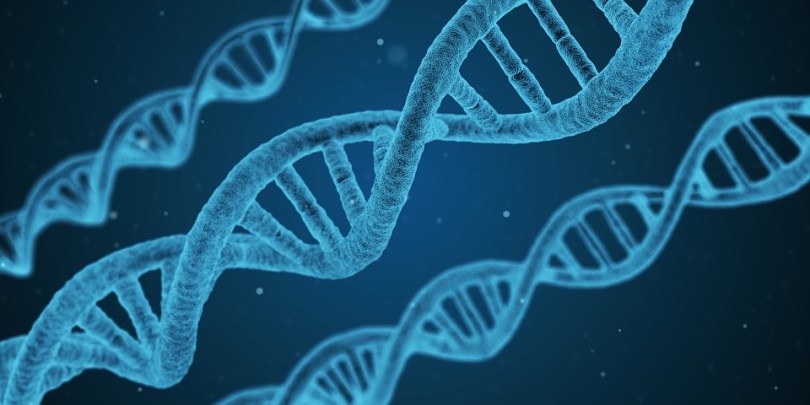
God is enriching every aspect of your lives, grace of God, will of God, called to be saints, thanksgiving, enriched in speech, knowing what to say, knowledge, lacking, having all the gifts, waiting, revealed, sustain you till the end, God is faithful, set apart for service, called into community, grace and peace, the right words to say, everything you need to know, necessary gifts, faithfulness

God is enriching every aspect of your lives

Lectionary reading: 1 Corinthians 1: 1-9

In this first letter from Paul to the Corinthians, he reminds them that not only is he designated by the will of God, but rather that all of them are also called.

Leaving aside my personal bones to pick with Paul, I cannot ignore the deep learnings that are available to us from reading this passage. Each of us, even today, has a calling. These verses remind us that we are up to this task – the task of fulfilling our purpose – because the Divine enriches every aspect of our lives.

I want to explore:

  • What we are invited into?
  • Consider the tools and gifts we are each given to fulfil our life mission.

Your Divine purpose

Every tree, every blade of grass, each bird fulfils a purpose on this planet. When we take the time to simply sit and notice, we see how each living being on earth, whether plant, animal or human, fits into the bigger scheme of life.

Nonetheless, we also see a lot of confusion – internally and in society – about our purpose and callings. Many of us are merely “staying alive” and struggling to survive.

Growing up in a very evangelical church, I was brought up to believe that my purpose would be “a cross to carry”. I was terrified of discovering my purpose, hoping it would not be a calling to go to Africa as a missionary. In churches, we talk about “knowing the will of God in your life”, but most of the time it’s put on us as “you’re called into missions” or “you’re called to preach the word of God”.

But if we take a look at most of the “heroes” of the Bible, we find that they were ordinary people with ordinary jobs. They simply happened to be in the right place at the right time. And when they were asked to step into doing something “big”, their lives had already prepared them for this.

Consider Deborah, for example. While she was considered a prophet, she was busy doing her day-to-day responsibilities of being the local “judge”. I’m pretty sure that she didn’t see her job, most days, as anything out of the ordinary. Especially if you watch any episodes of traffic courts or have ever spent a couple of hours in your local magistrate’s court, you will see the everyday complaints that people bring. There was nothing remarkable about her calling — until there was.

Knowing your Divine purpose starts with recognising that we were already given the necessary gifts to fulfil our mission. Paul reminds the Corinthians of this:

“you are not ill-equipped or slighted on any necessary gifts”.

If you are unsure what your purpose and mission are, a great place to start is looking at your talents and natural gifts and abilities. You have everything you need to fulfil your purpose in life. Because a bird has wings, it flies (or if it’s a chicken, it tries to).

I doubt cherry trees complain to each other that they wish they were able to produce oranges, and yet we waste so much of our time lamenting the gifts and talents that we don’t have.

cherry trees, enriched, loved, divine love, loved by the divine, purpose in life

Today I want to invite you to do an inventory of your natural gifts and talents, and consider your calling and purpose in this light.

Set apart for service

Think for a moment of when you are arranging a table for dinner: you go to the cupboard, and you pick up the plates. If there are four of you for dinner, you don’t choose six plates, but only four. You set them aside for service: the ones that you need when you need them.  The rest of the dishes sit in the cupboard, waiting to be shown when they will be required.

Know this: you have been set aside for service. Perhaps you feel like you are sitting in the cupboard – always on the shelf rather than in the game. I wonder if Deborah thought that she was on the shelf as she worked through listening to all the petty complaints that were brought before her.

But Paul reminds us that our purpose will be revealed.

General callings

There are two other callings, apart from our life purpose. We are called to be saints, and we are called into community.

Called to be saints

While Deborah might have been “a saint”, the first description of Deborah was that she was the wife of Lapidoth. I wonder if Lapidoth considered her to be “a saint”; probably not in the way that you and I imagine the word to mean.

So, today I invite you to rewrite your definition of what it means to be a saint!

The calling to be saints is about how we live our day-to-day lives. If I had to sum it up in one word, I would say it’s compassion: 

  • Love for the Divine, with a constant connection that we are overflowing with love and compassion
  • Love for our neighbour as ourself

Compassion allows us to be kind and patient. It will enable us to live with love in our lives, as mentioned in 1 Corinthians 13:

  • not envious, proud or boastful
  • not self-seeking or dishonouring others
  • it keeps no record of wrongs and is not easily angered
  • protects
  • trusts
  • hopes
  • perseveres

We are all called to live in this place of being fulling aligned with Divine Love. What is your personal definition of what it means to live as a saint? Make it realistic for you, rather than something so out of reach that you could not aspire to live each day in sainthood!

Called into community

You are also called into community: that we cannot live in isolation. Take a moment and consider what your community looks like:

  • family
  • friends
  • work colleagues
  • hobbies and activities that you participate in
  • volunteering & community activities
  • your neighbourhood where you live
  • your spiritual community

What does your community look like?

spiritual community, volunteering, charity, neighbourhood, family relationships, social life, professional relationships

God is enriching every aspect of your life

You are promised that nothing is lacking because you have all the gifts that you need. Paul describes this as

God is enriching every aspect of your lives.

He then goes on to explain what he means by this.

You are enriched in speech

This means, when you are in touch with the Divine and that deep inner knowing, you will have the right words to say. Enriched in speech is knowing what to say and when to say nothing.

Most of us want to think about what to say. We make up scenarios and speeches in our head, failing to listen to the still small voice of Spirit.

Consider silence and just going within to listen, confident that you are enriched in speech.

You are enriched in knowledge

Everything you need to know, you will know. Can you trust this?

My first “real job” at sixteen was working as a cashier at McDonald’s: “Would you like fries with that?”. Later in life, I have come to cherish what I learned from “would you like fries with that?” – because it is a lesson in upselling. McDonald’s sells millions of fries every year because of this simple phrase. The client is already there, and they have their wallet in their hand, ready to buy something. The cashier doesn’t know what the client wants, and often the result of the question is “no, but I will have…”. While they didn’t sell the fries, they got an additional sale from the client.

This mundane, everyday job taught me a skill that has served me well over the past thirty years. Am I always open to adding more value to someone else’s life?

You, too, are enriched with knowledge. You have life experiences, abilities and life lessons that you possibly haven’t tapped into. You might not be aware of everything you know.

But trust that you know everything that you need to know when you need it.  You are enriched with knowledge.

Enriched with God’s grace, peace & faithfulness

Today I want to remind you that you are enriched with grace, peace and faithfulness. I don’t mean that you show others mercy, but instead that you accept grace, be open to a peace that transcends your understanding, and that you experience Divine faithfulness towards you.

“Grace is love that cares and stoops and rescues.”(John Stott)

It is said that the grace of God is the opposite of karma – it’s receiving the good that you do not deserve because you are a child of God. You are loved and cherished. In my life, I can see where I have blocked grace, continuing to believe that I deserve punishment and the consequences of my decisions and actions. Nonetheless, we are enriched with grace. Are you willing to accept more grace?

enriched with grace, peace that passes understanding, peace that transforms, faithfulness

We are also enriched with peace: that peace that while we are waiting, we will be sustained emotionally, mentally, physically and spiritually. It’s the peace that we hold within us, even in the middle of the storm. This inner peace does not depend on what is happening in our environment. While we are aware of the situation and in touch with it – we are present – but we also connect with the Divine. It is that Divine that allows us to say

I am not overcome by the storm, because I am one with the storm.

Sometimes storms clear our path. Can you recognise this inner peace which sustains you while you wait?

Finally, the Divine is faithful, constant and true. When I say we are enriched with faithfulness, I am not referring to your faith in God, but rather how the Divine relates to you! It doesn’t matter how small your faith is, but rather that we know that Divine Love is faithful. We can trust that all things are working for our good and that we are enriched with all good things.

Thanksgiving

Our response to this is one of gratitude and thanksgiving.

If you are struggling to discover your purpose, consider a daily practice of gratitude, where you each day you focus your attention and thanksgiving on your talents, gifts, strengths and abilities. Start to notice the patterns and what you genuinely enjoy. Be grateful for the desires of your heart and the wisdom and insight that you gain from being present.

Take note of the times when you receive grace: when in spite of the natural consequences of your choices and decisions, you get a second chance! Practice thanksgiving for all those opportunities.

Start to notice when you are filled with peace, in spite of the situations and challenges you are facing. Be grateful for those moments.

Notice the presence of the Divine in your life in each moment of the day. Sit in silence and be thankful.

sign up, weekly newsletter, Divine Presence
Sign up to receive Beth’s weekly newsletter with the latest blog posts, journal prompts and affirmations.
gratitude, say grace, grace, thankful, thanks, grateful, sustained, connected, inspired

The practice of gratitude

How do you practice gratitude?

“You say grace before meals. All right.
But I say grace before the concert and the opera, and grace before the play and pantomime, and grace before I open a book, and grace before sketching, painting, swimming, fencing, boxing, walking, playing, dancing and grace before I dip the pen in the ink.”  ― G.K. Chesterton

I’m 23 days through the 28 days of “The Magic”, by Rhonda Byrne. You can say what you like about “oh, it’s New Age” or whatever you want, but I have loved the practical application of gratitude in my life this month!Read More »

Sermon: Abundance of Grace

How many of you are awake this morning?  I’m looking for a show of hands here…

How many of you were awake while Betsy read the 7 verses from Romans 5: 12-17?  English Standard Version.  It seems amazing that the entire message of the Bible, from Genesis to the end,  is found here, all summed up neatly in seven verses.

If you all understood it, I don’t need to give you this sermon, and we can go straight to the offertory (we’ll skip the prayers) and then head downstairs to the coffee break.  How does that sound?

How many of you think you don’t need to hear this sermon?

How many of you think you can stay awake until I finish the sermon?

We’ll see how you all go with that, shall we?  …

This morning I’m going to take you on an intellectual (read: scientific journal mumbo jumbo), winding maze through one of the toughest texts that I’ve ever had to prepare for.

I am going to try to give you an explanation that you can hopefully understand…  although I am going to rely a bit on my high-school science as it relates to DNA sequencing in the human body and a very basic knowledge of NLP (NeuroLinguistic Programming).

I want to start with the idea of the “Original Sin” and the effect of that “Original Sin” on mankind and how that is passed down from generation to generation.  Verse 12 of Romans 5 starts with

“just as sin came into the world through one man, and death through sin, and so death spread to all men”

We’ve all been taught that Adam had everything he needed to live eternally, but that because of his sin in the garden of Eden, life becomes finite instead of infinite – death enters the world.

And I want to add to that mix the verse from Exodus 34:7 (ESV) that says:

Keeping steadfast love for thousands, forgiving iniquity and transgression and sin, but who will by no means clear the guilty, visiting the iniquity of the fathers on the children and the children’s children, to the third and the fourth generation.”

And I’ve wondered to myself how that might be possible on a molecular and physical level – can science explain what the Bible says happened to Adam because of sin and to all mankind, through the passing of the sin from generation to generation?  How does Adam’s bad nature get down to me all these millennia later? Well, some say, it’s like pollution or poison poured into a river. If a company dumps hundreds of liters of mercury into a river, then no matter how far downstream you go, you still get mercury poisoning.

Now – today I’m not going to give you a definition of sin – or even discuss what Adam’s sin was – trying to become like God, transgressing the Commandment God gave him, or whether sin is simply missing the mark of the most perfect version of yourself that God created you to be (like the archer that fails to hit the target).

What I want to look at is the effect that sin has upon us, as a human race, and then briefly touch about the gift of Abundance of Grace that we are promised in Romans 5: 17.

Our bodies have 3 billion genetic building blocks, or base pairs, that make us who we are. And we are somewhere between 99.5 to 99.9% similar to the person next to us.  A printed version of your entire genetic code would occupy some 262,000 pages! Of those pages, only some 500 would be unique to you. So how much of that do you think you inherited from 20 generations back?  How similar does that make you to the person sitting behind you?

And it seems that in 2017, scientists are getting closer to having the answers as they study the effects of stress and life-styles on our DNA codes and sequencing.  And now it seems that there is a reason for this, on 2 levels: epigenetics and the shortening of our telomeres (the protective casing at the end of a strand of DNA).   The field of epigenetics refers to the science that studies how the development, functioning and evolution of biological systems are influenced by forces operating outside the DNA sequence, including intracellular, environmental and energetic influences (and by energetic, I also mean the emotional forces that affect our bodies organs, such as when we get angry, are upset, or stressed and tired, especially for long periods of time).

Since the 1970s, researchers had known that the tightly wound spools of DNA inside each cell’s nucleus require something extra to tell them exactly which genes to transcribe, whether for a heart cell, a liver cell or a brain cell.

One such extra element is the methyl group, a common structural component of organic molecules. The methyl group works like a placeholder in a cookbook, attaching to the DNA within each cell to select only those recipes —  genes — necessary for that particular cell’s proteins. Because methyl groups are attached to the genes, residing beside but separate from the double-helix DNA code.  Originally these changes were believed to occur only during fetal development. But it has already been shown that DNA can be added to in adulthood, setting off a cascade of cellular changes resulting in cancer, diabetes or other illnesses.  Not only that, but epigenetic change could be passed down from parent to child, one generation after the next (hence you find the reference in the Bible that the sins of the fathers are passed down to the son to the third and fourth generations). A study from Randy Jirtle of Duke University showed that when female mice are fed a diet rich in methyl groups, the fur pigment of subsequent offspring is permanently altered. Just by playing with the diet, they could alter the colour of the fur of the mice.  Now, what if emotions, such as guilt, could play a similar role?

The medical field has already shown that stress has this particular effect.  Telomeres are a protective casing at the end of a strand of DNA. Each time a cell divides, it loses a bit of its telomeres. An enzyme called telomerase can replenish it, but chronic stress and cortisol exposure decrease your supply. When the telomere is too diminished, the cell often dies or becomes pro-inflammatory. This sets the aging process in motion, along with associated health risks.

Now we all know that old wives tale that tells a young pregnant woman not to cry during the pregnancy because her child will bear the effects of it through their entire life – but now science is beginning to understand that the negative effects of stress begin before conception.  A baby’s intrauterine environment is shaped by a mom’s pre-existing physical health. There have also been several studies looking at maternal health and telomeres in offspring: the higher a mom’s prenatal anxiety, the shorter the baby’s telomere length (i.e. the shorter the life span).

According to the new insights of behavioral epigenetics, traumatic experiences in our past, or in our recent ancestors’ past, leave molecular scars adhering to our DNA. Jews whose great-grandparents were chased from their Russian shtetls; a child whose grandparents lived through the ravages of a Revolution; young immigrants whose parents survived massacres; anyone who grew up with alcoholic or abusive parents — all carry with them more than just memories.

So what on earth does any of all this scientific mumbo jumbo have to do with the “Original Sin”, and Paul’s discussion of the original Adam and the posterior Adam (Jesus)?

Well, for starters – it explains how our genetic make up is affected by our habits, our environment, our diet, our stress, and even the stress and anxiety of being ashamed, berating ourselves, or failing to accept God’s forgiveness of our sins.  It explains how any resentment, bitterness or anger that we carry towards another person, when we fail to forgive, affects us to the most innermost of our being as David describes in the Psalms.

1. Your beliefs influence your behavior.  

One of the most basic ways that beliefs can shape reality is through their influence on behavior—no quantum physics or molecular genetics knowledge required.  Beliefs about your basic character—who you are as a person on a fundamental level—can be especially powerful. Research suggests that while guilt (feeling that you did a bad thing) can motivate self-improvement, shame (such as that felt by Adam & Eve in the garden), tends to create a self-fulfilling prophecy, reducing hope and undermining efforts to change, leaving you stuck in the rut of the very behavior you are ashamed of.

And your behavior will directly impact you with respect to your habits, whether they are good habits, or bad habits.

2. Your feelings directly affect your DNA:   

“When we have negative emotions such as anger, anxiety and dislike or hate, or think negative thoughts such as ‘I hate my job,’ ‘I don’t like so and so’ or ‘Who does he think he is?’, we experience stress and our energy reserves are redirected,” and I’m not talking about a positive redirecting. Part of our energy reserves, which otherwise would be put to work maintaining, repairing and regenerating our complex biological systems, which you probably know as your “body”, are used to confront the stresses these negative thoughts and feelings create, leaving your body unattended.

On another level, science is now beginning to understand that humans have multiple brains: the one you know in your head, your heart brain (which generates much of your energy field), and your gut brain.  So, when you are feeling heavy-hearted, what effect is this physically having on your DNA and body – how is it affecting the helix structure of your DNA strands?  When you are in a gut-wrenching panic or suffering constant anxiety, what effect is this having on the nutrients that are getting to your cells and DNA on a molecular level?

3. You may choose, or not, to accept the abundance of God’s grace:   

The entire Bible is about the transformation of man… having been made perfect, having become imperfect, and having reached perfection once more in the person of Jesus Christ.  Having loved perfectly: God and others – fulfilling the 2 greatest laws of the Bible:  To Love the Lord your God with all your heart, soul, mind & strength, and to love your neighbour as yourself.  And how Jesus came to make the way for us to become perfect also in Him, breaking the curses so that they are no longer passed down to future generations, allowing us to re-write the code and become truly transformed, by the renewing of our mind (which will, of course, affect our bodies and even down to our DNA).

There is only one question:  are you willing to allow God’s grace to truly sweep through your life and transform you: To practice abiding in His presence on a daily basis until you reach a level of peace that transcends all human understanding, guarding your heart and mind in His love? 

Let’s pray.


Sources and further reading: