
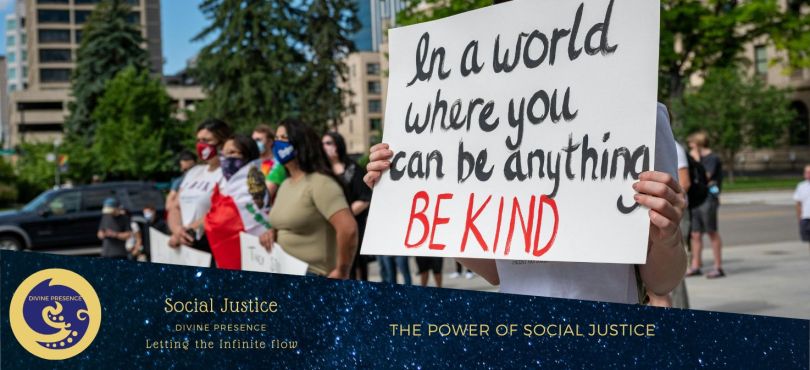
Today’s lectionary reading comes from Amos 8: 1-12. It focuses on the karma of those who oppress the poor and the failure to uphold social justice. In a similar fashion, Psalm 15 focuses on the power of social justice and the need for living in truth.
I’m often uncomfortable with many books of the prophets. Especially those like Amos 8 that start with words like we find in Amos 8:2.
“The end has come upon my people Israel; I will spare them no longer
It sounds so harsh.
Until you read further and understand the context.
In fact, in many places within the Bible, context is everything. There are actions and there are consequences.
Actions and consequences
Like Newton’s Third Law in physics: for every action, there is an equal and opposite reaction.
So, what caused this outrage and response?
8:4 Hear this, you who trample on the needy, and bring to ruin the poor of the land,
8:5 saying, “When will the new moon be over so that we may sell grain, and the Sabbath, so that we may offer wheat for sale? We will make the ephah smaller and the shekel heavier and practice deceit with false balances,
8:6 buying the poor for silver and the needy for a pair of sandals and selling the sweepings of the wheat.”
So, how did the people of Israel bring about their own destruction?
- trampling the needy and bringing the poor to ruin
- practicing deceit with false balances
- human trafficking and exploiting the poor
- selling the sweepings of the wheat (selling substandard or defective goods).
This wasn’t a reflection of how the people of Israel treated other nations, but rather how rotten they were within themselves. It was a reflection of how far their society had fallen, oppressing their neighbours and taking advantage of each other.
We also find in Psalm 15 another list of practices which lead to social injustice:
- slandering
- doing evil to their friends
- heaping shame upon your neighbours
- loan sharks
- taking bribes against the innocent (false imprisonment, bribery and corruption)
So, while in the New Testament there is a lot about personal righteousness, in the Old Testament we find a lot more about the power of social justice and the importance of ensuring a nation of righteousness.
It’s particularly interesting when we see the foundations that were laid down for the nation of Israel.
“However, there should be no poor among you, for in the land the Lord your God is giving you to possess as your inheritance, he will richly bless you.”
Deuteronomy 15:4
Nonetheless, since the people failed to live in the power of social justice that were laid down, the divide grew between the ‘have’s and the ‘have not’s.
Modern examples of these injustices
It’s not always easy to relate to these verses from the Old Testament, since often what they speak of are practices that we are not familiar with.
So, let me try to provide some modern examples of these injustices:
Trampling the needy and bringing the poor to ruin
Perhaps in our modern age, this is as simple as being dismissed, ignored and dehumanised. Becoming a statistic, rather than being seen as a person.
How often do we deny someone opportunities to grow, simply because their resume or clothes don’t look attractive enough. They are already struggling, but we don’t even provide them with opportunities to grow and change their circumstances, preferring instead to choose someone that already has advantages.
We all know that it takes money to make money. If you have enough money, you can invest in stocks, real estate and other assets that simply provide an income without you working.
The poor, on the other hand, are limited to using their time, skills and labour to make money.
Because of this, the rich get richer and have more opportunities to pursue education, rather than needing to work to take care of their needs.
Even if we consider the impact of something like the 2008 crash, we can see how the banks were bailed out, while the middle and lower class lost their jobs and then their homes when they were unable to keep up the payments for the mortgages. Because of this, many private institutions were able to sweep through and buy up those homes at low cost, which were then rented back to the very classes that had previously owned them.
But who was responsible for the loan crisis and crash? The very banks and investment advisers that later profited from the bailouts and being able to buy up cheap.
This is only one example of how you bring the poor to ruin.
It’s buying up the farmland of farmers, after you’ve squeezed them into not being able to sell their produce at the market.
All of these commonly accepted business practices that we overlook are not overlooked by the heavens. We are asked to love our neighbour as ourselves, and this is reflected even in the way we create laws and manage our economy.
Practicing deceit with false balances
With electronic scales and everything modernised, it’s hard to imagine the experiences of the past. But as it says in Amos, there were many waiting for the days of the full moon or the Sabbath, so that they could prey on the poor.
They would “make the ephah smaller and the shekel heavier“.
- The wheat and grain was sold by the ephah (about a bushel or 60 pounds). By making the ephah smaller, the buyer would receive less wheat.
- The shekel, on the other hand, was the weight used to measure silver and gold. So, by making it heavier, you had to use more gold or silver to pay for your purchases.
In other words, they were shortchanging the buyer and charging an inflated price.
Even in the online world, where prices are shown to us, there are many ways to charge inflated prices. For example, the price might say “does not include delivery and handling”, and they add an extra $5.00 charge for delivery. It’s even more likely that prices are adjusted on real-time factors such as demand, the time of day, or even location of the buyer.
Did you press “accept cookies”? Those very cookies might track what you buy, how much you spend and even the frequency of what you look at.
These modern conveniences can influence the prices of what the algorithm believes you can afford and adjust it accordinly. You might never know that the price you are quoted is different from the price others are paying.
Human trafficking and exploiting in the poor
It was common in the times of the Old Testament to own slaves. It was even common to sell yourself as a slave, to ensure that your family’s debts were paid and that you would have a roof over your head and food to eat.
Nonetheless, in Exodus through Numbers, we see many rules established about these practices, aimed to ensure social justice. One of the principal ones being the “Year of Jubilee“. Every seven years, the slaves that had been purchased had to be released and returned to freedom.
Obviously, the price you would pay for someone in the first year would be much higher than you might be wiling to pay in the last year or the month before the Year of Jubilee.
However, none of this exempted them from paying a fair price. They were not supposed to buy someone just for the cost of a pair of sandals. Even today there are examples of debt bondage in countries like India, Pakistan and Nepal, where people are forced to work just to continue paying off the interest on loans, and don’t even dare to take sick days as the loan amount will increase.
Around the world, there are at least 40 million people in slavery, in spite of slavery having been abolished.
Nonetheless, the exploiting of the poor to keep them working for low wages, whether it be illegal immigrants that are mistreated or other forms of social injustice in wages is rampant all around the world.
Selling the sweepings of wheat
This is an interesting one that probably needs a little more explanation. Basically, what would happen as that sellers would mix the chaff of the wheat with the actual wheat being sold, and so they would sell less actual wheat to the consumer.
It’s simply a form of defective goods, as the buyer would not get what they were paying for.
So, what are some modern examples we might consider?
- Refurbished or poorly manufactured electronics. often sold with misleading claims about their performance or lifespan.
- Counterfeit or fake goods
- Deceptive advertising, packaging or labelling
- Overcharging our hours or time when selling professional services
We are called to be honest and trustworthy even when we are not being watched and supervised. It’s all about personal integrity in business and dealing with others.
The outcome of a nation with social injustice
Amos provides a bleak picture of what will befall a nation that has corroded from within.
I will turn your feasts into mourning and all your songs into lamentation; I will bring sackcloth on all loins and baldness on every head; I will make it like the mourning for an only son and the end of it like a bitter day.
Amos 8:10
Worse yet, the country is promised that they will no longer hear the Word of the Lord. Because they have abandoned God, they will no longer be able to hear that still, small voice.
The blessings of social justice
Psalms 15 reminds us that a person, community and nation that focuses on social justice will be blessed.
Those who do these things shall never be moved.
Psalm 15:5
What are “these things”? There are both do’s and don’ts in this list.
What to do?
- Walk blamelessly and do what is right
- Speak the truth from their hearts
- In whose eyes the wicked are despised
- Honour those who fear the Lord
- Stand by their oath even to their hurt
What not to do?
- Do not slander with their tongue
- Do no evil to their friends
- Do not heap shame upon their neighbours
- Do not lend money at interest
- Do not take a bribe against the innocent
A person that cannot be moved is one that stands strong, no matter what they are facing or how strong the winds and storm. They might be battered, but they will not be knocked over.
The blessing that awaits is unwavering stability, steadfastness, and an unyielding position in the face of adversity or challenges.
The person and nation that stands strong for social justice refuses to be swayed, shaken, or forced. Instead they have determination, resilience, and a deep-rooted sense of security in their faith.
This is the promise of the power of social justice and living in truth.
 Divine Presence: Letting the Infinite flow in my life