We all carry burdens we refuse to name, yet we often mistake our spiritual journey for a performance. The prophet Isaiah forces us to confront this: What if our most fervent prayers are, to God, simply a heavy burden (1:14)? Our way of faith is not found in the rituals we repeat, but in the inner transformation that begins with honest reckoning. These readings reveal how works without faith are a scarlet-stained futility, but they also unveil the path of renewal through confession. When we embrace mercy, we receive the power of love and forgiveness, preparing us to make the decisive leap of following Jesus.
The Foundation: Lectionary Texts for Reflection
Isaiah 1:10–18: The Reckoning and the promise of purification.
Psalm 32:1–7: The joy of confession and forgiveness, unsealing mercy’s flood.
2 Thessalonians 1:1–12: The endurance of growing faith amid affliction.
Mark 10:46–52: Bartimaeus’s cry and the leap of response.
I. The Weariness: Laying Down the Mask
From burden to authenticity.
Inner Posture: Awareness of hypocrisy.
Movement Phrase: The soul grows weary of pretending holiness.
If the exhaustion we feel is not from the difficulty of our life, but from the spiritual lie we maintain, then the path to renewal begins here. We are invited not as performers, but as the weary ones, to lay down the mask of false piety. The soul grows weary of pretending holiness.
The prophet Isaiah points to the divine sigh: “I am weary of bearing them” (1:14). God is not weary of our sin, but of our inauthenticity. We have become so adept at the motions of our way of faith that we’ve forgotten its meaning. This is the quiet, daily form of Christian hypocrisy.
The Apostle Paul, writing to the Thessalonians, offers a vision of what genuine, unwearying faith looks like. He commends them not for their rituals, but for a tested faith “growing abundantly” amid affliction (2 Thess. 1:3). Their love is increasing, not as effort, but as overflow. He prays that God will “fulfill by his power every good resolve and work of faith” (2 Thess. 1:11). This is the promise: Not our frantic striving, but divine presence fueling what endures.
Invitation: What resolve stirs in you, unspoken, waiting for such power?
Refrain:Faith births love. Love births justice.
But unmasking is only the beginning. Awareness without repentance still withers; the soul must face what its silence has hidden.
II. The Reckoning: Facing the Abomination (Isaiah 1:10–18)
From hypocrisy to confession.
Inner Posture: Honest confession.
Movement Phrase: When I kept silent, I dried within.
We move from the fatigue of pretense to the necessary shock of the reckoning. We must face the spiritual cost of hiding our true state, accepting that our works without faith are what God finds burdensome. When I kept silent, I dried within. This phrase captures the internal cost of the hypocrisy Isaiah is about to name.
A. The Prophetic Renaming (The Fire of Recognition)
Isaiah begins with a devastating act of renaming: “Hear the word of the Lord, you rulers of Sodom; listen to the law of our God, you people of Gomorrah!” (1:10). This is the prophet’s gut-punch. We, the covenant people, are labeled for cities consumed by their own moral decay. The sin of Sodom and Gomorrah wasn’t hidden vice alone; it was a profound spiritual blindness—a prosperity that felt no obligation to the poor.
Invitation: In this renaming, what hidden Sodom lingers in your governance of self—of time, of words, of withheld mercy?
B. The Vain Offering (The Futility of Unrooted Works)
This hypocrisy leads to the central crisis: “What to me is the multitude of your sacrifices?… Your hands are full of blood” (1:11, 15). God rejects all the outward rituals because iniquity poisons the air. The vast accumulation of our works of faith is rendered futile if our inner transformation hasn’t aligned our heart with justice. Deeds detached from the heart’s truth are echoes in an empty chamber—resounding, yet rootless.
The Refrain:Faith births love. Love births justice.
Yet divine judgment is never the final word. Even as Isaiah names our desolation, mercy waits in the next breath. The Psalmist teaches us how grace begins — not in defense, but in confession.
III. The Release: Confessing the Heart’s Truth (Psalm 32:1–7)
From silence to song.
Inner Posture: Receiving mercy.
Movement Phrase:Truth demands its voice.
The spiritual journey pivots here, at the hinge of confession. We move from condemnation to the forge where guilt yields to grace. Confession unseals the flood of grace.
A. The Cost of Concealment (The Wasting Silence)
The Psalmist articulates the precise internal cost of living under the burden exposed by the prophet. When I kept silent, I dried within. This phrase perfectly captures the barren weight of unacknowledged sin: “my bones wasted away… my strength was dried up as by the heat of summer” (Psalm 32:3-4). Inauthentic faith is this exhaustion. It is why the first step toward renewal is simply speaking the truth.
Invitation: Where in your silence does the heat rise, drying what once flowed freely?
B. The Cleansing Fire (The Forgiveness Freely Given)
The moment of release is simple and instantaneous: “Then I acknowledged my sin to you, and I did not hide my iniquity; I said, ‘I will confess my transgressions to the Lord,’ and you forgave the guilt of my sin” (Psalm 32:5).
The Theological Hinge: The fire that razed Sodom becomes, in mercy, the forge that purifies the heart—ashes transfigured to gold, pretense to truth. We are covered by divine embrace: “Happy are those whose transgression is forgiven” (Psalm 32:1). We are no longer defined by the scarlet of our past, for God declares: “if your sins are like scarlet, they shall become like snow” (Isaiah 1:18). This is the power of love and forgiveness.
The Refrain:Faith births love. Love births justice.
The silence that once drained the Psalmist now gives way to the shout of faith. What was inwardly confessed now becomes outwardly embodied.
IV. The Response: Leaping into the Way (Mark 10:46–52)
From sight to following.
Inner Posture: Faith embodied.
Movement Phrase: He threw off his cloak and followed the Way.
A forgiven heart does not sit still; it shouts, it springs, it follows. Bartimaeus, the blind beggar, embodies this final stage of our way of faith.
A. The Bold Cry (The Heart’s Unsilenced Plea)
Bartimaeus began to shout: “Jesus, Son of David, have mercy on me!” (Mark 10:47). He prioritized his need over the crowd’s rules.
The Theological Hinge: Isaiah’s Sodom burned because blindness reigned in the powerful; Bartimaeus’s physical blindness is healed because he had spiritual sight. He recognizes mercy in Christ and voices the plea that the self-righteous refused to speak for the poor.
Invitation: What mercy do you cry for, louder than the world’s silencing?
B. The Surrender and Healing (The Way Made Visible)
When called, Bartimaeus made a definitive choice: “So throwing off his cloak, he sprang up and came to Jesus” (Mark 10:50). The cloak was his beggar’s chain. To cast it off was faith’s decisive surrender: no more hiding in the old sin.
Jesus honored the source: “Go; your faith has made you well” (Mark 10:52). The outward act was merely the visible evidence of the inner transformation. The story is incomplete without the following: “Immediately he regained his sight and followed Jesus on the way.” This is the key to all works of faith. Justice becomes not a duty, but love in motion on this spiritual journey.
The Refrain:Faith births love. Love births justice.
The one who follows on the Way becomes the sign of what faith fulfilled looks like. Bartimaeus’s leap becomes our lifelong walk — love made visible.
V. The Fulfillment: Living Love in Motion
From action to enduring love.
Inner Posture: Love enduring.
The cycle is complete: Isaiah wrenched open the abomination; the Psalm forged the release; Bartimaeus leapt into the Way. We are no longer Sodom’s heirs, burdened by scarlet-stained futility, but snow’s—made clean by surrender and empowered by love enduring, tested through mercy as Paul envisions. The goal is not just to feelforgiven, but to let that forgiveness drive us. As Paul prayed, God can fulfill in you “every good work of faith” (2 Thess. 1:11).
Final Challenge
Pause here: Confess the silence in your heart, not to earn, but to receive the boundless love and forgiveness. Then rise: Seek justice not as frantic striving, but as the forgiven one’s quiet command. Let your heart become the clean altar where mercy kindles every act of love.
Contemplative Sending
Go now—washed, forgiven, and aflame with faith that does not tire. Amen.
The Final Echo (Closing the Cycle):
Faith births love. Love births justice. And justice, lived in mercy, returns us again to faith.
The lectionary reading for this week is from Luke 15: the story of the prodigal son. And today, I want to highlight five powerful lessons about love that we can learn from Jesus’ teachings.
If you love, sometimes you have to let go
As parents and friends, we’ve all had people that we want to protect in our lives. But sometimes, as the father in the parable, we realise that we have to let our loved ones go out and learn lessons for themselves.
So, we see, at the beginning of the parable, that the father simply allows his youngest son to leave.
There was a man who had two sons.
And the younger of them said to his father, ‘Father, give me the share of property that is coming to me.’ And he divided his property between them.
Not many days later, the younger son gathered all he had and took a journey into a far country, and there he squandered his property in reckless living.
I can’t imagine this father’s pain when his son treated him as dead, asking for his share of the inheritance ahead of time. But, rather than teaching him a lesson, he loves him enough to let him go and experience the world on his own.
Unlike now, where we have internet, email, WhatsApp and all types of communication and travel that can reduce the distance between us, I’m sure that the father didn’t hear from his son once he left and moved away.
He was basically abandoning his family and all their teachings.
And still, the father let him go. All his hard work and affection, just squandered by youth’s mad pursuit of the present moment.
True love is not about control and it’s not always about protection. Sometimes, it’s allowing someone to grow up and learn on their own. As parents and friends, we have to learn to love fully, even letting go.
Even with God’s love, we see freedom of choice. We choose whether or not to practice the Divine’s presence in our life each day. What relationship do you want to have with Spirit?
Choose your friends wisely
The second life lesson in love that we learn from the Prodigal Son is to choose your friends wisely.
We’ve all had our share of fair weather friends. The Prodigal Son shows us a prime example of this.
When he’s rich and there’s money for parties and entertainment, he’s surrounded by people that want to be his friends. He’s living the high life.
But after he squandered all his money and the famine hits, he gets a rude wake up call.
Where are those friends now?
He’s all alone in a foreign land, with no one to help or guide him.
He sinks as low as to become a servant for another, having to feed slop to pigs on someone’s farm. He’s so low that even the pigs eat better than he does.
But, he has fallen to this low, because of the friends that he chose in this new land and how they influenced his choices.
Jim Rohn said that you are the average of the 5 people you spend the most time with.
Show me your friends and I’ll show you your future.
We all need connection and belonging in our lives. This is one of the reason that we find so many gangs flourishing in low income ghettos. They give youth a sense of belonging and safety. No matter how dangerous it might be, they meet their needs to some extent.
But this connection and belonging also influences our habits and choices. Do the people that we choose to build relationships with lead us to better ourselves and strive to grow? Emotionally, spiritually, financially and even physically.
If your friends are all into health and fitness, it’s likely that they are inviting you to go for walks, or go to the gym, hiking, cycling or different types of classes. Where they choose to go to eat and what they drink will be influenced by this lifestyle choice.
And as you spend time with them, you will find it easy to choose healthy activities and focusing on your physical wellbeing.
Of course, the prodigal son’s friends also influenced his choices – to spend money frivously with no thoughts to the future. And it destroyed him.
Throughout the Bible, we find all manner of advice about how to choose our friends and those we regularly spend time with. What will you do with this advice?
Knowing when to admit “I was wrong”
Our third lesson in love from the Prodigal Son, comes when he wakes up to his situation and reality, and chooses to admit that he was wrong.
“When he came to his senses, he said, ‘How many of my father’s hired servants have food to spare, and here I am starving to death! I will set out and go back to my father and say to him: Father, I have sinned against heaven and against you. I am no longer worthy to be called your son; make me like one of your hired servants.’ So he got up and went to his father.
All of us make mistakes. But what really matters in relationships is how we deal with those mistakes and how we choose to relate to others.
Can we humble ourselves and ask for forgiveness from those who love us? Are we willing to rebuild a relationship based on forgiveness?
Today’s lesson from the Prodigal Son is not just about a father’s love. It’s also about humility and admitting our mistakes.
The Prodigal Son no longer takes his father’s love and care for granted. Instead, he resolves to return with humility and ask for forgiveness.
So, today, let’s consider those relationships where we are taking others – especially their love and care for us – for granted. Do we need to ask for forgiveness in humility and rebuild our relationships?
Unconditional love and rejoicing
Perhaps the best lesson we all know from the Prodigal Son is the father’s response upon the return of his wayward son.
“But while he was still a long way off, his father saw him and was filled with compassion for him; he ran to his son, threw his arms around him and kissed him.
“The son said to him, ‘Father, I have sinned against heaven and against you. I am no longer worthy to be called your son.’
“But the father said to his servants, ‘Quick! Bring the best robe and put it on him. Put a ring on his finger and sandals on his feet. Bring the fattened calf and kill it. Let’s have a feast and celebrate. For this son of mine was dead and is alive again; he was lost and is found.’ So they began to celebrate.
In previous parables, Jesus talked about the Shepherd who leaves the 99 to go out to search for that one lost sheep. And here, we see the father rejoicing over the return of that one wayward son.
We first see that when the father sees him, he is filled with compassion. He recognises that the broken young man returning home is his son. And while the son recognises that he is in the wrong and no longer worthy of being called his son, the father responds with returning to him his status of being a son.
He clothes him and put shoes back on his feet. He begins a feast to welcome him home.
I find it fascinating that this father didn’t say “I told you so¨.
There’s no lecture and no questioning. He accepts the apology fully and embraces his son back into the family.
There’s probably wisdom in this father’s heart and eyes: he can see that life has already provided all the lessons and there’s no need to rub salt into his wounds. What the son needs now is love and acceptance.
But how many of us can show this level of wisdom in our love and relationships? Do we know when to lecture and teach versus when to simply show love. It’s not about coddling and pampering. But rather, it’s about know when to speak and what to speak.
So, as we learn from the Prodigal Son, there’s a time in relationships to accept someone’s humble apology and embrace them without teaching them anything further.
Do we have the wisdom to know the difference?
Love isn’t just about following the rules
Our final lesson in love comes from the reaction of the older son to his brother’s return and his conversation with his father:
“Meanwhile, the older son was in the field. When he came near the house, he heard music and dancing. So he called one of the servants and asked him what was going on. ‘Your brother has come,’ he replied, ‘and your father has killed the fattened calf because he has him back safe and sound.’
“The older brother became angry and refused to go in. So his father went out and pleaded with him. But he answered his father, ‘Look! All these years I’ve been slaving for you and never disobeyed your orders. Yet you never gave me even a young goat so I could celebrate with my friends. But when this son of yours who has squandered your property with prostitutes comes home, you kill the fattened calf for him!’
“‘My son,’ the father said, ‘you are always with me, and everything I have is yours. But we had to celebrate and be glad, because this brother of yours was dead and is alive again; he was lost and is found.’”
I can almost hear resentment in the older brother’s voice towards his father. It almost seems that there are unspoken feelings in his heart towards his father – the struggle of always being “the responsible one”.
But relationships and love aren’t just about following the rules and never disobeying. It’s not just about external compliance, but also the state of our heart.
Take a moment and consider whether you are holding any resentment in your heart towards others because you feel that the relationship is unfair. You’re doing everything right, but are you complaining that you don’t receive “enough love” in return?
Is this really love that you are feeling? Or is it just responsibility? Love isn’t a transaction.
I know, for myself, the biggest resentments I have ever felt in my life are not actually towards others, but towards God. The times I have recriminated with “But this isn’t fair!” have typically been when I’m complaining about life to the Divine.
Today’s a great day to consider what bitterness or resentment you might be holding in your heart in your relationships. Where do you feel that you’ve been doing it all right and you’re not receiving back the love and attention that you deserve? And what will you do with these feelings now that you’ve identified them?
What other lessons have you taken away from this parable of the Prodigal Son?
Over recent weeks, in my healing journey, I have been examining my relationship with trust. It first came to my attention when I looked at my business decisions, especially mistakes that I have made over the past 20 years. But, in recent days, I noticed a pattern emerge.
The beauty of recognising patterns of behaviour is that it opens the door for change and transformation. What I’ve noticed is a swinging pendulum in my life between distrust and blind trust. This pattern has cost me thousands of dollars, as well as relationships and creating heartbreak.
It is in seeing my actions and omissions accurately that the doors open.
The truth sets us free.
Let me provide you with some concrete examples:
In my early business days, I hired a friend to run one of my companies. Because I was overwhelmed and swamped with the growth in business and hiring new staff, I failed to supervise her properly. She was struggling in getting everything done, and I wasn’t available to support her. I didn’t ask how things were going, instead choosing to focus exclusively on my own overwhelm. Unfortunately, while she was getting the client work done, she wasn’t invoicing the client for it! By the time I realised the mess in accounts receivable and payable, the client had accrued some $40,000.00 in services they hadn’t paid for. Thankfully, the client eventually paid all outstanding invoices. But it took years to get fully up to date, and I bore the financial brunt of being caught between suppliers and financing a client. When I’m overwhelmed, I shut down, dissociate from the present, and turn to blind trust.
In March 2009, I left on holiday for three weeks to New Zealand. I chose the dates based on the weather (end of summer) and flight costs (cheaper because summer holidays were over and it wasn’t yet Easter). I was overwhelmed and exhausted after restructuring staff following the 2008 markets crash. Unfortunately, March 31st is the end of tax season – which meant that my company tax returns were prepared and presented in my absence. The company accountant and external accountants included a refundable expense in “income”, an extra $54,000 in ghost income! As a result, my income tax bill that year was $27,000.00 when it should have been less than $9,000.00. But, you prepay taxes for the next year, based on the estimates of what you paid the previous year! So, not only was I hit with the current tax bill, but my estimated taxes for the next year were identical, giving me a tax credit for years to come. My blind trust created a substantial financial pinch.
I could provide you with many more examples in my professional life where I have distrusted, micro-managed and controlled every aspect of an employee’s performance, to those moments where I am overwhelmed and shut down, leading to no involvement or supervision at all.
Definitions
definition of Trust
Trust = firm belief in the reliability, truth, ability, or strength of someone or something
definition of Distrust
Distrust = the feeling that someone or something cannot be relied upon.
Blind faith or blind trust: “unquestioning belief in something, even when it’s unreasonable or wrong”. I take it to mean “trust in spite of evidence to the contrary” or blindly ignoring evidence that perhaps they are undeserving of your complete trust.
How trauma informs our state of mind
Unfortunately, this pattern is not something I learned as an adult, and I’ve been using this pattern since early childhood. When I get overwhelmed, the easiest solution is to shut down and freeze, and this takes me into dissociation from the present moment and avoidance. In these cases, blind faith and trust in others become the only option, and I can’t trust myself.
Hypervigilance at the other end of the pendulum presents itself as distrust, micro-managing every situation as I attempt to control the outcome. Of course, this is exhausting, making me angry (an emotion that I was taught not to acknowledge as a child) and frustrated. To avoid anger, I would rebound into dissociation and shut down.
I never learned how to stay in the middle: in balance, calm and being alert. I struggle on so many levels with trust, and this shows up in my life on every level:
personal
interpersonal
professional
spiritual
I could choose to sit in victimhood: “this is how I am, because of my childhood“. But I choose not to. I started to look at my patterns as generative learning – an opportunity to grow and change. And I share these learnings with you, because I want you to recognise that you have options and choices available to you.
As I have begun to experience inner peace, the wisdom of trust has become available.
The human experiences that break trust, building distrust
Years ago, I denied being traumatised at boarding school because I wasn’t regularly beaten and abused. Anger and speaking up would earn you a beating, being labelled a Jezebel, or having a rebellious spirit.
I avoided beatings by being “a good girl”, knowing when to shut my mouth and swallowing any anger I felt. The survival skills I learned were to shut down, dissociate, and walk away. Unfortunately, those skills are not very resourceful and helpful in my life anymore.
There are many moments that I wish I were rebellious, angry & unruly. How I wish I had been the wild child that baulked the system and stood up against injustices, daring to question unfair authority. Instead, I chose the safety and security of apathy, withdrawal and indifference. Unfortunately, as an adult, I still struggle with dealing with my anger, boundaries and injustice. As a lawyer, it’s easy to stand up for others. But I shrink instead of standing up for myself. I avoid confrontations of a personal nature, even when they would clear the air.
Through it all, I am entrenched in my independence. Of course, as I know now – hyper-independence is merely a symptom of trauma: unable to ask for help because I can’t trust others. Can I even trust myself?
Taught to obey Church leaders without question:
We had verses drummed into us, which in themselves were not wrong. But was the interpretation of these verses rightly applied?
Under no circumstances were we, children, to question those in authority because they were “appointed by God”. And if God wanted to remove them for wrongdoing, then it was merely our duty to “pray about it” rather than to do anything.
Even the hymns we sang reminded us that we were to “Trust and Obey” rather than stand up for ourselves or others. Helplessness was ingrained, and anything that was not as it “should be” was “God’s will”, and we were to endure it.
Biblical teachings: the human heart
But that wasn’t the only weapon in the arsenal of submission. In reading the below verses, repeatedly we heard: “The heart is deceitful above all things”. Divine Justice prevailing, to each according to their ways, patterns and actions received little mention. Instead, beatings were justified because our hearts were deceitful.
Those in power were above all of that.
How can I trust myself if I believe that my heart is deceitful? What relationship or trust can I build with others if they are devious and incurably sick in their hearts?
If you question what I am telling you, you lack faith. Instead, you should “pray about it” and “trust God” to solve this for you.
If the prevalent attitude about human nature is one of sin and depravity, then there is no trust.
Maureen Murdock, “The Heroine’s Journey”
Divide and conquer has worked for centuries, both within the church and politics, and it’s as quickly at work today as it always has been. Even today, we hear who to distrust and then expected to place blind trust in authority.
But blind faith means that you have no ownership of your spiritual path or will. It relieves you of responsibility, creating victimhood. And victims are powerless, easy to manipulate.
I am so grateful for learning a new way: what it means to have a healthy trust.
As much as I would like to say that my journey back to trust began with trusting Divine Presence in my life, that’s not the truth of my journey. My transformation started with an exploration of self-awareness for personal growth, and spiritual healing occurred after learning and personal development.
The first step back to trust was:
Know thyself.
In noticing my patterns of distrust and blind trust, I could explore what healthy trust means. Emotional and spiritual healing have come together as I worked with forgiveness of myself and others.
My trust in the Divine grows as I let go of my need to micro-manage and control every tiny detail. And in living in the Spirit, I trust my insight and intuition to build relationships with others.
What does it mean to trust me, others and Divine Presence?
The elements of trust
Trust is not something we do from a place of apathy, withdrawal or dissociation. It is active and engaged: trust requires relaxed courage, curiosity, and calm presence.
According to Grant Soosalu & Marvin Oka, in their book mBraining, they identify the four elements of trust (learning to trust yourself):
Communication
Compassion
Consistency
Competency
Other authors and writers similarly identify the basic requirements of trust as:
Competence
Character
Caring
Credibility
Reliability
Intimacy
Self-Orientation
Integrity
Benevolence
Ability
These authors point towards the same essential characteristics and requirements of trust. As difficult as it is, I have tried to group these together in a simple explanation:
Communication:
Is all about listening as well as sharing
As Covey says: “Seek first to understand, and then to be understood”
To build trust, it’s necessary to voice your wants, needs, desires and motives. It’s okay to have self-interest, but be open about what those interests are
“intimacy refers to your willingness to share appropriate information about the things that truly matter.”
Trust begins when we are open & transparent – even with ourselves
It is recognising my value and the value of others, leading to genuine empathy & understanding
Clear & heartfelt commitment to my personal wellbeing and the wellbeing of others
Only then can we build trusted relationships
Actions – Consistency & Character:
In order to build trust, there has to be congruence and alignment between what I say and do! This applies as much to promises I make to myself as what I promise others.
Predictable, reliable, & full of integrity
Loyalty, honour & duty
Respect and selfless service
Oriented to values and the vision – not just selfish interest
Clear set of principles, so you can be on the same wavelength
Can be counted upon
Ability – Competency & Credibility:
Mastery – skilled & knowledgeable
Has a domain of expertise and performs their functions well
Will speak up and give their point of view on the matter at hand from a point of knowledge
Stays current & up to date
Self-assured in their competence
Demonstrating progress towards goals
Emotional and spiritual healing: rebuilding trust
When I look back at boarding school and these four qualities of trust, I find those in authority sorely lacking. If they had known better, they would have done better. But they lacked communication skills; they were authoritarian rather than compassionate. When I look at their actions, looking for consistency and character, I find them predictable, but I couldn’t count on them. They were not always congruent in what they said and did, as the rules did not apply equally to all. Perhaps worst of all, they were not skilled and knowledgeable, although they believed themselves to be.
We were left with an expectation of blind faith and trust in authority because the essential elements of a healthy trust were missing.
Self-awareness
I now recognise that I have a proactive role in building relationships: I listen to the desires of my heart and trust my gut. I stay engaged and curious, rather than withdrawing. Instead of seeing myself as helpless and needing to be rescued, I recognise that I must play a part in building my future.
True faith is an inner alignment with yourself and with God. It’s a balance of trusting the universe to provide and doing your part to co-create with the Creator.
Letting the Infinite flow in my life: rebuilding trust
The road back to faith, trust and hope is uneven and rocky. Sometimes, it’s the procession of three steps forward and two steps back as I fall into habitual patterns of blind trust or distrust.
I am learning to communicate and listen. As I consistently practise the presence of the Divine in my life, I hear the small, still voice of Spirit. It requires that I quiet my mind – that I sit in Silence and allow my heart to be still. It’s a daily practice in which my mastery builds up each day.
I have to choose to be open and transparent; it doesn’t happen naturally. There are times I want to shut down, and I have to make a conscious choice to be vulnerable and compassionate. When I commit to building relationships with myself, others, and the Divine, trusting relationships open up for me.
I sit in the Silence each morning to reconnect and refill my heart with the faithful love of Divine Presence, for I trust in Divine Love. Each morning I listen to how I should walk and allow my Spirit to submit fully to Spirit
Ps. 143: 8
My understanding of what it means to rely on the Divine entirely has changed: it is no longer helplessness. I am not frozen in fear, unable to think logically or approach life with curiosity. I’m not keeping myself safe by being emotionally disengaged or apathetic. Instead, I am choosing to be fully present and connected.
From this place, I still choose trust, faith and hope.
Place your trust in the Eternal; rely on the Divine completely; never depend upon your own ideas and inventions. Give the Great Creator the credit for everything you accomplish, trusting that Divine Love will smooth out and straighten the road that lies ahead.
Prov. 3: 5-6
Other posts your might find interesting on Blind Faith:
We say that God is love, and by this, we typically accept that Divine Love is the law. We see the Divine as the embodiment of love; it is the very nature of the Divine. This love permeates all of creation, present in every one of us.
So, for example, we read in 1 John that anyone who does not love does not know the Divine because Divine Love is the very nature and essence of goodness.
Do you base your love for others on an expectation of reciprocity? Love based on expectations becomes a business deal – if you do this for me, I will love you. How could you make Divine Love an article of commerce? God’s pure love can only flow from a pure heart. It’s impossible to say that you are full of Divine Presence and not overflow with love.
The beatitudes remind us, “Bless those that curse you”.
When we bless, we invoke good upon, calling forth Divine Love. This power of blessing imparts the quickening of spiritual power: it produces growth and increases. It is the very power of multiplication.
A curse, on the other hand, is to affirm evil for or onto something. You might understand this as the removal of Divine Presence. A curse wishes upon others that they not bring forth spiritual good through Divine Love.
When we curse those who curse us, we start from a place of ego: taking upon ourselves the decision to remove Divine Love and Divine Presence from the equation. We punish tit-for-tat, diminishing the spiritual power that produces growth and increase. Because of our pain, we strike out to cause pain to another.
How do you speak up?
But while your ego may be satisfied, what good has this done for you or another?
Why speak kindly about those to talk badly about you?
Perhaps your natural response is to complain and play the victim. Yet, each time you retell the story of how they wronged you, you replay the emotions and feelings in your body. You relive the moment, over and over again. Our bodies are constantly in tune with these emotions: what are you creating in your health and well-being as you replay and relive a past scenario?
Our stress doesn’t happen “out there”. It is what happens within your mind and your body. How you respond matters: this is the energy that you mirror into the world. It’s the very same energy that will come back to you. In the same way that you can be sure that another person will reap what they sow – you will reap what you sow. You reap the rewards of your thoughts and your words.
How you do anything is how you do everything.
There is no better motivation to speak kindly about others than neuroplasticity! How you respond now is writing neural pathways in your brain. You can self-train and entrain yourself in how to respond.
Most importantly, these same neural pathways become your inner voice and inner critic. They become the automated response in similar situations.
How would you like to entrain yourself to respond in moments of being attacked and stressed in the future?
Finally, consider who is listening and watching you. If you curse those that curse you: who is hearing you do this? Perhaps your children are watching you. Is this what you want them to learn in life?
Or perhaps, you live the Christian life and want your life to be a beacon of light for others. If you claim to love God and yet do not show this in how you respond in everyday life, what example are you showing the world?
Divine Presence is an Inside Job
Transformation is not just what comes out of your mouth or the words that others hear. It is also your thoughts and feelings. So, if you are not feeling up to blessing someone that cursed you, take a moment to sit with your reaction. What is going on inside of you?
Is this about you and an experience from the past you have yet to heal?
Or perhaps, it’s a pattern with this person that repeats, and you have failed to set in place healthy boundaries.
On the other hand, it may simply be a reflection of the state of your relationship with this person.
As you sit with the inner awareness, take time to notice whether you have an overdue conversation with this person. What do you need to clarify or change? Is this a relationship that you can heal?
Patterns of pain
Alternatively, you might notice that your pain is unrelated to this person and what they said to you. What pattern of pain or hurt has this situation shone a light on that hasn’t healed? Is there forgiveness work that you have outstanding?
It is often the case that you remember the pain from your childhood that you have swept under the mat or rationalised. For example, it may well be that a parent, teacher or family member spoke in this way to you, and you felt helpless to respond.
Now, as an adult, you feel the anger of how they mistreated you. A part of you, because you understand that they were doing the best they could, perhaps has already said, “It’s okay, I understand”. But the very fact that you feel triggered sheds light on the healing work you have outstanding.
Will you take this opportunity to go within?
Divine Love often brings people into our lives momentarily to allow us to heal those parts of us that we are overlooking. It’s like a pumice stone that helps us slough off the old skin on the soles of our feet. In the same way, through these healing opportunities, we slough off the deadwood of our soul.
What about this person or situation is truly bothering you?
In what ways did they rub you up the wrong way?
Was it a particular word or phrase that they used?
Maybe it was the tone of their voice?
What about their opinion or comments is vital to you?
As you take time in the silence to consider this person or situation, do you notice a characteristic that you have avoided working on yourself?
Your gratitude: take a moment to thank this person for the opportunity they have given you to go within.
Divine Love flows
If you take a lemon and squeeze it, you expect to get lemon juice.
If you are walking along with your mug of coffee, and someone bumps into you, causing you to spill it, what you will spill is coffee.
That is what you carried in your coffee mug.
So, when you are squeezed or bumped: does Divine Love flow from you? If anything other than Divine Love flows from you, start at the top and reread it all.
The person cursing you is an opportunity to go within. How you do anything – like how you respond when bumped – is how you do everything.
The only thing that can flow out of you is what fills you. Does your cup overflow with Divine Love and inner peace?
Where attention goes, energy flows.
You get to choose where to focus your attention any time another person attacks you. Will you focus on that person and what they have done? Will you choose to be the victim and replay the scenario over in your mind or with others?
Or will you choose the path of healing?
Every interaction with others is an opportunity to notice where you have blocks to the flow of Divine Love in your life. Humility and vulnerability allow us to accept “I am a work in progress”. But it requires that you be open to seeing and attending.
What does Divine Presence require of you today?
Bless those that curse you
Could you bless this person and thank them for holding up a mirror for you to look at yourself thoroughly?
Every person you meet reflects your stage on this journey of life and personal transformation. How does Divine Love overflow through your life? Does it seep out when life squeezes you? Does it spill out if you get bumped?
Divine Love is the law:
Love the Great Creator with all your heart, soul and mind; and
Love your neighbour as yourself.
This is what makes it possible to bless those that curse you.
I began a personal healing journey in 2017, with no idea where it would take me. I certainly never expected all the spiritual and life lessons that I’ve learned along the way!
If I had known that I would be in 2021 and the journey would still be underway, would I have had the courage to even take the first steps?
I thought I would get the miraculous healing that when I reached a certain point it would be instantaneous. Instead, it has been a journey of a thousand steps, sometimes on spiralling stairs, rather than giant leaps forward.
Gut health challenges
Since about 2001, my health has been centred around my gut and immune system, with challenges of:
Ulcerative colitis
IBS (irritable bowel syndrome – i.e. we have no idea what’s wrong)
Coeliac disease
Diverticulitis (caused by the Coeliac disease going undiagnosed for 10+ years)
SIBO (small intestinal bacterial overgrowth)
All of these are gut issues and are closely tied with the immune system – that part of you that is able to easily mount defences to defend “self” against “not self”.
If I look at this from an mBraining (Grant Soosalu & Marvin Oka) perspective, the gut has the prime functions not only of digesting and processing food, but also influences:
Our sense of identity: “this is who I am”. My lack of authenticity – trying to please other people – broke down my ability to identify “self”;
Our processes of safety and security. This is our self-preservation. It begins physiologically as the immune system, but there’s also an element in there of the autonomic nervous system, which I failed to recognise, leading to an immune system in overdrive and hyper-drive, as I strove to keep myself safe psychologically and emotionally.
Movement and motivation. We know physiologically of “bowel movement”, but if you listen to our language, we clearly speak about the fire in our belly that moves us forward. My trauma-informed dorsal vagal, however, was trained to sedation and hibernation in the face of danger, and while scientists know that this impacts the immune system, they are not quite yet sure of the exact effects.
A personal journey to healing: lifestyle changes
Spiritual healing
Psychological healing
emotional
mental
Physical healing
To heal my gut, I’ve had to recognise that every aspect of my life impacts how well this heals.
All of this requires lifestyle changes: because it’s impossible to solve a problem with the same thinking, habits and lifestyle that created the problem.
“The necessity of change makes healing a terrifying experience for many people.”
Caroline Myss
He who knows to do right and does it not, to him it is sin
There were so many pieces to the healing journey and changes that needed to be made. Doctors glaze over quickly the role that stress plays, saying platitudes such as “you need to manage stress better”.
Really?
Who doesn’t know that?
The question is: what do we do about it?
Most of us – do nothing.
We ask for the pills that soften the blow of the symptoms, so that we can get back on with life, exactly as it already was. But we don’t make the fundamental changes that are required for health and healing to happen.
If we did, the pharmaceutical industry would be out of business. Imagine how many blood pressure medications would be taken off the market if patients would actually follow doctor’s instructions about making changes to their lifestyle.
Faith without works: changing habits
You can no more show me your habits apart from your beliefs than I can show you what I believe apart from my daily habits.
Faith and works, works and faith, fit together hand in glove.
In my life, healing was not optional.
Change became mandatory, because I could no longer keep on keeping on. I was totally crashing and my body with it!
It’s not that I didn’t know ways of dealing with stress!
Meditation & Silence
Trusting the Divine
Dealing with the root causes of anxiety & depression
Part of me was refusing to look at diet, beyond the obvious factors of avoiding gluten (wheat, barley, malt & rye). But I could do more, like accepting that corn totally irritated me, as well as rice making me feel bloated, and that I needed to adjust my diet to accommodate inflammation and SIBO.
I have been physically active since my early twenties and am no stranger to the multiple benefits of exercise, even when you don’t have energy. I know how good it is for the digestive system (just getting out for a walk helps your gut digest more easily), as well as helping to regulate stress.
Perhaps most importantly, I know the role and importance of forgiveness, letting go and release. What I didn’t know was the depth of work I would need to do, and how much I have buried and hidden away (even from myself), to be able to survive.
Part of the healing journey has been accepting that sometimes it feels like I’m stuck in a loop, when I am really on a spiral stairway that keeps coming round to the same issues, just at a different level. It might feel, at times, that I am just going around in circles, but progress is not always in a straight line.
Bad habits are decisions we refuse to make
Take a moment to write down, for yourself, three habits that you have right now that are impacting your health and wellness, and that you are making no attempt or haphazard attempts to change. How would healing be possible if you made these changes?
If you know better,
do you do better?
I’m going to mention a few habits that most of us have (at some level) and that we know better, and yet it’s easier to continue doing it, than to change. We give ourselves all kinds of excuses.
Eating on the go
Who doesn’t know that eating-on-the-run is bad for their health? This might be that you are eating:
fast food while driving your car
standing in your kitchen while fixing food for others or doing some chores, or perhaps
sitting at your desk or computer, working.
There’s the risk of falling into a fast-food trap – with unhealthy ingredients, high sugar and high sodium. But it’s not just the ingredients, it’s the very fact that we are not allowing the body to go into “rest and digest” while we eat, but rather we are still eating while in motion (and quite possibly under stress).
All of these habits lead to:
increased risk of cancer;
risk of heart disease
high blood pressure
inflammation
issues in the immune system
and even memory loss.
Our bodies were created to rest and relax while eating, to enjoy the aroma and visual appeal – so that we get the digestive juices flowing. We allow ourselves the time and space to savour and chew. And to notice what we are doing, rather than having our attention focused somewhere else.
A lot of problems can be solved just by removing some people, some food, and some habits from your life.
Anonymous
Our sedentary lifestyles
We’re warned enough about laziness and sitting around in Proverbs, but more than just being couch potatoes, it’s even the way we travel to work and the conditions in which we’re working that create challenges.
Sitting for so many hours a day, whether it be in a bus, on a train, in the car, at your desk is exhausting mentally, leaving us wanting to stay sedentary when we finally get home.
What does this create?
high blood pressure
type 2 diabetes
cancer
obesity
heart disease
osteoporosis
stroke
Exercise – or more importantly regular movement – helps us with our digestion as well as improving the blood flow to the brain. It naturally helps our body keep our blood sugar under control, and possibly most importantly helps produce oxytocin – our “happy hormone” that is produced naturally in the body.
Over-eating
Do you really need me to tell you all the ways that this shows up? Perhaps you snack when you’re not actually hungry, you give into cravings, or you are just eating too much generally. Eventually, your body stops sending you the hunger signals (since you ignore them anyway) and just lets you know the cravings.
We create our own health challenges through over-eating:
obesity
heart disease
diabetes
acid reflux
These are just a few.
It could be as simple as wolfing down your food too quickly, so that you fail to notice the message that you are full. This, unfortunately, can lead to bloating, gas and acid-reflux.
If you’re eating too late, it may be interfering with your ability to get a good night’s sleep.
Not drinking enough water
Our bad habits are as simple as failing to drink water, and instead replacing it with energy drinks, soft drinks or coffee. But your body is 60% water, and we need the water for regular bowel function, optimal muscle performance and even for our skin.
When we fail to drink enough water, we run into:
bad breath
fatigue
constipation
sugar cravings
weight gain
mental fog
risk of stroke
moodiness & irritability
headaches
over-eating
slower metabolism
All because we haven’t built a habit of drinking water.
Skimping on sleep
I’ll sleep when I’m dead.
Yes, I have said that. I would burn the candle at both ends and then drink coffee (not water) to keep going. Skimping on sleep does more than just impair our judgement and compromise clear-headedness in decision-making.
It also causes:
irritability
heart disease, heart failure & contributes to heart attacks
high blood pressure
stroke
weakens immunity and the immune system
increases stress and cortisol levels
causes weight gain
increases the risk of diabetes
fuels depression
I justified to myself the choices of burning the candle both ends and continuing with my lifestyle choices, even daring to suggest that this was Biblical (Proverbs 31 – the Virtuous Woman). She gets up while it’s still dark, her lamp does not go out at night, and she does not eat the bread of idleness. But I’m pretty sure that she didn’t drive herself into the ground either!
My personal healing journey: lifestyle changes
All five of these issues came up for me in my healing journey, to different degrees. But when we talk about “go and sin no more” – what we each have to address our the habits we have that are holding us back.
Each one of us has strengths and weaknesses (and for many our strengths are also our weaknesses), and it’s a personal journey of discovery and transformation.
In my personal journey, there were four principal areas that I had to address, most of them more than once and in different areas of my life:
gluttony and over-eating
murmuring & complaining
laziness & failure to take responsibility, and
holding onto anger, resentment and bitterness, rather than letting it go with complete forgiveness.
Gluttony & over-eating
I’m not going into sharing a rift of Bible verses on gluttony. It’s the internet – you can look them up for yourself.
Definition of Gluttony: Merriam-Webster disctionary
My personal definition of Gluttony is slightly different, although it is certainly an excess of eating.
But what I consider an excess might be much more strict that what you are accustomed to seeing or hearing as “excess”.
So, I invite you to consider what your definition of excess might be.
For me, eating starts with the question (physical) – “Am I hungry?”. I’ve discovered over the past three years, that there are a ton of reasons that I might eat, when I’m not hungry:
anxiety
boredom
cravings
fatigue
stress
social constructs & pressure
the power of suggestion – “I see food, so I eat it”
comfort.
When I’m hungry, it’s perfectly possible to postpone eating for thirty minutes or more without getting hangry. Cravings and emotional eating, on the other hand, demand to be attended immediately. The question is “how do I choose to attend to these demands?”.
If I acknowledge that my body is a temple, how am I maintaining it with discipline?
If I’m not hungry, am I willing to deal with the root issues and causes that lead me to the fridge, rather than eating and stuffing all my emotional and mental issues right back down again, swallowing my tears, and refusing to sit in the discomfort of what I am experiencing?
Stress eating:
Stress, especially chronic and ongoing stress, causes our body to produce cortisol. In a healthy situation of stress (i.e. where you literally ran away from danger), cortisol will make you hungry, so that you refuel your body. Unfortunately, my stress is not the result of running away from a tiger! The hunger signals are false, and I know this if I actually check in with my stomach.
What needs to change? When I’m honest with myself, this is about lifestyle, beliefs and choices that are keeping me in a state of stress.
Where’s the inner peace that passes understanding?
What happened to the faith that allows me to trust that things are truly working out for my good?
If I eat, I can ignore these questions, rather than address the root problem: one of faith. It’s very similar to eating when anxious. If I eat, I can focus on something away from the anxiety.
But aren’t I supposed to be “anxious for nothing” and instead to turn my requests over to the Divine and surrender? Eating bypasses the anxiety, rather than addressing the beliefs and faith issues. How do I expect physical healing when I am not addressing the spiritual?
Fatigue and being tired:
Another chemical process happens in our body when we’re tired:
Our ghrelin goes up (produced to let us know we’re hungry) and
Our leptin goes down (produced by our fat cells to let us know we don’t need to eat – as it decreases our feelings of hunger).
So, when we’re tired, no matter the cause of our fatigue, our body asks for either rest or more fuel.
But what if the reason that we’re tired is because of bad sleep habits? It my case, it was caused in part by gut problems (bloating and discomfort, which lead to light and interrupted sleep). One habit that was effective in fixing this: eat before 6 pm, so that I sleep better. But do I change my habits and honour health?
We can feel the difference once again in our stomachs between tired and hungry. If I really am tired, is what my body really needs healing rest?
Comfort eating and sweets:
Perhaps we eat comfort foods because they remind us of “being loved”. Or we need more sweetness in our lives, so we give into our sweet tooth.
But if what we need is comfort and connection, perhaps what we need to do is hop on the phone and call home. Are we hungering for a spiritual connection?
Whatever the reason for our cravings, when we eat, we block the request. The request has been attended to, but the underlying need remains unsatisfied.
Eating past the point of hunger into fullness
The challenge is not just to eat when hungry, but to stop at the right moment: when I am no longer hungry. There’s no need to eat into “crowded” or “full”, much less “stuffed”.
So why do we eat more than our body asked for?
I’m enjoying this too much – we have scarcity and deprivation thoughts related to food or enjoyment
procrastination – I don’t want this to end, because then I will have to go and take care of… On a more subconscious level we know: if I eat too much, I’ll be sluggish and tired, and have the perfect excuse.
I was told to clean my plate as a kid, and I’ve never adjusted this belief around being able to leave something on the plate
I feel the pressure of friends or family to “eat up”, especially when they want to offer a second helping.
But what if, instead, we chose to:
Deal with what I’ve been avoiding?
Accepted that there is abundance and I can have more enjoyment at another moment.
I give generously to those in need and don’t have to prove it by clearing my plate.
I serve myself smaller portions, so that I can finish with nothing left on the plate, and
I told the people that I love how I feel about them and how I appreciate them, so it’s not necessary to show this by eating more.
Unmet needs, desires & wants:
All of these examples simply go to show that we have unmet needs, desires, fears and wants. These may be mental, emotional or even spiritual.
The lifestyle change that was required for me is being willing to tackle them, rather than choosing to stuff them down with food.
It is so easy, especially when your illness comes with physical pain, to allow our grief and pain to turn into bitterness, anger, reproach and despair.
We are told to bless those that curse you. How about blessing your body and your pain? If you feel cursed, because you are carrying an illness or disease – are you blessing it?
Are you cursing your body or that part of your body that appears to be letting you down?
Is your heart raging against the Divine because of this cross that you have to bear? Are you raging against yourself for all the life choices you’ve made that lead to this point?
Perhaps complaining feels easier!
Definition of murmur, Merriam-Webster dictionary
Definition of complain, Merrian-Webster dictionary
Ask and you will receive
In her book, “Unbound: A woman’s guide to power“, Kasia Urbanjiak talks about how behind every complaint is an unspoken request. We complain because it feels more acceptable than asking for what we really want.
Where is my faith in
“ask and you will receive”
“making your requests known”
“asking according to Divine will, because the Divine hears” and
“you do not have, because you do not ask”?
Of course… perhaps I’m not willing to take up my bed and walk! Maybe I’m too scared to get out of the boat, to walk on water.
It’s so much easier to murmur and complain, rather than to ask and then be responsible for my actions.
Let’s be honest – complaining is socially acceptable!
“Nothing unites people more strongly than a common dislike. The easiest way to build friendship and communicate is through something negative.”
Trevor Blake
Complaining impacts your health!
A cheerful disposition is good for your health;
gloom and doom leave you bone-tired.
Health impacts of complaining:
fatigue
creates more stress
worsens anxiety & depression
it rewires your brain – in a bad way! The habit of complaining reduces the number of neurons in the hippocampus, the part of the brain used for problem-solving and cognitive function. Actual shrinkage!
Neurons that fire together, wire together – and you are creating a habit of complaining. So, you are likely to be creating new things to complain about and attracting to you people who like to complain!
And so, you find yourself in a place – that you have built – clinging to resentment, pain & trauma. You have become what you have focused on.
What would you like to focus on?
But as I said, you don’t receive, because you don’t ask. Complaining reinforces the idea “I’m a victim and there’s nothing I can do to change this situation.”
“Complaining does not work as a strategy. We all have finite time and energy. Any time we spend whining is unlikely to help us achieve our goals. And it won’t make us happier.”
Professor Randy Pausch
I finally reached a point where I had to ask myself:
What if this disease is happening for me, not to me?
Can I search for the blessing, strengths and lessons that it has to teach me? What might I be grateful for in this journey? How does Divine Presence show up in my life through this illness?
And this takes me into the third thing I had to address: being willing to take small steps forward.
Synonyms for laziness are indolence and sloth. Indolence derives from the Latin indolentia, ‘without pain’ or ‘without taking trouble’. Sloth has more moral and spiritual overtones than laziness or indolence.
Anyone who’s taken time to read Proverbs or Ecclesiastes knows what they say about getting stuck under the covers! But sometimes, with chronic illness, there’s more than laziness to deal with.
Definition of lazy, Merriam-Webster dictionary
Allow me to clarify, that when I talk about the desire to stay as a couch potato and be lazy, I am not referring to:
Chronic fatigue and the need to rest
Clinical depression and how it drives you to inactivity
Shutdown caused by the dorsal vagus nerve
Resting to recover from illness
While I mention that my healing journey has required that I face my personal laziness, it would be unfair to myself and others to write everything off as laziness.
Fatigue
Most people with chronic illness deal at some point in time with chronic fatigue. I’m not talking about ME, also known as chronic fatigue syndrome, although I can identify with every one of the symptoms listed for it:
brain fog, problems with clear thinking, memory loss, and even muscle twitching
Being diagnosed with ulcerative colitis and Coeliac disease, these are all part of the fatigue I’ve had.
Depression
Another symptom (commonly found with other chronic illnesses also) of Coeliac disease and ulcerative colitis is depression. For me, this was caused by two things:
a natural side effect of having a disease in the gut that affects the ANS, immune system and gut microbiome.
ignoring my grief and sorrow, trying to soldier on, without allowing myself to acknowledge what I felt I had lost.
For many years, I attempted to fore happiness and pretend nothing was wrong. “I’ve got this”. I was pretending to be strong, rather than finding inner strength. And if you’re any good at this, you can do it for years.
During this time, I failed to acknowledge all the sources of my depression: gut health & microbiome, emotions, mental, chemical and even the dis-regulation of my ANS.
Shutdown & avoidance as self-preservation
Until recently I didn’t even know that one of my primary survival instincts (those habits you create to survive, that later become your Achilles heel), was shutdown and avoidance. The body is an amazing thing – survival first.
While some people go into fight-flight when faced with danger, I learnt as a child that those were not options. The safest option was to be neither seen nor heard. It’s freezing like a possum that plays dead or a turtle that hides safely in its shell.
So why on earth, if I’m battling these three challenges, would I even mention laziness as a habit to be overcome?
Being lazy: disinclined to activity or exertion
It’s so easy when life is overwhelming to get stuck in “there’s nothing I can do about this”. As I said before, if I had known that returning to a healthy life would take so long, would I have even tried?
In most cases, it is deemed painful to expend effort on long-term goals that do not provide immediate gratification. For a person to embark on a project, he has to value the return on his labour more than his loss of comfort.
I was not completely helpless. There were things I could do that would make a difference, but that required some effort on my part.
Intentionally resting: rather than watching TV or playing computer games or mindlessly scrolling social media, I needed to sleep deeply, giving my body a chance to heal. To do this, I had to remove foods that interfered with deep sleep, remove caffeine and add in magnesium.
Find out which supplements, vitamins & minerals would restore health. Some of these tackle inflammation, while others support the nervous system and neuro-processes, giving me clearer thinking and raising my energy levels.
Build my own personal support network and groups.
I wanted people around me who were positive and believed that restored health was possible. I needed accountability, not people who would listen to me complaining. Most importantly, I wanted to be surrounded by those interested in “being healthy“, rather than those whose mindset was “how do I live with this illness?”
I want to be healthy despite this illness
It takes exertion, motivation & discipline to make the changes (habits & lifestyle) that restore health & wellbeing. I constantly battle my innate survival mode of withdrawal and hibernation.
Laziness says
“I’ll deal with the mental, emotional and physical issues later – right now I’m just going to finish binge-watching this series on Netflix.”
“I’m sick. There’s nothing I can do about it.”
“I can’t run, so there’s no point in going for a 5-minute walk.”
“My joints & muscles hurt, so I’m just going to stay here.”
If I listen to that, I don’t even bother going to the kitchen to take the supplements that help relieve the inflammation & pain.
Laziness doesn’t just refer to being “a couch potato” – but it’s the state of mind of being stuck, unable to even move a single rung up the ladder.
Yes, I still want the magic pill of miraculous healing that allows me to bypass all this work and all these individual steps! But would I really have made the changes and addressed all these issues any other way?
Change the habits & lifestyle, so that the miracle can happen!
Medically speaking, it’s impossible to heal Coeliac Disease and ulcerative colitis. So far, they are vastly improved, but not healed. I’m not sure if it will be possible, or whether my personal healing journey will simply be one of discipline & habits.
But I finally reached a point where I am willing to continue the journey, irrespective of the final outcome.
And so I come to the last healing lesson I want to share with you: forgiving myself and others.
Learning to Forgive: letting go of anger, resentment & bitterness
Forgiveness and reconciliation are two entirely different concepts. Unfortunately, as a child I learnt a very skewed example of forgiveness and reconciliation.
We were made to say “I’m sorry“, with the threat of punishment hanging over our headif we didn’t. And if we received this unrepentant sorry, we were equally forced to say “I forgive you“, with that very same threat of punishment. At least we were equally afraid of the punishment that would be meted out if we failed to say sorry or I forgive you.
What lesson was that really in forgiveness?
There was not open-heartedness or vulnerability. There was no true desire to repair the relationship. We merely feared the greater punishment that awaited if we failed to say those words, no matter how meaningless.
I grew within myself a heart of stone, because it wasn’t safe to be vulnerable and open. Feelings were not safe and were certainly not to be expressed.
Personal forgiveness
I’ve had to come a long way in my own journey of forgiveness, leaving meaningless words behind and delving for myself into the heart of the matter. I no longer rush to forgive (going through the motion) or minimising my emotions and feelings. And I don’t need the other person to even be aware that I am forgiving them.
Forgiving you means I no longer dwell on what a cruel & unkind person you were.
It doesn’t mean you are no longer cruel & unkind.
It also doesn’t mean we still have a relationship.
To truly forgive another, you have to acknowledge what you’re feeling. And those feelings might no be pretty. They might be more than pain and hurt or disappointment. Perhaps you feel angry and resentful. Worse yet, you might have allowed it to fester and turn into bitterness.
But until you can actually unpack your emotional baggage, and hang it in the sun to air and for you to see clearly, you won’t truly forgive. All of the feelings that you stuffed down, stowed away, and hid in the darkest corners of your memory have to be released and let go.
Forgiveness isn’t just spiritual, it’s also physical:
If we want to heal physically, we have to practice forgiveness – of ourselves and others. Whatever it is that we are holding onto.
…unresolved conflict can go deeper than you may realize—it may be affecting your physical health. The good news: Studies have found that the act of forgiveness can reap huge rewards for your health, lowering the risk of heart attack; improving cholesterol levels and sleep; and reducing pain, blood pressure, and levels of anxiety, depression and stress. ,,, Chronic anger puts you into a fight-or-flight mode, … changes in heart rate, blood pressure and immune response. Those changes, then, increase the risk of depression, heart disease and diabetes, among other conditions. Forgiveness, however, calms stress levels, leading to improved health.
When we hold a grudge, our attention stays focused on the past and it plays a role in the present moment, even in depression. This anger or resentment, when stored for long enough in our body, can even show up as pain or more illness.
Studies show how suppressed anger – that which we haven’t been willing to even acknowledge, much less vent – is showing up in cases of patients with cancer. Suppression takes a toll on our bodies, as we pretend that we aren’t hurt and angry. (Anger and Cancer: Is There a Relationship?)
On the other hand, when we hold a grudge, we create the feelings each time I mind replays the situation. So, now when I think of “forgive and forget”, I am turning off the “replay” switch in my mind. It’s not that I completely forget the situation as if it never existed, but rather that I refuse to give the reruns “air time” in my mind.
I refuse to relive the stress of the memory over and over again in my body. I will not rehash – in this present moment – an event from the past. That is simply poisoning the present.
Among the many harmful effects that this loop has on your health is cognitive decline, dumping cortisol (the stress hormone) back into your bloodstream, and affecting once again appetite, sleep patterns, heart rate and blood pressure.
“Living in a chronic state of tension disables your body’s repair mechanisms, increasing inflammation and the stress hormone cortisol in the body.” “Forgiveness engages the parasympathetic nervous system, which helps your immune system function more efficiently and makes room for feel-good hormones like serotonin and oxytocin.”
I recognise that I’m still not done with this process. But I’m finally willing to sit with emotions as they arise. I’m finally able to see how the spiral works in healing, no matter how long the journey.
And the truth will set you free
Not just knowing it… but truly living it! I started off with a video by Stephen Levine, where he talks about healing, not just physically but also emotionally.
Over these past four years, as I’ve worked on restoring my physical health, I’ve had to admit to the truth of where I am at and what changes and habits I have not been willing to change that have delayed the healing process.
I finally have begun to understand Jesus’ admonition to the man he healed “Go and sin no more” – I realise the effects that my lifestyle had (emotionally, physically, mentally & spiritually) on my health & well-being.
This has been the greatest gift of this illness: recognising that I have a choice about how I choose to live in the presence of the Divine and how I choose to let it shine for and through me.
Wisdom comes when we apply creative compassion to creative action. In fact:
Generative wisdom is far more than just having wise insights from your life experiences.
Soosalu & Oka, “mBraining”
It is not an end state of being wise, but rather an ongoing process, one that continually transforms who you are.
I cannot stress this enough: wisdom must be embodied in pragmatic action. The same way that we show our faith by our works and deeds, we embody our wisdom in action and the decisions that we make each and every day.
All knowing is doing.
Dr. Humberto Maturana
Most of us that were brought up in churches can easily recite that to love God is to love our neighbour and to love our brother, no matter who they might be. We are likewise challenged to bless those who curse us.
It is not enough to be able to recite the Bible verse that says this, but rather to actually do it – in the midst of the emotional chaos and turmoil of conflict and upheaval.
It’s easy to be at peace and in harmony with God and others when you are sitting quietly, meditating and in prayer. But true wisdom is being able to hold that same inner peace in the midst of the unrest of every day triggers and people who would typically anger us or make us feel fearful.
I’ll show you my faith by my works is not simply about doing good deeds: but rather it is living that life of faith and Divine Wisdom in all moments of challenge.
The process of acquiring true wisdom is not one of studying and memorisation (although that is no doubt where it begins): it is in changing our responses and choosing a new way of acting and reacting in the world.
The measure of intelligence is the ability to change.
Albert Einstein
The beginning of wisdom
This journey for me, into transformation and change, began with the search to understand “the fear of the Lord”. As a child, I had it hammered into me that the fear of the Lord is the beginning of wisdom.
Unfortunately, my understanding of “fear of the Lord” was heavily tainted by my understanding of the word “fear”. And my understanding of “the Lord” was much influenced by the descriptions of a terrible God sitting on a throne “in heaven” surrounded by “a host of angels” that were ready to send anyone and everyone to hell.
It was much more of a Machiavellian description of “tis better to be feared than loved”, than an understanding of awe, presence and communion. I certainly viewed God as being dangerous and painful. While I was perfectly capable of saying “God loves you”, it had quite the “domestic violence kind of love” written all over it. Unfortunately, I experienced a traumatic view of authority, which clouded and overwrote my views on God.
It has been hard for me to change and learn a new definition of Divine Love. One of the many reasons that you will find me referring more to “Divine” and “Source” rather than “God” and “the Lord” in this blog is that I am aware that I am not the only one that still has wounds to heal. I am perfectly clear in my mind that these are man-made wounds, by men (and women) who purported to be godly and “loving”. And horridly, wretchedly human.
I came close to throwing out the baby with the bathwater.
It is so much easier to say “God did this” than to take the time to separate the humanity of (mostly) well-intentioned, badly misguided men and women, and simply turn your back on the Divine.
Finding my way back to accepting Divine Love and living in that Presence has been a challenge: one in which I have had to be open and vulnerable to healing and change over these past ten years.
Forgiveness and learning to love and accept myself have been difficult lessons to live by.
A peace that passes understanding
And yet, in 2020, I had a year in which to come to grips with “how far I’ve come”. You might notice that there has been a hiatus in posting (for months on end).
Part of this was overwhelm with all that was happening in the world. Another part was being drawn into the shadows of “This is where you need to shine more light in your life and allow healing to take place. This is what you are holding onto and it’s time to let go of.”
The beauty of 2020, for me, was that I discovered that somehow, over the last decade, I had discovered “a peace that passes all understanding”. Accidentally tripped over it during the chaos.
While I contemplated questions like:
What is truly important?
How does the way I am living my life reflect my values?
What do I trust in and where is my faith place?
I discovered that I had come to a deeper understanding of the simplicity of Source versus channel.
The Source of abundance, health and well-being is the Divine. The channels through which I may receive abundance can be a job, independent contracting or even gifts.
When I found my channels placed in jeopardy by the chaos of 2020, I suddenly discovered that my faith and trust had moved. I was no longer trusting in myself and my ability to create income: I had an inner peace I had never experienced before of “my Source” would provide a new channel.
Likewise, I’ve had to face thoughts and challenges regarding my attitudes towards health and wellness. I live from a place of responsibility: I am 100% responsible for my health and wellness and taking care of myself.
Ideas without action are worthless!
Harvey Mackay
Nonetheless, the question arose: but where am I putting my faith?
Is my faith limited to what I can control and what I can do for myself? Or is it in something bigger than me? Can I trust in my Creator that I am wonderfully made and that all my cells and organs respond and vibrate to a Divine vibration of health and wellness?
Letting go: moving with inspiration
For most of us, 2020 gave us the challenge and opportunity to let go of life as we knew it (and planned it), and to turn our trust into a Divine purpose and process.
Most of us can quote many a verse that reminds us that everything that is happening is for us. But what does wisdom really look and feel like in the face of uncertainty?
There are moments when troubles enter our lives and we can do nothing to avoid them. But they are there for a reason. Only when we have overcome them will we understand why they were there.
Paolo Coelho
In part, we have to be willing to let go of what was to step into what could be. This requires changes at so many levels:
from the heart: starting with love and compassion for ourselves and for others around us;
in our heads: minding our thoughts, especially the doubts, awfulisations and catastrofising that we do;
and in our guts: being willing to gently release the tight grip we have on our identity “this is who I am” and grow into a new creation.
On a spiritual level, it requires that we be reminded that we are souls having a human experience. Our spirits are searching for Oneness with the Divine – living constantly in that Divine Presence, rather than separated from. And yet the human experience teaches us that we are individual and separate from each other and from God. We are constantly trying to get back to God.
Creative compassion
Divine Love, especially in moments like these, invites us to get in touch with God’s plan and purpose in our lives. Each one of us has been given unique talents and gifts that are not shared by others.
Likewise, most of us have passed through levels of preparation. What life lessons have you learned that have moulded you into the person you are today?
Creative compassion invites us to have a look at everything we have to offer, as well as our heart’s desires, and ask:
What is truly on my heart?
This might include questions or thoughts of the following nature:
What might it be like to live in alignment with Divine Will?
How can I use all the gifts, talents and experiences I have been given to serve others?
Who am I drawn to serving?
Many of us, don’t have immediate clarity. Some, of course, get called similar to what we’ve read in the Bible:
Jonah – told exactly who to go to and what to say to them;
Jeremiah – given visions and messages
Peter – called by Jesus to leave his nets
Some of us might end up with an experience like Esther, put in a position where we only discover it’s purpose when there is a crisis “I was put here for such a time as this”. Others might experience hardship like Joseph, only to be called “when it’s time”.
Most of us, on the other hand, have nothing quite so concise. Life is much more mundane and subtle.
Are we listening for those callings?
Perhaps, like the Good Samaritan, we are simply called to go about our business and just help others anonymously when they are put in our path.
The only questions we have to ask ourselves is: am I living this life from a place of compassion for myself & others? Do I allow Divine Love to flow through me as a conduit and channel for others?
Sometimes the calling is simply to follow a new line of study or preparation, without knowing the end purpose. Can you trust the Divine to take that step without being able to see the full path ahead?
A man is the sum of his actions, of what he has done, of what he can do. Nothing else.
Gandhi
It takes courage to act when called:
Without action there is no true wisdom.
As James said, it is not simply about hearing “the Word” or memorising it. It’s no good to spout it out to others or recite it.
The true change happens when we allow it to change our heart: to give up our heart of stone and allow it to be replace with a heart of flesh. A hear that is vulnerable, open, soft and gentle.
When this happens, we learn to think in new ways. And as we begin to think in new ways, we learn to talk differently. We see through new eyes, with compassion and empathy.
It takes courage to allow Divine Love to change and transform our lives. In many cases, this means letting go of any hatred or fear that we have been harbouring. To start to let go of fear, we have to acknowledge and accept that we are afraid.
When I’m honest with myself: fear is usually about situations beyond my control. Like most of the things that happened in 2020. Letting go of that fear requires that I learn “fear of the Lord” in a new way: trust in the invisible.
And only now am I discovering that level of courage to have faith. I haven’t figured out my “calling”, but for now, I’m willing just to take the one next step that is clear on the path ahead and trust that the rest will be revealed when I’m ready.
Inspirations:
The fear of I AM THAT I AM is the beginning of wisdom and knowledge of the Divine One is understanding. For through wisdom your days will be many, and years will be added to your life.
Proverbs 9:10-11
The fear of I AM THAT I AM is the beginning of wisdom and knowledge of the Divine One is understanding. For through wisdom your days will be many and years will be added to your life.
Proverbs 9:10-11
Desire without knowledge is not good, and whoever makes haste with his feet misses his way.
Proverbs 19:2
Desire without knowledge is not good, and whoever makes haste with his feet misses his way.
Proverbs 19:2
5 Trust in I AM THAT I AM with all your heart; do not depend on your own understanding. 6 Seek his will in all you do, and he will show you which path to take.
Proverbs 3: 5-6
Trust in I AM THAT I AM with all your heart; do not depend on your own understanding. Seek Divine will in all you do, and the Divine will show you which path to take.
Proverbs 3:5-6
And I will give you a new heart, and a new spirit I will put within you. And I will remove the heart of stone from your flesh and give you a heart of flesh.
Ezekiel 36:26
And I will give you a new heart, and a new spirit I will put within you. And I will remove the heart of stone from your flesh and give you a heart of flesh.
Ezekiel 36:26
So get rid of your feelings of hatred. Don’t just pretend to be good! Be done with dishonesty and jealousy and talking about others behind their backs.
1 Peter 2:1
So get rid of your feelings of hatred. Don’t just pretend to be good! Be done with dishonesty and jealousy and talking about others behind their backs.
1 Peter 2:1
All knowing is doing.
Dr. Humberto Maturana
The measure of intelligence is the ability to change. Albert Einstein
Ideas without action are worthless!
Harvey Mackay
There are moments when troubles enter our lives and we can do nothing to avoid them. But they are there for a reason. Only when we have overcome them will we understand why they were there.
Paolo Coelho
A man is the sum of his actions, of what he has done, of what he can do. Nothing else. Gandhi
We must be willing to let go of the life we planned, so as to have the life that is waiting for us. Joseph Campbell
We keep brainstorming options and plans, but Divine Purpose prevails.
Proverbs 19:21
Today, as I look with great sadness at the anger erupting in communities in the United States, I realise that Christian leaders need to stand up and overturn a few more tables within the temple! Obviously, we haven’t overturned the tables of oppression!
Oppression can take so many forms: whether it’s the orphans (or children who are being trafficked), the widows (or human trafficking), the poor, the sojourners/immigrants/foreigners, or someone who you haven’t even recognised as your equal (race, education or any other standard).
The first table that needs to be overturned is the alter on which our individual egos sit.
Ego – that part of us that fails to understand that illness would become wellness if we would replace “I” with “WE”.
The illness of division could be the wellness of unity and cooperation, if we are willing to start within: with an awareness of our own feelings, anger, hatred and division. It is my ego that tells me that I am separate from those in pain.
When I saw the first posts about the events, questions came to mind – even along the lines of “is this another false flag operation” to get people to focus their attention onto something divisive, rather than awakening to creating the world and society in which we wish to live.
But the reality is that these events show the brokenness of the “normal” to which we wish to return.
How is it possibly okay for a white man (just because he has a uniform) to kneel on the neck of another man, already cuffed and in custody, until he stops breathing? Even if this was “created” to divert attention from something else: this requires our collective attention and healing! It is no less oppression, irrespective of the purpose which it serves.
My arrogance: daring to think that I am somehow above these events, says “not my problem”. But that’s not true.
It is exactly my privilege that is the problem!
It’s the fact that this would NOT happen to me that makes me the ideal person to say “something needs to change”. Deep within, I know that it’s time to heal within me the coldness and apathy that say “not my injustice”!
The collective pain
What springs to view with these events is the pain that many are suffering, sight unseen.
Today I read about the father that goes for a walk with his young daughter and the dog because he’s fearful of walking around his neighbourhood alone. I read about the young man being the only person of colour in his school, and constantly being pulled over by the cops, while his friends never received the same treatment.
And I realise that we are called to overturn the tables that allow some to be down-trodden, while others continue to live with privilege.
I’m not saying that I should “lose” my privileges, but rather that they should be the same privileges afforded to every person, regardless of race, creed, or economic strata.
Perhaps we need to learn a little more about restorative justice: the process where entire communities taking responsibility for restoring balance, harmony and the practice of forgiveness.
I’m talking about Ho’oponopono.
“Restorative justice is a philosophy that embraces a wide range of human emotions including healing, mediation, compassion, forgiveness, mercy, reconciliation as well as sanction when appropriate. It also recognizes a world view that says we are all interconnected and that what we do be it for good or evil has an impact on others.”
— “Restorative Justice – The Pacific Way” Paper presented at the 7th International Conference on Prison Abolition; Barcelona, Spain, 17 – 19 May 1995; by Jim Consedine (see link at the end of this post)
I first learnt about restorative justice in law school in Waikato University, Hamilton, New Zealand. Thankfully, I was at a very culturally connected law school, where we openly spoke about community justice systems and how the Pākehā system failed to take into account restoration of balance within the community. It simply punished the offender (like a criminal justice system).
But the community continued to suffer and hurt: with the criminal justice system, nothing is actually done to restore balance within the community.
Most people only know Ho’oponopono as 4 lines:
I love you
I’m sorry
Please forgive me
Thank you
But it’s more than just repeating the mantras… It’s opening up our awareness and emotions.
Ho’oponopono Practice: The Practice of Forgiveness
The origins of the Huna practice known as Ho’oponopono are a community reconciliation process. It is very similar to other Pacific Island restorative processes – which involved entire communities taking responsibility for restoring balance, harmony and the practice of forgiveness when harmony in the community has been broken.
Coming to Ho’oponopono from a lawyers perspective of community justice, I knew that it was so much more than simply 4 lines:
I love you
I’m sorry
Please forgive me
Thank you
Not because I knew anything about the Hawaiian Huna practice itself, but simply because I recognized that there was so much more to restoration than simply saying “sorry”! It’s much more than sending the “offender” to jail.
Restorative justice means righting the wrong that allows the crime to be committed in the first place. It addresses the question: “Why would four white men consider that it was okay, under any circumstances, to pin a man down under their knee until he stops breathing?”
True healing happens when we allow ourselves to experience what is happening in the community from every angle and clear the pain from every perspective:
the perpetrator (Can I forgive him and his companions? Do I need to forgive myself for any hatred, anger or other feelings against them?);
the victim (Can I forgive what others did to him? Do I need to forgive myself for any prejudice or feelings against him?)
the bystanders (Is there any judgment in my heart against them? Do I feel that they failed in any way?)
the family members (What forgiveness do I need to practice for the family of the victim or the perpetrators?)
others in the community, including the protestors, police, first responders, or leaders (How do I consider that they have failed?)
It’s literally saying… I understand ALL of the pain and frustration – of every person involved and forgiving for each and every one of them for whatever I hold them at fault for. It is a process and quite possibly not something you can do in a single moment.
It begs the question: why were onlookers too afraid to intervene? It asks: “How did we create officers of the law that were so lacking in empathy and awareness, that they failed to hear this man begging and be moved by any compassion?”
Where do we start?
Forgiveness always starts within.
If you’re a Christian and you are moved to pray, then I invite you to start asking to be shown within yourself everything that needs to come to the surface and be dealt with! Before you go praying for peace in Minnesota or Minneapolis, ask to be shown the plank in your own eye that should be removed!
What are the little ways that you are failing to stand up for justice in your community? Where are you unconsciously supporting “the status quo”, rather than overturning the tables of inequality?
It’s so much easier to think that there’s a problem in Minnesota than to acknowledge that there is a problem in my own heart!
Don’t righteously pray to forgive those who are rioting and angrily violent: pray to understand the underlying emotions of that anger and violence, so that it touches your heart. Pray for empathy and understanding.
Yourself.
Hooponopono practice is the practice of forgiveness based on the knowledge that anything that happens to you or that you perceive — the entire world where you live — is your creation. Whatever you have become aware of that exists in the world, has become your responsibility to set to right.
Everything in your life is entirely your responsibility: 100%. No exceptions.
Please don’t misunderstand what I mean. I did not say it was your fault. I said it’s your responsibility.
You are 100% responsible for:
healing yourself and breaking down the barriers within your beliefs, emotions and fears;
changing the relationship you have with any other person of another race, religion or background that you have not been able to fully understand and relate to; and
changing your perception of the world, making it possible for you to overturn the tables of injustice.
Before you try to put in order what is wrong “out there in the world”, have a deep look within and see what needs to be put right within your heart.
Who needs to feel your love and acceptance?
Ho’oponopono practise is a journey to restore inner peace and balance. It begins by changing my inner world in order to effect change in the exterior world.
Three steps PLUS gratitude
How can we heal this pain with Ho’oponopono?
I love you
Start simply reminding yourself, regularly and consistently of Divine Love – “I love you”. “I love you” just as you are today, with mistaken views and perceptions of the world, with perceptions that have not allowed you to grow and change your community, and with all the baggage that you have chosen to carry around. I love you in spite of your fears and weakness. And because I love you, “I recognise that whatever comes to me in this life is my creation.”
Can you expand the circle of “I love you” to your neighbours?
What about to your whole suburb? Or the suburb next to yours? Can you extend that “I love you” to your town or city? How comfortable are you putting a face on “I love you”? What resistance are you feeling when you say “I love you”? Acknowledge it, so that you can forgive yourself fully.
I’m sorry
Once you recognise love and even those areas of lack of love, you can tell yourself “Sorry”. Sorry for the errors of thought, words and actions that created those memories and held onto that energy. Sorry for failing to love fully and completely. I’m sorry for not practising unconditional love.
What do you need to forgive yourself for?
What do you need to ask your neighbour forgiveness for? What are you sorry for?
Don’t just say it: allow yourself to connect with the emotions. Perhaps you feel shame as you say “I’m sorry that I looked the other way” or “I’m sorry when I laughed nervously when someone said something rude to you, because I was too weak to stand up to them for you.”
Allow yourself simply to feel what needs to be felt. What you resist, persists in your life. If you fail to acknowledge what you are feeling, you cannot forgive yourself for it.
Please forgive me
It’s not just about asking for forgiveness: the miracle happens when you give yourself permission to release the burden you’ve been carrying. Forgiveness is about letting it go.
It’s impossible to turn over a new leaf unless we are willing to allow the old leaf to fall off the tree, decompose and become dust.
Take a moment to imagine a new relationship with yourself and with your neighbour. How will your view of the world change? How will you change your interaction with them?
Thank you
And then, of course, the practice of gratitude – gratitude for the freedom that this brings! Gratitude for the change in my way of thinking, speaking and acting. Thank you for the new opportunities this creates. Thank you for the changes that will start happening in my relationships and how I relate to others.
Coming together as a community
Once we have taken care of the sty in our own eyes, maybe we can come together in small community groups and begin to work on this collectively: slowly building the size of the groups that do this together, until we have rebuilt love and trust.
But if we aren’t willing to overturn the tables of the status quo – nothing will change.
I invite you to join me on this journey of discovery – where we can learn together what it means to heal the world and restore balance to hurting communities, by starting within.
I recently read and posted this comment, reflecting on how 2019 has been the best worst year of my life… or possibly the worst best year of my life. I haven’t quite made up my mind which it is!
Some of you are breaking generational curses and you don’t even know it. That’s why your attack has been so hard.
Unknown
And how it has felt like a struggle this year, but in a great way. I know I have done some deep healing work and growth, but it has also felt dark and dirty. Like weeding the garden – you get sweaty, dirty and now there’s gunk under my nails that doesn’t want to simply wash off!
Part of me, the part that grew up as a missionary kid, automatically hears in my head those verses from Exodus, Numbers & Deuteronomy:
Thou shalt not bow down thyself unto them, nor serve them: for I the Lord thy God am a jealous God, visiting the iniquity of the fathersupon the children unto the third and fourth generation of them that hate me
Deuteronomy 5:9
Of course, with modern psychology and even neuroscience, we begin to understand a new application of what happens. There is nature and there is nurture – what we inherit through our genes and biologically, as well as what we learn from our parents, grandparents and community as we grow up.
Earlier this year, I was working with a few girlfriends, addressing some of those generational issues that were coming up and keeping us stuck – visiting the experiences of our parents and grandparents and forgiving them or those that had harmed them. It felt dark and intense. But very liberating as well.
Consider these 2 examples:
Case 1: 1874
In 1874, the New York State Prison Board discovered that they have 6 members of the same family locked up at the same time. Mere coincidence? Looking back, all the way to 1720, they found a town trouble-maker and his less-than-lovely wife, who had 6 daughters and two sons. From those, by 1874, they had 1200 descendants.
310 were homeless
180 had drug or alcohol abuse problems
160 were involved in prostitution
150 had spent time in prison, 7 for murder
Case #2: 1874
Nonetheless, another couple, going back to 1703 had 11 children. His name was Jonathan Edwards, and as a family man and caring for his education, he went on to be the President of Princeton University. By 1874, they had 1400 descendants.
13 college presidents
65 university professors
100 lawyers and 32 state judges
85 authors
80 politicians, including 3 state governors, 3 senators, and 1 President
66 doctors
Is this nature? Is it nurture? Or perhaps a mix of both?
Generational trauma & the study of epigenetics
Some of the most interesting work that is being done at the moment is in epigenetics, cellular biology, and neurobiology. In mice, the effects of trauma on the DNA and gene sequencing can be seen for up to 14 generations. But, on a more tangible level, we have scientists like Dr. Rachel Yehuda, from Mt. Sinai Medical in New York, studying the effects of trauma and PTSD on the children and grandchildren of those who suffered in the holocaust. The effects of the stress and trauma can be transmitted biologically up to three generations.
Similarly, we see the effects on the human body of those who have suffered through famine or war and political unrest. Have you dug deeper into your family tree and had a good look at the biological and environmental factors that affected your childhood, your parents and your grandparents? What stories did you hear? Or perhaps, more importantly, what stories would they refuse to speak of?
We read in the Bible that we reap what we sow… but sometimes we reap what others have sowed… and worse yet, sometimes we reap what others have been the victim of! Sometimes the changes in genetic traits works in our favours, and sometimes it might be considered a flaw. We might inherit genes for strength or we might be prone to certain syndromes or diseases.
Just remember this: when your grandmother was pregnant with your mum, you were there as an embryo experiencing the world. Of course, biology allows us to know that at the moment of inception, a “cleaning” takes place, which for the most part should take care of most of those “anomalies”. But that’s not always the case.
The vestiges of the US Civil War
Furthermore, as studies of the sons of men from the Civil War exhibited, there are also experiences that were specifically transferred down through the Y chromosome (only to the sons and not to the daughters). Whether it was the stress or the malnutrition that the father’s suffered is not yet known, but without a doubt, the sons of those who had been in prison camps died younger than those who were not prisoners.
Without a doubt, trauma in previous generations can alter genes and their expression in future generations. The reason (the story) for the trauma gets lots, but the behaviours and the symptoms are passed down. Our bodies, in order to manage stress, make a physiological change. Unfortunately, when the conditions for the next generation are not the same, these changes may not be for their benefit. But the evolution has occurred.
Nurture – the cycles of behaviour we learn
The same way that part of the trauma is stored and handled genetically, there are also many coping mechanisms that are behaviour and habits. Dysfunctional families breed dysfunctional adults. We are the product of our childhood upbringing and our socialisation.
So, even when there were experiences we had as a child – behaviour and responses that we swore we would never repeat when we had children of our own – unless we have done the healing work, we will run down the easiest neural pathway to the very same response. Whether we like it or not, how we were raised shapes our reactions, responses and attitudes.
Children raised in abusive homes learn that violence is an effective way to resolve conflict.
Boys who witness domestic violence are three times more likely to become batterers.
Children of alcoholics have a fourfold risk of becoming an alcoholic than someone who comes from a family of non-alcoholics.
You learned so much by simply watching others – even unconsciously:
how to eat
how to cope with stress
how to do marriage or relationships
what to do with your anger.
Have you taken the time to give serious thought to your life generationally?
The trauma embedded in your family line
Take a moment to look at yourself, your parents and your grandparents. Look wider at your cousins, aunties and uncles. What do you see of:
mental illness
drug addiction or substance abuse
codependency or enabling
depression
anxiety
stress
anger
When you see it all – as a single, big picture – can you get an idea of the importance of breaking the cycle?
If you were to shake the family tree – what skeletons fall out? What is hiding in the closets?
If you don’t deal with
the weight and obesity issue;
the debt and overspending;
anxiety and stress;
anger;
depression;
insecurity; or
drug addiction and substance abuse,
Those very same issues will be for your children to handle. They will face the same patterns and choices.
The traumas that are not healed in your generation will be for the next generation to heal and work through.
The path of healing
So, how do we get there? If you want for the buck to stop here – how do you make sure that you are the generation that changes the situation for the future?
Acknowledgement and awareness
It all starts with awareness. You cannot teach what you don’t know – so first, you have to become aware. This comes from evaluating your thoughts and feelings. It also comes from educating yourself – through personal development and self-improvement.
Through looking at what you want to be and then measuring yourself up to that model. For me, I would like to be able to say I am compassionate, creative and courageous. How do I measure up to this standard? I recently wrote about being an angry woman, and the healing that has to happen as I work my way through that!
Acceptance & ownership
Unfortunately, what you resist, persists. When you fail to acknowledge those thoughts and feelings – “I shouldn’t feel this way” and “I shouldn’t be thinking that”, you cannot change the pattern.
After the awareness, you have to own it – as yours. “This is what I feel”. You don’t have to agree with it or like it. Once you’ve swallowed it down and allowed yourself to digest it, then you can do something with it.
Just take ownership – “These are my thoughts, feelings and actions – and because they are mine, they are mine to change!”
Be the one in your family that was brave enough to do the dirty work of cleansing and healing!
Using forgiveness and release
When we go back to the root of the issue, we go back to that event in the past, and have a new experience of it with forgiveness and releasing the past. You will need a powerful experience to release the trauma, to override the trauma response in you.
When I was doing some of this work earlier this year, I came face-to-face with one of my survival mechanisms. When I feel attacked, I want to shoot someone. Now, to my rational mind, that makes absolutely no sense. I obviously don’t want to shoot someone. How could I possibly want to do that?
But my first thoughts always turn to “just shoot them down”. Sometimes I would literally do it verbally – destroy them with my tongue. But in my mind, the image I had included guns.
When I went into the forgiveness work with Sarah and Sharon, I realised my granddad was a rear gunner (or tail gunner) in WWII. If you know anything about that, it was the least likely position to survive.
This is what the tail of a Lancaster bomber could look like upon arriving home:
But my granddad did survive and came home. He never – that I ever remember – spoke about his days in the war. He would remember his pilot and members of his crew fondly, but never told a single war story that I will ever recall. And as I did the work with Sharon & Sarah, I realised how good he must have been as a gunner to have survived so many battles. How many planes did he shoot down, so that he and his crew could make it back alive? He must have been a really good shot to have made it out alive.
This is the kind of plane he flew in (photo of a print I have on my wall)
I sat with that deep sadness and guilt. And I realised why my survival instinct was “let’s just shoot them down”, but I’m not in that position.
I don’t actually need to shoot anyone down in order to survive: Not with my mouth. Not in my thoughts.
In my world, I can choose to be kind and compassionate.
So, I worked through forgiving the powers that were that started the war and put my granddad in a position where he had to shoot others down in order to survive. I forgave my granddad for all those people whose lives he’d taken in order to get home to my grandmother and mum alive. And I forgave myself for those crazy, irrational thoughts that I had carried around in my head for as long as I could remember, recognising them for what they were.
I then finally able to forgive myself for all the times I had shot others down with my tongue, tearing them apart with my words.
Yesterday, I discovered that a guy called Mark Wolynn has written a book called “It didn’t start with you: how inherited family trauma shapes who we are and how to end the cycle“. I’m definitely adding that to my reading list for January! Maybe I’m already doing the work – but perhaps there’s so much more that I could be doing.
Learning a new way
Breaking the cycle of generational trauma starts with acknowledging that you have a choice. That in that space that exists between stimulus and response, you can breathe. That space is yours.
It takes practice. You will need patience and understanding. Show yourself some compassion and mercy, because there will be mistakes along the way.
But you can – single-handedly – break this cycle, one decision at a time. You can choose what tools and support you need. Perhaps you need faith and a spiritual understanding, to reach out to a friend, a coach or a mentor, and in some cases, you might even need therapy.
But each day is a choice that allows the generational curses to be broken.
Because the buck stops here – in the worst best year of my life!
The book of John is the only gospel in which we find this part of the story after the resurrection, especially Jesus’ questions to Peter “Do you love me?”. For me, this is a beautiful story of restoration and empowerment, after the hard road of failure, forgiveness and repentance.
Failure
Peter, many days before, had been left crying bitterly at his failure and lack of faith. The very day that Peter declared that he would die with Jesus, when asked if he was a disciple, he denied it vehemently. Peter simply caved in to fear and the dread of the unknown after seeing Jesus voluntarily submit to his arrest. When Peter had lopped off the ear of one of the guards, Jesus had healed the man.
Easter has just passed, and while everyone was focused on Jesus’ resurrection I was busy thinking about my personal “death” and “resurrection”. I don’t know about you, but it seems that every 6-7 years, life presents us with a “breakdown”: grow through this experience or be doomed to repeat it in 6-7 years time! They say that after every breakdown, comes a break through, and I think that this is very true for all of us, especially spiritually. Without the break down, we would never be forced to break through!
Over the past months, I have been convinced that I need to focus on my spiritual well-being, putting God, as Source and Substance first in my life. I find this to be particularly challenging. Source: as in source of my
income and substance,
energy and health,
emotions and feelings, and
source of my thoughts.
If I focus on one aspect of my life, I typically exclude the Divine from other aspects, unconsciously. So, I constantly find myself “going it alone”, and then try to come back to center. When I remember that the Infinite is the source of my abundance and finances, I forget about my health and well-being. When I focus on Divine as source of my emotions, I get caught up in my thoughts.
Death: releasing and renewing
So, over Easter, I was busy contemplating: what do I need to release and let go of? What beliefs and thoughts and feelings no longer serve me? What would I be better of without?
And even more importantly, perhaps, what do I need to forgive and release? What baggage am I carrying around, emotionally and in my thoughts, that needs to “die” in me and be released?
“Holding on to anger is like grasping a hot coal with the intent of throwing it at someone else; you are the one who gets burned.” — Buddha
The same goes for suffering, hurt and pain that we hold onto because it has become part of who we identify with. Who will I be if I let go of this? We talk about “renewal of our minds” and yet strangely consider it okay to hold on to those beliefs and habits which do not allow us to grow, renew and resurrect.
I started March on the right foot: a morning spent on World Day of Prayer in prayer and forgiveness. And yet, when we arrived at Easter, I was very aware that there was still work to be done in forgiveness and release. I needed to renew my mind even further. I needed to focus on forgiveness of self, and release and let go, so that I could move past mistakes of the past and grow.
Rising from the ashes like a phoenix:
We have developed, as a human race, many concepts of death and resurrection. We speak of rising like a phoenix from the ashes, and this symbolism exists across many cultures. For the Greeks, it is the phoenix, but it is also the Benu bird of the Egyptians. For some, it is the Nimbus, closely related to the sun. The Jews has the Milcham, and the Persians had the Simurgh. Native Americans have the Thunderbird, Russians have a Firebird, and the Chinese have the Feng Huang. Finally, the Japanese have the HoHo bird. These are all symbols of resurrection after loss.
The phoenix is a legendary bird that can live for 500 years. Knowing that the end was near, the phoenix builds a funeral pyre for itself. It lies down on this pyre as it begins to die and burst into flames, consumed by the fire. Then, from the fire, the phoenix emerges, renewed, purified, more beautiful and regal than before. And so the cycle of life would begin again, for another 500 years, dying, purifying, returning more beautiful than ever, into perpetuity.
And so, I have been ruminating about what has died or is dying in my life that it’s time to release?
What should I simply release and let go of, so that I can rise again, a more beautiful and better version of myself?
As a spiritual being in a human body, what does eternity and perpetuity look like? If the Kingdom of Heaven is here: what does that look like in my life and experience?
Renewal & resurrection:
And so as Easter moves into Pentecost – a time in which we rejoice in the Oneness that we have with Wisdom and Comfort – I am invited to contemplate what my renewal and resurrection looks like.
Who am I when I am the best version of myself, living as my Creator intended for me to live?
Who am I after I have walked through the fire of purification, with eyes clearly fixed on my purpose?
What does my spiritual self look like when I leave behind that which no longer serves me and commit to being the Light in this world?
As I live in Presence each day, committing to Peace in my life, I am assured that I have everything that I need. That the source of my abundance and sustenance, my emotions & feelings, my thoughts and my bodily health is Perfect. I am simply asked to allow the Light to fill me and flow through me.

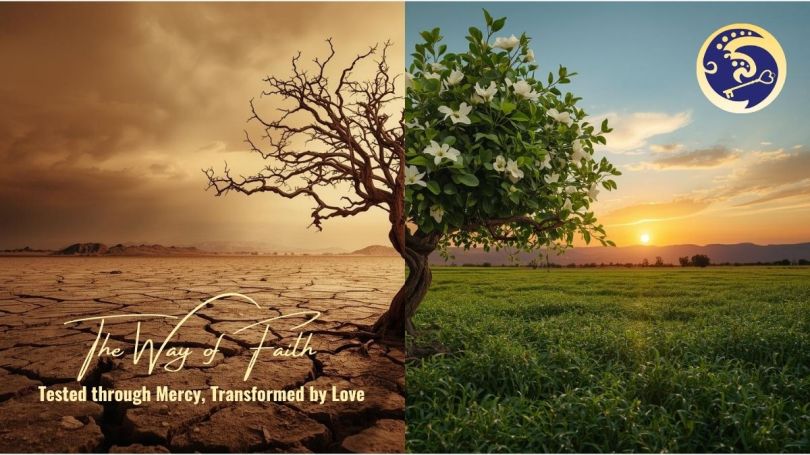






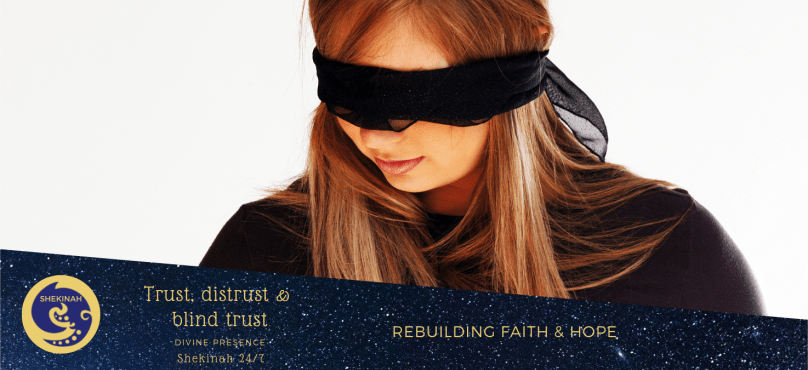
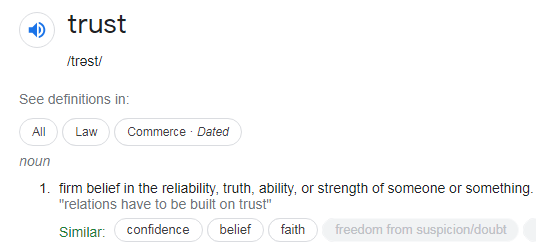
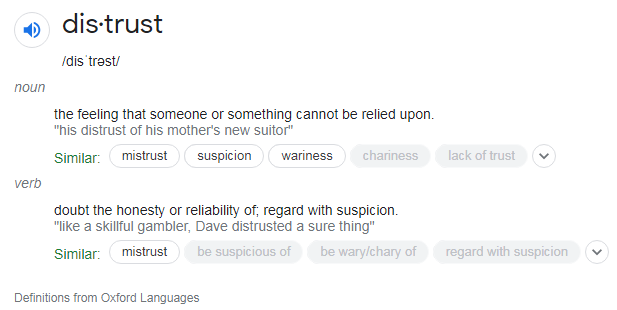
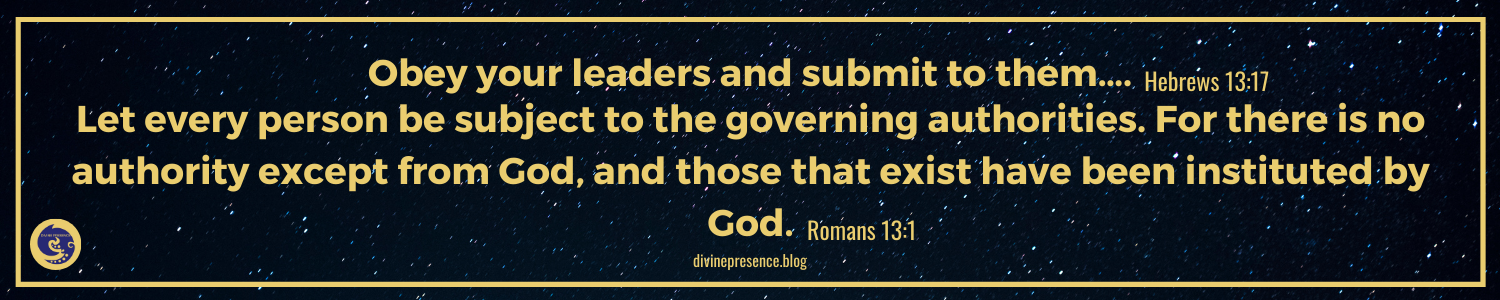

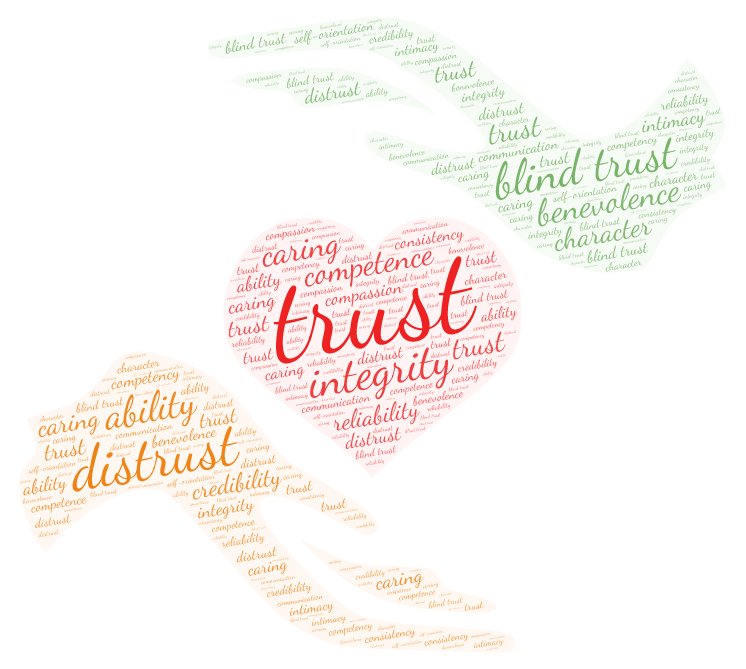






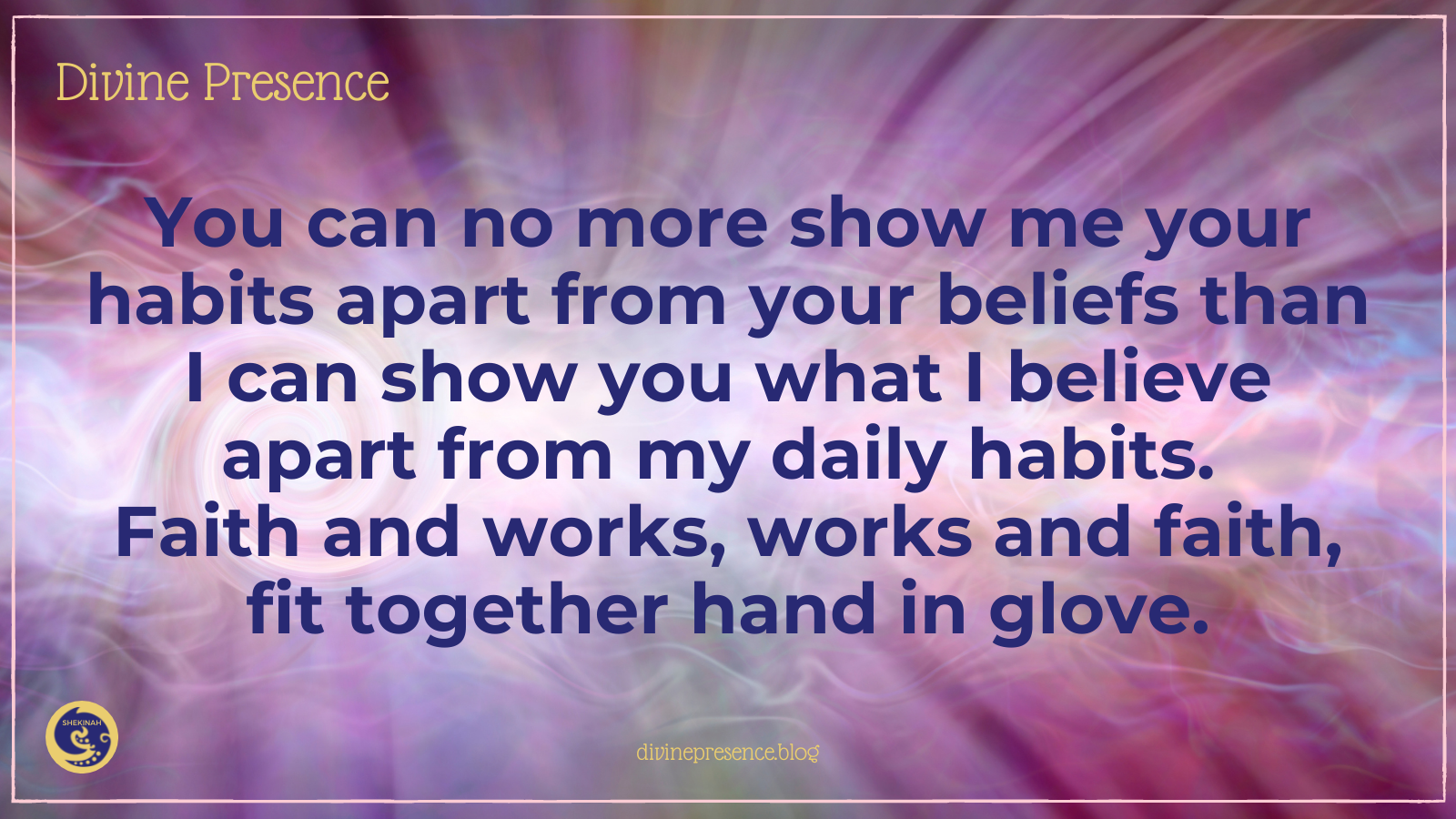
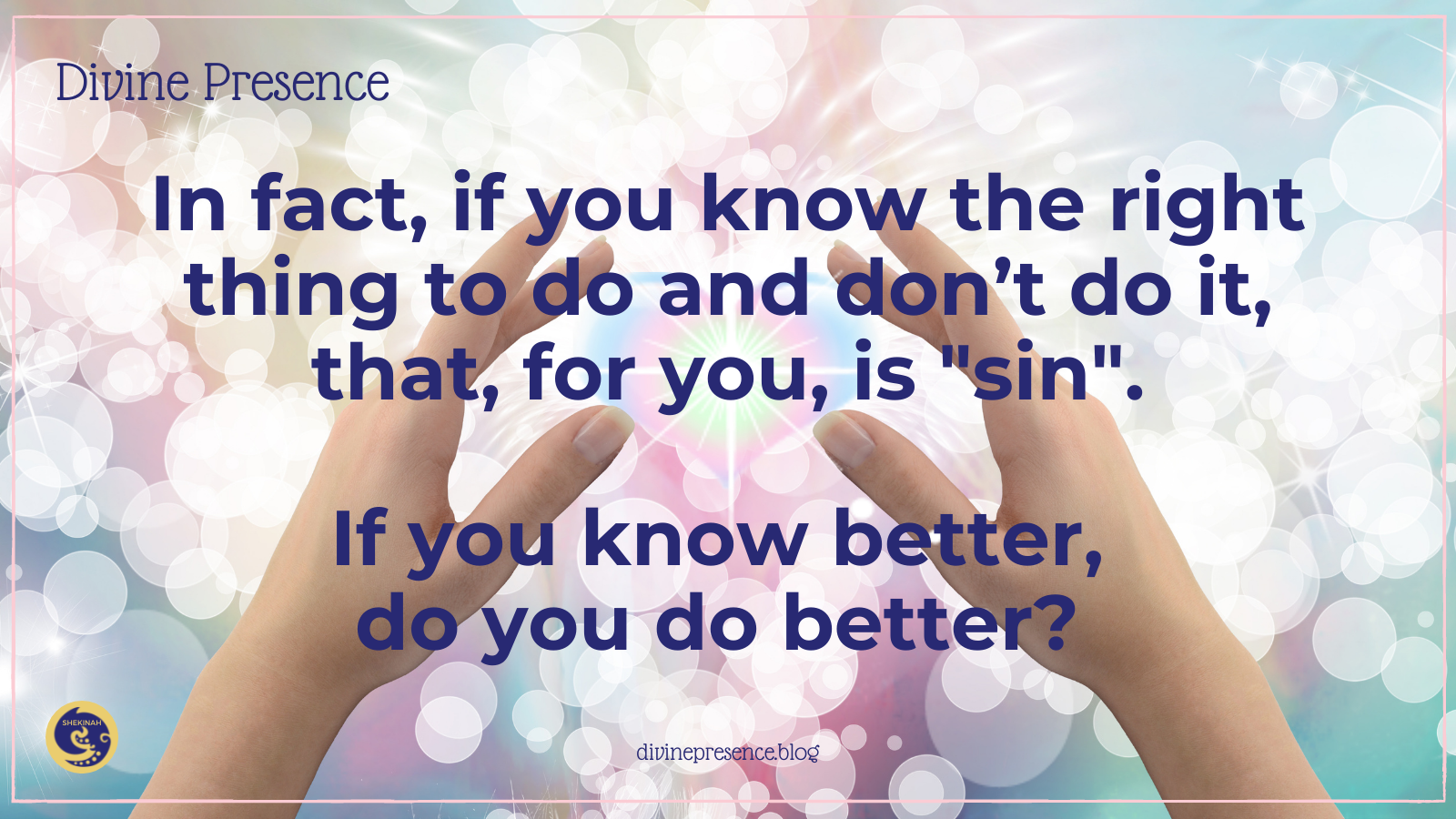
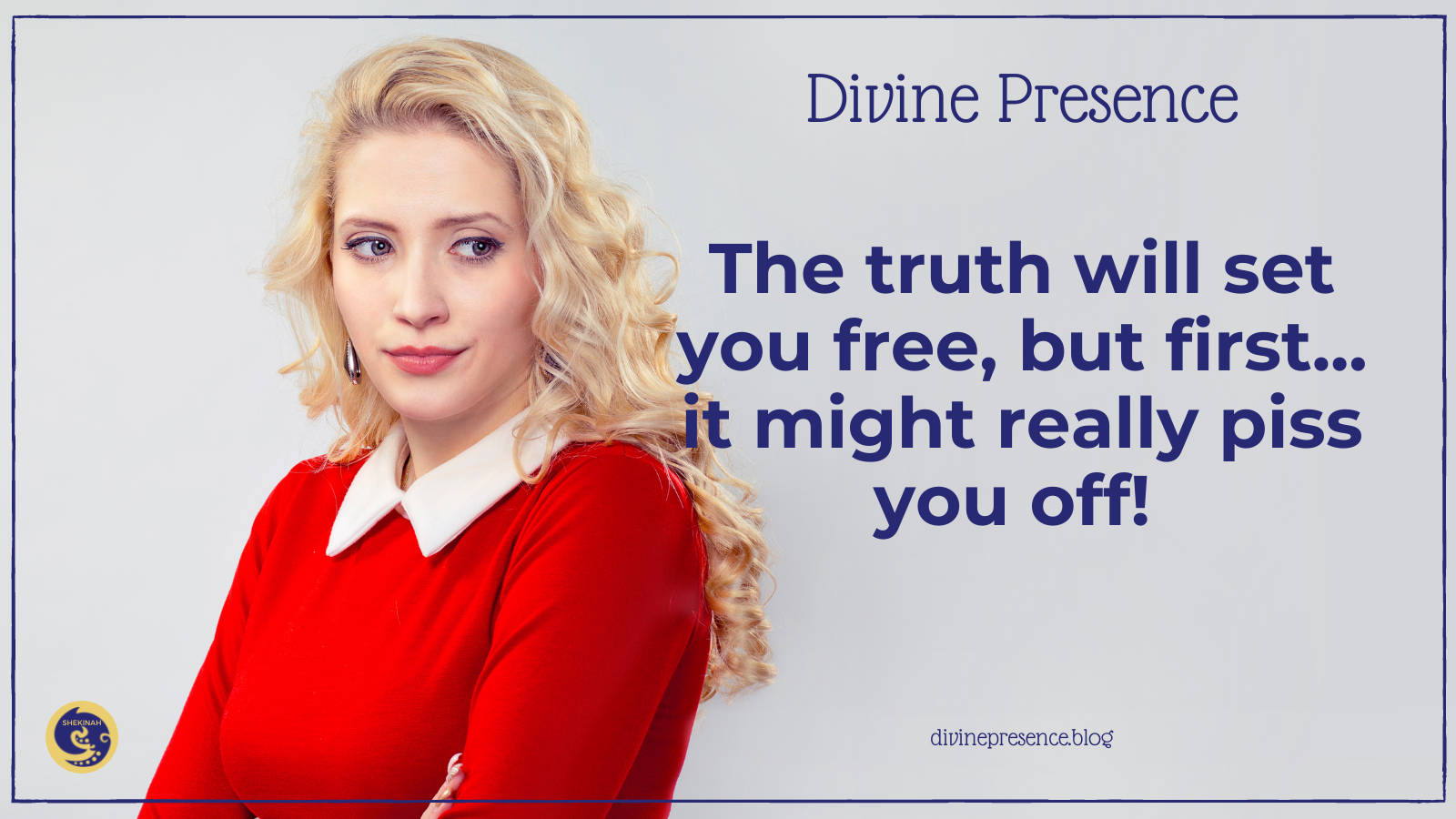
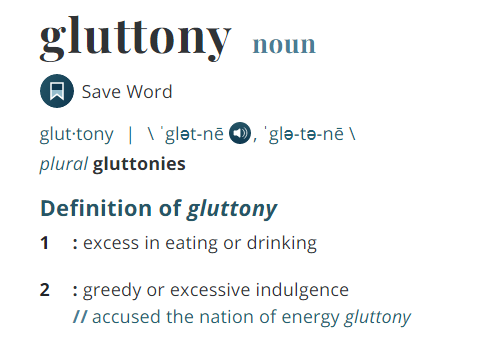
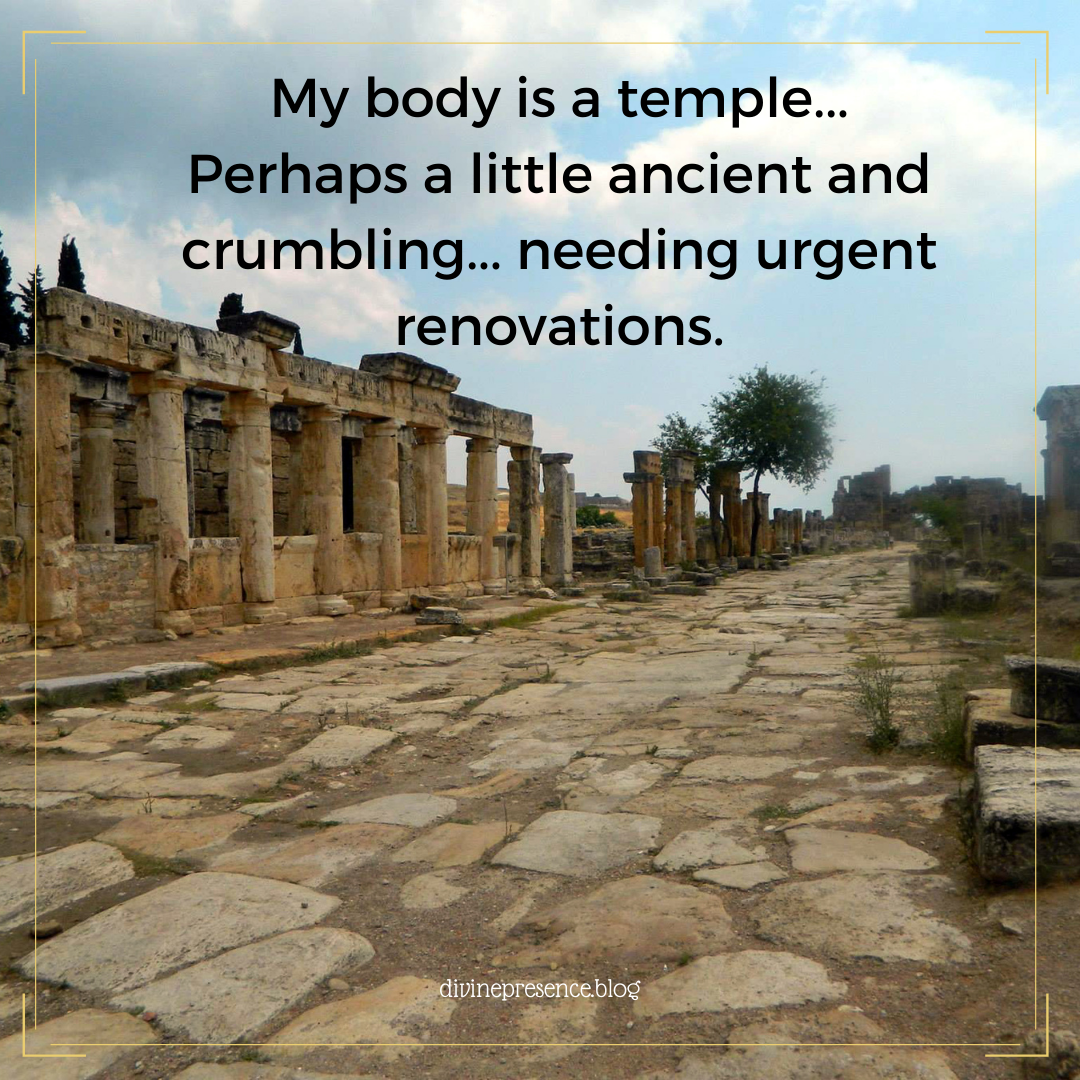
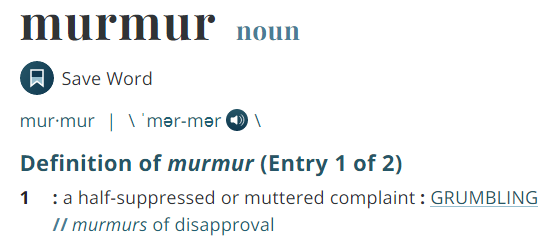
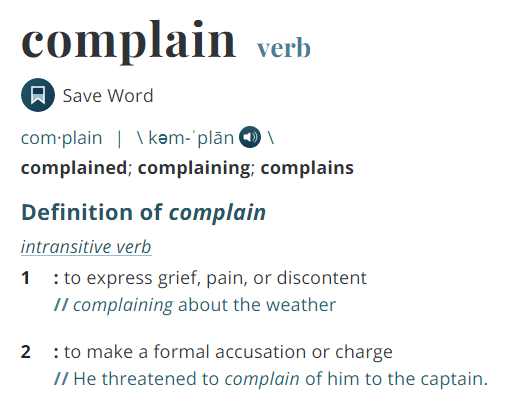
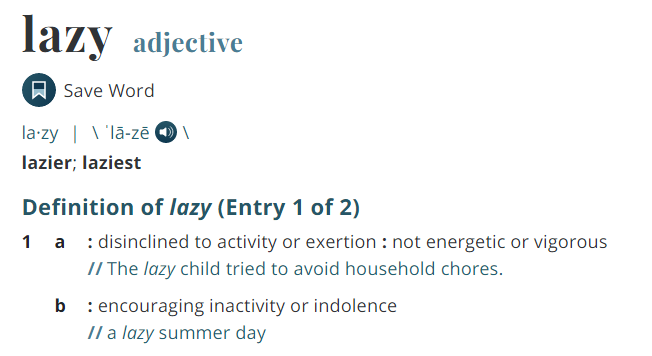
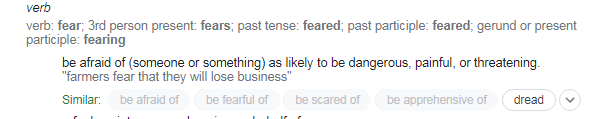
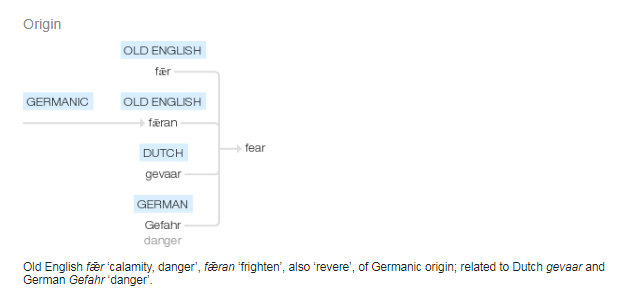




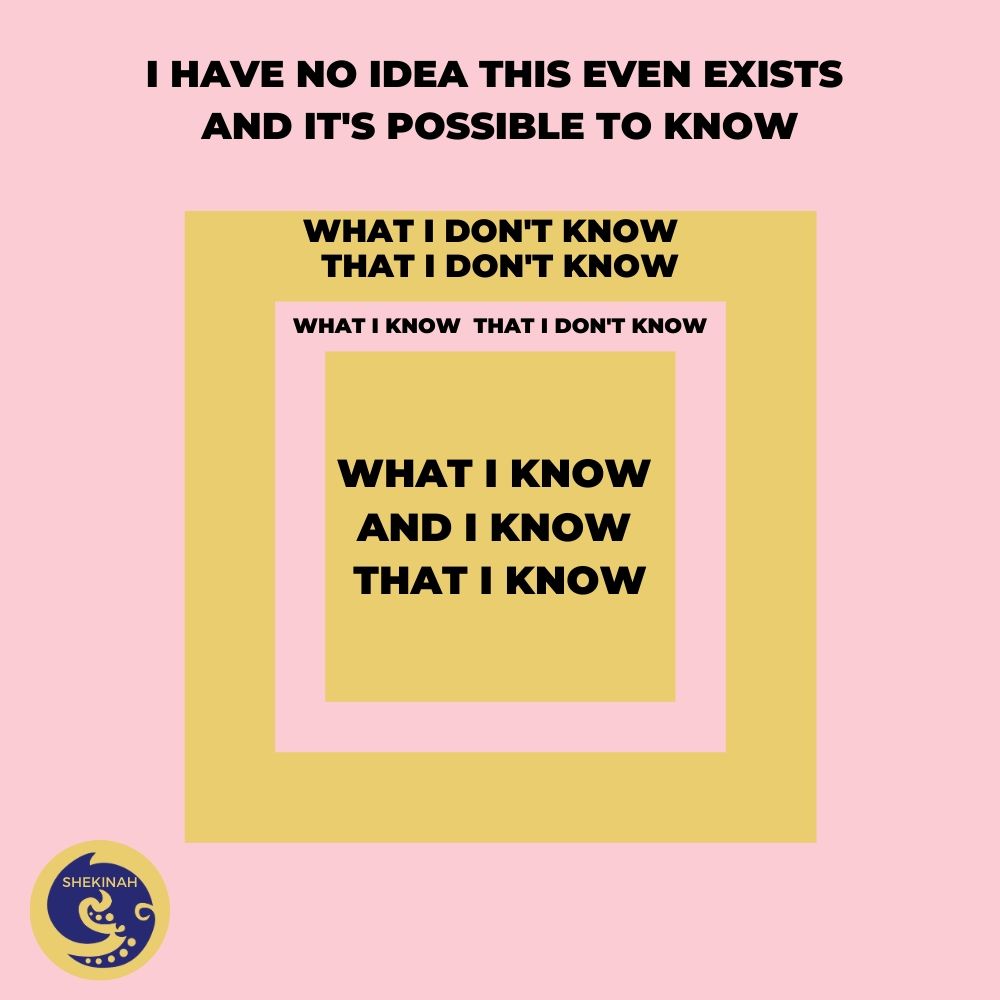


 Divine Presence: Letting the Infinite flow in my life