

“It is easy enough to be friendly to one’s friends. But to befriend the one who regards himself as your enemy is the quintessence of true religion. The other is mere business.”
― Mahatma Gandhi
Valentine’s day is almost here, and I want to challenge you to love the people that trigger you and rub you the wrong way. The people that don’t fit your ideal image of what humanity looks like at its best. This might be:
- troubled youth
- the homeless vagabond
- drug addicts
- militant feminists / gays / Muslims / Christians
- your parents, siblings or a co-worker
Who are you struggling to love and accept? For this Valentine’s Day – I challenge you to find space in your heart to love this person or group of people.
Just for one day.

How is your religion serving you?
A 2012 study from the University of Berkeley found that typically atheists, agnostics and the non-religious were more motivated by compassion than those that considered themselves to be religious. In some ways, this infers that “love thy neighbour” has become more of a rule of external action, rather than kindness inspired from a loving heart.
Does your religion lead you to a place of moral obligation, while allowing you to avoid feelings of connection?
Unfortunately, it seems that the non-religious are more likely to give up their seat on a bus or train to a stranger. There is a surprising lack of empathy when we focus on following rules, rather than allowing ourselves to be lead from a heart of compassion.
While practising compassion results in subduing the ego and the self-centred mind, complying with the rules allows the ego to become self-righteous. We become the very Pharisees that Jesus decried. “Look how well I follow the rules .” Unfortunately, then our ego begins to hide behind self-righteousness, with a false sense of wellbeing and goodness.
Being religious may very well diminish our capacity for empathy and compassion.
What does the Bible say about this?
The very essence of Jesus’ teachings is love and compassion. For example:
43-47 “You’re familiar with the old written law, ‘Love your friend,’ and its unwritten companion, ‘Hate your enemy.’
I’m challenging that. I’m telling you to love your enemies. Let them bring out the best in you, not the worst.
When someone gives you a hard time, respond with the energies of prayer, for then you are working out of your true selves, your God-created selves. This is what God does.
He gives his best—the sun to warm and the rain to nourish—to everyone, regardless: the good and bad, the nice and nasty.
If all you do is love the lovable, do you expect a bonus? Anybody can do that. If you simply say hello to those who greet you, do you expect a medal? Any run-of-the-mill sinner does that. 48 “In a word, what I’m saying is, Grow up. You’re kingdom subjects. Now live like it. Live out your God-created identity. Live generously and graciously toward others, the way God lives toward you.”
Matthew 5:43-48 (MSG)
We also read in other places “if your enemy is hungry, feed him”. Then, in 1 John we find
If anyone boasts, “I love God,” and goes right on hating his brother or sister, thinking nothing of it, he is a liar. If he won’t love the person he can see, how can he love the God he can’t see? The command we have from Christ is blunt: Loving God includes loving people. You’ve got to love both. (1 John 4:20 – MSG)
How well are you doing with loving your brother, your neighbour, your co-worker that irritates you or that person that strikes fear in your heart?

Where neuroscience meets ancient wisdom
I’m lucky to get to study and practice mBraining (Soosalu & Oka) and mBIT (multiple brain integration techniques). Because of this, I’ve learned to make a clear distinction between what I use my head for – thinking, logic, analysis & creativity – versus how I use my heart. I use my heart for feeling & connecting (with myself and with others). While I might analyse and make meaning of my emotions in my head, I recognise that the feeling happens within me, not in my mind.
Over time, I’ve recognised that I when I get deep into learning (books & knowledge), I end up in my head, rather than in my heart. It takes a different kind of learning for me to have a change of heart. The risk of being “in my head” is that ego comes into play – I start imagining and visualising stories of who I am or who others are. Instead of connecting with the person, heart-to-heart, I allow myself to catastrophise or awfulise any past experiences I have had.
Who are you?
I’ve also learned with mBraining that our identity – who we deeply are – lies down in our gut, not in our heads. If you think of a fetus or embryo, the gut forms before the heart and the head – and our very primal system of self-preservation (including the immune system) lies with our belly.
So, when we want to make a profound, long-lasting change in our lives, head knowledge is only the very tip of the iceberg. It is only the first step. We have to “take it to heart” and “digest it” before we can look for actual change and transformation.
Unfortunately, we can also get caught up in having an identity forged on being part of a group or a religious organisation. This forces us to follow the rules and kowtow to behavioural expectations. Another way to hold your identity, however, is to see yourself as Jesus invites us to as a “child of God”. As such, your identity changes from having your security in obeying the rules to having security based on identifying with the Divine.
The presence of the Divine in everyone I see
“To love another person is to see the face of God.”
― Victor Hugo, Les Miserables
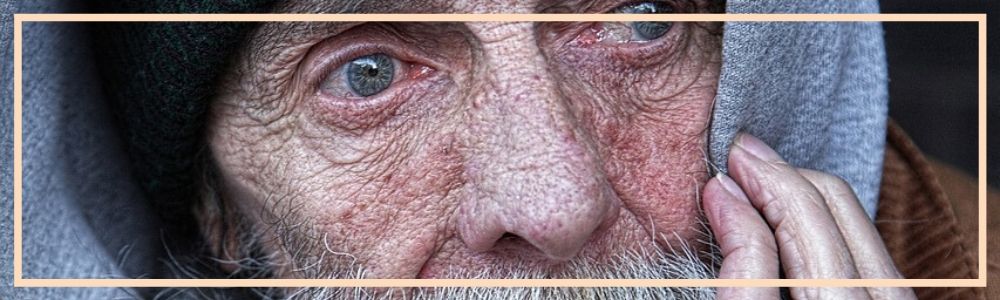
Every person you meet is a reflection of the Creator, loved and set upon this earth with a purpose & passion. They may have chosen not to follow their purpose or calling, but they are no less God’s children than the prodigal son.
They breathe in the same breath of life that you or I breathe.
The same way that you expect others to show you empathy & compassion for your mistakes and shortcomings give them that same latitude. You had a moment of “come to Jesus” on your spiritual path, whether you choose to believe and follow the Christian path or another.
But at some point, you had an awakening – a moment of accepting your gifts and callings. Of realising that everything before then was simply preparation for the spiritual path, you would choose.
Can you look at the homeless person or the drug addict before you and see their calling to be all they were created to be? Can you be patient and kind while they find the courage to accept it?
They are not the enemy, only friends that you haven’t yet had the pleasure of getting to know.
“Do I not destroy my enemies when I make them my friends?”
― Abraham Lincoln
Practical ways you can love your enemies
Start with humility
All love begins within, being willing to look at yourself with love and compassion. This humility allows you to forgive yourself, truly seeing your shadows, weaknesses & darkness. Acknowledging your mistakes and feelings that we try so hard to hide – shame, guilt and fear.
When we are humble, we can genuinely say “There, but for the grace of God, go I.”
Focus on Divine Love
Loving God with all your heart, mind & soul allows you to love your neighbour as yourself. But it’s not just loving the Divine. It’s accepting reciprocation. Can you accept that you are loved? Can you allow Divine Love to fill your lungs with every breath you take, to fill your bloodstream and reach every cell of your body?
If you aim each day to be Divine Love in the world around you, you will come to realise that love is patient and kind, without envy, boasting, and self-seeking. This same Divine Love is not quick to anger, forgives easily and keeps no record of wrongs.
Could you live each day from a place of this kind of love?
Practice empathy & patience
Putting it into practice requires that we put ourselves in the shoes of others. Until we get to know another person, we are oblivious to their experiences, their family background, education, and even opportunities. What are the challenges and obstacles that they are currently faced with?
It’s easy to judge another when we make up stories in our head. It’s a lot more complicated when we take the time to truly listen and get to know what is going on in their lives. What mistakes have they made that they are struggling to overcome?
Could you allow yourself to see their pain and feel for them?
Practise forgiveness
Most of us know the line “and forgive us our trespasses as we forgive those who trespass against us” or some version of it. My experience has been that the hardest part of forgiving another person is admitting what I forgive them for!
I cannot forgive and release what I am not willing to admit exists. If I believe “I should not feel ashamed”, and so ignore my feelings of shame, I cannot forgive what I feel ashamed for. Until I am willing to admit to the existence of what I feel, I cannot experience it and allow it to flow. Likewise, if I am feeling hate towards someone and limit myself to “I am not supposed to hate anyone”, I make it impossible to work my way through it.
How often are we offended by what someone said because we judged them by the lens of what happened five or ten years ago (perhaps even with another person)? Who needs the forgiveness: the person that just offended you, the person that hurt you all those years ago, or you for carrying this all these years without facing it?
Practising forgiveness requires that you dig deep into your personal darkness and baggage. It’s one of the most uncomfortable tasks of my spiritual practice, even now.
Be willing to take a step back
Often, our perspective is tarnished by the lens and angle we are looking through. Are you ready to take a step back or to the side, to look from another angle?
For example, what if instead of seeing it just from your point of view, or the point of view of the other person, you pulled up a third chair and looked at the two of you from the perspective of an onlooker. What would you see? How does this inform your compassion?
And if you were to raise up, higher, from a bird’s eye view of all the moving pieces of the past hour, day, weeks or years that lead up to this moment and this encounter – what would you notice differently? About yourself? About them?
Dare to be love & compassion
“Want to keep Christ in Christmas? Feed the hungry, clothe the naked, forgive the guilty, welcome the unwanted, care for the ill, love your enemies, and do unto others as you would have done unto you.”
― Steve Maraboli
It takes a brave person to see another as a beautiful human being and human becoming. When we look through Divine Love, we see infinite potential in each person we meet. But first, you have to be open and vulnerable: willing to see yourself as infinite potential.
Perhaps the answer to your prayers is you, and you are meant to be the change in the world that you desire to see.




 Divine Presence: Letting the Infinite flow in my life