generative wisdom,being wise,death,a time for everything,a time to heal,actions,all is meaningless,all is vanity,ask yourself this,awareness,being compassionate,being kind,career,choices,decision-making,desires,discovering your purpose,education,riches,spiritual healing,

How to Create a Lasting Legacy: The True Pursuit of Wisdom

Is the pursuit of wisdom and creating a lasting legacy worth it?

If we read Ecclesiastes 1, we might think it’s all an exercise in futility. 
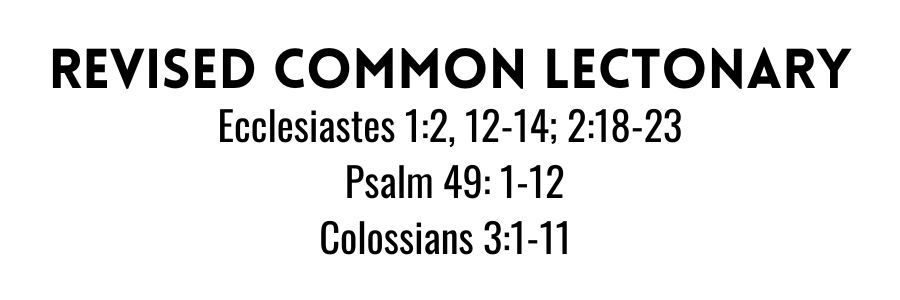
Ecclesiastes, Psalms, Colossians

Was the writer of Ecclesiastes depressed? It seems so. After all he had done to pursue wisdom, he realises that everyone dies.

What was the purpose of studying so much and creating so much wealth? Will it be appreciated by those left behind? Even wealth gets squandered by unwise heirs. 

So, what’s the purpose of all that hard work and effort?

When we look at the wise, they die; fool and dolt perish together and leave their wealth to others.

Psalms 49:10

On the other hand, Colossians suggests that we stop pursuing worldly pleasures and goals, and focus our time and energy on “things above”.

Set your minds on the things that are above, not on the things that are on earth

Colossians 3:2

So, what is the meaning of life? Is it futile to pursue wisdom and wealth? Is this all vanity (futility) as the author of Ecclesiastes suggests? 

Or is there something meaningful that we can do and create here and now that will leave a legacy behind?

The true pursuit of wisdom

First, what is wisdom? Is there a difference between worldly wisdom and divine wisdom? Earthly wisdom or godly wisdom?

Who do you consider to be wise?

Is someone with a Master’s degree considered to be wise? Or are they merely educated?

In business, there’s a DIKW pyramid – data, information, knowledge and wisdom. Data is meaningless, unless you can actually draw some conclusions from it that you can use to guide your future actions.

Data is the foundation, information is processed data, knowledge is information with context, and wisdom is the application of knowledge to make informed decisions. 

So, in the context of business, wisdom is not knowledge, but the application of knowledge into decision-making. 

In a similar fashion, education is merely a means to an end: hopefully, getting an education will teach you how to transform knowledge into wisdom – wise decision-making. 

Worldly Wisdom or Divine Wisdom?

So, what about this divide between earthly wisdom and godly wisdom? 

Do you want to be counted wise, to build a reputation for wisdom? Here’s what you do: Live well, live wisely, live humbly. It’s the way you live, not the way you talk, that counts. Mean-spirited ambition isn’t wisdom. Boasting that you are wise isn’t wisdom. Twisting the truth to make yourselves sound wise isn’t wisdom. It’s the furthest thing from wisdom—it’s animal cunning, devilish plotting. Whenever you’re trying to look better than others or get the better of others, things fall apart and everyone ends up at the others’ throats.

James 3:13-16, The Message

If you ask me for my favourite books of the Bible, they would be these:

  • James
  • Proverbs
  • Job
  • Ecclesiastes

Do you see any similarities in them? Yes, they all talk about Wisdom.

And still, Ecclesiastes suggests that even the pursuit of Wisdom is meaningless and futile. 

As we know it, the author of Ecclesiastes (thought to be Solomon, but perhaps not) was also one (if not the principal) of the authors of Proverbs. 

And in the end, he says it’s all vanity. What’s the point of pursuing wisdom?

Or as Psalms suggests: what’s the point of building up an estate and wealth to leave to your children? 

What do we truly live behind when we go? Is there any point to “living with purpose” or “finding your purpose” in life and creating a legacy to leave behind? 

Is pursuing holiness enough?

Colossians suggests that we should pursue individual holiness. But how does Colossians define this individual holiness?

What does it mean to be renewed in wisdom and become a new self?

I find it fascinating that the defintion we are given focuses most on what we leave behind and stop doing. When we stop all of these bad habits, though patterns and emotions, we open up space for the new.

Put to death, therefore, whatever in you is earthly: sexual immorality, impurity, passion, evil desire, and greed (which is idolatry).
But now you must get rid of all such things: anger, wrath, malice, slander, and abusive language from your mouth.
Do not lie to one another, seeing that you have stripped off the old self with its practices and have clothed yourselves with the new self, which is being renewed in knowledge according to the image of its creator.

Colossians 3:5, 8-10

As it says here, stripped off the old self with its practices and habits. And then you can put on your clean clothes.

“seek the things that are above”

Colossians 3:1

What are we seeking? Divine Presence in our lives.

And how can we be filled with the Divine Spirit? Only by making room! To make room in our life for the Divine, we have to let go of whatever is holding us back.

What are the personal obstacles in your thoughts, feelings and actions that inhibit the Spirit from flowing freely in your mind?

To be full of the Spirit

In order to demonstrate the fruit of the Spirit fully – love, joy, peace, patience, kindness, goodness, faithfulness, gentleness and self-control – we have to let go those emotions and thoughts that are their archnemesis.

  • To be full of love, I have to first let go of hate.
  • If I want my joy to overflow, I first have to finish grieving for whatever I think I deserved and didn’t receive, as well as find a place of acceptance of what is.
  • To be full of peace, I release my anxiety and that pressing need to have everything now. I recognise any greed that I have – whether it be for things, results or even knowledge and wisdom.
  • If I want to have patience, I must learn to persist in the face of trouble, delay or even suffering. It’s an internal strength that I gather that allows me to face whatever may come, and still love othes in spite of my circumstances. I let go of the longing for immediate results, and recognise that everything is for my good. 
  • To be full of kindness, I have to let go of my ego, pride, anger and wrath. I release all malice and slander from my thoughts, emotions, words and actions. And I certainly refrain from abusive language coming out of my mouth!
  • If I am committed to being filled with goodness, I must first release sexual immorality, impurity, passion, evil desire, and idolatry.
  • And when I claim that I have faithfulness, I let go of lying to myself and others, and instead demonstrate loyalty, steadfastness, and trustworthiness.
  • Likewise, when I am filled with gentleness, I get rid of all those rough edges of my emotions and tongue. I learn to speak gently, rather than harshly, and I curb my anger, wrath and hatred completely. 
  • Finally, the crux of it all becomes impeccable self-control. I have control over my mind and thoughts, my emotions and especially my tongue and the words of my mouth. 

This is why Colossians focuses on what we have to get rid of in our lives. Take out the old, in order to be full of the new. If you want to think on things above, you have to stop thinking about all the things below. 

What is Wisdom and a Meaningful Legacy?

Let’s go back to Ecclesiastes and the lamentations of “This is all futile and useless”. 

sometimes one who has toiled with wisdom and knowledge and skill must leave all to be enjoyed by another who did not toil for it.

Ecclesiastes 2:21

So, all that hard work, even applying your knowledge and skill for wise decision-making, sometimes is reaped by those who don’t deserve it.

Perhaps you died and a distant family member reaps rewards rather than the children you expected. Or your business is taken over by outsiders. The bank forecloses on your house and leaves your children without a roof over their heads.

So, what is meaningful? What do we leave behind that truly matters?

I would guess that it’s the impact we have on the lives of others. Especially when that impact carries far into the future, beyond the span of our lives and the generations that followed us. 

Think for a moment, for example of the authors of the Bible: thousands of years later, we are still reading those words. Even the authors of political, ethical and scientific books are read hundreds and thousands of years later.

But it’s not just books and writers that leave a legacy – there are many who impacted lives that were illiterate, and yet their deeds are know all over the world, living on as legends and stories that we continue to share. 

Jesus may have been born humbly, and we have no works written by him… yet every year we continue to celebrate his birth and coming to this earth, as well as his teachings and his sacrifice.

His divine wisdom and legacy are clear to each one us.

So the question for you today is: what meaningful legacy are you creating and leaving?
faith, worry, doubt, where attention goes energy flows, Divine Presence, Great Creator, creative solutions, perfect peace, anxiety, impacts of anxiety, fear, focus, safety, decision-making, Divine help, God Box, personal responsibility, accountability, be anxious for nothing, gratitude, aligned action, blind faith, patience, trust, confidence

The challenge of Faith: Worry Worships the Problem

I recently saw an image posted on social media: “Worry is worshipping the problem”. And without a doubt, I believe that where attention goes, energy flows. I have to regularly stop myself and ask: “Where are you focussing your attention – on the problem or the solution?” 

More than this, however, I bring myself back to the reminder that I live in the presence of the Divine. And if I claim to be practising Divine Presence in my life, how is it expressed when faced with problems or challenges?  

Am I keeping my attention and focus on the Great Creator, allowing creative solutions to flow to me? 

When my mind is focused and stayed on the Divine, perfect peace holds me. I trust in both the process and the outcome.

When my mind is focused and stayed on the Divine, perfect peace holds me. I trust in both the process and the outcome. Isaiah 26:3

The effects of worry 

When we stay worried – in a stressed state – this impacts us on several levels. One of the primary organs hit by stress and worry is your heart, including your arteries and blood vessels. Consequently, your heart beats faster and harder, resulting in inflamed arterial walls. This inflammation impacts your health: 

  • hardening of the arteries 
  • unhealthy cholesterol levels 
  • high blood pressure 
  • heart attacks 
  • stroke. 

Even in the Bible, we read:  

Anxiety weighs down the heart

Proverbs 12:25

And again: 

So then, banish anxiety from your heart and cast off the troubles of your body 

Ecclesiastes 11:10

Other impacts of anxiety:

When we are anxious and worrying, it’s more than just our heart that gets hit. Blood sugar levels also rise, with the need for more energy caused by adrenaline and then cortisol. We don’t burn off this extra energy; we have passive worry and anxiety. So, those high blood sugar levels, intended to help us escape danger, stay in the body without being burned up for energy.  

Our worry also impacts our immune system, weakening it. Our bodies struggle to defend against illness and disease. Additionally, we contend with gut and digestive issues. That knot in your stomach becomes an ulcer or indigestion. Your worries might even impact bowel motility. 

We hold this worry and anxiety in our bodies, as well as impacting the central nervous system. To cope, we create: 

  • eating disorders – not eating or over-eating; 
  • bad habits & addictions, and 
  • insomnia and disturbed sleep patterns.  

Worry also impacts our relationships, job performance and the ability to make decisions.  

Despite knowing all this: we continue to worry and focus on the problem, not the solutions.  

let go and let God, the God Box

The problem with staying anxious & worried: 

Anxiety is a state of distraction and prolonged suffering. Our worrying creates a physical and emotional response, in the present moment, regarding a future possibility. It is not an inevitable future outcome but uncertain. You are trying to predict the future and possibly are catastrophising. It may not turn out as you create it in your imagination. And it is indeed not happening right now.  

Worry stems from fear. Typically, this is our fear of not being enough or having enough talent, resources, or abilities to face life’s challenges.  

This anxiety creates less focus, where you can no longer concentrate on the task at hand. You might become irritable and easily thrown off balance. It’s easy to become disengaged, showing up either as fight and flight or being withdrawn. 

Worry reduces your ability to weed out distractions, making it easy to fall into: 

  • social media 
  • news
  • a train of worrying thoughts 
  • meaningless tasks & chores that could wait 

All of this comes together to impair decision-making.  

Chasing safety 

Unfortunately, part of your brain got unplugged and disengaged by worry! Worry and anxiety lead you towards what might seem (from a limited perspective) the safest choice. But the safest option is not always the best solution.  

Good decision-making requires flexibility in your thinking and looking at the problem and solutions from various perspectives. Do you have the ability to look above and beyond the present moment and conditions? 

  • Weigh up the consequences 
  • Plan for the future 
  • Use logical processing  

Another challenge when you are worried is that you might not talk about your fears. It’s more than asking for Divine help and guidance. Sometimes you need to talk to people. Perhaps you ask the Divine to get the right people to show up for you. 

Finally, when we are worried and overwhelmed, we respond in two opposing ways: 

  1. We consider too few options and become fixated. 
  2. We overthink all the available options under the sun, a scattered mind that is unable to focus. Because there are too many options, we get overwhelmed.  

In both cases, we procrastinate. Then, as we run out of time, we pick the first solution because we want to escape the overwhelming feelings. Of course, if we had proactively studied the options earlier, a different outcome would emerge. 

Where are you focused when times are hard? 

The Divine invites us to trust: to set a divine intention and then hold that intention as being true. Perhaps the intention is as simple as: 

I am capable of making good decisions, guided by Spirit.  

We challenge the worry and anxiety and get present in this moment – here and now. Right now, I am safe and secure.  

The purpose of doing this is to focus our energy and attention on the direction we should go. Worry tricks us into avoiding what we don’t want: any direction is a good direction, as long as it takes me away from ____. A good decision, on the other hand, takes us in the bearing we want to go. We have a purpose, and we turn towards our goal. 

Watch your heart with all diligence: from your heart flows the spring of life. 

Watch your heart with all diligence: from your heart flows the spring of life. Proverbs 4:3

It’s easy to get caught up worrying about all the things that are beyond our control. But it is when we focus our attention on what we can control that we get anything done. 

Things I can control: 

  • my attitude 
  • my choice to get organised 
  • where to spend and invest my time and energy 
  • time management 
  • how I respond to the challenge before me 
  • how I communicate with others 
  • whether or not I choose to share with others and ask for help 

You control whether or not you make a plan, getting specific about which steps to take in the coming days. You put time and energy into this and what you can do and who you can talk to.  

Alternatively, sometimes the best choice is to take a break: 

  • meditate 
  • pray 
  • exercise.  

The God Box

Everything else – beyond your control – where do you put that?

I put those things in my “God Box”. The God Box is a little cardboard box, hand painted and decorated on the shelf above my desk. All my worries get written on a bit of paper, folded up, and placed in the box.

I place those worries out of sight and mind. At the end of the year, as part of my end of year routine, I’ll paint a new one for 2022 with little miss and we’ll burn the 2021 box and say farewell to the worries we put away.

The power of holding an intention with faith 

As a child, my prayers to God were much like asking Santa Claus at Christmas. There was wishing as well as negotiation. As an adult, however, I believe in personal responsibility and accountability for an outcome. And yet, I believe in miracles. 

I believe in “be anxious for nothing”. And so, in every situation, I hold an intention and gratitude in my heart. I present every request for my highest good to the Divine Creator. And as a result, my heart is flooded with a peace that I cannot begin to comprehend.

I believe in "be anxious for nothing". And so, in every situation, I hold an intention and gratitude in my heart. I present every request for my highest good to the Divine Creator. And as a result, my heart is flooded with a peace that I cannot begin to comprehend.

It’s more than a helpless prayer. 

It is a proactive prayer, one in which I believe that what I have asked for will come to pass, and therefore it is safe to take steps forward on that path! 

Believe that you have received it and it will be yours!  

But it is asking with single-mindedness, without a shadow of a doubt. Can you believe that Divine Love cradles you? Are you confident that when you hold an intention for the highest good and possible outcome – daring to pour your time and energy into achieving this – it will come to pass?  

It’s more than just faith: aligned action. 

They say that if you want to walk on water, you’ve got to start by hopping out of the boat! While that might take the example to an extreme, for me, that is the definition of faith and believing: your actions fully align with what you profess to believe.  

My biggest mistakes have been made in blind faith: the faith of sitting waiting without any corresponding action.

My definition of blind faith: I expect a perfect crop without having planted any seeds, watered or weeded. Unless I have grounds to believe that someone else actually planted, watered and weeded, that’s merely blindness. It’s not faith.

Faith is stepping out and putting my plan into effect. 

Faith believes that the Divine accompanies me on every step of my path. It allows me to trust that I can listen to the still, small voice of Spirit, make a plan, and then take action.  

Keeping the faith that what you’ve planted will grow 

Sometimes, faith shows up in patience. Trust is waiting for results without growing anxious. It is confidence in the results that I hope for, resting in the assurance of what I cannot yet see.  

Faith is confidence in the results that I hope for, resting in the assurance of what I cannot yet see.

Having faith means I am filled with joy and peace as I sit trusting in the Divine. It is overflowing with hope, knowing that the power of Spirit fuels me. 

My attention, time, and energy focus on doing what I can. I let go of all aspects beyond my control. I focus on the peace that passes understanding because I place my attention on Divine Love.