5 Powerful Lessons about Love from the Prodigal Son

The lectionary reading for this week is from Luke 15: the story of the prodigal son. And today, I want to highlight five powerful lessons about love that we can learn from Jesus’ teachings. 

If you love, sometimes you have to let go

As parents and friends, we’ve all had people that we want to protect in our lives. But sometimes, as the father in the parable, we realise that we have to let our loved ones go out and learn lessons for themselves. 

So, we see, at the beginning of the parable, that the father simply allows his youngest son to leave.

There was a man who had two sons. 

And the younger of them said to his father, ‘Father, give me the share of property that is coming to me.’ And he divided his property between them. 

Not many days later, the younger son gathered all he had and took a journey into a far country, and there he squandered his property in reckless living.

I can’t imagine this father’s pain when his son treated him as dead, asking for his share of the inheritance ahead of time. But, rather than teaching him a lesson, he loves him enough to let him go and experience the world on his own.

Unlike now, where we have internet, email, WhatsApp and all types of communication and travel that can reduce the distance between us, I’m sure that the father didn’t hear from his son once he left and moved away.

He was basically abandoning his family and all their teachings.

And still, the father let him go.  All his hard work and affection, just squandered by youth’s mad pursuit of the present moment. 

True love is not about control and it’s not always about protection. Sometimes, it’s allowing someone to grow up and learn on their own.  As parents and friends, we have to learn to love fully, even letting go.

Even with God’s love, we see freedom of choice. We choose whether or not to practice the Divine’s presence in our life each day. What relationship do you want to have with Spirit?

prodigal son, love, unconditional love, forgiveness, freedom of choice, relationships

Choose your friends wisely

The second life lesson in love that we learn from the Prodigal Son is to choose your friends wisely. 

We’ve all had our share of fair weather friends. The Prodigal Son shows us a prime example of this.

When he’s rich and there’s money for parties and entertainment, he’s surrounded by people that want to be his friends. He’s living the high life.

But after he squandered all his money and the famine hits, he gets a rude wake up call.

Where are those friends now?

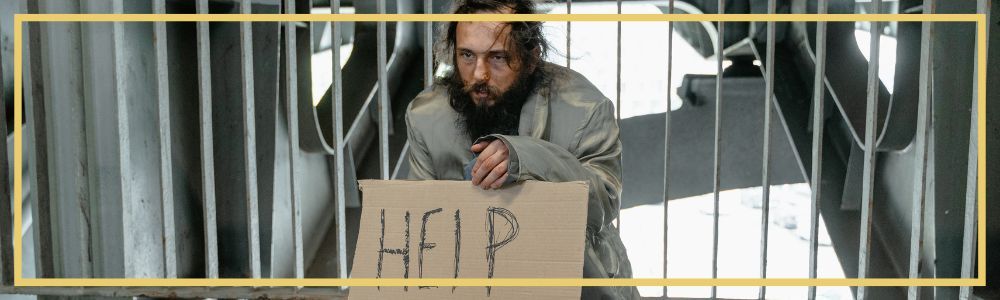
He’s all alone in a foreign land, with no one to help or guide him.

He sinks as low as to become a servant for another, having to feed slop to pigs on someone’s farm. He’s so low that even the pigs eat better than he does. 

But, he has fallen to this low, because of the friends that he chose in this new land and how they influenced his choices. 

Jim Rohn said that you are the average of the 5 people you spend the most time with. 

Show me your friends and I’ll show you your future. 

We all need connection and belonging in our lives. This is one of the reason that we find so many gangs flourishing in low income ghettos. They give youth a sense of belonging and safety. No matter how dangerous it might be, they meet their needs to some extent. 

But this connection and belonging also influences our habits and choices.  Do the people that we choose to build relationships with lead us to better ourselves and strive to grow? Emotionally, spiritually, financially and even physically.

If your friends are all into health and fitness, it’s likely that they are inviting you to go for walks, or go to the gym, hiking, cycling or different types of classes. Where they choose to go to eat and what they drink will be influenced by this lifestyle choice. 

And as you spend time with them, you will find it easy to choose healthy activities and focusing on your physical wellbeing. 

Of course, the prodigal son’s friends also influenced his choices – to spend money frivously with no thoughts to the future.  And it destroyed him. 

Throughout the Bible, we find all manner of advice about how to choose our friends and those we regularly spend time with. What will you do with this advice?
prodigal son, love, unconditional love, forgiveness, freedom of choice, relationships

Knowing when to admit “I was wrong”

Our third lesson in love from the Prodigal Son, comes when he wakes up to his situation and reality, and chooses to admit that he was wrong. 

“When he came to his senses, he said, ‘How many of my father’s hired servants have food to spare, and here I am starving to death! I will set out and go back to my father and say to him: Father, I have sinned against heaven and against you. I am no longer worthy to be called your son; make me like one of your hired servants.’ So he got up and went to his father.

All of us make mistakes. But what really matters in relationships is how we deal with those mistakes and how we choose to relate to others. 

Can we humble ourselves and ask for forgiveness from those who love us? Are we willing to rebuild a relationship based on forgiveness? 

Today’s lesson from the Prodigal Son is not just about a father’s love. It’s also about humility and admitting our mistakes.

The Prodigal Son no longer takes his father’s love and care for granted. Instead, he resolves to return with humility and ask for forgiveness. 

So, today, let’s consider those relationships where we are taking others – especially their love and care for us – for granted. Do we need to ask for forgiveness in humility and rebuild our relationships? 

Unconditional love and rejoicing

Perhaps the best lesson we all know from the Prodigal Son is the father’s response upon the return of his wayward son. 

“But while he was still a long way off, his father saw him and was filled with compassion for him; he ran to his son, threw his arms around him and kissed him.

“The son said to him, ‘Father, I have sinned against heaven and against you. I am no longer worthy to be called your son.’

“But the father said to his servants, ‘Quick! Bring the best robe and put it on him. Put a ring on his finger and sandals on his feet. Bring the fattened calf and kill it. Let’s have a feast and celebrate. For this son of mine was dead and is alive again; he was lost and is found.’ So they began to celebrate.

In previous parables, Jesus talked about the Shepherd who leaves the 99 to go out to search for that one lost sheep. And here, we see the father rejoicing over the return of that one wayward son. 

We first see that when the father sees him, he is filled with compassion. He recognises that the broken young man returning home is his son. And while the son recognises that he is in the wrong and no longer worthy of being called his son, the father responds with returning to him his status of being a son. 

He clothes him and put shoes back on his feet. He begins a feast to welcome him home. 

I find it fascinating that this father didn’t say “I told you so¨. 

There’s no lecture and no questioning. He accepts the apology fully and embraces his son back into the family. 

There’s probably wisdom in this father’s heart and eyes: he can see that life has already provided all the lessons and there’s no need to rub salt into his wounds. What the son needs now is love and acceptance. 

But how many of us can show this level of wisdom in our love and relationships? Do we know when to lecture and teach versus when to simply show love.  It’s not about coddling and pampering. But rather, it’s about know when to speak and what to speak.

So, as we learn from the Prodigal Son, there’s a time in relationships to accept someone’s humble apology and embrace them without teaching them anything further.

Do we have the wisdom to know the difference?

prodigal son, love, unconditional love, forgiveness, freedom of choice, relationships

Love isn’t just about following the rules

Our final lesson in love comes from the reaction of the older son to his brother’s return and his conversation with his father:

“Meanwhile, the older son was in the field. When he came near the house, he heard music and dancing. So he called one of the servants and asked him what was going on. ‘Your brother has come,’ he replied, ‘and your father has killed the fattened calf because he has him back safe and sound.’

“The older brother became angry and refused to go in. So his father went out and pleaded with him. But he answered his father, ‘Look! All these years I’ve been slaving for you and never disobeyed your orders. Yet you never gave me even a young goat so I could celebrate with my friends. But when this son of yours who has squandered your property with prostitutes comes home, you kill the fattened calf for him!’

“‘My son,’ the father said, ‘you are always with me, and everything I have is yours. But we had to celebrate and be glad, because this brother of yours was dead and is alive again; he was lost and is found.’”

I can almost hear resentment in the older brother’s voice towards his father. It almost seems that there are unspoken feelings in his heart towards his father – the struggle of always being “the responsible one”. 

But relationships and love aren’t just about following the rules and never disobeying. It’s not just about external compliance, but also the state of our heart. 

Take a moment and consider whether you are holding any resentment in your heart towards others because you feel that the relationship is unfair. You’re doing everything right, but are you complaining that you don’t receive “enough love” in return? 

Is this really love that you are feeling? Or is it just responsibility? Love isn’t a transaction. 

I know, for myself, the biggest resentments I have ever felt in my life are not actually towards others, but towards God. The times I have recriminated with “But this isn’t fair!” have typically been when I’m complaining about life to the Divine. 

Today’s a great day to consider what bitterness or resentment you might be holding in your heart in your relationships. Where do you feel that you’ve been doing it all right and you’re not receiving back the love and attention that you deserve? And what will you do with these feelings now that you’ve identified them? 

What other lessons have you taken away from this parable of the Prodigal Son? 

Perfect control: how to encourage and drive growth

Today, I’m back to one of my favourite passages in James 3: “the untamable tongue”.  Having control of the words of our mouth reflects fully in our relationships. We use words to build others up and encourage them, or we can tear each other down. 

We are warned in the first verse of James not to presume to be teachers (those purporting spiritual authority above others), because these teachers will be judged more harshly.

We all make mistakes, especially in what we say. 

A slip of the tongue for just a moment can destroy a relationship in just a few words.

No amount of saying “I’m sorry, I was angry and I didnt mean it” can rebuild the trust that was destroyed by our words.

Having perfect control of the tongue – to encourage others and drive their growth – is the measure of the perfect man, able to use his self-control in every way. 

From Galatians, we know that one of the fruits of the Spirit is self-control:

Perfect control of your tongue is the hallmark of being filled with the Spirit.

Consider the effect of the words of a school teacher on a child and the impact this may have on them throughout their lives:

  • You’re useless and can’t learn anything.
  • Obviously, you’ll never go to University.
  • I believe in you! Youˋre so hard-working and putting in so much effort, youˋll definitely do great things in the future.
  • I know you can do this! Even though it’s been hard for you to learn these things, youˋve done a great job with this homework. 

And this is even more powerful within the Church.

Imagine what happens when someone in leadership says to our youth:

  • You’re so rebellious, it’s impossible to teach you. There’s simply no hope for you. 
  • With all this rebellious spirit you’ve shown, I’m sure that you will always stand tall and be strong when going against the crowd. You have the strength to be a future leader. 

As we are reminded in James, a large ship is guided by a small rudder. And the tongue of those in leadership can shape the future of our Church and members. 

We don’t have to be in a leadership position to use the power of the tongue. 

  • gossip is mentioned about 133 times in the Bible
  • cursing shows up more than 65 times; and
  • complaining is mentioned more than 100 times.

Proverbs 20:19 reminds us:

A gossip betrays a confidence; so avoid anyone who talks too much.

Worse yet, those who eagerly listen to gossip are considered to be of low character. (Prov. 17:4)

A curse is calling for harm or injury to come to someone, and 1 Peter 3:10 suggest that if we love life and want to see good days, then we should guard our tongue against speaking evil and our lips from lying.

Swearing is not necessarily using curse words – in fact, consider swearing to be verbal abuse.

  • You’re stupid and I hope you die.
  • You will never amount to anything. 
  • You’re so fat and ugly, no one will ever love you.

These are all curses, even though they don’t include any swear words. Instead, we are asked to speak positive and encouraging words to each other. 

Complaining is not the same as letting people know when something is wrong. It comes from the soul and focuses on the problem, rather than on seeking solution.

This is why in verse 7 of James 3 we read:

The tongue also is a fire… It corrupts the whole person, sets the whole course of his life on fire, and is itself set on fire by hell. 

We see examples of this in every day life.

  • Gossip spreads like a wild fire, especially through social media and chat groups.
  • You’re in a meeting discussing a problem and looking for solutions:  One person complains and soon ten people are complaining and the vibe gets dragged down. Soon, everyone has forgotten that the meeting was to look for solutions.
  • One kid in the play ground starts to bully and verbally another, and soon you have a group of kids picking on the victim. 

So, what are we supposed to do?

These verses of James 3, verses 1-12 don’t really offer us the solution. They simply outline for us the power of the challenge and what happens if we fail to control the tongue. 

It’s only when we get to verses 13 and following that we discover the solution:

Wisdom and understanding is shown by a good life, by deeds done in humility and the humility that comes from wisdom.  

So, if we want to drive growth in our community or family, is starts individually: each one of us has to learn to control our tongue.

It’s living from the inside out – what we have on the inside will be shown to others by what we say and do.

Isaiah 50, verse 4 from this week’s lectionary reading offers the following:

To encourage those who are tired and weary.

The Lord GOD has given me a trained tongue, that I may know how to sustain the weary with a word. Morning by morning he wakens, wakens my ear to listen as those who are taught.

This is what we are asked to do.

When we use our words for encouragement and building others up, then we are living a life filled with the presence of the Divine.

gratitude, say grace, grace, thankful, thanks, grateful, sustained, connected, inspired

The practice of gratitude

How do you practice gratitude?

“You say grace before meals. All right.
But I say grace before the concert and the opera, and grace before the play and pantomime, and grace before I open a book, and grace before sketching, painting, swimming, fencing, boxing, walking, playing, dancing and grace before I dip the pen in the ink.”  ― G.K. Chesterton

I’m 23 days through the 28 days of “The Magic”, by Rhonda Byrne. You can say what you like about “oh, it’s New Age” or whatever you want, but I have loved the practical application of gratitude in my life this month!Read More »

Inside out, Romans, Matthew, reject, rejected, gifts, calling, mercy, listen, understanding, practicing presence, squeeze, news, environment, true colours, masks, fears, anger, healing, love, fear, mouths, words, tongue, practicing presence, Shekinah

Sermon: Inside Out

READINGS:

    • Romans 11: 1-2a; 29-31
    • Matthew 15: 10-11; 15-20


This week, in the news from Charlottesville and then Barcelona, we see far more fear and hatred in the world than we are comfortable with. This is not the world that I want my daughter to grow up in. The unfortunate reality is that we are in an environment today where people have become comfortable showing us what they really hold on the inside – they are letting it come to the surface and showing their “true colours”. While I’m repelled by it, I’m also a little relieved that the masks are off – now that we know you have these fears and anger on the inside, let’s talk about them. Let’s talk about healing. Let’s talk about a love that casts out all fear!

Our readings this morning dealt with 2 particular topics:

  1. We each have a gift and calling from God that are irrevocable; and
  2. Whatever comes out of our mouths, comes directly from our hearts!

We are all like lemons: a lemon has some wonderfully positive characteristics; it’s full of vitamins, it can help your liver deal with bile, it can cleanse your bowels, you can use it to bleach your hair (if you don’t mind it getting dried out), we put “real lemon juice” in our dish-washing liquid and our furniture oil; it is considered anti-bacterial. On the other hand, it’s also sour, acidic, tart, astringent and in some cases just plain bitter! When you squeeze a lemon, what you get out is lemon juice – because that’s what is inside.

And when you or I are put under pressure and squeezed – the “real” you comes out: that which is really inside of you! And, like the lemon, you have some wonderful qualities, gifts and calling; and other parts of you are sour or bitter or not so pleasant.

STRENGTHS & WEAKNESSES strengths, weaknesses, talents, gifts, serving others, learning, growing, born again, rebirth, transformed, renewing, God, Spirit, healing

Before I talk about your gifts and your callings, I want to remind you that our strengths and our weaknesses are usually connected: they can’t be looked at as independent attributes.  For example: your stubbornness is the determination that gets things done; your creativity is probably somehow tied to your day-to-day chaos; your inconsistency may allow you to remain flexible; your calm may be seen by many as emotionlessness. Many adventurers are seen as being irresponsible; someone who is realistic may tend to be negative and pessimistic; and someone who is self-confident may easily become arrogant.

Behind all of this, is the heart and the intentions of the heart! Is the heart coming from a place of love, caring and calling? Or is the heart  coming from a place of lack, fear and ego?

There is a story that is told of an old Cherokee teaching his grandson about life:

“A fight is going on inside me,” he said to the boy.  “It is a terrible fight and it is between two wolves. One is evil – he is anger, envy, sorrow, regret, greed, arrogance, self-pity, guilt, resentment, inferiority, lies, false pride, superiority, and ego.”
He continued, “The other is good – he is joy, peace, love, hope, serenity, humility, kindness, benevolence, empathy, generosity, truth, compassion, and faith. The same fight is going on inside you – and inside every other person, too.”
The grandson thought about it for a minute and then asked his grandfather, “Which wolf will win?”
The old Cherokee simply replied, “The one you feed.”

WHICH “I” ARE YOU FEEDING?

If you have followed me so far, you will realise that every one of your weaknesses might actually be a strength – a gift that God has given you to help you fulfill your calling. They say that the best moment to plant a tree was 20 years ago; but if you didn’t do it 20 years ago, the next best day is today. If you haven’t identified your calling in life, today is the best day to sit down and identify what you were called by God to do. Every single person that is born was born with a purpose to fulfill on earth! Everyone.

“Each one should use whatever gift he has received to serve others, faithfully administering God’s grace in its various forms.” 1 Peter 4:10

You have your gifts and talents. You were given enough. But if you are busy feeding your heart anger, envy, sorrow, greed, arrogance, self-pity, guilt & ego – that is what will win. When you are put under pressure and squeezed, that is what will show to the world!

So, when you look at your gifts and talents, and you identify your calling: then you have to strive to perfect those gifts. Use it, or lose it? Anyone that has ever tried to learn a musical instrument knows what no matter how much talent you have, without practice it’s impossible to improve. There are hours of practice of techniques, until muscle memory takes over instead of having to think about each movement. They say it takes some 10,000 hours to become a master! If you look at your spiritual gifts and your Christian life – how far along the path are you investing 10,000 hours to master being a Christian and following in Jesus’ footsteps?

If you considered a University degree – 4 years of study, which is about 8 months out of the year, let’s say 8 hours a day, 5 days a week? That would be about 5,500 hours that you spent only to reach a bachelor’s level of education. Most of us would not consider a recent University graduate to have mastered anything yet. So, when it comes to your spiritual life and transformation, when it comes to what you have inside your heart, why do you expect it to be so easy?

BEING “BORN AGAIN”

rebirth, transformation, patience, struggle, effort, hard work, mercy, gifts, calling, God, listen, understand,, mouth, heartI know for myself, there is this lingering idea that when you are “born again” you become a new creation! Suddenly it’s all easy, right? But if you remember, about 2 months ago we were studying Romans 7, verses 14 to 25, where Paul was agonizing over how he wanted to do good and yet was doing exactly what he didn’t want to do! It was a constant struggle. But as you get to know your strengths and weaknesses, as you cultivate yourself – you practice, sharpen, and develop – then your heart becomes transformed closer each day to the calling that God has for you.

But I would dare to say that “being reborn” is simply “the first day of the rest of your life”. As today is. As tomorrow will be when you wake up tomorrow morning. So use your gifts well. The gifts and talents that God has given you  are not for your own benefit, they’re for the benefit of other people. My gifts are for your benefit. Your gifts are for my benefit. You are to use those gifts in the service of other people. God has given you a special role in this world: you have a special contribution to make that others cannot replace!

1 Corinthians 7: 7 reminds us:

each person has a special gift from God, of one kind or another.

LIVING FROM THE HEART:true, honest, just, pure, lovely, good, virtue, praise, meditation, heart, words, mouth, acceptable, Lord, gifts, talents, focus, meditate, excellent, praiseworth, English speaking, Sunday service, Panama City, Panama

As we read in Romans 11:

I ask, then, has God rejected his people? By no means! … God has not rejected his people who he foreknew.
For the gifts and the calling of God are irrevocable.

God has NOT rejected us! God’s love abounds for everyone: the gifts and calling are irrevocable. But it depends upon us to make our way back to God’s calling and to use the gifts we are given. It is up to us to get ourselves back on track with the forgiveness, healing and help that God has promised throughout the entire Bible. We may reject ourselves. We may reject others. But God is love: God is not ONLY loving. God is love. This means that God cannot help but love us. We are all children of God, called according to God’s purpose. May our hearts and minds reflect this calling.

We read in Psalm 19, verse 14:

May the words of my mouth and the meditation of my heart, be acceptable in your sight, O Lord.

David knew well that what he meditated on, in his heart, would control the words that came out of his mouth. As you take stock of your gifts and talents, as you identify your calling and purpose, how you are called to serve others, then you will find the focus on which you are meant to meditate, ruminate, ponder, consider, reflect and think. And as you spend more time, thinking on things which are true, noble, right, pure, lovely, admirable, excellent, praiseworthy, just, commendable: when you are squeezed by life – that is the fruit that will come out of your mouth from your heart! I trust, as we all leave today, that we will go forth to our calling, using our gifts as we were meant to do.

Readings:

  • Romans 11: 1-2a; 29-31

I ask, then, has God rejected his people? By no means! … God has not rejected his people who he foreknew.
For the gifts and the calling of God are irrevocable. Just as you… have now received mercy… so they now, by the mercy shown to you, they too many now receive mercy.

  • Matthew 15: 10-11; 15-20

Then he called the crowd to him and said to them, “Listen and understand: it is not what goes into the mouth that defiles a person, but it is what comes out of the mouth that defiles.”
But Peter said to him, “Explain this parable to us.”
Then he said, “Are you also still without understanding? Do you not see that whatever goes into the mouth enters the stomach and goes out into the sewer? But what comes out of the mouth proceeds from the heart, and this is what defiles. For out of the heart come evil intentions… false witness, slander [gossip, lying, cursing, blasphemies, evil speaking, complaining, railings, perjury, impiety of speech]. These are what defile a person, but to eat with unwashed hands does not defile.”