
Life and death are in the power of the tongue, speak life, every cell in your body

Life and death are in the power of the tongue

I’ve been somewhat unsettled in recent weeks hearing masses around the world chanting “I can’t breathe”. I believe in the power of the tongue in creating wellness and illness in our bodies.

I pin my hopes on George receiving justice: what was done to him was an abomination. I firmly believe that the systems that stand in place to perpetuate injustice and prejudice should be exposed and torn away—all the wrongs of those who are silenced and told that their opinions don’t matter.

I wasn’t going to write this post. This has been sitting in my drafts for two weeks. Not my place to comment. I didn’t want to be one to criticise.

But does holding back my voice not make me part of the problem, rather than contributing to a solution? So, let me say this clearly:

I am horrified by the continued use of the slogan”I can’t breathe“.

On the one hand, it’s great for the media. On the other hand, do those chanting it consider the double-edged sword it can be for their health?

Words spoken by masses with strong emotions: powerful stuff.

Calling into existence that which is spoken.

The question is: what does it create?

What spells are we casting?

We laugh at “abracadabra” – but many believe that the word actually has meaning and power.

Scholars who support the Hebrew etymology say that abracadabra is a corruption of the Hebrew, ebrah k’dabri, meaning “I will create as I speak,” ie that the act of speech will magically create new realities. … the words and letters of the Hebrew alphabet have the power to create.

Abracadabra, https://www.thejc.com/judaism/jewish-words/abracadabra-1.466709

life and death, Every cell in your body is eavesdropping on your thoughts & words, i can't breathe, #icantbreathe, united we stand, we can do it

Similarly, you may scoff at those that use affirmations and recite promises to themselves or God, claiming a blessing or healing.

But what if words and thoughts and emotions do have power?

This is particularly true of words spoken full of emotion.

What if I can’t breathe has power?

The first reference I can find to this slogan arises in late 2014, shortly after the asphyxiation of Eric Gardner by a police officer. His last words “I can’t breathe”, were raised like a mantra in the protests that followed in New York City.

“There was this quote staring me in the face, and that’s something that should be the quote of the year,” Shapiro recalled.
So the Yale Law Library’s associate director and lecturer revised his 2014 list, placing “I can’t breathe” in the top slot. His widely cited annual list, which is intended to capture the political and cultural mood of the country each year, serves as a supplement to “The Yale Book of Quotations,” originally published in 2006.

‘I can’t breathe.’ Eric Garner’s last words are 2014’s most notable quote, according to a Yale librarian

Unfortunately, when I took a quick look at the 2014-15 flu deaths for that same period, there was a small spike – from the usual 36,000 a year up to 51,000. Mere coincidence? Quite likely. There are probably a million factors that played a part in the increase. Again in 2017, when the book “I can’t breathe” by Matt Kaibbi comes out, and Queen Ifrica publishes her song “I can’t breathe”: we get another spike up to 61,000 flu deaths. Probably irrelevant.

However, at this moment in history, following on the heels of mass sickness caused by a little-studied virus, we have angry crowds chanting “I can’t breathe”. We have media pushing fear and uncertainty. We have politicians using fear for personal safety and security for their platforms and personal gain.

So, if our words do have power and every cell of our body is eavesdropping on our thoughts, emotions and words – recreating what we declare into existence – how important then are the words that we choose to chant in protest?

Justice for George becomes much more powerful than I can’t breathe if we believe that we have a hand in creating an outcome!
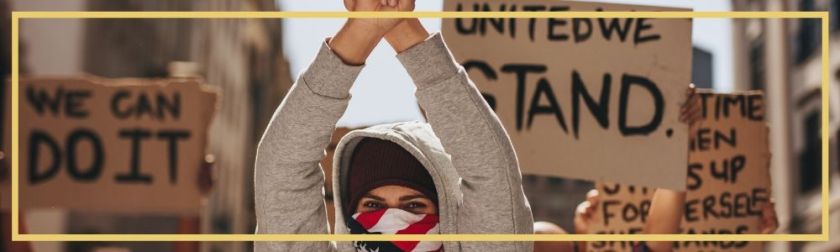
every cell in your body is eavesdropping on what you think, say, do and feel

Every cell in your body is eavesdropping.

In the same way that our mind is aware of everything that goes on in our body, our body and cells are listening and experiencing our thoughts, emotions and words. Unfortunately, our body takes those thoughts, emotions and words literally.

Our cells don’t differentiate when we are protesting from when we are having a phone call or merely meditating alone. Your body experiences your thoughts, emotions and words as they are. You can’t tell your body “I was just joking”.

Like a child that doesn’t understand sarcasm, our body responds to what was said and doesn’t take a joke. It takes everything we feel, say and think quite seriously.

In many different teachings, we find the effects of emotions on our organs:

  • anger: affects the liver
  • fear: affects the kidneys
  • grief: weakens the lungs
  • worry: affects the stomach
  • stress: wreaks havoc on your heart and mind

Examine, for a moment, how your words spoken with emotion are affecting different parts of your body.

Consider your inner child and the children around you:

We all have the voice of an inner critic stuck in our heads – and quite often it’s the voice of a parent, teacher or someone we respected or feared as a child. The voice that our child hears now is the voice that will become their inner critic in the future.

Do we want our children to have an inner voice that says “I can’t breathe”?

consider the impact of words on children

What are our children hearing and experiencing in the chants and protests? How are we explaining the situation to them? What conversations do we have that allow understanding, compassion and wisdom to guide the experience?

Consider a child: how do you build them up after you’ve stripped them down with words said in anger? Think for a moment about any relationship where words have been spoken in anger: if you don’t move past the hatred into love, understanding and acceptance, what footing is your relationship on?

The protests in Panama are not about Black Lives Matter: they are about the lock-down and people going hungry. I have it so much easier in what I have to explain! But I still have to explain to my daughter the images, emotions and even violence that she is witnessing if she catches the news.

At the same time, I explain how incredible our bodies and immune systems are! I talk about how we eat, and even how our emotions and thoughts can help us stay healthy and strong. I check myself any time I notice that I am feeling fearful or anxious: careful not to stuff it down but to release it. I don’t need my daughter to latch onto my fear or anxiety!

In the same way, I have to relate and quieten that inner child of my own: that part of me that feels insecure in any way.
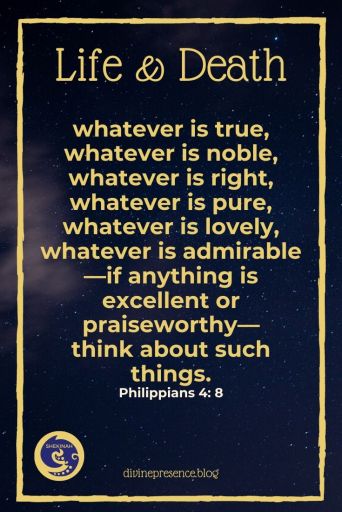
Philippians 4:8, whatever is true, whatever is noble, whatever is right, whatever is pure, whatever is lovely, whatever is admirable—if anything is excellent or praiseworthy— think about such things.
Whatever is true, whatever is noble, whatever is right, whatever is pure, whatever is lovely, whatever is admirable—if anything is excellent or praiseworthy— think about such things.

The power of your thoughts

Your thoughts influence your words and your actions. Long before you choose to do something, you have probably considered it multiple times.

Think, for a moment, about words that you spoke to someone in anger. How many times had you thought that before you actually said it? Then, in a moment of rage and slightly out of control (or perhaps in control but no caring about the consequences) you actually said what you’ve been thinking for a while. You voiced how you truly felt. Maybe it wasn’t the whole picture. But it started with thoughts that you have mulled over.

Consider the effect of thinking “I can’t breathe”, with all the nuances that it carries. Perhaps one of those nuances is that the system is unjust and doesn’t allow you to speak your mind.

If you regularly think “the system is unjust”, are you motivated to change it? Or do you get caught in a feeling of hopelessness? Notice the difference between thinking “I can participate in changing this unjust system” versus thinking “the system is unjust”.

Have you noticed how all your thoughts influence your emotions and your words? If your thoughts control your actions, then they have a role to play in creating your future! The action you take has a direct impact on your results.

The power of our emotions when mixed with words.

Our words are so much more powerful when they are spoken with emotion. It doesn’t matter if you are creating and destroying.

Anger at injustice can provide us with the strength and courage to embark on a journey that we might otherwise never take. Unfortunately, anger can also eat us up on the inside if we bottle it up, rather than channelling and releasing it.

Before becoming a bitter person: this was probably an angry person. Over time, the fire of the anger dies down, but the embers continue to burn within. The dissatisfaction and discontent are still there, unresolved. After the explosion of rage burnt out, bitter ashes and disillusion are left.

When we start a journey to transform our community, we may embark on it out of anger and frustration at the current situation. It is terrific to shout out to the world:

This is wrong! Wrongs must be righted!

"Your anger is the part of you that knows your mistreatment and abuse are unacceptable. Your anger knows you deserve to be treated well, and with kindness. Your anger is a part of you that LOVES you."
“Your anger is the part of you that knows your mistreatment and abuse are unacceptable. Your anger knows you deserve to be treated well, and with kindness. Your anger is a part of you that LOVES you.” https://twitter.com/apocalynds/status/1269711325749563399

But at some moment, love and compassion for our community need to replace that anger against the aggressors as the driving force of change. When we fail to recognise that our passion is driven by love and stay only in the rage, we miss an opportunity to grown in greater love and compassion.

Revolutions begin in angry protest and perhaps even rioting but have to end in love and compassion to build!

Man must evolve for all human conflict a method which rejects revenge, aggression and retaliation. The foundation of such a method is love.

Martin Luther King, Jr.

Make sure your thoughts, emotions & words serve your goals.

I love that injustice has awoken people to stand up and make a difference in their worlds. But if I could ask just one thing, it would be this:

Choose your words carefully, especially those spoken with emotion.

I want to hear the masses chanting:

Justice for George!
We can do it!
United we stand.
Black lives matter!

Fighting for justice!
We stand for justice.
We demand justice!

Respect me.
My voice matters!

I’m sure you could make a better list of powerful statements that could create change, without cursing your body or those supporting you.

And when we are done tearing down what no longer serves us, let’s build communities of compassion, love and kindness. Communities that are safe for our children, and that allow us to learn what it means to love our neighbour as ourselves.
Your words can either speak life, or your words can speak death. Our tongues can build others up, or they can tear them down

Life & death are in the power of the tongue.

Prov. 18: 21
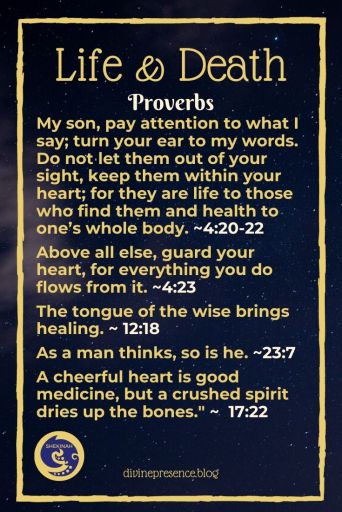
pay attention, words, sight, heart, health, guard your heart, bring healing, tongue of the wise, as a man thinks, so is he, a cheerful heart, good medicine,

If I look to Proverbs for Wisdom, these are but a few of the reminders about the power of our thoughts, emotions and words:

Proverbs 12:18
The tongue of the wise brings healing.

Proverbs 23:7
As a man thinks, so is he.

Proverbs 4:23
Above all else, guard your heart, for everything you do flows from it.

Proverbs 4:20-22
My son, pay attention to what I say; turn your ear to my words. Do not let them out of your sight, keep them within your heart; for they are life to those who find them and health to one’s whole body.

Proverbs 17:22
A cheerful heart is good medicine, but a crushed spirit dries up the bones.
everything beautiful, relationship with God, no Bible, how did Abraham discover God, Pentateuch, Psalms, Isaiah, Jeremiah, gospels, epistles, Muslims, Christians, Jews,infinite all-powerful God, building faith, living, true God, infinite in being, perfection, most pure spirit, invisible, immutable, immense, eternal, most absolute, but one God, no god other than Him, compassionate and merciful, reflect with care, timelessness of God, creation of time, a time for everything, a time to plant, a time to kill, a time to heal, a time to tear down, human heart, be happy, do good

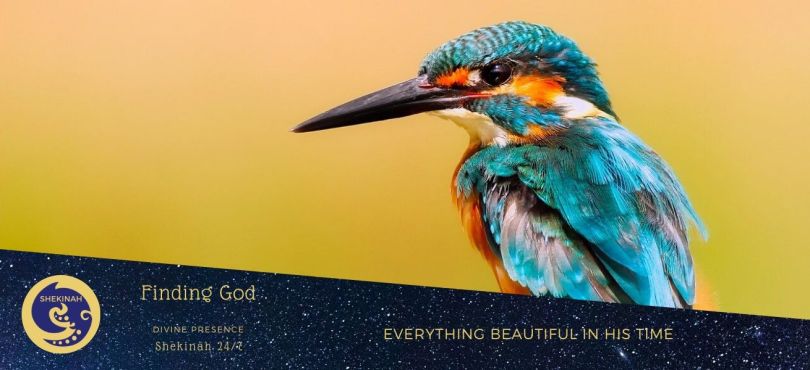
Everything beautiful in His time…

Lectionary Readings:

1-     Joshua 24: 1-3a, 14-25

2-    Psalms 78:1-7

3-     Matthew 25: 1-14

I often wonder what our relationship with God would be like if we had no Bible. Think about it for a minute – other than your relationship with God, what friendship or relationship comes with a guide-book?

So, how on earth did Abraham discover God and become God’s friend? He had no Pentateuch, Psalms, Isaiah or Jeremiah, no gospels or epistles from Paul to help him along his way.

We read this morning in Joshua:

‘…Long ago your ancestors, including Terah the father of Abraham and Nahor, lived beyond the Euphrates River and worshipped other gods. 3 But I took your father Abraham from the land beyond the Euphrates and led him throughout Canaan…[1]

How did Abraham, living in a family that worshipped other gods, discover God for himself?  Why do we have Jews, Muslims and Christians believing in this infinite all-powerful God, building faith and rituals and traditions on the God described in the Westminster Confession?

One & only,(a) living, and true God:(b) who is infinite in being and perfection,(c) a most pure spirit,(d) invisible,(e) without body parts,(f) or passions,(g) immutable,(h) immense,(i) eternal,(k) incomprehensible,(l) almighty,(m) most wise,(n) most holy,(o) most free,(p) most absolute,(q) working all things according to the counsel of His own immutable and most righteous will…”[2]

Even if we read the Koran we find:

“Your God is but one God. There is no god other than Him, Compassionate and Merciful. In the creation of the heavens and the earth, in the alternation of night and day, in the ships that ply the seas to the benefit of man, in the water sent down from the heavens to revive the earth after its death, in the different species of animals scattered across the earth, in the rotation of the winds, in the clouds that are subordinate to God’s command between heaven and earth, in all of this, there are signs for men who use their intellects.”[3]

“Tell men to reflect with care and see what things the heavens and the earth contain.”[4]

The Bible says that if I seek God, I’ll find Him.  How long is building my relationship with God supposed to take?  There are supposed to be signs for those who use their intellects to see God – but where am I supposed to look? When will God’s work in my life be done?

In answer to my question, how did Abraham discover God for himself, I found some light shed in a couple of legends that are sometimes recounted to Muslim children.  I told one of those legends this morning to the children, and now I want to tell the 2nd one to you. Then I’m going to relate these to our Bible readings this morning.

Here goes:

In the days of mighty King Nimrod, there lived in Mesopotamia a young man named Abraham. Now, Abraham’s father was an idol maker named Terah Azar, who carved the wooden gods worshipped by his people. But Abraham was a believer in the one God, and not in the gods made by hand.

Azar would send Abraham and his other sons to sell his idols in the marketplace. But Abraham would call to the passersby, “Who’ll buy my idols? They won’t help you and they can’t hurt you! Who’ll buy my idols?”

He’d also mock the gods of wood: take them to the river, push their faces into the water, and command them, “Drink! Drink!”

Abraham would ask his father, “How can you worship what doesn’t see or hear or do you any good?”

Azar replied, “Dare you deny the gods of our people? Get out of my sight!”

“May God forgive you,” said Abraham. “No more will I live with you and your idols.” And he left the house of his father.

Now, the time came for one of the festivals of that town. The people gathered in their temple and placed offerings of food before their gods.

Abraham walked among them, saying, “What are you worshipping? Do these idols hear when you call them? Can they help you or hurt you?”

But their only reply was, “It is the way of our forefathers.”

“I am sick of your gods!” declared Abraham. “Truly I am their enemy.”

When the people had gone out, Abraham took some of the food and held it up to the idols. “Why don’t you eat?” he mocked them. “Aren’t you hungry? Speak to me!” And he slapped their faces.

Then Abraham took an axe and chopped the idols to pieces—all except for the largest idol, of course, the chief god of the people. And he tied the axe to the hand of that idol.

When the people returned, they were shocked to find their gods broken up and scattered about the temple. Then they remembered how Abraham had spoken, and they sent for him.

“Abraham,” said the head man, “was it you who did this?”

“Surely it was someone!” he replied. “Their chief stands there with an ax in his hand. Perhaps he grew jealous and destroyed the rest. But why don’t you just ask him?”

The head man said, “You know they neither strike nor speak.”

“Then why worship gods that you make?” demanded Abraham. “Worship instead the Maker of all!”

But few of the people would listen. Abraham was seized and brought to King Nimrod for punishment.

When Nimrod had heard the accusers, he turned to Abraham. “Who is this mighty God you spoke of?”

“He it is Who gives life and death,” answered Abraham.

“But I too give life and death,” said Nimrod. “I pardon a guilty man sentenced to die—then I execute one who is innocent!”

“That is not the way of my Lord,” said Abraham. “But listen to this: Each morning, my Lord brings the sun up in the east. Can you make it rise in the west?”

Then Nimrod grew angry. He had a great fire built, and he ordered Abraham to be tied up and thrown into it. But the fire only burnt away the ropes, and they saw Abraham sitting peacefully among the flames. Beside him was an angel in Abraham’s likeness, comforting and protecting him.

After that, Nimrod did not dare try to harm Abraham again. Abraham returned to his town, where he gathered those who believed in the one God. Then he set out west, placing all faith in the Lord.

And so… As in Genesis, we find Abraham setting out to the west from beyond the Euphrates.

The timelessness of God came up one morning in our discussions in adult Sunday school – our clocks are set by the earth’s rotation around the sun, and our tides and seasons by our orbit around the sun and the moon’s orbit around the earth.  So, if God created the earth, the sun, the moon and the stars, then it goes without saying that God created time: the hours, minutes, and seconds of our day– and therefore God is timeless – above and beyond our restraints of time.

In Matthew 25 we read about the 5 wise and the 5 foolish virgins waiting for the bridegroom to arrive – to light the way for the bridal party.  The 5 wise virgins had enough oil and the 5 foolish virgins burnt out their lamps and had to run off to get more.  While they were gone, the bridegroom arrived and by the time they got back, it was too late – they were no longer needed.  The 5 foolish virgins made one small mistake – they acted on their expectations, rather than acting with forethought.  They expected the bridegroom to show up at a certain time.  Not in his time – when they expected him to.  They were ready now… he should be here now… “oh, what could possibly be taking them so long?”  “They should have been here hours ago.

Think about it like this:

15 years ago we didn’t have cell phones to coordinate with each other.  Let’s say us girls were getting together to go shopping for Christmas tree ornaments, and we organised to meet at Albrook Mall at 10.00 a.m. Saturday morning, at the entrance by the supermarket.  Everyone would be there at 10.00 a.m., because if you weren’t there on time, you would know if we were still at the mall or whether we’d moved on from there over to El Dorado, or if we’d decided to go to Caledonia to see if we could find better bargains.  Then we would organise a time, and whoever failed to be there was out – unless, of course, the one that’s missing is the one that has the car!

So, imagine this wedding… you’re waiting for the bridegroom – an essential part of the wedding! Without him, nothing gets started.  And while you’re waiting, you run out of oil… Now, he’s an essential part of the wedding – but are the lamp-bearing virgins “essential”?  No… they’re part of the wedding, but one more or one less – the show can go on without them.  The bridegroom has arrived, the procession leaves… and whoever went out for oil gets left behind.

So… How about you and God?

Are you expecting God to act “on your timetable” or have you come to understand your minor role in Act 2011?

Is your attitude: “I prayed about it, and I need the answer by next week, OK God?” Or are you working on God’s time?

Psalms relates: that for God 1000 years is like a passing day, as brief as a few night hours.[5]  I found on the internet where someone actually worked out what that meant – if 1000 years is one day, then one minute in heaven-time equals 8.33 months on earth.  So, when God’s response to your prayer is “I’ll be with you in just a minute” you know how long you’re supposed to wait?

Solomon, in Ecclesiastes 3 explains it:

1 There is a time for everything, and a season for every activity under the heavens:

2 a time to be born and a time to die, a time to plant and a time to uproot, 3 a time to kill and a time to heal, a time to tear down and a time to build, 4 a time to weep and a time to laugh, … 5 … a time to embrace and a time to refrain from embracing, 6 a time to search and a time to give up, a time to keep and a time to throw away, 7 a time to tear and a time to mend, a time to be silent and a time to speak,

10 I have seen the burden God has laid on the human race. 11 He has made everything beautiful in its time. He has also set eternity in the human heart; yet no one can fathom what God has done from beginning to end. 12 I know that there is nothing better for people than to be happy and to do good while they live. 13 That each of them may eat and drink, and find satisfaction in all their toil—this is the gift of God. 14 I know that everything God does will endure forever; nothing can be added to it and nothing taken from it. God does it so that people will fear him.

15 Whatever is… has already been, and what will be… has been before; and God will call the past to account.

Solomon, the philosopher and wise man, the King – looked on the world and on creation, and saw God in it; got a glimpse of eternity.

When I read the Hebrew Scriptures, I get a feeling of how quickly generations pass.

You have made my days a mere handbreadth; the span of my years is as nothing before you. Each man’s life is but a breath[6].

In our Psalm this morning, we read about what our ancestors have told us, and how we are to pass these experiences on to the next generation.  Our job on this earth is to learn from the past and build for the future, while understanding the eternity which is set in our hearts.

In business, we talk about leaving a legacy – what legacy are we leaving? What have we learnt about God and our relationship with Him that we are leaving to those who will come after us? If each new generation were to write another book of the Bible, what would it say? How could we describe what we have learned about God to others, to make it easier for someone else to understand?

I want to finish this morning revisiting our reading from Joshua 25 – that I’ve taken a little of literary license with:

Respect God and serve Him faithfully.  Throw away your gods – stop chasing after more money, fame and fortune, keeping up with the Joneses, fitness and health, making a fashion statement – and focus on the truly important and eternal things in life.  If this change of lifestyle (focusing on the eternal and leaving a true legacy) seems undesirable to you, then choose for yourselves today who you will serve: Money? Intelligence & Knowledge? Fame & fortune? The Joneses? Fashion? Fitness? Pleasure? The big “I” – me, myself, and I?

But as for me and my family – we’ve decided we’re going to focus on our relationship with God and how to translate that into everything we say and do.

All the people answered – “No, we won’t get caught up in the present and material world and forsake God and chase after meaningless pursuits! We’ll remember what we were before and what God has done for us, the miracles we’ve experienced; His protection and guidance in all our travels.  We’re going to make this commitment too, because He is our God.” 

Joshua warned them: “You won’t be able to serve God – He’s holy and perfect and without any faults or weaknesses.  And he expects the same from you! God won’t just overlook and forgive your intentional rebellion and sins – when you decide to forsake the eternal and run after money or fame & fortune, or get so caught up with running your business that you forget that there’s more to life than the bottom line.  If you start looking to the material world for your happiness and satisfaction, you’ll be headed for disaster: it will be the end of you, and you’ll lose everything that you’ve built and learned in your relationship with God. Remember the eternal. 

But the people were adamant: “No, we’ve decided. We’re going to serve God.” 

And so Joshua responded to everyone present: You are witnesses against yourselves – YOU’VE chosen God for yourselves (I didn’t choose Him for you.  I didn’t force Him on you.  It’s your free-will choice). Worship Him. 

And they responded – “We are witnesses…. We’ll worship God. What He says, we’ll do.”

We have each been given the gift of God’s Spirit – and the right to be called Children of God. Do we accept the gift?

Having accepted this, it’s our responsibility daily to tend to this Spirit – the continual flow of the relationship we have – keeping it constant and flowing.  Eternity has already started for each of us – it’s not some unknown moment of the future.

Our relationship with the Creator, with the Eternal –This is what really matter. 

Even in the mundane, we need to find that pearl of growth and change that lights our way, so that we can light the way for those that will come after us.

Each day of our lives should be lived as if it were our last: THIS is the day that will decide my future.  I’m ready and prepared to live this day filled with the Spirit!  Seeking and finding God. Not just reading my Bible – but actually building on my relationship with a living God. Building on yesterday’s foundations, and making room for tomorrow’s dreams.

Being the lamp that is shining in our community and lighting the way for others to follow.  Believing that God makes everything (even me) beautiful in His time… and working toward that final finished product.

It’s only when we truly know and understand that we have a limited time on earth — and that we have no way of knowing when our time is up — that we will begin to live each day to the fullest, as if it was the only one we had.[7]


[1] Joshua 25: 2-3

[2](a) Deut. 6:4; I Cor. 8:4, 6; (b) I Thess. 1:9; Jer. 10:10; (c) Job 11:7, 8, 9; Job 26:14; (d) John 4:24; (e) I Tim. 1:17; (f) Deut. 4:15, 16; John 4:24, with Luke 24:39; (g) Acts 14:11, 15; (h) James 1:17; Mal. 3:6; (i) I Kings 8:27; Jer. 23:23, 24; (k) Ps. 90:2; I Tim. 1:17; (l) Ps. 145:3; (m) Gen. 17:1; Rev. 4:8; (n) Rom. 16:27; (o) Isa. 6:3; Rev. 4:8; (p) Ps. 115:3; (q) Exod. 3:14.

[3] (2:163-164)

[4] (10:101)

[5]Psalms 90:4

[6]Psalms 39:5

[7] Elisabeeth Kubler-Ross