generative wisdom,being wise,death,a time for everything,a time to heal,actions,all is meaningless,all is vanity,ask yourself this,awareness,being compassionate,being kind,career,choices,decision-making,desires,discovering your purpose,education,riches,spiritual healing,

How to Create a Lasting Legacy: The True Pursuit of Wisdom

Is the pursuit of wisdom and creating a lasting legacy worth it?

If we read Ecclesiastes 1, we might think it’s all an exercise in futility. 
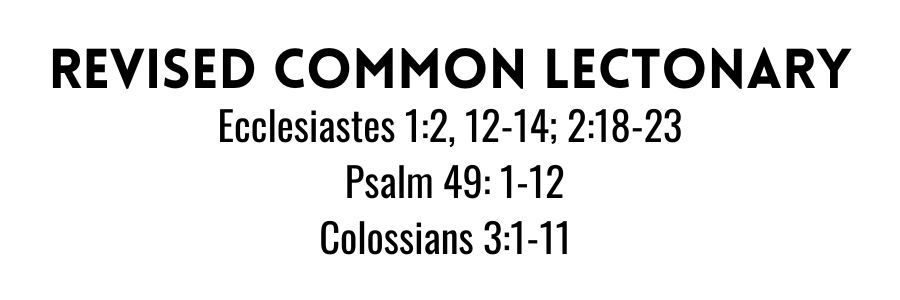
Ecclesiastes, Psalms, Colossians

Was the writer of Ecclesiastes depressed? It seems so. After all he had done to pursue wisdom, he realises that everyone dies.

What was the purpose of studying so much and creating so much wealth? Will it be appreciated by those left behind? Even wealth gets squandered by unwise heirs. 

So, what’s the purpose of all that hard work and effort?

When we look at the wise, they die; fool and dolt perish together and leave their wealth to others.

Psalms 49:10

On the other hand, Colossians suggests that we stop pursuing worldly pleasures and goals, and focus our time and energy on “things above”.

Set your minds on the things that are above, not on the things that are on earth

Colossians 3:2

So, what is the meaning of life? Is it futile to pursue wisdom and wealth? Is this all vanity (futility) as the author of Ecclesiastes suggests? 

Or is there something meaningful that we can do and create here and now that will leave a legacy behind?

The true pursuit of wisdom

First, what is wisdom? Is there a difference between worldly wisdom and divine wisdom? Earthly wisdom or godly wisdom?

Who do you consider to be wise?

Is someone with a Master’s degree considered to be wise? Or are they merely educated?

In business, there’s a DIKW pyramid – data, information, knowledge and wisdom. Data is meaningless, unless you can actually draw some conclusions from it that you can use to guide your future actions.

Data is the foundation, information is processed data, knowledge is information with context, and wisdom is the application of knowledge to make informed decisions. 

So, in the context of business, wisdom is not knowledge, but the application of knowledge into decision-making. 

In a similar fashion, education is merely a means to an end: hopefully, getting an education will teach you how to transform knowledge into wisdom – wise decision-making. 

Worldly Wisdom or Divine Wisdom?

So, what about this divide between earthly wisdom and godly wisdom? 

Do you want to be counted wise, to build a reputation for wisdom? Here’s what you do: Live well, live wisely, live humbly. It’s the way you live, not the way you talk, that counts. Mean-spirited ambition isn’t wisdom. Boasting that you are wise isn’t wisdom. Twisting the truth to make yourselves sound wise isn’t wisdom. It’s the furthest thing from wisdom—it’s animal cunning, devilish plotting. Whenever you’re trying to look better than others or get the better of others, things fall apart and everyone ends up at the others’ throats.

James 3:13-16, The Message

If you ask me for my favourite books of the Bible, they would be these:

  • James
  • Proverbs
  • Job
  • Ecclesiastes

Do you see any similarities in them? Yes, they all talk about Wisdom.

And still, Ecclesiastes suggests that even the pursuit of Wisdom is meaningless and futile. 

As we know it, the author of Ecclesiastes (thought to be Solomon, but perhaps not) was also one (if not the principal) of the authors of Proverbs. 

And in the end, he says it’s all vanity. What’s the point of pursuing wisdom?

Or as Psalms suggests: what’s the point of building up an estate and wealth to leave to your children? 

What do we truly live behind when we go? Is there any point to “living with purpose” or “finding your purpose” in life and creating a legacy to leave behind? 

Is pursuing holiness enough?

Colossians suggests that we should pursue individual holiness. But how does Colossians define this individual holiness?

What does it mean to be renewed in wisdom and become a new self?

I find it fascinating that the defintion we are given focuses most on what we leave behind and stop doing. When we stop all of these bad habits, though patterns and emotions, we open up space for the new.

Put to death, therefore, whatever in you is earthly: sexual immorality, impurity, passion, evil desire, and greed (which is idolatry).
But now you must get rid of all such things: anger, wrath, malice, slander, and abusive language from your mouth.
Do not lie to one another, seeing that you have stripped off the old self with its practices and have clothed yourselves with the new self, which is being renewed in knowledge according to the image of its creator.

Colossians 3:5, 8-10

As it says here, stripped off the old self with its practices and habits. And then you can put on your clean clothes.

“seek the things that are above”

Colossians 3:1

What are we seeking? Divine Presence in our lives.

And how can we be filled with the Divine Spirit? Only by making room! To make room in our life for the Divine, we have to let go of whatever is holding us back.

What are the personal obstacles in your thoughts, feelings and actions that inhibit the Spirit from flowing freely in your mind?

To be full of the Spirit

In order to demonstrate the fruit of the Spirit fully – love, joy, peace, patience, kindness, goodness, faithfulness, gentleness and self-control – we have to let go those emotions and thoughts that are their archnemesis.

  • To be full of love, I have to first let go of hate.
  • If I want my joy to overflow, I first have to finish grieving for whatever I think I deserved and didn’t receive, as well as find a place of acceptance of what is.
  • To be full of peace, I release my anxiety and that pressing need to have everything now. I recognise any greed that I have – whether it be for things, results or even knowledge and wisdom.
  • If I want to have patience, I must learn to persist in the face of trouble, delay or even suffering. It’s an internal strength that I gather that allows me to face whatever may come, and still love othes in spite of my circumstances. I let go of the longing for immediate results, and recognise that everything is for my good. 
  • To be full of kindness, I have to let go of my ego, pride, anger and wrath. I release all malice and slander from my thoughts, emotions, words and actions. And I certainly refrain from abusive language coming out of my mouth!
  • If I am committed to being filled with goodness, I must first release sexual immorality, impurity, passion, evil desire, and idolatry.
  • And when I claim that I have faithfulness, I let go of lying to myself and others, and instead demonstrate loyalty, steadfastness, and trustworthiness.
  • Likewise, when I am filled with gentleness, I get rid of all those rough edges of my emotions and tongue. I learn to speak gently, rather than harshly, and I curb my anger, wrath and hatred completely. 
  • Finally, the crux of it all becomes impeccable self-control. I have control over my mind and thoughts, my emotions and especially my tongue and the words of my mouth. 

This is why Colossians focuses on what we have to get rid of in our lives. Take out the old, in order to be full of the new. If you want to think on things above, you have to stop thinking about all the things below. 

What is Wisdom and a Meaningful Legacy?

Let’s go back to Ecclesiastes and the lamentations of “This is all futile and useless”. 

sometimes one who has toiled with wisdom and knowledge and skill must leave all to be enjoyed by another who did not toil for it.

Ecclesiastes 2:21

So, all that hard work, even applying your knowledge and skill for wise decision-making, sometimes is reaped by those who don’t deserve it.

Perhaps you died and a distant family member reaps rewards rather than the children you expected. Or your business is taken over by outsiders. The bank forecloses on your house and leaves your children without a roof over their heads.

So, what is meaningful? What do we leave behind that truly matters?

I would guess that it’s the impact we have on the lives of others. Especially when that impact carries far into the future, beyond the span of our lives and the generations that followed us. 

Think for a moment, for example of the authors of the Bible: thousands of years later, we are still reading those words. Even the authors of political, ethical and scientific books are read hundreds and thousands of years later.

But it’s not just books and writers that leave a legacy – there are many who impacted lives that were illiterate, and yet their deeds are know all over the world, living on as legends and stories that we continue to share. 

Jesus may have been born humbly, and we have no works written by him… yet every year we continue to celebrate his birth and coming to this earth, as well as his teachings and his sacrifice.

His divine wisdom and legacy are clear to each one us.

So the question for you today is: what meaningful legacy are you creating and leaving?

Sermon: the Helper

Lectionary Genesis 2:18-24

A HELPER WHO IS “JUST RIGHT”

You’ve all heard the 10 reasons why God created, Eve, right?

  1. God worried that Adam would always be lost in the garden because He knew men would never ask for directions.
  2. God knew that Adam would one day need someone to hand him the TV remote because men don’t want to see what is on TV; they want to see WHAT ELSE is on TV.
  3. God knew that Adam would never2. buy a new fig leaf when the seat wore out and therefore would need Eve to get one for him.
  4. God knew that Adam would never make a doctor’s appointment for himself.
  5. God knew that Adam would never remember which night was garbage night.
  6. God knew that if the world was to be populated there would have to someone to bear children because men would never be able to handle the pain of childbirth.
  7. As Keeper of the Garden Adam would never remember where he put his tools.
  8. The Scripture account of creation indicates that Adam needed someone to blame his troubles on when God caught him hiding in the garden.
  9. As the Bible says, “It is not good for man to be alone”, he only ends up getting himself in trouble.
    And the NUMBER ONE reason…
  10. When God finished the creation of Adam he stepped back, scratched his head and said, “I can do better than that.”

Seriously, there is so much debate now about the correct interpretation that we should give of the Creation story, and especially of the role and relationship between man and woman.  The Church is supposed to be shaped and guided by the Word of God, and yet it is clearly evident that our cultural norms and expectations have guided our interpretation of the Bible, and even come into play with respect to the translation of the Bible.

There is no question that gender issues have been shaped by our culture. In a patriarchal culture, the Church accepted and used passages of the Bible to justify male superiority and female servitude.As cultural views shifted, we have looked back at the translations and words used, and searched for a new understanding of the Bible – but we should ask ourselves, are we simply looking to once again “be right”, as opposed to being guided by the Word of God?  Are we simply now looking to justify a feminist or egalitarian perspective of the creation story that is acceptable in today’s society?  Or are we looking for the Bible to present to us an actual Biblical response to the question of “what is a Godly relationship between a man and woman?”

This morning, I would like to explore the verses of Genesis 2: 18 to 24, and  provide some insight regarding translation and meaning.  But this is merely one of many possible understandings and meanings that can be found, and I would venture to say only scratches the surface of a possibility of interpretations.  But there are lessons here for us!  While God created man & woman equally in His image, there is  no doubt that we are different – the same way that the males and females of all species are equal but different.

In Genesis 1 we find a chronological view of Creation – from day 1 in which God creates time, through to day 7 in which God rests.  On day 6, God is particularly busy, creating all creatures that habitat on land.  Great and small, he creates them, and when God is done, he declares that “it is good”. After this God – Elohim – the multiple nature of God, decides to create man in his image. God says:

“Let us make man in our image, in our likeness.”

And so, man is created, both male and female. In order to avoid confusion, I’m going to use the term “mankind” to refer to humans, and man to refer to the male gender.  To emphasize the godlike nature of mankind, God gives mankind dominion over the earth, and asks Adam to name all of the animals.

The creation story in Genesis 1 is repeated in Genesis 2, but told from a different perspective, demonstrating different facets of God’s character.  And so, in Genesis 2, we rewind a little, and are given more details regarding the creation of mankind, and in particular the differentiation of men and women.

Most versions of the Bible have simply translated verse 18 “It is no good for the human to be alone. I will make a helper suitable for him” or “a helper that is just right for him”. And because it was culturally acceptable and appropriate to define “helper” as an assistant or as subordinate to the man, the woman was interpreted as having a role of serving: somehow intended to be responsible for catering to the needs and demands of her husband.  Because if woman is the helper, man is the boss, right?   Even Paul says that the man is the head…

But much has been written about the translation of this section, especially regarding the original term “ezer” having been user rather than “azar”.  “Ezer”, with an e does not mean the same as “azar”. Azar does mean helper or servant, but ezer has a different meaning completely.

The word EZER is used in the Old Testament some 21 times, 2 in the context of Eve (women made in creation), 3 times in relation to man’s help and 16 in relation to God.  And the 3 times it’s used in relation to man’s help, it is referencing that help did not arrive such as that help which only God can provide.

So let’s see what other words and terms ARE used throughout the Old Testament that might have been used to describe women as servants or assistants, that would have clearly established woman’s role as being subservient to that of man:

  • The best word for helper or assistant in Hebrew is Azar – and it is used 82 times in the Old Testament, in contexts of helping, assisting or giving aid.  So, if God had wanted to say helper, he could simply have used this word, azar, instead of ezer, right?
  • And if we wanted to specify that woman was a servant-helper, a better word would have been ebed.  In fact, the word ebed is used over a thousand times in the Old Testament.  But that’s not what it says in Genesis 2.
  • Or then there’s the word sharath, which means high-ranking assistant, like Elisha was to Elijah, or like Joshua was to Moses.  But Genesis 2 doesn’t use sharath.

So, what does ezer mean, then?  Ezer is help from God: not only from a superior, but a miraculous help.  Divine intervention.

Before you go off thinking that women are witches and we really fly on broom sticks, let’s get into the translation issues a bit more closely.  Ezer means that God is the help.  Ezer conveys that it is never a servant, helper or assistant.

So, how does this help us?  Well, possibly because if we realise that this was Divine assistance, we will realise that maybe we’ve always been misunderstanding this verse.  It never was intended to say that the woman was the helper! In fact, it should not be ascribed to any human at all.  So, if she isn’t the helper, what did God make?  What does Genesis 2:18 refer to?

Let’s look quickly at the other word that rises in this verse – “suitable” or “right” or “companion”.  The word in Hebrew is kenegdo. Kenegdo arises from 2 words:  Neged refers to a mirror image or reflection, and ke refers to “himself” or “likeness”.  So, God has said he will make a likeness of his mirror image or reflection.  So, woman was supposed to be a mirror-image of man.

Going back in the verses in chapter 2 of Genesis we see what the story of the creation of Eve starts out with the only time God says about creation – “this ins’t good”.  And what isn’t good?  It’t not good that man is alone.  Man is incomplete – because unlike all of the creatures that he has just named, male and female, Adam is alone.

And so God says, I will help man by making his mirror likeness, a reflection of himself.  The solution for man’s loneliness is woman, made to reflect him. God did not create woman to be man’s servant, or assistant or subservient to him. He didn’t make Adam “the boss”.  But rather, God makes them one – flesh of my flesh and bone of my bone.  Equal and together. In harmony and communion.

But, as with the fall in Eden, the moment we allow our self-interest to get in the way, we start to run into  relationship and control issues.  The moment we start to allow our egos to rule, we look at our differences, and then separation and domination begin to take hold, rather than unity and oneness.  Separation and domination was never part of God’s divine plan for men and women.

Lessons we can take away from Genesis 2 today:

  1. Companionship – It is not good that the man should be alone.  Human’s are social creatures – we need to connect with other people.  One of the most shattering emotions of which human beings are capable is that of loneliness – it consumes people: whether they be teenagers, struggling with acceptance, stay at home mothers or fathers who are thirsting for interactions, or the elderly who are feeling forgotten.  We need each other.  What are you actively doing to be part of the lives of those around you?  If you are a spouse, are you making sure that your other half doesn’t feel alone?
  2. Are you sharing the load and the burden?  Whether it be with your spouse, or a team member at work, or another volunteer in an organisation you have joined: is someone feeling that they have to do everything themselves and that they are not getting the support that they need?  What can you do to support that person?  What needs to change so that you become a team player?
  3. Are you taking care of your responsibilities?  In every team, each person has different functions and tasks: and your first priority should always be to have fulfilled your responsibilities first.  It’s  no good to be worried about what others aren’t getting done to the detriment of your own responsibilities.  You will always hear – finish  your own responsibilities before helping another – just like in an airplane you put on your own oxygen mask before helping someone else with theirs. AND FINALLY
  4. Acknowledge and rejoice in our individuality and differences.  They are not meant to separate us from each other – they are intended to complement each other.  Yes – women and men are different – women may be more emotional, or protective of our little ones – but that doesn’t mean the weaker sex! And some of us are black, white, yellow, pink or any other colour under the sun.  We come from different cultures and customs.  But these differences are to be enjoyed and celebrated, creating a diversity in our team work and fulfilling all of the needs.

Today I would invite all of you to explore how you were created to be “just right”, a Divine gift to help and connect with those around you.

Sermon: We all make mistakes sometime

Lectionary: 2 Samuel 11: 1-15

The story of David is not about a saint. He had many faults, numerous sins throughout his life. As John Walton writes,

“God has not given us the Bible with the intention that we put the heroes of the faith up on pedestals of awe and reverence. In contrast, we find that the characters portrayed in the text are shown to share many of the human weaknesses with which all of us struggle. … We cannot view them as superhuman. … Instead, their stories are in the Bible because God worked through their successes as well as their failures. … They are part of God’s story.”

God had plans for David, who was “at times an instrument and at times an obstacle”.  I like the fact that the Bible tells it like it is.  We read about these heroes, but not just the great things they have done.  We read about their failings, their wrongdoings, their dark sides.  And there are lessons for us to learn.

Today I want to talk about one of David’s better known mistakes – his affair with Bathsheba and then his attempt to cover it up, by having Uriah murdered.  Yes, of course there’s murder in the Bible – we find it with Cain killing Abel, with Moses killing an Egyptian before running off into the desert, and now we find David plotting a murder to hide that he got another man’s wife pregnant.

Here was a man God had anointed as a youth – the hero that had defeated the mighty Goliath.  General over Saul’s army, and of whom it was said “He is a man after God’s own heart.”  But yet not perfect.

Our Reading this morning starts with setting the context:

In the spring of the year, the time when kings go out to battle, David sent Joab with his officers and all Israel with him; they ravaged the Ammonites, and besieged Rabbah. But David remained at Jerusalem.

Why, if kings of old went out to battle, was David at home?  Well, this battle was close enough to Jerusalem that David decided to stay home and have Joab report to him daily on the battle (it was only some 40 km away).  Maybe David was starting to feel his age, or nursing an injury or an illness.  Maybe he was over-confident because he felt that his trusted men had everything under control.  Or maybe he had become complacent, after so many victories.  For whatever reason, David left himself in the wrong place at the wrong time.

The first problem that David has is that he is idle – after waking up from his afternoon nap (which he probably needed), instead of getting back to work or focusing on affairs of the state, he wanders aimlessly around on the roof of the palace.  How do we stay out of trouble? One way is by keeping ourselves busy and occupied.  I spend a lot less time spending money, if I don’t walk idly through the mall!  “I’ll just go window shopping” she says.  Except then something catches our eye, and before long window shopping has turned into real shopping.

There is an old German proverb that says “Idleness is the beginning of all sin”, just like the  Russian proverb that states “Idleness is the mother of vice.”  The Irish say “Poverty waits at the gates of idleness.”, and I remember hearing as a kid “Idle hands are the devil’s workshop.”  Most cultures agree that idleness is not a good thing – it can get you into all sorts of problems.

We should be clear about what idleness is and what it isn’t.  Resting is not being idle!  Our bodies need rest – it’s vital for our health.  Resting for rejuvenation is not idleness!  Resting when we are sick and need to recover is just what the doctor ordered!  Idleness is that state of being where we are not occupied in meaningful things.  It’s slacking off or being lax, and when we have nothing better to do, we wind up in mischief.

Having a nap was not a bad thing… but there was no need for David to wander around aimlessly.  There was business to conduct, the country was at war.  Both rest and work are necessary, as well as having time for family, hobbies and other pursuits.  But there is a problem with idleness – which is why many of the youth programs today focus on getting our at risk youth into sport or other activities, so that they will not get engaged or caught up in gangs and crime.

And because of David’s idleness, he runs into temptation.  We all run into temptation, on a regular basis.  We walk past Gelarti or La Italiana in the mall, and the ice-cream calls out to us!  We can either choose to keep walking, or we can let our desire take over.   David’s on his rooftop and sees a beautiful woman bathing on the rooftop below.

An aside here. If you wonder about bathing up there in front of God and everybody with a higher vantage point, remember that the rooftops of houses in ancient Israel were flat and served as additional living and working space. The ancient Israelites also had water gathering and storage systems on their rooftops designed to trap dew and rainwater and carry it into cisterns through pipes. I doubt that any of us remember life before indoor plumbing, but these rooftop systems were the next best thing.  The water would also have been left out in the sun during the day, so that by evening it was warmed.

And so, David’s desire gets him in trouble: being tempted is not wrong.  But how David handles this temptation definitely gets him into a huge bind, where one lie leads to another!  Instead of letting it be, David inquires to find out who she is – and the response should have been enough to warn him to stay away.   She is a daughter of a powerful man (Eliam) and the wife of one of David’s mighty men (Uriah the Hittite).  She is also the granddaughter of one of David’s closest advisors.

But that didn’t stop him either.  He ignores all the warning signs.  And sends for her… ending up in bed together – committing adultery (which was punishable by stoning for both of them!).   David sins prior to even sleeping with Bathsheba, because Jesus said:

You have heard that it was said “You shall not commit adultery”.  But I say to you that everyone who looks at a woman with lustful intent has already committed adultery with her in his heart.

Instead of shutting down the temptation, David lets it run wild, until it takes over him.

And one thing leads to another… before you know it, we’ve moved from lust to adultery, to lies and manipulation, and when plan A doesn’t work (i.e. getting Uriah to come home from battle and sleep with his wife so he will think the child is his), then plan B fails (even getting him drunk on liquor doesn’t work), then David moves to plan C (having him killed in the line of duty).

David had been on solid ground – chosen by God.  But he got careless and he didn’t even know it.  Just like a sheep that sees a tempting mouthful of grass over there.  Then another one a little farther, and then another… and another.  Before you know it, he’s lost or in the sights of a predator looking for an easy meal.  With each successive lie, David takes another step closer to the edge… until he’s over the edge with murder. The snowball effect, it started so small.  But now, he’s tumbling down the rocks.  He’s crashed and burned.  And the last thing he hears is the devil singing in his ear “another one bites the dust”.

It’s hard to find someone else in the Bible who could break so many of the 10 Commandments at one sitting!  As far as I can see, David managed to at least break 4 in one go:

  • You shall not murder
  • You shall not commit adultery
  • You shall not steal
  • You shall not covet your neighbour’s wife

So, I want to quickly share with you some thoughts on how we can use this example from David’s life in our own:

#1: You’re dying in the present if you’re living in the past!   David had already defeated armies and nations: the Philistines, the Moabites, the Edomites and others.  And so, instead of taking his place against the Ammonites, he leans on the victories of the past, and doesn’t have a vision of the future.

#2: When we are out of the way of our duty, we put ourselves in the path of temptation.  David should have been out on the front lines, but instead makes the mistake of staying in Jerusalem where he takes on a moral defeat.  What are you supposed to be doing?  Have you got a clear path cut out ahead of you?  Or are you just drifting along waiting for live to happen for you?

#3:  We will also fall in that one are of our life where our passion is the strongest and our principles are the weakest.  There are certain temptations that one person will struggle with, while another person won’t.  I gave up smoking cold turkey, without thinking twice about it – because I had only smoked because of the social aspects of it.  It was no big deal to quit.  But I know of many others for whom drugs, alcohol or smoking are their Aquiles heel.  On the other hand, I had to continually safeguard myself against impulse spending.  I don’t need more things!

#4: What we don’t resist in the mind, will soon become manifested in our thoughts and actions.   One part of psychology looks at Neuro-Linguistic Programming, (NLP for short) a name that encompasses the three most influential components involved in producing human experience: neurology, language and programming. The neurological system regulates how our bodies function, language determines how we interface and communicate with other people and our programming determines the kinds of models of the world we create. Neuro-Linguistic Programming describes the fundamental dynamics between mind (neuro) and language (linguistic) and how their interplay affects our body and behavior (programming).  What we think about is what we will say and do. 

#5: The power of your example should always exceed the position of your authority.  No matter what position you have, you should always strive to set an example of excellence.  Set the standard of leadership, holding more authority from your example than from the power of the position.

I hope that this story of David helps you focus on what is truly important in your life and the example you are setting for those people that are watching you.

Sermon: Boasting in my Weakness

“Boasting in my Weakness” – Really?

LECTIONARY:

  • 2 Corinthians 12: 2-10

A teacher said to her students in class one day,

“Boys and girls, there is a wonderful example in the life of the ant. Every day the ant goes to work and works all day, a busy life. And in the end, what happens?

Little Johnny replies, “SOMEONE STEPS ON HIM.”

We live in an era in which life is a constant struggle. Everyone  wants to be healthy and strong; nobody likes to be sick, weak, depressed or worried. And yet, we face problems and tragedies; we struggle to live up to expectations – whether our own or those imposed by others.  We’re not quite who we think we should be. Just like Paul in his letter to the Corinthians.

Take a moment and put this in context: this letter to Corinthians was not written in a vacuum. When Paul wrote this letter (which by the way is his 4th letter, not the second), he didn’t pen in the chapter and verse designations. Those were added much later in history. So chapter 11 and chapter 12 are one continuous thought.  In chapter 11, Paul writes about the suffering he has endured because of the name of Jesus. He tells the Corinthians that he has been imprisoned for preaching the gospel; he has been whipped on several occasions; he had been beaten with rods. He tells them that on one occasion the Jews stoned him; and left him for dead. But he survived (probably with deep lacerations and broken bones.) Paul was shipwrecked three times, spending one night in the open seas. He experienced intense times of suffering and yet found strength.

It is apparent as you read this part of 2nd Corinthians, that some in the church in Corinth were questioning Paul’s authority as an apostle. “Not good enough.”  So in Chapter 11, Paul tells about all the things he could boast about, both good and bad, that make him an apostle. But in Chapter 12 the tone changes, because he is not living in the past.  Our past history and our past glories are all fine and well, but the real question is “who are you today?”.  Paul is writing this letter to the Corinthians when he is no longer in sparkling health and strength.  Who keeps singing “Glory Days” by Bruce Springsteen?

The church in Corinth has these “super apostles” or “big shots” that were criticising Paul. Paul responds, admitting that he was not a trained speaker, (2 Cor. 10:10), implying that the so-called super-apostles were trained speakers. One of their favorite criticisms of Paul seems to have been that he was not very impressive in presence or speech.  Paul warned the Corinthians against the pretense that knowledge can create. Toe to toe with these orators, Paul would fail. In many respects, his writing also lacked sophistication and talent.

And yet Paul says, he will boast about his weaknesses.  We feel unhappy and worried about our weaknesses, but somehow he has accepted his weakness in a positive way and so he is able to boast about it.  And he even accepts that he needs it long-term. In order to remain focused on God, rather than himself and his exploits, Paul has this “thorn in his side”. He prayed repeatedly and yet the thorn remained in his life. I don’t think that ‘three times’ means Paul said three prayers but that he spend three seasons in prayer pleading with God to remove this from his life.  And yet he has an unanswered prayer.

  • How many times could we cite that we are thankful for our unanswered prayers?
  • How often do our prayers tend to focus on making life easier and softer and rarely are for the kind of difficulties that would challenge us and make us grow spiritually.

None of us wants to really be moved outside of our comfort zone, and so we react to life’s situation by rejecting the difficulty.  Paul, for all his abilities and mighty use by God, could not escape the fact that he was human, and thus inevitably susceptible to weakness.

Paul doesn’t like it.
He can’t change it.
And God won’t remove it.

Had Paul focused on the injustice of this torment in his life, he could have become a very bitter man, consumed by how unfair this harsh and excessive situation had become for him.  But Paul not only accepted his negative circumstances but he also expresses his joy and happiness over them.

  • What is your hurt story?
  • What behavior keeps you from where you need to be?

I hate looking weak or insufficient. I particularly loathe being wrong, especially when the mistake I’ve made has public ramifications. What will people think?  God forbid that someone realise how far behind I am at work, or that I get upset and short-tempered with my daughter when I’m tired, or that I can’t seem to get things right in my marriage, or that I don’t think quickly on my feet and always come up with the perfect rebuttal three days later!  I get frustrated by these deficiencies and perceived weaknesses – I’m inadequate and useless.  And so, since I don’t like to feel this way, I adopt a fake persona that I hope others will see (or that they will at least pretend to see, because I pretend to see the fake persona they put forward).

We live in a world where all the photos of models in magazines are Photo-shopped to perfection, where there’s a special model for hands, and another for backs and another for legs.  Where there are body doubles for actresses in Hollywood for those close-up shots or for the action or dance scenes – each one showing a perfection that perhaps the actress doesn’t actually have.

Boasting in weakness goes so against the way the world operates today. We don’t boast to our peers about our weaknesses or in a job interview. Typically, when we’re asked to focus on our weaknesses in an interview, we are trained to say – “Well, I would say that I’m stubborn, and I just don’t give up until I’ve finished the project that I’m working on to successful completion.”  or “I care too much about my work, and don’t have a good work-life balance.” – or whatever we think the perfect answer to the question is.

In our conversations with our friends, we don’t say, “Hey! Turns out I’m really bad at empathy and I’m totally self-centered. Isn’t that great?”

So, let’s each take a moment to reflect – what is your greatest weakness? What are you truly ashamed of?

  • I’m self-centered, frigid, insensitive and withdrawn;
  • I speak too loudly and sometimes have inappropriate social awareness;
  • I hate confrontation and so don’t deal with issues in a timely manner;
  • I don’t take criticism well;
  • I shut down and reject others;
  • I ride rough-shod over other people’s feelings in order to get what I want;
  • I can’t handle change and am stuck in a rut;
  • I take things personally;
  • I can’t say no and am always overloaded;
  • I’m condescending and treat others badly;
  • I have poor leadership skills;
  • I manipulate others;
  • I hold on to hurt feelings and dwell on them;
  • I overreact  …

Each one of us has something that we try to hide and pretend isn’t there. And if it’s a habit that we’re trying to break or a type of reaction that we know is wrong, whatever you do, don’t label it as “SIN”, so passé!  No one “sins” anymore… No one is a “sinner”.

Let me put it this way – the Bible says if you know what is right and you don’t do it, it’s sin – so, when you’re on that diet for your diabetes and you know you shouldn’t eat that chocolate bar and ice cream, that’s sin – not necessarily for someone else, but for you.  Because you know that it’s bad for you!  And yet you insist…

For how many of you, has ignoring and trying to hide this weakness, bad habit or character flaw actually worked?  As much as we may hate it, ignoring our weakness doesn’t make them go away. How many of you notice a character flaw in another person and say nothing, because you’re polite?  You see someone faking it and you go along with the charade, because you want them to go along with your charade?  They say there’s “nothing wrong” and you say “okay”, because it’s the easy way out.

If I took the time to actually ask, and they answered me honestly, I might have to do something about it!  I might then have to care for this person later, and ask how they are doing again… and then hear the truthful answer!  And it’s so much easier to just accept the “nothing wrong” and “okay” and carry on as if nothing had happened.

But that’s not who we are supposed to be!  We’re not supposed to be shallow and callous people, living on a surface, pretending that the weaknesses don’t exist.

When I don’t have enough love in my life, God reminds me that God is LOVE – it’s unlimited! I may be frigid and uncaring, but when I’m filled with God’s love there’s more than enough to go around!  I can be filled to overflowing – because God created me to be His vessel.  It doesn’t matter how much love I have, the question is “how much love does God have?”And so, it is when I can truly say “this is my weakness” that I allow God to shine through!  When I finally accept – “this is how I am”, I’m wonderfully and perfectly made, and God just wants to shine through all the cracks in my character, then I can truly boast in my weakness.

When I don’t have enough patience, God reminds me that He is PATIENCE – unlimited…

When I am filled with anger, God reminds me that He is goodness and kindness… unlimited…

I would invite all of you, during our coffee time after the service, to take a moment and share with someone your weakness, (yes, that one that you are SO ashamed of) and how God can shine through you, in spite of yourself!

Just Do It!

Lectionary Readings:  February 2, 2014

  • 1 Corinthians 1:18-31
  • Matthew 5:1-12

As many of you may be aware, since November I have been participating in coaching seminars (once a month).  These seminars focus on increasing effectiveness, especially with relation to your goals and relationships.  One of the purposes of participating was to “stop procrastinating”.

I’m one of those people that when I read on someone’s CV “works well under pressure”, my automatic assumption is “this person is just like me – they procrastinate”, otherwise that wouldn’t be in their CV.
Of course, as I was finishing preparing this sermon last night (yes, you heard right… last night, after I put Isabella to bed), it struck me “so how have these seminars helped me? It’s the night before, and here I are, finishing up again at the last minute”…

But I did notice a big difference – on Thursday, when I was busy doing other things, I thought to myself – you should be preparing your sermon – and then I decided that I needed to do that instead.  Conscious decision.

Friday I was busy with the house and paediatricians appointment – once again, I realised I could be preparing my sermon, but chose not to.

Saturday morning – I chose to participate in the Patio Sale here at church, knowing that it would without a doubt mean that on Saturday night I would be at the laptop, finishing off my review of my sermon and putting my thoughts together.

So, what is different?  What have I learned after almost 120 hours of seminars and coaching?
The value of my decisions and choices – that I own them.  The results are completely mine.  Over the next 15 weeks I have given myself what I consider to be some extraordinary goals – not because they require me to do something extraordinary today, but rather because they require me to be consistent every day.  There’s not a single day that I can just tune out and say – “not today.  Today I’m not responsible…”

I remember as a kid, we always used to joke “the Devil made me do it”… like I had no say in the matter… It is about as effective as “if I was really filled with the Spirit, I wouldn’t sin anymore”.

Really? Why am I still waiting for that “magical” moment when suddenly I will be a new person and magically stop doing what I know to be wrong?  Why am I waiting for the Holy Spirit to do the job for me, when I already know what I’m supposed to do?

How many times have I given myself the excuse – I’m going to love my neighbour when the Holy Spirit fills me with Christ’s love?  That unknown moment in the future – that lets me off the hook today.
How many times will I continue to excuse my behaviour, because I have that perfect excuse?

This morning we read the beatitudes – which like Paul mentions in Corinthians, differ completely from the wisdom of man.

  • Blessed are the poor in spirit – those who are truly humble before God. This means to be free of arrogance, self-righteousness and self-sufficiency.  To be poor in spirit gives me the freedom to be completely available for God.  It’s when I acknowledge that bring nothing of my own: power, possessions or merit – that’s when I gain the kingdom of heaven.  Being poor in spirit doesn’t mean that to get in I am humble and then as soon as I have entered I become self-sufficient:  it means that I live in a state of humility.  It’s a way of being – consistently humble before God and others.  Constantly being available to others.
  • Blessed are those who mourn – we often look at this as being those who have lost a loved one: but I think it’s more than this.  How many of us see another person with problems and think “that’s their problem”?  I have enough issues of my own – I don’t need to take on anything else.  But when we read this passage of Matthew, it’s as if there is a mourning for the loss of another.  What if I opened myself up to feeling another person’s suffering?  What if I was open to making myself available and feeling empathy with their pain?  How much more could I achieve in “loving my neighbour” if I took it upon myself to feel his or her pain and not simply write it off as “their problem”?
  • Blessed are the meek – the meek in the Bible are those who have a spirit or gentleness and self-control.  This means to be free from malice and a condescending spirit.  The meek don’t exploit and oppress others – they are not violent, and they don’t seize power for their own ends.
  • Blessed are those who hunger and thirst after righteousness – not just their own righteousness (of doing what is right in God’s sight), but the righteousness in terms of justice throughout the nation.  These are people who are concerned about social justice and ensuring that the law is followed and due process is given to all.  They are crusaders in their community for what is right – not silent bystanders watching as injustice happens around them.
  • Blessed are the merciful – showing mercy to others means both compassion to the sinner, as well as compassion for the hungry and needy.  It means that I will show kindness and heal wounds.  It is only if I shun that place where I think I deserve the grace that I have received and avoid becoming intolerant of others or judgement, that I can show mercy to others.
  • Blessed are the pure in heart – this describes not only inner purity but singleness of mind.  This is where my will and choice come into play.  To be pure in heart means that my desires, thoughts and intentions are aimed at pleasing God.
  • Blessed are the peacemakers – When my effort is to strive to establish a peace that embraces God’s provision of peace, where everyone around me is in harmony, because we are all at peace with God.  This is a spiritual state of peace, not a political one.
  • Blessed are those who are persecuted because of righteousness – if we start to promote peace or champion righteousness, or live a life of gentleness and meekness, we will find opposition.  And that may get nasty.
  • Blessed are you when people insult you, persecute you and falsely say all kinds of evil against you because of Jesus.  What if I would really stand up for what Jesus taught us and refused to live in the grey area?

Have you noticed that all of these refer to states of being – I am poor in spirit, I am meek, I am a peacemaker, I am pure in heart.  None of these refer to how I feel.  None of these refer to being a Christian “when the circumstances and my emotions are in the right place and it’s easy”.

Jesus was a radical – the same way that Paul said that the wisdom of God doesn’t make sense for the wisdom of man.

What do you mean the poor in Spirit are blessed?  Then, as now, most of us would have said “Blessed are the rich and powerful, for they have it all”… But that’s not what Jesus said….  Jesus bucked the establishment and focused on what really mattered spiritually.   And as a follower of Christ, I’m expected to also.

Next weekend I’m going to be back in the seminar that I mentioned, but this time as a volunteer helper in the first weekend.  The principal reason for doing this is that I want to give back to a new group of people a little of what I received.  But I will admit that there is this curiosity in me that I want to satisfy.  I want to see if Jorge, the leader, really is a sweet and loving on the first day as what he is now!

What changed? How he treated me? Or my perception and expectations of how someone that truly loves others treats me?

I have to say, I have never met anyone like Jorge and Nicholas… These two men work in black and white.  No grey areas.  I would go as far as saying for the first time I have met someone that helps me understand the Apostle Paul – I have always seen him as harsh and judgmental, not loving – but maybe the reason his letters were so well accepted among those he wrote to was that they had experienced first-hand how loving he was. Perhaps they knew that he was telling them exactly what they needed to hear – not what they wanted to hear.

Jorge and Nicholas call me out – they don’t just let me slide.  If I have said that the most important relationships in my life are my marriage and Isabella, then they expect my actions to reflect this.  That rather than giving Alessandro and Isabella the “left-overs” of my time – they are getting my prime time.  Rather than taking Alessandro for granted (because he loves me), that I am giving to Alessandro my full attention when we are together, because that is how you treat the most important person in your life.

Now, I have some great excuses about why that doesn’t happen:
1-    I had a really hard day at work;
2-    I was up at 3.00 a.m. checking on Isabella and I’m really tired;
3-    I got pounded by work today and then I had to meet with so-and-so and then I took the dogs out;
4-    You have NO IDEA how much I had to do today…

The list can go on and on… I even believe my excuses!  But Jorge and Nicholas don’t. They don’t buy into them… they question them.  They question my priorities.

And for most of us, it’s socially unacceptable for someone to call you out on these things.  When someone gives us a good excuse for why they aren’t a loving and attentive Christian, we let them off the hook – because we want them to let us off the hook when we aren’t.

But I haven’t found anywhere in the Bible where Jesus says “Love your neighbour when you’re having a good day and feel like it”.  I haven’t found “It’s acceptable to complain when you need a little self-pity”.

What we find are verses like:

•    Philippians 2: 14 – Do everything without grumbling and complaining.
•    1 Peter 4:9 – Show hospitality to one another without complaining.
•    1 Thessalonians 5:18 – Give thanks in all circumstances…
•    James 1: 2-3 – Count it all joy… when you meet trials of various kinds, for you know that the testing of your faith produces steadfastness.

There’s no getting off easy in the Bible for having a bad attitude, responding to someone with harsh words, feeling self-pity.  But would I call someone out on this?  I’m expected when someone complains about how hard their day has been to listen to them and give them that hug they need.  But is what they need really that hug and my pity?

What if I really listened to them, and rather than just accepting what they told me out of their mouth, I read their body language and listened further – and actually got to the bottom of what was really bothering them?  What if instead of buying into their words and giving them a pat on the back and “there, there, it will be okay”, I challenged them to be better than the circumstances they were facing?  Wouldn’t that be true love like Jesus showed?

I claim to love others as Christ loved us – but I only do it until it’s comfortable.  When it starts to get uncomfortable, that’s when I back off and step back into my comfort zone.

And the Bible tells us, in unequivocal form – JUST DO IT.