children of God, child of God, living as a Christian or as a child of god, does Jesus invite you to be a Christian, how does a child of God pray, what is faith, relationship with the Divine, heir of the Divine,

How to live as a child of God

Lectionary: John 1: (1-9) 10-18

We call ourselves Christians (followers of Christ), and yet Jesus says that we are children of God.

What’s the difference?

Does it matter whether I think of myself as a Christian or a child of God? Does seeing myself as a Christian limit me to being a follower of Christ, while a child of God encompasses something different? How does our language impact our thoughts and perception?

Children often resemble their parents, imitate them, and strive to be more like them (or less like them as a teenager and young adult). In some cases, we strive to make our parents proud.

Genesis begins saying that mankind (male and female) was made in the image of God. Even in Acts, we find Paul stating that in God, we live, move and exist. We are God’s offspring.

Does being a child of God, rather than a Christian, offer more security, authority, assurance and faith? Do you feel more obliged to live with confidence, discipline and earn your family inheritance, as opposed to when you call yourself a Christian?

What impact does “family likeness” have on you, when you compare “Christian” = imitating and being like your family of Christians and child of God = imitating and being like the Divine Creator, rather than other people?

Similarly, what effect does it have on your self-image to look at yourself as divine creation? Can you see yourself as the emanation of Love, Life & Truth? How does this impact your feelings of self-worth? Could you be less defensive and more courageous as a child of God?

Does Jesus invite you to be a Christian?

I don’t believe so.

Without a doubt, Jesus didn’t invent the term, Christian. In fact, he didn’t even use the name “Christ“. (Consider that he would have spoken in Aramaic, rather than Greek – to start with. The words Christ and Christian derive from the Koine Greek title Christós (Χριστός) – Bickerman). The first reference we find the Christians is actually in Antioch – Acts 11:26 – referring to Paul and other apostles, not even to the eleven disciples.

Nonetheless, Jesus called himself the Son of God, referring to God as his Father. Throughout the gospels, he invites us to see ourselves as children of God.

Remember Nicodemus: here, Jesus suggests that all of us are to be “born again”. Go through a spiritual process of rebirth. Culturally, the ancients used birth to describe experiences of crisis – often women were close to death as they struggled to bring new life into the world. How much crying and pain is involved in birthing? The same happens with our spiritual birthing, as we recognise our spiritual existence and awakening. It might even be messy to symbolically accept that we also are children of God. Often, it is an ongoing experience of growing pains as we peel off layers and burdens we have been carrying to reveal Spirit within us and allow more light to shine through us!

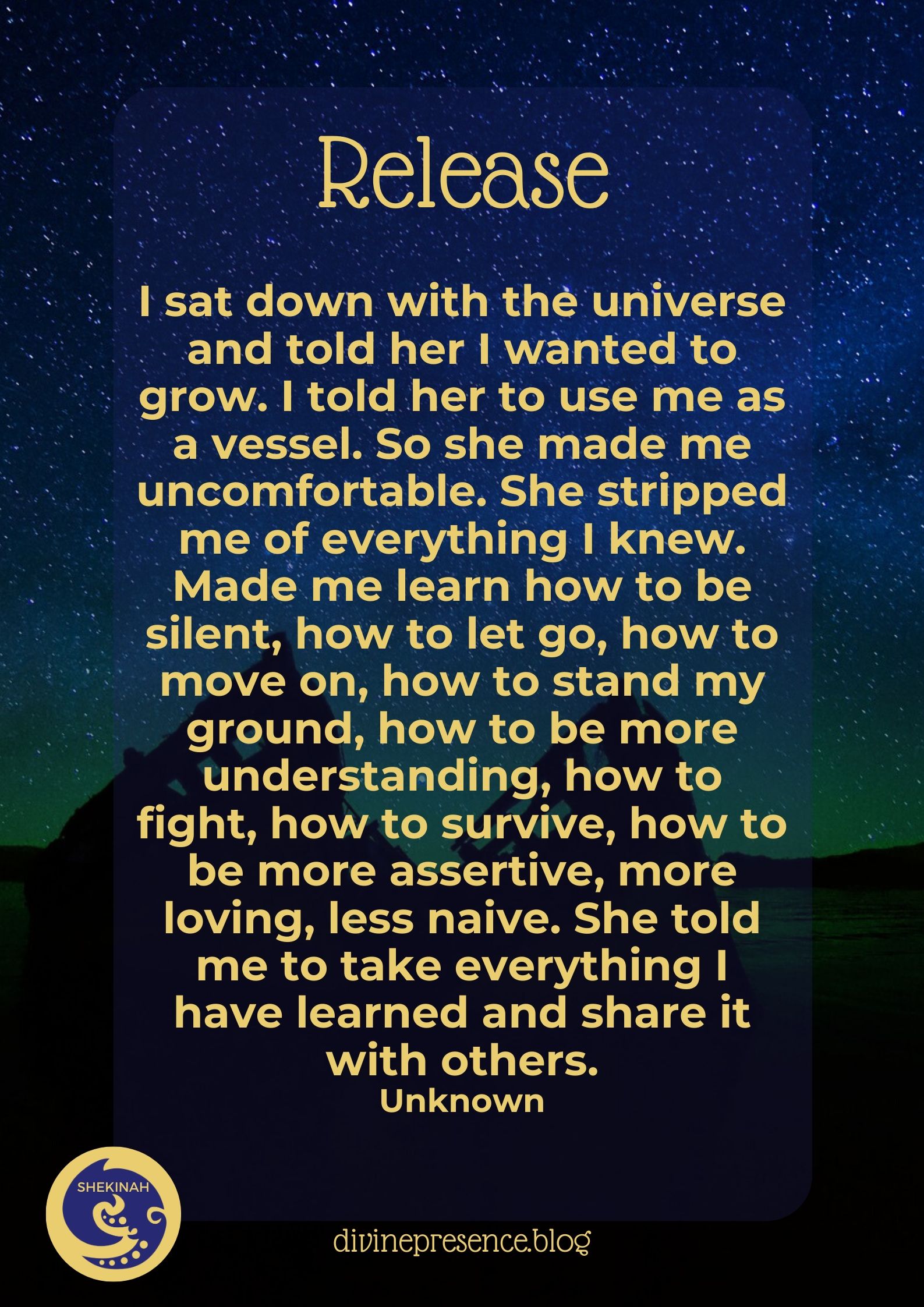
I sat down with the universe and told her I wanted to grow. I told her to use me as a vessel. So she made me uncomfortable. She stripped me of everything I knew. Made me learn how to be silent, how to let go, how to move on, how to stand my ground, how to be more understanding, how to fight, how to survive, how to be more assertive, more loving, less naive. She told me to take everything I have learned and share it with others. Unknown

Can you see and recognise your spiritual potential within, the way that Spirit sees it within you?

Imagine for a moment that you have this invitation:

  • think like Jesus;
  • act like Jesus;
  • love others with Absolute Love;
  • forgive others to the same extent that he practised forgiveness;
  • pray, meditate and recharge your spiritual batteries each and every day to fully charged;
  • practise healing like Jesus did; and
  • live your life to the fullness of your personal purpose.

So, how does a child of God pray?

When you are living as a child of God, it influences every area of life, including prayer.

  • When you ask for wisdom and direction, you wait to hear the response. Can you believe that you can know the mind of God and tap into Infinite Wisdom?
  • If you ask to learn how to do something, imagine practising nonstop until you have mastered it.
  • When you ask to be introduced to the right teacher, you pay attention to the lessons.
  • Upon asking for protection, you allow yourself to be protected.

As a child of God, you have a right to claim health and wellbeing, expressing health, strength and infinite life in your spiritual body, healing your physical body.

John reminds us that in the beginning was the Word, and the Word was with God, and the Word was God. Are you holding onto the power of that Word within you? Do you call it into being and create with the force and power of being a child of God?

Having faith in your Divine power

We can all read how Jesus lived and breathed his faith. He believed that he was the Son of God and therefore exercised the confidence and power that came with this. Do you apply that same hope and trust? We are promised God’s gift of eternal love and power.

And yet, I fail to grasp it in my daily life! I know that for my continual growth, I am strengthened and tested. I also have a deep faith that all the testing and strengthening is for a purpose. I am being made stronger FOR SOMETHING, not just to be tested!

But I am still learning to say with conviction and assurance:

  • I am love as my Father is love.
  • I am unbridled joy as my Divine Creator is joy.
  • I forgive as Divine Love is forgiving.
  • I am prosperous as Spirit within me prospers.
  • I have access and deserve all abundance of this Earth and Heavens, as a child of the Divine.
  • Peace floods my soul as peace floods the Kingdom of Heaven. As the Kingdom of Heaven is within me, peace floods through every cell of my being.

No. I haven’t yet reached that place of total faith in my Divine power. But each day, I continue to recognise that I am a child of Divine Love, not merely a follower of Christ.

This changes my relationship with the Divine

When you are someone’s child, you cannot become more or less of their child. This gives me the certainty that I cannot become “more” of a child of God through my actions or merits, any more than I can become less of a child of God through my failures and mistakes. I have the certainty of being a child.

Unfortunately, many of us judge our relationship with the Divine according to our earthly experiences and broken families. We recognise that parents will disown you or mistreat you, and so judge Spirit accordingly.

But being a child of God is part of your innate nature, the same way that your genes and DNA are inherited. It is part of who you are, internally. You have a divine inheritance, all the power and divinity, this and more.

Are you willing to claim it and live according to your purpose?

Worshipping in Spirit and in Truth as an Heir

God is Spirit, and as children of God, we are spiritual beings, not just human beings. We live on this earth in human form, but our bodies are merely our “spacesuits” for this planet. Ultimately, our essence is spirit, and we are called to worship and live in Spirit and in Truth.

A Christian is a follower of Christ. But in many respects, this limits us to human existence. This limitation of physical body, emotions, thoughts and actions, rather than acknowledging all that we are as spiritual essence and energy.

When we accept that we are children of God, we open ourselves up to the spiritual realm of existence: born of the Spirit, already eternal.

As you go about your day, remember that Divine Love is your rightful inheritance, with everything that this envelops.


References:

Bickerman, Elias J. (April 1949). “The Name of Christians”. The Harvard Theological Review42 (2): 109–124

God, maturity, grow, Spirit, true, best version of you, body, emotions, spirit, John, baptizer, light, testimony, Messiah, prophet, voice, practicing presence, Shekinah

Who are you?

Readings:

  • John 1: 6-8; 19-28

God sent a man, John the Baptist, to tell about the light so that everyone might believe because of his testimony. John himself was not the light; he was simply a witness to tell about the light.

19 This was John’s testimony when the Jewish leaders sent priests and Temple assistants from Jerusalem to ask John, “Who are you?” 20 He came right out and said, “I am not the Messiah.”
21 “Well then, who are you?” they asked. “Are you Elijah?”
“No,” he replied.
“Are you the Prophet we are expecting?”
“No.”
22 “Then who are you? We need an answer for those who sent us. What do you have to say about yourself?”
23 John replied in the words of the prophet Isaiah:
     “I am a voice shouting in the wilderness,
    ‘Clear the way for the Lord’s coming!’”
24 Then the Pharisees who had been sent 25 asked him, “If you aren’t the Messiah or Elijah or the Prophet, what right do you have to baptize?”
26 John told them, “I baptize with water, but right here in the crowd is someone you do not recognize. 27 Though his ministry follows mine, I’m not even worthy to be his slave and untie the straps of his sandal.”
28 This encounter took place in Bethany, an area east of the Jordan River, where John was baptizing.

So, I would ask each one of you this morning: who are you?

John the Baptist, knew clearly, who he was. Do you know who you are?  Are you living the life that God intended for you to live, being who God made you to be? Have you reached a place of maturity where you know and accept what God says about you, agree with Spirit that this is true of you, and become the best version of you that exists?

Let’s do a small exercise, and review different areas of our lives: starting with our bodies.  I want you to close your eyes for a moment, and just be present in your body. Be aware of your head, of your neck, your shoulders, your left arm, your hand, your right arm, your right hand… and now let’s move down to your legs. And now let’s move back to your head. And now, I want to ask you: are you your body? Or is your body simply the vessel that carries you?

If you are not your body, then who are you?

What about your possessions? Do those define who you are? Your home, your car, your bank account? Is that who you are?

How about your job, profession and career? Does that define who you are? How many people do you know that have changed careers? How many times in your life has your career and profession changed? How many people do you know that have been laid off or fired, that have quit, that have moved to another country and had to start over in another field? Is a person truly defined by their career or profession? Who are you?

What about your family? Are you mum, dad, the black sheep, the only single one left, the life of the party, the grandmother? Is that who you are? How many people do you know who have lost members of their family? And yet they still continue to live and find new identities and purposes.  Who are you?

How about your emotions? Are you happy, sad, angry, fearful, ashamed, tired? But is that who you are? Or is that simply a state of feeling and emotion that comes and passes?

John responds rather cryptically to the Pharisees and scribes: “I am a voice…” The first verses of John tell us a little more about John the Baptist’s identity:

“God sent a man, John the Baptist, to tell about the light so that everyone might believe because of his testimony. John himself was not the light; he was simply a witness to tell about the light.”

And you, who are you? What were you sent for? God sent you… Have you discovered yet what for? Are you living out that purpose? Are you being everything that you could possibly be?

Your identity doesn’t depend on something you do or have done. Most of us confuse doing, having and feeling with being.  Instead of saying I feel sad, we identify with the sadness and say “I am sad”. Instead of saying that I work as a lawyer, we say “I am a lawyer”. Instead of saying I have a family, we lose our identity within that family.  But is that truly who you are?

John knew who he was. And Jesus certainly knew who he was.  Jesus said:

  • I am the bread of life.
  • I am the light of the world.
  • I am the door.
  • I am the good shepherd.
  • I am the resurrection and the life.
  • I am the way, the truth and the life.
  • I am the vine.
  • “I tell you the truth, before Abraham was even born, I Am!

And who are you?

Now, I don’t care much for Joel Osteen, but I quite like part of his start to Sunday services and his declaration about the Bible:

This is my Bible.
I am what it says I am.
I can do what it says I can do.

Who are you?

Who does God, through the Bible, say that you are? Let me give you some ideas:

  • You ARE a child of God, complete in Christ – John 1: 12; Colossians 2:10
  • You ARE loved, accepted, redeemed, holy, forgiven, free from condemnation, chosen, established, anointed and sealed by God. 1 John 3: 3; Ephesians 1:6; Colossians 1:14; Romans 8:1; 2 Corinthians 1:21; Colossians 3:12
  • You ARE a joint heir with Jesus, united with God and one spirit with God Spirit. Romans 8: 17; 1 Corinthians 6:17
  • You ARE a temple of God: his Spirit and life lives in you. 1 Corinthians 6:19
  • You are God’s co-worker; a living stone on which the spiritual house is being built. 2 Corinthians 6:1; 1 Peter 2:5

So, if that’s who you are: what are you doing that lives up to this description of you? Does your life reflect who you are?

If you embodied this description of you: what would be different to how you are living your life at the moment? What needs to change in your life, for this to really be you? What would new things would appear in your life if this was you?

What scares you the most about this description of you?

  • Being a child of God? a joint heir with Jesus?
  • Being united with God – complete Oneness?
  • being complete?
  • being loved, accepted, redeemed, holy, forgiven, free from condemnation, chosen, established, anointed and sealed by God?
  • being God’s temple?
  • being God’s co-worker and co-creator?

What obstacles or idols in your life keep you from living this out? What habits or practices do you need to incorporate into your life to live this more fully?

What’s keeping you from living this life today? From walking out of the Church today and being You, the best You that there is, the You that God created you to be in all your fullness and glory, so that others might see Christ in you?

Because today, YOU are the hope of the world. You are the voice in the wilderness. You are the light in the darkness. God sent you!

So, who are you?

choose life, thy will be done, have it your way, doubting God, painful trial, you are suffering, rejoice, overjoyed, god, goddess, dazzling, radiant, immortal creature, energy, joy, wisdom, love, boundless power, mere human beings, God has been making it grow, earthly life, all religions are true, a better Christian, child of God, relationship with God, personal transformation, eternal life, gift of forgiveness, omnipotent, onmiscient, ever-present God, no other gods, loving God, walking in His ways

Choose life

C.S. Lewis said:

“There are two kinds of people: those who say to God, “Thy will be done,” and those to whom God says, “All right, then, have it your way”. ”

For those of us who have a hard time saying “Thy will be done” C.S. Lewis identifies:

We may be thinking about those verses in 1 Peter chapters 4 & 5 that say:  “Beloved, do not be surprised at the painful trial you are suffering… but rejoice that you participate in the sufferings… so that you may be overjoyed when His glory is revealed.”  “… those who suffer according to God’s will should commit themselves to their faithful Creator and continue to do good.”   “and the God of all grace, who called you to His eternal glory in Chris, after you have suffered a little while, will Himself make you perfect, strong, firm and steadfast.”

C.S. Lewis goes on to say:

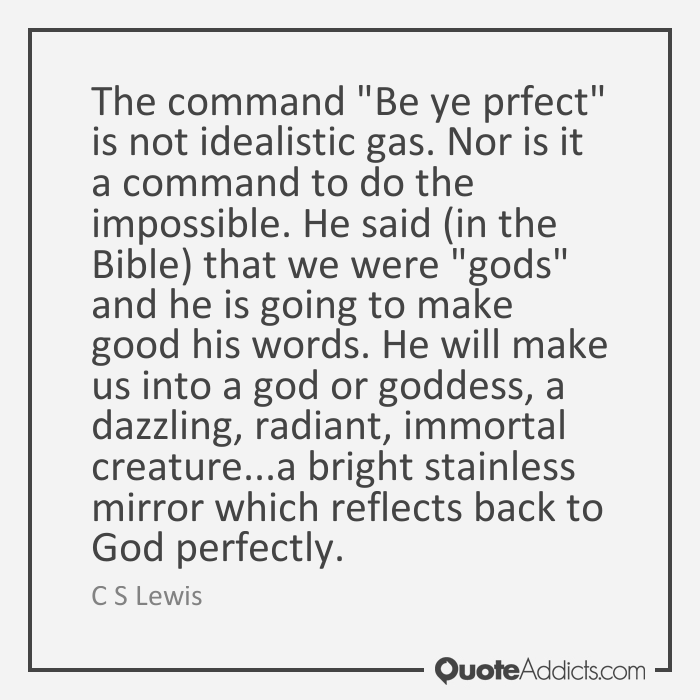
“If we let Him–…we can prevent Him, if we choose–He will make the feeblest and filthiest of us into a god or goddess, a dazzling, radiant, immortal creature, pulsating all through with such energy and joy and wisdom and love as we cannot now imagine, a bright stainless mirror which reflects back to God perfectly (though, of course, on a smaller scale) His own boundless power and delight and goodness. The process will be long and in parts very painful; but that is what we are in for. Nothing less.”
cslewisOur 4 lectionary readings have a common theme: they demonstrate to us how simple and yet profound the choice presented in the Bible is.

1st Corinthians 3, verses 3 to 7:

You are still worldly.  For since there is jealousy and quarrelling among you, are you not worldly?  Are you not acting like mere humans? For when one says “I follow Paul” and another “I follow Apollos” are you not mere human beings?  What, after all, is Apollos? And what is Paul? … I planted the seed, Apollos watered it, but God has been making it grow.  So neither the one who plants nor the one who waters is anything, but only God, who makes things grow.

We are not to get caught up this earthly life, or on whose teachings we follow, who is right or wrong.

Gandhi said:

“all religions are true … So we can only pray, if we are Hindus, not that a Christian should become a Hindu … But our innermost prayer should be (that) a Hindu should be a better Hindu, a Muslim a better Muslim, a Christian a better Christian.”

Spiritual maturity is being able to admit “God makes me grow” – not what I do. I am not “trying” to become a “child of God”: I already am a child of God. We have all been redeemed and bought with a price.  Our objective is not to win salvation; our objective is to become more Christ-like.  As my relationship with God evolves, I realise that salvation, sanctification and justification is about personal transformation.  I am not looking forward to eternal life when I die: eternal life began the day that I accepted God’s free gift of forgiveness.

But, am I allowing God to work in me or holding Him back?  Do I love myself and God enough to become a dazzling, radiant, immortal creature, pulsating all through with such energy and joy and wisdom and love as I cannot now imagine? Or am I caught up in this world?

In my adventure of getting to know the omnipotent, omniscient, ever-present God, Deuteronomy 30: verses 15 to 20 sheds light on my relationship with God.  Deuteronomy means “the second giving of the law.” In this Book, Moses repeats the law of God for those who will cross the Jordan into the Promised Land.

If you recall, before going up Mount Sinai to receive the 10 Commandments, Moses challenged the Children of Israel with the basic rules. Exodus 23:25 “Worship the Lord your God and His blessing will be on your food and water.  I will take away sickness from among you, and none will miscarry or be barren in your land.  I will give a full life span.”  And so, in Exodus 24: 3: “they responded with one voice, “Everything the Lord has said, we will do.

A couple of days later, while Moses is up on Mount Sinai getting the 10 Commandments, these same people ask Aaron to make them the golden calf.  Who here can honestly say they’ve never done this? “Everything the Lord has said, we will do” except for the “no other gods”, or whatever your favourite exception is.  We promise God one thing, and days later have completely failed.

So, here we have Moses, in Deuteronomy 30, repeating the law of God to the new generation; he offers them a choice:

See, I set before you today life and prosperity, death and destruction.  For I command you today to love the Lord your God, to walk in His ways and to keep His commands, decrees and laws… This day I call heaven and earth as witnesses against you that I have set before you life and death, blessings and curses.  Now choose life, that you and your children may live, and that you may love the Lord your God, listen to his voice, and hold fast to Him.  For the Lord is your life…

This passage is about my relationship with God, not about material prosperity. No magic formula for worldly success.  Nor was this was some “altar call”.  This was a call to surrender, each new morning, to Him.  “Choose life” refers to loving God, hearing Him, walking in His ways, keeping His torah, holding fast to Him and not going astray (each morning, each moment of each day).  It’s a radical difference – a life-style choice.

Psalms 119, verses 1 to 8 remind us.

1-     Blessed are they whose ways are blameless, who walk according to the law of the Lord.

2-    Blessed are they who keep His statutes and seek Him with all their heart.

3-    They do nothing wrong; they walk in His ways.

4-   You have laid down precepts that are to be fully obeyed.

5-    Oh, that my ways were steadfast in obeying your decrees!

6-    Then I would not be put to shame when I consider all your commands.

7-    I will praise you with an upright heart as I learn your righteous laws.

8-    I will obey your decrees; do not utterly forsake me.

Even David, a man after God’s own heart, admits that he is NOT perfect in obeying God’s decrees.  He feels put to shame when he considers God’s commands.  “I’d love to say I am obeying fully, but I’m messing up”.  If we are truly honest with ourselves, obeying God’s Word is challenging.  It’s a very high standard!  The Bible is the mirror in which we see our own inadequacies.

David admits he’s still learning God’s law, and finishes with “I will obey your decrees; do not utterly forsake me.”  Don’t give up on me God; I’m going to keep on trying.  We know David had some serious slip-ups in keeping God’s commandments.

He coveted his neighbour’s wife.

He committed murder.

So, how is it that he’s the man after God’s own heart? Well, firstly, although he obviously went through a period of rebellion (more than just a couple of months… maybe more than a year). He was far, far from God.  Yet, when Nathan confronts him, he repents.  There is true remorse, grief and shame.  There is a certain tenderness that comes with this repentance.  Surrender.

We see it again in Peter, who rejecting Christ 3 times, realises his rejection and rebellion, and goes out weeping bitterly.  Somehow, having reached the bottom, Peter was able to put aside his pride, accept Jesus’ forgiveness: was able to bow down and surrender.

Sai Baba said:

“Give up all bad qualities in you, banish the ego and develop the spirit of surrender.”

As a child of God, in our walk to become more Christ-like, we have to understand the importance of the spirit of surrender to God:  “Choosing life.”

Jesus makes it clear, in the sermon on the mount, that it’s not about legalistic fulfilment of the law.

It’s not enough just to know the law.  Last week we read: “let your righteousness surpass that of the Pharisees”.  Pharisees followed the letter of the law; even added a few for good measure. What have we humans done with God’s law?

Let’s see:

The Law of Moses established that we should fulfil our oaths:  Human interpretation says: “if I don’t make an oath, I don’t exactly have to tell the truth”.

Likewise, with respect to divorce:  what was “objectionable” enough about a woman to warrant divorce?  There were different views between various rabbinic schools:

One said:  A man may not divorce his wife unless he has found unchastity in her, for it is written, Because he hath found in her indecency in anything.

Another said: [He may divorce her] even if she spoiled a dish for him, for it is written: Because he hath found in her indecency in anything.

And yet another: Even if he found another fairer than she, for it is written (and this translation is a little more liberal than “because he had found in her indecency in anything), And it shall be if she find no favour in his eyes.”

And so Jesus explains that the true meaning of the law is to honour God, not just with your actions, but also with your thoughts, your motives and your attitudes.  What does it mean to “Choose Life”? Even Gandhi taught:

Before the throne of the Almighty, man will be judged not by his acts, but by his intentions.  For God alone reads our hearts.

These rules from the Sermon on the Mount are deeper and more personal than the laws of any country.  It delves deep into the innermost part of man, where only God sees.

We may think that our “thought life” is our own, hidden from others.  We indulge in “my thoughts” –save a little space, some room, for us to live in our little indulgences.  This hypocrisy of a secret thought life! – One way on the inside and another on the outside – This deep corruption and confusion is not “choosing life”.

We see another example of this when Jesus rebukes us for holding onto our anger, rather than choosing the higher way.   What do I choose to do with my anger?  Do I deal with it?  Buddhist teachings warn:

“Holding on to anger is like grasping a hot coal with the intent of throwing it at someone else; while holding it, you’re getting burned.”

Jesus says there is no real point in priding myself on the fact that I have never actually killed someone. Why? Well, because unresolved anger leads us to sin: saying “Raca” (empty head) or “you fool” (moron) – My angry, thoughtless words KILL my relationships, chipping away at the trust and love.

Jesus values our earthly relationships – important enough that he says we should leave worshipping God and go and make things right with our neighbour or brother.  We are to actively seek reconciliation.

True happiness and fulfilment comes from putting our relationship with God right and then our relationships with all of those around us.

Sai Baba says:  “Once we surrender our mind to GOD completely, HE will take care of us in every way.”

How do I really put into practice, in all aspects of my life, the grace that I have received, living a life of righteousness and holiness before God?  How do I “do justice, love mercy, walk humbly with God”?  I “know” (head knowledge) it means to desire Him above all else: He demands first place in my life.  No half-hearted or part-time love: “just Sunday mornings.”

Much like Christ says in the gospels to the young rich ruler:  No one is good except one–God. You know the commandments: ‘Do not murder,’ ‘Do not commit adultery,’ ‘Do not steal,’ ‘Do not give false testimony,’ ‘Do not defraud,’ ‘Honor your father and mother.’”  The young ruler said to him, “Teacher, I have observed all these things from my youth.”
Jesus looking at him loved him, and said to him, “One thing you lack. Go, sell whatever you have, and give to the poor, and you will have treasure in heaven; and come, follow me, taking up the cross.”

This isn’t the first time we’ve seen “choices” in the Bible.  Genesis: starts with the exercise of free will.  We can choose to eat the forbidden fruit or not – our eyes will be opened: but… will we like what we see?

Augustine said:

“When people choose to withdraw far from a fire, the fire continues to give warmth, but they grow cold.  When people choose to withdraw far from light, the light continues to be bright in itself but they are in darkness.  This is also the case when people withdraw from God.”

God doesn’t want me to pick and choose when I will love him, or under what conditions.  I am to Love God with all my heart and with all my soul and with all my strength.

I’m happy to be a Mary sitting at Jesus’ feet lapping up all the teachings.  I enthralled by His teachings.  But that’s not enough: how do I let go of earthly things, daily struggles, and become a dazzling, radiant, immortal creature, pulsating all through with such energy and joy and wisdom and love as I cannot now imagine?

If I loved God, really, truly, loved HIM, I wouldn’t have any problem keeping His commandments; I would have complete faith in Him and His Word, put absolute trust in Him.  I’d allow Him to guide me, not snatch the reigns back when things get tough.  I would surrender all and trust Him, be filled with His light, and let it shine through me into the lives of others around me.

We know (head knowledge) that “things” cannot give us life – they don’t satisfy the inner longing of our soul.  No harm in trying, right? And so, like the rich young ruler, we distance ourselves from God, putting our trust in our “security”.

True righteousness is more than just legal or external obedience.  It’s not about seeing how much I can “get away with” and still be considered “righteous”.  Wrong-doing arises because of the mind.  But if my mind is transformed, wrong-doing has no place to live.  God’s righteousness is concerned with His “shalom” – well-being, peace and harmony.  This is His righteousness: a peaceful, life-giving relationship with God.  I want, this day, to choose life.

And so, as C.S. Lewis said:

“He will make the feeblest and filthiest of us into a god or goddess, a dazzling, radiant, immortal creature, pulsating all through with such energy and joy and wisdom and love as we cannot now imagine, a bright stainless mirror which reflects back to God perfectly … His own boundless power and delight and goodness. The process will be long and in parts very painful; but that is what we are in for. Nothing less.”

And so, I repeat:

So, as you walk out of here today, which of the 2 types of people do you choose to be?

Those that say to God: “I choose to surrender and banish my ego. I trust you to do the best for me and to give me the strength I need for whatever You have in store, however painful the growth process may be. I want to become more Christ-like. Thy will be done.

Or those to whom our Father in heaven, with great sadness in His heart says, like as to the rich young ruler, “All right then, have it your way”.

Remember: When we lose God, it’s not God who gets lost.