generative wisdom,being wise,death,a time for everything,a time to heal,actions,all is meaningless,all is vanity,ask yourself this,awareness,being compassionate,being kind,career,choices,decision-making,desires,discovering your purpose,education,riches,spiritual healing,

How to Create a Lasting Legacy: The True Pursuit of Wisdom

Is the pursuit of wisdom and creating a lasting legacy worth it?

If we read Ecclesiastes 1, we might think it’s all an exercise in futility. 
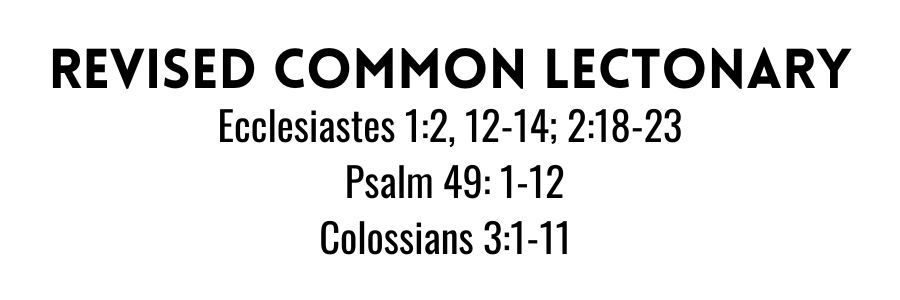
Ecclesiastes, Psalms, Colossians

Was the writer of Ecclesiastes depressed? It seems so. After all he had done to pursue wisdom, he realises that everyone dies.

What was the purpose of studying so much and creating so much wealth? Will it be appreciated by those left behind? Even wealth gets squandered by unwise heirs. 

So, what’s the purpose of all that hard work and effort?

When we look at the wise, they die; fool and dolt perish together and leave their wealth to others.

Psalms 49:10

On the other hand, Colossians suggests that we stop pursuing worldly pleasures and goals, and focus our time and energy on “things above”.

Set your minds on the things that are above, not on the things that are on earth

Colossians 3:2

So, what is the meaning of life? Is it futile to pursue wisdom and wealth? Is this all vanity (futility) as the author of Ecclesiastes suggests? 

Or is there something meaningful that we can do and create here and now that will leave a legacy behind?

The true pursuit of wisdom

First, what is wisdom? Is there a difference between worldly wisdom and divine wisdom? Earthly wisdom or godly wisdom?

Who do you consider to be wise?

Is someone with a Master’s degree considered to be wise? Or are they merely educated?

In business, there’s a DIKW pyramid – data, information, knowledge and wisdom. Data is meaningless, unless you can actually draw some conclusions from it that you can use to guide your future actions.

Data is the foundation, information is processed data, knowledge is information with context, and wisdom is the application of knowledge to make informed decisions. 

So, in the context of business, wisdom is not knowledge, but the application of knowledge into decision-making. 

In a similar fashion, education is merely a means to an end: hopefully, getting an education will teach you how to transform knowledge into wisdom – wise decision-making. 

Worldly Wisdom or Divine Wisdom?

So, what about this divide between earthly wisdom and godly wisdom? 

Do you want to be counted wise, to build a reputation for wisdom? Here’s what you do: Live well, live wisely, live humbly. It’s the way you live, not the way you talk, that counts. Mean-spirited ambition isn’t wisdom. Boasting that you are wise isn’t wisdom. Twisting the truth to make yourselves sound wise isn’t wisdom. It’s the furthest thing from wisdom—it’s animal cunning, devilish plotting. Whenever you’re trying to look better than others or get the better of others, things fall apart and everyone ends up at the others’ throats.

James 3:13-16, The Message

If you ask me for my favourite books of the Bible, they would be these:

  • James
  • Proverbs
  • Job
  • Ecclesiastes

Do you see any similarities in them? Yes, they all talk about Wisdom.

And still, Ecclesiastes suggests that even the pursuit of Wisdom is meaningless and futile. 

As we know it, the author of Ecclesiastes (thought to be Solomon, but perhaps not) was also one (if not the principal) of the authors of Proverbs. 

And in the end, he says it’s all vanity. What’s the point of pursuing wisdom?

Or as Psalms suggests: what’s the point of building up an estate and wealth to leave to your children? 

What do we truly live behind when we go? Is there any point to “living with purpose” or “finding your purpose” in life and creating a legacy to leave behind? 

Is pursuing holiness enough?

Colossians suggests that we should pursue individual holiness. But how does Colossians define this individual holiness?

What does it mean to be renewed in wisdom and become a new self?

I find it fascinating that the defintion we are given focuses most on what we leave behind and stop doing. When we stop all of these bad habits, though patterns and emotions, we open up space for the new.

Put to death, therefore, whatever in you is earthly: sexual immorality, impurity, passion, evil desire, and greed (which is idolatry).
But now you must get rid of all such things: anger, wrath, malice, slander, and abusive language from your mouth.
Do not lie to one another, seeing that you have stripped off the old self with its practices and have clothed yourselves with the new self, which is being renewed in knowledge according to the image of its creator.

Colossians 3:5, 8-10

As it says here, stripped off the old self with its practices and habits. And then you can put on your clean clothes.

“seek the things that are above”

Colossians 3:1

What are we seeking? Divine Presence in our lives.

And how can we be filled with the Divine Spirit? Only by making room! To make room in our life for the Divine, we have to let go of whatever is holding us back.

What are the personal obstacles in your thoughts, feelings and actions that inhibit the Spirit from flowing freely in your mind?

To be full of the Spirit

In order to demonstrate the fruit of the Spirit fully – love, joy, peace, patience, kindness, goodness, faithfulness, gentleness and self-control – we have to let go those emotions and thoughts that are their archnemesis.

  • To be full of love, I have to first let go of hate.
  • If I want my joy to overflow, I first have to finish grieving for whatever I think I deserved and didn’t receive, as well as find a place of acceptance of what is.
  • To be full of peace, I release my anxiety and that pressing need to have everything now. I recognise any greed that I have – whether it be for things, results or even knowledge and wisdom.
  • If I want to have patience, I must learn to persist in the face of trouble, delay or even suffering. It’s an internal strength that I gather that allows me to face whatever may come, and still love othes in spite of my circumstances. I let go of the longing for immediate results, and recognise that everything is for my good. 
  • To be full of kindness, I have to let go of my ego, pride, anger and wrath. I release all malice and slander from my thoughts, emotions, words and actions. And I certainly refrain from abusive language coming out of my mouth!
  • If I am committed to being filled with goodness, I must first release sexual immorality, impurity, passion, evil desire, and idolatry.
  • And when I claim that I have faithfulness, I let go of lying to myself and others, and instead demonstrate loyalty, steadfastness, and trustworthiness.
  • Likewise, when I am filled with gentleness, I get rid of all those rough edges of my emotions and tongue. I learn to speak gently, rather than harshly, and I curb my anger, wrath and hatred completely. 
  • Finally, the crux of it all becomes impeccable self-control. I have control over my mind and thoughts, my emotions and especially my tongue and the words of my mouth. 

This is why Colossians focuses on what we have to get rid of in our lives. Take out the old, in order to be full of the new. If you want to think on things above, you have to stop thinking about all the things below. 

What is Wisdom and a Meaningful Legacy?

Let’s go back to Ecclesiastes and the lamentations of “This is all futile and useless”. 

sometimes one who has toiled with wisdom and knowledge and skill must leave all to be enjoyed by another who did not toil for it.

Ecclesiastes 2:21

So, all that hard work, even applying your knowledge and skill for wise decision-making, sometimes is reaped by those who don’t deserve it.

Perhaps you died and a distant family member reaps rewards rather than the children you expected. Or your business is taken over by outsiders. The bank forecloses on your house and leaves your children without a roof over their heads.

So, what is meaningful? What do we leave behind that truly matters?

I would guess that it’s the impact we have on the lives of others. Especially when that impact carries far into the future, beyond the span of our lives and the generations that followed us. 

Think for a moment, for example of the authors of the Bible: thousands of years later, we are still reading those words. Even the authors of political, ethical and scientific books are read hundreds and thousands of years later.

But it’s not just books and writers that leave a legacy – there are many who impacted lives that were illiterate, and yet their deeds are know all over the world, living on as legends and stories that we continue to share. 

Jesus may have been born humbly, and we have no works written by him… yet every year we continue to celebrate his birth and coming to this earth, as well as his teachings and his sacrifice.

His divine wisdom and legacy are clear to each one us.

So the question for you today is: what meaningful legacy are you creating and leaving?

Perfect control: how to encourage and drive growth

Today, I’m back to one of my favourite passages in James 3: “the untamable tongue”.  Having control of the words of our mouth reflects fully in our relationships. We use words to build others up and encourage them, or we can tear each other down. 

We are warned in the first verse of James not to presume to be teachers (those purporting spiritual authority above others), because these teachers will be judged more harshly.

We all make mistakes, especially in what we say. 

A slip of the tongue for just a moment can destroy a relationship in just a few words.

No amount of saying “I’m sorry, I was angry and I didnt mean it” can rebuild the trust that was destroyed by our words.

Having perfect control of the tongue – to encourage others and drive their growth – is the measure of the perfect man, able to use his self-control in every way. 

From Galatians, we know that one of the fruits of the Spirit is self-control:

Perfect control of your tongue is the hallmark of being filled with the Spirit.

Consider the effect of the words of a school teacher on a child and the impact this may have on them throughout their lives:

  • You’re useless and can’t learn anything.
  • Obviously, you’ll never go to University.
  • I believe in you! Youˋre so hard-working and putting in so much effort, youˋll definitely do great things in the future.
  • I know you can do this! Even though it’s been hard for you to learn these things, youˋve done a great job with this homework. 

And this is even more powerful within the Church.

Imagine what happens when someone in leadership says to our youth:

  • You’re so rebellious, it’s impossible to teach you. There’s simply no hope for you. 
  • With all this rebellious spirit you’ve shown, I’m sure that you will always stand tall and be strong when going against the crowd. You have the strength to be a future leader. 

As we are reminded in James, a large ship is guided by a small rudder. And the tongue of those in leadership can shape the future of our Church and members. 

We don’t have to be in a leadership position to use the power of the tongue. 

  • gossip is mentioned about 133 times in the Bible
  • cursing shows up more than 65 times; and
  • complaining is mentioned more than 100 times.

Proverbs 20:19 reminds us:

A gossip betrays a confidence; so avoid anyone who talks too much.

Worse yet, those who eagerly listen to gossip are considered to be of low character. (Prov. 17:4)

A curse is calling for harm or injury to come to someone, and 1 Peter 3:10 suggest that if we love life and want to see good days, then we should guard our tongue against speaking evil and our lips from lying.

Swearing is not necessarily using curse words – in fact, consider swearing to be verbal abuse.

  • You’re stupid and I hope you die.
  • You will never amount to anything. 
  • You’re so fat and ugly, no one will ever love you.

These are all curses, even though they don’t include any swear words. Instead, we are asked to speak positive and encouraging words to each other. 

Complaining is not the same as letting people know when something is wrong. It comes from the soul and focuses on the problem, rather than on seeking solution.

This is why in verse 7 of James 3 we read:

The tongue also is a fire… It corrupts the whole person, sets the whole course of his life on fire, and is itself set on fire by hell. 

We see examples of this in every day life.

  • Gossip spreads like a wild fire, especially through social media and chat groups.
  • You’re in a meeting discussing a problem and looking for solutions:  One person complains and soon ten people are complaining and the vibe gets dragged down. Soon, everyone has forgotten that the meeting was to look for solutions.
  • One kid in the play ground starts to bully and verbally another, and soon you have a group of kids picking on the victim. 

So, what are we supposed to do?

These verses of James 3, verses 1-12 don’t really offer us the solution. They simply outline for us the power of the challenge and what happens if we fail to control the tongue. 

It’s only when we get to verses 13 and following that we discover the solution:

Wisdom and understanding is shown by a good life, by deeds done in humility and the humility that comes from wisdom.  

So, if we want to drive growth in our community or family, is starts individually: each one of us has to learn to control our tongue.

It’s living from the inside out – what we have on the inside will be shown to others by what we say and do.

Isaiah 50, verse 4 from this week’s lectionary reading offers the following:

To encourage those who are tired and weary.

The Lord GOD has given me a trained tongue, that I may know how to sustain the weary with a word. Morning by morning he wakens, wakens my ear to listen as those who are taught.

This is what we are asked to do.

When we use our words for encouragement and building others up, then we are living a life filled with the presence of the Divine.

love is kind, celebrating World Kindness Day, practising kindness, being kind, good deeds, compassion, being compassionate, thinking of others, do unto others, be kind to yourself, practice kindness, show kindness, spread kindness, how to practice kindness and compassion, love is kind meaning, compassion and kindness, compassionate and kind, loving and kind, habits of kind people, benefits of kindness, importance of kindness, ways to make kindness a habit, the power of kindness

Love is kind: celebrating World Kindness Day

Yesterday, November 13, was World Kindness Day. And after 9.00 p.m., when I hadn’t yet finished writing this blog post, I decided that the greatest act of kindness and self-care for myself was to go to bed!

Today, like most days, I’m up at 4.00 a.m. My body has decided that this new schedule works better!

I’m adapting to not staying up till 11.00 p.m., burning the candle at both ends – learning that kindness starts not with others, but showing compassion to myself. Especially since me tired and cranky, lacking in sleep, is not putting my best foot forward to be kind to others!

Kindness is a habit that starts with me being fully rested – at least to the extent that it is available to me!

I am loving the early mornings.

The stillness and quiet.

Being awake before the birds even start their morning songs! Hearing that first chirp of bird song, and then others waking and joining in.

Being still and knowing that I AM is within me, all around me, and having the opportunity to ask how I can best express love in the world today.

Why does kindness matter?

Find me a Christian who is not kind – and I will challenge them to their face that they are not a true Christian. At the very least, they are failing to be renewed by the transforming of their mind!

Anyone who does not love does not know I AM, because I AM is love.

1 John 4:8

End of story.

And from 1 Corinthians 13, we know that Love is Kind.

I accept that there are more verses in the Bible that speak to the kindness of God than the kindness of man.

Kindness is forgiving

Nonetheless, the verses that speak about our challenge to be kind are crystal clear that kindness goes hand-in-hand with forgiveness. Your measurement of commitment to being Christ to others is whether you accept forgiveness and grant forgiveness to others.

For example:

… be kind and merciful, and forgive others, just as God forgave you… 

Ephesians 4:32

If you want to understand better this idea of “do unto others as you would have them do unto you”, get very clear about the role that kindness, mercy and forgiveness play in your daily habits.

Consider how well you have mastered holding firm to kindness as a way of being.

love is kind, practising being kind, learning to be kind, kindness and truth

Don’t mistake kindness for niceness

In Proverbs we find:

Do not let kindness and truth leave you. Tie them around your neck. Write them upon your heart.

Proverbs 3:3 (NLV)

So, when we speak truth, it must be with kindness. And in order to be kind, we need to hold onto truth. Anything less is inauthentic. Is there any real kindness without truth?

We are told to speak the truth with love, with compassion and empathy. And that seems to be harder in our culture as we have lost the ability to have difficult conversations. We’ve learnt not to talk about politics or religion at the dinner table, but now that’s extended to we simply don’t talk about them. Then we wonder why society has lost the ability to speak about controversies with respect and kindness.

But, by the same token, if we are busy being nice, we might leave out the truth. Because that’s nicer. But it ignores the sense of betrayal that the other person gets when they find out the truth. It’s not always possible to simply be agreeable and not ruffle any feathers.

Living as a people-pleaser – always being nice – is exhausting. When the resentment starts – the niceness ends.

It’s much better to choose kindness with truth – which may be somewhat uncomfortable as you navigate learning how to be kind while being authentic, but the long-term benefits far outweigh the risks. Practising kindness includes being kind to yourself. It’s not just good deeds and being nice to others.

Kindness stands hand-in-hand with justice

The same way that kindness requires truth, it also requires justice. It doesn’t have to be a harsh and unforgiving justice, but it does require that injustice be stopped in its tracks.

Practising kindness may be as simple as standing up for someone in your community or school against bullying, or making a stand with part of your community for their right to be heard and given a fair audience.

He has told you, O man, what is good—
    and what does the Lord require of you,
but to do justice and to love kindness,
    and to walk humbly with your God?

Micah 6:8 (MEV)

Perhaps you need to attend that community meeting. Or kindness might just be showing up at your local animal shelter and taking care of the rescues who no one has taken time to share love and justice with.

How can you choose today to show kindness and spread kindness in your community?

What does it look like for you when it goes hand-in-hand with justice?

love is kind, compassion and kindness, compassionate and kind, kind and loving

Kindness is patient, Spirit-filled living

But the fruit of the Spirit is love, joy, peace, patience, kindness, goodness, faithfulness, 23 gentleness, self-control …

Galatians 4:22-23 (RSV)

Can you practice kindness, thinking of others, without patience? What would it mean that love is kind, if you have no patience or no self-control?

Imagine, if you can, someone impatient, with no self-control, trying to be kind.

Consider, for a moment, kindness without gentleness and goodness.

The fruit of the Spirit all go hand-in-hand: in order to have one, you have to practice all of them. And as much as I would love to say you get baptised in the Spirit and it all magically changes and you become magically transformed into having all of those qualities at all times – my experience in life has been otherwise.

Much like a potter moulds the clay, we are moulded by life.

For better or for worse.

We get to choose whether we allow life’s lessons to teach us how to practice kindness and compassion in every situation – or whether we will simply react. Compassion and kindness are not learnt in a vacuum, but in our every day experiences.

In fact, spiritual growth is not what happens when you are ardently praying and studying. Spiritual growth is what happens when you are facing life’s storms!

  • It’s how you respond when someone is trying your patience.
  • The way you speak to someone when you haven’t had enough sleep.
  • How you choose love rather than anger, when another person is baiting you

Compassion and kindness show up every day as habits, the habitual way that you respond and react to life’s situations.

Practising kindness each day

Kindness is not something to practice and celebrate one day of the year!

It is the every day sweetness of life.

If you can’t be anything else – be kind.