generative wisdom,being wise,death,a time for everything,a time to heal,actions,all is meaningless,all is vanity,ask yourself this,awareness,being compassionate,being kind,career,choices,decision-making,desires,discovering your purpose,education,riches,spiritual healing,

How to Create a Lasting Legacy: The True Pursuit of Wisdom

Is the pursuit of wisdom and creating a lasting legacy worth it?

If we read Ecclesiastes 1, we might think it’s all an exercise in futility. 
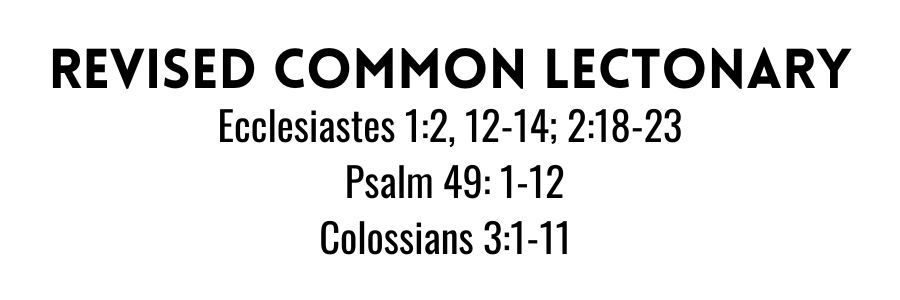
Ecclesiastes, Psalms, Colossians

Was the writer of Ecclesiastes depressed? It seems so. After all he had done to pursue wisdom, he realises that everyone dies.

What was the purpose of studying so much and creating so much wealth? Will it be appreciated by those left behind? Even wealth gets squandered by unwise heirs. 

So, what’s the purpose of all that hard work and effort?

When we look at the wise, they die; fool and dolt perish together and leave their wealth to others.

Psalms 49:10

On the other hand, Colossians suggests that we stop pursuing worldly pleasures and goals, and focus our time and energy on “things above”.

Set your minds on the things that are above, not on the things that are on earth

Colossians 3:2

So, what is the meaning of life? Is it futile to pursue wisdom and wealth? Is this all vanity (futility) as the author of Ecclesiastes suggests? 

Or is there something meaningful that we can do and create here and now that will leave a legacy behind?

The true pursuit of wisdom

First, what is wisdom? Is there a difference between worldly wisdom and divine wisdom? Earthly wisdom or godly wisdom?

Who do you consider to be wise?

Is someone with a Master’s degree considered to be wise? Or are they merely educated?

In business, there’s a DIKW pyramid – data, information, knowledge and wisdom. Data is meaningless, unless you can actually draw some conclusions from it that you can use to guide your future actions.

Data is the foundation, information is processed data, knowledge is information with context, and wisdom is the application of knowledge to make informed decisions. 

So, in the context of business, wisdom is not knowledge, but the application of knowledge into decision-making. 

In a similar fashion, education is merely a means to an end: hopefully, getting an education will teach you how to transform knowledge into wisdom – wise decision-making. 

Worldly Wisdom or Divine Wisdom?

So, what about this divide between earthly wisdom and godly wisdom? 

Do you want to be counted wise, to build a reputation for wisdom? Here’s what you do: Live well, live wisely, live humbly. It’s the way you live, not the way you talk, that counts. Mean-spirited ambition isn’t wisdom. Boasting that you are wise isn’t wisdom. Twisting the truth to make yourselves sound wise isn’t wisdom. It’s the furthest thing from wisdom—it’s animal cunning, devilish plotting. Whenever you’re trying to look better than others or get the better of others, things fall apart and everyone ends up at the others’ throats.

James 3:13-16, The Message

If you ask me for my favourite books of the Bible, they would be these:

  • James
  • Proverbs
  • Job
  • Ecclesiastes

Do you see any similarities in them? Yes, they all talk about Wisdom.

And still, Ecclesiastes suggests that even the pursuit of Wisdom is meaningless and futile. 

As we know it, the author of Ecclesiastes (thought to be Solomon, but perhaps not) was also one (if not the principal) of the authors of Proverbs. 

And in the end, he says it’s all vanity. What’s the point of pursuing wisdom?

Or as Psalms suggests: what’s the point of building up an estate and wealth to leave to your children? 

What do we truly live behind when we go? Is there any point to “living with purpose” or “finding your purpose” in life and creating a legacy to leave behind? 

Is pursuing holiness enough?

Colossians suggests that we should pursue individual holiness. But how does Colossians define this individual holiness?

What does it mean to be renewed in wisdom and become a new self?

I find it fascinating that the defintion we are given focuses most on what we leave behind and stop doing. When we stop all of these bad habits, though patterns and emotions, we open up space for the new.

Put to death, therefore, whatever in you is earthly: sexual immorality, impurity, passion, evil desire, and greed (which is idolatry).
But now you must get rid of all such things: anger, wrath, malice, slander, and abusive language from your mouth.
Do not lie to one another, seeing that you have stripped off the old self with its practices and have clothed yourselves with the new self, which is being renewed in knowledge according to the image of its creator.

Colossians 3:5, 8-10

As it says here, stripped off the old self with its practices and habits. And then you can put on your clean clothes.

“seek the things that are above”

Colossians 3:1

What are we seeking? Divine Presence in our lives.

And how can we be filled with the Divine Spirit? Only by making room! To make room in our life for the Divine, we have to let go of whatever is holding us back.

What are the personal obstacles in your thoughts, feelings and actions that inhibit the Spirit from flowing freely in your mind?

To be full of the Spirit

In order to demonstrate the fruit of the Spirit fully – love, joy, peace, patience, kindness, goodness, faithfulness, gentleness and self-control – we have to let go those emotions and thoughts that are their archnemesis.

  • To be full of love, I have to first let go of hate.
  • If I want my joy to overflow, I first have to finish grieving for whatever I think I deserved and didn’t receive, as well as find a place of acceptance of what is.
  • To be full of peace, I release my anxiety and that pressing need to have everything now. I recognise any greed that I have – whether it be for things, results or even knowledge and wisdom.
  • If I want to have patience, I must learn to persist in the face of trouble, delay or even suffering. It’s an internal strength that I gather that allows me to face whatever may come, and still love othes in spite of my circumstances. I let go of the longing for immediate results, and recognise that everything is for my good. 
  • To be full of kindness, I have to let go of my ego, pride, anger and wrath. I release all malice and slander from my thoughts, emotions, words and actions. And I certainly refrain from abusive language coming out of my mouth!
  • If I am committed to being filled with goodness, I must first release sexual immorality, impurity, passion, evil desire, and idolatry.
  • And when I claim that I have faithfulness, I let go of lying to myself and others, and instead demonstrate loyalty, steadfastness, and trustworthiness.
  • Likewise, when I am filled with gentleness, I get rid of all those rough edges of my emotions and tongue. I learn to speak gently, rather than harshly, and I curb my anger, wrath and hatred completely. 
  • Finally, the crux of it all becomes impeccable self-control. I have control over my mind and thoughts, my emotions and especially my tongue and the words of my mouth. 

This is why Colossians focuses on what we have to get rid of in our lives. Take out the old, in order to be full of the new. If you want to think on things above, you have to stop thinking about all the things below. 

What is Wisdom and a Meaningful Legacy?

Let’s go back to Ecclesiastes and the lamentations of “This is all futile and useless”. 

sometimes one who has toiled with wisdom and knowledge and skill must leave all to be enjoyed by another who did not toil for it.

Ecclesiastes 2:21

So, all that hard work, even applying your knowledge and skill for wise decision-making, sometimes is reaped by those who don’t deserve it.

Perhaps you died and a distant family member reaps rewards rather than the children you expected. Or your business is taken over by outsiders. The bank forecloses on your house and leaves your children without a roof over their heads.

So, what is meaningful? What do we leave behind that truly matters?

I would guess that it’s the impact we have on the lives of others. Especially when that impact carries far into the future, beyond the span of our lives and the generations that followed us. 

Think for a moment, for example of the authors of the Bible: thousands of years later, we are still reading those words. Even the authors of political, ethical and scientific books are read hundreds and thousands of years later.

But it’s not just books and writers that leave a legacy – there are many who impacted lives that were illiterate, and yet their deeds are know all over the world, living on as legends and stories that we continue to share. 

Jesus may have been born humbly, and we have no works written by him… yet every year we continue to celebrate his birth and coming to this earth, as well as his teachings and his sacrifice.

His divine wisdom and legacy are clear to each one us.

So the question for you today is: what meaningful legacy are you creating and leaving?

Active forgiveness: how to intentionally practice love

Today, as I look with great sadness at the anger erupting in communities in the United States, I realise that Christian leaders need to stand up and overturn a few more tables within the temple! Obviously, we haven’t overturned the tables of oppression!

Oppression can take so many forms: whether it’s the orphans (or children who are being trafficked), the widows (or human trafficking), the poor, the sojourners/immigrants/foreigners, or someone who you haven’t even recognised as your equal (race, education or any other standard).

The first table that needs to be overturned is the alter on which our individual egos sit.

Ego – that part of us that fails to understand that illness would become wellness if we would replace “I” with “WE”.

The illness of division could be the wellness of unity and cooperation, if we are willing to start within: with an awareness of our own feelings, anger, hatred and division. It is my ego that tells me that I am separate from those in pain.

When I saw the first posts about the events, questions came to mind – even along the lines of “is this another false flag operation” to get people to focus their attention onto something divisive, rather than awakening to creating the world and society in which we wish to live.

But the reality is that these events show the brokenness of the “normal” to which we wish to return.

How is it possibly okay for a white man (just because he has a uniform) to kneel on the neck of another man, already cuffed and in custody, until he stops breathing? Even if this was “created” to divert attention from something else: this requires our collective attention and healing! It is no less oppression, irrespective of the purpose which it serves.

My arrogance: daring to think that I am somehow above these events, says “not my problem”. But that’s not true.

It is exactly my privilege that is the problem!

It’s the fact that this would NOT happen to me that makes me the ideal person to say “something needs to change”. Deep within, I know that it’s time to heal within me the coldness and apathy that say “not my injustice”!

The collective pain

What springs to view with these events is the pain that many are suffering, sight unseen.

Today I read about the father that goes for a walk with his young daughter and the dog because he’s fearful of walking around his neighbourhood alone. I read about the young man being the only person of colour in his school, and constantly being pulled over by the cops, while his friends never received the same treatment.

And I realise that we are called to overturn the tables that allow some to be down-trodden, while others continue to live with privilege.

I’m not saying that I should “lose” my privileges, but rather that they should be the same privileges afforded to every person, regardless of race, creed, or economic strata.

Perhaps we need to learn a little more about restorative justice: the process where entire communities taking responsibility for restoring balance, harmony and the practice of forgiveness.

I’m talking about Ho’oponopono.

“Restorative justice is a philosophy that embraces a wide range of human emotions including healing, mediation, compassion, forgiveness, mercy, reconciliation as well as sanction when appropriate. It also recognizes a world view that says we are all interconnected and that what we do be it for good or evil has an impact on others.”

— “Restorative Justice – The Pacific Way” Paper presented at the 7th International Conference on Prison Abolition; Barcelona, Spain, 17 – 19 May 1995;  by Jim Consedine (see link at the end of this post)

I first learnt about restorative justice in law school in Waikato University, Hamilton, New Zealand.  Thankfully, I was at a very culturally connected law school, where we openly spoke about community justice systems and how the Pākehā system failed to take into account restoration of balance within the community.  It simply punished the offender (like a criminal justice system). 

But the community continued to suffer and hurt: with the criminal justice system, nothing is actually done to restore balance within the community.

Most people only know Ho’oponopono as 4 lines:

  • I love you
  • I’m sorry
  • Please forgive me
  • Thank you

But it’s more than just repeating the mantras… It’s opening up our awareness and emotions.

Ho’oponopono Practice: The Practice of Forgiveness

The origins of the Huna practice known as Ho’oponopono are a community reconciliation process. It is very similar to other Pacific Island restorative processes – which involved entire communities taking responsibility for restoring balance, harmony and the practice of forgiveness when harmony in the community has been broken.

Coming to Ho’oponopono from a lawyers perspective of community justice, I knew that it was so much more than simply 4 lines:

  • I love you
  • I’m sorry
  • Please forgive me
  • Thank you 

Not because I knew anything about the Hawaiian Huna practice itself, but simply because I recognized that there was so much more to restoration than simply saying “sorry”!  It’s much more than sending the “offender” to jail.

Restorative justice means righting the wrong that allows the crime to be committed in the first place. It addresses the question: “Why would four white men consider that it was okay, under any circumstances, to pin a man down under their knee until he stops breathing?”

True healing happens when we allow ourselves to experience what is happening in the community from every angle and clear the pain from every perspective:

  1. the perpetrator (Can I forgive him and his companions? Do I need to forgive myself for any hatred, anger or other feelings against them?);
  2. the victim (Can I forgive what others did to him? Do I need to forgive myself for any prejudice or feelings against him?)
  3. the bystanders (Is there any judgment in my heart against them? Do I feel that they failed in any way?)
  4. the family members (What forgiveness do I need to practice for the family of the victim or the perpetrators?)
  5. others in the community, including the protestors, police, first responders, or leaders (How do I consider that they have failed?)

It’s literally saying… I understand ALL of the pain and frustration – of every person involved and forgiving for each and every one of them for whatever I hold them at fault for. It is a process and quite possibly not something you can do in a single moment.

It begs the question: why were onlookers too afraid to intervene? It asks: “How did we create officers of the law that were so lacking in empathy and awareness, that they failed to hear this man begging and be moved by any compassion?”

be kind, love, forgiveness, ho'oponopono, practicing forgiveness, learning to forgive, I'm sorry, please forgive me, gratitude

Where do we start?

Forgiveness always starts within.

If you’re a Christian and you are moved to pray, then I invite you to start asking to be shown within yourself everything that needs to come to the surface and be dealt with! Before you go praying for peace in Minnesota or Minneapolis, ask to be shown the plank in your own eye that should be removed!

What are the little ways that you are failing to stand up for justice in your community? Where are you unconsciously supporting “the status quo”, rather than overturning the tables of inequality?

It’s so much easier to think that there’s a problem in Minnesota than to acknowledge that there is a problem in my own heart!

Don’t righteously pray to forgive those who are rioting and angrily violent: pray to understand the underlying emotions of that anger and violence, so that it touches your heart. Pray for empathy and understanding.

Yourself.

Hooponopono practice is the practice of forgiveness based on the knowledge that anything that happens to you or that you perceive — the entire world where you live — is your creation.  Whatever you have become aware of that exists in the world, has become your responsibility to set to right.

Everything in your life is entirely your responsibility: 100%. No exceptions.

Please don’t misunderstand what I mean.  I did not say it was your fault.  I said it’s your responsibility

You are 100% responsible for:

  • healing yourself and breaking down the barriers within your beliefs, emotions and fears;
  • changing the relationship you have with any other person of another race, religion or background that you have not been able to fully understand and relate to; and
  • changing your perception of the world, making it possible for you to overturn the tables of injustice.

Before you try to put in order what is wrong “out there in the world”, have a deep look within and see what needs to be put right within your heart.

homesless, beggar, guilt, forgiveness, prejudice, overturning tables of injustice, racism, discrimination
Who needs to feel your love and acceptance?

Ho’oponopono practise is a journey to restore inner peace and balance.  It begins by changing my inner world in order to effect change in the exterior world.

Three steps PLUS gratitude

How can we heal this pain with Ho’oponopono?

I love you

Start simply reminding yourself, regularly and consistently of Divine Love – “I love you”.  “I love you” just as you are today, with mistaken views and perceptions of the world, with perceptions that have not allowed you to grow and change your community, and with all the baggage that you have chosen to carry around.  I love you in spite of your fears and weakness. And because I love you, “I recognise that whatever comes to me in this life is my creation.”

Can you expand the circle of “I love you” to your neighbours?

What about to your whole suburb? Or the suburb next to yours? Can you extend that “I love you” to your town or city? How comfortable are you putting a face on “I love you”? What resistance are you feeling when you say “I love you”? Acknowledge it, so that you can forgive yourself fully.

I’m sorry

Once you recognise love and even those areas of lack of love, you can tell yourself “Sorry”.  Sorry for the errors of thought, words and actions that created those memories and held onto that energy. Sorry for failing to love fully and completely. I’m sorry for not practising unconditional love.

  • What do you need to forgive yourself for?
  • What do you need to ask your neighbour forgiveness for? What are you sorry for?

Don’t just say it: allow yourself to connect with the emotions. Perhaps you feel shame as you say “I’m sorry that I looked the other way” or “I’m sorry when I laughed nervously when someone said something rude to you, because I was too weak to stand up to them for you.”

Allow yourself simply to feel what needs to be felt. What you resist, persists in your life. If you fail to acknowledge what you are feeling, you cannot forgive yourself for it.

Please forgive me

It’s not just about asking for forgiveness: the miracle happens when you give yourself permission to release the burden you’ve been carrying. Forgiveness is about letting it go.

It’s impossible to turn over a new leaf unless we are willing to allow the old leaf to fall off the tree, decompose and become dust.

Take a moment to imagine a new relationship with yourself and with your neighbour. How will your view of the world change? How will you change your interaction with them?

Thank you

And then, of course, the practice of gratitude – gratitude for the freedom that this brings!  Gratitude for the change in my way of thinking, speaking and acting.  Thank you for the new opportunities this creates.  Thank you for the changes that will start happening in my relationships and how I relate to others.

coming together, building bridges, understanding, compassion, building communities, trust, love

Coming together as a community

Once we have taken care of the sty in our own eyes, maybe we can come together in small community groups and begin to work on this collectively: slowly building the size of the groups that do this together, until we have rebuilt love and trust.

But if we aren’t willing to overturn the tables of the status quo – nothing will change.

I invite you to join me on this journey of discovery – where we can learn together what it means to heal the world and restore balance to hurting communities, by starting within.

the gift of authentic detachment, spiritual bypassing, spiritual ideas, spiritual practices, emotional issues, psychological wounds, unfinished developmental tasks, fake positivity, positive affirmations, prayer, meditation, practising the presence, presence of the Divine, divine presence, spiritually distracted, healthy spiritual path, checking out, avoidance, avoid our feelings, grasping, clinging, letting go, release control, give up control, surrender, attachment is the source of all suffering, defence mechanism, self-care, self-awareness

The value of true detachment, not spiritual bypassing

As spiritual beings having a human experience, we get attached and tied to things, relationships and stuff. In fact, we begin to measure our own value by that attachment. And then, when a relationship breaks, or we fail at something, we somehow believe that we are a failure. We are no longer worthy.

Attachment is the source of all suffering.

Buddha

People, places and things can ruin us unless we can learn to live in a state of detachment. Not detachment as “I don’t care”, in a disconnected way. But detached in the sense of no longer needing to have control over the outcome. That place where you can honestly say, I trust that all is well.

Let go and let God.

Can you enter that place where you release your perceptions, beliefs, expectations of how things should turn out? Can you experience life as it is, even when that’s not how you hoped it would be? In some cases, this means feeling your emotions, then letting them go. It might include establishing emotional boundaries, rather than giving away your power to others.

Can you detach from the material world and simply trust that all is well?

The love of money is the root of all evil.

1Tim. 6:10

Take a moment and consider your spiritual practices – whether it’s prayer, meditation, singing, chanting, study or silence. What is the purpose of your practice, and how has it helped you heal?

Contemplate how you can practise healthy detachment from relationships, situations or even thought patterns and habits because of these spiritual practices.

Are they really working for you?

Or are you merely going through the motions of being busy in spiritual practice to avoid doing the deep work of facing your shadows, pain, guilt and shame?

What is spiritual bypassing?

A spiritual bypass is a defence mechanism we use, which effectively distracts us from experiencing the present moment. It’s what we do when we get busy so that we can ignore our feelings.

Do you find yourself using spiritual bypassing to shield you from the ugly truth of what you really feel? Perhaps you keep telling yourself, I obviously need to pray more, because I shouldn’t feel this way. You stuff it or swallow it down so that it doesn’t show.

Are you “checking out” by studying more, reading more, and learning more, instead of checking in with your feelings? How long do you think you can go on saying “I’m fine”, rather than acknowledging that you really aren’t okay?

Perhaps you tell yourself it’s self-care, even, when it’s really just avoidance. You become a Pharisee, busy following all the rules, without ever really experiencing the cleansing flood of tears and true healing.

The reality is that spiritual healing doesn’t typically happen when you are reading, studying, in prayer, singing or in meditation. Healing occurs in the middle of an argument – when you remember to pause before you say something hateful.  Rebuilding yourself comes after a breakdown or loss, walking down the beach, crying silent tears. In the middle of life, you find grace and mercy to cleanse your soul, heal your emotions, and refocus your thoughts.

Bypassing your unresolved trauma, wounds & issues

While you might try to outrun the pain and forgetting it, spirituality is not about “feeling good” or “being positive”. Pain in life is inevitable, and your spiritual practice is not intended to numb the pain but to truly heal it.

Have you noticed that 40% of the Psalms are about pain suffering and lament? When was the last time you read Job or even the book of Jonah?

And yet we tell ourselves:

Don’t be a Debbie Downer.

When we live in a culture that says “just use your positive affirmations”. Claim your power.  All the while, you fail to acknowledge that you are angry, fearful and irritable. Because we hide it, we side-step the healing process for emotional, mental and psychological wounds.

Perhaps you are telling yourself “I forgave them”, but still feel the resentment, hurt and anger. And in your confusion of “I shouldn’t feel this way”, you bottle it up and swallow it down, rather than acknowledging the truth that you haven’t done enough work to forgive and release. Sometimes there is much deeper healing work that needs to take place, but it makes us too uncomfortable, so we settle for the spiritual bypass that lets us off the hook.

shadow work, healing the pain, release the pain, trauma, emotional hurt

The potential harm of false positivity

I believe in positive affirmations. They are intense and influential; they have a fantastic role to play. But you can’t fake healing! It’s like painting over a structural crack in the wall: the paint job just won’t hold the building up!

If you want to grow and flourish, you can’t avoid the painful experiences of life. More often than not, it’s not in deep meditation that you find your growth, but when you’re angry, frustrated and upset – and you breathe for a moment. You recognise that you have space to choose your response. That’s where your growth happens.

Of course, you can only achieve this is you have the awareness to acknowledge that you are feeling angry, frustrated and upset. Have you created a safe space in which you can feel pain, sadness or even depression? Is it okay, in your world, to not be okay? Can you admit and ask for help when you need it, whether it be therapy, coaching or spiritual counselling?

We don’t need to hear any more “you shouldn’t feel like that” – but rather the helping hands that say “I see that you feel this way”, now let’s help you move through this.

I love one of the acronyms I learnt through mBraining (most likely from Vikki Coombes, who probably learnt it from Grant Soosalu):

PAIN =
Please
Acknowledge
Information
Now

When you are feeling pain – what is the information that it is inviting you to acknowledge?

Shadow work and healing

Are you scared of the dark? Are you afraid to face your guilt and shame, hiding from the pain and ugly aspects of your life? Do you tell yourself to move on, without really doing the work? There is a moment when we stop digging and move on. But not by studiously ignoring it when it needs to be addressed. Not through spiritual bypassing.

explore your inner darkness, shadow work, healthy detachment, true detachment, spiritual bypassing

Can you explore your inner darkness, sit with it and then release it?

To start on the healing process, we have to acknowledge it exists. Stop denying a part of yourself and turning a blind eye to those parts of yourself that you don’t want to see.

You cannot heal what does not exist. So, your first step in the healing process is to allow it into your awareness, acknowledge it, feel it. Carl Jung referred to this dark part we deny as the shadow self. It might be anger, lust, envy, pain, sadness, anxiety or depression. Generally, these are emotions we feel and thoughts we have, that we have labelled as “wrong”. We tell ourselves “I shouldn’t feel this way any more”, and so we begin to hide them, even from ourselves.

Detachment is what happens when we acknowledge it, but don’t get caught up in it. Be willing to see it, and see yourself experience it, and then allow it to go, rather than engulfing you.

Allow yourself to ask these questions:

  • What do I feel?
  • When did this start?
  • What were the events that triggered this? Which events in my present life are continuing to trigger this?
  • Why am I ashamed of feeling this way?
  • What part of my identity – who I think I am – requires me to hold onto this? Who would I be if I released this?

Let go and let God

Yes, it’s cliché. But it’s also healthy detachment.

You are not your pain. Or your anger. That is not your identity. It is an emotion you have felt or are continuing to experience. Can you feel it and then let it go?

Can you see yourself disconnecting from that emotion that controls your life? Could you take it one step further and see yourself disconnecting from the people that trigger this response in you and allowing them to control your life?

It’s easy to mistake connection and attachment. Connecting with others is essential. Attachment, however, brings in elements of control and expectations. We get tangled in a web and lose our identity.

Detaching allows you to step back, and see how you can connect with others compassionately, without attachment. With no control or expectations of what should be. It allows you to say “I don’t need you, but I can love you, compassionately“.

In this very same way, can you look in the mirror and see yourself without expectations? Could you acknowledge the shadow self and love yourself just as you are? This is where the healing starts.

Just let go and be with I AM.

Generational trauma, generational curses, how to heal the past with love, using forgiveness to break the cycle, breaking the cycles, epigenetics, how trauma is passed through your genes, reap what you sow, nature or nurture, learned behaviour, mental illness, depression, stress, anxiety, low cortisol levels, insecurity, neurobiology, the sins of the fathers, acknowledgement, awareness, acceptance, forgiveness and release, learning a new way, break the cycle, it didn't start with you, ptsd, chronic pain syndrome, chronic fatigue syndrome, depression and anxiety, neuroscience, physiological change, evolution

Generational Trauma: How to heal the past with love

I recently read and posted this comment, reflecting on how 2019 has been the best worst year of my life… or possibly the worst best year of my life. I haven’t quite made up my mind which it is!

Some of you are breaking generational curses and you don’t even know it. That’s why your attack has been so hard.

Unknown

And how it has felt like a struggle this year, but in a great way. I know I have done some deep healing work and growth, but it has also felt dark and dirty. Like weeding the garden – you get sweaty, dirty and now there’s gunk under my nails that doesn’t want to simply wash off!

Part of me, the part that grew up as a missionary kid, automatically hears in my head those verses from Exodus, Numbers & Deuteronomy:

Thou shalt not bow down thyself unto them, nor serve them: for I the Lord thy God am a jealous God, visiting the iniquity of the fathers upon the children unto the third and fourth generation of them that hate me

Deuteronomy 5:9

Of course, with modern psychology and even neuroscience, we begin to understand a new application of what happens. There is nature and there is nurture – what we inherit through our genes and biologically, as well as what we learn from our parents, grandparents and community as we grow up.

Earlier this year, I was working with a few girlfriends, addressing some of those generational issues that were coming up and keeping us stuck – visiting the experiences of our parents and grandparents and forgiving them or those that had harmed them. It felt dark and intense. But very liberating as well.

Consider these 2 examples:

Case 1: 1874

In 1874, the New York State Prison Board discovered that they have 6 members of the same family locked up at the same time. Mere coincidence? Looking back, all the way to 1720, they found a town trouble-maker and his less-than-lovely wife, who had 6 daughters and two sons. From those, by 1874, they had 1200 descendants.

  • 310 were homeless
  • 180 had drug or alcohol abuse problems
  • 160 were involved in prostitution
  • 150 had spent time in prison, 7 for murder

Case #2: 1874

Nonetheless, another couple, going back to 1703 had 11 children. His name was Jonathan Edwards, and as a family man and caring for his education, he went on to be the President of Princeton University. By 1874, they had 1400 descendants.

  • 13 college presidents
  • 65 university professors
  • 100 lawyers and 32 state judges
  • 85 authors
  • 80 politicians, including 3 state governors, 3 senators, and 1 President
  • 66 doctors

Is this nature?
Is it nurture?
Or perhaps a mix of both?

generational curses, generational trauma, epigenetics

Generational trauma & the study of epigenetics

Some of the most interesting work that is being done at the moment is in epigenetics, cellular biology, and neurobiology. In mice, the effects of trauma on the DNA and gene sequencing can be seen for up to 14 generations. But, on a more tangible level, we have scientists like Dr. Rachel Yehuda, from Mt. Sinai Medical in New York, studying the effects of trauma and PTSD on the children and grandchildren of those who suffered in the holocaust. The effects of the stress and trauma can be transmitted biologically up to three generations.

Similarly, we see the effects on the human body of those who have suffered through famine or war and political unrest. Have you dug deeper into your family tree and had a good look at the biological and environmental factors that affected your childhood, your parents and your grandparents? What stories did you hear? Or perhaps, more importantly, what stories would they refuse to speak of?

We read in the Bible that we reap what we sow… but sometimes we reap what others have sowed… and worse yet, sometimes we reap what others have been the victim of! Sometimes the changes in genetic traits works in our favours, and sometimes it might be considered a flaw. We might inherit genes for strength or we might be prone to certain syndromes or diseases.

Just remember this: when your grandmother was pregnant with your mum, you were there as an embryo experiencing the world. Of course, biology allows us to know that at the moment of inception, a “cleaning” takes place, which for the most part should take care of most of those “anomalies”. But that’s not always the case.

The vestiges of the US Civil War

Furthermore, as studies of the sons of men from the Civil War exhibited, there are also experiences that were specifically transferred down through the Y chromosome (only to the sons and not to the daughters). Whether it was the stress or the malnutrition that the father’s suffered is not yet known, but without a doubt, the sons of those who had been in prison camps died younger than those who were not prisoners.

Without a doubt, trauma in previous generations can alter genes and their expression in future generations. The reason (the story) for the trauma gets lots, but the behaviours and the symptoms are passed down. Our bodies, in order to manage stress, make a physiological change. Unfortunately, when the conditions for the next generation are not the same, these changes may not be for their benefit. But the evolution has occurred.

Nurture – the cycles of behaviour we learn

The same way that part of the trauma is stored and handled genetically, there are also many coping mechanisms that are behaviour and habits. Dysfunctional families breed dysfunctional adults. We are the product of our childhood upbringing and our socialisation.

So, even when there were experiences we had as a child – behaviour and responses that we swore we would never repeat when we had children of our own – unless we have done the healing work, we will run down the easiest neural pathway to the very same response. Whether we like it or not, how we were raised shapes our reactions, responses and attitudes.

  • Children raised in abusive homes learn that violence is an effective way to resolve conflict.
  • Boys who witness domestic violence are three times more likely to become batterers.
  • Children of alcoholics have a fourfold risk of becoming an alcoholic than someone who comes from a family of non-alcoholics.

You learned so much by simply watching others – even unconsciously:

  • how to eat
  • how to cope with stress
  • how to do marriage or relationships
  • what to do with your anger.

Have you taken the time to give serious thought to your life generationally?

The trauma embedded in your family line

Take a moment to look at yourself, your parents and your grandparents. Look wider at your cousins, aunties and uncles. What do you see of:

  • mental illness
  • drug addiction or substance abuse
  • codependency or enabling
  • depression
  • anxiety
  • stress
  • anger

When you see it all – as a single, big picture – can you get an idea of the importance of breaking the cycle?

If you were to shake the family tree – what skeletons fall out? What is hiding in the closets?

If you don’t deal with

  • the weight and obesity issue;
  • the debt and overspending;
  • anxiety and stress;
  • anger;
  • depression;
  • insecurity; or
  • drug addiction and substance abuse,

Those very same issues will be for your children to handle. They will face the same patterns and choices.

The traumas that are not healed in your generation will be for the next generation to heal and work through.

The path of healing

So, how do we get there? If you want for the buck to stop here – how do you make sure that you are the generation that changes the situation for the future?

Acknowledgement and awareness

It all starts with awareness. You cannot teach what you don’t know – so first, you have to become aware. This comes from evaluating your thoughts and feelings. It also comes from educating yourself – through personal development and self-improvement.

Through looking at what you want to be and then measuring yourself up to that model. For me, I would like to be able to say I am compassionate, creative and courageous. How do I measure up to this standard? I recently wrote about being an angry woman, and the healing that has to happen as I work my way through that!

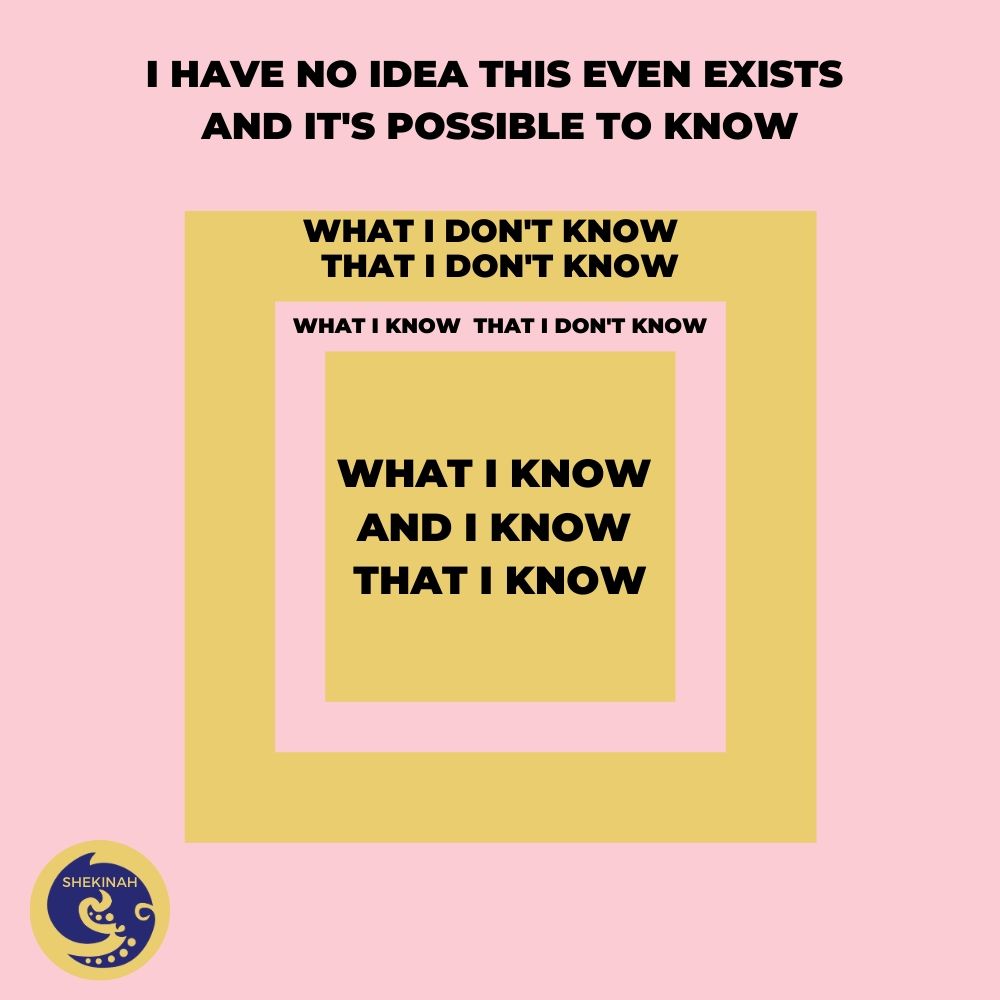
what I know, I know that I know, what I don't know, learning and growth

Acceptance & ownership

Unfortunately, what you resist, persists. When you fail to acknowledge those thoughts and feelings – “I shouldn’t feel this way” and “I shouldn’t be thinking that”, you cannot change the pattern.

After the awareness, you have to own it – as yours. “This is what I feel”. You don’t have to agree with it or like it. Once you’ve swallowed it down and allowed yourself to digest it, then you can do something with it.

Just take ownership – “These are my thoughts, feelings and actions – and because they are mine, they are mine to change!”

Be the one in your family that was brave enough to do the dirty work of cleansing and healing!

Using forgiveness and release

When we go back to the root of the issue, we go back to that event in the past, and have a new experience of it with forgiveness and releasing the past. You will need a powerful experience to release the trauma, to override the trauma response in you.

When I was doing some of this work earlier this year, I came face-to-face with one of my survival mechanisms. When I feel attacked, I want to shoot someone. Now, to my rational mind, that makes absolutely no sense. I obviously don’t want to shoot someone. How could I possibly want to do that?

But my first thoughts always turn to “just shoot them down”. Sometimes I would literally do it verbally – destroy them with my tongue. But in my mind, the image I had included guns.

When I went into the forgiveness work with Sarah and Sharon, I realised my granddad was a rear gunner (or tail gunner) in WWII. If you know anything about that, it was the least likely position to survive.

This is what the tail of a Lancaster bomber could look like upon arriving home:

https://i.pinimg.com/736x/2d/a0/36/2da0369c0180b821c83f3449ee194614–bombers-air-force.jpg

But my granddad did survive and came home. He never – that I ever remember – spoke about his days in the war. He would remember his pilot and members of his crew fondly, but never told a single war story that I will ever recall. And as I did the work with Sharon & Sarah, I realised how good he must have been as a gunner to have survived so many battles. How many planes did he shoot down, so that he and his crew could make it back alive? He must have been a really good shot to have made it out alive.

Wellington Bomber, rear gunner
This is the kind of plane he flew in (photo of a print I have on my wall)

I sat with that deep sadness and guilt. And I realised why my survival instinct was “let’s just shoot them down”, but I’m not in that position.

I don’t actually need to shoot anyone down in order to survive:
Not with my mouth.
Not in my thoughts.

In my world, I can choose to be kind and compassionate.

So, I worked through forgiving the powers that were that started the war and put my granddad in a position where he had to shoot others down in order to survive. I forgave my granddad for all those people whose lives he’d taken in order to get home to my grandmother and mum alive. And I forgave myself for those crazy, irrational thoughts that I had carried around in my head for as long as I could remember, recognising them for what they were.

I then finally able to forgive myself for all the times I had shot others down with my tongue, tearing them apart with my words.

Yesterday, I discovered that a guy called Mark Wolynn has written a book called “It didn’t start with you: how inherited family trauma shapes who we are and how to end the cycle“. I’m definitely adding that to my reading list for January! Maybe I’m already doing the work – but perhaps there’s so much more that I could be doing.

Learning a new way

Breaking the cycle of generational trauma starts with acknowledging that you have a choice. That in that space that exists between stimulus and response, you can breathe. That space is yours.

It takes practice. You will need patience and understanding. Show yourself some compassion and mercy, because there will be mistakes along the way.

But you can – single-handedly – break this cycle, one decision at a time. You can choose what tools and support you need. Perhaps you need faith and a spiritual understanding, to reach out to a friend, a coach or a mentor, and in some cases, you might even need therapy.

But each day is a choice that allows the generational curses to be broken.

Because the buck stops here – in the worst best year of my life!