I recently saw an image posted on social media: “Worry is worshipping the problem”. And without a doubt, I believe that where attention goes, energy flows. I have to regularly stop myself and ask: “Where are you focussing your attention – on the problem or the solution?”
More than this, however, I bring myself back to the reminder that I live in the presence of the Divine. And if I claim to be practising Divine Presence in my life, how is it expressed when faced with problems or challenges?
Am I keeping my attention and focus on the Great Creator, allowing creative solutions to flow to me?
When my mind is focused and stayed on the Divine, perfect peace holds me. I trust in both the process and the outcome.
The effects of worry
When we stay worried – in a stressed state – this impacts us on several levels. One of the primary organs hit by stress and worry is your heart, including your arteries and blood vessels. Consequently, your heart beats faster and harder, resulting in inflamed arterial walls. This inflammation impacts your health:
hardening of the arteries
unhealthy cholesterol levels
high blood pressure
heart attacks
stroke.
Even in the Bible, we read:
Anxiety weighs down the heart
Proverbs 12:25
And again:
So then, banish anxiety from your heart and cast off the troubles of your body
Ecclesiastes 11:10
Other impacts of anxiety:
When we are anxious and worrying, it’s more than just our heart that gets hit. Blood sugar levels also rise, with the need for more energy caused by adrenaline and then cortisol. We don’t burn off this extra energy; we have passive worry and anxiety. So, those high blood sugar levels, intended to help us escape danger, stay in the body without being burned up for energy.
Our worry also impacts our immune system, weakening it. Our bodies struggle to defend against illness and disease. Additionally, we contend with gut and digestive issues. That knot in your stomach becomes an ulcer or indigestion. Your worries might even impact bowel motility.
We hold this worry and anxiety in our bodies, as well as impacting the central nervous system. To cope, we create:
eating disorders – not eating or over-eating;
bad habits & addictions, and
insomnia and disturbed sleep patterns.
Worry also impacts our relationships, job performance and the ability to make decisions.
Despite knowing all this: we continue to worry and focus on the problem, not the solutions.
The problem with staying anxious & worried:
Anxiety is a state of distraction and prolonged suffering. Our worrying creates a physical and emotional response, in the present moment, regarding a future possibility. It is not an inevitable future outcome but uncertain. You are trying to predict the future and possibly are catastrophising. It may not turn out as you create it in your imagination. And it is indeed not happening right now.
Worry stems from fear. Typically, this is our fear of not being enough or having enough talent, resources, or abilities to face life’s challenges.
This anxiety creates less focus, where you can no longer concentrate on the task at hand. You might become irritable and easily thrown off balance. It’s easy to become disengaged, showing up either as fight and flight or being withdrawn.
Worry reduces your ability to weed out distractions, making it easy to fall into:
social media
news
a train of worrying thoughts
meaningless tasks & chores that could wait
All of this comes together to impair decision-making.
Chasing safety
Unfortunately, part of your brain got unplugged and disengaged by worry! Worry and anxiety lead you towards what might seem (from a limited perspective) the safest choice. But the safest option is not always the best solution.
Good decision-making requires flexibility in your thinking and looking at the problem and solutions from various perspectives. Do you have the ability to look above and beyond the present moment and conditions?
Weigh up the consequences
Plan for the future
Use logical processing
Another challenge when you are worried is that you might not talk about your fears. It’s more than asking for Divine help and guidance. Sometimes you need to talk to people. Perhaps you ask the Divine to get the right people to show up for you.
Finally, when we are worried and overwhelmed, we respond in two opposing ways:
We consider too few options and become fixated.
We overthink all the available options under the sun, a scattered mind that is unable to focus. Because there are too many options, we get overwhelmed.
In both cases, we procrastinate. Then, as we run out of time, we pick the first solution because we want to escape the overwhelming feelings. Of course, if we had proactively studied the options earlier, a different outcome would emerge.
Where are you focused when times are hard?
The Divine invites us to trust: to set a divine intention and then hold that intention as being true. Perhaps the intention is as simple as:
I am capable of making good decisions, guided by Spirit.
We challenge the worry and anxiety and get present in this moment – here and now. Right now, I am safe and secure.
The purpose of doing this is to focus our energy and attention on the direction we should go. Worry tricks us into avoiding what we don’t want: any direction is a good direction, as long as it takes me away from ____. A good decision, on the other hand, takes us in the bearing we want to go. We have a purpose, and we turn towards our goal.
Watch your heart with all diligence: from your heart flows the spring of life.
It’s easy to get caught up worrying about all the things that are beyond our control. But it is when we focus our attention on what we can control that we get anything done.
Things I can control:
my attitude
my choice to get organised
where to spend and invest my time and energy
time management
how I respond to the challenge before me
how I communicate with others
whether or not I choose to share with others and ask for help
You control whether or not you make a plan, getting specific about which steps to take in the coming days. You put time and energy into this and what you can do and who you can talk to.
Alternatively, sometimes the best choice is to take a break:
meditate
pray
exercise.
The God Box
Everything else – beyond your control – where do you put that?
I put those things in my “God Box”. The God Box is a little cardboard box, hand painted and decorated on the shelf above my desk. All my worries get written on a bit of paper, folded up, and placed in the box.
I place those worries out of sight and mind. At the end of the year, as part of my end of year routine, I’ll paint a new one for 2022 with little miss and we’ll burn the 2021 box and say farewell to the worries we put away.
The power of holding an intention with faith
As a child, my prayers to God were much like asking Santa Claus at Christmas. There was wishing as well as negotiation. As an adult, however, I believe in personal responsibility and accountability for an outcome. And yet, I believe in miracles.
I believe in “be anxious for nothing”. And so, in every situation, I hold an intention and gratitude in my heart. I present every request for my highest good to the Divine Creator. And as a result, my heart is flooded with a peace that I cannot begin to comprehend.
It’s more than a helpless prayer.
It is a proactive prayer, one in which I believe that what I have asked for will come to pass, and therefore it is safe to take steps forward on that path!
Believe that you have received it and it will be yours!
But it is asking with single-mindedness, without a shadow of a doubt. Can you believe that Divine Love cradles you? Are you confident that when you hold an intention for the highest good and possible outcome – daring to pour your time and energy into achieving this – it will come to pass?
It’s more than just faith: aligned action.
They say that if you want to walk on water, you’ve got to start by hopping out of the boat! While that might take the example to an extreme, for me, that is the definition of faith and believing: your actions fully align with what you profess to believe.
My biggest mistakes have been made in blind faith: the faith of sitting waiting without any corresponding action.
My definition of blind faith: I expect a perfect crop without having planted any seeds, watered or weeded. Unless I have grounds to believe that someone else actually planted, watered and weeded, that’s merely blindness. It’s not faith.
Faith is stepping out and putting my plan into effect.
Faith believes that the Divine accompanies me on every step of my path. It allows me to trust that I can listen to the still, small voice of Spirit, make a plan, and then take action.
Keeping the faith that what you’ve planted will grow
Sometimes, faith shows up in patience. Trust is waiting for results without growing anxious. It is confidence in the results that I hope for, resting in the assurance of what I cannot yet see.
Having faith means I am filled with joy and peace as I sit trusting in the Divine. It is overflowing with hope, knowing that the power of Spirit fuels me.
My attention, time, and energy focus on doing what I can. I let go of all aspects beyond my control. I focus on the peace that passes understanding because I place my attention on Divine Love.
I began a personal healing journey in 2017, with no idea where it would take me. I certainly never expected all the spiritual and life lessons that I’ve learned along the way!
If I had known that I would be in 2021 and the journey would still be underway, would I have had the courage to even take the first steps?
I thought I would get the miraculous healing that when I reached a certain point it would be instantaneous. Instead, it has been a journey of a thousand steps, sometimes on spiralling stairs, rather than giant leaps forward.
Gut health challenges
Since about 2001, my health has been centred around my gut and immune system, with challenges of:
Ulcerative colitis
IBS (irritable bowel syndrome – i.e. we have no idea what’s wrong)
Coeliac disease
Diverticulitis (caused by the Coeliac disease going undiagnosed for 10+ years)
SIBO (small intestinal bacterial overgrowth)
All of these are gut issues and are closely tied with the immune system – that part of you that is able to easily mount defences to defend “self” against “not self”.
If I look at this from an mBraining (Grant Soosalu & Marvin Oka) perspective, the gut has the prime functions not only of digesting and processing food, but also influences:
Our sense of identity: “this is who I am”. My lack of authenticity – trying to please other people – broke down my ability to identify “self”;
Our processes of safety and security. This is our self-preservation. It begins physiologically as the immune system, but there’s also an element in there of the autonomic nervous system, which I failed to recognise, leading to an immune system in overdrive and hyper-drive, as I strove to keep myself safe psychologically and emotionally.
Movement and motivation. We know physiologically of “bowel movement”, but if you listen to our language, we clearly speak about the fire in our belly that moves us forward. My trauma-informed dorsal vagal, however, was trained to sedation and hibernation in the face of danger, and while scientists know that this impacts the immune system, they are not quite yet sure of the exact effects.
A personal journey to healing: lifestyle changes
Spiritual healing
Psychological healing
emotional
mental
Physical healing
To heal my gut, I’ve had to recognise that every aspect of my life impacts how well this heals.
All of this requires lifestyle changes: because it’s impossible to solve a problem with the same thinking, habits and lifestyle that created the problem.
“The necessity of change makes healing a terrifying experience for many people.”
Caroline Myss
He who knows to do right and does it not, to him it is sin
There were so many pieces to the healing journey and changes that needed to be made. Doctors glaze over quickly the role that stress plays, saying platitudes such as “you need to manage stress better”.
Really?
Who doesn’t know that?
The question is: what do we do about it?
Most of us – do nothing.
We ask for the pills that soften the blow of the symptoms, so that we can get back on with life, exactly as it already was. But we don’t make the fundamental changes that are required for health and healing to happen.
If we did, the pharmaceutical industry would be out of business. Imagine how many blood pressure medications would be taken off the market if patients would actually follow doctor’s instructions about making changes to their lifestyle.
Faith without works: changing habits
You can no more show me your habits apart from your beliefs than I can show you what I believe apart from my daily habits.
Faith and works, works and faith, fit together hand in glove.
In my life, healing was not optional.
Change became mandatory, because I could no longer keep on keeping on. I was totally crashing and my body with it!
It’s not that I didn’t know ways of dealing with stress!
Meditation & Silence
Trusting the Divine
Dealing with the root causes of anxiety & depression
Part of me was refusing to look at diet, beyond the obvious factors of avoiding gluten (wheat, barley, malt & rye). But I could do more, like accepting that corn totally irritated me, as well as rice making me feel bloated, and that I needed to adjust my diet to accommodate inflammation and SIBO.
I have been physically active since my early twenties and am no stranger to the multiple benefits of exercise, even when you don’t have energy. I know how good it is for the digestive system (just getting out for a walk helps your gut digest more easily), as well as helping to regulate stress.
Perhaps most importantly, I know the role and importance of forgiveness, letting go and release. What I didn’t know was the depth of work I would need to do, and how much I have buried and hidden away (even from myself), to be able to survive.
Part of the healing journey has been accepting that sometimes it feels like I’m stuck in a loop, when I am really on a spiral stairway that keeps coming round to the same issues, just at a different level. It might feel, at times, that I am just going around in circles, but progress is not always in a straight line.
Bad habits are decisions we refuse to make
Take a moment to write down, for yourself, three habits that you have right now that are impacting your health and wellness, and that you are making no attempt or haphazard attempts to change. How would healing be possible if you made these changes?
If you know better,
do you do better?
I’m going to mention a few habits that most of us have (at some level) and that we know better, and yet it’s easier to continue doing it, than to change. We give ourselves all kinds of excuses.
Eating on the go
Who doesn’t know that eating-on-the-run is bad for their health? This might be that you are eating:
fast food while driving your car
standing in your kitchen while fixing food for others or doing some chores, or perhaps
sitting at your desk or computer, working.
There’s the risk of falling into a fast-food trap – with unhealthy ingredients, high sugar and high sodium. But it’s not just the ingredients, it’s the very fact that we are not allowing the body to go into “rest and digest” while we eat, but rather we are still eating while in motion (and quite possibly under stress).
All of these habits lead to:
increased risk of cancer;
risk of heart disease
high blood pressure
inflammation
issues in the immune system
and even memory loss.
Our bodies were created to rest and relax while eating, to enjoy the aroma and visual appeal – so that we get the digestive juices flowing. We allow ourselves the time and space to savour and chew. And to notice what we are doing, rather than having our attention focused somewhere else.
A lot of problems can be solved just by removing some people, some food, and some habits from your life.
Anonymous
Our sedentary lifestyles
We’re warned enough about laziness and sitting around in Proverbs, but more than just being couch potatoes, it’s even the way we travel to work and the conditions in which we’re working that create challenges.
Sitting for so many hours a day, whether it be in a bus, on a train, in the car, at your desk is exhausting mentally, leaving us wanting to stay sedentary when we finally get home.
What does this create?
high blood pressure
type 2 diabetes
cancer
obesity
heart disease
osteoporosis
stroke
Exercise – or more importantly regular movement – helps us with our digestion as well as improving the blood flow to the brain. It naturally helps our body keep our blood sugar under control, and possibly most importantly helps produce oxytocin – our “happy hormone” that is produced naturally in the body.
Over-eating
Do you really need me to tell you all the ways that this shows up? Perhaps you snack when you’re not actually hungry, you give into cravings, or you are just eating too much generally. Eventually, your body stops sending you the hunger signals (since you ignore them anyway) and just lets you know the cravings.
We create our own health challenges through over-eating:
obesity
heart disease
diabetes
acid reflux
These are just a few.
It could be as simple as wolfing down your food too quickly, so that you fail to notice the message that you are full. This, unfortunately, can lead to bloating, gas and acid-reflux.
If you’re eating too late, it may be interfering with your ability to get a good night’s sleep.
Not drinking enough water
Our bad habits are as simple as failing to drink water, and instead replacing it with energy drinks, soft drinks or coffee. But your body is 60% water, and we need the water for regular bowel function, optimal muscle performance and even for our skin.
When we fail to drink enough water, we run into:
bad breath
fatigue
constipation
sugar cravings
weight gain
mental fog
risk of stroke
moodiness & irritability
headaches
over-eating
slower metabolism
All because we haven’t built a habit of drinking water.
Skimping on sleep
I’ll sleep when I’m dead.
Yes, I have said that. I would burn the candle at both ends and then drink coffee (not water) to keep going. Skimping on sleep does more than just impair our judgement and compromise clear-headedness in decision-making.
It also causes:
irritability
heart disease, heart failure & contributes to heart attacks
high blood pressure
stroke
weakens immunity and the immune system
increases stress and cortisol levels
causes weight gain
increases the risk of diabetes
fuels depression
I justified to myself the choices of burning the candle both ends and continuing with my lifestyle choices, even daring to suggest that this was Biblical (Proverbs 31 – the Virtuous Woman). She gets up while it’s still dark, her lamp does not go out at night, and she does not eat the bread of idleness. But I’m pretty sure that she didn’t drive herself into the ground either!
My personal healing journey: lifestyle changes
All five of these issues came up for me in my healing journey, to different degrees. But when we talk about “go and sin no more” – what we each have to address our the habits we have that are holding us back.
Each one of us has strengths and weaknesses (and for many our strengths are also our weaknesses), and it’s a personal journey of discovery and transformation.
In my personal journey, there were four principal areas that I had to address, most of them more than once and in different areas of my life:
gluttony and over-eating
murmuring & complaining
laziness & failure to take responsibility, and
holding onto anger, resentment and bitterness, rather than letting it go with complete forgiveness.
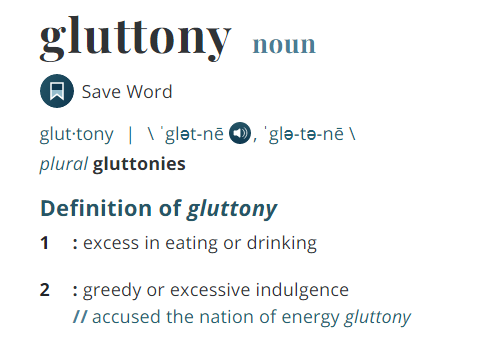
Gluttony & over-eating
I’m not going into sharing a rift of Bible verses on gluttony. It’s the internet – you can look them up for yourself.
Definition of Gluttony: Merriam-Webster disctionary
My personal definition of Gluttony is slightly different, although it is certainly an excess of eating.
But what I consider an excess might be much more strict that what you are accustomed to seeing or hearing as “excess”.
So, I invite you to consider what your definition of excess might be.
For me, eating starts with the question (physical) – “Am I hungry?”. I’ve discovered over the past three years, that there are a ton of reasons that I might eat, when I’m not hungry:
anxiety
boredom
cravings
fatigue
stress
social constructs & pressure
the power of suggestion – “I see food, so I eat it”
comfort.
When I’m hungry, it’s perfectly possible to postpone eating for thirty minutes or more without getting hangry. Cravings and emotional eating, on the other hand, demand to be attended immediately. The question is “how do I choose to attend to these demands?”.
If I acknowledge that my body is a temple, how am I maintaining it with discipline?
If I’m not hungry, am I willing to deal with the root issues and causes that lead me to the fridge, rather than eating and stuffing all my emotional and mental issues right back down again, swallowing my tears, and refusing to sit in the discomfort of what I am experiencing?
Stress eating:
Stress, especially chronic and ongoing stress, causes our body to produce cortisol. In a healthy situation of stress (i.e. where you literally ran away from danger), cortisol will make you hungry, so that you refuel your body. Unfortunately, my stress is not the result of running away from a tiger! The hunger signals are false, and I know this if I actually check in with my stomach.
What needs to change? When I’m honest with myself, this is about lifestyle, beliefs and choices that are keeping me in a state of stress.
Where’s the inner peace that passes understanding?
What happened to the faith that allows me to trust that things are truly working out for my good?
If I eat, I can ignore these questions, rather than address the root problem: one of faith. It’s very similar to eating when anxious. If I eat, I can focus on something away from the anxiety.
But aren’t I supposed to be “anxious for nothing” and instead to turn my requests over to the Divine and surrender? Eating bypasses the anxiety, rather than addressing the beliefs and faith issues. How do I expect physical healing when I am not addressing the spiritual?
Fatigue and being tired:
Another chemical process happens in our body when we’re tired:
Our ghrelin goes up (produced to let us know we’re hungry) and
Our leptin goes down (produced by our fat cells to let us know we don’t need to eat – as it decreases our feelings of hunger).
So, when we’re tired, no matter the cause of our fatigue, our body asks for either rest or more fuel.
But what if the reason that we’re tired is because of bad sleep habits? It my case, it was caused in part by gut problems (bloating and discomfort, which lead to light and interrupted sleep). One habit that was effective in fixing this: eat before 6 pm, so that I sleep better. But do I change my habits and honour health?
We can feel the difference once again in our stomachs between tired and hungry. If I really am tired, is what my body really needs healing rest?
Comfort eating and sweets:
Perhaps we eat comfort foods because they remind us of “being loved”. Or we need more sweetness in our lives, so we give into our sweet tooth.
But if what we need is comfort and connection, perhaps what we need to do is hop on the phone and call home. Are we hungering for a spiritual connection?
Whatever the reason for our cravings, when we eat, we block the request. The request has been attended to, but the underlying need remains unsatisfied.
Eating past the point of hunger into fullness
The challenge is not just to eat when hungry, but to stop at the right moment: when I am no longer hungry. There’s no need to eat into “crowded” or “full”, much less “stuffed”.
So why do we eat more than our body asked for?
I’m enjoying this too much – we have scarcity and deprivation thoughts related to food or enjoyment
procrastination – I don’t want this to end, because then I will have to go and take care of… On a more subconscious level we know: if I eat too much, I’ll be sluggish and tired, and have the perfect excuse.
I was told to clean my plate as a kid, and I’ve never adjusted this belief around being able to leave something on the plate
I feel the pressure of friends or family to “eat up”, especially when they want to offer a second helping.
But what if, instead, we chose to:
Deal with what I’ve been avoiding?
Accepted that there is abundance and I can have more enjoyment at another moment.
I give generously to those in need and don’t have to prove it by clearing my plate.
I serve myself smaller portions, so that I can finish with nothing left on the plate, and
I told the people that I love how I feel about them and how I appreciate them, so it’s not necessary to show this by eating more.
Unmet needs, desires & wants:
All of these examples simply go to show that we have unmet needs, desires, fears and wants. These may be mental, emotional or even spiritual.
The lifestyle change that was required for me is being willing to tackle them, rather than choosing to stuff them down with food.
It is so easy, especially when your illness comes with physical pain, to allow our grief and pain to turn into bitterness, anger, reproach and despair.
We are told to bless those that curse you. How about blessing your body and your pain? If you feel cursed, because you are carrying an illness or disease – are you blessing it?
Are you cursing your body or that part of your body that appears to be letting you down?
Is your heart raging against the Divine because of this cross that you have to bear? Are you raging against yourself for all the life choices you’ve made that lead to this point?
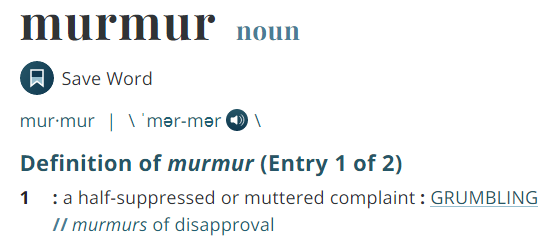
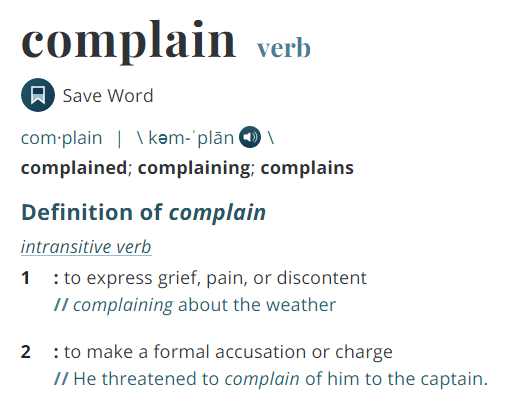
Perhaps complaining feels easier!
Definition of murmur, Merriam-Webster dictionary
Definition of complain, Merrian-Webster dictionary
Ask and you will receive
In her book, “Unbound: A woman’s guide to power“, Kasia Urbanjiak talks about how behind every complaint is an unspoken request. We complain because it feels more acceptable than asking for what we really want.
Where is my faith in
“ask and you will receive”
“making your requests known”
“asking according to Divine will, because the Divine hears” and
“you do not have, because you do not ask”?
Of course… perhaps I’m not willing to take up my bed and walk! Maybe I’m too scared to get out of the boat, to walk on water.
It’s so much easier to murmur and complain, rather than to ask and then be responsible for my actions.
Let’s be honest – complaining is socially acceptable!
“Nothing unites people more strongly than a common dislike. The easiest way to build friendship and communicate is through something negative.”
Trevor Blake
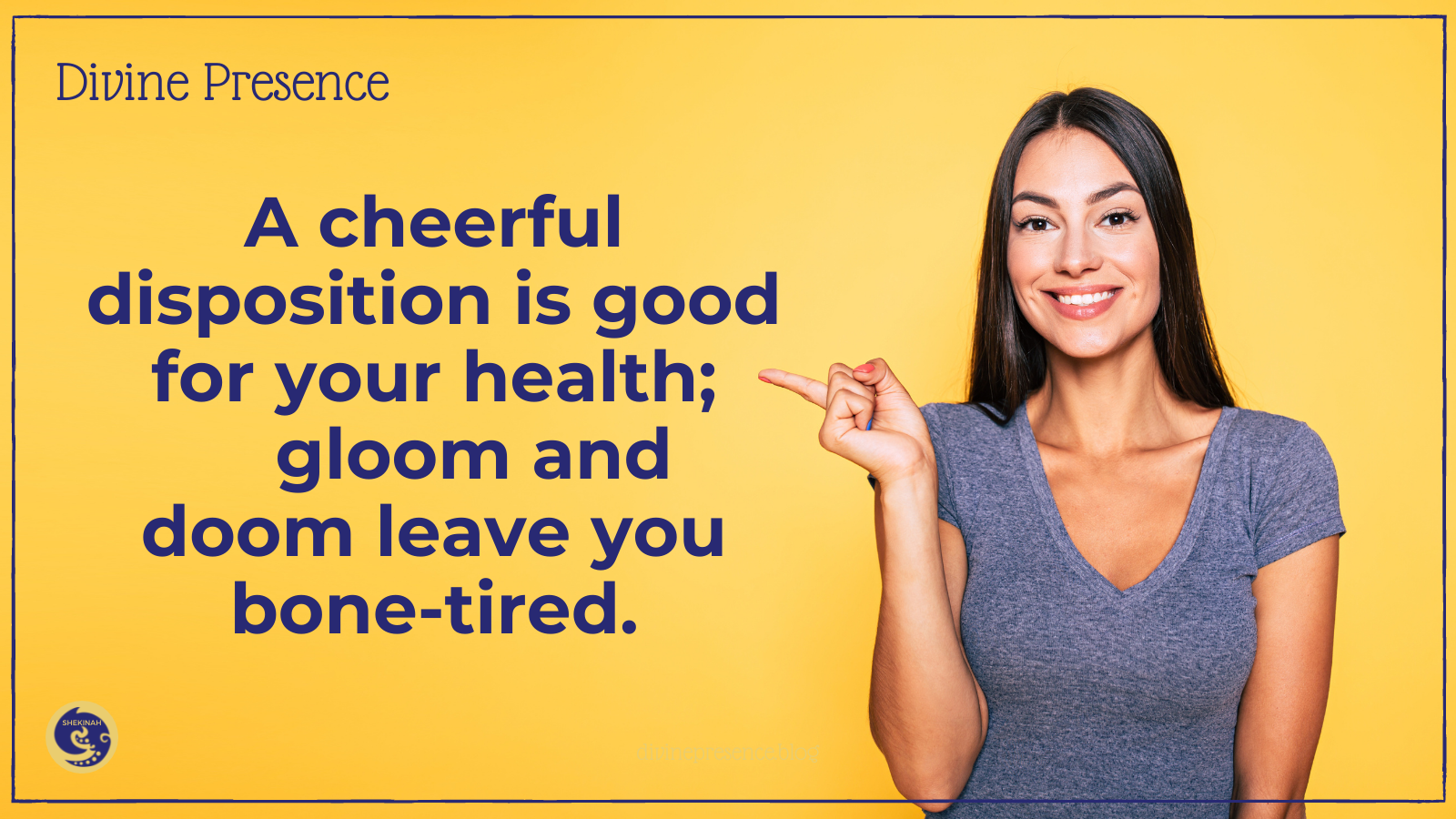
Complaining impacts your health!
A cheerful disposition is good for your health;
gloom and doom leave you bone-tired.
Health impacts of complaining:
fatigue
creates more stress
worsens anxiety & depression
it rewires your brain – in a bad way! The habit of complaining reduces the number of neurons in the hippocampus, the part of the brain used for problem-solving and cognitive function. Actual shrinkage!
Neurons that fire together, wire together – and you are creating a habit of complaining. So, you are likely to be creating new things to complain about and attracting to you people who like to complain!
And so, you find yourself in a place – that you have built – clinging to resentment, pain & trauma. You have become what you have focused on.
What would you like to focus on?
But as I said, you don’t receive, because you don’t ask. Complaining reinforces the idea “I’m a victim and there’s nothing I can do to change this situation.”
“Complaining does not work as a strategy. We all have finite time and energy. Any time we spend whining is unlikely to help us achieve our goals. And it won’t make us happier.”
Professor Randy Pausch
I finally reached a point where I had to ask myself:
What if this disease is happening for me, not to me?
Can I search for the blessing, strengths and lessons that it has to teach me? What might I be grateful for in this journey? How does Divine Presence show up in my life through this illness?
And this takes me into the third thing I had to address: being willing to take small steps forward.
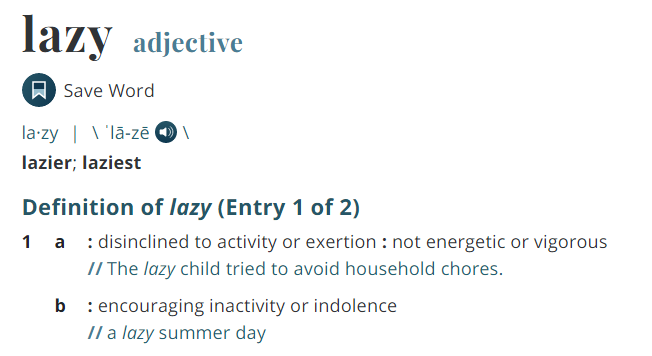
Synonyms for laziness are indolence and sloth. Indolence derives from the Latin indolentia, ‘without pain’ or ‘without taking trouble’. Sloth has more moral and spiritual overtones than laziness or indolence.
Anyone who’s taken time to read Proverbs or Ecclesiastes knows what they say about getting stuck under the covers! But sometimes, with chronic illness, there’s more than laziness to deal with.
Definition of lazy, Merriam-Webster dictionary
Allow me to clarify, that when I talk about the desire to stay as a couch potato and be lazy, I am not referring to:
Chronic fatigue and the need to rest
Clinical depression and how it drives you to inactivity
Shutdown caused by the dorsal vagus nerve
Resting to recover from illness
While I mention that my healing journey has required that I face my personal laziness, it would be unfair to myself and others to write everything off as laziness.
Fatigue
Most people with chronic illness deal at some point in time with chronic fatigue. I’m not talking about ME, also known as chronic fatigue syndrome, although I can identify with every one of the symptoms listed for it:
brain fog, problems with clear thinking, memory loss, and even muscle twitching
Being diagnosed with ulcerative colitis and Coeliac disease, these are all part of the fatigue I’ve had.
Depression
Another symptom (commonly found with other chronic illnesses also) of Coeliac disease and ulcerative colitis is depression. For me, this was caused by two things:
a natural side effect of having a disease in the gut that affects the ANS, immune system and gut microbiome.
ignoring my grief and sorrow, trying to soldier on, without allowing myself to acknowledge what I felt I had lost.
For many years, I attempted to fore happiness and pretend nothing was wrong. “I’ve got this”. I was pretending to be strong, rather than finding inner strength. And if you’re any good at this, you can do it for years.
During this time, I failed to acknowledge all the sources of my depression: gut health & microbiome, emotions, mental, chemical and even the dis-regulation of my ANS.
Shutdown & avoidance as self-preservation
Until recently I didn’t even know that one of my primary survival instincts (those habits you create to survive, that later become your Achilles heel), was shutdown and avoidance. The body is an amazing thing – survival first.
While some people go into fight-flight when faced with danger, I learnt as a child that those were not options. The safest option was to be neither seen nor heard. It’s freezing like a possum that plays dead or a turtle that hides safely in its shell.
So why on earth, if I’m battling these three challenges, would I even mention laziness as a habit to be overcome?
Being lazy: disinclined to activity or exertion
It’s so easy when life is overwhelming to get stuck in “there’s nothing I can do about this”. As I said before, if I had known that returning to a healthy life would take so long, would I have even tried?
In most cases, it is deemed painful to expend effort on long-term goals that do not provide immediate gratification. For a person to embark on a project, he has to value the return on his labour more than his loss of comfort.
I was not completely helpless. There were things I could do that would make a difference, but that required some effort on my part.
Intentionally resting: rather than watching TV or playing computer games or mindlessly scrolling social media, I needed to sleep deeply, giving my body a chance to heal. To do this, I had to remove foods that interfered with deep sleep, remove caffeine and add in magnesium.
Find out which supplements, vitamins & minerals would restore health. Some of these tackle inflammation, while others support the nervous system and neuro-processes, giving me clearer thinking and raising my energy levels.
Build my own personal support network and groups.
I wanted people around me who were positive and believed that restored health was possible. I needed accountability, not people who would listen to me complaining. Most importantly, I wanted to be surrounded by those interested in “being healthy“, rather than those whose mindset was “how do I live with this illness?”
I want to be healthy despite this illness
It takes exertion, motivation & discipline to make the changes (habits & lifestyle) that restore health & wellbeing. I constantly battle my innate survival mode of withdrawal and hibernation.
Laziness says
“I’ll deal with the mental, emotional and physical issues later – right now I’m just going to finish binge-watching this series on Netflix.”
“I’m sick. There’s nothing I can do about it.”
“I can’t run, so there’s no point in going for a 5-minute walk.”
“My joints & muscles hurt, so I’m just going to stay here.”
If I listen to that, I don’t even bother going to the kitchen to take the supplements that help relieve the inflammation & pain.
Laziness doesn’t just refer to being “a couch potato” – but it’s the state of mind of being stuck, unable to even move a single rung up the ladder.
Yes, I still want the magic pill of miraculous healing that allows me to bypass all this work and all these individual steps! But would I really have made the changes and addressed all these issues any other way?
Change the habits & lifestyle, so that the miracle can happen!
Medically speaking, it’s impossible to heal Coeliac Disease and ulcerative colitis. So far, they are vastly improved, but not healed. I’m not sure if it will be possible, or whether my personal healing journey will simply be one of discipline & habits.
But I finally reached a point where I am willing to continue the journey, irrespective of the final outcome.
And so I come to the last healing lesson I want to share with you: forgiving myself and others.
Learning to Forgive: letting go of anger, resentment & bitterness
Forgiveness and reconciliation are two entirely different concepts. Unfortunately, as a child I learnt a very skewed example of forgiveness and reconciliation.
We were made to say “I’m sorry“, with the threat of punishment hanging over our headif we didn’t. And if we received this unrepentant sorry, we were equally forced to say “I forgive you“, with that very same threat of punishment. At least we were equally afraid of the punishment that would be meted out if we failed to say sorry or I forgive you.
What lesson was that really in forgiveness?
There was not open-heartedness or vulnerability. There was no true desire to repair the relationship. We merely feared the greater punishment that awaited if we failed to say those words, no matter how meaningless.
I grew within myself a heart of stone, because it wasn’t safe to be vulnerable and open. Feelings were not safe and were certainly not to be expressed.
Personal forgiveness
I’ve had to come a long way in my own journey of forgiveness, leaving meaningless words behind and delving for myself into the heart of the matter. I no longer rush to forgive (going through the motion) or minimising my emotions and feelings. And I don’t need the other person to even be aware that I am forgiving them.
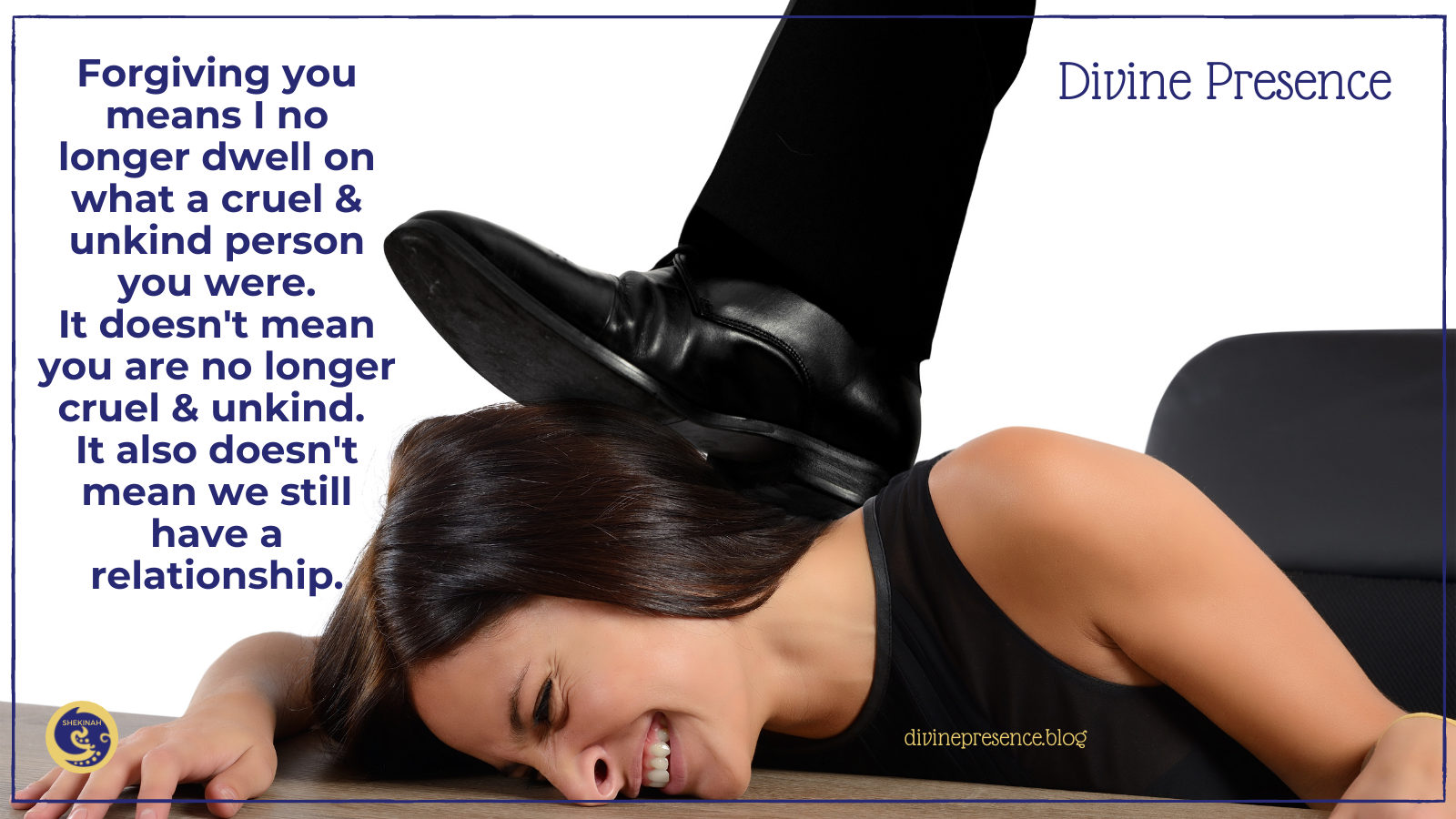
Forgiving you means I no longer dwell on what a cruel & unkind person you were.
It doesn’t mean you are no longer cruel & unkind.
It also doesn’t mean we still have a relationship.
To truly forgive another, you have to acknowledge what you’re feeling. And those feelings might no be pretty. They might be more than pain and hurt or disappointment. Perhaps you feel angry and resentful. Worse yet, you might have allowed it to fester and turn into bitterness.
But until you can actually unpack your emotional baggage, and hang it in the sun to air and for you to see clearly, you won’t truly forgive. All of the feelings that you stuffed down, stowed away, and hid in the darkest corners of your memory have to be released and let go.
Forgiveness isn’t just spiritual, it’s also physical:
If we want to heal physically, we have to practice forgiveness – of ourselves and others. Whatever it is that we are holding onto.
…unresolved conflict can go deeper than you may realize—it may be affecting your physical health. The good news: Studies have found that the act of forgiveness can reap huge rewards for your health, lowering the risk of heart attack; improving cholesterol levels and sleep; and reducing pain, blood pressure, and levels of anxiety, depression and stress. ,,, Chronic anger puts you into a fight-or-flight mode, … changes in heart rate, blood pressure and immune response. Those changes, then, increase the risk of depression, heart disease and diabetes, among other conditions. Forgiveness, however, calms stress levels, leading to improved health.
When we hold a grudge, our attention stays focused on the past and it plays a role in the present moment, even in depression. This anger or resentment, when stored for long enough in our body, can even show up as pain or more illness.
Studies show how suppressed anger – that which we haven’t been willing to even acknowledge, much less vent – is showing up in cases of patients with cancer. Suppression takes a toll on our bodies, as we pretend that we aren’t hurt and angry. (Anger and Cancer: Is There a Relationship?)
On the other hand, when we hold a grudge, we create the feelings each time I mind replays the situation. So, now when I think of “forgive and forget”, I am turning off the “replay” switch in my mind. It’s not that I completely forget the situation as if it never existed, but rather that I refuse to give the reruns “air time” in my mind.
I refuse to relive the stress of the memory over and over again in my body. I will not rehash – in this present moment – an event from the past. That is simply poisoning the present.
Among the many harmful effects that this loop has on your health is cognitive decline, dumping cortisol (the stress hormone) back into your bloodstream, and affecting once again appetite, sleep patterns, heart rate and blood pressure.
“Living in a chronic state of tension disables your body’s repair mechanisms, increasing inflammation and the stress hormone cortisol in the body.” “Forgiveness engages the parasympathetic nervous system, which helps your immune system function more efficiently and makes room for feel-good hormones like serotonin and oxytocin.”
I recognise that I’m still not done with this process. But I’m finally willing to sit with emotions as they arise. I’m finally able to see how the spiral works in healing, no matter how long the journey.
And the truth will set you free
Not just knowing it… but truly living it! I started off with a video by Stephen Levine, where he talks about healing, not just physically but also emotionally.
Over these past four years, as I’ve worked on restoring my physical health, I’ve had to admit to the truth of where I am at and what changes and habits I have not been willing to change that have delayed the healing process.
I finally have begun to understand Jesus’ admonition to the man he healed “Go and sin no more” – I realise the effects that my lifestyle had (emotionally, physically, mentally & spiritually) on my health & well-being.
This has been the greatest gift of this illness: recognising that I have a choice about how I choose to live in the presence of the Divine and how I choose to let it shine for and through me.
How many of you are awake this morning? I’m looking for a show of hands here…
How many of you were awake while Betsy read the 7 verses from Romans 5: 12-17? English Standard Version. It seems amazing that the entire message of the Bible, from Genesis to the end, is found here, all summed up neatly in seven verses.
If you all understood it, I don’t need to give you this sermon, and we can go straight to the offertory (we’ll skip the prayers) and then head downstairs to the coffee break. How does that sound?
How many of you think you don’t need to hear this sermon?
How many of you think you can stay awake until I finish the sermon?
We’ll see how you all go with that, shall we? …
This morning I’m going to take you on an intellectual (read: scientific journal mumbo jumbo), winding maze through one of the toughest texts that I’ve ever had to prepare for.
I am going to try to give you an explanation that you can hopefully understand… although I am going to rely a bit on my high-school science as it relates to DNA sequencing in the human body and a very basic knowledge of NLP (NeuroLinguistic Programming).
I want to start with the idea of the “Original Sin” and the effect of that “Original Sin” on mankind and how that is passed down from generation to generation. Verse 12 of Romans 5 starts with
“just as sin came into the world through one man, and death through sin, and so death spread to all men”
We’ve all been taught that Adam had everything he needed to live eternally, but that because of his sin in the garden of Eden, life becomes finite instead of infinite – death enters the world.
And I want to add to that mix the verse from Exodus 34:7 (ESV) that says:
Keeping steadfast love for thousands, forgiving iniquity and transgression and sin, but who will by no means clear the guilty, visiting the iniquity of the fathers on the children and the children’s children, to the third and the fourth generation.”
And I’ve wondered to myself how that might be possible on a molecular and physical level – can science explain what the Bible says happened to Adam because of sin and to all mankind, through the passing of the sin from generation to generation? How does Adam’s bad nature get down to me all these millennia later? Well, some say, it’s like pollution or poison poured into a river. If a company dumps hundreds of liters of mercury into a river, then no matter how far downstream you go, you still get mercury poisoning.
Now – today I’m not going to give you a definition of sin – or even discuss what Adam’s sin was – trying to become like God, transgressing the Commandment God gave him, or whether sin is simply missing the mark of the most perfect version of yourself that God created you to be (like the archer that fails to hit the target).
What I want to look at is the effect that sin has upon us, as a human race, and then briefly touch about the gift of Abundance of Grace that we are promised in Romans 5: 17.
Our bodies have 3 billion genetic building blocks, or base pairs, that make us who we are. And we are somewhere between 99.5 to 99.9% similar to the person next to us. A printed version of your entire genetic code would occupy some 262,000 pages! Of those pages, only some 500 would be unique to you. So how much of that do you think you inherited from 20 generations back? How similar does that make you to the person sitting behind you?
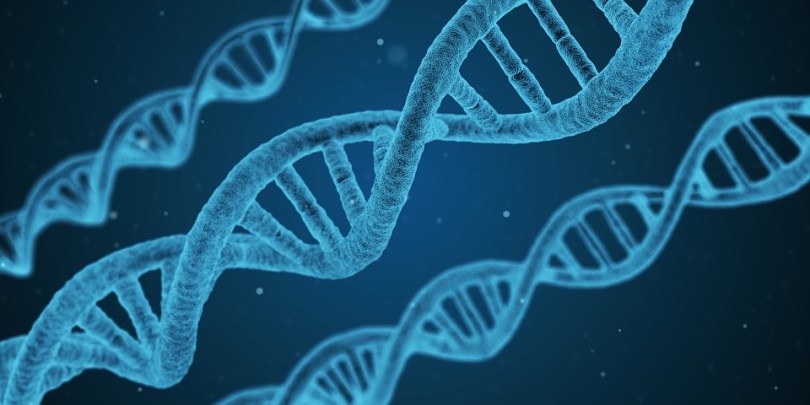
And it seems that in 2017, scientists are getting closer to having the answers as they study the effects of stress and life-styles on our DNA codes and sequencing. And now it seems that there is a reason for this, on 2 levels: epigenetics and the shortening of our telomeres(the protective casing at the end of a strand of DNA). The field of epigenetics refers to the science that studies how the development, functioning and evolution of biological systems are influenced by forces operating outside the DNA sequence, including intracellular, environmental and energetic influences (and by energetic, I also mean the emotional forces that affect our bodies organs, such as when we get angry, are upset, or stressed and tired, especially for long periods of time).
Since the 1970s, researchers had known that the tightly wound spools of DNA inside each cell’s nucleus require something extra to tell them exactly which genes to transcribe, whether for a heart cell, a liver cell or a brain cell.
One such extra element is the methyl group, a common structural component of organic molecules. The methyl group works like a placeholder in a cookbook, attaching to the DNA within each cell to select only those recipes — genes — necessary for that particular cell’s proteins. Because methyl groups are attached to the genes, residing beside but separate from the double-helix DNA code. Originally these changes were believed to occur only during fetal development. But it has already been shown that DNA can be added to in adulthood, setting off a cascade of cellular changes resulting in cancer, diabetes or other illnesses. Not only that, but epigenetic change could be passed down from parent to child, one generation after the next (hence you find the reference in the Bible that the sins of the fathers are passed down to the son to the third and fourth generations). A study from Randy Jirtle of Duke University showed that when female mice are fed a diet rich in methyl groups, the fur pigment of subsequent offspring is permanently altered. Just by playing with the diet, they could alter the colour of the fur of the mice. Now, what if emotions, such as guilt, could play a similar role?
The medical field has already shown that stress has this particular effect. Telomeres are a protective casing at the end of a strand of DNA. Each time a cell divides, it loses a bit of its telomeres. An enzyme called telomerase can replenish it, but chronic stress and cortisol exposure decrease your supply. When the telomere is too diminished, the cell often dies or becomes pro-inflammatory. This sets the aging process in motion, along with associated health risks.
Now we all know that old wives tale that tells a young pregnant woman not to cry during the pregnancy because her child will bear the effects of it through their entire life – but now science is beginning to understand that the negative effects of stress begin before conception. A baby’s intrauterine environment is shaped by a mom’s pre-existing physical health. There have also been several studies looking at maternal health and telomeres in offspring: the higher a mom’s prenatal anxiety, the shorter the baby’s telomere length (i.e. the shorter the life span).
According to the new insights of behavioral epigenetics, traumatic experiences in our past, or in our recent ancestors’ past, leave molecular scars adhering to our DNA. Jews whose great-grandparents were chased from their Russian shtetls; a child whose grandparents lived through the ravages of a Revolution; young immigrants whose parents survived massacres; anyone who grew up with alcoholic or abusive parents — all carry with them more than just memories.
So what on earth does any of all this scientific mumbo jumbo have to do with the “Original Sin”, and Paul’s discussion of the original Adam and the posterior Adam (Jesus)?
Well, for starters – it explains how our genetic make up is affected by our habits, our environment, our diet, our stress, and even the stress and anxiety of being ashamed, berating ourselves, or failing to accept God’s forgiveness of our sins. It explains how any resentment, bitterness or anger that we carry towards another person, when we fail to forgive, affects us to the most innermost of our being as David describes in the Psalms.
1. Your beliefs influence your behavior.
One of the most basic ways that beliefs can shape reality is through their influence on behavior—no quantum physics or molecular genetics knowledge required. Beliefs about your basic character—who you are as a person on a fundamental level—can be especially powerful. Research suggests that while guilt (feeling that you did a bad thing) can motivate self-improvement, shame (such as that felt by Adam & Eve in the garden), tends to create a self-fulfilling prophecy, reducing hope and undermining efforts to change, leaving you stuck in the rut of the very behavior you are ashamed of.
And your behavior will directly impact you with respect to your habits, whether they are good habits, or bad habits.
2. Your feelings directly affect your DNA:
“When we have negative emotions such as anger, anxiety and dislike or hate, or think negative thoughts such as ‘I hate my job,’ ‘I don’t like so and so’ or ‘Who does he think he is?’, we experience stress and our energy reserves are redirected,” and I’m not talking about a positive redirecting. Part of our energy reserves, which otherwise would be put to work maintaining, repairing and regenerating our complex biological systems, which you probably know as your “body”, are used to confront the stresses these negative thoughts and feelings create, leaving your body unattended.
On another level, science is now beginning to understand that humans have multiple brains: the one you know in your head, your heart brain (which generates much of your energy field), and your gut brain. So, when you are feeling heavy-hearted, what effect is this physically having on your DNA and body – how is it affecting the helix structure of your DNA strands? When you are in a gut-wrenching panic or suffering constant anxiety, what effect is this having on the nutrients that are getting to your cells and DNA on a molecular level?
3. You may choose, or not, to accept the abundance of God’s grace:
The entire Bible is about the transformation of man… having been made perfect, having become imperfect, and having reached perfection once more in the person of Jesus Christ. Having loved perfectly: God and others – fulfilling the 2 greatest laws of the Bible: To Love the Lord your God with all your heart, soul, mind & strength, and to love your neighbour as yourself. And how Jesus came to make the way for us to become perfect also in Him, breaking the curses so that they are no longer passed down to future generations, allowing us to re-write the code and become truly transformed, by the renewing of our mind (which will, of course, affect our bodies and even down to our DNA).
There is only one question: are you willing to allow God’s grace to truly sweep through your life and transform you: To practice abiding in His presence on a daily basis until you reach a level of peace that transcends all human understanding, guarding your heart and mind in His love?


 Divine Presence: Letting the Infinite flow in my life