children of God, child of God, living as a Christian or as a child of god, does Jesus invite you to be a Christian, how does a child of God pray, what is faith, relationship with the Divine, heir of the Divine,

How to live as a child of God

Lectionary: John 1: (1-9) 10-18

We call ourselves Christians (followers of Christ), and yet Jesus says that we are children of God.

What’s the difference?

Does it matter whether I think of myself as a Christian or a child of God? Does seeing myself as a Christian limit me to being a follower of Christ, while a child of God encompasses something different? How does our language impact our thoughts and perception?

Children often resemble their parents, imitate them, and strive to be more like them (or less like them as a teenager and young adult). In some cases, we strive to make our parents proud.

Genesis begins saying that mankind (male and female) was made in the image of God. Even in Acts, we find Paul stating that in God, we live, move and exist. We are God’s offspring.

Does being a child of God, rather than a Christian, offer more security, authority, assurance and faith? Do you feel more obliged to live with confidence, discipline and earn your family inheritance, as opposed to when you call yourself a Christian?

What impact does “family likeness” have on you, when you compare “Christian” = imitating and being like your family of Christians and child of God = imitating and being like the Divine Creator, rather than other people?

Similarly, what effect does it have on your self-image to look at yourself as divine creation? Can you see yourself as the emanation of Love, Life & Truth? How does this impact your feelings of self-worth? Could you be less defensive and more courageous as a child of God?

Does Jesus invite you to be a Christian?

I don’t believe so.

Without a doubt, Jesus didn’t invent the term, Christian. In fact, he didn’t even use the name “Christ“. (Consider that he would have spoken in Aramaic, rather than Greek – to start with. The words Christ and Christian derive from the Koine Greek title Christós (Χριστός) – Bickerman). The first reference we find the Christians is actually in Antioch – Acts 11:26 – referring to Paul and other apostles, not even to the eleven disciples.

Nonetheless, Jesus called himself the Son of God, referring to God as his Father. Throughout the gospels, he invites us to see ourselves as children of God.

Remember Nicodemus: here, Jesus suggests that all of us are to be “born again”. Go through a spiritual process of rebirth. Culturally, the ancients used birth to describe experiences of crisis – often women were close to death as they struggled to bring new life into the world. How much crying and pain is involved in birthing? The same happens with our spiritual birthing, as we recognise our spiritual existence and awakening. It might even be messy to symbolically accept that we also are children of God. Often, it is an ongoing experience of growing pains as we peel off layers and burdens we have been carrying to reveal Spirit within us and allow more light to shine through us!
I sat down with the universe and told her I wanted to grow. I told her to use me as a vessel. So she made me uncomfortable. She stripped me of everything I knew. Made me learn how to be silent, how to let go, how to move on, how to stand my ground, how to be more understanding, how to fight, how to survive, how to be more assertive, more loving, less naive. She told me to take everything I have learned and share it with others. Unknown

Can you see and recognise your spiritual potential within, the way that Spirit sees it within you?

Imagine for a moment that you have this invitation:

  • think like Jesus;
  • act like Jesus;
  • love others with Absolute Love;
  • forgive others to the same extent that he practised forgiveness;
  • pray, meditate and recharge your spiritual batteries each and every day to fully charged;
  • practise healing like Jesus did; and
  • live your life to the fullness of your personal purpose.

So, how does a child of God pray?

When you are living as a child of God, it influences every area of life, including prayer.

  • When you ask for wisdom and direction, you wait to hear the response. Can you believe that you can know the mind of God and tap into Infinite Wisdom?
  • If you ask to learn how to do something, imagine practising nonstop until you have mastered it.
  • When you ask to be introduced to the right teacher, you pay attention to the lessons.
  • Upon asking for protection, you allow yourself to be protected.

As a child of God, you have a right to claim health and wellbeing, expressing health, strength and infinite life in your spiritual body, healing your physical body.

John reminds us that in the beginning was the Word, and the Word was with God, and the Word was God. Are you holding onto the power of that Word within you? Do you call it into being and create with the force and power of being a child of God?

Having faith in your Divine power

We can all read how Jesus lived and breathed his faith. He believed that he was the Son of God and therefore exercised the confidence and power that came with this. Do you apply that same hope and trust? We are promised God’s gift of eternal love and power.

And yet, I fail to grasp it in my daily life! I know that for my continual growth, I am strengthened and tested. I also have a deep faith that all the testing and strengthening is for a purpose. I am being made stronger FOR SOMETHING, not just to be tested!

But I am still learning to say with conviction and assurance:

  • I am love as my Father is love.
  • I am unbridled joy as my Divine Creator is joy.
  • I forgive as Divine Love is forgiving.
  • I am prosperous as Spirit within me prospers.
  • I have access and deserve all abundance of this Earth and Heavens, as a child of the Divine.
  • Peace floods my soul as peace floods the Kingdom of Heaven. As the Kingdom of Heaven is within me, peace floods through every cell of my being.

No. I haven’t yet reached that place of total faith in my Divine power. But each day, I continue to recognise that I am a child of Divine Love, not merely a follower of Christ.

This changes my relationship with the Divine

When you are someone’s child, you cannot become more or less of their child. This gives me the certainty that I cannot become “more” of a child of God through my actions or merits, any more than I can become less of a child of God through my failures and mistakes. I have the certainty of being a child.

Unfortunately, many of us judge our relationship with the Divine according to our earthly experiences and broken families. We recognise that parents will disown you or mistreat you, and so judge Spirit accordingly.

But being a child of God is part of your innate nature, the same way that your genes and DNA are inherited. It is part of who you are, internally. You have a divine inheritance, all the power and divinity, this and more.

Are you willing to claim it and live according to your purpose?

Worshipping in Spirit and in Truth as an Heir

God is Spirit, and as children of God, we are spiritual beings, not just human beings. We live on this earth in human form, but our bodies are merely our “spacesuits” for this planet. Ultimately, our essence is spirit, and we are called to worship and live in Spirit and in Truth.

A Christian is a follower of Christ. But in many respects, this limits us to human existence. This limitation of physical body, emotions, thoughts and actions, rather than acknowledging all that we are as spiritual essence and energy.

When we accept that we are children of God, we open ourselves up to the spiritual realm of existence: born of the Spirit, already eternal.

As you go about your day, remember that Divine Love is your rightful inheritance, with everything that this envelops.


References:

Bickerman, Elias J. (April 1949). “The Name of Christians”. The Harvard Theological Review42 (2): 109–124
how to pray, learning from a child's faith, faith of a child, power of prayer, ordering from a menu, issuing commands to God, begging and pleading, Christmas wishes, certainty, belief and faith

How to Pray: learning from a child’s faith

I recently read a quote from Osho:

Pray like a lover, not like a beggar.

I realised that while a beggar might say “can you spare some change“, a lover would not hesitate to request their heart’s desires. A lover would never request leftovers or spare change but instead asks to be wined and dined. Your beloved seeks to be loved, wholly and completely.

Much like the faith of a child.

Before Christmas, I went to the pharmacy to pick up something, and little miss 6 begged me to take her upstairs to see toys. She insisted that she wouldn’t ask me to buy her anything, but rather, just wanted to look and to tell me what she wanted for Christmas. As we walked around the toys, I took my phone and photographed each one that she pointed out she wanted. I later sent all the photos to her dad, her aunts & older cousins – making sure that everyone had an idea of “these are the types of toys she’s interested in this year”.

She never bothered me again about Christmas presents, although throughout December she kept telling me what she was getting. She had absolute certainty that the things that we’d looked at that day would be under the tree! Because that’s what she had asked for.

On December 23rd, when I went to the supermarket, she hand-picked 8 carrots for the reindeer, and then stopped to pick up chocolate chip cookies for Santa. For her, there was no doubt that Santa would come – so it was apparent we needed to have ready the snacks.

At six years old, she sees magic in life that I have lost touch with – become cynical about. She stops to smell the flowers and notice the details. It’s possible to embrace the possibility of the impossible. She simply believes it to be so – and we make it happen!

magic in life, stops to smell the flowers, notice the details

The power of prayer

How do I describe the importance of the words that we use without ascribing formality and strength to the words that they don’t have? The power lies in my faith of the all-present Divine to fulfil. There is no magic in eloquence or wordiness.

And yet words are essential: we speak reality into existence, first as thoughts, ideas, and then we put it into words and actions.

We are told to have the faith as small as a mustard seed to move mountains.

Nonetheless, in various passages, we are chided to ask according to Divine purpose and will, rather than according to our own desires. And when we pray with this certainty of Divine purpose, we know that we already have it! Even in the Lord’s Prayer, we find “Thy will be done”.

When we know our purpose, and that what we are thinking, speaking and doing is aligned with our mission and Divine Plan, the certainty that our prayer has power comes more easily. The power of our prayers is then released by the choices and actions that we take.

Do you believe that Santa is coming tonight – enough to buy carrots for the reindeer?

What actions are you taking after you pray? Do you pray for rain and then carry an umbrella or a raincoat?

Are your prayers ordering from a menu?

I cannot count the times my prayers were like a patron ordering from a menu: “I’ll have the daily bread, some patience, and could you please take away these trials that I seem to be having at the moment?”.

Thy will be done be damned! I’m not interested. Please just remove this plate and this trial from me, because I have other plans for my life. Can we skip the vegetables and go straight to dessert?

Can our prayers be simply a request for ourselves – from a place of desire – because we want it? Or do our appeals need to align with our purpose and passion?

How do I exercise the faith of a mustard seed – of a child? Can I command the Divine power that we have been given? To influence events and situations, we have to connect with Divine Love, and rest in knowing that we can command “this or better”. If the Bible is at all valid, then we have the power to calm a storm, ordering it to be still.

calm the storm, order the storm to be still

When we tell our dog to sit, we simply expect it to sit. So why do we not expect the same from other elements of life? Do we educate the dog – or are we training ourselves to believe that the dog will sit when told to do so?

Perhaps we need more training in faith and prayer.

I don’t believe prayer is begging and pleading

God, can you spare some change? 

I hope that Divine Love is so much more than just spare change by random passersby.

My daughter would never ask me just for leftovers. No. She would dare to ask me for the food off my plate, for my dessert. While she loves sharing, she also has no fear in asking.

Ask and you shall receive.

Of course, sometimes we are like spoiled children. We ask, and we are told no. Or our parents say “later”. Then we start with the begging and pleading. We try to negotiate a different response because we didn’t like the answer we received.

How often do you tell a child “no” for their own good? We protect our children in all kinds of ways, not always giving them what they ask us for.

Are you listening for the answers to your prayers? Can you sit in silence and hear the still, small voice that says “I have something better for you.“? Unfortunately, there have been many times in my life that I have been the child, throwing a tantrum. I fail to see the look of love in the eyes of the Divine. The noise that I am making is too loud for me to hear the stilling and calm voice that says “wait”.

Faith does not beg and plead.

I might beg and plead. But faith doesn’t. My begging and pleading typically come from a place of fear and lack.

Like a child, I might be attempting manipulation – I’m going to make you do what I want. Do I really think that I might be able to shame the Divine into doing what I please?

Don’t get me wrong – prayer changes everything. Typically, in these moments, I find that prayer changes me. If I stay there long enough, begging and pleading – I start to see Truth. I begin to recognise where I am coming from and the state that I am in.

The divine purpose has not been changed – but my relationship with it has been.

“You’re going to be happy” – said Love – “but first I’m going to make you strong.”

Certainty, belief and faith

The only certainty I have is that everything is for my good and aligned with my Divine purpose. That doesn’t always mean that I am confident of the next right step forward or of the outcome.

The only certainty I have is that when I know the next right step forward, it becomes my responsibility to take it. The onus falls upon me to move my feet.

I’ve wasted time over the past decades waiting to see the whole path before me, before daring to take the step that has been revealed. Unfortunately, we often never get to see it all with that kind of clarity!

Life is a mix of prayer, answers & insight, faith and action.

“Just as courage is persisting in the face of fear, so faith is persisting in the presence of doubt.” (Julia Baird)

prayer, next step forward, finding the path

It’s not that we doubt that this is the right path – it’s that we doubt our ability to carry it out! Faith is not about convincing myself to believe – it’s having that deep inner conviction that this is my purpose and path, in spite of doubting my own fortitude and abilities. It’s trusting that the Divine within me is sufficient to make up for my own weaknesses.

Therein lies the magic that my daughter sees.

If God is all-powerful, why would my doubts and uncertainty be able to undermine the outcome? All that is asked of me is to step forward in my purpose, trusting that the parts beyond my control will work out by Divine plan. I am only responsible for all the elements within my control.

What is within your control?

A few weeks ago, I was coaching a friend about her life journey, as she finished her Licensed Unity Teacher training, and was taking up a role in her local church. Before we started our coaching session, she shared with me a precious moment of her Sunday morning service.

Sunday, sitting in the centre chair – as the speaker that day, and realising that she had fulfilled a life dream.

As a child, she had wanted to be a priest – obviously not an option for a little girl. That was abandoned, and she went on with life. Now, almost at retirement, she began studying for a new career – that of a licensed teacher. And because her pastor had a family emergency, she was asked to stand in for him.

The building their church is in was taken over by the City, about forty or more years ago, when it was abandoned by the Catholic church which could no longer run it as a school. Her church eventually acquired it. And so, here she sat, in the seat that once might have been occupied by the priest. About to give the Sunday sermon.  She could never have foreseen the events that would lead up to this moment.

But, when the still small voice called her to study, she studied. And when her pastor asked her to stand in for him, she said “yes”.

Do you have faith that you are aligned with your Divine purpose?

Prayer is simply a conversation with God. It’s a moment in which to regain clarity and focus, remembering what is truly important. Do you use your time in prayer to align your purpose and priorities for the day?

The function of prayer is not to influence God, but rather to change the nature of the one who prays. (Soren Kierkegaard)

Prayer is that place where you find the strength, courage and wisdom to understand “Thy will be done” is the biggest blessing that can happen in your life. It’s connecting with something much more significant than just your ego self and daring to ask for the best for your life journey.

To pray is to require of your Lover – that you be blessed and be a complete blessing to others. That your cup overflows so much that everyone around you is touched by the grace. It is daring to ask the Divine to be the Divine in you – to request for God from God. Could you ask to be loved so thoroughly that you never doubt it for a moment?

Could you have the faith of a child? Can you believe you are loved and cared for by the Divine – in you, for you, and through you?

sign up, weekly newsletter, Divine Presence
Sign up to receive Beth’s weekly newsletter with the latest blog posts, journal prompts and affirmations.
the reward of focus, lead us not into temptation, lead us not into temptation, desire, something wrong, unwise, enticement, pride, self-aggrandisement, distortion of purpose, getting off track, where your treasure is, invest your time, spend money, important priorities, core values, vision board, focus your attention, where attention goes energy flows, as you think, grounded and centred, keep your eye on the prize, learning and personal development

Lead us not into temptation: the reward of focus

When we say “lead us not into temptation”, most of us think of temptation as “sin”. But I want to suggest that temptation is the desire to do something, especially something that is considered wrong or unwise. I also invite you to define sin as to “miss the mark” – i.e. to take your eyes off the target and fail to shoot straight.

Lead us not into temptation, could very well be understood as: let me not get side-tracked and forget my priorities and purpose. Lead me not into the temptation of getting so busy and worked up that I forget the goal that I am working towards.

We say “resist the Devil, and he will flee from you”, but the devil is in the details, in the little things. The devil is in all the ways that I waste time and get off track.

The reality is that while pride, self-aggrandisement may well be an enticement, the real temptation is much more subtle. Temptation usually presents itself in the form of shiny objects that remove our focus from greatness and allow us to settle for good. We accept the simple pleasures now, rather than working hard towards long-term goals.

We turn and look at all of our differences, rather than seeing how we are all loved and connected to each other and the Divine.

Where your treasure is…

How do you keep your purpose and vision before you? What do you prioritise above other things?

One of the ways to realise what your priorities are is to consider asking others what they see in you. I did that today and asked others what my treasures were. These are some of the answers that I received:

  • my daughter
  • my rescues – cats & dogs
  • consistency, getting stuff done, tenacity, unmatched courage and tenacity in the face of challenges
  • compassion, capacity to love, sharing, enthusiastic encouragement of and deep empathy for those around you
  • passion, fire, zest, energy, motivation
  • insane levels of capacity to learn and execute that learning under pressure, inquisitive, intellect, brilliant, knowledge
  • smile, beautiful face, eyes
  • courage
  • depth, intuitive wisdom
  • authenticity, openness
  • confidence
  • positive vibes, positivity
  • charming
  • healthy boundaries
  • books
  • humour

what do I treasure, the treasures of the heart, as a man thinks in his heart, priorities, core values, vision board, visionboard

And yet several things are missing that I truly treasure:

Silence, nature & meditation
Divine inspiration
Writing
Sleep (how did they miss sleep?)
Health & wellness

Another way that you can see what your treasures are: have a look at how you invest your time and where you spend your money. In which case, without a doubt, I have the following priorities (in no particular order):

  • my business
  • writing
  • my daughter, health & pets
  • too much social media for my own good!
  • And definitely, too much time spent looking at business and social media metrics and results, without actually looking at what actions I will take to change those results

Lead us not into temptation … caught up being busy, rather than actually living our purpose!

Take a sheet a paper, drawing a line down the middle. On one side, you write down your priorities and what is essential in your life. What do I treasure? Now, on the other hand, for the next 7 days, write down where you spend your time and money.

Where are you lead into temptation?

I have many tools that I use to keep me focused on the target:

  1. my values: 6 words that I keep before me each day:
    1. Divine
    2. aligned
    3. connected
    4. courageous
    5. creative
    6. thriving
  2. a vision board: a visual representation of what I want to make manifest in my life
  3. A list of 50: fifty things that I said at the beginning of the year were necessary to do this year. They are divided into ten sections, including health, spiritual practice & growth, holidays, income streams, professional growth, etc. But a reminder that action and works are equally important in this life.

That is what I focus my attention on each day: reminders that keep me on track so that I am less likely to be led into temptation by the shiny objects that appear in my path.

Where attention goes, energy flows

It is so easy to get caught up in being “busy”, with your focus on a to-do list and day-to-day demands on your time. Are you intentional about how you focus?

Now that you have had an opportunity to review your life, what are you pouring yourself into? What do you invest your time thinking about? What consumes your thoughts?

As a man thinks in his heart, so he is.

Prov. 23:7

Your thoughts are busy creating who you are – what you will say and then what you will do. A simple change in your focus and attention will allow you to pour your energy and effort into your purpose.

This, in turn, allows you to get new results.

What’s on your mind today?

what's on your mind, where do you spend your time, invest your time

The most important thing to remember is the most important thing.

What is distracting you from the most critical priorities?

Lead me not into the temptation of distractions, chasing my tail, and putting out fires.

When I am grounded and centred, I remember that I get my prize for performing on my stage. Not as a guest performance on someone else’s expectations and priorities.

Where is my purpose in my daily schedule? How does my agenda reflect my values? Or am I easily distracted by shiny objects that lead me into temptation?

Today I invite you to scrutinise where you invest your time, energy and money.

  • How many hours a week are you spending on social media or watching TV?
  • How much quality time do you spend with your family & friends?
  • Do you spend too much time at work? Could you change the way you travel to and from work so that this time is used more effectively (for example, I discovered that when I drive, I can listen to a podcast, while if I take a cab or Uber, I can work on the iPad or laptop)?
  • Does your schedule adequately reflect your priorities and what you tell yourself is important?
  • What “shiny objects” get you side-tracked and off-focus? Where are you led into temptation?

Unless you have your priorities clearly identified – as the treasures of your heart and mind, clearly set out in front of you – life will happen and get in the way. You will chase after a good idea, forgetting that it’s not aligned with your call to greatness!

Today, I invite you to focus on your target and find ways to consistently maintain that focus, so that you are not lead into temptation. Keep your eyes on becoming all that you can be, that

dazzling, radiant, immortal creature, pulsating all through with such energy and joy and wisdom and love as we cannot now imagine. (CS Lewis)

the gift of authentic detachment, spiritual bypassing, spiritual ideas, spiritual practices, emotional issues, psychological wounds, unfinished developmental tasks, fake positivity, positive affirmations, prayer, meditation, practising the presence, presence of the Divine, divine presence, spiritually distracted, healthy spiritual path, checking out, avoidance, avoid our feelings, grasping, clinging, letting go, release control, give up control, surrender, attachment is the source of all suffering, defence mechanism, self-care, self-awareness

The value of true detachment, not spiritual bypassing

As spiritual beings having a human experience, we get attached and tied to things, relationships and stuff. In fact, we begin to measure our own value by that attachment. And then, when a relationship breaks, or we fail at something, we somehow believe that we are a failure. We are no longer worthy.

Attachment is the source of all suffering.

Buddha

People, places and things can ruin us unless we can learn to live in a state of detachment. Not detachment as “I don’t care”, in a disconnected way. But detached in the sense of no longer needing to have control over the outcome. That place where you can honestly say, I trust that all is well.

Let go and let God.

Can you enter that place where you release your perceptions, beliefs, expectations of how things should turn out? Can you experience life as it is, even when that’s not how you hoped it would be? In some cases, this means feeling your emotions, then letting them go. It might include establishing emotional boundaries, rather than giving away your power to others.

Can you detach from the material world and simply trust that all is well?

The love of money is the root of all evil.

1Tim. 6:10

Take a moment and consider your spiritual practices – whether it’s prayer, meditation, singing, chanting, study or silence. What is the purpose of your practice, and how has it helped you heal?

Contemplate how you can practise healthy detachment from relationships, situations or even thought patterns and habits because of these spiritual practices.

Are they really working for you?

Or are you merely going through the motions of being busy in spiritual practice to avoid doing the deep work of facing your shadows, pain, guilt and shame?

What is spiritual bypassing?

A spiritual bypass is a defence mechanism we use, which effectively distracts us from experiencing the present moment. It’s what we do when we get busy so that we can ignore our feelings.

Do you find yourself using spiritual bypassing to shield you from the ugly truth of what you really feel? Perhaps you keep telling yourself, I obviously need to pray more, because I shouldn’t feel this way. You stuff it or swallow it down so that it doesn’t show.

Are you “checking out” by studying more, reading more, and learning more, instead of checking in with your feelings? How long do you think you can go on saying “I’m fine”, rather than acknowledging that you really aren’t okay?

Perhaps you tell yourself it’s self-care, even, when it’s really just avoidance. You become a Pharisee, busy following all the rules, without ever really experiencing the cleansing flood of tears and true healing.

The reality is that spiritual healing doesn’t typically happen when you are reading, studying, in prayer, singing or in meditation. Healing occurs in the middle of an argument – when you remember to pause before you say something hateful.  Rebuilding yourself comes after a breakdown or loss, walking down the beach, crying silent tears. In the middle of life, you find grace and mercy to cleanse your soul, heal your emotions, and refocus your thoughts.

Bypassing your unresolved trauma, wounds & issues

While you might try to outrun the pain and forgetting it, spirituality is not about “feeling good” or “being positive”. Pain in life is inevitable, and your spiritual practice is not intended to numb the pain but to truly heal it.

Have you noticed that 40% of the Psalms are about pain suffering and lament? When was the last time you read Job or even the book of Jonah?

And yet we tell ourselves:

Don’t be a Debbie Downer.

When we live in a culture that says “just use your positive affirmations”. Claim your power.  All the while, you fail to acknowledge that you are angry, fearful and irritable. Because we hide it, we side-step the healing process for emotional, mental and psychological wounds.

Perhaps you are telling yourself “I forgave them”, but still feel the resentment, hurt and anger. And in your confusion of “I shouldn’t feel this way”, you bottle it up and swallow it down, rather than acknowledging the truth that you haven’t done enough work to forgive and release. Sometimes there is much deeper healing work that needs to take place, but it makes us too uncomfortable, so we settle for the spiritual bypass that lets us off the hook.

shadow work, healing the pain, release the pain, trauma, emotional hurt

The potential harm of false positivity

I believe in positive affirmations. They are intense and influential; they have a fantastic role to play. But you can’t fake healing! It’s like painting over a structural crack in the wall: the paint job just won’t hold the building up!

If you want to grow and flourish, you can’t avoid the painful experiences of life. More often than not, it’s not in deep meditation that you find your growth, but when you’re angry, frustrated and upset – and you breathe for a moment. You recognise that you have space to choose your response. That’s where your growth happens.

Of course, you can only achieve this is you have the awareness to acknowledge that you are feeling angry, frustrated and upset. Have you created a safe space in which you can feel pain, sadness or even depression? Is it okay, in your world, to not be okay? Can you admit and ask for help when you need it, whether it be therapy, coaching or spiritual counselling?

We don’t need to hear any more “you shouldn’t feel like that” – but rather the helping hands that say “I see that you feel this way”, now let’s help you move through this.

I love one of the acronyms I learnt through mBraining (most likely from Vikki Coombes, who probably learnt it from Grant Soosalu):

PAIN =
Please
Acknowledge
Information
Now

When you are feeling pain – what is the information that it is inviting you to acknowledge?

Shadow work and healing

Are you scared of the dark? Are you afraid to face your guilt and shame, hiding from the pain and ugly aspects of your life? Do you tell yourself to move on, without really doing the work? There is a moment when we stop digging and move on. But not by studiously ignoring it when it needs to be addressed. Not through spiritual bypassing.

explore your inner darkness, shadow work, healthy detachment, true detachment, spiritual bypassing

Can you explore your inner darkness, sit with it and then release it?

To start on the healing process, we have to acknowledge it exists. Stop denying a part of yourself and turning a blind eye to those parts of yourself that you don’t want to see.

You cannot heal what does not exist. So, your first step in the healing process is to allow it into your awareness, acknowledge it, feel it. Carl Jung referred to this dark part we deny as the shadow self. It might be anger, lust, envy, pain, sadness, anxiety or depression. Generally, these are emotions we feel and thoughts we have, that we have labelled as “wrong”. We tell ourselves “I shouldn’t feel this way any more”, and so we begin to hide them, even from ourselves.

Detachment is what happens when we acknowledge it, but don’t get caught up in it. Be willing to see it, and see yourself experience it, and then allow it to go, rather than engulfing you.

Allow yourself to ask these questions:

  • What do I feel?
  • When did this start?
  • What were the events that triggered this? Which events in my present life are continuing to trigger this?
  • Why am I ashamed of feeling this way?
  • What part of my identity – who I think I am – requires me to hold onto this? Who would I be if I released this?

Let go and let God

Yes, it’s cliché. But it’s also healthy detachment.

You are not your pain. Or your anger. That is not your identity. It is an emotion you have felt or are continuing to experience. Can you feel it and then let it go?

Can you see yourself disconnecting from that emotion that controls your life? Could you take it one step further and see yourself disconnecting from the people that trigger this response in you and allowing them to control your life?

It’s easy to mistake connection and attachment. Connecting with others is essential. Attachment, however, brings in elements of control and expectations. We get tangled in a web and lose our identity.

Detaching allows you to step back, and see how you can connect with others compassionately, without attachment. With no control or expectations of what should be. It allows you to say “I don’t need you, but I can love you, compassionately“.

In this very same way, can you look in the mirror and see yourself without expectations? Could you acknowledge the shadow self and love yourself just as you are? This is where the healing starts.

Just let go and be with I AM.

Generational trauma, generational curses, how to heal the past with love, using forgiveness to break the cycle, breaking the cycles, epigenetics, how trauma is passed through your genes, reap what you sow, nature or nurture, learned behaviour, mental illness, depression, stress, anxiety, low cortisol levels, insecurity, neurobiology, the sins of the fathers, acknowledgement, awareness, acceptance, forgiveness and release, learning a new way, break the cycle, it didn't start with you, ptsd, chronic pain syndrome, chronic fatigue syndrome, depression and anxiety, neuroscience, physiological change, evolution

Generational Trauma: How to heal the past with love

I recently read and posted this comment, reflecting on how 2019 has been the best worst year of my life… or possibly the worst best year of my life. I haven’t quite made up my mind which it is!

Some of you are breaking generational curses and you don’t even know it. That’s why your attack has been so hard.

Unknown

And how it has felt like a struggle this year, but in a great way. I know I have done some deep healing work and growth, but it has also felt dark and dirty. Like weeding the garden – you get sweaty, dirty and now there’s gunk under my nails that doesn’t want to simply wash off!

Part of me, the part that grew up as a missionary kid, automatically hears in my head those verses from Exodus, Numbers & Deuteronomy:

Thou shalt not bow down thyself unto them, nor serve them: for I the Lord thy God am a jealous God, visiting the iniquity of the fathers upon the children unto the third and fourth generation of them that hate me

Deuteronomy 5:9

Of course, with modern psychology and even neuroscience, we begin to understand a new application of what happens. There is nature and there is nurture – what we inherit through our genes and biologically, as well as what we learn from our parents, grandparents and community as we grow up.

Earlier this year, I was working with a few girlfriends, addressing some of those generational issues that were coming up and keeping us stuck – visiting the experiences of our parents and grandparents and forgiving them or those that had harmed them. It felt dark and intense. But very liberating as well.

Consider these 2 examples:

Case 1: 1874

In 1874, the New York State Prison Board discovered that they have 6 members of the same family locked up at the same time. Mere coincidence? Looking back, all the way to 1720, they found a town trouble-maker and his less-than-lovely wife, who had 6 daughters and two sons. From those, by 1874, they had 1200 descendants.

  • 310 were homeless
  • 180 had drug or alcohol abuse problems
  • 160 were involved in prostitution
  • 150 had spent time in prison, 7 for murder

Case #2: 1874

Nonetheless, another couple, going back to 1703 had 11 children. His name was Jonathan Edwards, and as a family man and caring for his education, he went on to be the President of Princeton University. By 1874, they had 1400 descendants.

  • 13 college presidents
  • 65 university professors
  • 100 lawyers and 32 state judges
  • 85 authors
  • 80 politicians, including 3 state governors, 3 senators, and 1 President
  • 66 doctors

Is this nature?
Is it nurture?
Or perhaps a mix of both?

generational curses, generational trauma, epigenetics

Generational trauma & the study of epigenetics

Some of the most interesting work that is being done at the moment is in epigenetics, cellular biology, and neurobiology. In mice, the effects of trauma on the DNA and gene sequencing can be seen for up to 14 generations. But, on a more tangible level, we have scientists like Dr. Rachel Yehuda, from Mt. Sinai Medical in New York, studying the effects of trauma and PTSD on the children and grandchildren of those who suffered in the holocaust. The effects of the stress and trauma can be transmitted biologically up to three generations.

Similarly, we see the effects on the human body of those who have suffered through famine or war and political unrest. Have you dug deeper into your family tree and had a good look at the biological and environmental factors that affected your childhood, your parents and your grandparents? What stories did you hear? Or perhaps, more importantly, what stories would they refuse to speak of?

We read in the Bible that we reap what we sow… but sometimes we reap what others have sowed… and worse yet, sometimes we reap what others have been the victim of! Sometimes the changes in genetic traits works in our favours, and sometimes it might be considered a flaw. We might inherit genes for strength or we might be prone to certain syndromes or diseases.

Just remember this: when your grandmother was pregnant with your mum, you were there as an embryo experiencing the world. Of course, biology allows us to know that at the moment of inception, a “cleaning” takes place, which for the most part should take care of most of those “anomalies”. But that’s not always the case.

The vestiges of the US Civil War

Furthermore, as studies of the sons of men from the Civil War exhibited, there are also experiences that were specifically transferred down through the Y chromosome (only to the sons and not to the daughters). Whether it was the stress or the malnutrition that the father’s suffered is not yet known, but without a doubt, the sons of those who had been in prison camps died younger than those who were not prisoners.

Without a doubt, trauma in previous generations can alter genes and their expression in future generations. The reason (the story) for the trauma gets lots, but the behaviours and the symptoms are passed down. Our bodies, in order to manage stress, make a physiological change. Unfortunately, when the conditions for the next generation are not the same, these changes may not be for their benefit. But the evolution has occurred.

Nurture – the cycles of behaviour we learn

The same way that part of the trauma is stored and handled genetically, there are also many coping mechanisms that are behaviour and habits. Dysfunctional families breed dysfunctional adults. We are the product of our childhood upbringing and our socialisation.

So, even when there were experiences we had as a child – behaviour and responses that we swore we would never repeat when we had children of our own – unless we have done the healing work, we will run down the easiest neural pathway to the very same response. Whether we like it or not, how we were raised shapes our reactions, responses and attitudes.

  • Children raised in abusive homes learn that violence is an effective way to resolve conflict.
  • Boys who witness domestic violence are three times more likely to become batterers.
  • Children of alcoholics have a fourfold risk of becoming an alcoholic than someone who comes from a family of non-alcoholics.

You learned so much by simply watching others – even unconsciously:

  • how to eat
  • how to cope with stress
  • how to do marriage or relationships
  • what to do with your anger.

Have you taken the time to give serious thought to your life generationally?

The trauma embedded in your family line

Take a moment to look at yourself, your parents and your grandparents. Look wider at your cousins, aunties and uncles. What do you see of:

  • mental illness
  • drug addiction or substance abuse
  • codependency or enabling
  • depression
  • anxiety
  • stress
  • anger

When you see it all – as a single, big picture – can you get an idea of the importance of breaking the cycle?

If you were to shake the family tree – what skeletons fall out? What is hiding in the closets?

If you don’t deal with

  • the weight and obesity issue;
  • the debt and overspending;
  • anxiety and stress;
  • anger;
  • depression;
  • insecurity; or
  • drug addiction and substance abuse,

Those very same issues will be for your children to handle. They will face the same patterns and choices.

The traumas that are not healed in your generation will be for the next generation to heal and work through.

The path of healing

So, how do we get there? If you want for the buck to stop here – how do you make sure that you are the generation that changes the situation for the future?

Acknowledgement and awareness

It all starts with awareness. You cannot teach what you don’t know – so first, you have to become aware. This comes from evaluating your thoughts and feelings. It also comes from educating yourself – through personal development and self-improvement.

Through looking at what you want to be and then measuring yourself up to that model. For me, I would like to be able to say I am compassionate, creative and courageous. How do I measure up to this standard? I recently wrote about being an angry woman, and the healing that has to happen as I work my way through that!

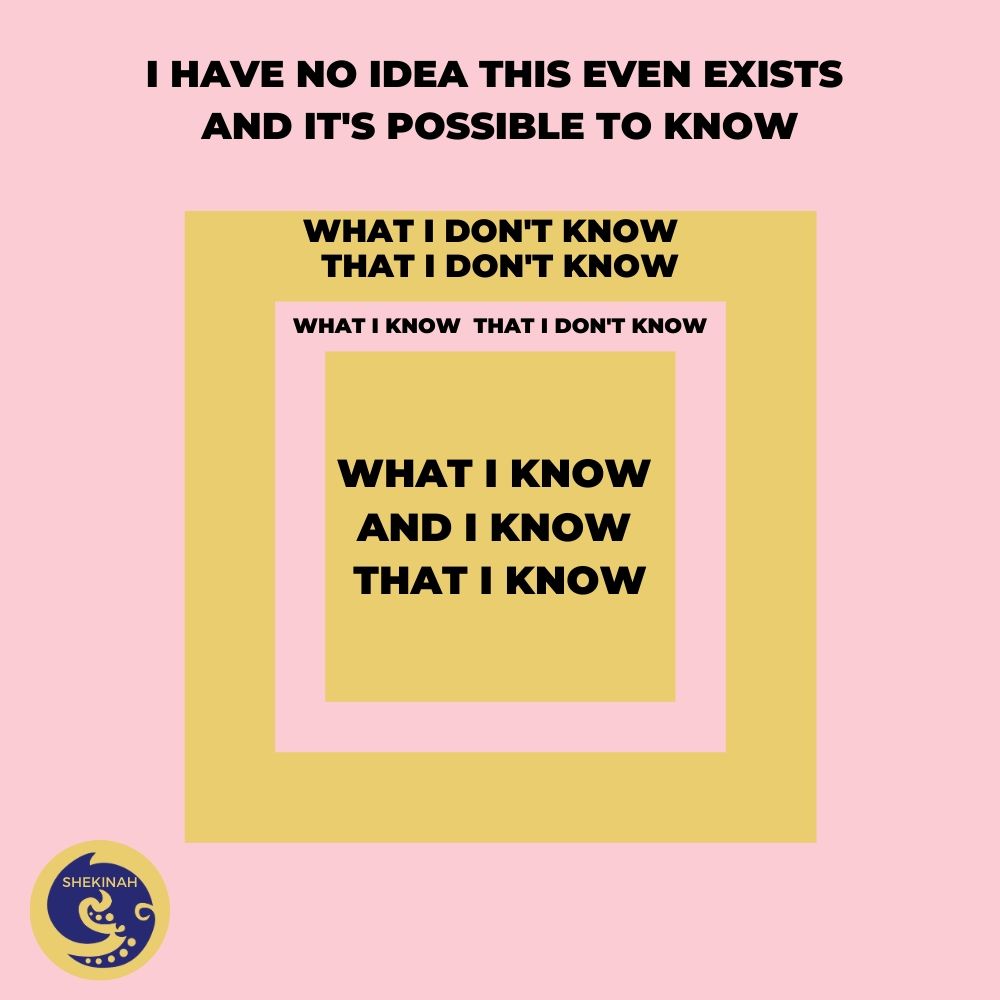
what I know, I know that I know, what I don't know, learning and growth

Acceptance & ownership

Unfortunately, what you resist, persists. When you fail to acknowledge those thoughts and feelings – “I shouldn’t feel this way” and “I shouldn’t be thinking that”, you cannot change the pattern.

After the awareness, you have to own it – as yours. “This is what I feel”. You don’t have to agree with it or like it. Once you’ve swallowed it down and allowed yourself to digest it, then you can do something with it.

Just take ownership – “These are my thoughts, feelings and actions – and because they are mine, they are mine to change!”

Be the one in your family that was brave enough to do the dirty work of cleansing and healing!

Using forgiveness and release

When we go back to the root of the issue, we go back to that event in the past, and have a new experience of it with forgiveness and releasing the past. You will need a powerful experience to release the trauma, to override the trauma response in you.

When I was doing some of this work earlier this year, I came face-to-face with one of my survival mechanisms. When I feel attacked, I want to shoot someone. Now, to my rational mind, that makes absolutely no sense. I obviously don’t want to shoot someone. How could I possibly want to do that?

But my first thoughts always turn to “just shoot them down”. Sometimes I would literally do it verbally – destroy them with my tongue. But in my mind, the image I had included guns.

When I went into the forgiveness work with Sarah and Sharon, I realised my granddad was a rear gunner (or tail gunner) in WWII. If you know anything about that, it was the least likely position to survive.

This is what the tail of a Lancaster bomber could look like upon arriving home:

https://i.pinimg.com/736x/2d/a0/36/2da0369c0180b821c83f3449ee194614–bombers-air-force.jpg

But my granddad did survive and came home. He never – that I ever remember – spoke about his days in the war. He would remember his pilot and members of his crew fondly, but never told a single war story that I will ever recall. And as I did the work with Sharon & Sarah, I realised how good he must have been as a gunner to have survived so many battles. How many planes did he shoot down, so that he and his crew could make it back alive? He must have been a really good shot to have made it out alive.

Wellington Bomber, rear gunner
This is the kind of plane he flew in (photo of a print I have on my wall)

I sat with that deep sadness and guilt. And I realised why my survival instinct was “let’s just shoot them down”, but I’m not in that position.

I don’t actually need to shoot anyone down in order to survive:
Not with my mouth.
Not in my thoughts.

In my world, I can choose to be kind and compassionate.

So, I worked through forgiving the powers that were that started the war and put my granddad in a position where he had to shoot others down in order to survive. I forgave my granddad for all those people whose lives he’d taken in order to get home to my grandmother and mum alive. And I forgave myself for those crazy, irrational thoughts that I had carried around in my head for as long as I could remember, recognising them for what they were.

I then finally able to forgive myself for all the times I had shot others down with my tongue, tearing them apart with my words.

Yesterday, I discovered that a guy called Mark Wolynn has written a book called “It didn’t start with you: how inherited family trauma shapes who we are and how to end the cycle“. I’m definitely adding that to my reading list for January! Maybe I’m already doing the work – but perhaps there’s so much more that I could be doing.

Learning a new way

Breaking the cycle of generational trauma starts with acknowledging that you have a choice. That in that space that exists between stimulus and response, you can breathe. That space is yours.

It takes practice. You will need patience and understanding. Show yourself some compassion and mercy, because there will be mistakes along the way.

But you can – single-handedly – break this cycle, one decision at a time. You can choose what tools and support you need. Perhaps you need faith and a spiritual understanding, to reach out to a friend, a coach or a mentor, and in some cases, you might even need therapy.

But each day is a choice that allows the generational curses to be broken.

Because the buck stops here – in the worst best year of my life!

giving thanks in all things, thanksgiving, gratitude practice, practising gratitude, thankful, blessed, grateful, the benefits of gratitude, why give thanks, gratitude in tough times, getting through difficult times, counting your blessings, count your blessings,

Giving thanks in all things, good and bad

Are you grateful for the experience of yesterday – or just thankful that it’s over? Not everyone is celebrating Thanksgiving (especially not worldwide), but even for those in the US that are celebrating, the holiday season can be a challenge, rather than a time of joy!

For some, it might be a reminder of what’s missing in their lives: while everyone else is posting photos of their family gatherings, they may be alone. The holiday season can be a time of loneliness, isolation and sadness. It might be a time for grief, broken families, or simply the physical distance that creates isolation.

The challenge is to find gratitude and an attitude of thanksgiving in spite of this. Throughout the Bible we find two references:

  1. a condemnation of complaining, murmuring and grumbling
  2. an exhortation to thanksgiving and gratitude

For example:

gratitude, appreciation, the power of gratitude, the benefits of being grateful

Science backs the value of gratitude

With more than a decade spent studying the effects of gratitude on the body, our relationships and our mental and emotional well-being, science has concluded that putting thanksgiving into our daily lives builds a better life!

Some of those benefits include:

  • saying thank you builds relationships
  • it improves your physical health and well-being – for example, the HeartMath project is constantly looking at the effects of gratitude and appreciation on your heart’s cardiovascular efficiency.
  • gratitude can improve your mental and emotional well-being, helping you to reduce any toxic emotions, and allowing you to release those feelings and thoughts that are simply passing through
  • you can improve your empathy through gratitude, as well as reducing anger and aggression
  • feeling grateful allows you to sleep better
  • you have improved self-esteem and confidence when you are grateful and appreciative of your own strengths and abilities
  • gratitude can even help overcome trauma

Celebrating the mundane

Gratitude and appreciation allow us to acknowledge the subtle pleasures of life. It’s taking a moment to stop and smell the roses, to appreciate the leaves of autumn, and to enjoy the aroma of cooking food. Just breathe the moment in.

When we allow ourselves a moment to appreciate all the things we have been taking for granted, we give ourselves permission to have greater clarity and joy. What is truly important in life?

Take a moment to open your eyes and see.

It’s not always about speaking our gratitude – sometimes it is simply being in the present moment and allowing ourselves to feel it. Truly feel the appreciation for this moment.

Just be.

giving thanks when life treats you bad, overcoming life's challenges with gratitude, an attitude of gratitude

Building relationships with gratitude

One of the powers of gratitude is that it can help you rebuild crumbling relationships, helping us to build closer relationships with loved ones. Even in our work or community, gratitude has a role to play in building better relationships.

Being thankful starts with becoming aware and appreciating what another person does and the strengths and benefits that they bring with them. Perhaps it’s as simple as noticing they always put the coffee on in the morning, and appreciating that someone is taking care of that.

When we are grateful, we recognise the value of the other person and the value that the relationship has for us. In turn, we do more for building on the relationship. As they feel appreciated, they begin to feel gratitude in return.

In the long term, gratitude leads to more openness in the relationship, which is essential for problem-solving, as you can trust the other person when a problem arises to work together with you towards finding a solution.

Giving thanks when life treats you badly

But what about when things are going wrong – when it appears that life as we know it is falling apart? Even then, we are called to be thankful and grateful.

Giving thanks in all things – in every circumstance

Sometimes life challenges us to let go of our expectations – of thinking that this is how life is supposed to be – and simply accept life as it is. We wallow in the thinking “life’s not supposed to be like this” and “this shouldn’t be happening to me,” failing to look at life as it is. Without judgement. Without expectations. Simply looking at the present moment as it is.

Not everyone in life will treat you fairly – but I remember years ago telling a friend I was grateful for the “pumice stones” of my life, that had polished me so that I could shine! It’s about learning to be grateful for the opportunity to learn patience and better communication skills.

Maybe this relationship and situation is the opportunity you needed to learn to stand up and speak up for yourself! Consider that it might be time that you stopped living as a people-pleaser, and started to live your purpose. Is this a chance for you to say “no”, and learn to do so with kindness, compassion and yet firmness?

Perhaps this is an opportunity for healing, even breaking lifelong or generational cycles of pain. Life may simply be offering you the opportunity to be the one that says that this no longer runs in my family! It stops here.

I’m not saying it’s easy – but look for the opportunities within the pain.

Giving thanks when you screw up in life

Sometimes it’s not that life has done you wrong – sometimes you are the one that messed things up. Can you find gratitude and thanksgiving in those moments?

We’ve all messed up. All of us fall short!

Whether you look at Elijah, Moses, Peter, David or Paul – all of them failed at some point! And some of them fell flat on their faces! A long, hard fall. Crushed by their own choices.

But can you turn this around and be grateful for the lessons you have learned through your mistakes? Are you willing to be grateful for having choices that lead you to make a decision, even if in the 20/20 vision of hindsight it was so obviously the wrong one?

Notice what you learned about making better decisions. What did you overlook that you will consider next time you are faced with a similar situation?

Be thankful for you had an opportunity to learn humility and forgiveness. Notice the grace and mercy that you have received, and the lessons in empathy that this gives you to give more grace and mercy to others when they make mistakes.

Take a moment and just be thankful for the mistakes and all their deep lessons.

gratitude when there's grief and heartache, the empty chair

Gratitude when you experience grief and heartache

Sometimes life presents us with an empty chair.

Even this is an opportunity to learn to grieve with gratitude. To be thankful for what was, and all the experience of loving that person. Learning to let go of the person and the expectation of “what should be” to simply accept the present moment of what is.

Life sometimes challenges us to find the little things to be grateful, even within our pain and loss. When you see a happy photo or a reminder, to acknowledge the loss in the present moment – and be grateful for that moment and memory in the past. To acknowledge all that you shared and dreamed.

It’s learning to acknowledge and accept the pain, grateful for the love that you felt and feel – it’s only because you got to experience that love that you are now experiencing the pain.

Sometimes, it’s just being present with the pain that reminds you “I am alive, and so I feel” – and being grateful that you feel, even if what you are experiencing are grief and pain.

Celebrating the wins

Sometimes we lose. But other times we win.

And when you win – give yourself the moment and the time to celebrate and feel the win as deeply as you feel the losses!

There is no guilt in having done your best and having achieved something great for yourself or for others! In fact, feeling gratitude and acknowledging your wins gives you more motivation and confidence!

Even the practice of noting down your wins – feeling gratitude for them as you do it – will help you notice what you have learned on this journey and internalise the lessons. Allow yourself to consider and notice what you had to do in order to achieve this – in fact, where did you go up and beyond what you expected?

Celebrate the skills you have learned that allowed you to achieve this new level, noticing the extra effort you put in that got you to this place.

Make sure that as you do this, you fix in your mind what it takes to win. Doing this will have the following effect:

Work –> results –> gratitude and acknowledgement –> increased motivation –> more work –> better results.

Allow gratitude to give you a hand on life’s journey.

Living in the awareness – gratitude

Being thankful is more than just saying thank you. It is living with an awareness – an appreciation – of the value of what you have.

It starts by looking in the mirror, and becoming aware of your own goodness and strengths! It is being grateful for the difficulties of life that have made you stronger and brought you to where you are today. Take a moment today to look yourself in the eyes – in the mirror – and say “thank you”. Feel it. Allow it to grow.

Take a moment to look at your life, with all the highs and lows, and appreciate what is happening for you and through you. Look at all the ways that life is moulding you – emotionally, mentally and materially. Appreciate all the ways that you have grown.

Look around you, at the people in your life — all the people in your life. Appreciate them.

Savour each moment.

Be present with the Presence of the Divine – acknowledging all that you truly have to be thankful for – each and every day.

this is my prayer, my prayer for you, strong and powerful, filled with God, strong and powerful, filled with the fullness of God, all the fullness of God was pleased to dwell, indwelt by the fullness of the Divine, the Divine in me, the Divine in you, the temple of the Holy Spirit, indwelt by the Spirit

My prayer for you: strong and powerful – filled with Divine Love

Revised Common Lectionary readings: Colossians 1: 11-20

At the beginning of almost all of Paul or other apostles letters, we find a section of “this is my prayer for you”. So, if you imagine you were writing, or even talking, to someone that you care about, and you are saying to them “this is the intention and space that I hold for you each day”.

What would you say to them?

Consider, for a moment a son or daughter, a nephew or niece, your significant other or perhaps just a friend that you have. What desire would you hold in your heart for them?

As we have a look at what Paul says to the Colossians in his letter, I want you to hold in your mind and prayers one person. Take a moment, before we start, to consider who you will hold this prayer for. And when we finish, I will ask you again to bring this person back to mind and consider how you would change this prayer for this person.

Made strong

Life can be hard and we all pass through difficult situations. Sometimes, we find it hard to find the strength to fight. And when we are told that we are made strong, this doesn’t refer to the physical strength, but to emotional and mental strength and fortitude.

Typically, the strength of something is measured according to the force or pressure that it can withstand! Think, for example, of a flood wall. And I pray that you are made strong — strong enough to withstand whatever flood you are facing at the moment.

Unfortunately, strength comes from experiences, often from tough, cold, painful and raw experiences.

They say that in Japan some scientists were doing an experiment on trees. They gave them perfect growing conditions – airtight, where they would not be subject to harsh winds, or even breeze. They watered them gently. Just enough water. And they made sure that they got the perfect amount of sunlight. All of the trees, sometime between three to four months of growth, all fell over. Without the breeze and the weather… they failed to grow strong!

So, my prayer for you this morning is that you, while knowing suffering, you rise above it! That in spite of the blows of change that you might be facing, may you have the fortitude to stand steady.

Because being strong is both vulnerable as well as fierce. It’s being independent, while knowing that you are supported and loved.

rise up, strength, grow strong, overcome hardship

Powerful

I pray for you that you will be powerful – whether with tears flowing fiercely and freely – or tears of joy and happiness. That you be vulnerably strong.

Know that your power lies in the present moment, in being here, in doing what you can now. Your power does not lie in the past, as it is no more. Know that you cannot ignore the present, it’s not enough to hope and pray for a better future – but in doing what you can today with what you have.

Endure everything with patience

I pray that you understand that strength is patient, it is persevering and enduring. Sometimes, this means having the power to wait out the storm. Know that this too shall pass.

At other times, your patience and strength will be in knowing that you have to keep your eye on the prize and take that small step forward, no matter how difficult and hard it feels. Don’t give up, in spite of the difficulties.

I pray that you have the wisdom to know when to back down and walk away and when to hold your ground or forge forward. That you have the courage to change what you need to change, the compassion and serenity to accept what cannot be changed, and the patience and wisdom that comes from knowing the difference.

Joyfully giving thanks

I pray that in spite of the mixed emotions that come from facing difficult moments, and wanting to complain when life appears to be falling apart, that you find what you are grateful for. Even at this time.

Let me envision you finding and maintaining a gratitude practice that brings you inner peace and joy. Even if this week we are celebrating Thanksgiving, that you have a practice of giving thanks each and every day. I pray that you find grateful appreciation for all of your circumstances and not just the great experiences of life.

I know that others might see you as being strong – and maybe your inner truth is that we are just getting through a tough situation the best that you can – but I pray that you find joy and inner peace in all of this moment.

May you recognise that a gratitude practice is called practice, because there are some days that it feels like a workout, rather than a joyful moment. So just keep practising!

joyfully give thanks, giving thanks, thanksgiving, count your blessings,

Rescued from the power of darkness

Today I pray that you remember that you have been (or maybe today you just need to hear that you can be) rescued from the power of darkness. If you are in the darkness of depression and/or anxiety, know that I hold this space for you.

Some days, you simply have to acknowledge and accept the turmoil, sadness, hurt and struggle that you are going through. And after acknowledging and accepting those feelings, be willing to release them and let them go. They do not define who you are – emotions are intended to pass through us. You are not required to hold onto them or store them within you.

Other times, this darkness means accepting the failures, the mistakes of the past, and I pray that you have the strength to stop beating yourself up. My prayer for you is that you recognise that you have the power to choose – or not – whether you are going to continue carrying all that baggage with you into the present and future.

I pray that you recognise that you have been rescued from the impotence of feeling afraid. This doesn’t mean that you will no longer feel fear. The fear will still be there to warn you of danger – but I pray that you also feel the calm inner strength and peace that passes all understanding. Know that the situation does not control you but that you can control how you respond. Choose your thoughts, then choose your words, so that you may choose your actions.

I can’t promise that this will be easy, but my prayer is that you see the light in the darkness.

Received forgiveness

I pray that you remember at all times that God is love, and because God is love, Love forgives. Your part – your role – is to accept forgiveness.

Are you strong enough – humble enough – to accept love and forgiveness? I pray that your pride does not stand in the way – that you get caught up in “I can’t forgive myself”. Because I know that you are not more than Divine Love. I know that I am not greater than Divine Love.

Who am I – who are you – to say that what I did is bigger and more important than Spirit? I pray that we never allow our past to become an idol – to stand between us and receiving forgiveness!

I pray that you always have the strength to let go of your ego, and make space where you can always receive forgiveness.

In the same way that you receive it, I pray that you will give it freely.

made in the image, invisible God, characteristics of God, attributes of God

The image of the invisible God

Genesis may remind us that we were made – man and woman / male and female – in the image of God. But Colossians reminds us that Christ was the walking image of the invisible God – the Way.

This is how you do it.

These are the attributes and characteristics that each and every one of us should have, when we are truly have made enough space in our lives – that WE are filled with the fullness of God.

And so, I pray that you, might have a Christ consciousness, that you show all the attributes of Divine Love. I pray that you be light, love, power, might, strength, wholeness, compassion, mercy and caring in this world.

In whom all things were created

Because you are the image of the Invisible Spirit and Creator of all, may you be made new, making something from nothing, and making more from something. May you speak it into existence, starting with the seed of an idea in your mind, knowing that if you have the faith of a mustard seed, you too might move mountains!

Know that the same Spirit that hovered over the waters of the deep, that separated the land from waters, lives in you. You have that same strength and power to know that relationship with the Divine, through whom all things are created and made new.

I pray that you see the role that you have been playing – that you have an awareness of the power and strength that has been entrusted to you – and that you stop playing small.

In whom all things hold together

Scientists talk about the Cosmic Glue that holds all things together – the force within that they do not yet understand. I pray that you understand that the Divine lives in you, and that the same power that holds all of the Universe together, is holding you together – down to each individual atom within each cell of your body.

You have survived 100% of the days – good and bad – that life has thrown at you so far.

And now, I pray that you consider – on a spiritual, mental and emotional level – what’s holding you together when you are pushed and pulled by life. I pray that you notice that when you want to fall apart, that you notice what sustains you in those times.

Have an awareness of Spirit within you – the Cosmic Glue – that simply allows you to keep it all together, even when it feels that the world is falling apart.

Making so much space for the Divine in your life

I pray that you make so much space for Spirit in your life, that the fullness of all that God is –

  • eternal
  • infinite
  • good
  • gracious
  • merciful
  • loving & compassionate
  • kind
  • whole & holy
  • omnipresent
  • omnipotent, all-powerful and strong
  • omniscient
  • mysterious and yet simple
  • truth
  • faithful, immutable & unchanging
  • wise

be within you. That the same way that the fullness of God was pleased to dwell within Christ, that it be pleased to dwell within you.

Being One with all things

That you truly understand, today and always, that you are One with all that God is. That you see within each other, the way that the Divine sees in you, the potential of what might be. And that you support and sustain each other, so that each and every one of us here, might enjoy that indwelling of the fullness of God.

This is my prayer.

Strong is my only choice. So, today I choose to be strong. I may never know how strong I am, but I am stronger than this.
do not be weary in doing what is right, kindness, feed the hungry, work, living in idleness, toil and labor, worked night and day, an example to imitate, unwilling to work, mere busybodies, work quietly, earn their own living

Do not be weary in doing what is right

Revised Common Lectionary readings: 2 Thessalonians 3:6-13

Our reading from the revised common lectionary is a passage from Paul to the church in Thessaloniki (and I won’t get into the debate about whether this was even written by Paul or by another leader in the Church).

Irrespective of authorship, some of the recriminations to the church are just as valid today as they were 2,000 years ago. He’s talking about the free-loaders. Those who are just along for an easy ride and are not pulling their weight.

Remember, the early church lived in community, where everyone’s needs were taken care of by the collective. So, they all poured what they had into the coffers and then the church took care of making sure that everyone received their meals and were cared for.

Nonetheless, there were some that Thessalonians says were living in idleness, being busybodies. I am sure that it was more than just “living in idleness” and being “mere busybodies” – because if you have ever worked in an office with a staff member that was idle and a busy-body, you know how that can drag the entire team down!

You get one person that is busy watching everyone else work and full of gossip and criticism of how the job is being done, and what is and is not right, and before long, you have two discontent workers, then three, and then four.

Rather than each person working quietly, each taking care of their own responsibilities and getting the job done, now you have negativity and complaints running rampant. And it all starts with one person feeling that they aren’t required to break a sweat like the rest.

The writer of Thessalonians counters this, saying I gave an example to imitate, by my own toil and labour. I worked night and day, so that others could see that no one is entitled and everyone should earn their own living.

This is a very practical perspective of living, even within the church – a look into human nature and what happens when we start to think that God will supply all of our needs, like Santa Claus, rather than looking to the nature of the Creator.

what are you working on, show, don't tell, loving-kindness, work quietly, doing justice, walking humbly

What does doing right look like from a spiritual perspective?

Do things for people not because of who they are or what they do in return, but because of who you are.” 

– Harold S. Kushner

If we look at this from a more spiritual perspective, rather than the very practical one we find in Thessalonians, what can we find? How can we live better in community with each other and with the Eternal?

Connected with God and doing right

Dear friends, let us practice loving each other, for love comes from God and those who are loving and kind show that they are the children of God, and that they are getting to know him better. But if a person isn’t loving and kind, it shows that he doesn’t know God—for God is love.

1 John 4:7-8 (TLB)

For starters, and it’s more than just a suggestion – we are called to BE loving and kind. Those who are loving and kind show that they are the children of God.

Would the people that know you well describe you as loving and kind? I’m not talking about your personality, whether you are charismatic or introverted. I’m not even talking about how well you relate to crowds of people.

But, when you treat others, closely – how would those that know you describe you? Do you show that you are child of God simply by being loving and kind?

This doesn’t mean that you don’t exercise boundaries, or that you become a people-pleaser! You can be loving and kind and say “no, I won’t do that for you“. It does not mean that you have to be another person’s doormat, trampled on, in order to show you love them and are kind to them.

But if you are not loving and kind what are you filled with?

I’ve used this metaphor before – when you squeeze a lemon, lemon juice comes out. If you bump into someone, carrying a cup of coffee, they spill their coffee. And when someone knocks into you, what spills out of you? Is it loving-kindness?

World Kindness day

Wednesday, November 13, was World Kindness Day. The internet was alight with examples of how to practice kindness – random acts of kindness, small acts of kindness, and celebrations of kindness in the community.

But, as Christians, as those who claim to be children of the Creator, followers of Christ, we are told that we are to be filled daily with love and kindness.

Not as something that we celebrate one day of each year.

But that as a demonstration of this is who we are.

if a person isn’t loving and kind, it shows that he doesn’t know God—for God is love

1 John 4:8

How are you doing in your day-to-day life, showing that you are a child of God?

day-to-day, child of God, loving and kind, god is love, this is who we are

What does the Eternal ask of you?

No. He has told you, mortals, what is good in His sight.
    What else does the Eternal ask of you
But to live justly and to love kindness
    and to walk with your True God in all humility?

Micah 6:8 (VOICE)

Other versions translate this as act justly and to love mercy and to walk humbly with your God.

It’s a really simple formula:

  • live justly
  • love mercy / love kindness
  • walk humbly with your God

Take a moment for some true self-awareness. To see yourself as others would see you. As they might feel that they have been treated by you.

Would they say that you live justly? That you love mercy and kindness? That you walk humbly with your God?

In what ways do you need to allow yourself to change, to strip away the ego and the self, to allow transformation through the renewing of your mind to take place?

Hard lessons of spiritual growth

While it’s true that we are told to not be weary in doing what is right, in showing kindness, feeding the hungry and working quietly, there are two important lessons that I have learned and continue to learn.

The first is this:

Fill your cup – don’t try to do this in your own strength

The reason that we find ourselves short-tempered and failing at being full of loving-kindness is because we’ve gone back to ego and self. When we try to do it all through “toil and labour”, rather than from a place of being a child of the Divine – filled with Divine Love.

Consider the difference between: we are separate and “should” love, and remembering that we are filled with love and that this is what flows from us naturally. How much easier is it to just focus on being filled with the love of the Divine, allowing it to flow from us effortlessly, versus trying to do it as an act of our own strength?

If I am short-tempered and irritable – it’s not just about me fixing my attitude. The problem is MY attitude – that “separateness” from the Divine. When the ego and I began to play the game, rather than simply being a conduit of Divine love through me.

The solution is discovering where I got off track – at which part of the day did I fail to refill my tank? When did I start to do this in my own strength, rather than remembering that I am simply the vessel that holds the Divine within me?

And the second lesson is:

Show, don’t teach

This one is even harder. How often do you say to your children – “do as I say, not as I do“?

People aren’t so much interested in what we have to say, at least when it doesn’t align with what we do. They are more busy watching us, looking for the authenticity in our words and actions.

Can you walk the talk of kindness? Can you truly be loving, allowing the Divine to flow through you?

Show, don’t tell.

The challenge for all us of is to live a life of loving-kindness that is an example for others to imitate, each working quietly, doing justice and walking humbly.

What would that look like in your life?

How can you put this into practice today?

“Do things for people not because of who they are or what they do in return, but because of who you are.” – Harold S. Kushner
love is kind, celebrating World Kindness Day, practising kindness, being kind, good deeds, compassion, being compassionate, thinking of others, do unto others, be kind to yourself, practice kindness, show kindness, spread kindness, how to practice kindness and compassion, love is kind meaning, compassion and kindness, compassionate and kind, loving and kind, habits of kind people, benefits of kindness, importance of kindness, ways to make kindness a habit, the power of kindness

Love is kind: celebrating World Kindness Day

Yesterday, November 13, was World Kindness Day. And after 9.00 p.m., when I hadn’t yet finished writing this blog post, I decided that the greatest act of kindness and self-care for myself was to go to bed!

Today, like most days, I’m up at 4.00 a.m. My body has decided that this new schedule works better!

I’m adapting to not staying up till 11.00 p.m., burning the candle at both ends – learning that kindness starts not with others, but showing compassion to myself. Especially since me tired and cranky, lacking in sleep, is not putting my best foot forward to be kind to others!

Kindness is a habit that starts with me being fully rested – at least to the extent that it is available to me!

I am loving the early mornings.

The stillness and quiet.

Being awake before the birds even start their morning songs! Hearing that first chirp of bird song, and then others waking and joining in.

Being still and knowing that I AM is within me, all around me, and having the opportunity to ask how I can best express love in the world today.

Why does kindness matter?

Find me a Christian who is not kind – and I will challenge them to their face that they are not a true Christian. At the very least, they are failing to be renewed by the transforming of their mind!

Anyone who does not love does not know I AM, because I AM is love.

1 John 4:8

End of story.

And from 1 Corinthians 13, we know that Love is Kind.

I accept that there are more verses in the Bible that speak to the kindness of God than the kindness of man.

Kindness is forgiving

Nonetheless, the verses that speak about our challenge to be kind are crystal clear that kindness goes hand-in-hand with forgiveness. Your measurement of commitment to being Christ to others is whether you accept forgiveness and grant forgiveness to others.

For example:

… be kind and merciful, and forgive others, just as God forgave you… 

Ephesians 4:32

If you want to understand better this idea of “do unto others as you would have them do unto you”, get very clear about the role that kindness, mercy and forgiveness play in your daily habits.

Consider how well you have mastered holding firm to kindness as a way of being.

love is kind, practising being kind, learning to be kind, kindness and truth

Don’t mistake kindness for niceness

In Proverbs we find:

Do not let kindness and truth leave you. Tie them around your neck. Write them upon your heart.

Proverbs 3:3 (NLV)

So, when we speak truth, it must be with kindness. And in order to be kind, we need to hold onto truth. Anything less is inauthentic. Is there any real kindness without truth?

We are told to speak the truth with love, with compassion and empathy. And that seems to be harder in our culture as we have lost the ability to have difficult conversations. We’ve learnt not to talk about politics or religion at the dinner table, but now that’s extended to we simply don’t talk about them. Then we wonder why society has lost the ability to speak about controversies with respect and kindness.

But, by the same token, if we are busy being nice, we might leave out the truth. Because that’s nicer. But it ignores the sense of betrayal that the other person gets when they find out the truth. It’s not always possible to simply be agreeable and not ruffle any feathers.

Living as a people-pleaser – always being nice – is exhausting. When the resentment starts – the niceness ends.

It’s much better to choose kindness with truth – which may be somewhat uncomfortable as you navigate learning how to be kind while being authentic, but the long-term benefits far outweigh the risks. Practising kindness includes being kind to yourself. It’s not just good deeds and being nice to others.

Kindness stands hand-in-hand with justice

The same way that kindness requires truth, it also requires justice. It doesn’t have to be a harsh and unforgiving justice, but it does require that injustice be stopped in its tracks.

Practising kindness may be as simple as standing up for someone in your community or school against bullying, or making a stand with part of your community for their right to be heard and given a fair audience.

He has told you, O man, what is good—
    and what does the Lord require of you,
but to do justice and to love kindness,
    and to walk humbly with your God?

Micah 6:8 (MEV)

Perhaps you need to attend that community meeting. Or kindness might just be showing up at your local animal shelter and taking care of the rescues who no one has taken time to share love and justice with.

How can you choose today to show kindness and spread kindness in your community?

What does it look like for you when it goes hand-in-hand with justice?

love is kind, compassion and kindness, compassionate and kind, kind and loving

Kindness is patient, Spirit-filled living

But the fruit of the Spirit is love, joy, peace, patience, kindness, goodness, faithfulness, 23 gentleness, self-control …

Galatians 4:22-23 (RSV)

Can you practice kindness, thinking of others, without patience? What would it mean that love is kind, if you have no patience or no self-control?

Imagine, if you can, someone impatient, with no self-control, trying to be kind.

Consider, for a moment, kindness without gentleness and goodness.

The fruit of the Spirit all go hand-in-hand: in order to have one, you have to practice all of them. And as much as I would love to say you get baptised in the Spirit and it all magically changes and you become magically transformed into having all of those qualities at all times – my experience in life has been otherwise.

Much like a potter moulds the clay, we are moulded by life.

For better or for worse.

We get to choose whether we allow life’s lessons to teach us how to practice kindness and compassion in every situation – or whether we will simply react. Compassion and kindness are not learnt in a vacuum, but in our every day experiences.

In fact, spiritual growth is not what happens when you are ardently praying and studying. Spiritual growth is what happens when you are facing life’s storms!

  • It’s how you respond when someone is trying your patience.
  • The way you speak to someone when you haven’t had enough sleep.
  • How you choose love rather than anger, when another person is baiting you

Compassion and kindness show up every day as habits, the habitual way that you respond and react to life’s situations.

Practising kindness each day

Kindness is not something to practice and celebrate one day of the year!

It is the every day sweetness of life.

If you can’t be anything else – be kind.

discovering God, discovering the Divine, finding God hidden in plain sight, looking within, God is everywhere, the fear of the Lord, the power of prayer, the baptism of the Holy Spirit, the role of Women in the church, humility, searching, the power of your tongue, watch your words, speaking things into existence, positive affirmations, taking responsibility

10 years searching for hidden treasures: discovering God

In February 2020 it will be ten years since I started this blog on WordPress, in order to have a place to write about practising the presence of God in my life and encouraging others to take their own adventure of exploration with the Divine.

Yesterday, I took some time to read my first blog posts and review some of the very first things that I wrote on here, and to see how far I’ve come – and how some things remain the same!

I chose then to look at five topics and hold these topics at the forefront of my spiritual learning for a decade. I admit, the last three years, I’ve gone off that track slightly, and yet … I find myself looking at them over and over again still!

The topics that I had chosen were:

The fear of the Lord (which is the beginning of wisdom, according to Proverbs).  Who is God?  What does it mean (in this day & age) to fear him?  What is “fear”?

An intimate relationship with God: which is really 2 topics – Prayer and speaking to God; and being filled with the Holy Spirit.

The tongue – blessings and curses, the control of the tongue, the power of the tongue for good and for bad.  What we build up and what we tear down.

Women – how do I reconcile the Virtuous Woman in Proverbs 31 with what Paul says about women in 1 Timothy 1: 11-12.  Throughout most of what is written by Paul, he makes mention over and over to the fact that women “caused” the fall of man and were lead astray, and lead man astray. But, how do I reconcile this model to follow in Proverbs with other parts of the Bible. 

Spiritual growth for a decade

I am still asking myself today some of the questions that I asked myself ten years ago.

Some things have changed

At the same time, I also look at my spiritual journey and see where I have changed and where I am no longer trying to fit a square peg into a round hole! For example, ten years ago I said

Now… I don’t want you to believe that I’m into paganism of ANY sort, but to me it’s VERY clear that God is not only the God of my heart, my spirit & my soul, but God is the God of the world (in every sense of it).  Of the rivers (dividing the River Jordan); the seas (drying the Red Sea); and the forests (He uses them as weapons at His will). 

The forest

Today – I would have written that differently!

I don’t care what you think or believe about what I believe. I’ve gotten over trying to explain myself to others or tone my writing down so that I don’t get any Christian backlash. It’s not that I don’t care about other people, but caring for people is not the same as caring about their opinion of me. I’ve learned the hard way that their opinion of me is none of my business!

So, rather than putting all kinds of disclaimers in what I write, so as to not offend anyone, I am looking more and more at being authentic in what I say. I would have openly stated that I can honour pantheism in its understanding of the presence of the Divine everywhere and in everything.

I am searching for Truth and for the presence of the Divine in my life – and sometimes that just gets messy!

I read all over the place – from all kinds of ancient wisdom, not just Christianity. Because I think that on some level, everyone is searching for the Divine connection.

As I said a few months ago:

Let’s say, for argument’s sake, that God is standing outside of the window. The Bible is simply the finger that points TO God, standing outside the window.
We, unfortunately, have gotten hooked on looking exclusively at “the finger”, rather than to where the finger points us!
At the end of the day, our relationship is not with the Bible – the relationship is with God. … God speaks THROUGH the Bible – the Bible is not God.

The best self-help book I’ve ever read?

So, the same way that I consider that the Bible points us to God, I read other people’s experiences in finding God as well.

Which takes me back to where I started – ten years of studying five subjects, to master them.

The fear of the Lord

Allow me to start by saying, I’ve stopped using “the Lord” in my terminology when speaking about God and the Divine. I prefer I AM or the Divine.

These things happen when you start to look into translations and original meetings, and discover that “the Lord” was a translation of a translation and there wasn’t actually meant to be an original meaning of “lord” but it served a purpose. So, for example, you could travel down this rabbit hole and read things like:

I must say… ignorance was bliss.

It was so much less confusing.

Finding God

Even ten years ago, like today, I am intrigued by the question of how Abraham and others discovered I AM – where did they experience the Oneness and presence of the Divine in their lives? Even today, that question still has me reading new stuff like:

I’m not even close to mastering the topic for myself of “the fear of the Lord”, as it seems the deeper that I go, the more questions that I have. The only certainty I have is that the Infinite is infinite… and Never fully understanding is okay with me. It doesn’t stop the search or the desire to know, but I am perfectly comfortable now with having questions and doubts, rather than certainty of any kind.

Prayer & meditation

Ten years ago, I wanted to set up a prayer centre, as a physical place and space. I attempted it a number of times, but never really putting myself out there. Because my view on defining God has changed over these ten years, so has my definition of prayer.

I am much more interested now in sitting in the Silence to hear that small, still voice, than I am to tell God about my problems and needs!

The meaning of

Seek ye first the Kingdom of God and all these things will be added unto you

Matthew 6:33

becomes more clear each day. My role in prayer is not to sit and beg a God sitting high in the heavens for some desires, but rather than trust and have faith that it has already been done!

The more that I believe that God is being God WITHIN me, the more I recognise that my role is to listen and do. And in that doing, whatever it may be, is the answer that I seek.

Sometimes, the doing is as irrational as Naaman bathing in the Jordan River, and other times it makes perfect, logical sense.

One of the challenges has been creating that space. And at the end of 2018, it magically showed up for me. I had been looking at the Power of Eight, and how the power of small groups holding together an intention could work, and was inspired by a friend’s post on Facebook to suggest we create our own Facebook group to get together. This began with the simple intention of creating a group that would meet once a week, and hopefully have six to eight members.

This Facebook group now has over 100 members and meets regularly each morning Monday to Friday – “Practising the Power of Eight“. At the moment, we have a short 10-minute meditation for abundance of health, wealth and well-being. Then we have a longer get together for holding specific intentions for those who show up.

But what I have learnt over the last 11 months of running this is that showing up daily to sit in Silence or lead meditation where you hold an intention of healing for another, is so powerful. We were meant to be co-creators, not idle bystanders. we have a role to play, that we fail to step up into, preferring to declare ourselves helpless.

I tell you this: if you had even a faint spark of faith, even faith as tiny as a mustard seed, you could say to this mountain, “Move from here to there,” and because of your faith, the mountain would move. If you had just a sliver of faith, you would find nothing impossible.

Matthew 17:20

Being full of the Holy Spirit

Two verses are always on my mind when I think of this topic:

19 Don’t you know that your body is a temple of the Holy Spirit who is in you, whom you have from God? 

1 Corinthians 6:19 (CSB)

and

16 Don’t you yourselves know that you are God’s temple and that the Spirit of God lives in you?

1 Corinthians 3:16  (CSB)

And yet we continue to pray to God as if God were somehow so far away. Instead of believing and looking within. Instead of finding God hidden in plain sight.

But, what I have learned over these ten years is the role that humility plays in taking responsibility for this power and this relationship.

The hardest part is getting ego and fears (years and years of fear) out of the way. To start believing that God chooses to be part of me, within me and that there is no need to go looking any further for God.

God’s not sitting up in a temple in the sky, far from reach and view. God is everywhere – and possibly most important – in each and every one of us. But we fail to make space. We fail to open up. We prefer to remain asleep, helpless and hopeless – because there is so much less responsibility when God – out there – is all powerful and I can do nothing.

We are each called to more.

My tongue, your tongue – the power of the tongue

Most of us know “in the beginning was the Word”… and we also know that when God made men and women, we were “created in the image of God”. As I already mentioned regarding prayer:

I tell you this: if you had even a faint spark of faith, even faith as tiny as a mustard seed, you could say to this mountain, “Move from here to there,” and because of your faith, the mountain would move. If you had just a sliver of faith, you would find nothing impossible.

Matthew 17.20

And yet we fail to recognise that what we are saying each and every day is creating the reality we live in. We cry out, I don’t have enough – and fail to see how this is manifesting physically in our world. Because it is the faith that we have! Somehow, we reject that God has taken care of all of our needs, and we insist on saying “it’s not enough”.

Rather than claiming, with actual faith (not begging and hoping that perhaps it might happen) – “My God shall supply all of my needs”… we ask God to save us.

Consider how many verses in Proverbs alone speak of the power of the tongue:

  • Death and life are in the power of the tongue, and those who love it will eat its fruits.
  • A soft answer turns away wrath, but a harsh word stirs up anger.
  • There is one whose rash words are like sword thrusts, but the tongue of the wise brings healing.
  • When words are many, transgression is not lacking, but whoever restrains his lips is prudent.
  • A gentle tongue is a tree of life, but perverseness in it breaks the spirit.
  • The heart of the righteous ponders how to answer, but the mouth of the wicked pours out evil things.
  • Whoever guards his mouth preserves his life; he who opens wide his lips comes to ruin.
  • Whoever restrains his words has knowledge, and he who has a cool spirit is a man of understanding.
  • Whoever keeps his mouth and his tongue keeps himself out of trouble.
  • With patience a ruler may be persuaded, and a soft tongue will break a bone.
  • The tongue of the wise commends knowledge, but the mouths of fools pour out folly.
  • Whoever goes about slandering reveals secrets; therefore do not associate with a simple babbler.
  • A fool’s mouth is his ruin, and his lips are a snare to his soul.
  • The words of a whisperer are like delicious morsels; they go down into the inner parts of the body.
  • With his mouth the godless man would destroy his neighbor, but by knowledge the righteous are delivered.
  • There are six things that the Lord hates, seven that are an abomination to him: haughty eyes, a lying tongue, and hands that shed innocent blood,
  • A fool gives full vent to his spirit, but a wise man quietly holds it back.
  • A dishonest man spreads strife, and a whisperer separates close friends.
  • The beginning of strife is like letting out water, so quit before the quarrel breaks out.
  • If you are snared in the words of your mouth, caught in the words of your mouth,
  • Even a fool who keeps silent is considered wise; when he closes his lips, he is deemed intelligent.
  • and this list is not complete… but I think you get the picture!

Whether you like to watch your words or not, understand that at every moment of every day you are speaking things into existence!

How many people do you see now doing positive affirmations? Working hard at changing their subconscious mindset and the words that they speak to themselves. Because the power of the tongue to create your reality is happening all around you.

The role of women

I’m still searching for answers on this – because the history of the church (especially decisions made of what doctrines to follow and what to leave out), leave me with more questions than answers.

And the same way that the more you know, the more complicated things get — this is another one of those topics.

This thought might rattle you:

“How can women be in the image of God if God cannot be imaged in female form?”

― Marcus J. Borg

But, we know that Shekinah – the Glory of the Presence of God – is female form. We know Divine Wisdom is feminine “she”.

So, what is the role that women are to play and how does this play out in my life, each and every day? Because, I admit, my quest and journey is a personal one. It’s about learning things that transform my life and how I relate to God and others.

Along the way, I share what I am learning and reading, but at the end of the day, the most important transformation that happens is the one within me, where I am transformed by the renewing of my mind.

And hopefully, along this journey, I will be a blessing to others as well!

“God is here, right now, at our side. We can see him in this mist, in the ground we're walking on, even in my shoes. His angels keep watch while we sleep and help us in our work. In order to find God, you have only to look around.” Paulo Coelho
“God is here, right now, at our side. We can see him in this mist, in the ground we’re walking on, even in my shoes. His angels keep watch while we sleep and help us in our work. In order to find God, you have only to look around.”