I recently saw an image posted on social media: “Worry is worshipping the problem”. And without a doubt, I believe that where attention goes, energy flows. I have to regularly stop myself and ask: “Where are you focussing your attention – on the problem or the solution?”
More than this, however, I bring myself back to the reminder that I live in the presence of the Divine. And if I claim to be practising Divine Presence in my life, how is it expressed when faced with problems or challenges?
Am I keeping my attention and focus on the Great Creator, allowing creative solutions to flow to me?
When my mind is focused and stayed on the Divine, perfect peace holds me. I trust in both the process and the outcome.
The effects of worry
When we stay worried – in a stressed state – this impacts us on several levels. One of the primary organs hit by stress and worry is your heart, including your arteries and blood vessels. Consequently, your heart beats faster and harder, resulting in inflamed arterial walls. This inflammation impacts your health:
hardening of the arteries
unhealthy cholesterol levels
high blood pressure
heart attacks
stroke.
Even in the Bible, we read:
Anxiety weighs down the heart
Proverbs 12:25
And again:
So then, banish anxiety from your heart and cast off the troubles of your body
Ecclesiastes 11:10
Other impacts of anxiety:
When we are anxious and worrying, it’s more than just our heart that gets hit. Blood sugar levels also rise, with the need for more energy caused by adrenaline and then cortisol. We don’t burn off this extra energy; we have passive worry and anxiety. So, those high blood sugar levels, intended to help us escape danger, stay in the body without being burned up for energy.
Our worry also impacts our immune system, weakening it. Our bodies struggle to defend against illness and disease. Additionally, we contend with gut and digestive issues. That knot in your stomach becomes an ulcer or indigestion. Your worries might even impact bowel motility.
We hold this worry and anxiety in our bodies, as well as impacting the central nervous system. To cope, we create:
eating disorders – not eating or over-eating;
bad habits & addictions, and
insomnia and disturbed sleep patterns.
Worry also impacts our relationships, job performance and the ability to make decisions.
Despite knowing all this: we continue to worry and focus on the problem, not the solutions.
The problem with staying anxious & worried:
Anxiety is a state of distraction and prolonged suffering. Our worrying creates a physical and emotional response, in the present moment, regarding a future possibility. It is not an inevitable future outcome but uncertain. You are trying to predict the future and possibly are catastrophising. It may not turn out as you create it in your imagination. And it is indeed not happening right now.
Worry stems from fear. Typically, this is our fear of not being enough or having enough talent, resources, or abilities to face life’s challenges.
This anxiety creates less focus, where you can no longer concentrate on the task at hand. You might become irritable and easily thrown off balance. It’s easy to become disengaged, showing up either as fight and flight or being withdrawn.
Worry reduces your ability to weed out distractions, making it easy to fall into:
social media
news
a train of worrying thoughts
meaningless tasks & chores that could wait
All of this comes together to impair decision-making.
Chasing safety
Unfortunately, part of your brain got unplugged and disengaged by worry! Worry and anxiety lead you towards what might seem (from a limited perspective) the safest choice. But the safest option is not always the best solution.
Good decision-making requires flexibility in your thinking and looking at the problem and solutions from various perspectives. Do you have the ability to look above and beyond the present moment and conditions?
Weigh up the consequences
Plan for the future
Use logical processing
Another challenge when you are worried is that you might not talk about your fears. It’s more than asking for Divine help and guidance. Sometimes you need to talk to people. Perhaps you ask the Divine to get the right people to show up for you.
Finally, when we are worried and overwhelmed, we respond in two opposing ways:
We consider too few options and become fixated.
We overthink all the available options under the sun, a scattered mind that is unable to focus. Because there are too many options, we get overwhelmed.
In both cases, we procrastinate. Then, as we run out of time, we pick the first solution because we want to escape the overwhelming feelings. Of course, if we had proactively studied the options earlier, a different outcome would emerge.
Where are you focused when times are hard?
The Divine invites us to trust: to set a divine intention and then hold that intention as being true. Perhaps the intention is as simple as:
I am capable of making good decisions, guided by Spirit.
We challenge the worry and anxiety and get present in this moment – here and now. Right now, I am safe and secure.
The purpose of doing this is to focus our energy and attention on the direction we should go. Worry tricks us into avoiding what we don’t want: any direction is a good direction, as long as it takes me away from ____. A good decision, on the other hand, takes us in the bearing we want to go. We have a purpose, and we turn towards our goal.
Watch your heart with all diligence: from your heart flows the spring of life.
It’s easy to get caught up worrying about all the things that are beyond our control. But it is when we focus our attention on what we can control that we get anything done.
Things I can control:
my attitude
my choice to get organised
where to spend and invest my time and energy
time management
how I respond to the challenge before me
how I communicate with others
whether or not I choose to share with others and ask for help
You control whether or not you make a plan, getting specific about which steps to take in the coming days. You put time and energy into this and what you can do and who you can talk to.
Alternatively, sometimes the best choice is to take a break:
meditate
pray
exercise.
The God Box
Everything else – beyond your control – where do you put that?
I put those things in my “God Box”. The God Box is a little cardboard box, hand painted and decorated on the shelf above my desk. All my worries get written on a bit of paper, folded up, and placed in the box.
I place those worries out of sight and mind. At the end of the year, as part of my end of year routine, I’ll paint a new one for 2022 with little miss and we’ll burn the 2021 box and say farewell to the worries we put away.
The power of holding an intention with faith
As a child, my prayers to God were much like asking Santa Claus at Christmas. There was wishing as well as negotiation. As an adult, however, I believe in personal responsibility and accountability for an outcome. And yet, I believe in miracles.
I believe in “be anxious for nothing”. And so, in every situation, I hold an intention and gratitude in my heart. I present every request for my highest good to the Divine Creator. And as a result, my heart is flooded with a peace that I cannot begin to comprehend.
It’s more than a helpless prayer.
It is a proactive prayer, one in which I believe that what I have asked for will come to pass, and therefore it is safe to take steps forward on that path!
Believe that you have received it and it will be yours!
But it is asking with single-mindedness, without a shadow of a doubt. Can you believe that Divine Love cradles you? Are you confident that when you hold an intention for the highest good and possible outcome – daring to pour your time and energy into achieving this – it will come to pass?
It’s more than just faith: aligned action.
They say that if you want to walk on water, you’ve got to start by hopping out of the boat! While that might take the example to an extreme, for me, that is the definition of faith and believing: your actions fully align with what you profess to believe.
My biggest mistakes have been made in blind faith: the faith of sitting waiting without any corresponding action.
My definition of blind faith: I expect a perfect crop without having planted any seeds, watered or weeded. Unless I have grounds to believe that someone else actually planted, watered and weeded, that’s merely blindness. It’s not faith.
Faith is stepping out and putting my plan into effect.
Faith believes that the Divine accompanies me on every step of my path. It allows me to trust that I can listen to the still, small voice of Spirit, make a plan, and then take action.
Keeping the faith that what you’ve planted will grow
Sometimes, faith shows up in patience. Trust is waiting for results without growing anxious. It is confidence in the results that I hope for, resting in the assurance of what I cannot yet see.
Having faith means I am filled with joy and peace as I sit trusting in the Divine. It is overflowing with hope, knowing that the power of Spirit fuels me.
My attention, time, and energy focus on doing what I can. I let go of all aspects beyond my control. I focus on the peace that passes understanding because I place my attention on Divine Love.
We say that God is love, and by this, we typically accept that Divine Love is the law. We see the Divine as the embodiment of love; it is the very nature of the Divine. This love permeates all of creation, present in every one of us.
So, for example, we read in 1 John that anyone who does not love does not know the Divine because Divine Love is the very nature and essence of goodness.
Do you base your love for others on an expectation of reciprocity? Love based on expectations becomes a business deal – if you do this for me, I will love you. How could you make Divine Love an article of commerce? God’s pure love can only flow from a pure heart. It’s impossible to say that you are full of Divine Presence and not overflow with love.
The beatitudes remind us, “Bless those that curse you”.
When we bless, we invoke good upon, calling forth Divine Love. This power of blessing imparts the quickening of spiritual power: it produces growth and increases. It is the very power of multiplication.
A curse, on the other hand, is to affirm evil for or onto something. You might understand this as the removal of Divine Presence. A curse wishes upon others that they not bring forth spiritual good through Divine Love.
When we curse those who curse us, we start from a place of ego: taking upon ourselves the decision to remove Divine Love and Divine Presence from the equation. We punish tit-for-tat, diminishing the spiritual power that produces growth and increase. Because of our pain, we strike out to cause pain to another.
How do you speak up?
But while your ego may be satisfied, what good has this done for you or another?
Why speak kindly about those to talk badly about you?
Perhaps your natural response is to complain and play the victim. Yet, each time you retell the story of how they wronged you, you replay the emotions and feelings in your body. You relive the moment, over and over again. Our bodies are constantly in tune with these emotions: what are you creating in your health and well-being as you replay and relive a past scenario?
Our stress doesn’t happen “out there”. It is what happens within your mind and your body. How you respond matters: this is the energy that you mirror into the world. It’s the very same energy that will come back to you. In the same way that you can be sure that another person will reap what they sow – you will reap what you sow. You reap the rewards of your thoughts and your words.
How you do anything is how you do everything.
There is no better motivation to speak kindly about others than neuroplasticity! How you respond now is writing neural pathways in your brain. You can self-train and entrain yourself in how to respond.
Most importantly, these same neural pathways become your inner voice and inner critic. They become the automated response in similar situations.
How would you like to entrain yourself to respond in moments of being attacked and stressed in the future?
Finally, consider who is listening and watching you. If you curse those that curse you: who is hearing you do this? Perhaps your children are watching you. Is this what you want them to learn in life?
Or perhaps, you live the Christian life and want your life to be a beacon of light for others. If you claim to love God and yet do not show this in how you respond in everyday life, what example are you showing the world?
Divine Presence is an Inside Job
Transformation is not just what comes out of your mouth or the words that others hear. It is also your thoughts and feelings. So, if you are not feeling up to blessing someone that cursed you, take a moment to sit with your reaction. What is going on inside of you?
Is this about you and an experience from the past you have yet to heal?
Or perhaps, it’s a pattern with this person that repeats, and you have failed to set in place healthy boundaries.
On the other hand, it may simply be a reflection of the state of your relationship with this person.
As you sit with the inner awareness, take time to notice whether you have an overdue conversation with this person. What do you need to clarify or change? Is this a relationship that you can heal?
Patterns of pain
Alternatively, you might notice that your pain is unrelated to this person and what they said to you. What pattern of pain or hurt has this situation shone a light on that hasn’t healed? Is there forgiveness work that you have outstanding?
It is often the case that you remember the pain from your childhood that you have swept under the mat or rationalised. For example, it may well be that a parent, teacher or family member spoke in this way to you, and you felt helpless to respond.
Now, as an adult, you feel the anger of how they mistreated you. A part of you, because you understand that they were doing the best they could, perhaps has already said, “It’s okay, I understand”. But the very fact that you feel triggered sheds light on the healing work you have outstanding.
Will you take this opportunity to go within?
Divine Love often brings people into our lives momentarily to allow us to heal those parts of us that we are overlooking. It’s like a pumice stone that helps us slough off the old skin on the soles of our feet. In the same way, through these healing opportunities, we slough off the deadwood of our soul.
What about this person or situation is truly bothering you?
In what ways did they rub you up the wrong way?
Was it a particular word or phrase that they used?
Maybe it was the tone of their voice?
What about their opinion or comments is vital to you?
As you take time in the silence to consider this person or situation, do you notice a characteristic that you have avoided working on yourself?
Your gratitude: take a moment to thank this person for the opportunity they have given you to go within.
Divine Love flows
If you take a lemon and squeeze it, you expect to get lemon juice.
If you are walking along with your mug of coffee, and someone bumps into you, causing you to spill it, what you will spill is coffee.
That is what you carried in your coffee mug.
So, when you are squeezed or bumped: does Divine Love flow from you? If anything other than Divine Love flows from you, start at the top and reread it all.
The person cursing you is an opportunity to go within. How you do anything – like how you respond when bumped – is how you do everything.
The only thing that can flow out of you is what fills you. Does your cup overflow with Divine Love and inner peace?
Where attention goes, energy flows.
You get to choose where to focus your attention any time another person attacks you. Will you focus on that person and what they have done? Will you choose to be the victim and replay the scenario over in your mind or with others?
Or will you choose the path of healing?
Every interaction with others is an opportunity to notice where you have blocks to the flow of Divine Love in your life. Humility and vulnerability allow us to accept “I am a work in progress”. But it requires that you be open to seeing and attending.
What does Divine Presence require of you today?
Bless those that curse you
Could you bless this person and thank them for holding up a mirror for you to look at yourself thoroughly?
Every person you meet reflects your stage on this journey of life and personal transformation. How does Divine Love overflow through your life? Does it seep out when life squeezes you? Does it spill out if you get bumped?
Divine Love is the law:
Love the Great Creator with all your heart, soul and mind; and
Love your neighbour as yourself.
This is what makes it possible to bless those that curse you.
I began a personal healing journey in 2017, with no idea where it would take me. I certainly never expected all the spiritual and life lessons that I’ve learned along the way!
If I had known that I would be in 2021 and the journey would still be underway, would I have had the courage to even take the first steps?
I thought I would get the miraculous healing that when I reached a certain point it would be instantaneous. Instead, it has been a journey of a thousand steps, sometimes on spiralling stairs, rather than giant leaps forward.
Gut health challenges
Since about 2001, my health has been centred around my gut and immune system, with challenges of:
Ulcerative colitis
IBS (irritable bowel syndrome – i.e. we have no idea what’s wrong)
Coeliac disease
Diverticulitis (caused by the Coeliac disease going undiagnosed for 10+ years)
SIBO (small intestinal bacterial overgrowth)
All of these are gut issues and are closely tied with the immune system – that part of you that is able to easily mount defences to defend “self” against “not self”.
If I look at this from an mBraining (Grant Soosalu & Marvin Oka) perspective, the gut has the prime functions not only of digesting and processing food, but also influences:
Our sense of identity: “this is who I am”. My lack of authenticity – trying to please other people – broke down my ability to identify “self”;
Our processes of safety and security. This is our self-preservation. It begins physiologically as the immune system, but there’s also an element in there of the autonomic nervous system, which I failed to recognise, leading to an immune system in overdrive and hyper-drive, as I strove to keep myself safe psychologically and emotionally.
Movement and motivation. We know physiologically of “bowel movement”, but if you listen to our language, we clearly speak about the fire in our belly that moves us forward. My trauma-informed dorsal vagal, however, was trained to sedation and hibernation in the face of danger, and while scientists know that this impacts the immune system, they are not quite yet sure of the exact effects.
A personal journey to healing: lifestyle changes
Spiritual healing
Psychological healing
emotional
mental
Physical healing
To heal my gut, I’ve had to recognise that every aspect of my life impacts how well this heals.
All of this requires lifestyle changes: because it’s impossible to solve a problem with the same thinking, habits and lifestyle that created the problem.
“The necessity of change makes healing a terrifying experience for many people.”
Caroline Myss
He who knows to do right and does it not, to him it is sin
There were so many pieces to the healing journey and changes that needed to be made. Doctors glaze over quickly the role that stress plays, saying platitudes such as “you need to manage stress better”.
Really?
Who doesn’t know that?
The question is: what do we do about it?
Most of us – do nothing.
We ask for the pills that soften the blow of the symptoms, so that we can get back on with life, exactly as it already was. But we don’t make the fundamental changes that are required for health and healing to happen.
If we did, the pharmaceutical industry would be out of business. Imagine how many blood pressure medications would be taken off the market if patients would actually follow doctor’s instructions about making changes to their lifestyle.
Faith without works: changing habits
You can no more show me your habits apart from your beliefs than I can show you what I believe apart from my daily habits.
Faith and works, works and faith, fit together hand in glove.
In my life, healing was not optional.
Change became mandatory, because I could no longer keep on keeping on. I was totally crashing and my body with it!
It’s not that I didn’t know ways of dealing with stress!
Meditation & Silence
Trusting the Divine
Dealing with the root causes of anxiety & depression
Part of me was refusing to look at diet, beyond the obvious factors of avoiding gluten (wheat, barley, malt & rye). But I could do more, like accepting that corn totally irritated me, as well as rice making me feel bloated, and that I needed to adjust my diet to accommodate inflammation and SIBO.
I have been physically active since my early twenties and am no stranger to the multiple benefits of exercise, even when you don’t have energy. I know how good it is for the digestive system (just getting out for a walk helps your gut digest more easily), as well as helping to regulate stress.
Perhaps most importantly, I know the role and importance of forgiveness, letting go and release. What I didn’t know was the depth of work I would need to do, and how much I have buried and hidden away (even from myself), to be able to survive.
Part of the healing journey has been accepting that sometimes it feels like I’m stuck in a loop, when I am really on a spiral stairway that keeps coming round to the same issues, just at a different level. It might feel, at times, that I am just going around in circles, but progress is not always in a straight line.
Bad habits are decisions we refuse to make
Take a moment to write down, for yourself, three habits that you have right now that are impacting your health and wellness, and that you are making no attempt or haphazard attempts to change. How would healing be possible if you made these changes?
If you know better,
do you do better?
I’m going to mention a few habits that most of us have (at some level) and that we know better, and yet it’s easier to continue doing it, than to change. We give ourselves all kinds of excuses.
Eating on the go
Who doesn’t know that eating-on-the-run is bad for their health? This might be that you are eating:
fast food while driving your car
standing in your kitchen while fixing food for others or doing some chores, or perhaps
sitting at your desk or computer, working.
There’s the risk of falling into a fast-food trap – with unhealthy ingredients, high sugar and high sodium. But it’s not just the ingredients, it’s the very fact that we are not allowing the body to go into “rest and digest” while we eat, but rather we are still eating while in motion (and quite possibly under stress).
All of these habits lead to:
increased risk of cancer;
risk of heart disease
high blood pressure
inflammation
issues in the immune system
and even memory loss.
Our bodies were created to rest and relax while eating, to enjoy the aroma and visual appeal – so that we get the digestive juices flowing. We allow ourselves the time and space to savour and chew. And to notice what we are doing, rather than having our attention focused somewhere else.
A lot of problems can be solved just by removing some people, some food, and some habits from your life.
Anonymous
Our sedentary lifestyles
We’re warned enough about laziness and sitting around in Proverbs, but more than just being couch potatoes, it’s even the way we travel to work and the conditions in which we’re working that create challenges.
Sitting for so many hours a day, whether it be in a bus, on a train, in the car, at your desk is exhausting mentally, leaving us wanting to stay sedentary when we finally get home.
What does this create?
high blood pressure
type 2 diabetes
cancer
obesity
heart disease
osteoporosis
stroke
Exercise – or more importantly regular movement – helps us with our digestion as well as improving the blood flow to the brain. It naturally helps our body keep our blood sugar under control, and possibly most importantly helps produce oxytocin – our “happy hormone” that is produced naturally in the body.
Over-eating
Do you really need me to tell you all the ways that this shows up? Perhaps you snack when you’re not actually hungry, you give into cravings, or you are just eating too much generally. Eventually, your body stops sending you the hunger signals (since you ignore them anyway) and just lets you know the cravings.
We create our own health challenges through over-eating:
obesity
heart disease
diabetes
acid reflux
These are just a few.
It could be as simple as wolfing down your food too quickly, so that you fail to notice the message that you are full. This, unfortunately, can lead to bloating, gas and acid-reflux.
If you’re eating too late, it may be interfering with your ability to get a good night’s sleep.
Not drinking enough water
Our bad habits are as simple as failing to drink water, and instead replacing it with energy drinks, soft drinks or coffee. But your body is 60% water, and we need the water for regular bowel function, optimal muscle performance and even for our skin.
When we fail to drink enough water, we run into:
bad breath
fatigue
constipation
sugar cravings
weight gain
mental fog
risk of stroke
moodiness & irritability
headaches
over-eating
slower metabolism
All because we haven’t built a habit of drinking water.
Skimping on sleep
I’ll sleep when I’m dead.
Yes, I have said that. I would burn the candle at both ends and then drink coffee (not water) to keep going. Skimping on sleep does more than just impair our judgement and compromise clear-headedness in decision-making.
It also causes:
irritability
heart disease, heart failure & contributes to heart attacks
high blood pressure
stroke
weakens immunity and the immune system
increases stress and cortisol levels
causes weight gain
increases the risk of diabetes
fuels depression
I justified to myself the choices of burning the candle both ends and continuing with my lifestyle choices, even daring to suggest that this was Biblical (Proverbs 31 – the Virtuous Woman). She gets up while it’s still dark, her lamp does not go out at night, and she does not eat the bread of idleness. But I’m pretty sure that she didn’t drive herself into the ground either!
My personal healing journey: lifestyle changes
All five of these issues came up for me in my healing journey, to different degrees. But when we talk about “go and sin no more” – what we each have to address our the habits we have that are holding us back.
Each one of us has strengths and weaknesses (and for many our strengths are also our weaknesses), and it’s a personal journey of discovery and transformation.
In my personal journey, there were four principal areas that I had to address, most of them more than once and in different areas of my life:
gluttony and over-eating
murmuring & complaining
laziness & failure to take responsibility, and
holding onto anger, resentment and bitterness, rather than letting it go with complete forgiveness.
Gluttony & over-eating
I’m not going into sharing a rift of Bible verses on gluttony. It’s the internet – you can look them up for yourself.
Definition of Gluttony: Merriam-Webster disctionary
My personal definition of Gluttony is slightly different, although it is certainly an excess of eating.
But what I consider an excess might be much more strict that what you are accustomed to seeing or hearing as “excess”.
So, I invite you to consider what your definition of excess might be.
For me, eating starts with the question (physical) – “Am I hungry?”. I’ve discovered over the past three years, that there are a ton of reasons that I might eat, when I’m not hungry:
anxiety
boredom
cravings
fatigue
stress
social constructs & pressure
the power of suggestion – “I see food, so I eat it”
comfort.
When I’m hungry, it’s perfectly possible to postpone eating for thirty minutes or more without getting hangry. Cravings and emotional eating, on the other hand, demand to be attended immediately. The question is “how do I choose to attend to these demands?”.
If I acknowledge that my body is a temple, how am I maintaining it with discipline?
If I’m not hungry, am I willing to deal with the root issues and causes that lead me to the fridge, rather than eating and stuffing all my emotional and mental issues right back down again, swallowing my tears, and refusing to sit in the discomfort of what I am experiencing?
Stress eating:
Stress, especially chronic and ongoing stress, causes our body to produce cortisol. In a healthy situation of stress (i.e. where you literally ran away from danger), cortisol will make you hungry, so that you refuel your body. Unfortunately, my stress is not the result of running away from a tiger! The hunger signals are false, and I know this if I actually check in with my stomach.
What needs to change? When I’m honest with myself, this is about lifestyle, beliefs and choices that are keeping me in a state of stress.
Where’s the inner peace that passes understanding?
What happened to the faith that allows me to trust that things are truly working out for my good?
If I eat, I can ignore these questions, rather than address the root problem: one of faith. It’s very similar to eating when anxious. If I eat, I can focus on something away from the anxiety.
But aren’t I supposed to be “anxious for nothing” and instead to turn my requests over to the Divine and surrender? Eating bypasses the anxiety, rather than addressing the beliefs and faith issues. How do I expect physical healing when I am not addressing the spiritual?
Fatigue and being tired:
Another chemical process happens in our body when we’re tired:
Our ghrelin goes up (produced to let us know we’re hungry) and
Our leptin goes down (produced by our fat cells to let us know we don’t need to eat – as it decreases our feelings of hunger).
So, when we’re tired, no matter the cause of our fatigue, our body asks for either rest or more fuel.
But what if the reason that we’re tired is because of bad sleep habits? It my case, it was caused in part by gut problems (bloating and discomfort, which lead to light and interrupted sleep). One habit that was effective in fixing this: eat before 6 pm, so that I sleep better. But do I change my habits and honour health?
We can feel the difference once again in our stomachs between tired and hungry. If I really am tired, is what my body really needs healing rest?
Comfort eating and sweets:
Perhaps we eat comfort foods because they remind us of “being loved”. Or we need more sweetness in our lives, so we give into our sweet tooth.
But if what we need is comfort and connection, perhaps what we need to do is hop on the phone and call home. Are we hungering for a spiritual connection?
Whatever the reason for our cravings, when we eat, we block the request. The request has been attended to, but the underlying need remains unsatisfied.
Eating past the point of hunger into fullness
The challenge is not just to eat when hungry, but to stop at the right moment: when I am no longer hungry. There’s no need to eat into “crowded” or “full”, much less “stuffed”.
So why do we eat more than our body asked for?
I’m enjoying this too much – we have scarcity and deprivation thoughts related to food or enjoyment
procrastination – I don’t want this to end, because then I will have to go and take care of… On a more subconscious level we know: if I eat too much, I’ll be sluggish and tired, and have the perfect excuse.
I was told to clean my plate as a kid, and I’ve never adjusted this belief around being able to leave something on the plate
I feel the pressure of friends or family to “eat up”, especially when they want to offer a second helping.
But what if, instead, we chose to:
Deal with what I’ve been avoiding?
Accepted that there is abundance and I can have more enjoyment at another moment.
I give generously to those in need and don’t have to prove it by clearing my plate.
I serve myself smaller portions, so that I can finish with nothing left on the plate, and
I told the people that I love how I feel about them and how I appreciate them, so it’s not necessary to show this by eating more.
Unmet needs, desires & wants:
All of these examples simply go to show that we have unmet needs, desires, fears and wants. These may be mental, emotional or even spiritual.
The lifestyle change that was required for me is being willing to tackle them, rather than choosing to stuff them down with food.
It is so easy, especially when your illness comes with physical pain, to allow our grief and pain to turn into bitterness, anger, reproach and despair.
We are told to bless those that curse you. How about blessing your body and your pain? If you feel cursed, because you are carrying an illness or disease – are you blessing it?
Are you cursing your body or that part of your body that appears to be letting you down?
Is your heart raging against the Divine because of this cross that you have to bear? Are you raging against yourself for all the life choices you’ve made that lead to this point?
Perhaps complaining feels easier!
Definition of murmur, Merriam-Webster dictionary
Definition of complain, Merrian-Webster dictionary
Ask and you will receive
In her book, “Unbound: A woman’s guide to power“, Kasia Urbanjiak talks about how behind every complaint is an unspoken request. We complain because it feels more acceptable than asking for what we really want.
Where is my faith in
“ask and you will receive”
“making your requests known”
“asking according to Divine will, because the Divine hears” and
“you do not have, because you do not ask”?
Of course… perhaps I’m not willing to take up my bed and walk! Maybe I’m too scared to get out of the boat, to walk on water.
It’s so much easier to murmur and complain, rather than to ask and then be responsible for my actions.
Let’s be honest – complaining is socially acceptable!
“Nothing unites people more strongly than a common dislike. The easiest way to build friendship and communicate is through something negative.”
Trevor Blake
Complaining impacts your health!
A cheerful disposition is good for your health;
gloom and doom leave you bone-tired.
Health impacts of complaining:
fatigue
creates more stress
worsens anxiety & depression
it rewires your brain – in a bad way! The habit of complaining reduces the number of neurons in the hippocampus, the part of the brain used for problem-solving and cognitive function. Actual shrinkage!
Neurons that fire together, wire together – and you are creating a habit of complaining. So, you are likely to be creating new things to complain about and attracting to you people who like to complain!
And so, you find yourself in a place – that you have built – clinging to resentment, pain & trauma. You have become what you have focused on.
What would you like to focus on?
But as I said, you don’t receive, because you don’t ask. Complaining reinforces the idea “I’m a victim and there’s nothing I can do to change this situation.”
“Complaining does not work as a strategy. We all have finite time and energy. Any time we spend whining is unlikely to help us achieve our goals. And it won’t make us happier.”
Professor Randy Pausch
I finally reached a point where I had to ask myself:
What if this disease is happening for me, not to me?
Can I search for the blessing, strengths and lessons that it has to teach me? What might I be grateful for in this journey? How does Divine Presence show up in my life through this illness?
And this takes me into the third thing I had to address: being willing to take small steps forward.
Synonyms for laziness are indolence and sloth. Indolence derives from the Latin indolentia, ‘without pain’ or ‘without taking trouble’. Sloth has more moral and spiritual overtones than laziness or indolence.
Anyone who’s taken time to read Proverbs or Ecclesiastes knows what they say about getting stuck under the covers! But sometimes, with chronic illness, there’s more than laziness to deal with.
Definition of lazy, Merriam-Webster dictionary
Allow me to clarify, that when I talk about the desire to stay as a couch potato and be lazy, I am not referring to:
Chronic fatigue and the need to rest
Clinical depression and how it drives you to inactivity
Shutdown caused by the dorsal vagus nerve
Resting to recover from illness
While I mention that my healing journey has required that I face my personal laziness, it would be unfair to myself and others to write everything off as laziness.
Fatigue
Most people with chronic illness deal at some point in time with chronic fatigue. I’m not talking about ME, also known as chronic fatigue syndrome, although I can identify with every one of the symptoms listed for it:
brain fog, problems with clear thinking, memory loss, and even muscle twitching
Being diagnosed with ulcerative colitis and Coeliac disease, these are all part of the fatigue I’ve had.
Depression
Another symptom (commonly found with other chronic illnesses also) of Coeliac disease and ulcerative colitis is depression. For me, this was caused by two things:
a natural side effect of having a disease in the gut that affects the ANS, immune system and gut microbiome.
ignoring my grief and sorrow, trying to soldier on, without allowing myself to acknowledge what I felt I had lost.
For many years, I attempted to fore happiness and pretend nothing was wrong. “I’ve got this”. I was pretending to be strong, rather than finding inner strength. And if you’re any good at this, you can do it for years.
During this time, I failed to acknowledge all the sources of my depression: gut health & microbiome, emotions, mental, chemical and even the dis-regulation of my ANS.
Shutdown & avoidance as self-preservation
Until recently I didn’t even know that one of my primary survival instincts (those habits you create to survive, that later become your Achilles heel), was shutdown and avoidance. The body is an amazing thing – survival first.
While some people go into fight-flight when faced with danger, I learnt as a child that those were not options. The safest option was to be neither seen nor heard. It’s freezing like a possum that plays dead or a turtle that hides safely in its shell.
So why on earth, if I’m battling these three challenges, would I even mention laziness as a habit to be overcome?
Being lazy: disinclined to activity or exertion
It’s so easy when life is overwhelming to get stuck in “there’s nothing I can do about this”. As I said before, if I had known that returning to a healthy life would take so long, would I have even tried?
In most cases, it is deemed painful to expend effort on long-term goals that do not provide immediate gratification. For a person to embark on a project, he has to value the return on his labour more than his loss of comfort.
I was not completely helpless. There were things I could do that would make a difference, but that required some effort on my part.
Intentionally resting: rather than watching TV or playing computer games or mindlessly scrolling social media, I needed to sleep deeply, giving my body a chance to heal. To do this, I had to remove foods that interfered with deep sleep, remove caffeine and add in magnesium.
Find out which supplements, vitamins & minerals would restore health. Some of these tackle inflammation, while others support the nervous system and neuro-processes, giving me clearer thinking and raising my energy levels.
Build my own personal support network and groups.
I wanted people around me who were positive and believed that restored health was possible. I needed accountability, not people who would listen to me complaining. Most importantly, I wanted to be surrounded by those interested in “being healthy“, rather than those whose mindset was “how do I live with this illness?”
I want to be healthy despite this illness
It takes exertion, motivation & discipline to make the changes (habits & lifestyle) that restore health & wellbeing. I constantly battle my innate survival mode of withdrawal and hibernation.
Laziness says
“I’ll deal with the mental, emotional and physical issues later – right now I’m just going to finish binge-watching this series on Netflix.”
“I’m sick. There’s nothing I can do about it.”
“I can’t run, so there’s no point in going for a 5-minute walk.”
“My joints & muscles hurt, so I’m just going to stay here.”
If I listen to that, I don’t even bother going to the kitchen to take the supplements that help relieve the inflammation & pain.
Laziness doesn’t just refer to being “a couch potato” – but it’s the state of mind of being stuck, unable to even move a single rung up the ladder.
Yes, I still want the magic pill of miraculous healing that allows me to bypass all this work and all these individual steps! But would I really have made the changes and addressed all these issues any other way?
Change the habits & lifestyle, so that the miracle can happen!
Medically speaking, it’s impossible to heal Coeliac Disease and ulcerative colitis. So far, they are vastly improved, but not healed. I’m not sure if it will be possible, or whether my personal healing journey will simply be one of discipline & habits.
But I finally reached a point where I am willing to continue the journey, irrespective of the final outcome.
And so I come to the last healing lesson I want to share with you: forgiving myself and others.
Learning to Forgive: letting go of anger, resentment & bitterness
Forgiveness and reconciliation are two entirely different concepts. Unfortunately, as a child I learnt a very skewed example of forgiveness and reconciliation.
We were made to say “I’m sorry“, with the threat of punishment hanging over our headif we didn’t. And if we received this unrepentant sorry, we were equally forced to say “I forgive you“, with that very same threat of punishment. At least we were equally afraid of the punishment that would be meted out if we failed to say sorry or I forgive you.
What lesson was that really in forgiveness?
There was not open-heartedness or vulnerability. There was no true desire to repair the relationship. We merely feared the greater punishment that awaited if we failed to say those words, no matter how meaningless.
I grew within myself a heart of stone, because it wasn’t safe to be vulnerable and open. Feelings were not safe and were certainly not to be expressed.
Personal forgiveness
I’ve had to come a long way in my own journey of forgiveness, leaving meaningless words behind and delving for myself into the heart of the matter. I no longer rush to forgive (going through the motion) or minimising my emotions and feelings. And I don’t need the other person to even be aware that I am forgiving them.
Forgiving you means I no longer dwell on what a cruel & unkind person you were.
It doesn’t mean you are no longer cruel & unkind.
It also doesn’t mean we still have a relationship.
To truly forgive another, you have to acknowledge what you’re feeling. And those feelings might no be pretty. They might be more than pain and hurt or disappointment. Perhaps you feel angry and resentful. Worse yet, you might have allowed it to fester and turn into bitterness.
But until you can actually unpack your emotional baggage, and hang it in the sun to air and for you to see clearly, you won’t truly forgive. All of the feelings that you stuffed down, stowed away, and hid in the darkest corners of your memory have to be released and let go.
Forgiveness isn’t just spiritual, it’s also physical:
If we want to heal physically, we have to practice forgiveness – of ourselves and others. Whatever it is that we are holding onto.
…unresolved conflict can go deeper than you may realize—it may be affecting your physical health. The good news: Studies have found that the act of forgiveness can reap huge rewards for your health, lowering the risk of heart attack; improving cholesterol levels and sleep; and reducing pain, blood pressure, and levels of anxiety, depression and stress. ,,, Chronic anger puts you into a fight-or-flight mode, … changes in heart rate, blood pressure and immune response. Those changes, then, increase the risk of depression, heart disease and diabetes, among other conditions. Forgiveness, however, calms stress levels, leading to improved health.
When we hold a grudge, our attention stays focused on the past and it plays a role in the present moment, even in depression. This anger or resentment, when stored for long enough in our body, can even show up as pain or more illness.
Studies show how suppressed anger – that which we haven’t been willing to even acknowledge, much less vent – is showing up in cases of patients with cancer. Suppression takes a toll on our bodies, as we pretend that we aren’t hurt and angry. (Anger and Cancer: Is There a Relationship?)
On the other hand, when we hold a grudge, we create the feelings each time I mind replays the situation. So, now when I think of “forgive and forget”, I am turning off the “replay” switch in my mind. It’s not that I completely forget the situation as if it never existed, but rather that I refuse to give the reruns “air time” in my mind.
I refuse to relive the stress of the memory over and over again in my body. I will not rehash – in this present moment – an event from the past. That is simply poisoning the present.
Among the many harmful effects that this loop has on your health is cognitive decline, dumping cortisol (the stress hormone) back into your bloodstream, and affecting once again appetite, sleep patterns, heart rate and blood pressure.
“Living in a chronic state of tension disables your body’s repair mechanisms, increasing inflammation and the stress hormone cortisol in the body.” “Forgiveness engages the parasympathetic nervous system, which helps your immune system function more efficiently and makes room for feel-good hormones like serotonin and oxytocin.”
I recognise that I’m still not done with this process. But I’m finally willing to sit with emotions as they arise. I’m finally able to see how the spiral works in healing, no matter how long the journey.
And the truth will set you free
Not just knowing it… but truly living it! I started off with a video by Stephen Levine, where he talks about healing, not just physically but also emotionally.
Over these past four years, as I’ve worked on restoring my physical health, I’ve had to admit to the truth of where I am at and what changes and habits I have not been willing to change that have delayed the healing process.
I finally have begun to understand Jesus’ admonition to the man he healed “Go and sin no more” – I realise the effects that my lifestyle had (emotionally, physically, mentally & spiritually) on my health & well-being.
This has been the greatest gift of this illness: recognising that I have a choice about how I choose to live in the presence of the Divine and how I choose to let it shine for and through me.
I’m just finishing reading, with my book club, Dr. Joe Dispenza’s book “Breaking the Habit of Being Yourself“. It challenged me to renew my mind and transform my way of being!
Dr. Joe’s book is a deep dive into neuroscience, quantum relationships, the Divine, and how to truly draw change to yourself by becoming aligned with what you are asking for.
We are told to be transformed by the renewing of our minds – and this is exactly the exercise that Dr. Joe takes you through!
Break the habits of your usual way of feeling, of thinking and of acting in the world, in order to experience a new way of showing up – be transformed by the renewing of your midn!
I believe miracles change and transform us. But so many times I fall into the trap of waiting for a miracle to happen for me, without doing my part! The hard school of knocks teaches that blessings flow more freely to me when I focus my energy, attention and effort on the outcome.
If you want to walk on water – you will have to get out of the boat!
Sometimes, the effort required is spiritual focus, but most times there is a physical or material aspect of expressing our faith as more than just prayer.
Because I believe, all things are possible for me.
This applies to our transformation journey and the renewing of our minds as it does to other miracles we await!
Awareness: the first step of transformation & renewal
The first step in renewing your mind is awareness: what needs to change?
Dr. Joe offers some very practical examples of where to start. Start with the emotions that keep you stuck and on repeat. Particularly those feelings you cannot control. These are feelings triggered by situations and circumstances, perhaps by relationships and interactions.
Focus on the feelings that remind you how human you are and how much you still need to transform.
Personally, I don’t believe any emotions are “bad” or should even be labelled as “negative”. Nonetheless, some feelings are not helpful when they control us and take over our reactions. These feelings can run amok and ruin the show.
When this is the case, we need to break the habits and be transformed and renew our minds!
Why do we need awareness?
Let me give you a quick example:
Sit down and take a few deep breaths. Remember a moment when you were truly happy and joyful. In your mind, rebuild the memory with as many details as you can.
Notice how you begin to feel in your body and emotionally as you focus your thoughts and mind on this memory.
Now, remember something that made you mad or sad or upset you. Build with as many details as you can remember the entire scene – who was there, where and when was it, and what happened as it unfolded. Notice how you now feel in your body.
Notice how your emotions have changed, as you’ve changed the focus of your thoughts.
I vigilantly nurture my heart, because I know that from it flows the spring of life.
The emotions that typically control our habitual responses are:
anger
fear
anxiety
bitterness or resentment
shame
guilt
unworthiness
judgment
I don’t know about you, but for most of these, I was taught I “shouldn’t” feel this way. To a large extent, then, I would ignore and push down these feelings, rather than acknowledging them.
I would say a prayer, and ask God to take the feeling away… as if I were powerless. God needed to take it away – that’s what salvation was, right? There was nothing I could do about it!
As I’ve matured and grown, I’ve realised that this was very irresponsible of me.
While there is a surrendering and handing over to the Divine: there is also an essential part of ownership and responsibility. We play an important role in the transformation & renewing of our mind.
Awareness is accepting that we are feeling this emotion and that it is interfering with in our spiritual transformation. It separates us from ourselves, from others and from God.
Name it:
I feel… and when I feel this way I start thinking about…
Awareness of my patterns of thought
The second step of breaking the habits and pattern is to notice how our feelings drive our thoughts (and also notice how our thoughts drive our feelings).
Consider what pattern or loop of emotion/thought you regularly get stuck in. Notice how the emotion feels in your body as well as the typical thoughts that go along with it.
Perhaps you are feeling victimised and that you don’t have control. Your thoughts might be
Why do things like this always happen to me?
What did I do to deserve being treated this way?
How come I always get the short end of the stick?
When am I going to catch a break?
Or perhaps you feel fearful and anxious. Your thoughts might be catastrophizing and awfulizing, making up the stories of everything in the future that could go wrong.
You might feel guilt or shame, in which case you keep replaying a loop in your mind of what you did wrong in the past.
I calm and quieten my soul.
Take a little time to sit in silence and ask Spirit to speak to you about what is the emotion and thought pattern that you need to break.
Awareness: the feelings-thoughts-feelings loop
There is a reason that we stay stuck in this loop of thoughts and emotions – it’s what we are used to. What we know. And no matter how “bad” it is for us, we may be afraid of what is on the other side of change!
This is a comfortable and safe place – no matter how uncomfortable it is or how much we want to transform!
Ego keeps us in the same loops. Spirit moves us in a spiral of growth – small steps forward in growth and change.
We are each called to be more – to be transformed and renewed.
Desiring change and transformation
We cannot change the past and we have no control over the future. The only moment in which you can transform and renew your mind is this moment.
Now.
The present.
I am every mindful of the present moment. This is the moment of my power and is the ony moment in which my heart may find wisdom.
You can make a daily habit of transformation and renewal, but there will be practice and discipline required of you.
Being in this moment.
Each and every day.
Wanting to change isn’t enough
Desiring change is not enough. Praying and asking God to change you is not enough – unless you are willing to let go of the way you were.
There’s a reason that after each healing Jesus would say “Go, and sin no more“.
Break the habit of who you used to be and start to live from this new place of having been transformed by the renewing of your mind, feeling a new way, and doing things differently. It’s not just the external – the actions. It’s the inner work: feelings and thoughts.
Willingness to change: surrender to the Divine
Part of the willingness to change is surrender. There is a part that you do… and there is a part where you have to simply have faith that the transformation is happening no matter that you cannot see it.
I surrender ot the Divine.
In 2018 I started a practice of silence. Of just sitting and focusing on my breath – being present – for 20-30 minutes each day.
In 2020, amid the chaos, a friend pointed out to me that I was unflappable… and I realised that I had a peace that I could not explain or understand!
I was content to trust and surrender what was out of my control to the Divine.
I couldn’t tell you WHEN that happened. I simply adopted the daily practice and trusted the process. The peace in my heart appeared when I needed it the most.
Transforming the Heart
Once you have become aware of what you are leaving behind, allow your heart to sit with what you want and desire to feel.
Perhaps you want the peace that passeth all understanding.
Maybe you desire to be filled with Divine Love.
Or you might just want to trust and surrender.
When you get your new heart and are driven by a new emotion – what would you like that to be?
For example, one of the emotions that I was working on was fear. And I wanted to transform that into trust and courage. Another emotion that I have worked on is shame, and I wanted to transform that into love and acceptance.
What do I desire?
Allow yourself to sit in the silence and listen to your heart.
Renew a right spirit within me.
When you are connected to Source in the silence, what does the Creator want for you?
Discovering my Divine Purpose
An even bigger question that you might be willing to sit with is “What is my Divine Purpose?”. Where does your heart feel lead when it is completely connected with Spirit?
The Divine works in me. Divine Will leads me. I work for Divine pleasure.
The answer might take some time (days, weeks or even months) to clarify.
Choosing peace & joy:
No matter what you decide, ultimately, you want to quieten your emotions and the ego mind, so that you can sit in silence with Spirit.
It is here that you will be open to receiving what the Creator has for you. The final outcome of whatever transformation and renewing of your mind will be a deep inner peace and a contentment that supersedes any situation of what is happening to you.
Transforming my mind:
Once you have decided on the new emotion you want to feel, notice what kind of thoughts you have when you feel this way. Imagine, for example, that you were feeling fear and you choose that now you want to feel courage.
Consider the last time you felt courageous, and notice what you were thinking about. Where did your thoughts center when you felt courageous?
What do I choose to focus on?
Divine peace is with me. I practice focusing on what is true, just, honourable and lovely.
We are reminded time and time again in the Bible “think on these things”. As you will have noticed, there’s a reason why we focus our thoughts on these things: by focusing our thoughts, we can focus our emotions.
But, it’s not an ostensible thinking on these things – from a place of self-righteousness or judgement.
The ony person who you are transforming by the renewing of your mind is yourself!
So, keep the thoughts and focus real!
When you think on “what is true” – consider the reality of what you are facing and notice your perspective and the stories you have told yourself in the past about the situation. Ask yourself “is this true?” and if it is not, then consider other perspectives of what might be true.
For example, perhaps someone looks at you funny. Your first thought might be: “they don’t like me”. Is this true? Perhaps they were looking away from something else and merely happened to glance in your direction and didn’t actually even see you (like when someone is looking off into the distance).
Keep it real.
Affirmations of faith:
I love using affirmations, spoken out loud. But they need to resonate with me on a deep level. When I say them, I notice how I respond to them: am I doubting them? How could I reword them in a such a way that they are true for me at this time?
Renew the spirit of your mind. Put on the new self! Speak the truth!
So, many times, instead of saying “I am ….” I will say “I am learning to be …”. This is true and I can affirm it without question! Eventually, I will reach a point where I an truthfully say “I am…” and it will no longer raise within me resistance.
I am also much more carefully now what I choose to read and where I choose to invest my time. GIGO = garbage in, garbage out.
I choose – each day – what I consume and digest; what I allow in. I then choose how I express myself in this world.
Finally, I look closely at my gifts and strengths – these were given to me with purpose! I affirm these gifts and strengths, and focus on using them and allowing them to help me on my way. It’s not that I ignore my weaknesses – but each of us has been given gifts to help us on this journey.
I fan the flames of Divine gifts. My spirit is not one of fear, but of power and love and sound mind.
Imagining and envisioning a new way:
Finally, I invite you to begin to envision and imagine yourself reacting to situations in a new way. We are creatures of habit.
We are what we repeatedly do. Excellence, then, is not an act, but a habit.
Aristotle
Each day, take a moment to envision and see yourself walking in faith and responding from a place of a transformed and renewed mind. Believe that as you practice this, practicing responding in new ways each day, that you will be transformed and renewed.
My faith makes me well.
It is an act of faith to work on this transformation each and every day without seeing the end result immediately.
Renewing my mind:
As you learn to refocus your mind, your emotions will also change to match these thoughts.
I set my mind on Spirit, where there is life and peace.
Rewriting neural pathways
Neuroscience teaches us that we can teach an old dog new tricks – our brains are constantly learning new pathways. They become shortcuts (the path of least resistance) when we use them repeatedly.
The more often you choose to go down a particular thought path, the easier it becomes to repeat this, especially in situations of stress or when you “aren’t thinking”.
The time for learning a new habit – rewriting your thoughts – is daily. When you are in the midst of chaos and a situation that would normally set you off, you will have a brief moment in which you become aware that you have a choice: and the choice that you make at that moment will also have a huge impact on how your brains and your emotions learn!
Will you choose to do things as you have always done them?
Or will you choose the new path – the transformation because you have renewed your mind?
Conclusions:
We are promised that we will be given new hearts and that Divine law will be written in our minds.
I hold this to be true.
Divine Law is gently and compassionately place in my heart. It is written in my mind.
But I am also aware that I have to be open to the transformation happening – I have a role to play in ensuring that I don’t fall back into my old habitual ways of thinking and feeling.
My heart will remain soft, vulnerable and tender since I am willing to keep it vulnerable and tender. How will I choose to respond when life throws me a curveball?
Will I remain open and teachable?
I have received a new heart. My heart of stone was removed, and I welcomed a heart of flesh – soft, vulnerabe and tender.
How will I know that I have truly been transformed by the renewing of my mind?
Am I choosing each day to focus on being open to the Divine – in remaining in awe and wonder of Creation?
Do I choose silence each day or do I keep myself so busy that I don’t listen and see? God is never going to talk to me about transforming and renewing someone else’s mind or changing their behaviour: the small, still voice will always be gently chastening me about what needs to change and align in my life!
Is my delight in this relationship with Spirit?
My delight is in the reverence of the Divine.
I will love God with all my heart, mind and soul
Can I say that I am filled with Divine Love?
This is the ultimate test… the holy grail of where I aspire to be and grow into.
Are my thoughts and emotions completely aligned with this love?
I am Divine Love. It is through love that I know the Divine. I choose to love others.
Wisdom comes when we apply creative compassion to creative action. In fact:
Generative wisdom is far more than just having wise insights from your life experiences.
Soosalu & Oka, “mBraining”
It is not an end state of being wise, but rather an ongoing process, one that continually transforms who you are.
I cannot stress this enough: wisdom must be embodied in pragmatic action. The same way that we show our faith by our works and deeds, we embody our wisdom in action and the decisions that we make each and every day.
All knowing is doing.
Dr. Humberto Maturana
Most of us that were brought up in churches can easily recite that to love God is to love our neighbour and to love our brother, no matter who they might be. We are likewise challenged to bless those who curse us.
It is not enough to be able to recite the Bible verse that says this, but rather to actually do it – in the midst of the emotional chaos and turmoil of conflict and upheaval.
It’s easy to be at peace and in harmony with God and others when you are sitting quietly, meditating and in prayer. But true wisdom is being able to hold that same inner peace in the midst of the unrest of every day triggers and people who would typically anger us or make us feel fearful.
I’ll show you my faith by my works is not simply about doing good deeds: but rather it is living that life of faith and Divine Wisdom in all moments of challenge.
The process of acquiring true wisdom is not one of studying and memorisation (although that is no doubt where it begins): it is in changing our responses and choosing a new way of acting and reacting in the world.
The measure of intelligence is the ability to change.
Albert Einstein
The beginning of wisdom
This journey for me, into transformation and change, began with the search to understand “the fear of the Lord”. As a child, I had it hammered into me that the fear of the Lord is the beginning of wisdom.
Unfortunately, my understanding of “fear of the Lord” was heavily tainted by my understanding of the word “fear”. And my understanding of “the Lord” was much influenced by the descriptions of a terrible God sitting on a throne “in heaven” surrounded by “a host of angels” that were ready to send anyone and everyone to hell.
It was much more of a Machiavellian description of “tis better to be feared than loved”, than an understanding of awe, presence and communion. I certainly viewed God as being dangerous and painful. While I was perfectly capable of saying “God loves you”, it had quite the “domestic violence kind of love” written all over it. Unfortunately, I experienced a traumatic view of authority, which clouded and overwrote my views on God.
It has been hard for me to change and learn a new definition of Divine Love. One of the many reasons that you will find me referring more to “Divine” and “Source” rather than “God” and “the Lord” in this blog is that I am aware that I am not the only one that still has wounds to heal. I am perfectly clear in my mind that these are man-made wounds, by men (and women) who purported to be godly and “loving”. And horridly, wretchedly human.
I came close to throwing out the baby with the bathwater.
It is so much easier to say “God did this” than to take the time to separate the humanity of (mostly) well-intentioned, badly misguided men and women, and simply turn your back on the Divine.
Finding my way back to accepting Divine Love and living in that Presence has been a challenge: one in which I have had to be open and vulnerable to healing and change over these past ten years.
Forgiveness and learning to love and accept myself have been difficult lessons to live by.
A peace that passes understanding
And yet, in 2020, I had a year in which to come to grips with “how far I’ve come”. You might notice that there has been a hiatus in posting (for months on end).
Part of this was overwhelm with all that was happening in the world. Another part was being drawn into the shadows of “This is where you need to shine more light in your life and allow healing to take place. This is what you are holding onto and it’s time to let go of.”
The beauty of 2020, for me, was that I discovered that somehow, over the last decade, I had discovered “a peace that passes all understanding”. Accidentally tripped over it during the chaos.
While I contemplated questions like:
What is truly important?
How does the way I am living my life reflect my values?
What do I trust in and where is my faith place?
I discovered that I had come to a deeper understanding of the simplicity of Source versus channel.
The Source of abundance, health and well-being is the Divine. The channels through which I may receive abundance can be a job, independent contracting or even gifts.
When I found my channels placed in jeopardy by the chaos of 2020, I suddenly discovered that my faith and trust had moved. I was no longer trusting in myself and my ability to create income: I had an inner peace I had never experienced before of “my Source” would provide a new channel.
Likewise, I’ve had to face thoughts and challenges regarding my attitudes towards health and wellness. I live from a place of responsibility: I am 100% responsible for my health and wellness and taking care of myself.
Ideas without action are worthless!
Harvey Mackay
Nonetheless, the question arose: but where am I putting my faith?
Is my faith limited to what I can control and what I can do for myself? Or is it in something bigger than me? Can I trust in my Creator that I am wonderfully made and that all my cells and organs respond and vibrate to a Divine vibration of health and wellness?
Letting go: moving with inspiration
For most of us, 2020 gave us the challenge and opportunity to let go of life as we knew it (and planned it), and to turn our trust into a Divine purpose and process.
Most of us can quote many a verse that reminds us that everything that is happening is for us. But what does wisdom really look and feel like in the face of uncertainty?
There are moments when troubles enter our lives and we can do nothing to avoid them. But they are there for a reason. Only when we have overcome them will we understand why they were there.
Paolo Coelho
In part, we have to be willing to let go of what was to step into what could be. This requires changes at so many levels:
from the heart: starting with love and compassion for ourselves and for others around us;
in our heads: minding our thoughts, especially the doubts, awfulisations and catastrofising that we do;
and in our guts: being willing to gently release the tight grip we have on our identity “this is who I am” and grow into a new creation.
On a spiritual level, it requires that we be reminded that we are souls having a human experience. Our spirits are searching for Oneness with the Divine – living constantly in that Divine Presence, rather than separated from. And yet the human experience teaches us that we are individual and separate from each other and from God. We are constantly trying to get back to God.
Creative compassion
Divine Love, especially in moments like these, invites us to get in touch with God’s plan and purpose in our lives. Each one of us has been given unique talents and gifts that are not shared by others.
Likewise, most of us have passed through levels of preparation. What life lessons have you learned that have moulded you into the person you are today?
Creative compassion invites us to have a look at everything we have to offer, as well as our heart’s desires, and ask:
What is truly on my heart?
This might include questions or thoughts of the following nature:
What might it be like to live in alignment with Divine Will?
How can I use all the gifts, talents and experiences I have been given to serve others?
Who am I drawn to serving?
Many of us, don’t have immediate clarity. Some, of course, get called similar to what we’ve read in the Bible:
Jonah – told exactly who to go to and what to say to them;
Jeremiah – given visions and messages
Peter – called by Jesus to leave his nets
Some of us might end up with an experience like Esther, put in a position where we only discover it’s purpose when there is a crisis “I was put here for such a time as this”. Others might experience hardship like Joseph, only to be called “when it’s time”.
Most of us, on the other hand, have nothing quite so concise. Life is much more mundane and subtle.
Are we listening for those callings?
Perhaps, like the Good Samaritan, we are simply called to go about our business and just help others anonymously when they are put in our path.
The only questions we have to ask ourselves is: am I living this life from a place of compassion for myself & others? Do I allow Divine Love to flow through me as a conduit and channel for others?
Sometimes the calling is simply to follow a new line of study or preparation, without knowing the end purpose. Can you trust the Divine to take that step without being able to see the full path ahead?
A man is the sum of his actions, of what he has done, of what he can do. Nothing else.
Gandhi
It takes courage to act when called:
Without action there is no true wisdom.
As James said, it is not simply about hearing “the Word” or memorising it. It’s no good to spout it out to others or recite it.
The true change happens when we allow it to change our heart: to give up our heart of stone and allow it to be replace with a heart of flesh. A hear that is vulnerable, open, soft and gentle.
When this happens, we learn to think in new ways. And as we begin to think in new ways, we learn to talk differently. We see through new eyes, with compassion and empathy.
It takes courage to allow Divine Love to change and transform our lives. In many cases, this means letting go of any hatred or fear that we have been harbouring. To start to let go of fear, we have to acknowledge and accept that we are afraid.
When I’m honest with myself: fear is usually about situations beyond my control. Like most of the things that happened in 2020. Letting go of that fear requires that I learn “fear of the Lord” in a new way: trust in the invisible.
And only now am I discovering that level of courage to have faith. I haven’t figured out my “calling”, but for now, I’m willing just to take the one next step that is clear on the path ahead and trust that the rest will be revealed when I’m ready.
Inspirations:
The fear of I AM THAT I AM is the beginning of wisdom and knowledge of the Divine One is understanding. For through wisdom your days will be many, and years will be added to your life.
Proverbs 9:10-11
The fear of I AM THAT I AM is the beginning of wisdom and knowledge of the Divine One is understanding. For through wisdom your days will be many and years will be added to your life.
Proverbs 9:10-11
Desire without knowledge is not good, and whoever makes haste with his feet misses his way.
Proverbs 19:2
Desire without knowledge is not good, and whoever makes haste with his feet misses his way.
Proverbs 19:2
5 Trust in I AM THAT I AM with all your heart; do not depend on your own understanding. 6 Seek his will in all you do, and he will show you which path to take.
Proverbs 3: 5-6
Trust in I AM THAT I AM with all your heart; do not depend on your own understanding. Seek Divine will in all you do, and the Divine will show you which path to take.
Proverbs 3:5-6
And I will give you a new heart, and a new spirit I will put within you. And I will remove the heart of stone from your flesh and give you a heart of flesh.
Ezekiel 36:26
And I will give you a new heart, and a new spirit I will put within you. And I will remove the heart of stone from your flesh and give you a heart of flesh.
Ezekiel 36:26
So get rid of your feelings of hatred. Don’t just pretend to be good! Be done with dishonesty and jealousy and talking about others behind their backs.
1 Peter 2:1
So get rid of your feelings of hatred. Don’t just pretend to be good! Be done with dishonesty and jealousy and talking about others behind their backs.
1 Peter 2:1
All knowing is doing.
Dr. Humberto Maturana
The measure of intelligence is the ability to change. Albert Einstein
Ideas without action are worthless!
Harvey Mackay
There are moments when troubles enter our lives and we can do nothing to avoid them. But they are there for a reason. Only when we have overcome them will we understand why they were there.
Paolo Coelho
A man is the sum of his actions, of what he has done, of what he can do. Nothing else. Gandhi
We must be willing to let go of the life we planned, so as to have the life that is waiting for us. Joseph Campbell
We keep brainstorming options and plans, but Divine Purpose prevails.
Proverbs 19:21
I’ve been somewhat unsettled in recent weeks hearing masses around the world chanting “I can’t breathe”. I believe in the power of the tongue in creating wellness and illness in our bodies.
I pin my hopes on George receiving justice: what was done to him was an abomination. I firmly believe that the systems that stand in place to perpetuate injustice and prejudice should be exposed and torn away—all the wrongs of those who are silenced and told that their opinions don’t matter.
I wasn’t going to write this post. This has been sitting in my drafts for two weeks. Not my place to comment. I didn’t want to be one to criticise.
But does holding back my voice not make me part of the problem, rather than contributing to a solution? So, let me say this clearly:
I am horrified by the continued use of the slogan”I can’t breathe“.
On the one hand, it’s great for the media. On the other hand, do those chanting it consider the double-edged sword it can be for their health?
Words spoken by masses with strong emotions: powerful stuff.
Calling into existence that which is spoken.
The question is: what does it create?
What spells are we casting?
We laugh at “abracadabra” – but many believe that the word actually has meaning and power.
Scholars who support the Hebrew etymology say that abracadabra is a corruption of the Hebrew, ebrah k’dabri, meaning “I will create as I speak,” ie that the act of speech will magically create new realities. … the words and letters of the Hebrew alphabet have the power to create.
Similarly, you may scoff at those that use affirmations and recite promises to themselves or God, claiming a blessing or healing.
But what if words and thoughts and emotions do have power?
This is particularly true of words spoken full of emotion.
What if I can’t breathe has power?
The first reference I can find to this slogan arises in late 2014, shortly after the asphyxiation of Eric Gardner by a police officer. His last words “I can’t breathe”, were raised like a mantra in the protests that followed in New York City.
“There was this quote staring me in the face, and that’s something that should be the quote of the year,” Shapiro recalled.
So the Yale Law Library’s associate director and lecturer revised his 2014 list, placing “I can’t breathe” in the top slot. His widely cited annual list, which is intended to capture the political and cultural mood of the country each year, serves as a supplement to “The Yale Book of Quotations,” originally published in 2006.
Unfortunately, when I took a quick look at the 2014-15 flu deaths for that same period, there was a small spike – from the usual 36,000 a year up to 51,000. Mere coincidence? Quite likely. There are probably a million factors that played a part in the increase. Again in 2017, when the book “I can’t breathe” by Matt Kaibbi comes out, and Queen Ifrica publishes her song “I can’t breathe”: we get another spike up to 61,000 flu deaths. Probably irrelevant.
However, at this moment in history, following on the heels of mass sickness caused by a little-studied virus, we have angry crowds chanting “I can’t breathe”. We have media pushing fear and uncertainty. We have politicians using fear for personal safety and security for their platforms and personal gain.
So, if our words do have power and every cell of our body is eavesdropping on our thoughts, emotions and words – recreating what we declare into existence – how important then are the words that we choose to chant in protest?
Justice for George becomes much more powerful than I can’t breathe if we believe that we have a hand in creating an outcome!
Every cell in your body is eavesdropping.
In the same way that our mind is aware of everything that goes on in our body, our body and cells are listening and experiencing our thoughts, emotions and words. Unfortunately, our body takes those thoughts, emotions and words literally.
Our cells don’t differentiate when we are protesting from when we are having a phone call or merely meditating alone. Your body experiences your thoughts, emotions and words as they are. You can’t tell your body “I was just joking”.
Like a child that doesn’t understand sarcasm, our body responds to what was said and doesn’t take a joke. It takes everything we feel, say and think quite seriously.
In many different teachings, we find the effects of emotions on our organs:
anger: affects the liver
fear: affects the kidneys
grief: weakens the lungs
worry: affects the stomach
stress: wreaks havoc on your heart and mind
Examine, for a moment, how your words spoken with emotion are affecting different parts of your body.
Consider your inner child and the children around you:
We all have the voice of an inner critic stuck in our heads – and quite often it’s the voice of a parent, teacher or someone we respected or feared as a child. The voice that our child hears now is the voice that will become their inner critic in the future.
Do we want our children to have an inner voice that says “I can’t breathe”?
What are our children hearing and experiencing in the chants and protests? How are we explaining the situation to them? What conversations do we have that allow understanding, compassion and wisdom to guide the experience?
Consider a child: how do you build them up after you’ve stripped them down with words said in anger? Think for a moment about any relationship where words have been spoken in anger: if you don’t move past the hatred into love, understanding and acceptance, what footing is your relationship on?
The protests in Panama are not about Black Lives Matter: they are about the lock-down and people going hungry. I have it so much easier in what I have to explain! But I still have to explain to my daughter the images, emotions and even violence that she is witnessing if she catches the news.
At the same time, I explain how incredible our bodies and immune systems are! I talk about how we eat, and even how our emotions and thoughts can help us stay healthy and strong. I check myself any time I notice that I am feeling fearful or anxious: careful not to stuff it down but to release it. I don’t need my daughter to latch onto my fear or anxiety!
In the same way, I have to relate and quieten that inner child of my own: that part of me that feels insecure in any way.
Whatever is true, whatever is noble, whatever is right, whatever is pure, whatever is lovely, whatever is admirable—if anything is excellent or praiseworthy—think about such things.
The power of your thoughts
Your thoughts influence your words and your actions. Long before you choose to do something, you have probably considered it multiple times.
Think, for a moment, about words that you spoke to someone in anger. How many times had you thought that before you actually said it? Then, in a moment of rage and slightly out of control (or perhaps in control but no caring about the consequences) you actually said what you’ve been thinking for a while. You voiced how you truly felt. Maybe it wasn’t the whole picture. But it started with thoughts that you have mulled over.
Consider the effect of thinking “I can’t breathe”, with all the nuances that it carries. Perhaps one of those nuances is that the system is unjust and doesn’t allow you to speak your mind.
If you regularly think “the system is unjust”, are you motivated to change it? Or do you get caught in a feeling of hopelessness? Notice the difference between thinking “I can participate in changing this unjust system” versus thinking “the system is unjust”.
Have you noticed how all your thoughts influence your emotions and your words? If your thoughts control your actions, then they have a role to play in creating your future! The action you take has a direct impact on your results.
The power of our emotions when mixed with words.
Our words are so much more powerful when they are spoken with emotion. It doesn’t matter if you are creating and destroying.
Anger at injustice can provide us with the strength and courage to embark on a journey that we might otherwise never take. Unfortunately, anger can also eat us up on the inside if we bottle it up, rather than channelling and releasing it.
Before becoming a bitter person: this was probably an angry person. Over time, the fire of the anger dies down, but the embers continue to burn within. The dissatisfaction and discontent are still there, unresolved. After the explosion of rage burnt out, bitter ashes and disillusion are left.
When we start a journey to transform our community, we may embark on it out of anger and frustration at the current situation. It is terrific to shout out to the world:
This is wrong! Wrongs must be righted!
“Your anger is the part of you that knows your mistreatment and abuse are unacceptable. Your anger knows you deserve to be treated well, and with kindness. Your anger is a part of you that LOVES you.” https://twitter.com/apocalynds/status/1269711325749563399
But at some moment, love and compassion for our community need to replace that anger against the aggressors as the driving force of change. When we fail to recognise that our passion is driven by love and stay only in the rage, we miss an opportunity to grown in greater love and compassion.
Revolutions begin in angry protest and perhaps even rioting but have to end in love and compassion to build!
Man must evolve for all human conflict a method which rejects revenge, aggression and retaliation. The foundation of such a method is love.
Martin Luther King, Jr.
Make sure your thoughts, emotions & words serve your goals.
I love that injustice has awoken people to stand up and make a difference in their worlds. But if I could ask just one thing, it would be this:
Choose your words carefully, especially those spoken with emotion.
I want to hear the masses chanting:
Justice for George! We can do it!
United we stand.
Black lives matter!
Fighting for justice!
We stand for justice.
We demand justice!
Respect me.
My voice matters!
I’m sure you could make a better list of powerful statements that could create change, without cursing your body or those supporting you.
And when we are done tearing down what no longer serves us, let’s build communities of compassion, love and kindness. Communities that are safe for our children, and that allow us to learn what it means to love our neighbour as ourselves.
If I look to Proverbs for Wisdom, these are but a few of the reminders about the power of our thoughts, emotions and words:
Proverbs 12:18
The tongue of the wise brings healing.
Proverbs 23:7
As a man thinks, so is he.
Proverbs 4:23
Above all else, guard your heart, for everything you do flows from it.
Proverbs 4:20-22
My son, pay attention to what I say; turn your ear to my words. Do not let them out of your sight, keep them within your heart; for they are life to those who find them and health to one’s whole body.
Proverbs 17:22
A cheerful heart is good medicine, but a crushed spirit dries up the bones.
Today, as I look with great sadness at the anger erupting in communities in the United States, I realise that Christian leaders need to stand up and overturn a few more tables within the temple! Obviously, we haven’t overturned the tables of oppression!
Oppression can take so many forms: whether it’s the orphans (or children who are being trafficked), the widows (or human trafficking), the poor, the sojourners/immigrants/foreigners, or someone who you haven’t even recognised as your equal (race, education or any other standard).
The first table that needs to be overturned is the alter on which our individual egos sit.
Ego – that part of us that fails to understand that illness would become wellness if we would replace “I” with “WE”.
The illness of division could be the wellness of unity and cooperation, if we are willing to start within: with an awareness of our own feelings, anger, hatred and division. It is my ego that tells me that I am separate from those in pain.
When I saw the first posts about the events, questions came to mind – even along the lines of “is this another false flag operation” to get people to focus their attention onto something divisive, rather than awakening to creating the world and society in which we wish to live.
But the reality is that these events show the brokenness of the “normal” to which we wish to return.
How is it possibly okay for a white man (just because he has a uniform) to kneel on the neck of another man, already cuffed and in custody, until he stops breathing? Even if this was “created” to divert attention from something else: this requires our collective attention and healing! It is no less oppression, irrespective of the purpose which it serves.
My arrogance: daring to think that I am somehow above these events, says “not my problem”. But that’s not true.
It is exactly my privilege that is the problem!
It’s the fact that this would NOT happen to me that makes me the ideal person to say “something needs to change”. Deep within, I know that it’s time to heal within me the coldness and apathy that say “not my injustice”!
The collective pain
What springs to view with these events is the pain that many are suffering, sight unseen.
Today I read about the father that goes for a walk with his young daughter and the dog because he’s fearful of walking around his neighbourhood alone. I read about the young man being the only person of colour in his school, and constantly being pulled over by the cops, while his friends never received the same treatment.
And I realise that we are called to overturn the tables that allow some to be down-trodden, while others continue to live with privilege.
I’m not saying that I should “lose” my privileges, but rather that they should be the same privileges afforded to every person, regardless of race, creed, or economic strata.
Perhaps we need to learn a little more about restorative justice: the process where entire communities taking responsibility for restoring balance, harmony and the practice of forgiveness.
I’m talking about Ho’oponopono.
“Restorative justice is a philosophy that embraces a wide range of human emotions including healing, mediation, compassion, forgiveness, mercy, reconciliation as well as sanction when appropriate. It also recognizes a world view that says we are all interconnected and that what we do be it for good or evil has an impact on others.”
— “Restorative Justice – The Pacific Way” Paper presented at the 7th International Conference on Prison Abolition; Barcelona, Spain, 17 – 19 May 1995; by Jim Consedine (see link at the end of this post)
I first learnt about restorative justice in law school in Waikato University, Hamilton, New Zealand. Thankfully, I was at a very culturally connected law school, where we openly spoke about community justice systems and how the Pākehā system failed to take into account restoration of balance within the community. It simply punished the offender (like a criminal justice system).
But the community continued to suffer and hurt: with the criminal justice system, nothing is actually done to restore balance within the community.
Most people only know Ho’oponopono as 4 lines:
I love you
I’m sorry
Please forgive me
Thank you
But it’s more than just repeating the mantras… It’s opening up our awareness and emotions.
Ho’oponopono Practice: The Practice of Forgiveness
The origins of the Huna practice known as Ho’oponopono are a community reconciliation process. It is very similar to other Pacific Island restorative processes – which involved entire communities taking responsibility for restoring balance, harmony and the practice of forgiveness when harmony in the community has been broken.
Coming to Ho’oponopono from a lawyers perspective of community justice, I knew that it was so much more than simply 4 lines:
I love you
I’m sorry
Please forgive me
Thank you
Not because I knew anything about the Hawaiian Huna practice itself, but simply because I recognized that there was so much more to restoration than simply saying “sorry”! It’s much more than sending the “offender” to jail.
Restorative justice means righting the wrong that allows the crime to be committed in the first place. It addresses the question: “Why would four white men consider that it was okay, under any circumstances, to pin a man down under their knee until he stops breathing?”
True healing happens when we allow ourselves to experience what is happening in the community from every angle and clear the pain from every perspective:
the perpetrator (Can I forgive him and his companions? Do I need to forgive myself for any hatred, anger or other feelings against them?);
the victim (Can I forgive what others did to him? Do I need to forgive myself for any prejudice or feelings against him?)
the bystanders (Is there any judgment in my heart against them? Do I feel that they failed in any way?)
the family members (What forgiveness do I need to practice for the family of the victim or the perpetrators?)
others in the community, including the protestors, police, first responders, or leaders (How do I consider that they have failed?)
It’s literally saying… I understand ALL of the pain and frustration – of every person involved and forgiving for each and every one of them for whatever I hold them at fault for. It is a process and quite possibly not something you can do in a single moment.
It begs the question: why were onlookers too afraid to intervene? It asks: “How did we create officers of the law that were so lacking in empathy and awareness, that they failed to hear this man begging and be moved by any compassion?”
Where do we start?
Forgiveness always starts within.
If you’re a Christian and you are moved to pray, then I invite you to start asking to be shown within yourself everything that needs to come to the surface and be dealt with! Before you go praying for peace in Minnesota or Minneapolis, ask to be shown the plank in your own eye that should be removed!
What are the little ways that you are failing to stand up for justice in your community? Where are you unconsciously supporting “the status quo”, rather than overturning the tables of inequality?
It’s so much easier to think that there’s a problem in Minnesota than to acknowledge that there is a problem in my own heart!
Don’t righteously pray to forgive those who are rioting and angrily violent: pray to understand the underlying emotions of that anger and violence, so that it touches your heart. Pray for empathy and understanding.
Yourself.
Hooponopono practice is the practice of forgiveness based on the knowledge that anything that happens to you or that you perceive — the entire world where you live — is your creation. Whatever you have become aware of that exists in the world, has become your responsibility to set to right.
Everything in your life is entirely your responsibility: 100%. No exceptions.
Please don’t misunderstand what I mean. I did not say it was your fault. I said it’s your responsibility.
You are 100% responsible for:
healing yourself and breaking down the barriers within your beliefs, emotions and fears;
changing the relationship you have with any other person of another race, religion or background that you have not been able to fully understand and relate to; and
changing your perception of the world, making it possible for you to overturn the tables of injustice.
Before you try to put in order what is wrong “out there in the world”, have a deep look within and see what needs to be put right within your heart.
Who needs to feel your love and acceptance?
Ho’oponopono practise is a journey to restore inner peace and balance. It begins by changing my inner world in order to effect change in the exterior world.
Three steps PLUS gratitude
How can we heal this pain with Ho’oponopono?
I love you
Start simply reminding yourself, regularly and consistently of Divine Love – “I love you”. “I love you” just as you are today, with mistaken views and perceptions of the world, with perceptions that have not allowed you to grow and change your community, and with all the baggage that you have chosen to carry around. I love you in spite of your fears and weakness. And because I love you, “I recognise that whatever comes to me in this life is my creation.”
Can you expand the circle of “I love you” to your neighbours?
What about to your whole suburb? Or the suburb next to yours? Can you extend that “I love you” to your town or city? How comfortable are you putting a face on “I love you”? What resistance are you feeling when you say “I love you”? Acknowledge it, so that you can forgive yourself fully.
I’m sorry
Once you recognise love and even those areas of lack of love, you can tell yourself “Sorry”. Sorry for the errors of thought, words and actions that created those memories and held onto that energy. Sorry for failing to love fully and completely. I’m sorry for not practising unconditional love.
What do you need to forgive yourself for?
What do you need to ask your neighbour forgiveness for? What are you sorry for?
Don’t just say it: allow yourself to connect with the emotions. Perhaps you feel shame as you say “I’m sorry that I looked the other way” or “I’m sorry when I laughed nervously when someone said something rude to you, because I was too weak to stand up to them for you.”
Allow yourself simply to feel what needs to be felt. What you resist, persists in your life. If you fail to acknowledge what you are feeling, you cannot forgive yourself for it.
Please forgive me
It’s not just about asking for forgiveness: the miracle happens when you give yourself permission to release the burden you’ve been carrying. Forgiveness is about letting it go.
It’s impossible to turn over a new leaf unless we are willing to allow the old leaf to fall off the tree, decompose and become dust.
Take a moment to imagine a new relationship with yourself and with your neighbour. How will your view of the world change? How will you change your interaction with them?
Thank you
And then, of course, the practice of gratitude – gratitude for the freedom that this brings! Gratitude for the change in my way of thinking, speaking and acting. Thank you for the new opportunities this creates. Thank you for the changes that will start happening in my relationships and how I relate to others.
Coming together as a community
Once we have taken care of the sty in our own eyes, maybe we can come together in small community groups and begin to work on this collectively: slowly building the size of the groups that do this together, until we have rebuilt love and trust.
But if we aren’t willing to overturn the tables of the status quo – nothing will change.
I invite you to join me on this journey of discovery – where we can learn together what it means to heal the world and restore balance to hurting communities, by starting within.
The only way out of the labyrinth of suffering is to forgive.
John Greene
As a child, growing up in a Christian environment, I was told to forgive and forget, the same way that God forgave and put our sins on the other side of the ocean. I was told to turn the other cheek and to pray for those who might persecute or mock me.
Be a proud martyr.
Unfortunately, the way I was taught forgiveness did not do me very many favours! It built and perpetrated many misconceptions of what forgiveness was, without in any way stopping the suffering! In fact, we were taught suffering was necessary. It was good.
It was proof of our faith – that your joy may be complete.
Yeah, right.
Some joy.
How I wish Christians would do a better job of teaching forgiveness and everything that it means!
What verses were used?
The following are two of the most common verses I heard as a child regarding forgiveness:
For if you forgive other people when they sin against you, your heavenly Father will also forgive you.
Matthew 6:14 (NIV)
If you don’t forgive, you won’t be forgiven. So, now, I made him tell you he’s sorry and you have to say “I forgive you”. Of course, if we didn’t say “I’m sorry” we would have received a paddling. And if we didn’t say “I forgive you” we would equally have received a paddling.
I know they did it with the best of intentions. But this is no way to teach forgiveness! We went through the motions to avoid the physical consequences. I was no more forgiving than the other child was sorry.
Make allowance for each other’s faults, and forgive anyone who offends you. Remember, the Lord forgave you, so you must forgive others.
Colossians 3:13
Misconceptions of forgiveness & love
The way that I was taught forgiveness created several erroneous beliefs around the effect of forgiveness. These were reinforced through social norms and adult behaviours.
I know, they had good intentions. But good intentions pave the road to… well, suffering.
For example, as a kid, we were forced to reconcile with another kid – at least on the outside, going through the motions. I can tell you this strips all your power away. You are instructed to kiss and make up, by adults with authority to make you do so. And then you are forced to have a relationship with this person that hurt you, with disregard for how you might have felt about it.
But this doesn’t teach you how to handle and deal with the emotions that go with forgiveness. As you get older, you try to reason away the pain. I can’t count the times I told myself “I shouldn’t feel this way.” You still feel the anger, sadness and hurt, but now you stuff it down, rather than releasing it because it’s not supposed to be there!
So often I felt worse and hypocritical because forgiveness didn’t work.
Myth: Forgive, and everything goes back to how it was
My experience, even now with having learnt how to forgive, is that things never go back to how they were. When trust is broken, it has to be rebuilt. It doesn’t magically reappear.
Forgiveness does not rebuild trust or magically rebuild relationships. The best apology is changed behaviour.
Myth: Forgiveness means there are no consequences
Another way that we were dis-empowered as children were that when we forgave, we were expected to relinquish any hope of seeing justice. Forgiveness meant that the other got off “scot-free“, excusing whatever actions they had done.
So, for example, in the cases of child abuse, we were expected to forgive an abuser and then not request that any further action be taken. Otherwise, we hadn’t truly forgiven.
Myth: Forgiveness means you can’t have boundaries
One of my hardest life lessons as an adult has been developing healthy boundaries in relationships. I never learnt how to say “this treatment is unacceptable”. If someone mistreated us, we were expected to forgive them.
And then turn the other cheek.
How many battered women are told to forgive their husbands, and go back into a situation of domestic violence, only to have the cycle repeated?
Obviously, we weren’t praying hard enough. (Sorry – not sorry, every once in a while my sarcasm slips in).
Learning forgiveness through Ho’oponopono
As unusual as it might seem, I finally learnt forgiveness through the Huna practice of Ho’oponopono. Many people know this as a simple meditative practice of mantras:
I love you.
I’m sorry.
Please forgive me.
Thank you.
Ho’oponopono prayer mantra
For months, this was all I did: repeating this mantra over and over. With time, however, I changed. I began to understand it differently.
The Huna practice says that whatever comes into your awareness you are responsible for. You are 100% accountable for everything that happens in the world around – as you are part of the problem.
100% responsible
So, you hear on the news that someone was murdered last night – that’s on you. You read in the newspaper that a drunk driver hit a car and killed a family, that’s your responsibility too. Your grandfather beat a man within an inch of his life before you were born: that was you as well.
Everything is connected to everything. That flap of a butterflies wings in Africa that starts the hurricane that hits the Caribbean and then the East Coast of Georgia. It is all connected.
We are all connected.
The anger I feel in my heart and life is merely a connection to the anger that any other person in the world is feeling. The hatred and discrimination that I feel towards any set of people on earth feed hatred in the world. The carelessness that I show when driving feeds the negligence of that young driver that ploughs into the back of another car.
If I want less anger in the world: I have to stop contributing to the energy of anger.
If I want less bigotry and hatred towards me and “my people”, I must release and relinquish all prejudice and disgust I feel towards any others, so that there is less of it in the world!
If I want less carelessness on the streets, I must become present and aware at all times.
If I want more understanding in the world and compassion, I must be understanding and compassionate.
In any situation where there is anger, violence or hurt, there is a role that I have played. And I am 100% responsible for my part in perpetuating the violence – whether it is mental, physical, emotional or spiritual abuse!
Learning to break the cycle through forgiveness & compassion
This has not been a comfortable journey, much less one without relapses. I always find myself doing the inner work, recognising what I have overlooked.
Whatever I notice and see in the world around me is simply a call to look within and see how that is reflected in who I am and how I have expressed myself in the world.
An example of forgiveness in action:
Let’s say that a distracted driver caused an accident.
How do I forgive them for the hurt and pain that they have caused?
How do I recognise my role in participating in this?
I start simply by acknowledging that sometimes I am a distracted driver. I have looked at my phone while driving, eaten in my car, had a sip of my coffee, handed a toy that fell on the floor to my crying toddler, and many other moments of distraction. Maybe my distraction hasn’t lead to an accident, but I also am a distracted driver.
Then, I go through the emotions, thoughts and senses in my body and mind of what is happening within me when I am distracted driving. Am I frustrated? Impatient? Anxious?
Forgiveness is not just about “being distracted while driving” – it’s about allowing yourself to be present with WHY you allowed yourself to become distracted. What was really happening at the time?
This awareness allows me to really do the work of forgiveness and release! Then I forgive myself for the frustration, the impatience, the anxiety. I take the time to release those emotions from my body and bring myself back to love and compassion.
When I turn my attention to the distracted driver, it’s easy to forgive. I can feel empathy and compassion. I can experience the pain and suffering without allowing it to overwhelm me.
Because while I cannot change the world or any other person, I can change how I interact with the world. As I become aware of a situation and how I have participated in this in the world, I can practice forgiveness and release.
Forgiveness starts and ends with forgiving myself
Ho’oponopono practice has taught me that forgiveness is never actually about the other person! When I fail to forgive, my burden is pain and blame.
As I walk around carrying blame towards another, saying that I am the victim, I dis-empower myself. I continue, long after the event is finished, to give that person and the hurt that they caused me, power over my life. You might even say I give them greater importance than I have. They rule my life, my thoughts and my memories.
To forgive is to set a prisoner free and realise that prisoner was you.
Lewis B. Smedes
Forgiveness allows me to reclaim my power – to accept that I gave it away and forgive myself for having done so. Many times, forgiveness means to forgive me for having carried the burden for so long, rather than leaving on the roadside years ago.
Only as I begin to love myself do I begin to see that forgiveness is the only way to end my own suffering.
I don’t have to “kiss-and-make-up”.
There is no need to accept that others mistreat me or abuse me.
Living as a martyr is not standing in the power of love and compassion.
I will probably feel pain and anger and rage and those are all valid emotions. Acknowledging them is the first step towards letting them go, rather than stuffing them down within me and trying to “hold it all together”.
I can ask that justice be served and that someone receive their just deserts and the consequences of their actions.
Forgiveness is leaving the burden and suffering that I carried with me by the side of the road and continuing my life journey full of compassion. It’s a choice that I have to make each day: who do I want to give the power to?
I hope that each day I can choose to give the power to Divine Love within me.
“It is easy enough to be friendly to one’s friends. But to befriend the one who regards himself as your enemy is the quintessence of true religion. The other is mere business.” ― Mahatma Gandhi
Valentine’s day is almost here, and I want to challenge you to love the people that trigger you and rub you the wrong way. The people that don’t fit your ideal image of what humanity looks like at its best. This might be:
troubled youth
the homeless vagabond
drug addicts
militant feminists / gays / Muslims / Christians
your parents, siblings or a co-worker
Who are you struggling to love and accept? For this Valentine’s Day – I challenge you to find space in your heart to love this person or group of people.
Just for one day.
How is your religion serving you?
A 2012 study from the University of Berkeley found that typically atheists, agnostics and the non-religious were more motivated by compassion than those that considered themselves to be religious. In some ways, this infers that “love thy neighbour” has become more of a rule of external action, rather than kindness inspired from a loving heart.
Does your religion lead you to a place of moral obligation, while allowing you to avoid feelings of connection?
Unfortunately, it seems that the non-religious are more likely to give up their seat on a bus or train to a stranger. There is a surprising lack of empathy when we focus on following rules, rather than allowing ourselves to be lead from a heart of compassion.
While practising compassion results in subduing the ego and the self-centred mind, complying with the rules allows the ego to become self-righteous. We become the very Pharisees that Jesus decried. “Look how well I follow the rules .” Unfortunately, then our ego begins to hide behind self-righteousness, with a false sense of wellbeing and goodness.
Being religious may very well diminish our capacity for empathy and compassion.
What does the Bible say about this?
The very essence of Jesus’ teachings is love and compassion. For example:
43-47 “You’re familiar with the old written law, ‘Love your friend,’ and its unwritten companion, ‘Hate your enemy.’
I’m challenging that. I’m telling you to love your enemies. Let them bring out the best in you, not the worst.
When someone gives you a hard time, respond with the energies of prayer, for then you are working out of your true selves, your God-created selves. This is what God does.
He gives his best—the sun to warm and the rain to nourish—to everyone, regardless: the good and bad, the nice and nasty.
If all you do is love the lovable, do you expect a bonus? Anybody can do that. If you simply say hello to those who greet you, do you expect a medal? Any run-of-the-mill sinner does that. 48 “In a word, what I’m saying is, Grow up. You’re kingdom subjects. Now live like it. Live out your God-created identity. Live generously and graciously toward others, the way God lives toward you.” Matthew 5:43-48 (MSG)
We also read in other places “if your enemy is hungry, feed him”. Then, in 1 John we find
If anyone boasts, “I love God,” and goes right on hating his brother or sister, thinking nothing of it, he is a liar. If he won’t love the person he can see, how can he love the God he can’t see? The command we have from Christ is blunt: Loving God includes loving people. You’ve got to love both. (1 John 4:20 – MSG)
How well are you doing with loving your brother, your neighbour, your co-worker that irritates you or that person that strikes fear in your heart?
Where neuroscience meets ancient wisdom
I’m lucky to get to study and practice mBraining (Soosalu & Oka) and mBIT (multiple brain integration techniques). Because of this, I’ve learned to make a clear distinction between what I use my head for – thinking, logic, analysis & creativity – versus how I use my heart. I use my heart for feeling & connecting (with myself and with others). While I might analyse and make meaning of my emotions in my head, I recognise that the feeling happens within me, not in my mind.
Over time, I’ve recognised that I when I get deep into learning (books & knowledge), I end up in my head, rather than in my heart. It takes a different kind of learning for me to have a change of heart. The risk of being “in my head” is that ego comes into play – I start imagining and visualising stories of who I am or who others are. Instead of connecting with the person, heart-to-heart, I allow myself to catastrophise or awfulise any past experiences I have had.
Who are you?
I’ve also learned with mBraining that our identity – who we deeply are – lies down in our gut, not in our heads. If you think of a fetus or embryo, the gut forms before the heart and the head – and our very primal system of self-preservation (including the immune system) lies with our belly.
So, when we want to make a profound, long-lasting change in our lives, head knowledge is only the very tip of the iceberg. It is only the first step. We have to “take it to heart” and “digest it” before we can look for actual change and transformation.
Unfortunately, we can also get caught up in having an identity forged on being part of a group or a religious organisation. This forces us to follow the rules and kowtow to behavioural expectations. Another way to hold your identity, however, is to see yourself as Jesus invites us to as a “child of God”. As such, your identity changes from having your security in obeying the rules to having security based on identifying with the Divine.
The presence of the Divine in everyone I see
“To love another person is to see the face of God.” ― Victor Hugo, Les Miserables
Every person you meet is a reflection of the Creator, loved and set upon this earth with a purpose & passion. They may have chosen not to follow their purpose or calling, but they are no less God’s children than the prodigal son.
They breathe in the same breath of life that you or I breathe.
The same way that you expect others to show you empathy & compassion for your mistakes and shortcomings give them that same latitude. You had a moment of “come to Jesus” on your spiritual path, whether you choose to believe and follow the Christian path or another.
But at some point, you had an awakening – a moment of accepting your gifts and callings. Of realising that everything before then was simply preparation for the spiritual path, you would choose.
Can you look at the homeless person or the drug addict before you and see their calling to be all they were created to be? Can you be patient and kind while they find the courage to accept it?
They are not the enemy, only friends that you haven’t yet had the pleasure of getting to know.
“Do I not destroy my enemies when I make them my friends?” ― Abraham Lincoln
Practical ways you can love your enemies
Start with humility
All love begins within, being willing to look at yourself with love and compassion. This humility allows you to forgive yourself, truly seeing your shadows, weaknesses & darkness. Acknowledging your mistakes and feelings that we try so hard to hide – shame, guilt and fear.
When we are humble, we can genuinely say “There, but for the grace of God, go I.”
Focus on Divine Love
Loving God with all your heart, mind & soul allows you to love your neighbour as yourself. But it’s not just loving the Divine. It’s accepting reciprocation. Can you accept that you are loved? Can you allow Divine Love to fill your lungs with every breath you take, to fill your bloodstream and reach every cell of your body?
If you aim each day to be Divine Love in the world around you, you will come to realise that love is patient and kind, without envy, boasting, and self-seeking. This same Divine Love is not quick to anger, forgives easily and keeps no record of wrongs.
Could you live each day from a place of this kind of love?
Practice empathy & patience
Putting it into practice requires that we put ourselves in the shoes of others. Until we get to know another person, we are oblivious to their experiences, their family background, education, and even opportunities. What are the challenges and obstacles that they are currently faced with?
It’s easy to judge another when we make up stories in our head. It’s a lot more complicated when we take the time to truly listen and get to know what is going on in their lives. What mistakes have they made that they are struggling to overcome?
Could you allow yourself to see their pain and feel for them?
Practise forgiveness
Most of us know the line “and forgive us our trespasses as we forgive those who trespass against us” or some version of it. My experience has been that the hardest part of forgiving another person is admitting what I forgive them for!
I cannot forgive and release what I am not willing to admit exists. If I believe “I should not feel ashamed”, and so ignore my feelings of shame, I cannot forgive what I feel ashamed for. Until I am willing to admit to the existence of what I feel, I cannot experience it and allow it to flow. Likewise, if I am feeling hate towards someone and limit myself to “I am not supposed to hate anyone”, I make it impossible to work my way through it.
How often are we offended by what someone said because we judged them by the lens of what happened five or ten years ago (perhaps even with another person)? Who needs the forgiveness: the person that just offended you, the person that hurt you all those years ago, or you for carrying this all these years without facing it?
Practising forgiveness requires that you dig deep into your personal darkness and baggage. It’s one of the most uncomfortable tasks of my spiritual practice, even now.
Be willing to take a step back
Often, our perspective is tarnished by the lens and angle we are looking through. Are you ready to take a step back or to the side, to look from another angle?
For example, what if instead of seeing it just from your point of view, or the point of view of the other person, you pulled up a third chair and looked at the two of you from the perspective of an onlooker. What would you see? How does this inform your compassion?
And if you were to raise up, higher, from a bird’s eye view of all the moving pieces of the past hour, day, weeks or years that lead up to this moment and this encounter – what would you notice differently? About yourself? About them?
Dare to be love & compassion
“Want to keep Christ in Christmas? Feed the hungry, clothe the naked, forgive the guilty, welcome the unwanted, care for the ill, love your enemies, and do unto others as you would have done unto you.” ― Steve Maraboli
It takes a brave person to see another as a beautiful human being and human becoming. When we look through Divine Love, we see infinite potential in each person we meet. But first, you have to be open and vulnerable: willing to see yourself as infinite potential.
Perhaps the answer to your prayers is you, and you are meant to be the change in the world that you desire to see.
Sign up to receive Beth’s weekly newsletter with the latest blog posts, journal prompts and affirmations.
In this first letter from Paul to the Corinthians, he reminds them that not only is he designated by the will of God, but rather that all of them are also called.
Leaving aside my personal bones to pick with Paul, I cannot ignore the deep learnings that are available to us from reading this passage. Each of us, even today, has a calling. These verses remind us that we are up to this task – the task of fulfilling our purpose – because the Divine enriches every aspect of our lives.
I want to explore:
What we are invited into?
Consider the tools and gifts we are each given to fulfil our life mission.
Your Divine purpose
Every tree, every blade of grass, each bird fulfils a purpose on this planet. When we take the time to simply sit and notice, we see how each living being on earth, whether plant, animal or human, fits into the bigger scheme of life.
Nonetheless, we also see a lot of confusion – internally and in society – about our purpose and callings. Many of us are merely “staying alive” and struggling to survive.
Growing up in a very evangelical church, I was brought up to believe that my purpose would be “a cross to carry”. I was terrified of discovering my purpose, hoping it would not be a calling to go to Africa as a missionary. In churches, we talk about “knowing the will of God in your life”, but most of the time it’s put on us as “you’re called into missions” or “you’re called to preach the word of God”.
But if we take a look at most of the “heroes” of the Bible, we find that they were ordinary people with ordinary jobs. They simply happened to be in the right place at the right time. And when they were asked to step into doing something “big”, their lives had already prepared them for this.
Consider Deborah, for example. While she was considered a prophet, she was busy doing her day-to-day responsibilities of being the local “judge”. I’m pretty sure that she didn’t see her job, most days, as anything out of the ordinary. Especially if you watch any episodes of traffic courts or have ever spent a couple of hours in your local magistrate’s court, you will see the everyday complaints that people bring. There was nothing remarkable about her calling — until there was.
Knowing your Divine purpose starts with recognising that we were already given the necessary gifts to fulfil our mission. Paul reminds the Corinthians of this:
“you are not ill-equipped or slighted on any necessary gifts”.
If you are unsure what your purpose and mission are, a great place to start is looking at your talents and natural gifts and abilities. You have everything you need to fulfil your purpose in life. Because a bird has wings, it flies (or if it’s a chicken, it tries to).
I doubt cherry trees complain to each other that they wish they were able to produce oranges, and yet we waste so much of our time lamenting the gifts and talents that we don’t have.
Today I want to invite you to do an inventory of your natural gifts and talents, and consider your calling and purpose in this light.
Set apart for service
Think for a moment of when you are arranging a table for dinner: you go to the cupboard, and you pick up the plates. If there are four of you for dinner, you don’t choose six plates, but only four. You set them aside for service: the ones that you need when you need them. The rest of the dishes sit in the cupboard, waiting to be shown when they will be required.
Know this: you have been set aside for service. Perhaps you feel like you are sitting in the cupboard – always on the shelf rather than in the game. I wonder if Deborah thought that she was on the shelf as she worked through listening to all the petty complaints that were brought before her.
But Paul reminds us that our purpose will be revealed.
General callings
There are two other callings, apart from our life purpose. We are called to be saints, and we are called into community.
Called to be saints
While Deborah might have been “a saint”, the first description of Deborah was that she was the wife of Lapidoth. I wonder if Lapidoth considered her to be “a saint”; probably not in the way that you and I imagine the word to mean.
So, today I invite you to rewrite your definition of what it means to be a saint!
The calling to be saints is about how we live our day-to-day lives. If I had to sum it up in one word, I would say it’s compassion:
Love for the Divine, with a constant connection that we are overflowing with love and compassion
Love for our neighbour as ourself
Compassion allows us to be kind and patient. It will enable us to live with love in our lives, as mentioned in 1 Corinthians 13:
not envious, proud or boastful
not self-seeking or dishonouring others
it keeps no record of wrongs and is not easily angered
protects
trusts
hopes
perseveres
We are all called to live in this place of being fulling aligned with Divine Love. What is your personal definition of what it means to live as a saint? Make it realistic for you, rather than something so out of reach that you could not aspire to live each day in sainthood!
Called into community
You are also called into community: that we cannot live in isolation. Take a moment and consider what your community looks like:
family
friends
work colleagues
hobbies and activities that you participate in
volunteering & community activities
your neighbourhood where you live
your spiritual community
What does your community look like?
God is enriching every aspect of your life
You are promised that nothing is lacking because you have all the gifts that you need. Paul describes this as
God is enriching every aspect of your lives.
He then goes on to explain what he means by this.
You are enriched in speech
This means, when you are in touch with the Divine and that deep inner knowing, you will have the right words to say. Enriched in speech is knowing what to say and when to say nothing.
Most of us want to think about what to say. We make up scenarios and speeches in our head, failing to listen to the still small voice of Spirit.
Consider silence and just going within to listen, confident that you are enriched in speech.
You are enriched in knowledge
Everything you need to know, you will know. Can you trust this?
My first “real job” at sixteen was working as a cashier at McDonald’s: “Would you like fries with that?”. Later in life, I have come to cherish what I learned from “would you like fries with that?” – because it is a lesson in upselling. McDonald’s sells millions of fries every year because of this simple phrase. The client is already there, and they have their wallet in their hand, ready to buy something. The cashier doesn’t know what the client wants, and often the result of the question is “no, but I will have…”. While they didn’t sell the fries, they got an additional sale from the client.
This mundane, everyday job taught me a skill that has served me well over the past thirty years. Am I always open to adding more value to someone else’s life?
You, too, are enriched with knowledge. You have life experiences, abilities and life lessons that you possibly haven’t tapped into. You might not be aware of everything you know.
But trust that you know everything that you need to know when you need it. You are enriched with knowledge.
Enriched with God’s grace, peace & faithfulness
Today I want to remind you that you are enriched with grace, peace and faithfulness. I don’t mean that you show others mercy, but instead that you accept grace, be open to a peace that transcends your understanding, and that you experience Divine faithfulness towards you.
“Grace is love that cares and stoops and rescues.”(John Stott)
It is said that the grace of God is the opposite of karma – it’s receiving the good that you do not deserve because you are a child of God. You are loved and cherished. In my life, I can see where I have blocked grace, continuing to believe that I deserve punishment and the consequences of my decisions and actions. Nonetheless, we are enriched with grace. Are you willing to accept more grace?
We are also enriched with peace: that peace that while we are waiting, we will be sustained emotionally, mentally, physically and spiritually. It’s the peace that we hold within us, even in the middle of the storm. This inner peace does not depend on what is happening in our environment. While we are aware of the situation and in touch with it – we are present – but we also connect with the Divine. It is that Divine that allows us to say
I am not overcome by the storm, because I am one with the storm.
Sometimes storms clear our path. Can you recognise this inner peace which sustains you while you wait?
Finally, the Divine is faithful, constant and true. When I say we are enriched with faithfulness, I am not referring to your faith in God, but rather how the Divine relates to you! It doesn’t matter how small your faith is, but rather that we know that Divine Love is faithful. We can trust that all things are working for our good and that we are enriched with all good things.
Thanksgiving
Our response to this is one of gratitude and thanksgiving.
If you are struggling to discover your purpose, consider a daily practice of gratitude, where you each day you focus your attention and thanksgiving on your talents, gifts, strengths and abilities. Start to notice the patterns and what you genuinely enjoy. Be grateful for the desires of your heart and the wisdom and insight that you gain from being present.
Take note of the times when you receive grace: when in spite of the natural consequences of your choices and decisions, you get a second chance! Practice thanksgiving for all those opportunities.
Start to notice when you are filled with peace, in spite of the situations and challenges you are facing. Be grateful for those moments.
Notice the presence of the Divine in your life in each moment of the day. Sit in silence and be thankful.
Sign up to receive Beth’s weekly newsletter with the latest blog posts, journal prompts and affirmations.





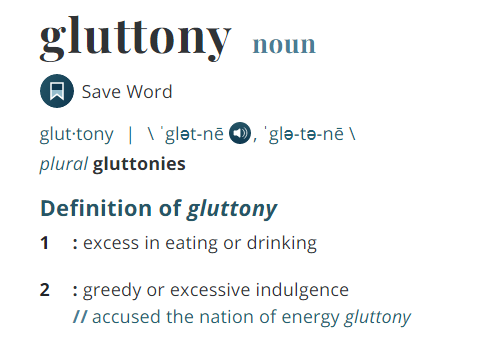
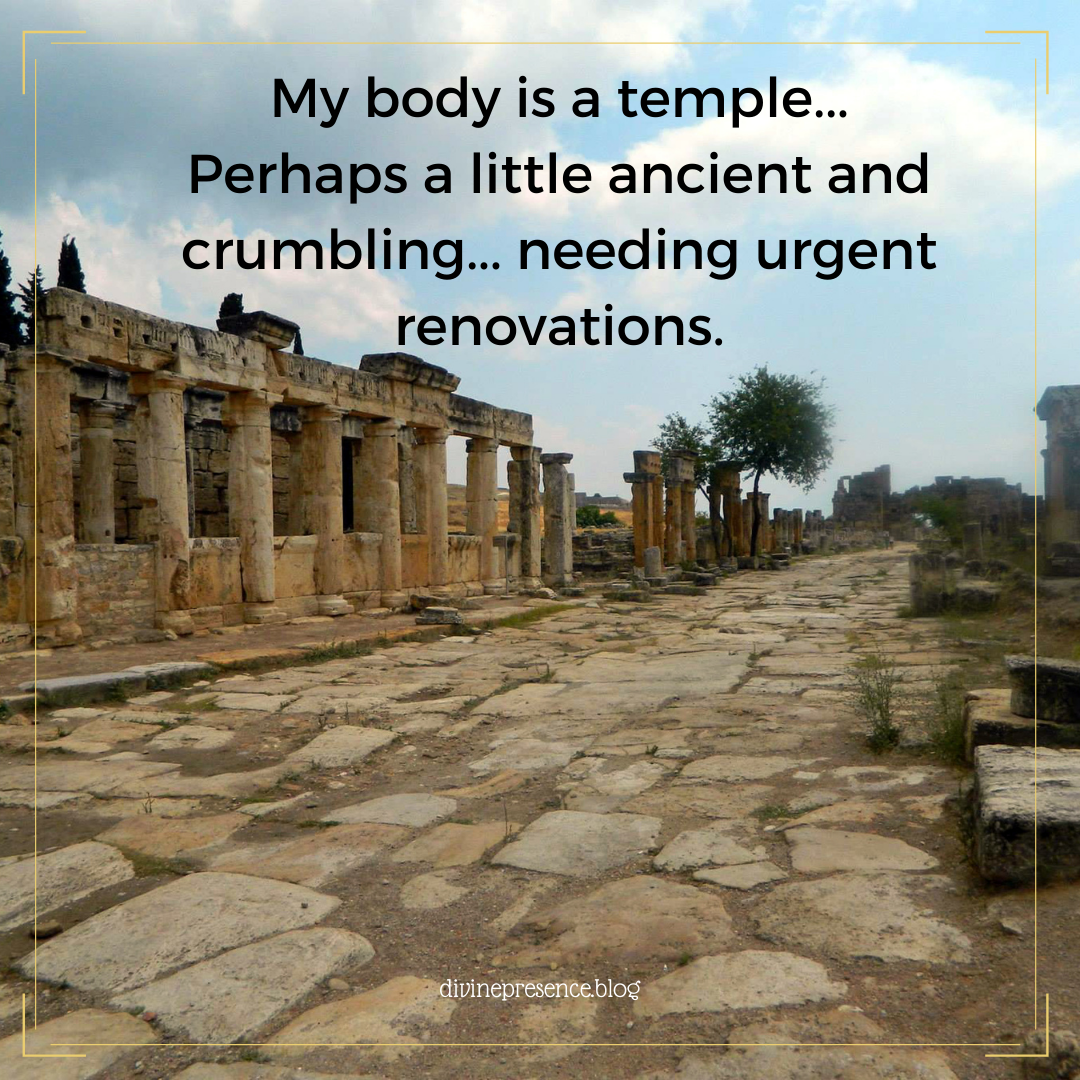
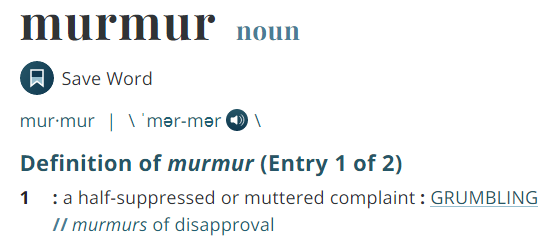
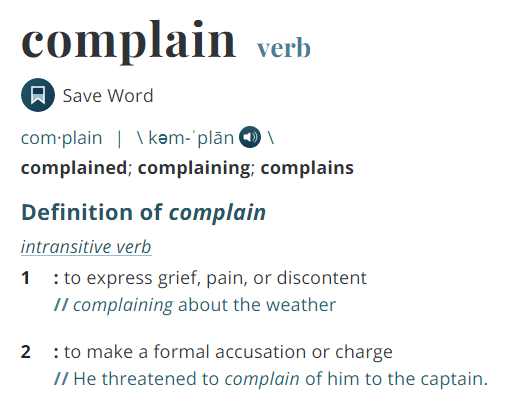
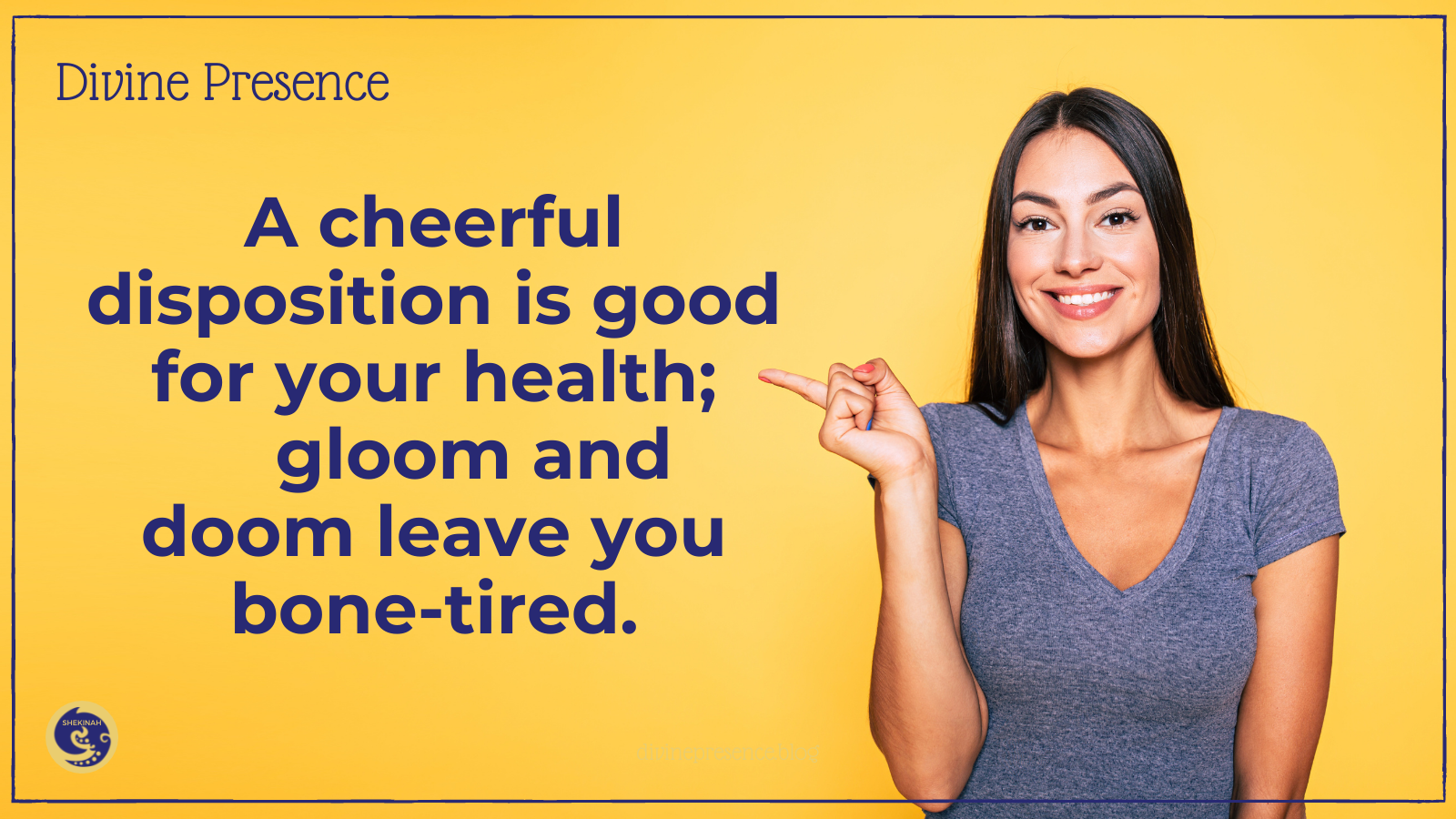
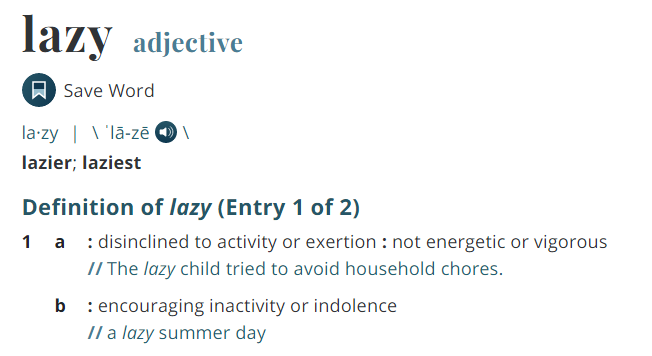
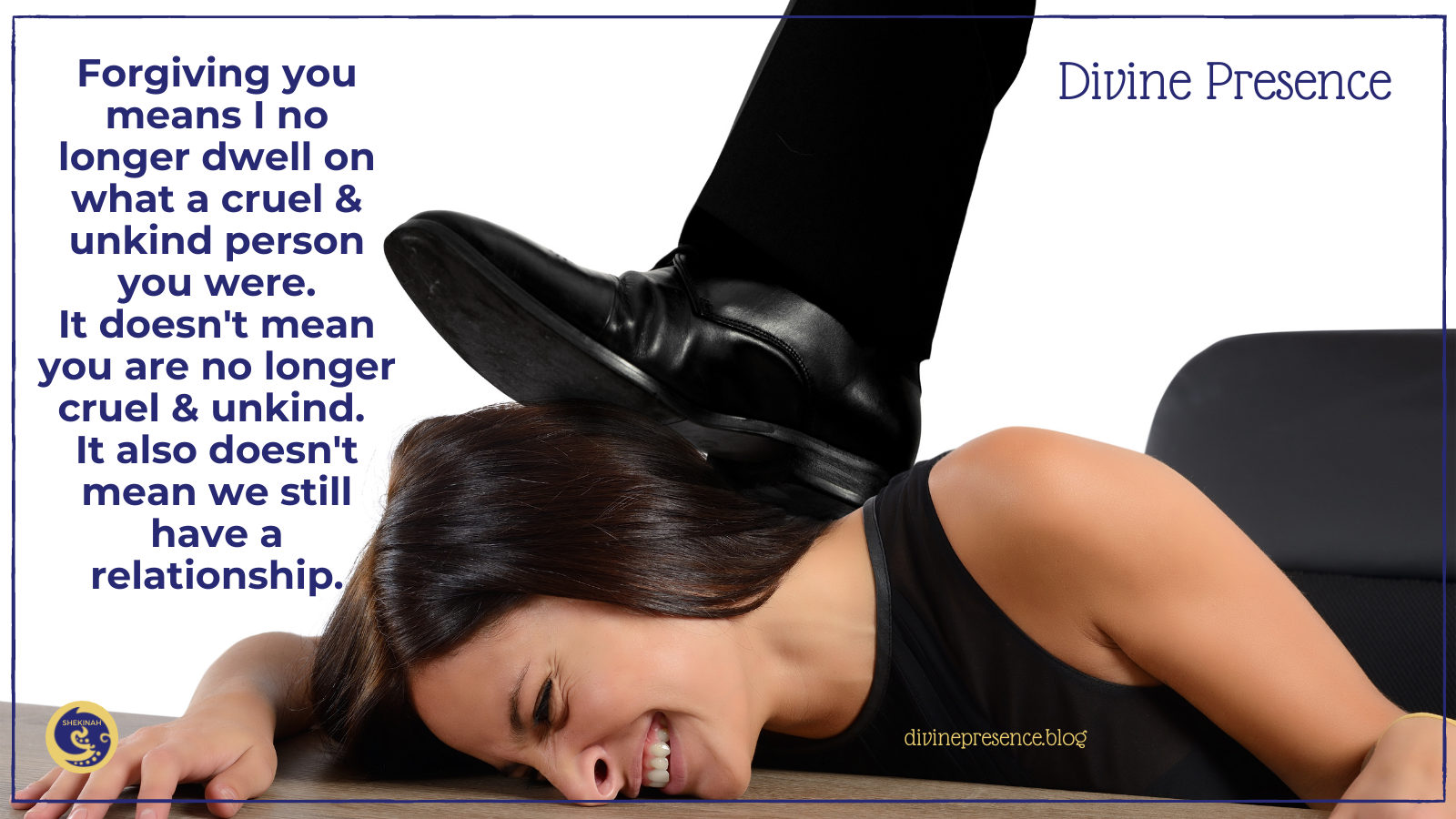
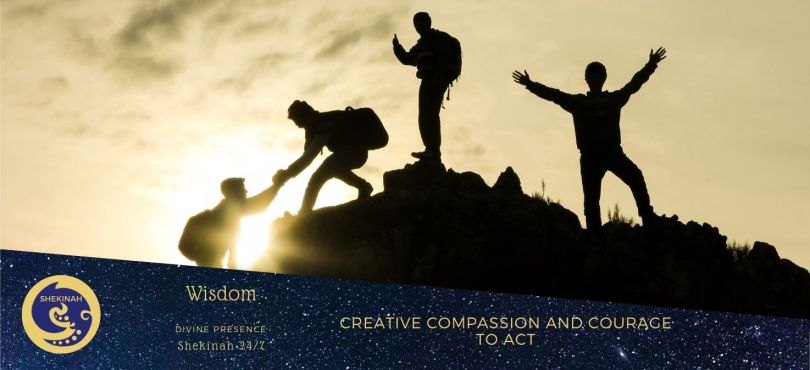
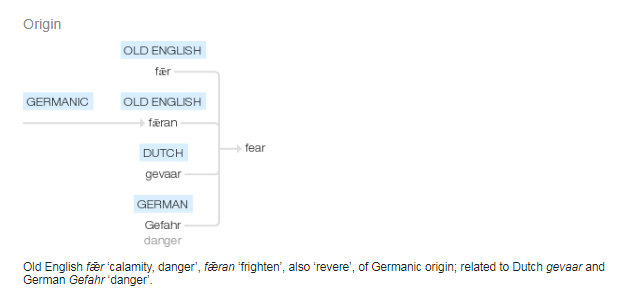







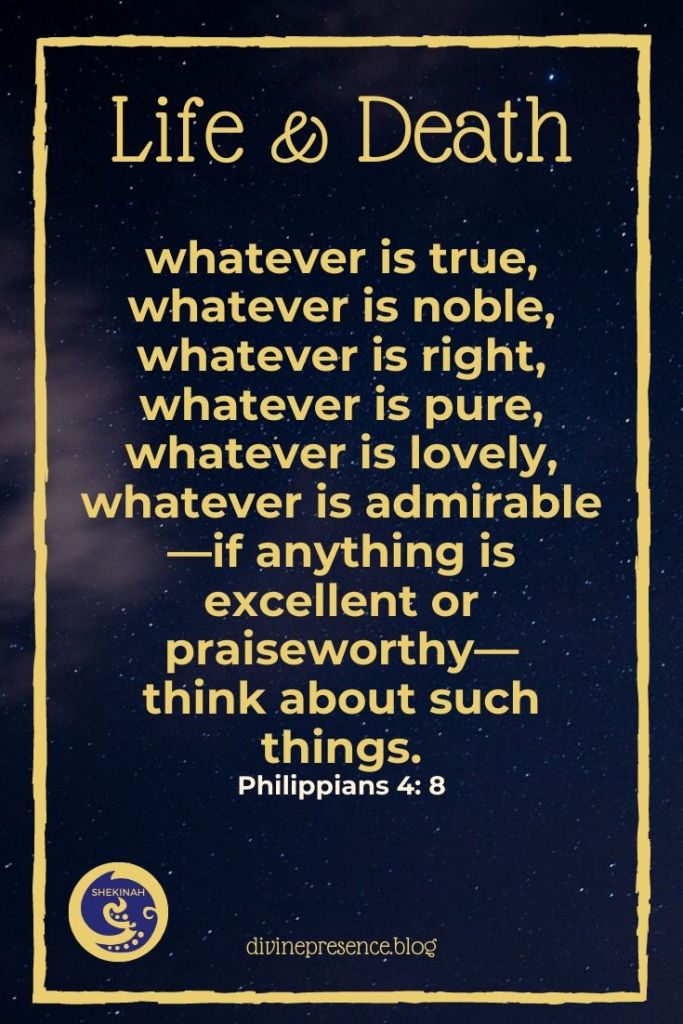
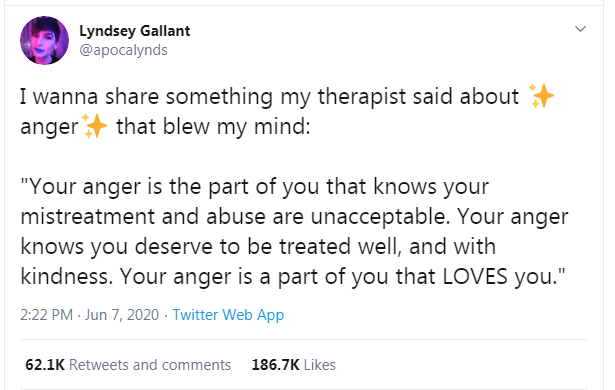






 Divine Presence: Letting the Infinite flow in my life