choose life, thy will be done, have it your way, doubting God, painful trial, you are suffering, rejoice, overjoyed, god, goddess, dazzling, radiant, immortal creature, energy, joy, wisdom, love, boundless power, mere human beings, God has been making it grow, earthly life, all religions are true, a better Christian, child of God, relationship with God, personal transformation, eternal life, gift of forgiveness, omnipotent, onmiscient, ever-present God, no other gods, loving God, walking in His ways

Choose life

C.S. Lewis said:

“There are two kinds of people: those who say to God, “Thy will be done,” and those to whom God says, “All right, then, have it your way”. ”

For those of us who have a hard time saying “Thy will be done” C.S. Lewis identifies:

We may be thinking about those verses in 1 Peter chapters 4 & 5 that say:  “Beloved, do not be surprised at the painful trial you are suffering… but rejoice that you participate in the sufferings… so that you may be overjoyed when His glory is revealed.”  “… those who suffer according to God’s will should commit themselves to their faithful Creator and continue to do good.”   “and the God of all grace, who called you to His eternal glory in Chris, after you have suffered a little while, will Himself make you perfect, strong, firm and steadfast.”

C.S. Lewis goes on to say:

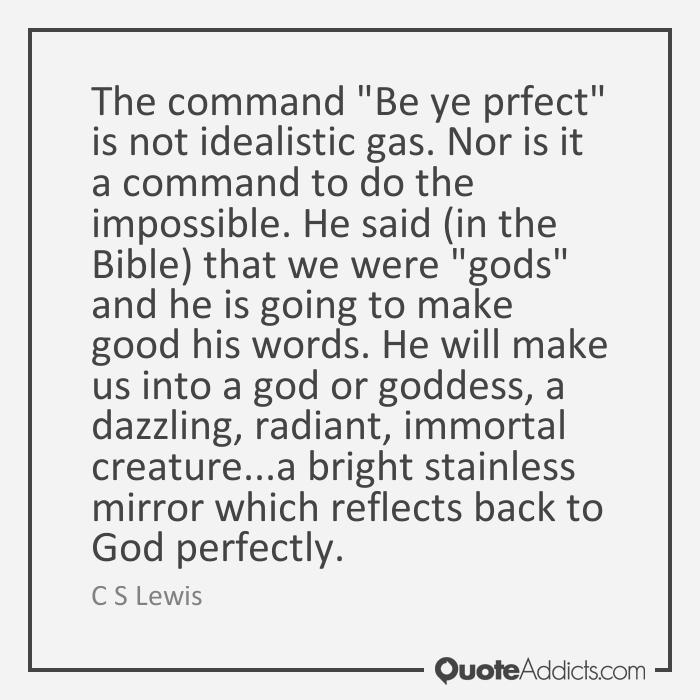
“If we let Him–…we can prevent Him, if we choose–He will make the feeblest and filthiest of us into a god or goddess, a dazzling, radiant, immortal creature, pulsating all through with such energy and joy and wisdom and love as we cannot now imagine, a bright stainless mirror which reflects back to God perfectly (though, of course, on a smaller scale) His own boundless power and delight and goodness. The process will be long and in parts very painful; but that is what we are in for. Nothing less.”
cslewisOur 4 lectionary readings have a common theme: they demonstrate to us how simple and yet profound the choice presented in the Bible is.

1st Corinthians 3, verses 3 to 7:

You are still worldly.  For since there is jealousy and quarrelling among you, are you not worldly?  Are you not acting like mere humans? For when one says “I follow Paul” and another “I follow Apollos” are you not mere human beings?  What, after all, is Apollos? And what is Paul? … I planted the seed, Apollos watered it, but God has been making it grow.  So neither the one who plants nor the one who waters is anything, but only God, who makes things grow.

We are not to get caught up this earthly life, or on whose teachings we follow, who is right or wrong.

Gandhi said:

“all religions are true … So we can only pray, if we are Hindus, not that a Christian should become a Hindu … But our innermost prayer should be (that) a Hindu should be a better Hindu, a Muslim a better Muslim, a Christian a better Christian.”

Spiritual maturity is being able to admit “God makes me grow” – not what I do. I am not “trying” to become a “child of God”: I already am a child of God. We have all been redeemed and bought with a price.  Our objective is not to win salvation; our objective is to become more Christ-like.  As my relationship with God evolves, I realise that salvation, sanctification and justification is about personal transformation.  I am not looking forward to eternal life when I die: eternal life began the day that I accepted God’s free gift of forgiveness.

But, am I allowing God to work in me or holding Him back?  Do I love myself and God enough to become a dazzling, radiant, immortal creature, pulsating all through with such energy and joy and wisdom and love as I cannot now imagine? Or am I caught up in this world?

In my adventure of getting to know the omnipotent, omniscient, ever-present God, Deuteronomy 30: verses 15 to 20 sheds light on my relationship with God.  Deuteronomy means “the second giving of the law.” In this Book, Moses repeats the law of God for those who will cross the Jordan into the Promised Land.

If you recall, before going up Mount Sinai to receive the 10 Commandments, Moses challenged the Children of Israel with the basic rules. Exodus 23:25 “Worship the Lord your God and His blessing will be on your food and water.  I will take away sickness from among you, and none will miscarry or be barren in your land.  I will give a full life span.”  And so, in Exodus 24: 3: “they responded with one voice, “Everything the Lord has said, we will do.

A couple of days later, while Moses is up on Mount Sinai getting the 10 Commandments, these same people ask Aaron to make them the golden calf.  Who here can honestly say they’ve never done this? “Everything the Lord has said, we will do” except for the “no other gods”, or whatever your favourite exception is.  We promise God one thing, and days later have completely failed.

So, here we have Moses, in Deuteronomy 30, repeating the law of God to the new generation; he offers them a choice:

See, I set before you today life and prosperity, death and destruction.  For I command you today to love the Lord your God, to walk in His ways and to keep His commands, decrees and laws… This day I call heaven and earth as witnesses against you that I have set before you life and death, blessings and curses.  Now choose life, that you and your children may live, and that you may love the Lord your God, listen to his voice, and hold fast to Him.  For the Lord is your life…

This passage is about my relationship with God, not about material prosperity. No magic formula for worldly success.  Nor was this was some “altar call”.  This was a call to surrender, each new morning, to Him.  “Choose life” refers to loving God, hearing Him, walking in His ways, keeping His torah, holding fast to Him and not going astray (each morning, each moment of each day).  It’s a radical difference – a life-style choice.

Psalms 119, verses 1 to 8 remind us.

1-     Blessed are they whose ways are blameless, who walk according to the law of the Lord.

2-    Blessed are they who keep His statutes and seek Him with all their heart.

3-    They do nothing wrong; they walk in His ways.

4-   You have laid down precepts that are to be fully obeyed.

5-    Oh, that my ways were steadfast in obeying your decrees!

6-    Then I would not be put to shame when I consider all your commands.

7-    I will praise you with an upright heart as I learn your righteous laws.

8-    I will obey your decrees; do not utterly forsake me.

Even David, a man after God’s own heart, admits that he is NOT perfect in obeying God’s decrees.  He feels put to shame when he considers God’s commands.  “I’d love to say I am obeying fully, but I’m messing up”.  If we are truly honest with ourselves, obeying God’s Word is challenging.  It’s a very high standard!  The Bible is the mirror in which we see our own inadequacies.

David admits he’s still learning God’s law, and finishes with “I will obey your decrees; do not utterly forsake me.”  Don’t give up on me God; I’m going to keep on trying.  We know David had some serious slip-ups in keeping God’s commandments.

He coveted his neighbour’s wife.

He committed murder.

So, how is it that he’s the man after God’s own heart? Well, firstly, although he obviously went through a period of rebellion (more than just a couple of months… maybe more than a year). He was far, far from God.  Yet, when Nathan confronts him, he repents.  There is true remorse, grief and shame.  There is a certain tenderness that comes with this repentance.  Surrender.

We see it again in Peter, who rejecting Christ 3 times, realises his rejection and rebellion, and goes out weeping bitterly.  Somehow, having reached the bottom, Peter was able to put aside his pride, accept Jesus’ forgiveness: was able to bow down and surrender.

Sai Baba said:

“Give up all bad qualities in you, banish the ego and develop the spirit of surrender.”

As a child of God, in our walk to become more Christ-like, we have to understand the importance of the spirit of surrender to God:  “Choosing life.”

Jesus makes it clear, in the sermon on the mount, that it’s not about legalistic fulfilment of the law.

It’s not enough just to know the law.  Last week we read: “let your righteousness surpass that of the Pharisees”.  Pharisees followed the letter of the law; even added a few for good measure. What have we humans done with God’s law?

Let’s see:

The Law of Moses established that we should fulfil our oaths:  Human interpretation says: “if I don’t make an oath, I don’t exactly have to tell the truth”.

Likewise, with respect to divorce:  what was “objectionable” enough about a woman to warrant divorce?  There were different views between various rabbinic schools:

One said:  A man may not divorce his wife unless he has found unchastity in her, for it is written, Because he hath found in her indecency in anything.

Another said: [He may divorce her] even if she spoiled a dish for him, for it is written: Because he hath found in her indecency in anything.

And yet another: Even if he found another fairer than she, for it is written (and this translation is a little more liberal than “because he had found in her indecency in anything), And it shall be if she find no favour in his eyes.”

And so Jesus explains that the true meaning of the law is to honour God, not just with your actions, but also with your thoughts, your motives and your attitudes.  What does it mean to “Choose Life”? Even Gandhi taught:

Before the throne of the Almighty, man will be judged not by his acts, but by his intentions.  For God alone reads our hearts.

These rules from the Sermon on the Mount are deeper and more personal than the laws of any country.  It delves deep into the innermost part of man, where only God sees.

We may think that our “thought life” is our own, hidden from others.  We indulge in “my thoughts” –save a little space, some room, for us to live in our little indulgences.  This hypocrisy of a secret thought life! – One way on the inside and another on the outside – This deep corruption and confusion is not “choosing life”.

We see another example of this when Jesus rebukes us for holding onto our anger, rather than choosing the higher way.   What do I choose to do with my anger?  Do I deal with it?  Buddhist teachings warn:

“Holding on to anger is like grasping a hot coal with the intent of throwing it at someone else; while holding it, you’re getting burned.”

Jesus says there is no real point in priding myself on the fact that I have never actually killed someone. Why? Well, because unresolved anger leads us to sin: saying “Raca” (empty head) or “you fool” (moron) – My angry, thoughtless words KILL my relationships, chipping away at the trust and love.

Jesus values our earthly relationships – important enough that he says we should leave worshipping God and go and make things right with our neighbour or brother.  We are to actively seek reconciliation.

True happiness and fulfilment comes from putting our relationship with God right and then our relationships with all of those around us.

Sai Baba says:  “Once we surrender our mind to GOD completely, HE will take care of us in every way.”

How do I really put into practice, in all aspects of my life, the grace that I have received, living a life of righteousness and holiness before God?  How do I “do justice, love mercy, walk humbly with God”?  I “know” (head knowledge) it means to desire Him above all else: He demands first place in my life.  No half-hearted or part-time love: “just Sunday mornings.”

Much like Christ says in the gospels to the young rich ruler:  No one is good except one–God. You know the commandments: ‘Do not murder,’ ‘Do not commit adultery,’ ‘Do not steal,’ ‘Do not give false testimony,’ ‘Do not defraud,’ ‘Honor your father and mother.’”  The young ruler said to him, “Teacher, I have observed all these things from my youth.”
Jesus looking at him loved him, and said to him, “One thing you lack. Go, sell whatever you have, and give to the poor, and you will have treasure in heaven; and come, follow me, taking up the cross.”

This isn’t the first time we’ve seen “choices” in the Bible.  Genesis: starts with the exercise of free will.  We can choose to eat the forbidden fruit or not – our eyes will be opened: but… will we like what we see?

Augustine said:

“When people choose to withdraw far from a fire, the fire continues to give warmth, but they grow cold.  When people choose to withdraw far from light, the light continues to be bright in itself but they are in darkness.  This is also the case when people withdraw from God.”

God doesn’t want me to pick and choose when I will love him, or under what conditions.  I am to Love God with all my heart and with all my soul and with all my strength.

I’m happy to be a Mary sitting at Jesus’ feet lapping up all the teachings.  I enthralled by His teachings.  But that’s not enough: how do I let go of earthly things, daily struggles, and become a dazzling, radiant, immortal creature, pulsating all through with such energy and joy and wisdom and love as I cannot now imagine?

If I loved God, really, truly, loved HIM, I wouldn’t have any problem keeping His commandments; I would have complete faith in Him and His Word, put absolute trust in Him.  I’d allow Him to guide me, not snatch the reigns back when things get tough.  I would surrender all and trust Him, be filled with His light, and let it shine through me into the lives of others around me.

We know (head knowledge) that “things” cannot give us life – they don’t satisfy the inner longing of our soul.  No harm in trying, right? And so, like the rich young ruler, we distance ourselves from God, putting our trust in our “security”.

True righteousness is more than just legal or external obedience.  It’s not about seeing how much I can “get away with” and still be considered “righteous”.  Wrong-doing arises because of the mind.  But if my mind is transformed, wrong-doing has no place to live.  God’s righteousness is concerned with His “shalom” – well-being, peace and harmony.  This is His righteousness: a peaceful, life-giving relationship with God.  I want, this day, to choose life.

And so, as C.S. Lewis said:

“He will make the feeblest and filthiest of us into a god or goddess, a dazzling, radiant, immortal creature, pulsating all through with such energy and joy and wisdom and love as we cannot now imagine, a bright stainless mirror which reflects back to God perfectly … His own boundless power and delight and goodness. The process will be long and in parts very painful; but that is what we are in for. Nothing less.”

And so, I repeat:

So, as you walk out of here today, which of the 2 types of people do you choose to be?

Those that say to God: “I choose to surrender and banish my ego. I trust you to do the best for me and to give me the strength I need for whatever You have in store, however painful the growth process may be. I want to become more Christ-like. Thy will be done.

Or those to whom our Father in heaven, with great sadness in His heart says, like as to the rich young ruler, “All right then, have it your way”.
Remember: When we lose God, it’s not God who gets lost.

forgiveness, lessons in forgiveness, what if Christ had hopped down from the cross, what do we learn from jesus, Father forgive them, forgiving

What if Christ had indeed hopped down from the cross?

Opening prayer:

Almighty and Everlasting God, with Paul we pray that you would fill us with the knowledge of Your will through all spiritual wisdom and understanding – that we may live a life worthy of you and in every way pleasing to you – a life in which we bear fruit in every good work, and acquire strength, endurance,  patience and a joyful heart – a heart that gives thanks to you in every situation.  We thank you for what you reveal to us through the study of Your Word as we continue in our search for the truth. That our peace may be made full. Amen.

What if Christ had indeed hopped down from the cross?

It is said that “one of the great, unique features of Christianity is that it is a religion of God coming down to us, totally unlike other religions where we have to raise ourselves up to a godly plane. Christianity is light shining in the darkness. It is not the darkness trying to become light…”

Many of us struggle with the Christian life, the whole “nailing the old self to the cross with Christ” – it is a constant battle to “Be holy, as I am holy”.  Wouldn’t it be nice if the Bible asked us to “Be self-righteous…”?  But no… we are called to be holy, to be vessels of His light, and all the while the spiritual man within us battles against “the dark side”.

Did I say I nailed my old self on the cross with Christ? Face it, while Biblically my old self is reckoned dead at Calvary, this morning, as I woke up, it reared it’s ugly head, it was still alive and kicking and in need of being nailed back on that cross again and told to “stay there”…  so that I can be a loving, joyful, peaceful, patient, kind, and faithful Christian, filled with gentleness, humility and above all with control over myself, my mind, my emotions, my reactions, and my desires.

So, what can we learn from today’s readings?

Let’s consider Luke 23:

We all know the reading well,  Jesus at Calvary (the Skull), how He was mocked and challenged to get down off the Cross, and of those eternal words that are engraved on our hearts:  “Father, forgive them; for they do not know what they are doing.”

This morning I want to consider the implications of “What if…”.

What if…  Christ had not said “Father forgive them, for they know not what they do”?

What if Christ, having said in Gethsemane “Father, if you are willing, take this cup from me; yet not my will, but yours be done.”, had then reached the Cross and come down from it as challenged to do by the Pharisees and religious leaders, by the Roman soldiers, by the thief nailed with him?  Judgement day arrived early…

How would our Bible read today if these events were not as recorded in Luke 23?  What would it mean to be a follower of Christ, if Christ hadn’t died on that cross?  There would be no books of Acts, the Epistles… would the book of Revelations have been written?  What would have become of Peter, who denied Christ 3 times?  What would have become of doubting Thomas? Would he then have believed?

I want to start by looking at our concept of forgiveness, and the influence that Christ’s forgiveness, right at that crucial moment has on us:  How would you interpret Isaiah 38:17 “…in love you have delivered my life from the pit of destruction, for you have cast all my sins behind your back.”, if Jesus hadn’t died on the cross?  How far behind God’s back would you say He had cast your sins?  Would you really believe that God was a forgiving God; that He forgives and forgets?

If Christ had been silent at that moment, I could say, “I’m not making amends, It’s her fault, she has to say sorry first”, or  “I’m the one that’s hurt and offended, I’m the victim here, Why do I always have to be the one to say Sorry and I forgive you?”.

But no, Jesus had to go and ruin it all for us, and put the bar very, very high… No arrogance. No pride. No bitterness.  Just forgiveness.  An outpouring of love.

When you look at the gospels, Jesus was always preaching forgiveness:  to the paralytic Jesus said “Friend, your sins are forgiven you”; to the woman caught in adultery: “woman, your sins are forgiven”; in prayer: “forgive us our trespasses as we forgive those who trespass against us”.

Daniel 9:9 tells us “The Lord our God is merciful and forgiving, even though we have rebelled against him”.  What kind of merciful and forgiving God would you believe in, if not for the example of Christ?  Psalms 103:12 “As far as the east is from the west, so far has he removed our transgressions from us.”

In Matthew 18:22 Christ responds to Peter when asked about forgiveness: “I do not say to you, up to seven times, but up to seventy times seven.”  So, when another person offends us, we are to forgive that person for that one offence 490 times (in a single day), and if today he repeats the office, I have to forgive him once more 490 times.  It’s a state of being, not an action. Not something I say.

My perception of what forgiveness is has been shaped by Christ’s forgiveness on the cross. His compassion.  His empathy.  His understanding.

Christ could see that the soldiers were following orders; they didn’t know who he was or what he was; trained to survive wherever they were stationed.

Christ saw Pharisees and Scribes that had spent years studying “the Law”, but that never allowed the law to change them on the inside.  They had head knowledge, but no heart knowledge.  And even though they had orchestrated his death, he still felt compassion for them.  He was able to look further than what they were doing to him right at that moment in time… He was clear about God’s will and his role in fulfilling it.

Christ saw a thief and murderer who was scared, who was hardened by the life he had chosen, … and who would use bravado to cover his fear. That like a dog that is backed into a corner, will lash out and attack another, rather than show how vulnerable he really is.

And Christ forgave.

Without this moment, without this event, we would never have had Acts 7:60 (Stephen, being stoned): “Lord, do not hold this sin against them.”  Where would Stephen have learnt this kind of forgiveness, if not from Christ?  And the apostle Paul, that day a young Pharisee looking on and approving the stoning, holding the coats of those killing Stephen, what would have become of him?  There would have been no apostle Paul if there was not Christ dying on the cross.

Would we (gentiles) have the news of the gospel of Christ if Stephen had not been stoned to death and been able to forgive those that were doing so?  Would salvation have only been, then, for the Jews?  Without the Apostle Paul, what New Testament Epistles would we have?  What would replace: Ephesians 4: 31-32: 31 “Get rid of all bitterness, rage and anger, brawling and slander, along with every form of malice. 32 Be kind and compassionate to one another, forgiving each other, just as in Christ God forgave you.”  What would become of Colossians 3:13 “Bear with each other and forgive whatever grievances you may have against one another. Forgive as the Lord forgave you.”

Matthew 6:14-15 tells us: “For if you forgive other people when they sin against you, your heavenly Father will also forgive you. 15 But if you do not forgive others their sins, your Father will not forgive your sins.”  Mark 11:25 “And when you stand praying, if you hold anything against anyone, forgive him, so that your Father in heaven may forgive you your sins.”

Where would we be without Hebrews 12: 14 and 15? “14 Follow peace with all men, and holiness, … 15 Looking diligently … lest any root of bitterness springing up trouble you…” If I fail to forgive, bitterness will take root in my heart…

When we withhold forgiveness, we imprison ourselves.  Jesus understood the power of forgiveness: it frees me and the person that I have forgiven.  Forgiveness: in Greek, the power to loose, to free, to cast off chains.

Philip Yancy tells of an immigrant rabbi: “Before coming to America, I had to forgive Adolf Hitler”.  “Why?”  you might ask. The rabbi went on: “I did not want to bring Hitler inside me to my new country.”

When I fail to forgive, I carry that person (and the bitterness) inside me.  I build the walls of my own prison.  And so today, I am thankful to Christ for His forgiveness.

But what if…  Christ had hopped down from the Cross that day, if he had given the Roman soldiers and the Pharisees “what for…”, what religion would we have today?  What of… bowing to God’s will and counting the cost?

Mark 8:34 and Matthew 16:24 tell us “If any man will come after me, let him deny himself, and take up his cross, and follow me.”  What would that mean to you today, if Christ had hopped down from the cross on that day and demonstrated his power?

What would have happened to the veil in the temple, hiding the holy of holies from the human eye?  Would it have been ripped in two that day?  Would we believe in direct access to God, or burnt sacrifices, incense and offering atonement for sins?  Or would that just be for the children of Israel, with all of us living with our pagan beliefs?  Would we believe in a loving and forgiving God, that is holy and found the way to reconcile us to Himself?

Without Luke 23: 33-43 there would be no book of Philippians, chapter 2, verses 5 to 8:  Let this mind be in you, which was also in Christ Jesus:  Who, … made himself of no reputation, and took upon him the form of a servant, … he humbled himself, and became obedient unto death, even the death of the cross.”

What if, instead of that, we had Christ on the cross saying: “ok, cut the crap! I am here to enforce God’s will and deliverance!  You think you’re big strong soldiers? You think your swords and spears scare me?  You have no authority over me.  You don’t REALLY think you can kill me do you?  Let me show you who’s really Boss…” Would lightning have sprung from the sky?  Would the angels have slain all present?  Would Christ have judged all those that deserved judgment? Think of the implications:  No more Pharisees, no more Roman invasion of Israel… no more freedom from sin through that blood sacrifice.

So… Why doesn’t Jesus save himself? He can raise the dead, walk on water, heal the sick, turn water into wine… Why not jump down? Jesus wasn’t a miracle worker. He’s not an entertainer; He wasn’t here to amuse and amaze.

Remember Luke 4:9-13? Then the devil took (Jesus) to Jerusalem, and placed him on a high pinnacle of the temple saying, “If you are the son of God, throw yourself down from here, for it is written: ‘He will command his angels, concerning you, to protect you,’ and ‘On their hands they will bear you up, so that you will not dash your foot against a stone.’  Jesus answered him, “It is said, ‘Do not put the Lord your God to the test.’

If … you are who you say you are… If… you are the Son of God… If you have the power…  and yet, Jesus rejects this temptation.

What does it mean to believe in a Saviour who doesn’t save himself?

I would like to have a saviour who would come to the rescue, kill the bad guys, cure the disease, end the injustice, and solve every painful circumstance. But salvation is not an event – it’s not a miracle that rescues us from pain.

Salvation is about re-establishing our relationship with God, about becoming a vessel of light.  It has nothing to do with the circumstances in which we find ourselves.  Am I sitting in fields of green, surrounded by sunshine and happiness? Great! But how’s my faith?  Am I suffering from the death of a loved one, the prolonged illness of a parent or child?  Terrible… but how is my relationship with the Everlasting?

Is there commitment? – founded on the hope, wholeness and well-being that comes from being grounded in my faith. Jesus was here to show us the way to a relationship with God, a relationship that endures, survives and persists through all the ups and downs of my changing circumstances.

It wasn’t about power:  ¿Remember that Peter drew his sword the night before, to protect his Christ and leader?  And Jesus’ response: “Put the sword into the sheath; the cup which the Father has given Me, shall I not drink it?”

We often have the power to do things differently – we’re in a situation where we know we’re right, “I know someone that can make you do it”.  The nice thing about power is that when you have it, you can use it.  Or you convince others that you have it, and then you don’t actually have to use it.  But if someone isn’t convinced that you really have the power, that you really can make them minced meat, then sometimes we feel “forced” to show our hand, just to shut them up.

If Christ had not obeyed God’s will on that day, would my obedience to God be optional?  Is it convenient? Do I feel like it? Is the cost too high?  Can I stay in my comfort zone?

To be followers of Christ means that we deny ourselves, we obey God’s commands, even when it’s to our detriment, when the personal cost to ourselves is high.

We who follow Christ are the difference in the world:  the ones that kneel down and wash another’s feet.  We cannot discriminate.  We are no longer to follow our every whim and addiction, living capriciously or aimlessly.  We are to care for those less fortunate than ourselves, with generosity of spirit for all.

As a follower of Christ, we forgive the drunk driver who killed our son or daughter in a hit and run accident (and we pray for him); we forgive our sister for those bitter and twisted words that she said in a moment of anger and pain, we have empathy and do not hold it against her; we forgive the boss that curses us and take a moment to say a prayer for him and his family.

We read in Jeremiah that God promises to gather together the remnant of His flock, to raise shepherds over them, that we should fear no longer, or be dismayed or have anything missing.  This deliverance: YHWH Tsidkenu – the Lord is our righteousness.  Righteousness, when it refers to God, speaks to His nature, the saving and healing activity of God.  God shows His righteousness by making us whole, by forgiving us, keeping His promises to us.   The true purpose of our liberation and our freedom is to worship and serve God without fear.

Colossians reminds us that we are to be made strong with all the strength that comes from God’s glorious power, prepared to endure everything with patience (even when it’s unjust mocking and abuse), while joyfully giving thanks to our everlasting, ever loving Creator.  We are to share in the inheritance of saints in the light – allowing the light to shine through us, remembering that our God has rescued us from the darkness, that we have redemption and the forgiveness of sin.

Jehovah Tsidkenu, before all things, is our source of healing and empowerment.  We are not expected to do it on our own.

Our joy is not the power of influence and control, but the power of love that flows brings transformation.  Love lies at the heart of the universe and is God’s wisdom and will.  And that is what we see when we visualise Jesus hung on the cross between two thieves, being mocked by the soldiers, by the religious leaders, by the thief at his side.

We see that Jesus, the one that could forgive; He gives us the hope of our salvation and freedom from the chains of bitterness, envy, pride, arguing, hatred and strife.  Freedom from the darkness within us… to be vessels of light… and for this we are thankful.

does your religion forget god, power of God, power of the divine, divine presence, practising the power of divine in our life, ignoring those who need help

Does your religion forget God?

“Does your religion forget God?”

As I stand up here this morning, I am reminded about why Jeremiah said to God “I don’t know how to speak; I am only a child”.  Well, maybe not a child, but Mum & Dad are sitting in the congregation listening, and I feel like a child. Are they going to like what I said? What are they going to say in the car on the way home?

Like Jeremiah, I feel that there is something important to share this morning, for the strengthening, encouragement and comfort of each one of you.  So, with some fear and trembling, I dare to ask “Does your religion forget God?”

When I read Luke 13: 10-17, titled: A Crippled Woman Healed on the Sabbath, I wonder whether I am the crippled woman or the Synagogue ruler.

For a moment, I want to consider the crippled woman.  Luke tells us:

  • She was crippled by a spirit (other translations mentions that it was a spirit of illness or infirmity).  This doesn’t mean demon possession: it’s more like the torment that Job endured when Satan afflicted his body.
  • For 18 years she’s been suffering!
  • She’s bent over, unable to straighten up – Now, If you get Ankylosing Spondylitis (a chronic progressive form of arthritis distinguished by inflammation and stiffness) today’s medicine can relieve the pain, but not actually cure the condition.
  • She was in the synagogue on the Sabbath
  • Finally, she was standing somewhere at the back, because Jesus had to call her forward.

I wonder how this spirit of illness attached itself to her: did it start attacking her slowly, surreptitiously, taking over her health a little at a time, so that she didn’t notice it at first?  Or did it crash in and knock her over and out, that she was overpowered and unable to fight back? For 18 years, she lived with this condition, probably in reluctant acceptance… something uncomfortable, but irreversible.

Sighing: “Oh well, this is my lot in life, I’ll just have to live with it”.

“It’s been this way for so long, I’ve learnt to live with it. In fact, I’m almost beginning to notice the benefits of this condition: SEE – I have a really good view of the floor for sweeping and mopping, it’s easy to do the laundry and the washing, I can pick up the kids clothes and toys easily, I don’t bump my head much on the low-handing doors or cupboards, preparing the food over the wood fire is effortless, and all the rest of the household chores are easily handled from here. I know I shouldn’t complain: there are a lot of others that are much worse off than me.  Overall, I’d say I’m doing pretty well: But, sometimes I wonder what the blue sky looks like, and I miss seeing rainbows.”

Is that why she wasn’t rushing to ask Jesus to heal her?  Had she lost hope, over the 18 years?  Maybe she’d prayed about it, when she was first afflicted by the pain and the spirit of illness, but there was no answer, and she decided that God was much too busy with other people and other problems and hers was just a little problem.

While there is the possibility that she relished her infirmity and felt that she was better than others, or she enjoyed feeling sorry for herself, I don’t think this was her view.  Given her reaction to the healing, “she straightened up and praised God”, I think she’d given up hope, but there was just that tiny, small, almost unspoken wish, that MAYBE, just maybe, Jesus will notice me and say or do something.  Maybe she was too scared or nervous or ashamed to ask for healing or speak to Jesus.

What we know is that she had the courage to step up and come forward.  When Jesus called her, not knowing whether he would call her to bless her, to question her, to rebuke her, or to speak with her, she came forward.  What do I do when Jesus asks me to step forward?  Do I cower in the background, hoping he’s talking to someone else?  Do I hide behind another?  Or do I walk forward to receive his Word and his healing touch?    What do you do when Jesus speaks to you?  Do you even realise that it is Jesus speaking?  Or think, “oh, he’s talking to someone else”?

Or maybe you’re so overcome by the problem, the weight on your shoulders, your human condition that you can’t drag yourself into Church.  And you say to yourself, I went to Church last week, and he wasn’t there and he didn’t talk to me, so why’s it going to be any different this week?  Are you busy looking at the earth? Stooped over? Looking down, instead of looking up?  Are your eyes fixed on God or on your own condition and its results?

Let’s have a look at the Synagogue ruler:

We know that he was INDIGNANT about Jesus healing on the Sabbath.  I remember reading somewhere that righteous indignation is usually 1% righteous and 99% indignation.  He’s so indignant, in fact, that he doesn’t even address Jesus and directs his speech to those present: “There are 6 days for work: so come and be healed on THOSE days, not on the Sabbath.”  Was the synagogue ruler right?  We know that the rules about the Sabbath are repeated or clarified 12 times throughout Exodus, Leviticus, Numbers and Deuteronomy.

Exodus 20 “Remember the Sabbath day by keeping it holy. Six days you shall labour and do all your work, but the seventh day is a Sabbath to the Lord your God.  On it you shall not do any work…”  Exodus 23 “ … so that your ox and your donkey may rest, and the slave born in your household… may be refreshed.”  Chapter 34: “… you shall rest; even during the ploughing season and harvest you must rest.”  And Exodus 35:  “Do not light a fire in any of your dwellings on the Sabbath day.”  In Leviticus 23: “a Sabbath of rest, a day of sacred assembly.  You are not to do any work; wherever you live…”  In Numbers we read of a man found collecting fire wood on the Sabbath, who Moses had stoned outside the camp, “as the Lord commanded Moses”.   This was SERIOUS!  The Sabbath was to be kept holy, set apart for God.

But the real nitty gritty rules, how to put it into practice, were rules made by man (yes, probably the lawyers)… These clarified that “rest” meant you couldn’t walk more than about 1.5 km from your home, but if you left food for 2 meals at the 1.5 km mark, you could walk another 1.5 km on from that point, since it was now your “dwelling”.

And yet we also find in the Bible, exceptions to this rule:

  • Leviticus 24:5-9 – the Levites were to present to God fresh bread EACH day, including on the Sabbath, for which they were to light fires and cook, even on the Sabbath.
  • In John 7, verses 22 and 23 we find that it was acceptable for a baby boy to be circumcised on the Sabbath
  • And in Matthew 12 we read that if a sheep falls into a pit, any owner would pull it out.

The Mischnic tractate “Sabbath” has precise definitions for the purpose of determining what was allowable and not allowable on the Sabbath.  And I’m sure that the synagogue ruler had memorised them all!   We all know his kind: they’ve been in and around churches for decades.  He doesn’t see this healing as an “act of God”, but rather a natural act of healing (that somehow must therefore be work).  How much criticism, condemnation is there in churches, excluding the possibility that it is God working the miracle, healing, restoration or freedom from bondage?

So, we have the crippled woman and the synagogue leader; now let’s have a look at Jesus:

I find it curious that the woman was not up the front, looking to get healed.  Jesus singled her out of the crowd, and called her forward.  He must have known that this was going to get a rise and reaction out the Pharisees, scribes or other synagogue leaders.  I believe he was taking the opportunity not just to heal her, but to bring restoration as well by confronting a problem.

The synagogue leader plays right into his hands and overreacts.  Just when the woman is praising God (not Jesus, but God), the synagogue leader steps up and tells everyone that the healing services in this church will only be held from Sunday through Fridays. “There won’t be any healing services held on the Sabbath. It’s NOT God’s will that anyone be healed on the Sabbath.”

And so Jesus, the Lord of the Sabbath, that same Lord that has already said previously in another synagogue and to another group of Pharisees that the Sabbath was made for man, and not man for the Sabbath, confronts him with:  “You hypocrites!”

I don’t know about you, but I might be a little embarrassed, maybe even a little offended!  I’m standing in MY synagogue, in front of MY friends and cronies, I’m the big fish in this little pond, and this guy (that I probably hadn’t even invited to come and teach) steps up to the microphone, takes over the teaching, and on top of that calls this woman forward from the back, who is OBVIOUSLY a sinner, (in case you hadn’t heard, she’s crippled by a SPIRIT), and he heals her, ON THE SABBATH.

To make matters even worse, Jesus insinuates that this woman has as MUCH right as I do to salvation and freedom?  He categorically states that she is a daughter of Abraham!  As if she was somehow at the same level as the sons of Abraham.

Without mincing his words, Jesus asks if this woman, whom SATAN (not herself through her sin) has kept bound for 18 long years, doesn’t have the right to be set free on the Sabbath day from what bound her?  (I’m sure the synagogue ruler wanted to say: “Well, maybe, but Not in MY church!”).

So, I come back to the question that I started with:  Does your religion forget God?

The 10 Commandments, they start with “You shall have no other gods before me” and “You shall not make for yourself an idol in the form of anything…”.  I’m certain that the synagogue leader firmly believed that he had no idols or any other gods.  He knew the laws and followed them religiously.  And I imagine that in the crippled woman’s house, we would have found no idols or other images.

And yet, in a way, each of them had something that held their attention, that defined them:

  • The woman was burdened, weighed down under the circumstances of her life.  She was living in defeat, possibly sapped on strength and vitality.   I imagine she felt like an outcast, maybe a hunchback, and probably in pain.  Probably the vertebrae of her spine were fused together.  And so, she’s come to accept this bondage – she accepts her condition.  She forgets that God is over and above all, even though she still somehow clings to that slender thread of belief that somehow, in the synagogue, she will still find the answers.  But she has given-in; she’s no longer asking God to be bigger than the problem.  The problem is obviously bigger than God.
  • The synagogue leader, on the other hand, has a god or idol that is much easier to identify (at whom we can point the finger): his ego, his knowledge of the scriptures, ME, ME, ME.  I AM.  I KNOW, I OBEY, I FOLLOW. He wants to keep control of the synagogue: he wants everyone to obey and follow the law the way he does. His way.

And just because we don’t assist religious temples dedicated to nonexistent deities, we think we are free from idolatry as well.  Our biggest idol, in secular society today, is what encourages us to worship ourselves:  greed, jealousy, self-indulgence, selfishness, pleasure, pride, arrogance, injustice, self-pity, hate, anger, and such like.  We work for money, for pleasure, for power, for importance, for a sense of self-worth or self-importance.   Our lives are centred and revolve around ME, MY FAMILY, MY JOB, MY CAREER, MY FEELINGS, MY SALARY, MY RAISE, MY REPUTATION, MY IMPORTANCE, MY EFFORTS, MY HOUSE, MY DECISIONS, MY WAY… and even go so far as to be about MY GOOD WORKS, MY MISSIONS EFFORTS, MY CONTRIBUTIONS, MY INTERPRETATION OF THE BIBLE, MY WALK OF FAITH, MY SUFFERING, and so on.

How far is my religion from actually loving and serving the Almighty God?  What do I need to be freed from, like this woman, to be like Jeremiah and accept that before God formed me in the womb, He KNEW me and set me apart for a special purpose even before I was born?  Am I living in the freedom that I have through the salvation of Christ Jesus?  Or am I still focused on the idols or bondage and burdens of my life?  Am I fulfilling my calling in Colossians 3: 12-15:  “Put on then, as God’s chosen ones, holy and beloved, compassion, kindness, lowliness, meekness, and patience; forbearing one another and, if one has a complaint against another, forgiving each other; as the Lord as forgiven you, so you also must forgive.  And above all these put on love, which binds everything together in perfect harmony.  And let the peace of Christ rule in your hearts, to which indeed you were called in the one body.  And be thankful.”

From personal experience I can tell you that when I started to examine my life, and identify those IDOLS that I put ahead and are more important than God, it startled me.  There were the obvious idols: my ego and pride, my career as a lawyer, my intellect, my achievements, my relationships… Susy (my Chihuahua) – on a pedestal of love.  My finances and my business – because we all know, my professional life and my relationship with God are mutually exclusive, right?  God is for Sundays and devotional time each morning or evening, and then from 8 to 5 I work and am a professional.  There’s no reason for the two to overlap or meet!  I tithe my money to the Church, and what I do with the rest of it is mine to decide, right? What does Christ mean he wants to be Lord of ALL?

On the one hand, I know that Jesus came to bring liberty to the captives and healing to the sick, as well as to save each man from sin.  He wants us to be His followers.  But, for some reason, we overlook that this means a radical life-changing experience.  Galatians 3:3 warns all Christians not to be foolish “… After beginning with the Spirit, are you now trying to attain your goal by human effort?” The Holy Spirit was sent to help us, so that we wouldn’t rely on our human effort alone, becoming self-centred.

God asks us to put HIM first, Lord of ALL… we are each faced with a decision: Do I trust God enough to hand over my business? Do I really trust Him? Who is God that I should trust Him?  What does it really mean to hand over my life, my finances and business to God?

This life-changing decision is now about asking God for His opinion and His permission, and there is no longer any sphere or area of life which is exclusively MINE, where God doesn’t have a part!  It means that before I go to work each day, I put the day before Him in prayer and ask Him for His strength and guidance, rather than depending on my own wisdom.  I must have the courage to do things differently: look at problems, issues and people from His perspective, not mine.

When we decide to put God first in our lives, as Jesus would have us do, we realise that it’s no longer MY synagogue, or MY burdens and bondage, but that we are to live under HIS freedom.  We are to show His love to every man, woman or child, not just those that we believe deserve it or are entitled to it. He is an equal opportunity freedom fighter.

Jesus knows that it’s not ONLY our possessions that may get in the way of our relationship with God, but also our self-pity, our sense of self-worth, our hopelessness, our piousness, our knowledge and human intellect.

At the end of the day, Jesus is looking for all of us to accept His deliverance, to have a new identity, and to give the praise to whom it is really due: to God, as the crippled woman did and those that saw her healing.  Having a personal relationship with Jesus, being His follower, means living in freedom from bondage and trusting in Him, so that it is no longer I (or me) but Christ working through me. He would have us all say, as we did in our prayer of confession at the beginning of the service, with the security that we trust Him in every area of our lives:

In you, O Lord, I have taken refuge; let me never be put to shame. Rescue me and deliver me in your righteousness; turn your ear to me and save me.  Be my rock of refuge, to which I can always go; give the command to save me, for you are my rock and my fortress. For you have been my hope, O Sovereign Lord, my confidence since my youth.  From birth I have relied on you; you brought me forth from my mother’s womb. I will ever praise you.  (Psalms 71: 1-6)

A friend is someone who knows all about you and still loves you.
acupuncture, allowing the infinite to flow, the flow of energy, the flow of power, God is light, the power of light

Acupuncture – and understanding God…

Let’s start with the basic tenet from the Bible: “God is light and in him is no darkness at all.” (1 Jn 1:5), and let’s take it literally:  God is LIGHT.

So, what is light? Light, scientifically speaking is particles and waves, which is a range of electromagnetic radiation that can be detected by the human eye, or photons.  Photons, which are massless particles and bursts of energy “quanta” which move at the speed of light. Electromagnetic waves start when an electric charge jiggles back and forth. In fact, you can actually think of an electromagnetic wave as being two waves in one – it has both an electric field and a magnetic field that move together. Being more simplistic, light is energy.   The Bible also says that God is an all-consuming fire.  Once again, we’re talking about energy.

Question by a 14-year-old: “doesn’t everything have atoms or at least mass and weight? if it doesn’t, then is it really there?”

Scientific answer:  “Lots of things aren’t made of atoms. Light and other electromagnetic waves are an obvious example. Individual protons, neutrons, and electrons don’t constitute atoms until they’re combined.”

So, while God doesn’t have atoms and mass and weight, if God is light, then as electromagnetic waves, God can exist even though we can’t see God.

So… then let’s look at what Chinese medicine tells us about the human body:  As the basis of Acupuncture, Shen Nung (oldest known acupuncturist) theorised that the body has an energy force running throughout it.  This energy force is known as Qi (pronounced Chee).  The Qi consists of all essential life activities, which include the spiritual, emotional, mental and the physical aspects of life.  A person’s health is influenced by the flow of Qi in the body. If the flow of Qi is insufficient, unbalanced or interrupted, Yin and Yang become unbalanced, and illness may occur. Qi travels throughout the body along “Meridians” or special pathways.  Acupuncture is the insertion of very fine needles, (sometimes in conjunction with electrical stimulus), on the body’s surface, in order to influence physiological functioning of the body. The acupuncture points are specific locations where the Meridians come to the surface of the skin, and are easily accessible by “needling” and Acupressure. The connections between them ensure that there is an even circulation of Qi or energy.

How does Acupuncture work? Scientists have no real answer to this; as you know many of the workings of the body are still a mystery!  By some unknown process, Acupuncture raises levels of triglycerides, specific hormones, prostaglandins, white blood counts, gamma globulins, opsonins and overall anti-body levels.   The “neurotransmitter” theory states that certain neurotransmitter levels (serotonin & nor-adrenaline) are affected by Acupuncture.  One of the most popular theories is the “Gate Control” theory.  According to this theory, the perception of pain is controlled by a part of the nervous system which regulates the impulse, which will later be interpreted as pain.  This part of the nervous system is called the “gate”.  If the gate is hit with too many impulses, it becomes overwhelmed, and it closes.

If the body has this energy flow, and there are pathways that the energy is supposed to flow through, and the pathway gets closed because of the person’s emotions or stress, then this will lead to imbalance in the energy throughout the body, and leads to illness.   We have all read, at some point in life, that emotions are the root cause of almost every injury and illness. Anger, fear, unworthiness and other emotions get ‘stuffed’ into the body, over time these limiting emotions weaken the physical body creating stiffness, aches, pain and general discomfort, which eventually can cause more serious conditions like tumours and cancer.  And so acupuncture is used to open the pathways that were closed, restoring the energy and balance to ALL organs and areas of the body, and reestablishing good health.

So… what does ANY of this have to do with God?

Let’s say that we accept that God is (at least, one facet and part of God is) ENERGY.  Pure and simple energy.  And energy flows and moves.  We can also, scientifically, prove that WE (human beings) are ENERGY and this flows through us.

As we’ve already seen, negative emotions (what the Bible refers to as SIN) block the energy flow through our body and may lead to illness.  If we believe that we are vessels put here on earth to do God’s purpose, and that as God is light and we are to be filled with His light, we need to have open pathways for the energy to flow, any sin in our lives will block the flow!  God, being the gentleman that he is, is limited to those areas of our life where we allow Him to flow freely.

That anger that I am holding onto, that resentment or bitterness, it not only affects my relationship with other people, but it directly inhibits me from having an openly flowing relationship with God!  The pathway is somewhat (or in some cases) totally blocked.  I can’t be used as a vessel for God to my full potential, because I have a blockage.

Consider one more thing:  1 Peter 1:16 “Be holy, as I am holy”.  If God is “holy” and God is light, and there is NO darkness in Him, then we are called to have NO blackout areas.  There is no room for short-circuits in our lives and the energy flow in our body.  We are to be totally free of any blockages which may lead to darkness having a place in our bodies.  We are to be holy (totally, not partially).

Holiness and sanctification go hand in hand.  We are told in 1 Corinthians 6:11 that we are washed, sanctified and justified.  “Sanctification occurs as a result of salvation. At the moment of conversion, the Holy Spirit enters our life. We are no longer held hostage by death, but are free to live the life God desires for us. We are thus sanctified simply because of our standing as lost souls saved by grace.”  So, once we are saved by the blood of Christ, (let’s think of that like getting a blood transfusion, replacing all of our old & decrepit blood with fresh, oxygen full blood!), we are to live a process of sanctification.

Why a process?  Unlike the things and places that are sanctified by God in the Bible, people have the capacity to sin. Even though we have been “set apart” as God’s children, we have free will and may continue to behave in ways that are contrary. As Christians, we realise shortly after we have been saved that there is a new inner battle being waged within us – a battle between our old sin-lead nature and new Spirit-lead nature.

So, while we got the blood-transfusion, there are still parts of the energy pathways in our lives that are blocked.  That have to be unblocked (and not re-blocked), so that the Spirit can flow through us.   And this is a constant process – we must continually clean out any blockages (confess sins), so that the energy of the Holy Spirit flows through us.

If I am angry with my neighbour, I have a blockage in my relationship with my neighbour.  Unfortunately, this same blockage that doesn’t allow me to speak openly with my neighbour exists in my body also – and so affects my relationship with God.  The blockage is in ME.  It’s not just in my relationship with my neighbour.  In some cases it goes as far as physically affecting my body.

I read about the following exercise: close your fist tight, and hold it tight until your knuckles go white (lack of blood & oxygen).  If you kept the flow of oxygen from your knuckles for long enough, they fingers would eventually die.  It’s medically been shown that something similar happens with anger and resentment… and how this affects some of our digestive organs.  When we are angry, one of the muscles that cramps up is in the abdomen (yeah… that “knot in your stomach”).  This muscle, if it cramps up too much and too often, forgets to relax… and then may cut off the proper blood supply to our stomach (resulting in ulcers), our lungs (means the muscles won’t inhale and exhale as they should, reducing the oxygen in all our body), or our heart (which may lead to heart attack).  And this is the just physical aspect!

And look what stress does to us:  When you perceive a threat, your nervous system responds by releasing a flood of stress hormones, including adrenaline and cortisol. These hormones rouse the body for emergency action.  We all know that your heart pounds faster, muscles tighten, blood pressure rises, breath quickens, and your senses become sharper. These physical changes increase your strength and stamina, speed your reaction time, and enhance your focus – preparing you to either fight or flee from the danger at hand.  The stress response is the body’s way of protecting you. When working properly, it helps you stay focused, energetic, and alert. In emergency situations, stress can save your life – giving you extra strength to defend yourself, for example, or spurring you to slam on the brakes to avoid an accident.  Unfortunately, the body can’t distinguish between physical and psychological threats. When you’re stressed over a busy schedule, an argument with a friend, a traffic jam, or a mountain of bills, your body reacts just as strongly as if you were facing a life-or-death situation.

Long-term exposure to stress can lead to serious health problems. Chronic stress disrupts nearly every system in your body. It can raise blood pressure, suppress the immune system, increase the risk of heart attack and stroke, contribute to infertility, and speed up the aging process. Long-term stress can even rewire the brain, leaving you more vulnerable to anxiety and depression.

How, then, am I sanctified? How do I become holy, because God is holy?

Well, if my body is a vessel through which energy flows, both my energy (Qi) and God’s energy, and I have blockages, then I cannot reach the level of holiness that my body (heart, soul & spirit) allows God’s energy to TOTALLY flow through me.  Sanctification is the process through which I let go of each blockage and remove it (confessing my sin, accepting God’s forgiveness, and then repenting – never repeating it, so as to never re-block that pathway), until such a point that the light of God completely flows through all of my being. Through the filling of the Holy Spirit, my energy and His energy combine, and I can do greater things.  I become a totally useful vessel, when I allow Him to flow through me, rather than wanting to do my own thing!  (No more singing, “I did it my way”).

One of Jesus’ parables teaches us that a farmer summarises whether or not a tree is good by its yield.  This isn’t the yield in one season or over 1 or 2 years.  This is the yield during the tree’s lifetime.  My works (actions) declare and manifest outwardly the reality of my faith which is not visible to man.  If I am bearing fruit, this shows that I am alive, healthy and productive.  My fruit is NOT what makes me alive.  It’s just the evidence that I am alive and well.  What makes me alive and well is the life ENERGY that flows through me!  And as I allow myself to be filled with God’s energy, and not just limited to my own, the results can be overwhelming!

If a man is to shed the light of the sun upon other men, he must first of all have it within himself.

The power of prayer… how big is my faith?

Proverbs 18: 21
Death and life are in the power of the tongue…
(this verse I have memorised, although I can never remember the citation!) 
 
then… here’s what I read today (my verse for today was 2 Samuel 18:8, but obviously I read most of the chapter… and you have to get an idea of the context)
 
2 Samuel 18: 5 (David´s instruction to his army and generals before going into battle):  “Deal gently for my sake with the young man, even with Absalom”… (obviously, he still loved him as his son, even though his son had defied him and wanted him dead so he could be king)
 
2 Samuel 18: 7-8
7-There the army of Israel was defeated by David’s men, and the casualties that day were great–twenty thousand men.
8-The battle spread out over the whole countryside, and the forest claimed more lives that day than the sword.
now… just my suggestion… read that again!  (the forest did what? what kind of forest was it? did I just get transported into an enchanted forest in Lord of the Rings?)
 
And now… read verse 9:
9-Now Absalom happened to meet David’s men. He was riding his mule, and as the mule went under the thick branches of a large oak, Absalom’s head got caught in the tree. He was left hanging in midair, while the mule he was riding kept on going.
 
Now… I don’t want you to believe that I’m into paganism of ANY sort, but to me it’s VERY clear that God is not only the God of my heart, my spirit & my soul, but God is the God of the world (in every sense of it).  Of the rivers (dividing the River Jordan); the seas (drying the Red Sea); and the forests (He uses them as weapons at His will).  In Joshua 10, Joshua commands the sun and the moon to stand still…  “and there was no day like that before it or after it, that the Lord hearkened unto the voice of a man…” 
Taking the time to actually READ the Bible slowly, not hurrying through it as an obligation but looking for the “best kept” secrets and what people aren’t talking about is fascinating! 
How many times have I read this story of Absalom and failed to notice verses 8 & 9, and make the connection? 
 
And even the oak tree obeyed David’s request to “deal gently with … Absalom”.  (If you carry on reading, you see it was a rogue general that killed Absalom contrary to David’s order, not the forest.) 
And that’s the God that I’m starting to believe in… the one that I’m getting to know.  
 
So, when the Bible says (Genesis) that we have “dominion” over every living thing, what does this mean? And when Jesus commands us “have faith in God”, and then “… if you have faith and do not doubt, not only can you do what was done to the fig tree, but also you can say to this mountain, ‘Go, throw yourself into the sea,’ and it will be done.”; how little has my faith been? 
Where have I been all these years? 
Have I been so caught up in semantics and religion that I’ve tried to put God in a little box?
I’ve been asking for peanuts, when He’s willing to let us move mountains?   
 
Right now I feel like I’ve just been knocked down to the ground, and I’m sitting there shaking my head, trying to stand up and wondering where on earth that punch came from…
Like I said – shouldn’t I have already “known” this?  Haven’t I read these verses more than 5 times? 
No wonder Jesus kept saying to his disciples “o ye of little faith”! 
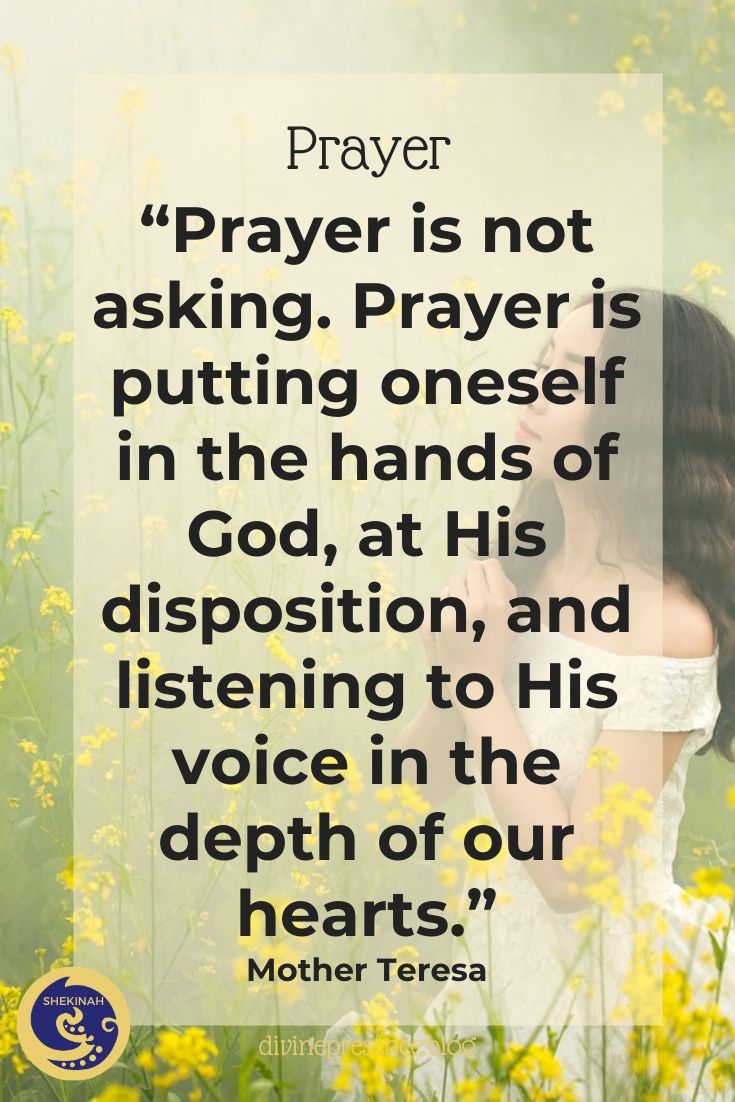
Prayer is not asking. Prayer is putting oneself in the hands of God, at His disposition, and listening to His voice in the depth of our hearts.
power of the trees, paganism, oneness, all creation, seas obey, the forests listen, the power of your words, divine presence, presence of the Divine, practising the presence of God, presence of Spirit

The forest

Proverbs 18: 21
Death and life are in the power of the tongue…
(this verse I have memorised, although I can never remember the citation!)
 
then… here’s what I read today (my verse for today was 2 Samuel 18:8, but obviously I read most of the chapter… and you have to get an idea of the context)
 
2 Samuel 18: 5 (David´s instruction to his army and generals before going into battle):  “Deal gently for my sake with the young man, even with Absalom”… (obviously, he still loved him as his son, even though his son had defied him and wanted him dead so he could be king)
 
2 Samuel 18: 7-8
7-There the army of Israel was defeated by David’s men, and the casualties that day were great–twenty thousand men.
8-The battle spread out over the whole countryside, and the forest claimed more lives that day than the sword.
now… just my suggestion… read that again!  (the forest did what? what kind of forest was it? did I just get transported into an enchanted forest in Lord of the Rings?)
 
And now… read verse 9:
9-Now Absalom happened to meet David’s men. He was riding his mule, and as the mule went under the thick branches of a large oak, Absalom’s head got caught in the tree. He was left hanging in midair, while the mule he was riding kept on going.
 
Now… I don’t want you to believe that I’m into paganism of ANY sort, but to me it’s VERY clear that God is not only the God of my heart, my spirit & my soul, but God is the God of the world (in every sense of it).  Of the riviers (dividing the River Jordan); the seas (drying the Red Sea); and the forests (He uses them as weapons at His will).  In Joshua 10, Joshua commands the sun and the moon to stand still…  “and there was no day like that before it or after it, that the Lord hearkened unto the voice of a man…”  Taking the time to actually READ the Bible slowly, not hurrying through it as an obligation but looking for the “best kept” secrets and what people aren’t talking about is fascinating!
How many times have I read this story of Absalom and failed to notice verses 8 & 9, and make the connection?
 
And even the oak tree obeyed David’s request to “deal gently with … Absalom”.  (If you carry on reading, you see it was a rogue general that killed Absalom contrary to David’s order, not the forest.)
And that’s the God that I’m starting to believe in… the one that I’m getting to know.
 
So, when the Bible says (Genesis) that we have “dominion” over every living thing, what does this mean? And when Jesus commands us “have faith in God”, and then “… if you have faith and do not doubt, not only can you do what was done to the fig tree, but also you can say to this mountain, ‘Go, throw yourself into the sea,’ and it will be done.”; how little has my faith been?
Where have I been all these years?
Have I been so caught up in semantics and religion that I’ve tried to put God in a little box?
I’ve been asking for peanuts, when He’s willing to let us move mountains?
 
Right now I feel like I’ve just been knocked down to the ground, and I’m sitting there shaking my head, trying to stand up and wondering where on earth that punch came from…
Like I said – shouldn’t I have already “known” this?  Haven’t I read these verses more than 5 times?
Learn character from trees, values from roots, and change from leaves.

Welcome to Shekinah: 24/7 prayer center

Thank you for visiting Shekinah 24/7. 

I had some serious doubts as to my sanity and whether or not I should even think about establishing a 24 hour-a-day, 7-day-a-week prayer center.  In fact, I wondered if it wasn’t just fanciful thinking that I should organise an ecumenical group of volunteers (and a place) to pray.  Just the over-whelming size of the task is daunting.  I will admit, the moment I voiced the idea, thoughts starting plaguing and bombarding me with reasons why it couldn’t be done. 

The next day, when I was searching for why I shouldn’t do it, I read Haggai 1: 4-8.  And there’s the answer I didn’t want to receive: 

Is it a time for you yourselves to be living in your paneled houses, while this house remains a ruin? Now this is what the Lord Almighty says: “Give careful thought to your ways.” 

“You have planted much, but have harvested little. You eat, but never have enough.  You drink, but never have your fill.  You put on clothes, but are not warm. You earn wages, only to put them in a purse with holes in it.”  This is what the Lord Almighty says: “Give careful thought to your ways.” 

“Go up into the mountains and bring down timber and build the house, so that I may take pleasure in it and be honoured”, says the Lord. 

So, I guess I have to stop procrastinating and make this 24/7 prayer room a reality.  I thought about naming it the Prayer Closet, since Jesus (in teaching us how to prayer) tells us to go into our room, close the door and pray (Matthew 6:6), but the idea of Shekinah is much bigger than that.  It’s about reviving all believers, irrespective of denominations.  It’s about recreating the revival of Zinzendorf in Moravia in 1727 and the 100 years that followed that revival.  It’s about the Wesley revival of the Methodist Church, and getting all of the denominations united in prayer for our country, for its leaders and for the needs of each man, woman and child in this country.

For more information about Zinzendorf, check out http://www.openheaven.com/library/history/zinzendorf.htm

special guidance, Holy Spirit, power, motivation, faith, spiritual discernment, prayer

24/7 Prayer closet

I need prayer for God’s special guidance and for a special dose of the Holy Spirit’s power: motivation, faith and spiritual discernment. I have been studying prayer, and was lead to look at Zinzendorf’s 24/7 X 100 year prayer room.
See: http://www.openheaven.com/library/history/zinzendorf.htm (thanks Maire). This catapulted the Methodist revival, among other things.

And i have been so touched by this that I really feel I am being lead to organise a “prayer closet” as a real physical space, where I organise people to pray 24 hours a day, 7 days a week, until Jesus comes again. I’m feeling a little overwhelmed by the idea… I don’t know right now where to do it, how to do it, and all the technical/admninistrative details of how it will work.

But I am very confident that God wants us to pray.
I would like special enlightenment that this is God’s will and not me just trying to do something in the flesh… and that being God’s Will, that I will allow HIM to take the credit, that I will give Him the glory, that I will allow Him to use the poeple that He would have involved in it, even if it ends up being taken over by other people to be done; especially if I am only supposed to broadcast the idea and not run with it. That whatever the role is that I am supposed to play in this, that I will humbly bow to God’s will…

This would be an ecumenical prayer room – for all denominations (and I want to get volunteers from ALL of the churches in town, irrespective of denomination), so that we can have true unity in the Spirit.

I have felt really pressed to make 1 Corinthians 12: 12-13 come true in this place: “For as the body is one, and has many members, and all the members of that one body, being many, are one body; so also is Christ. For by one Spirit are we all baptised into one body, whether we be Jews or Gentiles, whether we be bond or free; and have been all made to drink into one Spirit.”

I need your prayers to bring glory to God; to bring unity to our community, to impress upon all of our churches the importance of prayer and the outpouring of his Holy Spirit upon ALL of the churches due to this dedication to prayer.

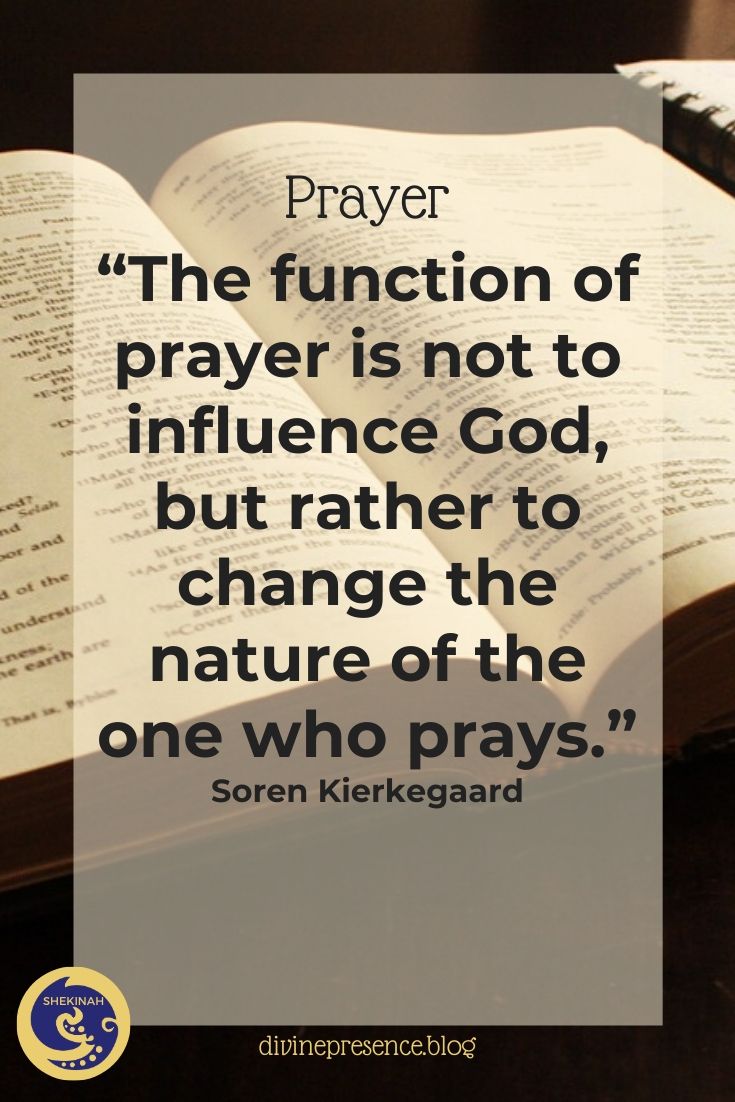
The function of prayer is not to influence God, but rather to change the nature of the one who prays
spiritual growth, reading, studying, prayer, holy spirit, the fear of the Lord, the power of prayer, women, the role of women, point of power, divine presence, presence of the divine, practising the presence of the Divine, the power of the tongue, the words of your mouth

Spiritual growth for a decade

There’s nothing like having high expectations of yourself and raising the bar.  And one of the areas in my life that I have started to refocus on is spiritual growth.

Admittedly, it all started in 2008 when Dr. Taylor challenged me to become a “Virtuous Woman”, according to Proverbs 31.  Now THAT is a woman I am very happy to imitate.  Following on from that, she challenged me to become “wise”, so I started reading a chapter of Proverbs each day, to increase in wisdom.  I was reading a lot of John Maxwell, on leadership, and each of the other books I read seemed to take me back to the Bible.  (Why is it that the good authors on leadership are all from churches?).

Eventually, that lead me to reading other books of the Bible and then to start reading Bible study books.  I got hooked, somewhere along the line, on Elizabeth George and her book “A Woman after God’s own heart”, referring to David being a man after God’s own heart.

In her book, which I finished some time last year, she challenges each woman to choose 5 topics and over the next decade become “an expert” in those 5 areas.

So, I’ve chosen 5 topics that caught my attention, principally because of Proverbs and also in part because they are areas that I simply feel I don’t understand.

  1. The fear of the Lord (which is the beginning of wisdom, according to Proverbs).  Who is God?  What does it mean (in this day & age) to fear him?  What is “fear”?
  2. An intimate relationship with God: which is really 2 topics – Prayer and speaking to God; and being filled with the Holy Spirit.
  3. The tongue – blessings and curses, the control of the tongue, the power of the tongue for good and for bad.  What we build up and what we tear down.
  4. Women – how do I reconcile the Virtuous Woman in Proverbs 31 with what Paul says about women in 1 Timothy 1: 11-12.  Throughout most of what is written by Paul, he makes mention over and over to the fact that women “caused” the fall of man and were lead astray, and lead man astray.  (Unfortunately, Eve wasn’t the only woman to do this – Sara did so with Abraham, giving him Hagar to have a child, as well as other examples in the Bible).  But, how do I reconcile this model to follow in Proverbs with other parts of the Bible.  What about Deborah?

Anyway, by 2020 I want to be an expert in these 5 areas of the Bible. So, when reading my Chronological Bible I am paying special attention to everything about these topics, and I am accumulating a library of books that study these topics.  And trying to get a little further ahead each week in reading and studying about them and how they fit into daily life.

One of the other things I’ve learned about is tithing, and since for me “time is money”, I am tithing not only my money, but also my time to study.  So, setting aside about 2 1/2 hours each day for prayer (practicing prayer) and study.  And all sorts of different study aids and guides to keep me motivated and moving.

Believe in your infinite potential. Your only limitations are those you set upon yourself.