The Way of Faith: Tested Through Mercy, Transformed by Love

We all carry burdens we refuse to name, yet we often mistake our spiritual journey for a performance. The prophet Isaiah forces us to confront this: What if our most fervent prayers are, to God, simply a heavy burden (1:14)? Our way of faith is not found in the rituals we repeat, but in the inner transformation that begins with honest reckoning. These readings reveal how works without faith are a scarlet-stained futility, but they also unveil the path of renewal through confession. When we embrace mercy, we receive the power of love and forgiveness, preparing us to make the decisive leap of following Jesus.

​The Foundation: Lectionary Texts for Reflection

  • Isaiah 1:10–18: The Reckoning and the promise of purification.
  • Psalm 32:1–7: The joy of confession and forgiveness, unsealing mercy’s flood.
  • 2 Thessalonians 1:1–12: The endurance of growing faith amid affliction.
  • Mark 10:46–52: Bartimaeus’s cry and the leap of response.

I. The Weariness: Laying Down the Mask

From burden to authenticity.

Inner Posture: Awareness of hypocrisy.

Movement Phrase: The soul grows weary of pretending holiness.

​If the exhaustion we feel is not from the difficulty of our life, but from the spiritual lie we maintain, then the path to renewal begins here. We are invited not as performers, but as the weary ones, to lay down the mask of false piety. The soul grows weary of pretending holiness.

​The prophet Isaiah points to the divine sigh: “I am weary of bearing them” (1:14). God is not weary of our sin, but of our inauthenticity. We have become so adept at the motions of our way of faith that we’ve forgotten its meaning. This is the quiet, daily form of Christian hypocrisy.

The Apostle Paul, writing to the Thessalonians, offers a vision of what genuine, unwearying faith looks like. He commends them not for their rituals, but for a tested faithgrowing abundantly” amid affliction (2 Thess. 1:3). Their love is increasing, not as effort, but as overflow. He prays that God will “fulfill by his power every good resolve and work of faith” (2 Thess. 1:11). This is the promise: Not our frantic striving, but divine presence fueling what endures.

confession,Faith,faith and works,following Jesus,Forgiveness,hypocrisy,inner transformation,justice,love,mercy,renewal,spiritual journey,tested faith,way of faith,works without faith,

Invitation: What resolve stirs in you, unspoken, waiting for such power?

Refrain: Faith births love. Love births justice.

​But unmasking is only the beginning. Awareness without repentance still withers; the soul must face what its silence has hidden.

​II. The Reckoning: Facing the Abomination (Isaiah 1:10–18)

From hypocrisy to confession.

Inner Posture: Honest confession.

Movement Phrase: When I kept silent, I dried within.

​We move from the fatigue of pretense to the necessary shock of the reckoning. We must face the spiritual cost of hiding our true state, accepting that our works without faith are what God finds burdensome. When I kept silent, I dried within. This phrase captures the internal cost of the hypocrisy Isaiah is about to name.

​A. The Prophetic Renaming (The Fire of Recognition)

​Isaiah begins with a devastating act of renaming: “Hear the word of the Lord, you rulers of Sodom; listen to the law of our God, you people of Gomorrah!” (1:10). This is the prophet’s gut-punch. We, the covenant people, are labeled for cities consumed by their own moral decay. The sin of Sodom and Gomorrah wasn’t hidden vice alone; it was a profound spiritual blindness—a prosperity that felt no obligation to the poor.

Invitation: In this renaming, what hidden Sodom lingers in your governance of self—of time, of words, of withheld mercy?

​B. The Vain Offering (The Futility of Unrooted Works)

​This hypocrisy leads to the central crisis: “What to me is the multitude of your sacrifices?Your hands are full of blood” (1:11, 15). God rejects all the outward rituals because iniquity poisons the air. The vast accumulation of our works of faith is rendered futile if our inner transformation hasn’t aligned our heart with justice. Deeds detached from the heart’s truth are echoes in an empty chamber—resounding, yet rootless.

The Refrain: Faith births love. Love births justice.

​Yet divine judgment is never the final word. Even as Isaiah names our desolation, mercy waits in the next breath. The Psalmist teaches us how grace begins — not in defense, but in confession.

​III. The Release: Confessing the Heart’s Truth (Psalm 32:1–7)

From silence to song.

Inner Posture: Receiving mercy.

Movement Phrase: Truth demands its voice.

The spiritual journey pivots here, at the hinge of confession. We move from condemnation to the forge where guilt yields to grace. Confession unseals the flood of grace.

Truth demands its voice, confession,Faith,faith and works,following Jesus,Forgiveness,hypocrisy,inner transformation,justice,love,mercy,renewal,spiritual journey,tested faith,way of faith,works without faith,

​A. The Cost of Concealment (The Wasting Silence)

​The Psalmist articulates the precise internal cost of living under the burden exposed by the prophet. When I kept silent, I dried within. This phrase perfectly captures the barren weight of unacknowledged sin: “my bones wasted away… my strength was dried up as by the heat of summer” (Psalm 32:3-4). Inauthentic faith is this exhaustion. It is why the first step toward renewal is simply speaking the truth.

Invitation: Where in your silence does the heat rise, drying what once flowed freely?

​B. The Cleansing Fire (The Forgiveness Freely Given)

​The moment of release is simple and instantaneous: “Then I acknowledged my sin to you, and I did not hide my iniquity; I said, ‘I will confess my transgressions to the Lord,’ and you forgave the guilt of my sin” (Psalm 32:5).

The Theological Hinge: The fire that razed Sodom becomes, in mercy, the forge that purifies the heart—ashes transfigured to gold, pretense to truth. We are covered by divine embrace: “Happy are those whose transgression is forgiven” (Psalm 32:1). We are no longer defined by the scarlet of our past, for God declares: “if your sins are like scarlet, they shall become like snow” (Isaiah 1:18). This is the power of love and forgiveness.

The Refrain: Faith births love. Love births justice.

​The silence that once drained the Psalmist now gives way to the shout of faith. What was inwardly confessed now becomes outwardly embodied.

​IV. The Response: Leaping into the Way (Mark 10:46–52)

From sight to following.

Inner Posture: Faith embodied.

Movement Phrase: He threw off his cloak and followed the Way.

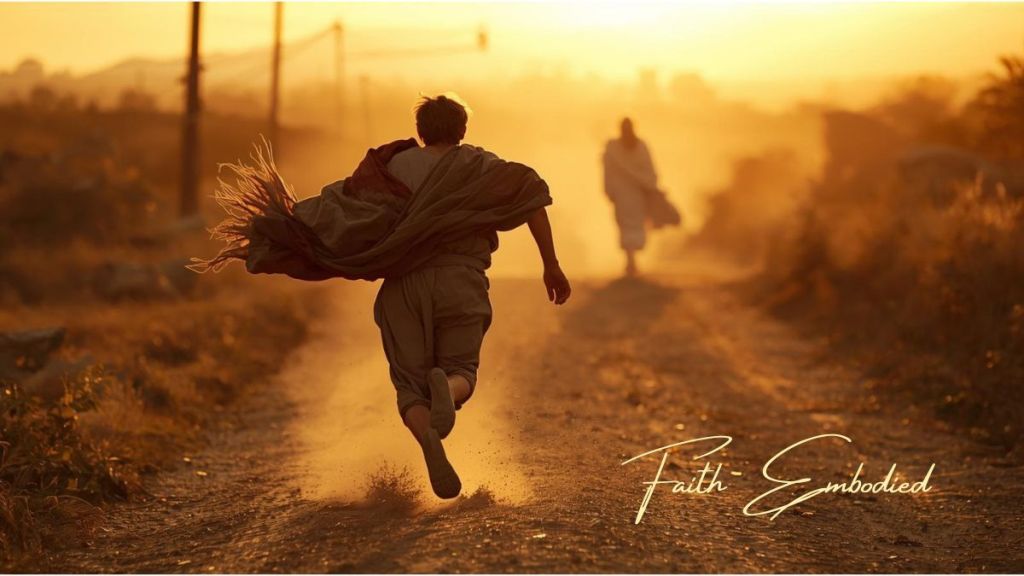
​A forgiven heart does not sit still; it shouts, it springs, it follows. Bartimaeus, the blind beggar, embodies this final stage of our way of faith.

​A. The Bold Cry (The Heart’s Unsilenced Plea)

​Bartimaeus began to shout: “Jesus, Son of David, have mercy on me!” (Mark 10:47). He prioritized his need over the crowd’s rules.

The Theological Hinge: Isaiah’s Sodom burned because blindness reigned in the powerful; Bartimaeus’s physical blindness is healed because he had spiritual sight. He recognizes mercy in Christ and voices the plea that the self-righteous refused to speak for the poor.

Invitation: What mercy do you cry for, louder than the world’s silencing?

​B. The Surrender and Healing (The Way Made Visible)

​When called, Bartimaeus made a definitive choice: “So throwing off his cloak, he sprang up and came to Jesus” (Mark 10:50). The cloak was his beggar’s chain. To cast it off was faith’s decisive surrender: no more hiding in the old sin.

Jesus honored the source: “Go; your faith has made you well” (Mark 10:52). The outward act was merely the visible evidence of the inner transformation. The story is incomplete without the following: “Immediately he regained his sight and followed Jesus on the way.” This is the key to all works of faith. Justice becomes not a duty, but love in motion on this spiritual journey.
faith embodied, confession,Faith,faith and works,following Jesus,Forgiveness,hypocrisy,inner transformation,justice,love,mercy,renewal,spiritual journey,tested faith,way of faith,works without faith,

The Refrain: Faith births love. Love births justice.

​The one who follows on the Way becomes the sign of what faith fulfilled looks like. Bartimaeus’s leap becomes our lifelong walk — love made visible.

​V. The Fulfillment: Living Love in Motion

From action to enduring love.

Inner Posture: Love enduring.

​The cycle is complete: Isaiah wrenched open the abomination; the Psalm forged the release; Bartimaeus leapt into the Way. We are no longer Sodom’s heirs, burdened by scarlet-stained futility, but snow’s—made clean by surrender and empowered by love enduring, tested through mercy as Paul envisions. The goal is not just to feel forgiven, but to let that forgiveness drive us. As Paul prayed, God can fulfill in you “every good work of faith” (2 Thess. 1:11).

​Final Challenge

​Pause here: Confess the silence in your heart, not to earn, but to receive the boundless love and forgiveness. Then rise: Seek justice not as frantic striving, but as the forgiven one’s quiet command. Let your heart become the clean altar where mercy kindles every act of love.

​Contemplative Sending

​Go now—washed, forgiven, and aflame with faith that does not tire. Amen.

The Final Echo (Closing the Cycle):

Faith births love. Love births justice. And justice, lived in mercy, returns us again to faith.
How to Command Mustard-Seed Faith: Living as God’s Heirs


There’s a powerful thread weaving through Habakkuk, Psalm 37, 2 Timothy, and this Gospel: faith isn’t a timid plea—it’s a bold command from God’s heirs.

Let’s pray:

Creator of all, open our eyes to our identity as Your children. Ignite our mustard-seed faith to uproot the impossible. Amen.

Mustard-Seed Authority: Faith That Commands

Imagine the apostles, exhausted from Jesus’ teachings, blurting out, “Increase our faith!” (Luke 17:5). They’ve seen miracles, but the world’s weight—oppression, division—feels too heavy.

Jesus doesn’t hand them a faith-booster shot.

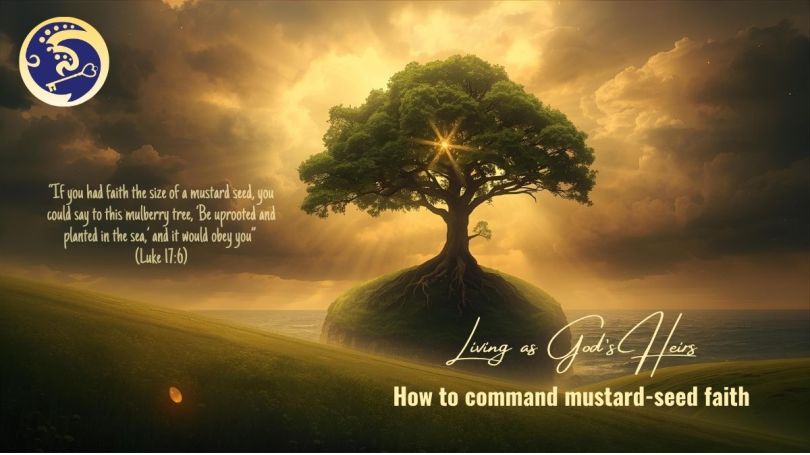
He says, “If you had faith the size of a mustard seed, you could say to this mulberry tree, ‘Be uprooted and planted in the sea,’ and it would obey you” (Luke 17:6).

That’s wild.

Not “ask God to move the tree.”

Command it.

Expect obedience.

Then He pivots to a parable:

“Who among you would say to your slave who has just come in from plowing or tending sheep in the field, ‘Come here at once and take your place at the table’?
Would you not rather say to him, ‘Prepare supper for me; put on your apron and serve me while I eat and drink; later you may eat and drink’?
Do you thank the slave for doing what was commanded? So you also, when you have done all that you were ordered to do, say, ‘We are unworthy slaves; we have done only what we ought to have done!'”

Luke 17:7-10

At first glance, this feels like a humility slap: Don’t pat yourself on the back for basics.

But dig deeper.  This isn’t our posture toward God—it’s a caution against entitlement.

And yet, we are not groveling servants begging favors.

John 1:12 declares: “But to all who received him, who believed in his name, he gave power to become children of God.”

Power.

Authority.

As sons and daughters, we command with expectation, rooted in the Father’s will.

Think of Nigeria, where over 7,000 Christians have been slaughtered this year by jihadists like Boko Haram—villages razed, churches in flames, largely ignored by global headlines. Chaos screams, “Where’s God?”

Yet Jesus invites us: As His kids, command protection over those believers.

Uproot the violence.

Expect it done—not as beggars, but heirs.

This commanding faith pulses through our readings. Let’s stand on the ramparts with Habakkuk.

Standing on the Ramparts: Visionary Faith Amid Violence

Habakkuk stares at a broken world:

“O LORD, how long shall I cry for help, and you will not listen? Or cry to you ‘Violence!’ and you will not save? Why do you make me see wrongdoing and look at trouble? Destruction and violence are before me; strife and contention arise”

Habakkuk 1:2-3

Sound familiar?

In Panama City, violence scars Curundú and El Chorrillo—200-250 murders this year, gangs trapping the poor at the bottom of Cerro Ancón and in 4 de Julio, while Albrook, Clayton, and the top of Cerro Ancón sit safe, gated, untouched. It’s injustice, raw and next door—the rich insulated, the poor bleeding.

How long, O Lord?

Habakkuk doesn’t crumble. “I will stand at my watchpost and station myself on the rampart; I will keep watch to see what he will say to me” (Habakkuk 2:1).

He demands God’s answer.

And it comes:

“Write the vision; make it plain on tablets, so that a runner may read it. For there is still a vision for the appointed time; it speaks of the end and does not lie. If it seems to tarry, wait for it; it will surely come; it will not delay.”

Habakkuk 2:2-3

This isn’t passive waiting—it’s defiant faith.

Galatians 4:7 reminds us: “So you are no longer a slave but a child, and if a child then also an heir, through God.”

Slaves fear; heirs inherit visions.

Habakkuk’s rampart is our prayer closet, our street corners in Curundú.

Write God’s vision for Panama City: Peace in El Chorrillo, equity from Cerro Ancón’s base to summit.

Command it as heirs—expect the delay to shatter.

Church, what’s your rampart? A neighborhood vigil? Advocating for the poor?

Stand there, not in fear, but visionary authority. Because this faith doesn’t fret—it fruits.

From Fret to Fruit: Stillness in the Storm

Psalm 37 meets us in the envy trap: “Do not fret because of the wicked; do not be envious of wrongdoers” (Psalm 37:1).

Fretting is spiritual quicksand—sinking us into anxiety over evil’s apparent wins.

In Nigeria’s silent slaughter—7,000 Christians gone, militants prospering—it’s tempting: Why them, Lord? Why not us?

The psalm flips it: “Trust in the LORD and do good; live in the land, and enjoy security. Take delight in the LORD, and he will give you the desires of your heart. Commit your way to the LORD; trust in him, and he will act” (Psalm 37:3-5). Then: “Be still before the LORD, and wait patiently for him; do not fret over those who prosper in their way” (Psalm 37:7). And the gut-punch: “Refrain from anger and forsake wrath. Do not fret—it leads only to evil” (Psalm 37:8).

Fretting breeds anger, wrath, evil. What’s the opposite? Galatians 5’s fruit of the Spirit:

  • Instead of fret’s anxiety, choose peace and patience.
  • Swap anger’s heat for kindness and gentleness.
  • Ditch wrath’s rage for love, joy, and self-control.

Galatians 4:7 frees us: “So you are no longer a slave but a child, and if a child then also an heir.”

Slaves fret; heirs bear fruit.

For Nigeria’s persecuted, don’t rage—pray kindness over killers, peace over pain.

In Panama City, when Albrook’s luxury mocks Curundú’s cries, be still.

Commit your way.

As God’s kids, command fruitfulness: Delight in Him, expect heart-desires fulfilled. Watch justice shine like noonday (Psalm 37:6).

This fruitful heirship ignites Timothy’s fire.

A Spirit of Power: Boldness Over Fear

Paul writes to Timothy, a young leader facing trials: “For this reason I remind you to rekindle the gift of God that is within you through the laying on of my hands” (2 Timothy 1:6). Then the powerhouse: “For God did not give us a spirit of cowardice, but rather a spirit of power and of love and of self-discipline” (2 Timothy 1:7).

Fear shrinks us—cowardice in chaos. But Romans 8:15-16 declares: “For you did not receive a spirit of slavery to fall back into fear, but you have received a spirit of adoption. When we cry, ‘Abba! Father!’ it is that very Spirit bearing witness with our spirit that we are children of God.”

Adopted!

Not slaves trembling, but kids crying “Abba!” with power.

In Panama City, where Curundú and El Chorrillo bleed from gang violence while Albrook, Clayton, and Cerro Ancón’s top rest easy, this spirit empowers us.

Don’t pray timidly—command justice.

Rekindle your gift: Love for the lost, discipline against division.  Suffer boldly for the gospel, expecting God’s guard (2 Timothy 1:12).

Church, rekindle today.

For Nigeria’s churches in flames, pray power. For our city’s streets, command healing. As heirs, expect it.

Commanding as Heirs: Uprooting the Trees

Let’s pull the thread: Luke’s mustard seed commands creation.

Habakkuk stands visionary on ramparts, heirs writing justice over Panama City’s divides—from Curundú and 4 de Julio’s pain to Cerro Ancón’s safe summit. Psalm 37 trades fretting over Nigeria’s persecuted for fruitful stillness. Timothy’s power-spirit, rooted in adoption, banishes fear.

We’re not unworthy slaves begging. John 1:12 grants power as God’s children. Romans 8 seals our heirship. Galatians 4:7 frees us from slavery. This is commanding faith: Tiny as mustard, potent to uproot mulberry trees of violence, injustice, fear.

What tree blocks you? A divided marriage? Addictive chains? Our city’s inequities? Command it: “Be uprooted!” Expect obedience, because Abba backs you.

This week, act:

  • Pray boldly for Nigeria’s protection—7,000 lives lost, but faith endures.
  • For Curundú and El Chorrillo, intercede for peace, equity. Write your vision. Bear fruit. Rekindle power.

Church, may we live as heirs, not slaves—commanding with mustard-seed faith.

Seeing is believing: how Thomas’ challenge shaped his faith

Today’s lectionary reading brings us the story of Thomas after Jesus’ crucifiction and burial (John 20: 19-31). For most of us, it’s a well-known story. 

Jesus comes to the disciples who are meeting and praying together in hiding, but Thomas is absent this day. When he returns, they tell him that Jesus has risen and visited, but he doubts. 

“Unless I see the mark of the nails in his hands and put my finger in the mark of the nails and my hand in his side, I will not believe.” (John 20:25)

And yet, when Jesus returns to visit a week later, Thomas is there and witnesses for himself that Jesus has indeed risen. 

“Put your finger here and see my hands. Reach out your hand and put it in my side. Do not doubt but believe.” (John 20: 27)

So, what would it take for your faith to be challenged and strengthened? 

What personal experience could you have that would confirm to you that God’s power in your life is real? 

Peter stumbled and fell into faith

Perhaps an easier example for us to relate to is Peter, the rock on which Jesus said the church would be built. We see many instances where Peter shows a great understanding of Christ, only to overshadow it with his doubting, hesitance, and failure of faith.
Peter was possibly the only one to see Jesus walking on water, yet this same Peter was hot-tempered and rebuked the children that wanted to come to Jesus. 

He’s passionate and impetuous: Peter was the first to say that he would accompany Jesus in prison and death, but at the moment of truth, denied that he even knew him.

This very same Peter was told off three times for falling asleep while accompanying Jesus in the garden for prayer. 

From euphoria to failure

Peter gets swept up in the euphoria of Jesus’s power and miracles.

I want that!

But he crumbles under persecution. 

He got it – Jesus was the messiah.

And he lost it – I’m too scared to follow this road of faith

Many of us, like Peter, have denied that we knew Jesus: with our words, or with our actions, or our priorities.

Perhaps you’ve lost faith, because of fear – just like Peter.

Nonetheless, Peter still becomes the pillar of the early church, an example for others to follow. 

Peter is the first to run to the empty tomb. He is also the first to jump out of the boat and swim to the shore to see Jesus after the resurrection.

In order to counter Peter’s denial of Christ three times before the crucifixion, we see Jesus ask Peter three times “Do you love me?”. Having failed three times, it’s important for Peter to confirm three times that he has overcome this failure in faith and believes. 

But his journey was plagued by missteps and mistakes.

Do your actions speak of faith or doubt? 

Thomas doubts strengthen his faith

It’s easy to see how Peter’s mistakes turn into strength. 

But Thomas has a different road of challenges before him. They are more subtle, but equally strong.

And these are the mental doubts and stumbling blocks we face.

When we lose a loved one, or don’t get that dream job, it’s easy to fall into the mental loop of doubt and asking “Why?”

People around us are quick to give us empty platitudes:

  • “Everything happens for a reason…”
  • “God won’t give you more than you can handle…”
  • “God has a wonderful plan for your life…”

And for Thomas, that challenge was seeing the man and friend that he believed in killed to satisfy the bloodthirst of the mobs and political powerplays.

The monkey mind: making you second-guess yourself

I’m sure he had millions of thoughts running through his head:

  • We did so much for the sick, the needy and the masses, but they turned their backs on Jesus.
  • Everyone listened to Jesus’ teachings, but is this the end of our journey?
  • Jesus promised us the kingdom of heaven, but now all we have is death and despair. 

And when the disciples tell him that they’ve seen a resurrected Jesus, Thomas doesn’t jump with joy and faith. 

He’s cynical. He’s rational and thoughtful, not easily swayed by a cheerful friend.

He no doubt has a million thoughts running through his head as he tries to make sense of his experiences of the past three years. 

Show me the money

Most of us have heard someone say “Show me the money.”

I don’t want any of your stories: I want to see the evidence. Don’t talk about the value you bring to the table, show me the value and benefits. 

And for Thomas, it wasn’t enough that others had experienced seeing Jesus. He needed to experience this for himself. 

When Jesus shows up, he doesn’t lecture Thomas. We might judge Thomas and read judgment into Jesus’ words to him, but does Jesus actually judge him?

Instead, Jesus says:

“Put your finger here; see my hands. Reach out your hand and put it into my side. Do not doubt but believe.” (v. 27)

Thomas said: “Show me the money!” and Jesus’ response is “Here’s the cold, hard cash.” Stop doubting. Here you go. 

His evidence is the wounds and scars, yet he overcame this. 

The challenge to overcome

For most of us, we find it easier to trust someone that has the battle scars than someone finely dressed, that hasn’t experienced life’s hard knocks. 

Want to know why Dr. Joe Dispenza is so popular? It’s not just what he’s teaching, but rather that he first had to get himself out of his semi-paralysed state and back on his feet again! Six of his vertebrae has compound fractures. He risked being a quadriplegic. But he overcame this challenge. 

We trust his scars and his journey. He walked the talk. Those scars tell a story of faith and healing. 

Similarly, people are willing to follow the teachings of Louise Hay who healed herself from cervical cancer through forgiveness and letting go.

Because, for many of us, seeing is believing.

We need to see the scars and wounds of others to believe that it’s possible for us to heal and get back on our feet. M

Much like Thomas, we say when I see the nail marks in his hands and the wound in his side, then I’ll believe that healing is possible.

We need these live examples to open our eyes to the possibilities of what could be. 

What challenge are you facing?

So today, I ask:

What challenge are you facing and what example do you need to strengthen your faith? 

Perhaps you’ve lost your business and are struggling with financial difficulties: 

  • Job had everything – the richest man, a wonderful family with children and grandchildren, and a fantastic reputation – only to have it all disappear in a moment. Can you find inspiration in Job for seeing is believing?
  • David is another great example – reduced to living in caves, running and hiding despite having been anointed to be the new king.

If you’re looking for modern examples, there are many like J.K. Rowling who went from a broke mother to becoming a billionaire through her creative efforts in writing.  Even Richard Branson, the owner of Virgin, had a rought start to life.

For others, it’s getting through betrayal.

Wasn’t Jesus betrayed? And David, by his son Absalom? Or Joseph who was sold into slavery by his brothers. 

Perhaps the challenge to your faith is sickness.

And we have many examples of healing:

  • Natural healing – you break a bone, the doctor sets it back in place and immobilises it, and your body takes care of the rest! The doctor only has to make sure it’s aligned, so that when healing takes place, it’s all in the right place. 
  • Sometimes, the miracle we need comes in the form of a doctor and medicine! But isn’t that still healing. The knowledge and how to help the body to overcome sickness and injury pave the road to recovery.
  • Most of us, of course, just want the miracle healing. The instant, no rational explanation, kind of healing. Of course there are examples of this – in life and in the Bible. But this isn’t the most common type.
  • We also have examples of miraculous healing over time – like Dr. Joe Dispenza and Louise Hay that weren’t healed in a day, but rather healed little by little. How many of us are willing to hold our faith, day by day, for this healing?
  • And sometimes, the healing that happens is in the heart – with acceptance for what is, forgiveness and letting go of resentment. Perhaps there is no physical manifestation, but what gets healed is relationships and we let go of bitterness.  Isn’t this also a miracle? 

What scars and wounds do you need to see, like Thomas, in order to restore your faith?

Do not doubt, but believe.

John 20: 27

How Jesus got cancelled: faith, expectations, and betrayal

On Sunday Jesus is welcomed into Jerusalem with crowds, praise and celebration, waving palms and welcoming him with joy. Celebrating with the disciples after his arrival, we learn of the Last Supper.

Nevertheless, on Spy Wednesday he’s betrayed and arrested in the Garden of Gethsemane, and by Friday he’s crucified.

How quickly public opinion changes and you fall from hero to zero. From being welcomed as the saviour to asking to release Barabbas, a Jewish bandit and rebel.

We have many examples of cancel culture in the past five years, for political motives as well as personal indiscretions. Whether it’s sexual indiscretion, badly handled brand messaging or simply holding an unpopular opinion.

So, what changed? Why did public opinion pivot so rapidly?

Personally, I think it all comes down to expectations, which play a huge role in our relationships.

There’s nothing like having hope and expecting a certain outcome, only to face disappointment.

If we don’t guard our hearts, bitterness and resentment grow within.

On Palm Sunday, Jesus rides into Jerusalem as a king, sitting on a colt, as prophesied in the Old Testament.

The crowds that welcomed him (all by word of mouth), have witnessed his miracles and healing hands. But now they are expecting more.

While they might be grateful for everything that he’s done so far, they still expect him to give more. 

What they are looking for is that hero that will save them from the tyranny of the Roman Empire. The new king. The Messiah. 

And Jesus is bound to disappoint them.

And as we’ve learned time and time again in our relationships, disappointment often leads to a cruel backlash. 

Jesus wasn’t offering a physical salvation, but spiritual. While he had healed many physical ailments, many of those miracles went hand-in-hand with spiritual healing and a change of behaviour and habits. 

Largely overlooked by the crowds.

Their faith and belief in his teachings, which overturned the status quo and Pharisees, seemingly overlooked the underlying message.

When they heard “the Kingdom of God is at hand”, they believed in a physical kingdom, returning to the glories of David and Solomon. 

This crowd had real problems and real needs.

And they expected Jesus to be the Saviour and hero that would fix everything. 

They were disappointed to find out that he offered spiritual salvation and a spiritual Kingdom of Heaven. 

But don’t we still do the same now?

We elect politicians and then criticize them when they don’t fix all the problems in our community. But what about the community getting together and facing the problems and working together for healing and improvement?

We watch blockbuster movies, celebrating heroes like Ironman, Superman, Captain America and Daredevil. All heroes, some with a small band of misfits, that do the impossible and save the world.

Imagine how boring a movie would be to show a community that came together and worked tirelessly to improve their city, but with no heroes or individuals that stood out to take the lead.

Since time immemorial, like Bonnie Tyler, we’ve been singing “I need a hero”:

He’s gotta be strong and he’s gotta be fast
And he’s gotta be fresh from the fight

And it’s these very same expectations that lead to disappointment, and ultimately lead to betrayal. 

How faith turns into disappointment

Take a moment to consider your prayers this week.

What did you pray and ask for?

Were you asking God for a specific outcome or solution? Or have you learned, like Jesus in Gethsemane to pray for God’s will to be done.

Jesus alerts the disciples that night:

My soul is very sorrowful, even to death. (Matt. 26: 38)

Nonetheless, he prays (v. 39):

“My Father, if it be possible, let this cup pass from me; nevertheless, not as I will, but as you will.”

As such, he’s not disappointed in the outcome, no matter how much it pains him.

But many  times, we’re tied to a particular outcome. We pray for healing for a person, and the expected outcome is that the illness or physical healing take place and be immediate.

And in doing so, we overlook that sometimes that most profound healing takes place over time. It’s like building up strength and stamina from walking and doing exercise every day. It can only be built by repetition.

Many times, our healing only happens by repetition – like forgiveness that takes place 70 time 7 times. Regularly letting go of the hurt and pain and replacing it with forgiveness.

But we want the instant gratification. Give me the pill that can stop the pain and get me back up and running immediately. Who care what the long term side-effects might be.

We want miracles and instant healing, not gradual improvement. 

As such, we’re disappointed and disillusioned when the outcome is long term. 

What expectations are you putting on miracles?

Disappointment in our relationships

Think also about your relationships with friends and family. Or perhaps going a bit further to those that you know.

Do you know someone who received a lot of help and support from someone, and then when that person stopped helping and supporting them they almost became enemies?

What’s really happening? Often, the person receiving the help is initially angry and frustrated with themselves. They might even hate themselves for being helpless and needing to rely on someone else’s benevolence.

But over time, they begin to hate the other, because this persons generosity highlights their own shortcomings and feelings of inadequacy. Most of this lies deep within as latent bitterness. Covered up with an band-aid of gratitude and praise. 

Nonetheless, the moment that benefactor fails to step up and meet a need, they become the subject of criticism. The hidden bitterness and resentment bubbles to the surface, and accusations fly of selfishness and pride. 

Now imagine the crowds that Jesus faced in Jerusalem.

So many expectations placed upon him with different people expecting from him different things.

And he fails to give them what they wanted.

It all ends with the cries to release Barabbas, the bandit and rabble-rouser.  He’s been known to revolt in small ways against the Romans. While he doesn’t promise to rebuild a kingdom, he openly opposes the Roman Empire.

And being disappointed that Jesus never had plans to revolt, they turn to the popular insurrectionist and rebel leader. 

And just like that, Jesus gets cancelled by popular opinion. 

Betrayal after disappointment

I wonder which hurt Jesus more: the betrayal of Judas or of Peter? Remember, Jesus predicts both of them.

At the last supper, he highlights that Judas will hand him over. In the garden of Gethsemane, Jesus warns Peter that before morning he will have denied him and turned his back on him. 

Which one of us would have dared to respond differently to the crowd than Peter?

We’ll never know whether Judas betrayed Jesus to cover up slipping his hand in the till and expecting to replace the missing coin by using the funds he received from the Pharisees, or whether he was simply disappointed, like the crowds, that Jesus wasn’t the Messiah that would save Israel from the Roman Empire.

No matter what lay beneath his betrayal, Peter’s actions were much more about fear and peer pressure. 

Was Peter afraid of being put in the same cell as Jesus if he was identified as being his follower? Or was he simply ashamed to be different? Had he lost complete faith in Jesus being the Messiah?

Your expections, your faith

So now, it’s your turn.

What expectations do you have when you pray and in your daily spiritual habits?

When you sit quietly in your heart, are you holding onto any bitterness or resentment towards God for unanswered prayers or situations in life that didn’t go how you expected God’s hand to move?

Each of us needs to be honest within about the state of our faith.

How to transform fear into faith: never give up

Today’s lectionary reading is from Psalm 27, and it shows a troubled David reaching out to God when times are troubled. He’s surrounded by intrigue, plots and plans. People are out to get him, and he’s acknowledged fear and frustration.

As David says in verse 12, he’s faced with false witnesses and people breathing out violence against him.

In spite of this, Psalm 27 starts and ends on a positive note of faith. Nonetheless, in the middle of the Psalm, we read David’s prayer when he begs for answers. 

So, how do we transform fear into faith when we are surrounded by life’s challenges? 

Desiring God and the presence of Spirit

Seeing through God’s eyes

Psalm 27 starts out with a strong affirmation:

The Lord is my light and my salvation; whom shall I fear?

The Lord is the stronghold of my life; of whom shall I be afraid?

What does it mean for the Divine to be our light? 

  • a light allows us to see things clearly, rather than stumbling around in the dark.
  • light is also used to guide the way and show us our path;
  • in other instances, we have light that can highlight dangers and warn us, like lighthouses

Typically, when we think of light, we also instinctively think of it’s opposite: darkness. And often, in darkness, we are blind to our situation and unable to see the way ahead. We can’t identify the path we should walk or the obstacles that can cause us to stumble and fall. 

To start to turn fear into faith, our first step is to see our situation clearly.    And for this, we need to use the right light. 

Is the light that I am using to look at my situation and circumstances, the eyes of Spirit and Divine inspiration? Or am I looking at my situation through the lens of my fear, other people’s opinions or gossip?

Is this a Divine perspective? Or did I get caught up in worldly troubles and opinions?

What is my faith placed on?

Let’s have a look at Psalm 27:5.

Psalms 27 reminds us that we are to find shelter and refuge in God. We find three metaphors for hope here:

  • refuge, stronghold or shelter
  • a tent
  • a rock

Here David syas that he hides in the shelter of God, he is concealed under the cover of God’s tent, and finally he is set high on a rock. 

I don’t know about you, but it’s really easy for me to get caught up thinking that money will solve all my problems. For example, how many times have we heard the saying:

If you have a problem that your money can solve, you don’t have a problem. 

So, for many of us, when we’re faced with a problem, our first thought is: money can solve this. And just like this, the love of money becomes a new problem, as we place our faith in money, rather than God.

Now, money is a good thing. But when we set our faith and trust in money, it takes us away from our spiritual walk. We start to focus all our energy and attention on making money and having “enough” money stored away so that we can feel confident and safe. 

When I was younger, I know that my faith was placed on my parents rather than God.  And perhaps, for you, there are friends or family that you have put your faith. 

That’s not to say that God doesn’t allow people to help us and shelter us, but we have to guard our hearts to make sure that our faith is placed in God, rather than in other people. 

Because, just like Job learnt through life’s trials, it’s easy to lose all your money and all your family and friends in just a moment.  And then, what do you have left to put your faith in? 

And so, we hear David say in verse 6 that his head is lifted up and held high.  He’s happy and joyful, celebrating with shouts of joy. 

What is your personal prayer?

And then David turns into a personsal prayer of faith: let’s look at verses 7 & following. 

Is your heart like David’s which says:

Come, seek God’s face!

Can you say?

Your face, Lord, do I seek. Do not hide your face from me. 

When you are troubled, what’s your first reaction and response? Is it to seek the presence of the Divine?

Or is God and prayer the last solution you think of when you’ve run out of all other options? 

I know for me, often my first impulse is not to directly seek Divine guidance.  First I rely on myself and try to fix it and solve the problem, and then, when all else fails, I turn to God.

But Psalm 27 reminds us that this is our first response: to seek God’s opinion while we are looking at the problem. 

One of things I have come to appreciate about churches and meetings, is that we start with prayer. No matter the problem that we are looking at, we ask for God’s insight and inspiration for solutions. 

Our daily practices and habits

But, are we doing this at home and in our every day life?

When you have a challenge at work, do you dedicate 10 seconds to ask for God’s insight before you really start to look at it? 

A few years ago, one of the girls at work asked me why I always had empty client folders in my drawer. It wasn’t just for the convenience of setting up new client files.
In fact, my practice was simply this:
I would sit down and look at how many new clients and how much new work I needed, and then I would go and get the empty file folders in that amount.
I would then sit and pray over those folders, asking that they be filled with new work and that I would have the discernment to know which clients to accept and which to reject and turn away. 

My personal prayer was that God would take care of my needs by sending me work. And my faith was that I would get the right work and clients because they were first dedicated to God.

But I don’t always remember this formula.

That was a habit that I developed. It didn’t come naturally to me. I would worry about doing the right thing to get clients, and finally, when all else failed, I would ask God.

But, we develop habits of faith through practice. 

So, what are your daily and weekly practices that turn fear into faith? 

David reminds us:

Teach me your way, O Lord…

Wait for the Lord, be strong and let your heart take courage; wait for the Lord. 

So, today I invite you, can you never give up on the path of transforming your daily habits and practices into those that turn fear into faith?

faith, worry, doubt, where attention goes energy flows, Divine Presence, Great Creator, creative solutions, perfect peace, anxiety, impacts of anxiety, fear, focus, safety, decision-making, Divine help, God Box, personal responsibility, accountability, be anxious for nothing, gratitude, aligned action, blind faith, patience, trust, confidence

The challenge of Faith: Worry Worships the Problem

I recently saw an image posted on social media: “Worry is worshipping the problem”. And without a doubt, I believe that where attention goes, energy flows. I have to regularly stop myself and ask: “Where are you focussing your attention – on the problem or the solution?” 

More than this, however, I bring myself back to the reminder that I live in the presence of the Divine. And if I claim to be practising Divine Presence in my life, how is it expressed when faced with problems or challenges?  

Am I keeping my attention and focus on the Great Creator, allowing creative solutions to flow to me? 

When my mind is focused and stayed on the Divine, perfect peace holds me. I trust in both the process and the outcome.

When my mind is focused and stayed on the Divine, perfect peace holds me. I trust in both the process and the outcome. Isaiah 26:3

The effects of worry 

When we stay worried – in a stressed state – this impacts us on several levels. One of the primary organs hit by stress and worry is your heart, including your arteries and blood vessels. Consequently, your heart beats faster and harder, resulting in inflamed arterial walls. This inflammation impacts your health: 

  • hardening of the arteries 
  • unhealthy cholesterol levels 
  • high blood pressure 
  • heart attacks 
  • stroke. 

Even in the Bible, we read:  

Anxiety weighs down the heart

Proverbs 12:25

And again: 

So then, banish anxiety from your heart and cast off the troubles of your body 

Ecclesiastes 11:10

Other impacts of anxiety:

When we are anxious and worrying, it’s more than just our heart that gets hit. Blood sugar levels also rise, with the need for more energy caused by adrenaline and then cortisol. We don’t burn off this extra energy; we have passive worry and anxiety. So, those high blood sugar levels, intended to help us escape danger, stay in the body without being burned up for energy.  

Our worry also impacts our immune system, weakening it. Our bodies struggle to defend against illness and disease. Additionally, we contend with gut and digestive issues. That knot in your stomach becomes an ulcer or indigestion. Your worries might even impact bowel motility. 

We hold this worry and anxiety in our bodies, as well as impacting the central nervous system. To cope, we create: 

  • eating disorders – not eating or over-eating; 
  • bad habits & addictions, and 
  • insomnia and disturbed sleep patterns.  

Worry also impacts our relationships, job performance and the ability to make decisions.  

Despite knowing all this: we continue to worry and focus on the problem, not the solutions.  

let go and let God, the God Box

The problem with staying anxious & worried: 

Anxiety is a state of distraction and prolonged suffering. Our worrying creates a physical and emotional response, in the present moment, regarding a future possibility. It is not an inevitable future outcome but uncertain. You are trying to predict the future and possibly are catastrophising. It may not turn out as you create it in your imagination. And it is indeed not happening right now.  

Worry stems from fear. Typically, this is our fear of not being enough or having enough talent, resources, or abilities to face life’s challenges.  

This anxiety creates less focus, where you can no longer concentrate on the task at hand. You might become irritable and easily thrown off balance. It’s easy to become disengaged, showing up either as fight and flight or being withdrawn. 

Worry reduces your ability to weed out distractions, making it easy to fall into: 

  • social media 
  • news
  • a train of worrying thoughts 
  • meaningless tasks & chores that could wait 

All of this comes together to impair decision-making.  

Chasing safety 

Unfortunately, part of your brain got unplugged and disengaged by worry! Worry and anxiety lead you towards what might seem (from a limited perspective) the safest choice. But the safest option is not always the best solution.  

Good decision-making requires flexibility in your thinking and looking at the problem and solutions from various perspectives. Do you have the ability to look above and beyond the present moment and conditions? 

  • Weigh up the consequences 
  • Plan for the future 
  • Use logical processing  

Another challenge when you are worried is that you might not talk about your fears. It’s more than asking for Divine help and guidance. Sometimes you need to talk to people. Perhaps you ask the Divine to get the right people to show up for you. 

Finally, when we are worried and overwhelmed, we respond in two opposing ways: 

  1. We consider too few options and become fixated. 
  2. We overthink all the available options under the sun, a scattered mind that is unable to focus. Because there are too many options, we get overwhelmed.  

In both cases, we procrastinate. Then, as we run out of time, we pick the first solution because we want to escape the overwhelming feelings. Of course, if we had proactively studied the options earlier, a different outcome would emerge. 

Where are you focused when times are hard? 

The Divine invites us to trust: to set a divine intention and then hold that intention as being true. Perhaps the intention is as simple as: 

I am capable of making good decisions, guided by Spirit.  

We challenge the worry and anxiety and get present in this moment – here and now. Right now, I am safe and secure.  

The purpose of doing this is to focus our energy and attention on the direction we should go. Worry tricks us into avoiding what we don’t want: any direction is a good direction, as long as it takes me away from ____. A good decision, on the other hand, takes us in the bearing we want to go. We have a purpose, and we turn towards our goal. 

Watch your heart with all diligence: from your heart flows the spring of life. 

Watch your heart with all diligence: from your heart flows the spring of life. Proverbs 4:3

It’s easy to get caught up worrying about all the things that are beyond our control. But it is when we focus our attention on what we can control that we get anything done. 

Things I can control: 

  • my attitude 
  • my choice to get organised 
  • where to spend and invest my time and energy 
  • time management 
  • how I respond to the challenge before me 
  • how I communicate with others 
  • whether or not I choose to share with others and ask for help 

You control whether or not you make a plan, getting specific about which steps to take in the coming days. You put time and energy into this and what you can do and who you can talk to.  

Alternatively, sometimes the best choice is to take a break: 

  • meditate 
  • pray 
  • exercise.  

The God Box

Everything else – beyond your control – where do you put that?

I put those things in my “God Box”. The God Box is a little cardboard box, hand painted and decorated on the shelf above my desk. All my worries get written on a bit of paper, folded up, and placed in the box.

I place those worries out of sight and mind. At the end of the year, as part of my end of year routine, I’ll paint a new one for 2022 with little miss and we’ll burn the 2021 box and say farewell to the worries we put away.

The power of holding an intention with faith 

As a child, my prayers to God were much like asking Santa Claus at Christmas. There was wishing as well as negotiation. As an adult, however, I believe in personal responsibility and accountability for an outcome. And yet, I believe in miracles. 

I believe in “be anxious for nothing”. And so, in every situation, I hold an intention and gratitude in my heart. I present every request for my highest good to the Divine Creator. And as a result, my heart is flooded with a peace that I cannot begin to comprehend.

I believe in "be anxious for nothing". And so, in every situation, I hold an intention and gratitude in my heart. I present every request for my highest good to the Divine Creator. And as a result, my heart is flooded with a peace that I cannot begin to comprehend.

It’s more than a helpless prayer. 

It is a proactive prayer, one in which I believe that what I have asked for will come to pass, and therefore it is safe to take steps forward on that path! 

Believe that you have received it and it will be yours!  

But it is asking with single-mindedness, without a shadow of a doubt. Can you believe that Divine Love cradles you? Are you confident that when you hold an intention for the highest good and possible outcome – daring to pour your time and energy into achieving this – it will come to pass?  

It’s more than just faith: aligned action. 

They say that if you want to walk on water, you’ve got to start by hopping out of the boat! While that might take the example to an extreme, for me, that is the definition of faith and believing: your actions fully align with what you profess to believe.  

My biggest mistakes have been made in blind faith: the faith of sitting waiting without any corresponding action.

My definition of blind faith: I expect a perfect crop without having planted any seeds, watered or weeded. Unless I have grounds to believe that someone else actually planted, watered and weeded, that’s merely blindness. It’s not faith.

Faith is stepping out and putting my plan into effect. 

Faith believes that the Divine accompanies me on every step of my path. It allows me to trust that I can listen to the still, small voice of Spirit, make a plan, and then take action.  

Keeping the faith that what you’ve planted will grow 

Sometimes, faith shows up in patience. Trust is waiting for results without growing anxious. It is confidence in the results that I hope for, resting in the assurance of what I cannot yet see.  

Faith is confidence in the results that I hope for, resting in the assurance of what I cannot yet see.

Having faith means I am filled with joy and peace as I sit trusting in the Divine. It is overflowing with hope, knowing that the power of Spirit fuels me. 

My attention, time, and energy focus on doing what I can. I let go of all aspects beyond my control. I focus on the peace that passes understanding because I place my attention on Divine Love.  

wisdom, creative compassion, courage to act, fear of the Lord, wise action, taking action, generative wisdom, being wise, transformed, renewing of your mind, heart of stone, heart of flesh, vulnerable, open to change, Divine Purpose, finding your divine purpose, courage to act, wisdom must be embodied, pragmatic action, faith, works and deeds, love your neighbour, awe, Divine Love, divine presence, prayer, meditation, quiet reflection, changing our responses, forgiveness, learning to love and accept myself, a peace that passes understanding, source of abundance, health, wellbeing, diet, exercise, lifestyle choices, responsible

Ten years searching for Wisdom: creative compassion and courage to act

In one of the very first posts I ever wrote for this blog, I mentioned the 10-year challenge of “gaining wisdom”. And this year, as I finished re-reading for the third time “mBraining: using your multiple brains to do cool stuff“, I was reminded that wisdom is both material (on the earthly plane) as well as having a spiritual element to it.

Wisdom comes when we apply creative compassion to creative action. In fact:

Generative wisdom is far more than just having wise insights from your life experiences.

Soosalu & Oka, “mBraining”

It is not an end state of being wise, but rather an ongoing process, one that continually transforms who you are.

I cannot stress this enough: wisdom must be embodied in pragmatic action. The same way that we show our faith by our works and deeds, we embody our wisdom in action and the decisions that we make each and every day.

All knowing is doing, inspired action, take action, compassionate courage, smart courage, deep thought, thought leads to action
All knowing is doing. Dr. Humberto Maturana

Most of us that were brought up in churches can easily recite that to love God is to love our neighbour and to love our brother, no matter who they might be. We are likewise challenged to bless those who curse us.

It is not enough to be able to recite the Bible verse that says this, but rather to actually do it – in the midst of the emotional chaos and turmoil of conflict and upheaval.

It’s easy to be at peace and in harmony with God and others when you are sitting quietly, meditating and in prayer. But true wisdom is being able to hold that same inner peace in the midst of the unrest of every day triggers and people who would typically anger us or make us feel fearful.

I’ll show you my faith by my works is not simply about doing good deeds: but rather it is living that life of faith and Divine Wisdom in all moments of challenge.

The process of acquiring true wisdom is not one of studying and memorisation (although that is no doubt where it begins): it is in changing our responses and choosing a new way of acting and reacting in the world.

The measure of intelligence is the ability to change.
The measure of intelligence is the ability to change. Albert Einstein

The beginning of wisdom

This journey for me, into transformation and change, began with the search to understand “the fear of the Lord”. As a child, I had it hammered into me that the fear of the Lord is the beginning of wisdom.

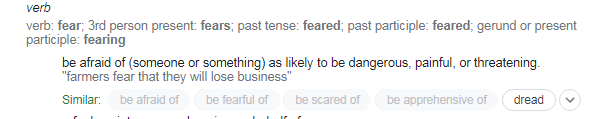
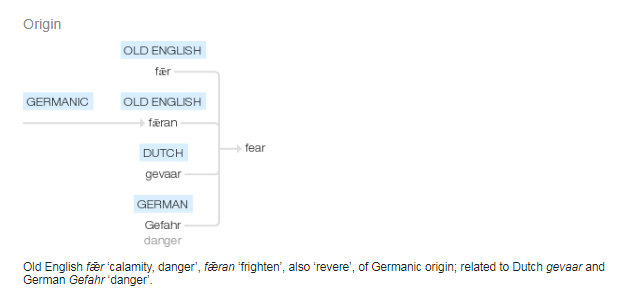
Unfortunately, my understanding of “fear of the Lord” was heavily tainted by my understanding of the word “fear”. And my understanding of “the Lord” was much influenced by the descriptions of a terrible God sitting on a throne “in heaven” surrounded by “a host of angels” that were ready to send anyone and everyone to hell.

It was much more of a Machiavellian description of “tis better to be feared than loved”, than an understanding of awe, presence and communion. I certainly viewed God as being dangerous and painful. While I was perfectly capable of saying “God loves you”, it had quite the “domestic violence kind of love” written all over it. Unfortunately, I experienced a traumatic view of authority, which clouded and overwrote my views on God.

It has been hard for me to change and learn a new definition of Divine Love. One of the many reasons that you will find me referring more to “Divine” and “Source” rather than “God” and “the Lord” in this blog is that I am aware that I am not the only one that still has wounds to heal. I am perfectly clear in my mind that these are man-made wounds, by men (and women) who purported to be godly and “loving”. And horridly, wretchedly human.

I came close to throwing out the baby with the bathwater.

It is so much easier to say “God did this” than to take the time to separate the humanity of (mostly) well-intentioned, badly misguided men and women, and simply turn your back on the Divine.

Finding my way back to accepting Divine Love and living in that Presence has been a challenge: one in which I have had to be open and vulnerable to healing and change over these past ten years.

Forgiveness and learning to love and accept myself have been difficult lessons to live by.

A peace that passes understanding

And yet, in 2020, I had a year in which to come to grips with “how far I’ve come”. You might notice that there has been a hiatus in posting (for months on end).

Part of this was overwhelm with all that was happening in the world. Another part was being drawn into the shadows of “This is where you need to shine more light in your life and allow healing to take place. This is what you are holding onto and it’s time to let go of.”

The beauty of 2020, for me, was that I discovered that somehow, over the last decade, I had discovered “a peace that passes all understanding”. Accidentally tripped over it during the chaos.

While I contemplated questions like:

  • What is truly important?
  • How does the way I am living my life reflect my values?
  • What do I trust in and where is my faith place?

I discovered that I had come to a deeper understanding of the simplicity of Source versus channel.

The Source of abundance, health and well-being is the Divine. The channels through which I may receive abundance can be a job, independent contracting or even gifts.

When I found my channels placed in jeopardy by the chaos of 2020, I suddenly discovered that my faith and trust had moved. I was no longer trusting in myself and my ability to create income: I had an inner peace I had never experienced before of “my Source” would provide a new channel.

Likewise, I’ve had to face thoughts and challenges regarding my attitudes towards health and wellness. I live from a place of responsibility: I am 100% responsible for my health and wellness and taking care of myself.

Ideas without action are worthless, inspired action, take action, wisdom is doing, compassionate wisdom, courageous action, courageous compassion, compassionate creativity
Ideas without action are worthless! Harvey Mackay

Nonetheless, the question arose: but where am I putting my faith?

Is my faith limited to what I can control and what I can do for myself? Or is it in something bigger than me? Can I trust in my Creator that I am wonderfully made and that all my cells and organs respond and vibrate to a Divine vibration of health and wellness?

Letting go: moving with inspiration

For most of us, 2020 gave us the challenge and opportunity to let go of life as we knew it (and planned it), and to turn our trust into a Divine purpose and process.

Most of us can quote many a verse that reminds us that everything that is happening is for us. But what does wisdom really look and feel like in the face of uncertainty?

There are moments when troubles enter our lives and we can do nothing to avoid them. But they are there for a reason. Only when we have overcome them will we understand why they were there.
There are moments when troubles enter our lives and we can do nothing to avoid them. But they are there for a reason. Only when we have overcome them will we understand why they were there. Paolo Coelho

In part, we have to be willing to let go of what was to step into what could be. This requires changes at so many levels:

  • from the heart: starting with love and compassion for ourselves and for others around us;
  • in our heads: minding our thoughts, especially the doubts, awfulisations and catastrofising that we do;
  • and in our guts: being willing to gently release the tight grip we have on our identity “this is who I am” and grow into a new creation.

On a spiritual level, it requires that we be reminded that we are souls having a human experience. Our spirits are searching for Oneness with the Divine – living constantly in that Divine Presence, rather than separated from. And yet the human experience teaches us that we are individual and separate from each other and from God. We are constantly trying to get back to God.

Creative compassion

Divine Love, especially in moments like these, invites us to get in touch with God’s plan and purpose in our lives. Each one of us has been given unique talents and gifts that are not shared by others.

Likewise, most of us have passed through levels of preparation. What life lessons have you learned that have moulded you into the person you are today?

Creative compassion invites us to have a look at everything we have to offer, as well as our heart’s desires, and ask:

What is truly on my heart?

This might include questions or thoughts of the following nature:

  • What might it be like to live in alignment with Divine Will?
  • How can I use all the gifts, talents and experiences I have been given to serve others?
  • Who am I drawn to serving?

Many of us, don’t have immediate clarity. Some, of course, get called similar to what we’ve read in the Bible:

  • Jonah – told exactly who to go to and what to say to them;
  • Jeremiah – given visions and messages
  • Peter – called by Jesus to leave his nets

Some of us might end up with an experience like Esther, put in a position where we only discover it’s purpose when there is a crisis “I was put here for such a time as this”. Others might experience hardship like Joseph, only to be called “when it’s time”.

Most of us, on the other hand, have nothing quite so concise. Life is much more mundane and subtle.

Are we listening for those callings?

Perhaps, like the Good Samaritan, we are simply called to go about our business and just help others anonymously when they are put in our path.

The only questions we have to ask ourselves is: am I living this life from a place of compassion for myself & others? Do I allow Divine Love to flow through me as a conduit and channel for others?

Sometimes the calling is simply to follow a new line of study or preparation, without knowing the end purpose. Can you trust the Divine to take that step without being able to see the full path ahead?

A man is the sum of his actions, of what he has done, of what he can do. Nothing else. Gandhi

It takes courage to act when called:

Without action there is no true wisdom.

As James said, it is not simply about hearing “the Word” or memorising it. It’s no good to spout it out to others or recite it.

The true change happens when we allow it to change our heart: to give up our heart of stone and allow it to be replace with a heart of flesh. A hear that is vulnerable, open, soft and gentle.

When this happens, we learn to think in new ways. And as we begin to think in new ways, we learn to talk differently. We see through new eyes, with compassion and empathy.

It takes courage to allow Divine Love to change and transform our lives. In many cases, this means letting go of any hatred or fear that we have been harbouring. To start to let go of fear, we have to acknowledge and accept that we are afraid.

When I’m honest with myself: fear is usually about situations beyond my control. Like most of the things that happened in 2020. Letting go of that fear requires that I learn “fear of the Lord” in a new way: trust in the invisible.

And only now am I discovering that level of courage to have faith. I haven’t figured out my “calling”, but for now, I’m willing just to take the one next step that is clear on the path ahead and trust that the rest will be revealed when I’m ready.


Inspirations:

The fear of I AM THAT I AM is the beginning of wisdom and knowledge of the Divine One is understanding. For through wisdom your days will be many, and years will be added to your life.

Proverbs 9:10-11
The fear of I AM THAT I AM is the beginning of wisdom and knowledge of the Divine One is understanding. For through wisdom your days will be many and years will be added to your life.
The fear of I AM THAT I AM is the beginning of wisdom and knowledge of the Divine One is understanding. For through wisdom your days will be many and years will be added to your life. Proverbs 9:10-11

Desire without knowledge is not good, and whoever makes haste with his feet misses his way.

Proverbs 19:2
smart compassion, smart courage, taking inspired action, Desire without knowledge is not good, and whoever makes haste with his feet misses his way.
Desire without knowledge is not good, and whoever makes haste with his feet misses his way. Proverbs 19:2

Trust in I AM THAT I AM with all your heart;
    do not depend on your own understanding.
Seek his will in all you do,
    and he will show you which path to take.

Proverbs 3: 5-6
Trust in I AM THAT I AM with all your heart; do not depend on your own understanding. Seek Divine will in all you do, and the Divine will show you which path to take.
Trust in I AM THAT I AM with all your heart; do not depend on your own understanding. Seek Divine will in all you do, and the Divine will show you which path to take. Proverbs 3:5-6

And I will give you a new heart, and a new spirit I will put within you. And I will remove the heart of stone from your flesh and give you a heart of flesh.

Ezekiel 36:26
And I will give you a new heart, and a new spirit I will put within you. And I will remove the heart of stone from your flesh and give you a heart of flesh.
And I will give you a new heart, and a new spirit I will put within you. And I will remove the heart of stone from your flesh and give you a heart of flesh. Ezekiel 36:26

So get rid of your feelings of hatred. Don’t just pretend to be good! Be done with dishonesty and jealousy and talking about others behind their backs.

1 Peter 2:1
feelings, hatred, pretend, be good, dishonesty, jealousy, talking about others behind their backs
So get rid of your feelings of hatred. Don’t just pretend to be good! Be done with dishonesty and jealousy and talking about others behind their backs. 1 Peter 2:1

All knowing is doing
All knowing is doing. Dr. Humberto Maturana
wisdom, change, intelligence, divine love, The measure of intelligence is the ability to change. Albert Einstein
The measure of intelligence is the ability to change. Albert Einstein
ideas without action are worthless
Ideas without action are worthless! Harvey Mackay

There are moments when troubles enter our lives and we can do nothing to avoid them. But they are there for a reason. Only when we have overcome them will we understand why they were there.
There are moments when troubles enter our lives and we can do nothing to avoid them. But they are there for a reason. Only when we have overcome them will we understand why they were there. Paolo Coelho
A man is the sum of his actions, of what he has done, of what he can do. Nothing else.
Gandhi
We must be willing to let go of the life we planned, so as to have the life that is waiting for us.
Joseph Campbell

We keep brainstorming options and plans, but Divine Purpose prevails.
We keep brainstorming options and plans, but Divine Purpose prevails. Proverbs 19:21
choosing faith over fear, raising your consciousness, decision-making with faith, deciding from faith, choosing to believe, inspired action, thy will be done, aligning with faith, responding with faith

Choosing Faith over Fear: raising your consciousness in decision-making

I’ve been walking a hard road over recent years, learning to live from a place of faith instead of fear. I recently wrote a post about the road of fear, and how my religious experiences as a child garnered more fear than faith!

Now, as I untangle all the old belief systems and build a new faith and connection with the Infinite, I am learning to trust – myself and the Divine.

Read More »
guilt and shame, faith or fear, loved by God, controlled by fear, use fear to rule, saved from hell, fear and social control, fear versus power, fear vs power, using fear to control the masses, work out your salvation with fear and trembling, why do you believe in Jesus, Jesus as a saviour, saved from sin, the way, the truth, the life, no one comes to the Father but by me, I am, overcoming fear with faith, church scares me, dread going to church, religion based on fear, controlling through fear,

Guilt & Shame – motivating you towards God?

This is Part 2, following on from Faith or Fear: Love of God or saving you from hell?

As we continue to move up Maslow’s Heirarchy of Needs, the motivating factors become weaker. So, while fear may be the strongest, with guilt and social acceptance being another strong external motivator, when you reach shame (internal), the power it holds over you lessens.

Nonetheless, shame as a learned behaviour is something that carries with you all your life! The effects of the manipulation and emotional abuse are scars carried until healing takes place on a deep level.

Read More »
faith or fear, loved by God, controlled by fear, use fear to rule, saved from hell, fear and social control, fear versus power, fear vs power, using fear to control the masses, work out your salvation with fear and trembling, why do you believe in Jesus, Jesus as a saviour, saved from sin, the way, the truth, the life, no one comes to the Father but by me, I am, overcoming fear with faith, church scares me, dread going to church, religion based on fear, controlling through fear,

Faith or Fear: Love of God or saving you from hell?

I’ve written a lot lately about how mission boarding school and growing up on the mission field has influenced my faith and my journey to practicing Presence. Today – I want to dive into the darkness of the journey from a culture of fear, into learning to lead from faith and love.

A topic I have been ruminating on recently: How many of my choices and decisions in life are made based on faith? What decisions were fear-based?

Where does the fear come from? Unfortunately – indoctrination.

Read More »