Faith,Love Thy Neighbour,Social justice,growth,living with purpose,living in truth,Integrity,spiritual transformation,Love Your Neighbor,fruit of the Spirit,power of prayer,spiritual worship,practicing presence,kindness,time management,self-control,spiritual discipline,emotional intelligence,

Teaching to Fish: Faith, Justice, and Growth today

A few weeks ago, in a message titled “Living with Truth,” we looked at Amos 8 and Psalm 15, seeing how God despises exploitation and steadies those who live with integrity. We saw that an upright heart is not just a moral ideal, but a firm foundation in a shifting world. Today, as we turn our gaze once more to the prophetic words of Amos, and the poetic truths of Psalm 113 and 1 Timothy 2, we are invited to go even deeper. We are called to see God’s heart for justice not merely as a set of ethical rules or a social program to be enacted, but as a profound act of spiritual worship—a natural, unavoidable overflow of a life lived in His divine presence.

From Presence to Practice: Living a Life of Justice

Consider a scene right here in Panama City: A maid earns about $450–$650 a month. Her days are defined by a quiet, relentless rhythm—hands calloused from brooms, mops and detergents, a body weary from endless tasks. Her labor is a testament to her strength, but her circumstances hold her captive.  If she spoke English, her reality could be transformed by a new opportunity: a job with foreigners, offering higher wages and new possibilities. In some cases, the opportunity to work in a business, not just a home.

On the surface, this is a beautiful story of economic mobility. But what if it’s also a story of a deeper, spiritual transformation—a journey from being overlooked to being fully seen, from feeling defeated to embodying the dignity with which God created her? This new role could be the stepping stone she needs, a way to move into an office position and grow professionally.

We are called, above all, to love our neighbor as ourselves. But sometimes, in our well-intentioned outreach, we stop at handing out fish—a meal, a bag of clothes, temporary aid. We address the immediate symptoms of poverty without looking to the root cause. What if God is calling us to a deeper form of love—not just to teach our neighbors to fish with practical skills, but to teach them to live by the Spirit? To live with the Fruit of the Spirit—love, joy, peace, patience, kindness, goodness, faithfulness, gentleness, and self-control? Practicing God’s presence in our work, in our relationships, and in our communities is how we truly empower others, for it is in our spiritual overflow that we find the capacity to reflect His heart and lift the lowly from the dust to dignity.

Let’s explore how the virtues of justice, the power of prayer, and the grace of reconciliation are not just things we do, but things that grow from a place of deep spiritual worship, transforming minimum-wage struggles into futures of hope.

Faith and Finance: Practicing Presence in the Economy

Amos 8 delivers a searing, prophetic warning to those who “trample the needy” with dishonest scales, exploiting the poor for something as trivial as a pair of sandals ($2.50 in those days, according to some commentators).

Faith,Love Thy Neighbour,Social justice,growth,living with purpose,living in truth,Integrity,spiritual transformation,Love Your Neighbor,fruit of the Spirit,power of prayer,spiritual worship,practicing presence,kindness,time management,self-control,spiritual discipline,emotional intelligence,

This wasn’t just a business crime; it was a profound spiritual betrayal. It was a failure to see God’s image in the very people they were exploiting. In their relentless pursuit of profit, they created a moral and spiritual gap—a chasm between themselves and those they were created to love. They lost the ability to practice God’s presence in their transactions, turning human beings into commodities.

Contrast this with the story of Dan Price, the CEO of Gravity Payments, who in 2015 made a startling decision. He slashed his own $1 million salary to ensure every employee, from the lowest-paid clerk to the most experienced developer, earned at least $70,000. This man is not perfect, but his business model has shown us it’s possible to build a business to foster employee well-being.

We see this emphasis not as a clever business strategy; But an act of profound spiritual integrity. It becomes an outward expression of a heart that was practicing generosity and kindness, where a side-effect is a flourishing company which far outweighs the financial cost. We can model our business on what it means to truly love your neighbor as yourself in a corporate setting. This decision isn’t just about money; it’s about dignity and mutual respect.

In a similar fashion, Fundación Microfinanzas BBVA provides training and micro-loans to women who would never be able to access traditional bank loans. Their stories of success are not just about a loan, but about a woman who used that small loan to start a sustainable business—a local market stall, a small bakery, a sewing business—and became a pillar in her community.

These stories show us that when we act with integrity and love, we create opportunities for dignity and self-sufficiency, turning a simple loan into an instrument of God’s grace. It is a powerful example of how a practical business model can be an expression of spiritual conviction.

From Dust to Dignity: Living the Fruit of the Spirit

Psalm 113 paints a glorious, almost unbelievable, picture of God. He is “enthroned on high,” yet He “stoops down to look” at the heavens and the earth (Psalm 113:4-6). This is the great paradox of God: He is infinitely high, yet He condescends to be intimately involved in our lives. The Psalm continues this breathtaking thought: God raises the poor from the dust and seats them “with princes” (Psalm 113:7-8). This isn’t just a metaphor for a better life; it is a spiritual truth. Justice is a form of worship, an act of love that mirrors God’s own heart, transforming our neighbors from being forgotten to being honored.

Faith,Love Thy Neighbour,Social justice,growth,living with purpose,living in truth,Integrity,spiritual transformation,Love Your Neighbor,fruit of the Spirit,power of prayer,spiritual worship,practicing presence,kindness,time management,self-control,spiritual discipline,emotional intelligence,

In Panama City, CAPTA, a program by Fundación Calicanto, empowers marginalized women. Their training focuses on vocational skills, but the true transformation happens on a deeper level. It is a work of building self-esteem and confidence—a rebuilding of the inner person. This is where the spiritual and the practical beautifully intersect.

From a spiritual perspective, we can see that the professional skills they teach are not merely a checklist for a job; they are an invitation to live with the Fruit of the Spirit. They are a spiritual path in themselves.

Think about it:

  • Professional communication becomes an act of kindness and gentleness, a way of building up instead of tearing down. It’s an expression of inner peace that makes our words steady and our intentions clear.
  • Time management becomes a practice of peace and self-control. It is a spiritual discipline that brings order to chaos and frees us to be present in our work.
  • Emotional intelligence becomes a manifestation of love and patience. It is an acknowledgment that our neighbor’s struggles are real and that we can meet them with empathy.
  • Dress code becomes a reflection of self-worth and inner dignity. It is a way of honoring God by honoring the temple of the Holy Spirit.

By teaching these, we are not just preparing someone for a job; we are teaching them to practice God’s presence in every part of their lives, transforming the exploited poor into Psalm 113’s princes.

Prayer in Action: Aligning Our Hearts with God’s

1 Timothy 2 urges us to pray for all people, especially those in authority, so that we may live “peaceful and quiet lives in all godliness” (1 Timothy 2:1-2). This is not a call to be passive; it is a call to be grounded. Prayer is not a passive wish; it is an active alignment of our hearts with God’s will. It is the fuel for our action.

Daniel’s life is a perfect example. He prayed faithfully three times a day in exile, facing the threat of the lion’s den, yet his prayer life was the spiritual foundation that allowed him to maintain his integrity and influence kings. His prayers weren’t just an escape from his circumstances; they were a way of maintaining his relationship with God, allowing him to be a transformative presence in a pagan nation.

In Haiti, SALT Microfinance is a powerful, modern example of prayer leading to action. They blend savings groups, vocational training, and Bible teaching in a holistic approach to empowerment. A testimonial from a woman named Elashe shows how a small loan helped her start a small store, a business that grew so much that she was eventually able to help her children move to the United States to pursue their dreams. This is what happens when prayer shapes our vision, leading to tangible, life-changing results.

Here in Panama, INADEH trains thousands in vocational skills, a tool for breaking the cycle of poverty. Let’s join our Wednesday night online prayer group to lift up the leaders of these organizations and our neighbors in Santa Ana and El Chorrillo.

For our church: Prayer is where empowerment begins, but it should never end there. It should lead us to ask the question: what is God calling us to do? Could we offer a health workshop, teaching nutrition as an act of loving our neighbor with our knowledge? Even if you are unable to teach, you can pray every Wednesday, asking God to guide our leaders and neighbors. This is how we blend faith and action, shaping peace and justice through empowered lives.

Bridging the Divide: The Journey of Reconciliation

1 Timothy 2:5 proclaims Christ as the “one mediator” between God and man. This is the heart of the Christian faith. Justice, then, is His gospel in action, the visible fruit of a reconciled life, bridging the divides of our broken world. The parable of the Good Samaritan is not just a lesson in kindness; it is a story of radical reconciliation. A Samaritan, despised by the Jewish people, crossed ethnic and class barriers to show mercy (Luke 10:25-37), binding the wounds and restoring dignity to a man who had been cast aside. His compassion was an act of grace that mirrored the mediation of Christ.

Faith,Love Thy Neighbour,Social justice,growth,living with purpose,living in truth,Integrity,spiritual transformation,Love Your Neighbor,fruit of the Spirit,power of prayer,spiritual worship,practicing presence,kindness,time management,self-control,spiritual discipline,emotional intelligence,

In Panama, the AES Panamá Foundation trains youth with technical and English language skills. Similarly, WeGrow Panama mentors young women in STEAM fields. These programs are not just about job training; they are about bridging divides and restoring relationships. They create a space where people can see beyond class and background to find a shared sense of dignity and purpose. They are a powerful image of Christ’s work of reconciliation in our city.

No matter how big or small our involvement, this is how our church can build bridges, not walls, across economic and cultural divides. These acts of reconciliation are a physical embodiment of Christ’s mediation, transforming our community with opportunity and hope.

Conclusion: From Being to Doing

Acts 4:32-35 shows the early church sharing so that “no one was in need.” Their community was a testament to justice and accountability. Like SALT’s savings groups or AES’s training, we can empower, not enable.

The true work of justice begins not with a strategy, but with a spiritual posture. It begins by practicing God’s presence in every area of our lives, allowing His love, His kindness, and His peace to flow through us and into the world around us. When we seek Him first, the actions of justice become a natural, beautiful overflow of our hearts.

This is the very essence of what the scriptures we explored today call us to: to be a people who, like the “upright” in Psalm 113, are lifted from the dust of our own spiritual poverty to reflect God’s justice. It is to live with integrity, rejecting the dishonest scales of Amos, and to be grounded in prayer, as 1 Timothy teaches, so that our lives become a visible testimony to God’s love and reconciliation.

My question for you today is not what you will do, but what you will become. How is God inviting you to practice His presence and cultivate His fruit in your life today? How will that inner transformation spill over into an act of love for your neighbor, an act of justice that reflects the very heart of God?
blessing,Divine Love,Divine Purpose,finding your divine purpose,flourishing,heart-centered living,inner transformation,live intentionally,live with purpose,living authentically,living with purpose,personal transformation,purposeful living,radical transformation,transformation,your life's purpose,

Choose Life: The Cost and Blessing of Living with Purpose

This week’s lectionary readings challenge us to choose life with purpose, embracing both the cost and the blessings of a faith-filled journey. Deuteronomy urges us to walk in God’s ways, Psalm 1 paints a vision of flourishing through righteousness, Philemon calls us to radical reconciliation, and Luke demands we count the cost of following Jesus. What does it mean to live intentionally, aligned with Divine purpose? Join me as we explore how these scriptures guide us to flow with divine love, courage, and transformation.

This week, we have a very practical example, as Paul asks Philemon to receive Onesimus as a brother, not a slave.

What does purposeful living look like when faith demands real transformation?

Rooted in Heart-Centered Living: The Path of Divine Purpose

The Tree of Flourishing: Living Intentionally by Divine Streams

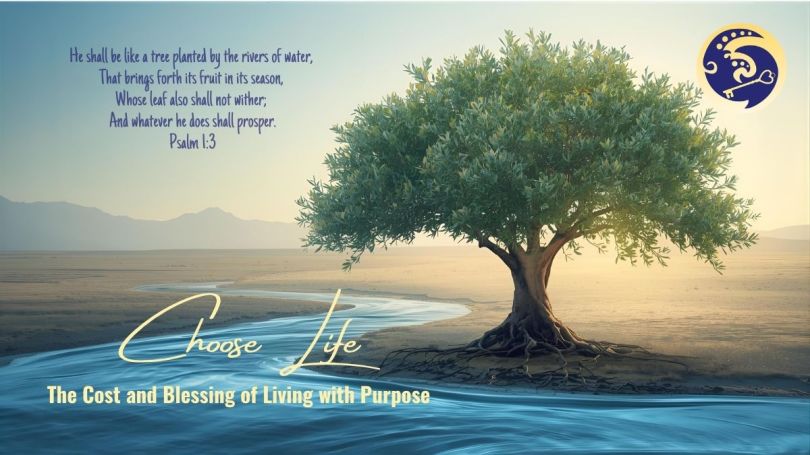
In Psalm 1, the righteous are depicted as “a tree planted by streams of water, which yields its fruit in season and whose leaf does not wither—whatever they do prospers” (v. 3, NIV).

This ancient Near Eastern imagery evokes a resilient olive or date tree in Israel’s arid landscape, deliberately positioned near life-giving waters to thrive despite drought or hardship. Just as a farmer invests effort in planting and nurturing such a tree for long-term harvest, our choice to delight in God’s law—meditating on it day and night—plants us in the steady flow of divine purpose.

In the context of this week’s lectionary, this metaphor counters the superficial following warned in Luke, reminding us that living with purpose isn’t a quick bloom but a rooted investment, bearing blessings of stability and fruitfulness in God’s presence.

Imagine your life as that tree: Are you planted by the streams of scripture, or scattered by the winds of distraction?

Fleeting Distractions vs. Enduring Purposeful Living

The wicked, in stark contrast, are “like chaff that the wind blows away” (Psalm 1:4, NIV), a metaphor drawn from the threshing floors of ancient agrarian life, where worthless husks are separated from valuable grain and scattered by the evening breeze.

In a culture where survival depended on the harvest, chaff represented transience and worthlessness—easily discarded and forgotten. This imagery warns against the empty allure of worldly ways, much like Deuteronomy’s path to death or Luke’s unfinished tower, urging us to choose the costly path of righteousness for lasting purpose. Today, we might see ourselves as chaff in the rush of social media trends or career ambitions that blow away without substance. But by choosing life through God’s instruction, we exchange fragility for the blessing of enduring impact, flourishing as part of a community planted in divine wisdom.

Count the Cost: Living with Purpose Amid Radical Transformation

The Radical Call: Embracing Inner Transformation in Your Life’s Purpose

Jesus’ opening metaphor in Luke 14 cuts like a double-edged sword: “If anyone comes to me and does not hate father and mother… yes, even their own life—such a person cannot be my disciple. And whoever does not carry their cross and follow me cannot be my disciple” (vv. 26-27, NIV).

In a society where family loyalty was sacred and the cross symbolized Roman execution’s ultimate humiliation, this hyperbole isn’t about literal hatred but a fierce prioritization—loving Jesus supremely amid potential loss. It’s a metaphor for the internal “war” of allegiance, echoing Deuteronomy’s life-or-death choice and Psalm 1’s rooted stability.

For us, this imagery invites reflection: In a world of divided loyalties, what “crosses” (sacrifices in time, comfort, or relationships) must we bear to live with purpose? Counting this cost ensures our faith isn’t a half-built tower but a purposeful foundation in God’s presence.

Parables of Purpose: Building Towers for Personal Transformation

Jesus then grounds His teaching in relatable parables: the tower builder who estimates costs to avoid ridicule for an unfinished project, and the king who assesses his army’s strength before battle, opting for peace if outmatched (Luke 14:28-32, NIV).

These metaphors from construction and warfare—familiar to Jesus’ agrarian and occupied audience—illustrate discipleship as a strategic endeavor, not impulsive enthusiasm.

The tower evokes the vulnerability of incomplete commitments in a resource-scarce world, while the king’s deliberation highlights surrender when human strength falls short. Adapted today, consider your “tower” as launching a new habit like daily prayer: Budget your time and energy to finish strong, lest it mock your intentions.

Or, like the king facing a career “battle,” evaluate if you’re equipped or need God’s peace through wise counsel. These images teach that choosing life with purpose demands upfront honesty about costs, leading to the blessings of resilience and victory in Christ.

The Heart of Transformation: Radical Renewal Through Divine Love

Philemon’s Costly Choice: Radical Transformation as a Model for Purposeful Living

In the intimate pages of Paul’s letter to Philemon, we encounter a story that pulses with the raw tension of early Christian life—a personal plea that ripples into profound transformation. Written around 55-62 CE from prison (likely Rome or Ephesus), this shortest of Paul’s epistles addresses Philemon, a wealthy Christian in the small city of Colossae, Asia Minor. Philemon hosted a house church, a diverse gathering of slaves, free people, and masters navigating the rigid hierarchies of the Roman Empire.

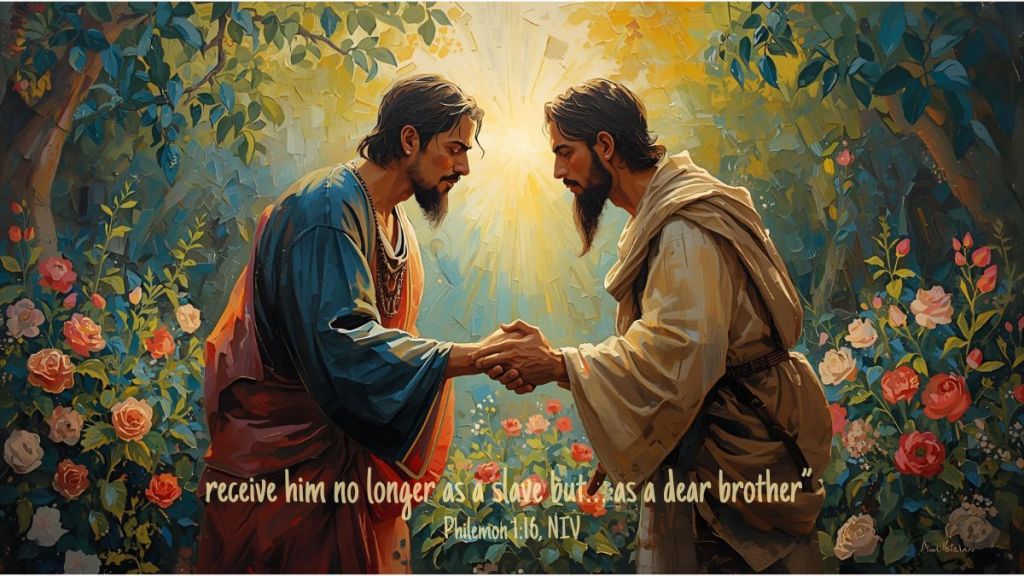
At its heart is Onesimus, Philemon’s enslaved runaway who, after encountering Paul and converting to faith, returns not as property but as a potential brother in Christ. Paul’s appeal—”receive him no longer as a slave but… as a dear brother” (Philemon 1:16, NIV)—was revolutionary in a culture where slavery underpinned society, affecting up to 40% of the population.

Enslaved individuals like Onesimus faced brutal recapture laws, and owners like Philemon held legal power over life and labor. Yet Paul, leveraging their shared faith, doesn’t demand legal freedom but invites a gospel-fueled shift in heart and relationship, offering to repay any “debts” himself (vv. 18-19).

This context of imprisonment, cultural norms, and emerging church dynamics sets the stage for a lesson in practical transformation: Choosing life with purpose often means counting relational costs for the blessing of restored community.

Philemon’s story embodies the lectionary’s intertwined themes, serving as the fulcrum for this week’s reflections.

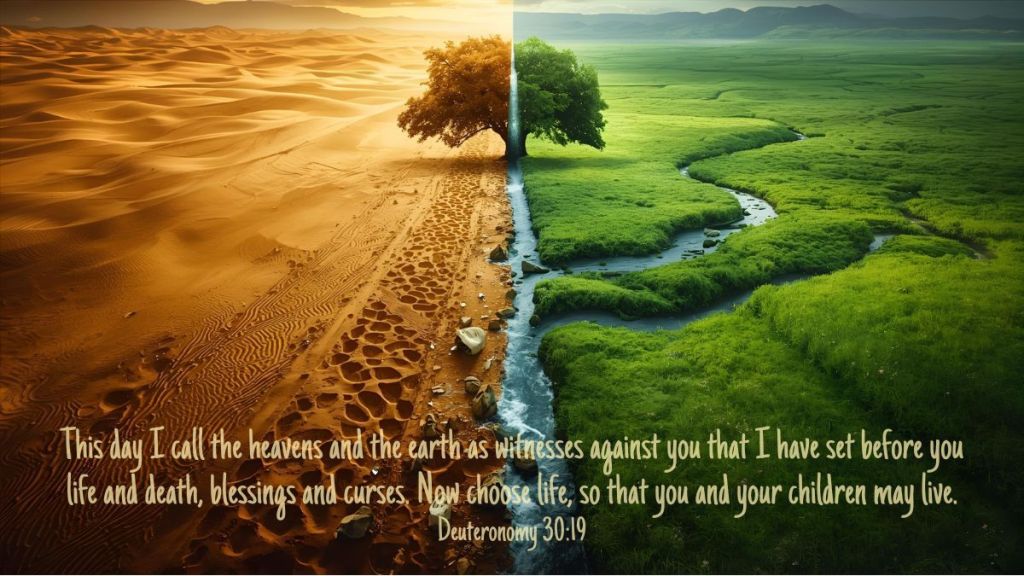
Like Deuteronomy’s stark choice between life and death (30:15-20), Paul urges Philemon to opt for obedience to Christ’s love over societal “death” of division.

Echoing Psalm 1’s flourishing tree, reconciliation plants seeds of fruitfulness in the church, turning potential chaff (conflict) into enduring bonds.

And mirroring Luke’s call to count the cost (14:25-33), Philemon faces a high-stakes decision: Uphold Roman power structures—risking financial loss or social ridicule by elevating a slave—or embrace the “cross” of equality, subverting the empire’s values.

Paul’s diplomatic yet bold approach models transformation not as abstract theology but as lived action: He reminds Philemon of his own debts to grace (v. 19), appealing to conscience in a world where Christianity quietly disrupted hierarchies without direct rebellion.

Historically, this letter, composed alongside Colossians, reflects the early church’s growth amid persecution, where house churches like Philemon’s became spaces for radical equality (Galatians 3:28). In a Greco-Roman society of economic exploitation and social stratification, Paul’s lesson foreshadowed the gospel’s long-term impact on justice, challenging readers then and now to live purposefully by transforming relationships.

What makes Philemon the main focus for practical transformation is its blueprint for applying faith in everyday tensions. In our modern world, we may not own slaves, but we inhabit “hierarchies” of power, prejudice, and unresolved hurts that mirror first-century Colossae—workplace dynamics, family rifts, or community divides.

Paul’s strategy offers a step-by-step model: First, acknowledge the shared humanity in Christ (v. 16), reframing “others” from adversaries to siblings. For Philemon, this meant seeing Onesimus’ usefulness not in labor but in fellowship.

Today, it could transform a strained boss-employee relationship: Instead of wielding authority like Roman owners, count the cost of vulnerability—perhaps by crediting a team member’s idea publicly, risking your ego for team flourishing. Second, embrace the cost willingly (v. 14), as Paul refuses to command but invites. In a family feud, this might involve writing a “letter” of apology, like Paul’s, offering to “repay” emotional debts through active listening, even if it means short-term discomfort.

The blessing? Restored purpose, as seen in the potential church unity Philemon’s choice could foster.

Finally, Philemon teaches that transformation yields communal blessings, aligning with your life’s purpose in God’s presence. By choosing reconciliation, Philemon would model the gospel’s power, turning a personal crisis into a testimony of grace—much like the fruitful tree in Psalm 1 or the completed tower in Luke.

Practically, start small this week: Identify your “Onesimus”—a overlooked coworker, estranged relative, or neighbor in need—and take one transformative step, such as an honest conversation or act of service.

Reflect: What costs (pride, time, status) does this require, and what blessings (deeper connections, personal growth) might follow?

In embracing Philemon’s lesson, we choose life not in isolation but in the purposeful flow of transformed relationships, discovering the profound joy of living as brothers and sisters in Christ.

Embracing Divine Purpose: The Blessings of Living Intentionally

The Cost and Blessing: Flourishing in Heart-Centered Living

This week’s lectionary readings ignite a fire within us: to choose life with unshakable purpose, anchored in the radiant presence of God. Deuteronomy’s bold call to “choose life” (30:15) resounds in Psalm 1’s vision of a flourishing tree, its roots drinking deeply from divine streams. Luke’s challenge to count the cost—bearing the cross, building towers, waging battles—urges us to commit fully to God’s path. Yet it’s Philemon’s story that lights the way forward, showing us that true purpose blossoms through transformed relationships, as Paul pleads for Onesimus to be welcomed as a brother, not a slave. In a world pulling us toward division and distraction, these scriptures proclaim a truth: Purposeful living demands courage, but oh, the blessings—fruitful hearts, restored bonds, and a life overflowing with God’s love!

This Week’s Invitation: Live with Purpose and Inner Transformation

So, rise up this week and embrace the Purpose Challenge! Let God’s Word root you daily, evaluate your commitments with bold honesty, initiate a conversation that heals, lift up the overlooked, and surrender distractions to soar in divine purpose. Like Philemon, dare to choose life, even when it costs pride or comfort, and watch God weave blessings through your obedience.

Reflect: How will you shine God’s love this week? Share your story below or with a friend, and let’s flow together in the divine presence that transforms everything. As Psalm 1 promises, may you stand like a tree, fruitful and unshaken, forever thriving in God’s eternal purpose.

  • Meditate Daily

Spend 10-15 minutes with Deuteronomy 30 or Psalm 1, journaling one purposeful choice.

  • Evaluate Commitments

List a faith goal’s costs (time, energy) and commit fully by mid-week.


Visuals: Consider an inspiring image (e.g., a vibrant tree by water, a sunrise symbolizing purpose) to amplify the motivational tone.

Integration with Action Steps: The conclusion references the five practical steps without listing them, keeping the tone inspirational.


Reconcile Boldly: Reach out to someone estranged with a kind gesture or apology by Sunday.


Uplift Others: Perform one act of equality (e.g., crediting a coworker) to foster unity.


Surrender Distractions: Replace one distraction (e.g., screen time) with prayer or service.